Part 7
After the ceremony, people didn’t ask me about my parents the way I expected. They didn’t crowd around with gossip-bright eyes. They asked about the recipients. They asked how to apply. They offered to donate.
A woman in her sixties approached me near the side door while volunteers stacked chairs.
“I saw what happened,” she said gently. “And I just want you to know… you handled that with dignity.”
I swallowed. “Thank you.”
She nodded toward the grant recipients laughing together near the refreshments. “My father used to say the only kind of power worth having is the kind you can hold without crushing someone else.”
Then she walked away, leaving the sentence behind like a hand on my shoulder.
Still, the internet did what the internet does.
My mother’s friend posted a shaky clip of the confrontation. The caption was dramatic, full of outrage. But the video wasn’t kind to her. In it, you could hear my mother shouting profanity, see her shove past a volunteer, watch my father point a finger at me like he was scolding a child.
And you could see me, calm, measured, asking security to remove them.
The comments shifted.
Some people still defended my mother. Some always will; some people recognize themselves in entitlement and protect it like a mirror.
But many more asked: Why would parents do that at a charity event?
And the simplest answer floated up from strangers who didn’t know me at all:
Because they weren’t there for you. They were there for your money.
Renata called that night. “We got another letter.”
I sighed. “From the same lawyer?”
“No,” she said. “A different one. This one is worse.”
It was a formal complaint alleging I had “defamed” my parents by having them removed publicly. It demanded I issue an apology and “repair their reputation.”
I stared at the email on my screen, then looked out at the ocean. It was dark, restless, the moon turning the waves silver.
“They really can’t stop,” I murmured.
“They won’t,” Renata said. “Not until they run out of oxygen.”
“What’s the move?”
Renata’s voice was crisp. “We go on offense.”
Two days later, Renata filed a restraining order petition, not because I wanted drama, but because the pattern was clear: my parents were escalating, showing up in person, disrupting events, attempting financial fraud, and now trying to use legal threats to bully me into compliance.
We submitted evidence. Video. The identity theft report. The cease-and-desist. Screenshots of my mother’s posts implying I was unstable. The loan application. The ceremony disruption.
Adam agreed to provide a statement.
That part surprised me.
He called the night before he signed it. “I feel sick,” he admitted.
“Then don’t do it,” I said. “You’re not responsible for cleaning up their mess.”
“I am responsible for my part,” he replied. “And my part was staying quiet.”
There was a pause, then he added, “I keep hearing Dad’s voice in my head. That night he kicked you out. I wasn’t there, but Mom told me the details like it was a victory. And I remember thinking… if he can talk to you like that, what does that say about us?”
I didn’t answer right away because the question was heavy.
Adam continued, voice low. “I’m getting married in six months. I keep thinking about having kids someday. And I don’t want them to grow up with that kind of love.”
Something softened in my chest. Not forgiveness. Not yet. But recognition.
“That’s how it starts,” I said. “You decide it ends with you.”
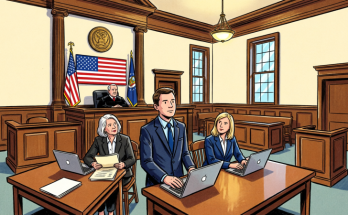
The hearing took place over video. My parents appeared on screen from their living room, my mother dressed like she was going to church, my father wearing a stiff collared shirt like it was armor.
They looked furious before anyone even spoke.
The judge listened patiently as Renata outlined the pattern. My mother tried to interrupt multiple times, each time insisting she was “just trying to talk to her daughter.”
The judge asked, “Why did you approach her at a public event and cause a disruption?”
My mother’s mouth pinched. “Because she refuses to speak to us.”
“And why does she refuse?”
My father leaned forward, voice sharp. “Because she’s spiteful. Because she thinks she’s better than us.”
The judge’s eyebrows lifted slightly. “Is that your understanding of why she refuses contact?”
My father hesitated.
Renata played the clip of my father calling me uneducated trash from a voicemail he’d left weeks ago, recorded, timestamped. She played another clip where my mother called me a nobody in a message sent to Mia. The audio was clean.
My mother’s face went pale.
My father’s jaw tightened so hard it looked painful.
The judge’s voice stayed even. “These statements are abusive.”
“They were said in anger,” my mother snapped, then immediately regretted the tone when the judge’s eyes narrowed.
Renata presented the identity theft report and the loan application, showing how my name had been used. My father tried to deny it. The lender’s email confirmation ended that.
Then Adam’s statement was read.
He didn’t show his face on camera, but his words were there, plain and undeniable: my parents had pressured him to gather information, had discussed using my name, had planned to show up publicly to force me to engage.
My mother started shouting, a high, furious sound. “He’s lying! He’s been turned against us!”
My father cursed.
The judge held up a hand, and the courtroom audio muted my parents for a moment while the judge spoke.
“I am granting the restraining order,” the judge said. “No contact. No approaching. No public confrontation. Any violation will result in consequences.”
When the audio returned, my mother was screaming again, words tumbling out in rage and disbelief. My father slammed something off-screen.
I watched their faces, and for the first time, I didn’t feel small.
I felt free.
After the call ended, my phone buzzed with a text from Adam.
I’m sorry it took me so long.
I stared at the message for a moment, then typed back:
Thank you for stepping out of the storm.
Outside, the ocean kept moving. It always did. It didn’t pause for anyone’s pride.
Neither would I.

Part 8
The restraining order didn’t make my parents kinder. It made them quieter, and with them, quiet always meant they were licking their wounds and recalculating.
For a month, there was nothing. No posts. No surprise visitors. No lawyer letters.
Then Mia called me late one night. Her voice was shaky.
“Lena,” she whispered, “your dad got fired.”
I sat up in bed, heart thumping. “What? Why?”
Mia exhaled. “He went to his boss and tried to convince him you were laundering money. He said you were involved in fraud, and he wanted them to ‘look into it’ because it was ‘family business.’”
I stared into the dark room, stunned by the sheer self-destruction of it.
“And?” I asked.
“His boss asked for evidence,” Mia said. “Dad didn’t have any. He got… loud. He accused them of disrespecting him. The company escorted him out.”
I rubbed my forehead. “He did this to himself.”
“I know,” Mia said quietly. “But now he’s blaming you.”
Of course he was.
Without his job, their financial situation tightened fast. They were already living on thin ice. Pride doesn’t save you when the bills come. And when my parents felt the squeeze, they did what they always did: looked for someone else to pay the cost.
They couldn’t reach me.
So they turned on each other.
Adam told me later, voice exhausted, “They’re fighting nonstop. Dad blames Mom for the charity stunt. Mom blames Dad for the loan attempt. They both blame you like you’re a hurricane.”
I didn’t feel satisfaction. I felt a grim clarity: this is what happens when people build their identity on control. When the control slips, they collapse.
The Nobody Fund grew anyway.
Donations came in after the ceremony clip went viral, not because people love drama, but because they love resilience. A small tech CEO in Miami matched my contributions for a year. A local construction company offered apprenticeships to my grant recipients. A community college created a partnership program.
I watched lives change in real time, not because I was saving people, but because I was giving them what I’d needed: a chance without humiliation.
One day, a grant recipient named Tasha brought her ten-year-old son to our office. He sat in the lobby clutching a cheap backpack, eyes wide at the glass walls and ocean view.
Tasha smiled at me, nervous. “He thinks this place is like a movie.”
I crouched down and said to her son, “What’s your name?”
“Marcus,” he whispered.
“What do you want to build someday, Marcus?”
He blinked, surprised I’d asked. “A robot.”
I grinned. “Then you better start annoying your mom with questions, because that’s how builders start.”
Marcus’s face lit up like someone had flipped a switch.
After they left, I sat in my office and felt something warm in my chest. Not pride. Purpose.
And then Adam called.
His voice was tight. “Dad’s in the hospital.”
My stomach dropped in a way I didn’t expect. “Is he okay?”
Adam hesitated. “It was a mild heart attack. The doctors say he’s stable, but… he’s scared.”
I closed my eyes. The old guilt tried to creep in, whispering: Go. Fix. Prove you’re not cruel.
Then I thought of the restraining order, the fraud, the insults, the public scenes.
“What do you want from me?” I asked softly.
Adam sounded small. “I don’t know. I just… I didn’t know who else to tell.”
I took a slow breath. “I’m sorry he’s hurt. I don’t wish that on him. But I’m not reopening the door.”
“I figured,” Adam said. There was no anger in his voice, just sadness. “Mom keeps saying you’ll regret it if he dies.”
I swallowed. “That’s her favorite weapon.”
“Yeah,” Adam whispered. “It still works on me sometimes.”
I made a decision in that moment, one that felt strange and adult and solid.
“Here’s what I can do,” I said. “I’ll pay for therapy. For you. For him, if he wants it. For Mom, if she wants it. Not because I owe them, but because I want the cycle to stop somewhere.”
Adam let out a breath. “You’d do that?”
“Yes,” I said. “But only if it’s real. No guilt. No leverage. No access to me.”
Adam was quiet. “I’ll ask.”
A week later he called back.
“Dad said no,” Adam admitted. “He said therapy is for weak people.”
I almost laughed, but it came out as a sigh. “Then nothing changes.”
Adam’s voice cracked. “I’m sorry.”
“Don’t apologize for them,” I said gently. “Just keep choosing better.”
Months passed. The ocean changed colors with seasons. My days filled with meetings and grant reviews and mentoring calls with founders who reminded me of my younger self. My nights filled with quiet dinners and friendships that felt uncomplicated.
Then, almost a year after I moved in, I received a letter in the mail.
Not from a lawyer.
From my father.
The handwriting was shaky. The paper was plain. No gold lettering, no dramatic threats. Just words.
Lena, it began. I don’t know if you’ll read this. I don’t know if I deserve you to. I’ve said things I can’t take back. I thought strength meant being harsh. I thought fear meant control. I was wrong.
I read it twice, then a third time.
He didn’t ask for money. He didn’t demand anything. He didn’t blame me.
He wrote: I was proud of you and I didn’t know how to say it without feeling small. So I made you small instead.
My throat tightened.
He ended with: I don’t expect forgiveness. I just didn’t want to leave this world without telling you I see it now.
I sat with the letter in my lap as waves hissed against shore outside.
It didn’t erase the past. It didn’t fix anything automatically.
But it was the first time my father had acknowledged a truth without trying to own it.
I called Renata the next morning. “Is it safe to respond?”
“It can be,” she said. “If you do it carefully.”
So I wrote back.
One page. Simple.
I received your letter. I appreciate the accountability. I am not ready for contact. I hope you continue to work on yourself with professional help. I wish you peace.
I didn’t sign it Love.
I signed it Lena.
Because I was no longer a child trying to earn the family title.
I was a person.
And that was enough.
Part 9
Five years later, the Nobody Fund wasn’t a headline anymore.
It was infrastructure.
We had a small office in my hometown now, run by people who understood the community because they came from it. We partnered with trade schools and community colleges. We funded apprenticeships, paid certification fees, covered childcare for night classes. We helped people get tools, laptops, reliable transportation.
Things that change lives quietly.
People still asked sometimes about my parents, because stories like mine stick in small towns like gum on a shoe.
I learned to answer with the same calm truth every time.
“I’m not estranged because I’m rich,” I’d say. “I’m rich because I learned how to survive being unloved. I chose not to keep paying for that.”
One afternoon, after a long board meeting, I walked along the beach behind my house as the sun sank low. The wind tugged my hair. The sky was orange and bruised purple at the edges.
My phone buzzed with a message from Adam.
Dad passed away this morning.
I stopped walking.
The waves kept rolling in, indifferent, steady.
For a moment, I felt nothing.
Then something sharp and hot rose up in my chest: grief, not for what I had, but for what I never got. For the father who could’ve been warm but chose control. For the years of being called trash by the man who should’ve protected me.
Then I remembered his letter.
I sat down in the sand and stared at the water until my breathing slowed.
Adam called a few minutes later.
“He asked about you at the end,” Adam said, voice thick. “He didn’t blame you. He just… he said he hoped you were happy.”
My throat tightened. “I am,” I whispered.
Adam sniffed. “Mom is… she’s a mess. She’s saying a lot of things.”
“Like what?” I asked, though I already knew.
“That you should come home,” Adam said. “That it would be the ‘right thing’ to come to the funeral. That people will talk if you don’t.”
There it was again: the town, the audience, the performance.
I closed my eyes. “What do you want, Adam?”
He was quiet. “I want you to do what’s right for you.”
The sentence landed softly, but it mattered. Adam had become someone who could see me outside the family script.
“Thank you,” I said.
The funeral was scheduled for Saturday.
I went back and forth in my head for two days. Not because I feared my mother, but because I wanted closure that didn’t leave loose ends in my chest. I didn’t need to prove anything to anyone, but I wanted to say goodbye to the version of my father who had finally, in his last years, started to see.
On Saturday morning, I flew to my hometown and rented a car. I arrived at the funeral early, before the crowd. I sat in the back row and kept my head down. I didn’t wear black because black felt like a costume. I wore a simple navy dress and a calm face.
People noticed anyway.
Whispers moved through the room like wind through dry leaves.
My mother spotted me from the front and froze. Her expression flickered through shock, anger, and something like hunger.
After the service, she rushed toward me as people gathered around to offer condolences.
“Lena,” she hissed, grabbing my arm too hard, nails biting. “Finally.”
I gently pulled my arm free. “Don’t touch me.”
Her eyes flashed. “You owe him. You owe us. You’ve made us look like monsters for years.”
I held her gaze. “You made your own choices.”
She leaned in, voice shaking with fury. “If you had just done what we asked, none of this would’ve happened.”
There was no grief in her words. Only blame.
Only control.
Only the same old song.
Adam appeared beside us like a shield. “Mom,” he said firmly, “stop.”
My mother rounded on him. “Don’t you start too!”
Adam didn’t flinch. “Dad’s gone. This isn’t about your pride. Let her be.”
My mother’s lips trembled. Tears welled, but they looked more like rage than sadness.
“Go back to your mansion,” she spat. “Go pretend you’re better than us.”
I didn’t raise my voice. I didn’t argue. I didn’t try to make her understand something she’d refused to learn her whole life.
I looked at her and said, quietly, “I hope you find peace.”
Then I turned to Adam. “I’m glad you told me.”
He nodded, eyes wet. “I’m glad you came, even if it was just for you.”
“It was,” I said.
I left before the reception. I didn’t need casseroles and awkward hugs and people staring like I was a story instead of a person.
At the airport, I sat by the window watching planes move slowly across the runway and felt something settle in my chest.
My father was gone.
My mother was still the same.
And I was still free.
Part 10
Back in Florida, the ocean was waiting like it always was.
I walked into my house, set my keys on the counter, and stood still for a moment, listening to the quiet. No screaming. No guilt. No performance. Just the soft hum of the refrigerator and the distant rush of waves.
I poured a glass of water and went out to the terrace. The sky was pale blue, the kind that looks freshly washed. A seabird glided over the surface of the water and disappeared into the horizon.
I thought about my father’s letter again, the one I kept in a drawer, folded neatly. I didn’t romanticize it. It didn’t undo years of damage. But it mattered because it was real, and real things are rare in families like mine.
A week after the funeral, Adam called.
“Mom’s selling the house,” he said.
I nodded, even though he couldn’t see me. “She has to.”
“She’s angry,” he added. “But she’s also… scared. She doesn’t know how to be alone.”
I stared at the ocean. “She should’ve learned how to be kind when she wasn’t alone.”
Adam was quiet. Then he said, “I want to tell you something.”
“Okay.”
“I’m starting therapy,” he said, voice firm. “I should’ve done it years ago. I’m done letting them live in my head.”
Warmth flickered in my chest. “I’m proud of you.”
Adam exhaled shakily. “That’s the first time anyone in our family has said that without sarcasm.”
“I mean it,” I said.
After we hung up, I sat outside until the sun dipped low. The air smelled like salt and blooming jasmine from the plants lining the walkway. Somewhere down the beach, people laughed. A dog barked. Life moved on, steady and unbothered by my family’s drama.
That night, I opened my laptop and reviewed a proposal from the Nobody Fund’s board.
They wanted to expand nationally.
A bigger footprint. More partners. More recipients. More stories changed quietly.
I stared at the numbers and felt the familiar calm that always came when I did something meaningful. Money was never the point. Money was just the tool I’d learned to wield after people tried to make me powerless.
I approved the expansion.
The next morning, I woke early and walked down to the shoreline. The water was cool around my ankles. The sunrise painted the waves gold, and for a moment the whole world looked like it was made of light.
I thought about that winter night years ago, standing in my parents’ doorway while my mother shouted that I was a nobody. I remembered the taste of salt in my throat from holding back everything I wanted to say.
They had no idea I was worth sixty million dollars.
But the real truth was, even if I’d been worth nothing on paper, I still would’ve deserved respect.
Because worth isn’t a bank balance. It’s a birthright.
I used to think the best revenge would be showing them the mansion, the accounts, the headlines. Letting their faces twist when they realized they’d misjudged me.
But revenge doesn’t actually heal you.
What healed me was building a life that didn’t revolve around their approval.
What healed me was making sure people like me, people they would’ve dismissed as “uneducated,” could get a chance without begging.
A few months after my father’s death, I received one last message from my mother.
It was short.
You think you won.
I stared at the text for a long moment.
Then I typed back:
This was never a competition. I just stopped losing myself.
I didn’t block her number immediately. Not out of hope. Out of clarity. She wasn’t powerful anymore. She was just noise at the edge of my life, and noise doesn’t have to be fought. It can be ignored.
When the next message came, I deleted it without reading.
I went back to my day.
A meeting with a grant recipient. A call with a founder. Lunch with Mia, who had moved to Florida and started her own small business with help from the program. A quiet dinner on the terrace with friends who made me laugh until my cheeks hurt.
Later, as the sky turned dark and the waves became a low steady roar, Adam sent me a photo.
It was him standing in front of a small classroom, whiteboard behind him. The caption read: First night teaching the coding workshop. Ten students showed up.
I smiled.
Because that was the ending I wanted.
Not my mother’s approval. Not my father’s praise. Not the family table that only offered love if you performed correctly.
A new table.
Built by people who learned to be brave in quiet ways.
I looked out at the ocean and felt peace settle fully, like a door clicking shut in a house that finally felt safe.
They told me to get lost.
So I left.
And in leaving, I found myself.
THE END!