My Parents Hid My Passport the Night Before My Flight, but They Forgot I Had Already Become Someone They Couldn’t Stop
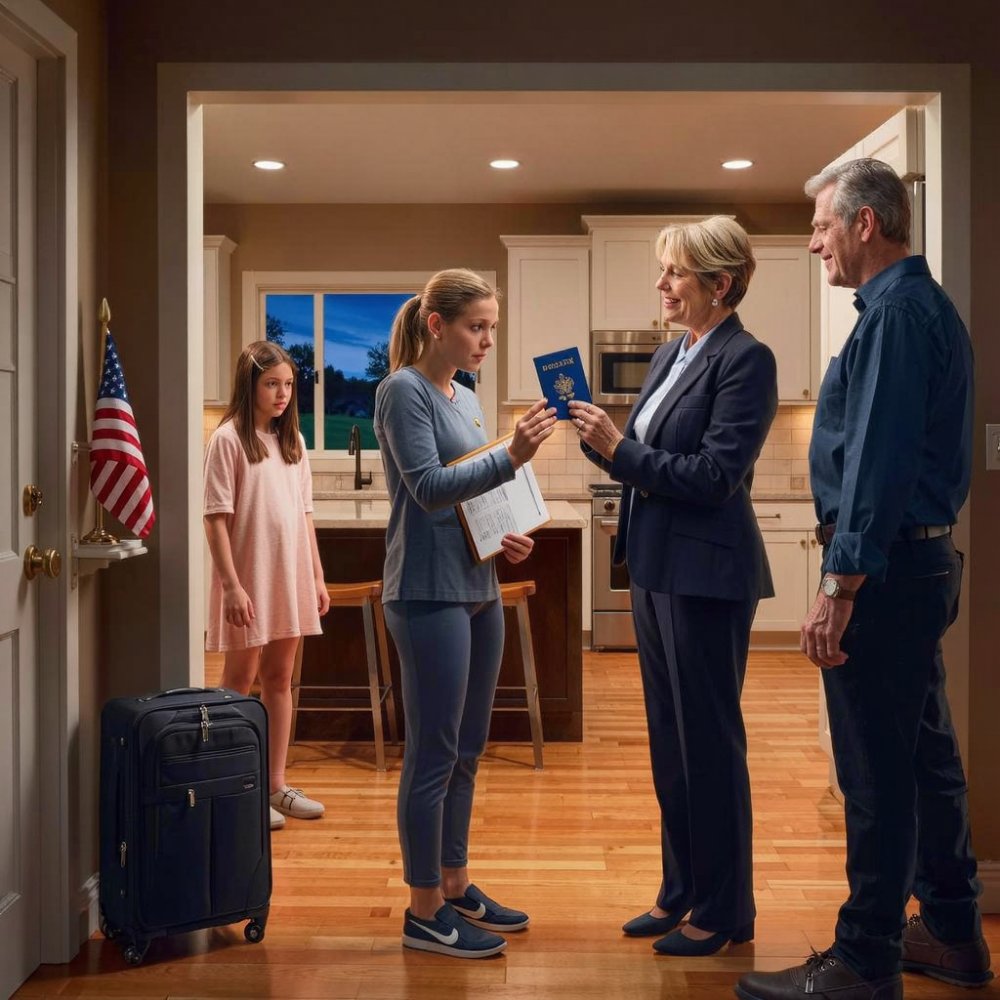
The night before my flight, my passport disappeared from the folder on my desk.
At first, I did what any reasonable person would do. I checked under the stack of printed boarding passes. I opened my carry-on again, even though I had packed it so carefully that every zipper faced the same direction. I looked inside the pocket of my laptop bag, the drawer of my nightstand, the blue plastic file box where I kept tax forms, scholarship letters, and every receipt from the past three years of my life.
Nothing.
Then I walked into the living room and saw my mother folding towels with the television on low, her face calm in the flickering blue light.
“Mom,” I said, trying to keep my voice level. “Have you seen my passport?”
She did not look surprised.
That was the first answer.
She smoothed the towel in her lap, folded it into thirds, and placed it on top of the pile beside her.
“You’re not leaving,” she said.
Just like that.
No apology. No explanation. Not even the courtesy of pretending she did not know what I meant.
My father was sitting in his recliner near the window, wearing the reading glasses he only used when he wanted to look reasonable. The lamp beside him threw a soft yellow circle over the newspaper he had not been reading.
“Your sister needs you here,” he added. “This isn’t the right time.”
I stood in the archway between the hallway and the living room, holding that empty folder against my chest, waiting for my own life to feel like mine again.
It didn’t.
My flight to London was scheduled for 9:40 the next morning.
By noon, it was gone.
So was the seat I had paid for. So was the airport shuttle I had booked weeks ahead. So was the first night in the residence hall I had dreamed about every time I picked up another double shift at the pharmacy or said no to dinner with friends because eighteen dollars for tacos and a soda could buy a voltage adapter, a document fee, a train ticket from Heathrow.
I had saved for three years.
Not in the way people say they saved when they mean they skipped vacations. I saved one grocery receipt at a time. I saved by wearing the same black work shoes until the soles thinned at the heel. I saved by packing peanut butter sandwiches in wax paper while my coworkers ordered lunch from the deli next door. I saved the ten-dollar bills tucked into birthday cards. I saved rebate checks, holiday pay, babysitting money, the tiny cash tips from elderly customers who insisted on giving me “something for being sweet.”
I had not been sweet.
I had been disciplined.
There is a difference.
My name is Hannah Mercer, and by the time I turned twenty-four, I had become the person everyone in my family leaned on without ever calling it leaning.
We lived in a quiet suburb outside Columbus, Ohio, on a street where every mailbox looked the same and the homeowners association sent warnings if your trash cans stayed out too long after pickup. My parents bought the house when I was ten, back when my father still had enough charm to make neighbors believe he was the kind of man who listened. My mother planted white hydrangeas along the porch, joined the church hospitality committee, and learned how to say cruel things in a voice so soft that people remembered only the softness.
At church lunches, she was “such a devoted mother.”
At the grocery store, my father was “a family man.”
At home, those words meant something else entirely.
Devotion meant my mother could volunteer me before I entered the room.
Family meant my father could decide where I belonged and call it love.
My younger sister, Madison, was twenty-one, beautiful in the effortless way that made adults excuse almost anything. She had the kind of blond hair my mother called “angel hair” even when Madison left it clogging the shower drain. She changed majors twice, lost her debit card so often my father eventually kept a spare one in his desk, and treated inconvenience like an emergency that required a rescue team.
That rescue team was usually me.
“Hannah, can you take Madison to her appointment? I’m making a casserole for the church ladies.”
“Hannah, can you pick up Madison from campus? Your father has a meeting.”
“Hannah, Madison’s having a rough week. Could you do her laundry too? Just this once.”
Nothing in our house ever stayed “just this once.”
By the time I was in high school, I knew which bills were due before my mother did. By college, I was cooking dinner four nights a week, cleaning bathrooms on Saturdays, driving Madison wherever she needed to go, picking up prescriptions, remembering birthdays, making sure my father’s shirts came back from the dry cleaner before Sunday service, and listening to my mother tell people, “Hannah has always been our responsible one.”
Responsible was not a compliment in our house.
It was a leash.
My parents did not forbid me from dreaming. That would have been too obvious. They smiled at the beginning of every dream, then placed small weights on it until it could no longer move.
When I first told them I wanted to study abroad for graduate school, my mother pressed one hand to her chest and said, “Oh, honey, that’s a very big idea.”
My father asked, “And how exactly would you pay for that?”
So I showed him.
I printed out tuition estimates, scholarship options, visa requirements, housing costs, and a spreadsheet so detailed that one of my professors laughed and said, “Hannah, NASA could use this to launch something.”
My father glanced at the first page.
“You’re getting ahead of yourself,” he said.
That was his favorite sentence. It sounded like guidance, but it really meant, get back where I can reach you.
I applied anyway.
I did it at the library on Tuesday nights after work, sitting near the back window where the Wi-Fi was strongest and the fluorescent lights buzzed over my head. I wrote my personal statement three times, then a fourth time after Dr. Patel, my undergraduate adviser, looked over her glasses and said, “This version is competent. I don’t want competent. I want honest.”
So I wrote the truth.
Not all of it.
Enough.
I wrote about growing up as the daughter who made herself useful because usefulness was safer than wanting. I wrote about studying public policy because I wanted to understand how systems trapped people politely, legally, quietly, and how people could still find doors. I wrote about volunteering at a legal aid clinic where elderly tenants brought grocery bags full of documents, afraid of losing homes they had lived in for thirty years because one notice had arrived in language nobody helped them understand.
I did not write that the first system I ever wanted to escape was my own family.
Maybe I didn’t need to.
The university accepted me in March.
The scholarship came in April.
I read the email in the break room of Greenfield Pharmacy while the microwave hummed with someone else’s leftover soup. I stared at the words until the screen blurred.
Full tuition award.
International housing support.
Orientation arrival date confirmed.
For one minute, I sat alone on a cracked vinyl chair with my phone in both hands, and the life I had been building in secret became real.
Then my manager, Lisa, pushed open the break room door with a box cutter in one hand.
“Hannah? You okay?”
I nodded, but tears were already sliding down my face.
“I got it,” I said.
She looked at my phone, then at me, and her whole expression changed.
“Well,” she said softly, “then I guess we better start planning your going-away cake.”
Lisa ordered that cake from Costco two weeks before my flight. White frosting. Blue border. “Good luck, Hannah!” written in dark icing across the top. The pharmacy staff signed a card and chipped in for a travel pillow, a set of luggage tags, and a tiny umbrella because Lisa said London rain did not care about American optimism.
My parents did not come to the break room party, of course. They were invited. My mother said she had a church committee meeting. My father said he did not want to make “a whole production” out of something that might still change.
“It’s not changing,” I told him.
He looked at me over the top of his coffee mug.
“Don’t talk like you know everything.”
Madison took a picture of my cake when I brought the leftover half home.
“Cute,” she said, standing in front of the open refrigerator. “Is there chocolate?”
“No.”
She wrinkled her nose. “You know I don’t like vanilla.”
My mother smiled from the sink, where she was rinsing lettuce.
“Maybe before you leave, Hannah, you can make that chocolate sheet cake your sister likes.”
Before you leave.
Those words became a room I walked around in for weeks.
Sometimes my mother sounded almost accepting. She asked whether I had packed enough sweaters. She told a woman at church, “Hannah is doing a program overseas,” in the same tone she used to mention someone’s niece getting engaged.
Then, at home, she would say, “You know, it’s going to be very hard on Madison.”
Or, “Your father hasn’t been sleeping well since you started all this.”
Or, “A good daughter doesn’t just run off because she wants something.”
My father preferred practical objections.
“Exchange rates can change.”
“Foreign housing is expensive.”
“You’ll be alone if something happens.”
“You may think that scholarship covers everything, but there are always surprises.”
He never said, “I’m proud of you.”
Not once.
I used to think those words would matter. By the final month, I realized I had stopped waiting for them.
The closer my flight got, the quieter our house became.
Not peaceful quiet. Strategic quiet.
My mother stopped leaving mail on the entry table. My father shut his office door whenever he made phone calls. Madison grew clingy and sharp at the same time, asking to borrow my black cardigan, then snapping, “Never mind, you’ll need it for your fancy new life.”
One night, two weeks before I left, I came home from a closing shift and found my parents in the kitchen with the light over the stove on. They had the look of people who had been talking about me and had not expected me to arrive.
My mother set down her mug.
“Hannah,” she said carefully, “we’ve been thinking.”
That phrase made my stomach tighten.
My father gestured to the chair across from him.
“Sit down.”
I stayed standing with my pharmacy tote still on my shoulder.
“I have work again in the morning. What is it?”
My mother’s lips pressed together. She hated when I did not give a scene the shape she wanted.
“We just think,” she said, “that perhaps you should defer for one year.”
I laughed once, not because it was funny, but because my body rejected the sentence before my manners could stop it.
“No.”
My father’s face hardened.
“You haven’t even heard us out.”
“I’ve heard this for three years.”
“That is not fair,” my mother said.
“What part?”
Her eyes glistened immediately. She could summon tears the way some people turned on a faucet.
“The part where you act like we’re trying to ruin your life.”
I looked at her, really looked.
My mother wore a pale blue robe with white piping. Her hair was clipped back. On the counter beside her sat the grocery list I had written that afternoon before leaving for work because she had said she was too tired to think about dinner.
“You’re asking me to give up a scholarship,” I said. “Housing. A visa. A program I may not get again. Why?”
“Because family comes first,” my father said.
It landed like a gavel.
Family comes first.
In our house, family meant everyone except me.
I said, “I’m leaving on the twenty-third.”
My father pushed back his chair.
“You are making a mistake.”
“Then it’s mine.”
For a moment, no one spoke.
Madison appeared in the hallway wearing pajama shorts and one of my old college sweatshirts.
“Are you guys fighting about Hannah abandoning us again?” she asked.
My mother closed her eyes as if she had been wounded.
My father looked at me with something colder than anger.
“You see?” he said. “This is what you’re doing to this house.”
I wanted to tell him the truth. That if one person leaving could break a house, maybe the house had been built wrong. But I was tired, and I had learned that some truths only give controlling people more material to twist.
So I went upstairs.
After that, I moved my important papers into a blue folder and kept it in my backpack. Passport, visa, acceptance letter, scholarship agreement, printed flight confirmation, copies of my birth certificate and Social Security card, bank statements, emergency contacts, medical insurance, vaccination records, everything.
I carried that backpack to work.
I brought it with me when I went to the grocery store.
At night, I slid the blue folder into the bottom drawer of my desk and put folded sweaters over it.
Looking back, I understand that I knew.
Not in a way I could have explained. Not enough to call anyone and say, “I think my parents might steal my passport.”
But my body knew.
My body had lived with them longer than my hope had.
The day before my flight, I woke before dawn.
The house was still dark, and for a few minutes, I lay under my quilt listening to the faint hum of the refrigerator downstairs and the occasional rush of a car passing on the road beyond our cul-de-sac. My suitcase stood open near my closet, half-packed and neat. On my desk sat a roll of clear tape, a travel-size bottle of Advil, and a list with almost every box checked.
I made coffee for everyone because old habits do not disappear just because you are leaving.
My father came downstairs in his gray robe, nodded at the pot, and said, “Thanks.”
My mother asked if I had remembered to wash the guest towels before leaving.
“Guest towels?” I said.
“Madison has friends coming over next week.”
I looked at her.
She opened the refrigerator and took out the creamer.
“What? You know where I keep them.”
That was how the whole day went.
Normal requests thrown like small stones.
Could I pick up milk?
Could I remind Madison about her dentist appointment?
Could I run the vacuum before my father’s Bible study group came on Thursday?
Could I show my mother one more time how to pay the water bill online, even though I had written the instructions in a notebook and taped the password hint inside the cabinet?
By late afternoon, I stopped saying yes.
Not dramatically. I just stopped.
“I can’t.”
“I’m packing.”
“You’ll have to ask Madison.”
Each time, my mother’s mouth tightened.
Madison stayed in her room most of the day, emerging only to complain that my suitcase was blocking the hallway.
“It’s not blocking the hallway,” I said. “It’s against my bedroom wall.”
“It feels like it’s blocking the hallway.”
That was Madison’s gift. She could turn her feelings into facts and expect everyone else to rearrange the furniture.
Dinner that night was meatloaf, green beans, and mashed potatoes from a box because my mother said it would be “nice to have something simple as a family.”
We sat around the oak table we had owned since I was twelve. My father said grace. My mother asked Madison about her classes. Madison talked for ten minutes about a professor who had “a tone” with her when she turned in a paper late.
No one asked about my flight.
No one asked whether I was nervous.
No one said they would miss me.
I remember the scrape of my fork against the plate. I remember the smell of ketchup glaze on the meatloaf. I remember my mother’s pearl earrings and the way my father’s jaw moved when he chewed.
It felt like a rehearsal for a scene where I had not been given lines.
After dinner, I washed my plate and went upstairs.
I checked my suitcase again. I zipped the outside pocket. I weighed it on the bathroom scale. Forty-six pounds. Safe. I placed my airport outfit over the chair: dark jeans, cream sweater, navy blazer, white sneakers. I plugged in my phone. I checked my bank app. I printed one last copy of my boarding pass because my father always said technology failed at the worst times, and some of his lessons stayed useful even when he didn’t.
Then I opened my desk drawer.
The sweaters were there.
The blue folder was there.
The passport was not.
I do not remember taking the stairs.
I remember the hallway light. The sound of the television. My mother’s hands on the towel. My father in his recliner.
“Have you seen my passport?” I asked.
My mother said, “You’re not leaving.”
My father said, “Your sister needs you here. This isn’t the right time.”
The folder bent slightly in my hands.
“Where is it?”
My mother looked offended, as if I had accused her of something ugly instead of asking about the thing she had just admitted taking.
“It’s safe.”
“Give it back.”
My father removed his glasses slowly.
“Lower your voice.”
My voice had not been raised.
“Dad. Give me my passport.”
He folded the newspaper and placed it on the side table.
“You need to calm down and think clearly.”
“I am thinking clearly.”
“No,” he said. “You are acting emotional.”
My mother stood then, clutching a towel to her chest.
“Who is going to cook? Who is going to help around here? Your sister cannot manage everything by herself.”
“She’s twenty-one.”
“She’s sensitive.”
“I’m leaving the country tomorrow.”
“No,” my father said. “You were leaving. Now you’re not.”
There are moments when a person’s life splits quietly.
No thunder. No broken glass. No dramatic music.
Just a sentence that teaches you where you stand.
I had believed, until that moment, that my parents were afraid. Afraid I would fail. Afraid I would leave and love another place more. Afraid people would ask why their responsible daughter no longer came home every Sunday.
But standing in that living room, I saw something worse.
They were not afraid of losing me.
They were angry that I thought I belonged to myself.
“Do you understand what you’re doing?” I asked.
My father’s expression did not change.
“We are protecting this family.”
“What about me?”
My mother’s eyes filled.
“Oh, Hannah. Don’t be selfish tonight.”
Selfish.
The word had followed me since childhood. It appeared whenever I had a need that inconvenienced someone else.
Selfish for wanting quiet to study.
Selfish for not lending Madison my car after she had returned it twice with the gas light on.
Selfish for working extra shifts instead of attending a church picnic.
Selfish for leaving.
I looked at my father.
“If you don’t give it back, I’ll call the police.”
For the first time, something flickered across his face.
Then he leaned back.
“And say what? That your parents are worried about you? That you’re upset and talking about running overseas alone? Hannah, think about how that sounds.”
My mother wiped under one eye with the edge of the towel.
“We don’t want strangers involved.”
Of course they didn’t.
Strangers were dangerous because strangers had no reason to believe our family story.
I went upstairs and locked my bedroom door.
My hands shook so badly I dropped my phone twice before I could call the airline. The woman on the line was kind, which almost made it worse. She explained policies, change fees, cancellation windows, standby possibilities. Her voice moved through a script designed for storms, emergencies, missed connections, ordinary misfortunes.
There was no script for my parents took my passport because they need me to clean the kitchen.
By the time I hung up, my eyes burned but I had not cried yet.
I emailed the university.
I emailed housing.
I emailed the scholarship office.
Then I sat on the edge of my bed, fully dressed, staring at my packed suitcase until the room blurred around it.
Around midnight, my mother knocked.
“Hannah?”
I did not answer.
“Honey, open the door.”
I stayed still.
Her voice softened into the one she used in public.
“I know you’re upset. But one day you’ll understand we did this because we love you.”
I pressed my palm over my mouth.
Love, in our house, was always asking me to disappear with a smile.
The next morning, my alarm went off at 5:15.
For several seconds, my body believed in the old plan. Wake up. Shower. Dress. Ride to the airport. Check in. Board. Leave.
Then I saw the suitcase.
I turned off the alarm.
Downstairs, the house moved as usual. Coffee grinder. Cabinet door. The low murmur of my father’s morning news. My mother humming in the kitchen.
At 6:10, my airport shuttle called.
I let it go to voicemail.
At 9:40, while my flight lifted off from Chicago without me, I sat on my bedroom floor with my back against the bed and cried so hard my ribs hurt.
Nobody came up.
Not my mother.
Not my father.
Not Madison.
Sometime after lunch, Madison texted me from downstairs.
Are you still taking me to Target later?
I stared at the message until the screen went dark.
The first day was shock.
The second day was humiliation.
The third day was anger, but not the hot kind. It was clean and cold and useful.
My parents behaved as if the matter had been settled. That was the part I could not forgive. If they had fought with me, yelled, panicked, begged, apologized, anything human, maybe I could have understood fear. But by breakfast the next morning, my mother was asking whether I wanted scrambled eggs. My father was reminding me that the lawn service bill needed to be paid before Friday. Madison complained that I had made “everyone’s energy weird.”
On Sunday, we went to church.
I did not want to go, but my mother stood in my doorway wearing her floral dress and said, “People will ask questions if you stay home.”
People.
That was the god my mother served most faithfully.
At church, Mrs. Calloway from the hospitality committee hugged me and said, “I thought you were flying out this weekend!”
Before I could answer, my mother placed a light hand on my shoulder.
“Plans changed,” she said warmly. “Hannah realized the timing just wasn’t right.”
Realized.
I looked at my mother’s hand on my shoulder. Her nails were painted pale pink.
Mrs. Calloway smiled with sympathy.
“Oh, honey. Well, sometimes the Lord closes a door.”
I stepped away from my mother’s hand.
“Sometimes someone locks it from the outside,” I said.
Mrs. Calloway blinked.
My mother’s smile froze.
I walked to the restroom and stayed there through the first hymn, gripping the edge of the sink while women came and went, spraying perfume, adjusting lipstick, pretending not to notice me.
When I got home, I changed out of my church clothes, took my laptop, and sat in the parking lot of a Panera two towns over because I did not trust our home Wi-Fi anymore.
That sounds dramatic.
It was not.
It was practical.
Control leaves fingerprints. Once you see them, you stop touching things without gloves.
I searched for passport replacement procedures. Emergency travel. Stolen passport. Withheld passport. Visa documentation. International student arrival delays. I made a list. Then I made another list from the first list because fear becomes smaller when it has bullet points.
The office everyone in my family called “the embassy” was technically a consular services office connected to the country where I was going to study, located in a federal building downtown. I had been there once before for my student visa appointment, wearing a blazer from a thrift store and shoes that gave me blisters.
I called Monday morning at 8:01.
A woman answered on the fifth ring.
“Consular services, how may I direct your call?”
“My name is Hannah Mercer,” I said. “I was supposed to travel for graduate study last week, but my passport was taken from me. I need to know what my options are.”
There was a pause.
Not a dismissive pause.
A listening one.
“Are you safe right now?” she asked.
The question stunned me.
I looked across the Panera parking lot at a man loading bagels into the backseat of his car, at a woman in scrubs drinking coffee behind the wheel, at the ordinary Monday morning continuing around me.
“Yes,” I said.
“Are you an adult?”
“Yes. I’m twenty-four.”
“Do you have copies of your passport and visa?”
“Yes.”
“Can you come in today?”
My hand tightened around the phone.
“Yes.”
“Bring every form of identification you have. Driver’s license, birth certificate copy if you have it, university correspondence, proof of travel, police report if one exists, and any written communication showing the passport was withheld.”
“I don’t have a police report.”
“That’s all right. Come anyway.”
Come anyway.
It was the first mercy anyone had offered me in days.
I did not go home first.
I drove straight to the bank and withdrew cash from the savings account my parents did not know still had money in it. Two years earlier, after my father had “borrowed” from my first study abroad fund to cover Madison’s car repair and then acted wounded when I asked about repayment, I opened a new account at a credit union near work. Paperless statements. Different password. No family computer.
It was the smartest thing I had ever done before I understood why I needed to be smart.
From the bank, I went to FedEx and printed everything.
Acceptance letter. Scholarship award. Housing confirmation. Flight receipt. Emails to the university. Emails from the university. Passport scan. Visa scan. Driver’s license. Birth certificate copy. Social Security card copy. Bank statement. Pay stubs. The list of shifts I had worked for the past six months, because some stubborn part of me wanted proof that I had earned every mile between myself and that house.
I put it all in a new folder.
Red this time.
The federal building downtown had marble floors and security guards who looked bored until they didn’t. I emptied my pockets into a tray, walked through a metal detector, and took the elevator to the sixth floor with a woman holding a sleeping baby and an older man wearing a Vietnam veteran cap.
The consular office was smaller than I remembered. Beige walls. Plastic chairs. A television mounted in the corner with the sound off. A ticket machine near the entrance. Behind the glass windows, staff members moved between computers and printers with the calm efficiency of people who handled other people’s emergencies every day.
I took a number.
When it appeared on the screen, I stepped to window four.
The woman behind the glass looked about fifty, with silver-threaded brown hair twisted into a knot and reading glasses on a chain. Her nameplate said Whitaker.
“How can I help you, Ms. Mercer?”
Hearing my name from a stranger nearly broke me.
Not “honey.” Not “young lady.” Not “your sister needs you.” My name. My actual name. Attached to my own problem.
I slid the folder through the slot.
“My parents took my passport the night before my flight,” I said. “I missed the flight. I need to know if my visa can still be used and what I have to do to travel.”
Ms. Whitaker did not gasp. She did not ask what I had done to upset them. She did not say, “But they’re your parents.”
She opened the folder and began sorting documents.
“How old are you?”
“Twenty-four.”
“Do you live with them?”
“Yes.”
“Do you have access to your own money?”
“Yes.”
“Do they have access to your email, phone, or bank account?”
“No. I don’t think so.”
Her eyes moved over the documents, stopping at the scholarship letter.
“This is a strong award.”
I swallowed.
“Thank you.”
“You were due to arrive last week?”
“Yes.”
“Did you notify the university?”
“I emailed them the night it happened.”
“Good.”
She typed for a while. I watched her expression carefully, trying to read my future in the movement of her eyebrows.
Then she stopped typing.
“Ms. Mercer,” she said slowly, “did you send a withdrawal request to the university three days before your flight?”
My body went cold.
“No.”
Her eyes lifted to mine.
“Did you authorize anyone to contact the university on your behalf?”
“No.”
She turned the monitor slightly, not enough for me to read private details, but enough to show me that she was looking at something real.
“There is a note here from the university’s international office. They received a message claiming you were withdrawing for family reasons and requesting information about whether housing and travel-related funds could be refunded.”
For a moment, I could not hear the room.
The baby behind me fussed. A printer started somewhere behind the glass. Someone laughed softly two windows down.
I said, “What?”
“The message was not sent from your official student email. The university flagged it and did not process the request. They tried to contact you through your secure account.”
I remembered an unread notification in the student portal. I had been too devastated to open anything except direct replies.
Ms. Whitaker’s voice remained even, but her eyes were kind.
“Your place was not canceled.”
I gripped the edge of the counter.
“Are you sure?”
“Yes.”
“My scholarship?”
“Still active, according to this note.”
“My housing?”
“Held. They marked your arrival as delayed due to document issues.”
Document issues.
Such a small phrase for the sound of your life being dragged back from a ledge.
I closed my eyes.
My mother had not simply hidden my passport in a moment of panic.
My father had not simply misjudged.
Someone in that house had tried to erase my next step quietly enough that I would not know where to appeal. They had planned for me to miss the flight, then planned for the evidence of my future to dissolve while they told the world I had changed my mind.
Ms. Whitaker slid a box of tissues through the opening beneath the glass.
I took one, then another.
“I’m sorry,” I said.
“No need.”
“I don’t usually—”
“You’re doing fine.”
That sentence undid me more than pity would have.
When I could speak again, I asked, “Can I still go?”
“Yes,” she said. “Your visa remains valid, but you need a valid passport. You’ll have to report the original as lost or stolen, apply for an emergency replacement through the passport agency, and carry supporting documentation. Given your travel date and circumstances, you may qualify for expedited processing.”
“What if my parents give it back?”
Ms. Whitaker looked at me over her glasses.
“Do not rely on people who withheld your passport to decide whether you may use it.”
I nodded slowly.
She wrote down addresses, phone numbers, and steps in a neat hand. She told me how to report the passport. She told me what to say and what not to over-explain. She told me to change every password from a device my family had never touched. She told me to contact the university through my secure portal, not regular email. She told me to consider staying somewhere else until I traveled.
Then she leaned closer to the glass.
“Ms. Mercer, I want you to understand something clearly. You are an adult. Your parents do not have legal authority to keep your passport from you. They do not have authority to cancel your education. They do not have authority to decide whether the timing is right.”
I stared at her.
I had heard versions of those words before from friends, professors, even Lisa at the pharmacy.
But something about hearing them in that building, under fluorescent lights, from a woman who did not know my mother’s church voice or my father’s reasonable face, made the truth settle into me differently.
Authority had always looked like my father at the kitchen table.
That day, it looked like a woman named Whitaker stamping a form and saying, “Next step.”
Before I left, she printed a letter confirming my visa status and the university’s delayed arrival note. She also gave me a small card with a number for a domestic support organization.
I looked at it, embarrassed.
She saw the hesitation.
“Taking documents to control someone’s movement is a serious thing,” she said. “You don’t have to decide what to call it today. Just keep the card.”
I put it in my wallet.
Outside the federal building, I stood on the sidewalk while traffic moved along the street and office workers passed with salads in plastic containers and coffee cups in their hands. The sky was pale gray, the kind of Ohio gray that made every building look tired.
But I was not tired anymore.
I was awake.
My phone had seventeen missed calls by the time I reached my car.
Mom.
Dad.
Madison.
Mom again.
A text from my mother: Where are you? You scared us.
Another: This is not how adults behave.
From Madison: Mom is crying. Thanks a lot.
From my father: Come home now. We need to discuss your attitude.
I sat behind the wheel and read them without answering.
Then I opened the university portal.
There was the message Ms. Whitaker had mentioned.
Dear Hannah,
We received a third-party message regarding possible withdrawal. As it did not come through your secure account, no action has been taken. Please confirm your intentions at your earliest convenience. We remain prepared to support your delayed arrival.
I read the last sentence three times.
We remain prepared to support your delayed arrival.
Not your cancellation.
Not your failure.
Delayed arrival.
I wrote back from the parking garage with my phone plugged into the charger and both hands steady.
Dear International Student Services,
I did not withdraw and did not authorize anyone to do so on my behalf. My passport was withheld without my consent, causing me to miss my original flight. I am working with the appropriate offices to replace my travel documents and still intend to enroll. Please keep my scholarship, housing, and registration active.
Thank you,
Hannah Mercer
Then I drove to the regional passport agency.
The rest of that day became a blur of counters, forms, fees, signatures, photocopies, and waiting rooms. I told the story so many times that it began to sound like something that had happened to someone else.
“My passport was taken by a family member.”
“No, I do not have access to it.”
“Yes, I am requesting it be marked invalid.”
“Yes, I have international travel for study.”
“Yes, here are the supporting documents.”
By four-thirty, I had an appointment for emergency processing the next morning and a list of additional documents to bring.
By five, I was sitting in my car outside a Hampton Inn near the airport, booking a room with shaking hands.
Not because I could not go home.
Because I finally understood that I should not.
I went back to the house once.
Not alone.
I called Lisa from the pharmacy and told her the cleanest version of the truth.
“My parents took my passport. I’m replacing it. I need to get my suitcase.”
There was silence on the other end.
Then Lisa said, “I’ll meet you there in twenty minutes.”
“You don’t have to—”
“Hannah,” she said, “I asked you to cover my Christmas Eve shift when my mother fell. You showed up in a snowstorm. I’m meeting you there.”
Lisa was five feet two, wore purple reading glasses, and had the moral spine of a steel beam. She arrived in her dented Subaru with a travel mug in one hand and her pharmacy badge still clipped to her fleece jacket.
“You say only what you need to say,” she told me in the driveway. “You get your things. I’ll stand by the door. If anybody gets dramatic, we leave.”
My mother opened the front door before I could use my key.
Her face changed when she saw Lisa behind me.
“Hannah,” she said, putting a hand to her throat. “What is this?”
“I’m getting my suitcase.”
My father appeared behind her.
“You brought your boss to our home?”
Lisa smiled politely.
“Evening, Mr. Mercer.”
He ignored her.
“Hannah, come inside. We are not doing this on the porch.”
“I’m getting my suitcase,” I repeated. “Then I’m leaving.”
My mother’s eyes shone.
“Leaving where?”
“A hotel.”
“A hotel?” she whispered, as if I had said a park bench. “You would rather sleep in a hotel than in your own home?”
I looked past her into the entryway. The framed family photo still hung beside the coat closet. In it, I was seventeen, wearing a navy dress my mother chose, standing between Madison and my father with a smile that did not reach my eyes.
“This doesn’t feel like my home right now.”
My father stepped forward.
“That is enough.”
Lisa moved one inch closer to me.
It was almost nothing.
My father noticed.
Good.
“Where is my passport?” I asked.
My mother looked away.
My father said, “Safe.”
“It’s been reported as unavailable to me. It won’t be useful to anyone.”
His expression shifted.
There it was again, the flicker.
“What does that mean?”
“It means I’m replacing it.”
My mother’s mouth opened.
“You went to strangers before coming to us?”
I almost laughed.
“You took my passport before coming to me.”
Madison came down the stairs then, barefoot, wearing leggings and one of my sweaters.
“Are you seriously still doing this?” she said.
I looked at the sweater. Gray cashmere, bought secondhand after three months of debating whether twenty-two dollars was too much to spend on myself.
“Take that off before I leave.”
Madison blinked. “Excuse me?”
“That’s mine. Take it off.”
My mother gasped. “Hannah.”
Something about that gasp, that delicate little sound of outrage over a sweater after what they had done, snapped the last thread of fear in me.
“No,” I said. “Do not Hannah me. She can take off my sweater.”
Madison stared at me as if I had become someone unreasonable.
Then she looked at Lisa, flushed, and stomped upstairs.
My father’s voice lowered.
“You are embarrassing yourself.”
“No,” Lisa said mildly, “she’s collecting her property.”
My mother turned to her.
“This is a family matter.”
Lisa’s smile stayed in place.
“Then it’s a good thing Hannah invited me.”
No one spoke after that.
I went upstairs. My suitcase was still by the closet. My airport outfit was still over the chair. My room looked paused, as if the version of me who was supposed to leave had stepped out and might return any second.
Madison had thrown the sweater on my bed.
I packed it.
I took the blue folder, even though the passport was gone. I took my laptop, chargers, medication, jewelry, the envelope of cash taped behind the bottom drawer, and the framed photo of my grandmother, my father’s mother, who had once told me at age eleven, “Never let useful become all you are.”
At the time, I thought she was talking about chores.
Now I wondered what she had seen.
When I came downstairs, my mother was crying quietly into a tissue.
My father stood rigid near the hallway.
“You will regret this,” he said.
Maybe he meant leaving.
Maybe he meant making him feel powerless in his own foyer.
I said, “I regret waiting this long.”
My mother made a wounded sound.
“You don’t mean that.”
I looked at her.
For the first time in my life, I let silence answer for me.
Lisa carried my smaller bag to the car. I rolled my suitcase behind me. The wheels clicked over the porch threshold, down the front step, across the driveway.
Madison watched from the upstairs window.
My mother stood in the doorway with one hand pressed against the frame.
My father did not come outside.
As Lisa pulled away, I looked back once.
Not because I was unsure.
Because I wanted to remember the house accurately.
The white hydrangeas. The identical mailbox. The porch light my mother always turned on for guests but never for me when I came home late from work. The upstairs window where my sister stood wearing the expression of someone who had lost a servant and thought she had lost love.
That night at the hotel, I put the security latch on the door and sat on the bed without turning on the television.
I expected to collapse.
Instead, I opened my laptop.
I changed passwords for everything. Email. Bank. University portal. Phone account. Cloud storage. Airline account. Pharmacy employee portal. Social media. Even the grocery rewards account because my mother knew the old password and control is often built from small doors.
Then I booked a new flight.
It cost more than the original. Of course it did. Last-minute freedom is expensive.
I paid anyway.
The next morning, I returned to the passport agency with every document I owned. The clerk at the counter had tired eyes and a kind mouth. She reviewed my paperwork, asked three questions, disappeared behind a door, and came back twenty minutes later with a receipt.
“Come back at three,” she said. “We should have it ready.”
I almost asked if she was sure.
I didn’t.
At three-fifteen, she handed me a new passport.
Blue cover.
Gold seal.
My name printed inside.
There are objects that feel heavier than they are because of what they return to you.
That passport felt like a door handle.
My new flight left the following morning from Chicago O’Hare. I took a bus that evening and stayed at an airport hotel with carpet that smelled faintly of bleach and a lobby full of flight crews drinking coffee from paper cups.
My parents called all night.
At first, I let the phone ring.
Then I turned it off.
In the morning, I dressed in the outfit that had waited over the chair for the wrong day. Dark jeans. Cream sweater. Navy blazer. White sneakers. I pulled my hair into a low bun, put my documents in the red folder, and checked out before sunrise.
The shuttle driver was an older man with a Cubs cap and a voice rough from cigarettes.
“International?” he asked.
“Yes.”
“Big trip?”
I looked at the terminal lights ahead, glowing in the dim morning.
“Yes,” I said. “It is.”
Inside, O’Hare was already alive. Suitcases rolled over tile. Families argued gently near kiosks. Business travelers moved through the crowd with practiced impatience. Somewhere, a child was crying. Somewhere else, someone laughed too loudly at six in the morning.
I stepped into the check-in line with my red folder pressed to my side.
My heart was steady until the airline agent scanned my new passport and paused.
It was a tiny pause.
But after the week I’d had, I could hear fear breathing in it.
She looked at the screen, then at me.
“Ms. Mercer?”
“Yes.”
“Just one moment, please.”
She typed. Then she picked up the phone.
My mouth went dry.
“Is there a problem?” I asked.
“Not necessarily,” she said, which is never a comforting phrase at an airport.
She spoke quietly into the phone, nodded, and hung up.
“A supervisor is going to come over and verify a document note.”
A document note.
Behind me, the line shifted. Someone sighed. A suitcase bumped my ankle.
I wanted to be brave. I was tired of needing to be brave.
A few minutes later, a woman in a dark uniform approached with a tablet in one hand. She was maybe in her early forties, with black hair pulled back neatly and a calm, direct gaze.
“Ms. Mercer?” she said.
“Yes.”
“I’m Officer Alvarez. I’m with Customs and Border Protection liaison support here at the terminal. May I see your passport and supporting documents?”
I handed them over.
She looked at my face, then at the passport, then at the red folder.
Something in her expression softened.
“I recognize this file,” she said.
My stomach dropped for half a second before I understood from her tone that recognition was not danger.
She tapped the tablet.
“You had a consular note added regarding replacement travel documents and delayed student arrival.”
“Yes.”
“And the prior passport was reported unavailable to you?”
“Yes.”
She nodded.
“You did the right thing.”
Four words.
In a week full of people telling me I was selfish, emotional, embarrassing, and dramatic, those four words felt almost impossible to absorb.
The airline agent printed something. Officer Alvarez reviewed it. Then she looked past me, over my shoulder.
Her posture changed.
Not alarmed.
Prepared.
I turned.
My parents were twenty feet away.
My mother wore her beige Sunday coat, the one she used for funerals and Easter services. My father had on his dark overcoat, his hair combed, his face set in the reasonable expression he saved for banks and school offices. Madison stood behind them in a puffer jacket, arms crossed, eyes red like she had been crying or wanted people to think she had.
My mother saw me and lifted one hand.
“Hannah.”
Not loud.
Not frantic.
Worse.
Publicly wounded.
Several people turned.
My father walked toward us.
Officer Alvarez stepped slightly to the side, placing herself between them and the counter.
“Is there an issue?” she asked.
My father looked at her badge, then at me.
“There’s been a misunderstanding,” he said smoothly. “This is our daughter.”
Officer Alvarez did not move.
“Ms. Mercer is an adult traveler with valid documents.”
My mother’s face trembled.
“She’s not thinking clearly. We’re very worried about her.”
There it was.
The sentence my father had warned me about. The one designed to make me sound unstable without saying the word.
Officer Alvarez turned to me.
“Ms. Mercer, do you wish to speak with them?”
My parents stared.
Madison’s mouth parted.
Nobody in my family had ever asked me that question in that way.
Do you wish.
Not will you be polite. Not don’t embarrass us. Not your mother is crying. Not your sister needs closure. Not your father drove all this way.
Do you wish.
I looked at my mother.
Her eyes begged, but not for me. For the scene to end in a way that restored her role.
I looked at my father.
His jaw was tight.
He had the old passport in one hand.
He lifted it slightly.
“We brought it,” he said, as if returning what he stole should make him generous.
Officer Alvarez looked at it.
“That passport has been reported unavailable to the bearer and replaced,” she said. “It is no longer valid for her travel.”
My father’s face changed.
Just enough.
My mother whispered, “Hannah, please. Don’t do this in front of everyone.”
I almost said, You did it in front of my whole life.
Instead, I said, “I don’t wish to speak with them.”
Officer Alvarez nodded once.
Then she turned to my parents.
“Ms. Mercer has valid travel documents and has declined contact. Please step away from the counter.”
My father’s voice sharpened beneath the polish.
“We are her parents.”
Officer Alvarez’s face remained calm.
“That is not the same as legal authority.”
The words fell cleanly between us.
For the first time, my father had no sentence ready.
My mother began to cry in earnest then, but softly, beautifully, the way she cried in church when the choir sang her favorite hymn. Madison put an arm around her and glared at me as if I had slapped someone.
“Hannah,” Madison said. “How can you just leave us?”
I looked at my sister, and for a moment, I saw her as a child again. Five years old, standing in the kitchen with chocolate on her mouth while my mother asked me why I hadn’t watched her better. Twelve, crying over a school project I stayed up until midnight helping her finish. Nineteen, sleeping in while I drove across town to pick up her abandoned car after a party she swore was only a study group.
I had loved Madison.
That was the hardest part.
I had loved all of them.
Love had never been the problem.
Ownership was.
“You’ll figure things out,” I said.
Madison recoiled like I had cursed at her.
My father stepped forward.
Officer Alvarez did not raise her voice.
“Sir. Step back.”
He stopped.
The airline agent slid my boarding pass across the counter.
“Gate M17,” she said gently. “Boarding starts at 8:55.”
I took it.
My mother pressed a hand over her mouth.
My father stared at me with an expression I had never seen before.
Not anger.
Not disappointment.
Recognition.
He was seeing, perhaps for the first time, that I might actually go.
That I had already gone somewhere inside myself he could not enter.
Officer Alvarez walked with me to the entrance of security. She did not have to. I knew that. But she did.
At the roped line, she handed back my folder.
“Keep your documents with you until you arrive,” she said. “And Ms. Mercer?”
“Yes?”
“Good luck with school.”
It was such a normal thing to say.
Good luck with school.
Not good luck surviving your family. Not good luck proving you’re not selfish. Not good luck building a life after people who raised you tried to stop it at the gate.
Just school.
The future, spoken as if it were still waiting for me.
I looked past her once.
My parents were still near the counter. My mother had collapsed into a chair. Madison stood beside her, crying now too. My father was on the phone, speaking with tight gestures, probably to someone who could do nothing.
For years, I had imagined leaving with closure.
A hug, maybe. My mother dabbing her eyes at security. My father clearing his throat and slipping me extra cash he pretended was no big deal. Madison rolling her eyes but texting me before takeoff.
That was the leaving I had wanted.
This was the leaving I got.
It was not pretty.
But it was true.
I went through security.
My shoes came off. My laptop came out. My red folder stayed under my hand. The TSA officer waved me through. I gathered my things on the other side, put my blazer back on, and walked toward the train to the international terminal.
Every step after that felt borrowed from the life I almost lost.
At the gate, I bought a coffee I could barely taste and a blueberry muffin I wrapped in napkins and put in my bag. I sat near the window and watched planes move across the gray morning.
My phone buzzed after I turned it back on.
Messages arrived all at once.
Mom: Please come back. We can talk about this.
Dad: You are making a permanent decision based on temporary emotions.
Madison: I hope you’re happy.
Mom: We love you.
Dad: Answer me.
Mom: People are asking what happened.
There it was, tucked between love and command.
People are asking.
I typed one message.
I am safe. I am traveling for school as planned. Do not contact my university, employer, bank, airline, or housing again. I will contact you when I am ready.
I sent it to all three.
Then I turned my phone off.
When boarding began, I stood with Group 4, passport in one hand, boarding pass in the other. The line moved slowly. A man ahead of me struggled to collapse a stroller. A woman behind me was telling someone on the phone that she had packed the wrong charger. Ordinary troubles. Beautiful troubles.
At the jet bridge, I paused for one second.
Not because I doubted.
Because I wanted to feel the moment fully.
The air smelled like coffee, airplane fuel, and cold metal. My backpack strap cut into my shoulder. My new passport was stiff in my hand, not yet softened by use. Behind me was everything that had tried to rename control as love.
Ahead was a narrow airplane doorway and a seat I had paid too much for and a life that would not be simple but would be mine.
I stepped forward.
The flight attendant smiled.
“Morning.”
“Morning,” I said.
My seat was by the window. I put my carry-on overhead by myself. A man across the aisle offered to help after I was already done, and I thanked him anyway. I sat down, buckled my seat belt, and placed the red folder flat in my lap.
As the plane pushed back from the gate, I looked out at the terminal windows.
For one strange second, I imagined my parents behind the glass, watching.
But the windows showed only reflections and sky.
The engines grew louder.
The plane turned.
Then the runway opened ahead of us.
I thought I would feel triumph when the wheels lifted.
I didn’t.
Triumph is too loud for some kinds of freedom.
What I felt was quieter.
I felt the exact moment when my fear ran out of authority.
The first month abroad was not magical.
People rarely include that part in stories about leaving.
They want the plane landing, the sunlight, the new city, the first breath of freedom. And there was some of that. London was busy and gray and beautiful in ways I had only seen in movies. The buses glowed red in the rain. The old buildings looked stern and patient. My residence hall room was small enough that I could sit on the bed and touch the desk with my foot, but it had a door that locked and nobody on the other side telling me who needed me more than I needed myself.
Still, I was lonely.
I got lost twice the first week. I cried in a grocery store because I could not find the kind of coffee I liked. I spent twenty minutes trying to understand the washing machine in the basement while a student from Spain took pity on me and showed me which button not to press unless I wanted my clothes boiled into doll sizes.
My classmates were kind, but they already seemed braver than me. They spoke in seminars as if their opinions had always been welcome. They ordered drinks in crowded pubs without rehearsing their sentences first. They called their parents from sidewalks and laughed.
I called no one.
Not at first.
My mother emailed every day for two weeks.
The first emails were soft.
We miss you.
The house feels empty.
Madison is taking this very hard.
Then they sharpened.
You humiliated your father.
You made us look like monsters.
No family is perfect.
One day you will understand what mothers do out of love.
My father sent only three.
The first: Send your address.
The second: We need to discuss finances.
The third: Silence is immature.
Madison sent photos of my room after my mother cleaned it, as if proving the space still existed meant I belonged back in it.
I did not respond.
Instead, I went to orientation. I opened a local bank account. I met with the international student adviser, a patient woman named Priya who had already been briefed by the university.
“You’re not the first student whose family struggled with control,” she said.
Struggled with control.
Such a careful phrase.
I appreciated it.
She helped me document that no third party could alter my enrollment. She added a password to my student file. She connected me with counseling services. She showed me where to find emergency grants if my family attempted financial pressure.
At the end of the meeting, she said, “You may feel grief even though you made the right choice.”
I nodded because I was afraid if I spoke, I would cry.
She was right.
Grief came in strange places.
It came when I saw a mother adjusting her daughter’s scarf near campus and felt a sudden ache so sharp I had to step into a bookstore until it passed.
It came when my roommate, Aisha, received a care package from home full of snacks, socks, and handwritten notes, and I had to pretend I was tired instead of jealous.
It came on Thanksgiving, which was not a holiday there but still lived inside my American bones. I went to class, took notes on housing policy, and returned to my room as if it were any other Thursday. That night, I microwaved soup and watched rain bead against the window while my phone stayed silent because I had blocked my family the week before after my mother emailed my department secretary asking for “guidance on bringing our daughter home safely.”
That was when I stopped calling it concern.
I forwarded the email to Priya, who handled it with professional calm.
Then I blocked them.
The relief was immediate.
So was the sadness.
That is the thing about choosing yourself after years of being trained not to. Peace feels suspicious at first. You keep waiting for someone to knock on the door and demand it back.
No one did.
So I learned.
I learned how to grocery shop for one person without buying everyone else’s preferences first. I learned that I liked mushrooms when they were cooked with garlic instead of hidden under cream soup the way my mother made them. I learned that I slept better when nobody sighed loudly outside my door. I learned that Sundays could be used for laundry, reading, long walks, or nothing at all, and the world would not end if I did not make a casserole.
I learned, slowly, that I was not lazy when I rested.
I was not selfish when I said no.
I was not cruel when other people had to solve problems I did not create.
My grades were strong. Stronger than I expected. The first time a professor wrote “excellent insight” on one of my papers, I took a screenshot and stared at it on the bus ride home.
Excellent insight.
Not responsible.
Not helpful.
Not needed.
Excellent.
I built a life from small pieces.
Coffee with classmates after seminar. A part-time research assistant position. A used winter coat from a charity shop. Friday night dinners with Aisha and two other students where everyone brought the cheapest food they could make taste expensive. Video calls with Lisa from the pharmacy, who always asked, “Are you eating?” before asking about school.
At Christmas, I stayed in London.
Aisha invited me to her aunt’s house in Birmingham, where I ate too much, helped wash dishes, and cried quietly in the guest room because her aunt hugged me goodnight after knowing me for eight hours.
“Some families are given,” Aisha told me later, sitting cross-legged on the floor of our room while we split a box of chocolates. “Some are found. Most are a little of both.”
In January, my father emailed from a new address.
Your mother has not been well. Madison is overwhelmed. Whatever you think we did, abandoning your family is not the answer.
I read it three times.
Then I wrote back one sentence.
I did not abandon you; I stopped being controlled by you.
I never received a reply.
Years do not pass in stories the way they pass in life.
In stories, there is a clean jump. “Two years later.” “Five years later.” The person who suffered is suddenly healed, successful, well dressed, standing in a place that proves everyone wrong.
In life, years pass through Tuesday mornings and laundry detergent and dentist appointments. They pass through rent increases, visa renewals, exams, friendships, winter colds, cheap haircuts, bank passwords, and learning which grocery store discounts vegetables after six.
But yes, years passed.
I finished the program.
I received an award for my dissertation on coercive control and access to civil documents in family systems. When my name was called, I walked across the stage in a black gown while Lisa watched through a video call at three in the morning Ohio time, crying into a dish towel in her kitchen.
My parents did not know the ceremony date.
At least, I did not tell them.
After graduation, I took a position with a nonprofit that helped international students and migrant workers navigate legal and housing systems. It was not glamorous work. The office had unreliable heating and a printer that jammed every Thursday as if honoring a schedule. But people came in carrying folders the way I had carried mine, with fear tucked between documents, and I knew how to speak to them.
I learned to say, “Let’s look at the next step,” the way Ms. Whitaker had said it to me.
Once, a nineteen-year-old student sat across from me with shaking hands because her uncle had taken her passport “for safekeeping.” She kept saying, “He’s family, so maybe I’m overreacting.”
I slid a tissue box toward her.
“You’re not overreacting,” I said.
Her shoulders dropped as if she had been holding a weight I recognized.
That night, I went home and cried.
Not because I was sad.
Because something broken can become useful without staying broken.
I did see Ms. Whitaker again, once.
Not in person. I wrote her a letter after I graduated. A proper letter on thick paper because email felt too small.
I told her she probably did not remember me, but I remembered her window, her red pen, her sentence: “Do not rely on people who withheld your passport to decide whether you may use it.”
Three weeks later, I received a reply.
Dear Ms. Mercer,
I remember you. Congratulations on your graduation. I am very glad you traveled.
That was all.
It was enough.
My parents never saw me again.
People think that sentence means hatred.
It does not.
Hatred would have kept me facing them.
What I chose was distance.
My mother tried for years, in cycles. Apologies that were not apologies. Birthday emails. Photos of the hydrangeas. News about people from church I barely remembered. Once, a long message about forgiveness that mentioned God eight times and accountability not once.
My father wrote less. When he did, his emails sounded like business memos from a man negotiating with weather.
Your mother would appreciate a call.
Madison is engaged.
We are considering selling the house.
Your grandmother’s belongings are still in storage.
That last one almost worked.
I loved my grandmother.
But I had learned the difference between grief and bait.
I hired a local attorney to contact him about any items legally belonging to me or specifically left to me. My father did not respond for six months. When he finally did, he sent a small box through the attorney’s office.
Inside was my grandmother’s silver locket, two photographs, and a handwritten recipe for lemon pound cake.
Also inside, tucked beneath the tissue paper, was my old passport.
Expired. Useless. Returned years too late.
I held it in my hand in my apartment kitchen and felt nothing at first.
Then I laughed.
Not because it was funny.
Because once, that little blue book had seemed like the difference between life and captivity. My parents had believed if they held it, they held me.
They never understood.
The passport was never the freedom.
It was only paper.
The freedom was the moment I stopped waiting for them to hand it back.
Madison contacted me the year she turned twenty-eight.
By then, she was divorced, living in an apartment forty minutes from my parents, working in a medical billing office, and learning the brutal math of doing your own laundry after years of treating clean towels like a household weather pattern.
Her first message was short.
I know you probably don’t want to hear from me. I’m starting to understand some things. I’m sorry for what I said at the airport.
I did not answer for two days.
Not to punish her.
To check whether my reply would come from guilt or choice.
Finally, I wrote back.
Thank you for saying that. I hope you’re doing well.
It was not warm.
It was not cruel.
It was a door opened one inch.
Over time, Madison and I built something cautious. Not sisterhood the way people imagine it. We did not become best friends. We did not spend holidays together in matching sweaters. But once every few months, we spoke. She told me things I already knew and things I hadn’t.
After I left, the house did not adjust.
It cracked.
My mother kept forgetting bills because she had never really managed them. My father resented doing errands he had considered beneath notice. Madison discovered that being the fragile one was comfortable only while someone else absorbed the consequences.
“They blamed you for everything for a long time,” Madison admitted once.
“I assumed.”
“Then they started blaming each other.”
“I assumed that too.”
She was quiet.
“I used to think you were cold for leaving.”
“I know.”
“I think now you were just the first one who told the truth with your feet.”
That stayed with me.
The truth with your feet.
I did not forgive my parents in the way people like to demand forgiveness.
I did not call them to say all was well. I did not fly home for tearful reconciliation. I did not sit across from them in a restaurant while my mother cried into a napkin and my father stared at the saltshaker.
Some stories do not need reunion to heal.
Some need the locked door to remain locked.
But I did let go of the daily courtroom in my head.
That took longer.
For years, I argued with imaginary versions of them while brushing my teeth or waiting for trains. I explained. Defended. Presented evidence. I told my mother exactly how it felt when she called me selfish. I told my father the law did not make him right. I told Madison I had been a sister, not a service.
Then, one morning, I was making coffee in my small kitchen, watching sunlight move across the floor, and realized I had not rehearsed a speech to them in weeks.
That was when I knew I was free in a deeper way.
Not because they admitted what they had done.
Because I no longer needed them to.
Ten years after the flight I almost missed, I flew back to the United States for a conference in Boston.
By then, I had a different passport, softened at the edges from use. Stamps from places I once thought only other people were brave enough to go. A job title that sounded more impressive than the daily work felt. A life with bills, friends, favorite cafés, a dentist who knew my name, a neighbor who watered my plants when I traveled, and a quiet little apartment where every object had been chosen by me.
At Logan Airport, I stood in the customs line behind a family of four. The mother was reminding a little girl to hold her own backpack. The father was balancing two suitcases and a duty-free bag. The little girl looked tired and annoyed and loved in that ordinary way children should be loved, where her backpack was her responsibility but her place in the family was not in question.
When it was my turn, the officer scanned my passport.
“Hannah Mercer,” he said.
For one second, I was back at O’Hare, hearing Officer Alvarez say my name while my parents stood behind me with the passport they thought still mattered.
Then the Boston officer looked up.
“Purpose of your visit?”
“Conference,” I said.
“What kind?”
“Student mobility, document access, and family control issues.”
He stamped my passport.
“Important work,” he said.
“Yes,” I replied. “It is.”
I walked out into arrivals with my suitcase rolling behind me.
No one waited with flowers.
No one cried.
No one demanded an explanation.
Outside, the air was cold and sharp, and taxis moved in a steady line along the curb. My phone buzzed with a message from Madison.
Landed?
I smiled.
Just did.
Proud of you, she wrote back.
It was a small sentence.
It did not fix childhood. It did not erase the airport. It did not turn us into the sisters we might have been if our parents had loved us without assigning roles.
But it was hers.
And it was clean.
That night, in my hotel room, I unpacked my conference clothes and hung my blazer in the closet. From my bag, I took the red folder.
Yes, I still had it.
Not the same documents. Not the same emergency copies. Over the years, it had become a habit more than a necessity. Travel insurance. Itinerary. Copies of IDs. Conference schedule. Receipts. A practical thing.
But sometimes, when I opened it, I remembered the younger woman sitting in a Panera parking lot, trying to make fear into bullet points.
I wished I could sit beside her for one minute.
I would not tell her everything would be easy.
That would be a lie.
I would tell her she was right to go.
I would tell her the crying did not mean she was weak.
I would tell her that missing one flight did not mean missing her life.
I would tell her that some people will hold your passport, your money, your reputation, your childhood, your guilt, anything they can reach, and call it love because love is the prettiest word they know for control.
Then I would tell her what Ms. Whitaker told me, the sentence that changed everything.
Do not rely on people who withheld your passport to decide whether you may use it.
The next morning, I spoke to a room full of advisers, attorneys, social workers, and university staff. I talked about policies, warning signs, emergency procedures, secure portals, third-party withdrawal attempts, and the importance of asking adult students what they want before calling their families.
I did not tell them every detail of my story.
I did not need to.
But near the end, I paused and said, “Sometimes the person in front of you has been told for years that obedience is the price of being loved. When they come to you with a document problem, understand that it may not be just a document problem. It may be the first time they are asking the world whether they belong to themselves.”
The room went very quiet.
Afterward, a woman with gray hair and a university badge came up to me. Her eyes were wet.
“My daughter is the responsible one,” she said softly. “I think I owe her a phone call.”
I nodded.
“Then make it a good one.”
That evening, I walked through Boston until the city lights blurred on the wet pavement. I passed restaurants full of people leaning across tables, a pharmacy glowing on a corner, a church with red doors, a small grocery where a cashier was taping a handwritten sign to the window.
Ordinary life.
That was what I had wanted all along.
Not glamour.
Not revenge.
Not a dramatic escape that people would applaud.
Just the right to live an ordinary life that belonged to me.
My parents tried to stop me with the one document they thought mattered most.
But they never understood the three years before that night.
They did not see every shift, every saved dollar, every library application, every quiet no, every private plan, every time I swallowed hurt and turned it into discipline. They did not see that I had already crossed a border long before I reached the airport.
By the time my passport disappeared, I had already left the version of myself they knew how to control.
The embassy did not give me courage.
The passport agency did not give me freedom.
The customs officer did not give me permission.
They only recognized what my parents refused to see.
I was already going.