Part 4
The year Ellie turned twelve, she started asking questions that didn’t have easy answers.
Not the usual Ellie questions—those were still constant: Why do bees dance? How do planes stay up? If lightning is electricity, can it charge a phone?—but new ones that came out in quiet moments, like when we folded laundry or sat in the car at a long red light.
“Mom,” she asked one night as I packed her lunch for the next day, “why doesn’t Grandma like me?”
The knife paused mid-slice over an apple. The question hung there, simple and brutal.
I didn’t say, That’s not true. Because it was. Not exactly in the way Ellie meant, maybe not as a conscious decision my mother would admit out loud, but in the way my mother treated her—like a burden, a complication, something inconvenient and loud.
I set the apple down and leaned against the counter. “Grandma has… limits,” I said carefully.
Ellie frowned, chewing on the word. “Like video game limits?”
“Sort of,” I said. “Like her heart has a limit on how much she can handle before she gets mean.”
Ellie’s eyes narrowed in that serious way she had when she was building a mental model of something complicated. “So she gets mean because she’s full?”
I almost smiled. That was Ellie: translating adult mess into something she could understand.
“She gets mean because she doesn’t know how to be uncomfortable,” I said. “And you make people uncomfortable sometimes.”
Ellie’s face changed, and my stomach tightened. I hated how easily kids turn words into blame.
“Not in a bad way,” I added quickly. “In a good way. You make people uncomfortable because you’re honest. Because you’re big. Because you don’t shrink.”
Ellie stared at the floor for a second. “Should I shrink?” she asked quietly.
“No,” I said immediately, voice firm enough it surprised even me. “Never. People who need you to shrink don’t deserve the full version of you.”
She nodded slowly, absorbing it. Then she did something that always made my throat tighten: she walked over and hugged me without saying anything, like she understood I’d been waiting a long time to say those words out loud.
After that, Ellie started noticing more.
She noticed how some classmates had grandparents who picked them up with cookies and hugs. She noticed holiday photos on social media—family matching pajamas, big tables, loud laughter. She didn’t ask for those things exactly, but she started asking where we fit in the world if we weren’t part of something bigger.
And I didn’t want her to feel like we were missing pieces.
So we built our own.
We started hosting “mission nights” at the apartment twice a month. Ellie invited a few close friends—kids who liked her weirdness, who didn’t mind when she talked too much. I invited two people I trusted from my own life: Jenna from work, who laughed like a snort and always brought extra snacks, and Malik, my neighbor from downstairs who was studying to be a nurse and treated Ellie like she was the mayor of the building.
We’d eat pizza and make ridiculous charts for Ellie’s missions: New food tried. New constellation found. New skill learned. We’d vote on next month’s missions like it was a town meeting.
Ellie thrived in that space. She didn’t perform for anyone. She didn’t try to earn attention. She just existed, bright and unapologetic, and the people around her responded like that was normal.
Because it was telling her that it was.
Meanwhile, my dad stayed in the picture in a cautious, uneven way.
He came to two of Ellie’s swim meets. He texted on holidays. He sent small gifts that were surprisingly thoughtful—a space-themed puzzle, a book about female astronauts, a set of colored pencils with a note that said, For your diagrams.
It wasn’t grand. It wasn’t enough to erase history. But it was something I’d learned to respect: consistency.
Then, one afternoon in early spring, my dad called me.
Not a new number this time. His real one.
His voice sounded different—tight, strained. “Amanda,” he said, “I need to talk to you.”
I immediately thought: Mom. Bri. Another attempt to rope me back in.
“I’m listening,” I said.
He exhaled, and for a second I heard the faint sound of something in the background—like a TV, or a radio. “Your mom… she got served,” he said.
“Served?” I repeated.
“An eviction notice,” he said quietly.
My stomach dropped, but not with the panic it used to. It was a heavy feeling, yes, but not the kind that made me reach for my bank account like a reflex.
“Okay,” I said slowly. “What happened?”
He hesitated, and that hesitation told me this wasn’t a sudden crisis. This was the result of choices.
“She stopped paying certain things,” he admitted. “She thought… she thought if it got bad enough, you’d step in.”
The words landed like ice.
Not: she couldn’t. Not: an emergency. Not: we tried.
She thought if it got bad enough, you’d step in.
My voice stayed calm, but my hands curled into fists at my sides. “So she planned this,” I said.
“I don’t know if she planned it like a plan,” my dad said quickly, defensive. “But she—she kept saying you couldn’t leave us like this. That you’d come back.”
“And you?” I asked. “What did you say?”
There was a long pause, then a sigh. “I told her she was wrong,” he said. “I told her you weren’t coming back like that.”
That was a small thing. But it mattered.
“What do you want from me?” I asked.
“I don’t want money,” he said immediately, like he’d rehearsed it. “I’m not calling for that.”
I waited anyway.
“I want you to know,” he continued, “because I think she’s going to do something stupid.”
My skin prickled. “Like what?”
He lowered his voice. “She keeps talking about Ellie.”
The air in my lungs turned cold.
“What about Ellie?” I asked, and my voice sharpened without permission.
“She keeps saying you’re keeping Ellie from her,” he said. “That she has rights. That she’s the grandmother. She’s been looking up… things.”
Legal things.
I stared at my kitchen window, suddenly aware of how thin glass was. “Are you telling me she’s going to try to take me to court?” I asked.
“I don’t know,” he said. “I don’t think she has a case. But she’s angry. And desperate. And she blames you for everything. She’s saying if she can’t get money, she’ll get access.”
My jaw clenched so hard it hurt. “Access isn’t a prize,” I said.
“I know,” he said. “I just—Amanda, I don’t want her to drag Ellie into this. Ellie doesn’t deserve it.”
And there it was. The one thing that made this call different. He wasn’t calling because he needed saving. He was calling because he didn’t want Ellie harmed.
I sat down at the table. “Thank you for telling me,” I said.
He sounded relieved, like he’d been holding something heavy. “What are you going to do?” he asked.
I took a slow breath. The old me would’ve started calculating numbers. Could I cover rent for a few months? Could I pay the landlord directly? Could I fix it quietly?
The new me thought of the school call. The lawyer letter. The way my mom twisted everything into a weapon.
“I’m going to protect my child,” I said.
“That’s… fair,” my dad replied softly.
“I’m also going to protect myself,” I added, because I needed to hear it out loud.
That night, after Ellie went to bed, I pulled out a folder I’d started keeping since the legal letter. Screenshots. Voicemails. Notes with dates and times. The school incident. The social media posts. The group chat messages. It felt strange, building a case file against my own family. But it felt stranger realizing I should’ve started sooner.
I scheduled a consultation with a family lawyer the next morning.
Not because I wanted a war. Because I refused to be surprised again.
A week later, my mother texted from a new number.
You can’t do this to us.
I stared at it for a long time, then typed back two sentences.
You did this to yourselves.
Do not contact Ellie’s school again.
Three dots appeared. Disappeared. Appeared again.
Then: You’re poisoning her against us.
I didn’t reply.
Silence was no longer avoidance. It was a boundary.
A month passed. Then another.
The eviction process moved forward. My parents had to leave their apartment. My dad found a small room to rent with a friend from his old job—someone he’d once dismissed as “not our kind of people,” which would have been funny if it wasn’t also heartbreaking. My mom refused that option and moved in with Bri.
That arrangement lasted three weeks.
It ended with Bri calling me from a blocked number, screaming into the voicemail that my mother was “impossible” and “ruining everything” and “how could you abandon your own family.”
I deleted the voicemail without listening to the end.
Ellie found me in the living room afterward, holding her Saturn notebook.
“Mom,” she said, “can I ask you something?”
“Always,” I said.
She sat cross-legged on the rug. “Do you think people can change?” she asked.
I thought of my dad. His uneven efforts. His letter. His warning call.
I thought of my mom. Her new numbers. Her hunger for control. Her willingness to use Ellie like leverage.
“Yes,” I said carefully. “Some people can.”
“How do you know which ones?” Ellie asked.
I looked at her, at the seriousness in her eyes, and realized she wasn’t asking about a science project. She was asking about life.
“You watch what they do,” I said. “Not what they say. People who change show it in patterns. They keep showing up. They take responsibility without demanding rewards.”
Ellie nodded slowly, like she was filing it away under important facts.
“Is Grandpa changing?” she asked.
I hesitated. “He’s trying,” I said. “And trying counts, if it keeps going.”
She smiled faintly, then opened her notebook. “I wrote a new mission,” she said, and slid it across the carpet toward me.
Mission: Build a family constellation.
Underneath, she’d drawn stars connected with lines. Each star had a name written next to it.
Me.
Ellie.
Jenna.
Malik.
Ms. Rivera (her science teacher).
Coach Tessa (swim coach).
Grandpa (written smaller, off to the side, but connected).
There were no stars labeled Grandma or Auntie Bri.
Ellie looked up, a little nervous. “Is that okay?” she asked.
My throat tightened, but I kept my voice warm. “It’s more than okay,” I said. “It’s perfect.”
We spent the rest of that night making it real. We cut star shapes out of paper, wrote names on them, and taped them to Ellie’s bedroom wall in a messy constellation that only made sense to us. Ellie insisted we add Saturn in the center like a sun.
“It’s not a sun,” I reminded her.
“It’s our center,” she said, and she stuck it up anyway.
By summer, Ellie had grown another inch. She started talking about middle school like it was a continent we were preparing to explore. She got accepted into a science camp she’d been dreaming about—one that involved building small rockets and launching them in a field.
The night before camp started, she was too excited to sleep. She kept whispering facts into the dark.
“Did you know Saturn’s rings might be younger than dinosaurs?” she whispered.
“I did not,” I murmured.
“Did you know—”
“Ellie,” I said gently, “your brain needs to rest so it can be a genius tomorrow.”
She giggled. “Okay,” she whispered. Then, after a pause, “Mom?”
“Yeah?”
“If Grandma tries to come here,” she said, voice suddenly smaller, “what happens?”
My heart clenched. I hated that she had to think about it at all.
“If Grandma tries anything,” I said, “I handle it. You don’t have to.”
Ellie was quiet for a second. Then she whispered, “I’m not scared.”
I believed her, mostly. Ellie was brave. But bravery didn’t mean she deserved to deal with adult mess.
“I’m not scared either,” I whispered back. “We’re safe.”
And for the first time in my life, when I said it, it wasn’t a hope.
It was a plan.
Part 5
The day Ellie launched her first rocket, the sky was the kind of bright blue that made everything feel possible. The field behind the camp was wide open, dotted with kids carrying plastic fins and foam nose cones, shouting over each other like tiny engineers who’d just discovered they could build worlds.
Ellie wore her camp shirt and safety goggles pushed up on her forehead like a crown. She held her rocket carefully, palms steady, eyes shining.
“This is my child,” I thought, standing behind the rope line with a paper cup of bad coffee, feeling pride so big it almost hurt.
When it was Ellie’s turn, she walked up with the confidence of someone who’d been practicing being herself for years. She placed her rocket on the launcher and stepped back to the line. The instructor counted down.
“Three… two… one…”
The rocket shot upward with a sharp hiss, streaking into the sky, then arcing gently before dropping into the grass.
Ellie’s mouth fell open.
“It flew!” she screamed, then spun toward me and ran, arms wide, like she was trying to hug the whole day at once.
I hugged her back, laughing, and for a moment I forgot everything else.
Then my phone buzzed.
I glanced down. A message from an unknown number.
You can’t keep her from me forever.
My stomach sank, but I didn’t let my face change. Ellie was still bouncing, still telling me how she was going to make the next one fly higher.
I slipped the phone into my pocket and focused on Ellie’s voice like it was the only thing that mattered.
Later, at home, I showed the message to the lawyer. We already had a file open. We already had documentation. We already had a plan.
The lawyer’s reply was calm, professional.
“We can send a formal cease-and-desist,” she said. “And if she escalates, we can pursue a protective order.”
That night, I sat at the kitchen table with Ellie’s Saturn notebook open in front of me. It had become our unofficial record of life—facts about planets mixed with lists of missions and drawings of places we wanted to go.
I wrote a new entry myself, in my own handwriting.
Mission: Choose peace. Protect it.
Two weeks later, the cease-and-desist letter was sent.
My mother didn’t respond directly. She never did when something had consequences. Instead, she responded the way she always had—through performance.
She posted on social media.
A long caption about betrayal. About “a daughter who forgot where she came from.” About “grandparents being erased.” Bri shared it immediately, adding her own commentary about “selfishness” and “kids these days.”
I didn’t respond. I didn’t defend myself. I didn’t correct the narrative.
I’d learned something in the quiet years after Ellie’s tenth birthday: you can’t win a game you refuse to play.
My dad called two days after the post.
“I saw it,” he said, voice tired.
“Okay,” I replied.
He sighed. “I’m sorry,” he said. “I told her to stop. She won’t.”
“I know,” I said. And I did. I’d known for years, I just hadn’t wanted to admit it.
There was a pause. Then he said, “Bri’s not doing well.”
I almost laughed, but it came out more like a breath. “What does that mean?” I asked.
“She’s overwhelmed,” he said. “Mom’s living with her, and it’s… chaos.”
I waited.
“She wants you to help,” he added quietly.
“There it is,” I said softly.
He didn’t argue. “I’m not asking you to,” he said. “I’m just telling you what’s happening.”
I appreciated that more than he probably understood.
Then he said something that surprised me.
“I moved,” he said.
“You moved?” I repeated.
“Yeah,” he said. “I couldn’t keep doing it. I couldn’t keep letting her blame you while she burned everything down. I found a senior apartment complex. It’s small. It’s… decent. I can afford it if I’m careful.”
The word careful sounded new in his mouth.
“That’s good,” I said, and I meant it.
“I want you to come see it,” he said. “And I want Ellie to come. If she wants.”
I didn’t promise. I didn’t rush. But I didn’t say no.
A week later, Ellie and I drove to the complex.
It wasn’t fancy. Beige buildings, trimmed bushes, a small common room with a TV playing a game show at low volume. But it was clean. Quiet. Stable.
My dad opened his door and stood there awkwardly, like he didn’t know what to do with his hands.
Ellie walked past him without hesitation, scanning the small living room like she was inspecting a spaceship.
“This is your new base,” she announced.
My dad blinked, then smiled, and it looked almost like the man I remembered from childhood, before he became bitter and afraid.
Ellie set her Saturn notebook on his coffee table like it belonged there. “I brought something,” she said, then opened it to a page she’d drawn.
It was a picture of Saturn with a tiny house on one of the rings.
She’d written: Grandpa’s Base.
My dad stared at it for a long time. His throat moved like he was swallowing something heavy.
“Thank you,” he said, voice rough.
Ellie shrugged. “You’re welcome,” she said, as if this was obvious.
We stayed for an hour. Ellie asked a million questions about the complex. My dad answered them all. He offered her a snack. She accepted. It was normal. Not perfect, not healed, but normal.
On the way home, Ellie was quiet in the backseat, watching the sunset through the window.
Finally, she said, “Grandpa’s different now.”
I kept my eyes on the road. “How so?” I asked.
“He listens,” she said. “He doesn’t look like he’s waiting for me to stop talking.”
My throat tightened. “Yeah,” I said. “I noticed that too.”
Ellie paused, then asked, “Is Grandma ever going to change?”
I didn’t want to lie. I also didn’t want to crush her hope.
“I don’t know,” I said honestly. “But whether she changes or not, we don’t have to let her hurt us.”
Ellie nodded slowly. “Okay,” she said.
Then, after a pause, she added, “I think my family constellation is better without people who want me to be quiet.”
I smiled, even though my eyes burned. “Me too,” I said.
That fall, Ellie started middle school.
She joined the science club on the first day. She made friends with a girl who liked coding and a boy who built tiny drones in his garage. She came home every day full of stories, full of plans, full of the kind of energy my parents used to call a problem.
I called it power.
One evening in November, my dad showed up at our door with a small bag and a nervous expression.
“I brought pumpkin bread,” he said.
Ellie opened the door and stared. “You came to us,” she said, like that was the headline.
My dad nodded. “Yeah,” he said quietly. “I did.”
Ellie took the bag and stepped aside. “Come in,” she said, as if she were hosting a formal event. “We’re doing mission night.”
My dad looked at me, uncertain.
I could’ve said no. I could’ve kept the boundary hard and closed.
But boundaries weren’t walls. They were gates. And gates could open carefully, when it was safe.
I nodded once.
He came in, sat awkwardly at our kitchen table while Ellie explained the mission board like it was classified information. Jenna arrived later, bringing her snorting laugh and a box of brownies. Malik knocked after that, holding two sodas and greeting my dad like he belonged there.
And something strange happened.
My dad relaxed.
He laughed at Ellie’s jokes. He asked Jenna about her work. He listened to Malik talk about nursing school. He didn’t dominate the room. He didn’t demand attention.
He just… existed in it.
After everyone left, Ellie went to brush her teeth, humming. My dad stood by the sink rinsing his coffee cup, then turned to me.
“I didn’t know families could be like this,” he said quietly.
I didn’t soften my voice. “They can,” I said. “When people show up for the right reasons.”
He nodded slowly. “I’m trying,” he said.
“I see that,” I replied.
He looked down at his hands. “I owe you an apology,” he said, and his voice shook slightly. “Not just for Ellie’s birthday. For years.”
I didn’t rush to comfort him. I let him feel it.
“I know,” I said softly.
He swallowed. “I’m sorry,” he said again. “For treating you like a resource. For letting your mother turn you into a paycheck. For letting Bri use you like a ladder.”
My chest ached with something complicated.
“I’m not going back,” I said, not unkindly.
“I know,” he replied. “I’m not asking you to.”
We stood in the quiet kitchen, the air smelling like pumpkin bread and dish soap. It wasn’t a dramatic reunion. It wasn’t a movie ending.
It was something better.
It was real.
And somewhere, in the distance of my life, the old group chat drama felt like a different universe. Like a storm we’d walked out of and locked the door behind us.
Then my phone buzzed again.
Another unknown number.
You think you can replace me.
I stared at the message for a long moment, then deleted it. Blocked the number. Added it to the file.
Ellie came back into the kitchen, hair damp, eyes sleepy. She looked at my dad.
“Are you coming to my science club showcase next month?” she asked.
My dad blinked, surprised.
Then he said, “If you want me there.”
Ellie smiled. “I do,” she said.
And just like that, the future kept moving forward.
Not with the family I was born into.
With the family we built.
Part 6
December arrived with cold mornings and Ellie counting down not just to winter break but to her science club showcase like it was the Super Bowl. She talked about it at breakfast. She talked about it in the car. She talked about it while brushing her teeth, voice muffled by toothpaste foam.
“We’re building a Mars rover prototype,” she announced one night, eyes bright. “It’s going to have wheels and a sensor and—Mom, can we go to the hardware store? I need tiny screws.”
We went to the hardware store. We wandered the aisles while Ellie held up different screws like she was choosing diamonds. We came home with a bag of parts and a promise that she could have the kitchen table “until further notice.”
It was the kind of chaos I loved now.
Two weeks before the showcase, my dad called.
“I want to give Ellie something,” he said. “For the showcase.”
“You already show up,” I told him. “That’s enough.”
“I know,” he said quickly. “I’m not trying to buy my way in. I just… I want to contribute in a way that’s not… you know.”
He didn’t need to finish. We both knew what he meant.
“Okay,” I said. “What are you thinking?”
“A set of tools,” he said. “A real starter kit. Nothing expensive. Just… something she can use.”
That felt different. Practical. Thoughtful. Not a bribe, not a show.
“She’d like that,” I admitted.
The kit arrived a few days later. Ellie opened it like it was treasure, running her fingers over the small wrench and the tiny screwdrivers.
“Grandpa gets it,” she declared. “He’s officially on the engineering team.”
My dad showed up at the showcase wearing a sweater that looked like he’d ironed it three times. He stood beside me in the school gym, watching Ellie present her rover prototype with her whole body—hands moving, voice big, eyes locked on her audience like she owned the room.
Afterward, Ellie ran to us, cheeks flushed. “Did you see?” she shouted. “It worked!”
My dad smiled, and there was pride in it—real pride, not the kind that needed to be credited. “I saw,” he said. “You were amazing.”
Ellie beamed, then leaned in like she had a secret. “Next year,” she whispered loudly, “I’m making it faster.”
My dad laughed, and it sounded like relief.
I could almost pretend everything was settled.
Then, on the first day of winter break, the email arrived.
It wasn’t from my mom directly. It was from a legal aid service.
Subject line: Notice of Petition Regarding Grandparent Visitation.
For a second, my vision blurred as if my brain refused to process what my eyes were reading. Then it snapped into sharp focus and my hands went cold.
I opened the email. The language was formal and stiff, but the point was clear.
My mother was petitioning for court-ordered visitation with Ellie.
I sat at the kitchen table while Ellie hummed in her room, unaware, and I felt something inside me go absolutely still.
Not panic.
Not guilt.
Not even rage.
Just a cold, calm clarity that said: This is the line.
My lawyer responded within hours. She’d warned me this might happen, but seeing it real felt like being punched in a place you didn’t know was still tender.
We moved quickly. My lawyer gathered the file: the school incident, the legal manipulation attempt, the messages, the social media posts, the new harassment texts, everything.
“You’re in a strong position,” she told me. “Grandparent visitation depends on the state and circumstances, but attempted unauthorized pickup is a serious factor. Harassment is a factor. The child’s best interest is the standard.”
The phrase best interest made my throat tighten, because Ellie had always been my best interest, even when my family treated her like an obstacle.
Still, the reality hit hard: I was going to have to tell Ellie.
Not the full legal mess, not the ugly details, but enough that she wouldn’t be blindsided.
That evening, I made hot chocolate and sat on the couch with Ellie under a blanket. She noticed my stiffness immediately.
“What’s wrong?” she asked, eyes sharp.
I took a breath. “Grandma is trying to get the court to make us see her,” I said carefully.
Ellie blinked. “Like… force us?” she asked.
“Yes,” I said.
Her face tightened, not with fear, but with anger. “That’s not how people work,” she said. “You can’t just… take visits.”
I almost laughed, but it came out as a shaky exhale. “I agree,” I said.
Ellie stared at her mug. “Do I have to?” she asked quietly.
“No,” I said firmly. “Not unless a judge orders it, and we’re going to do everything we can to stop that.”
Ellie looked up. “Can I tell the judge I don’t want to?” she asked.
“You might,” I said honestly. “Depending on how it goes.”
Ellie’s jaw set in a way that made her look older than twelve. “Then I will,” she said. “I’ll tell them I don’t want her. Because she doesn’t want me, she wants control.”
My stomach clenched. The fact that she could articulate it so clearly was both painful and comforting.
“You don’t have to carry this,” I said softly. “This is grown-up stuff.”
Ellie shook her head. “It’s my life,” she said. “And you always told me not to shrink.”
I swallowed hard. “That’s true,” I whispered.
The court date was set for early January.
In the weeks leading up to it, my mother tried everything.
She left gifts at our door—cheap toys Ellie didn’t want, a stuffed bear with a bow that looked like it had been bought in a panic. We didn’t accept them. Malik started checking the hallway camera for me when I was at work, and Jenna offered to come over saying she could “accidentally” be there if my mother showed up.
My dad called once during that time, voice heavy.
“I didn’t know she filed,” he said. “She didn’t tell me.”
“Do you believe that?” I asked, not accusing, just asking.
He hesitated. “No,” he admitted.
“Then what are you going to do?” I asked.
Another pause. Then, quietly, “I’ll testify,” he said.
I froze. “You would?” I asked.
“I’m not letting her do this to Ellie,” he said. “Or to you. I should’ve stopped her years ago. I can’t change that, but I can do this.”
It wasn’t redemption. It wasn’t forgiveness. It was accountability finally becoming action.
On the day of the hearing, Ellie wore her nicest sweater and held her Saturn notebook in her lap like armor. We sat in a hallway that smelled like floor polish and nerves. My mother arrived with Bri beside her, both of them dressed like they were going to church. Bri avoided my eyes. My mother stared at Ellie like Ellie was a possession she’d misplaced.
Ellie leaned closer to me and whispered, “Do not let her look at me like that.”
“I won’t,” I whispered back.
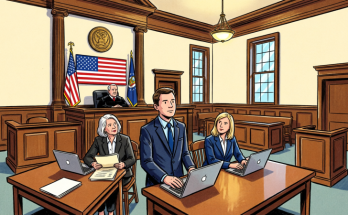
Inside the courtroom, my mother’s lawyer argued about “family bonds” and “a grandmother’s love.” My mother dabbed her eyes dramatically, performing grief like it was her favorite role.
When it was my turn, my lawyer presented the evidence. Calmly. Clearly. Dates, screenshots, documented attempts to bypass school security, patterns of harassment.
Then my dad stood up to speak.
My mother’s face changed the moment she saw him, surprise flashing into anger.
My dad’s voice shook at first, but then steadied.
“My wife is not doing this for Ellie,” he said. “She’s doing it because she thinks Ellie is leverage. Because she thinks if she can get access, she can get control back.”
My mother gasped like he’d slapped her.
My dad continued anyway. “Ellie deserves peace,” he said. “Amanda has given more than anyone should have to give. I’m telling you as Ellie’s grandfather: forcing visitation will not help Ellie. It will hurt her.”
When Ellie was asked if she wanted to speak, she stood up without hesitation.
She looked small in that courtroom, but her voice wasn’t.
“I don’t want visits,” she said clearly. “Grandma called me a problem. She left on my birthday. She tried to pick me up from school without asking my mom. She doesn’t care about me. She cares about winning.”
The courtroom went silent.
My mother’s face twisted, fury leaking through her performance mask.
Ellie kept going. “My family is people who show up,” she said. “Grandma only shows up when she wants something.”
I felt tears sting my eyes, but I didn’t cry. I watched my daughter stand tall in a place designed to intimidate, and I felt something like awe.
The judge listened. Asked questions. Reviewed evidence.
Then, after what felt like a lifetime, the judge denied my mother’s petition.
No court-ordered visitation.
The words settled into the room like a door locking.
My mother’s breath hitched, then she stood abruptly, chair scraping. She glared at me like I’d stolen something from her.
“You’re going to regret this,” she hissed under her breath as she passed.
I didn’t respond.
Ellie didn’t either.
We walked out into the cold January air, and Ellie took a deep breath like she was tasting freedom.
“Is it over?” she asked.
“It’s over,” I said.
Ellie nodded once, then said, “Good. Because I have missions.”
She opened her Saturn notebook and showed me a new page she’d written while waiting.
Mission: Celebrate our peace.
Mission: Don’t let anyone steal our sky.
I smiled, and for the first time in a long time, the future didn’t feel like something I had to fight for every day.
It felt like something we could build.
Together.
THE END!
Disclaimer: Our stories are inspired by real-life events but are carefully rewritten for entertainment. Any resemblance to actual people or situations is purely coincidental.