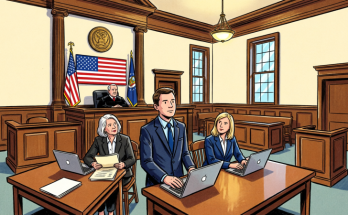
Aarav did not say anything more. He returned to his chair, placed his hands flat on the table, and looked at Priya with that quiet stillness people always mistook for weakness.
Priya adjusted her bangles. “See?” she said to her lawyer. “He doesn’t even understand what is happening. That is why I must step in.”
There it was.
Aarav’s fingers tapped once against the wood.
Mr. Menon looked at him, confused.
Priya continued, encouraged by the silence. “Amma has done what she could, but she is old. Poor. Emotional. This boy needs proper management now. He needs someone practical.”
“Someone practical,” I repeated.
She did not hear the warning in my voice.
Her husband finally spoke. “We’re not here to fight. We’re here to protect the asset.”
The asset.Aarav lifted his head.
“What asset?” he asked softly.
Priya smiled, the way adults smile when they think a child has asked a foolish question. “Your company, beta. Your future.”
“My future,” Aarav said.
“Yes. And because you are still under eighteen, I can legally help you. You may be brilliant with computers, but life is different. Money is different. Businessmen will cheat you. Your grandmother cannot understand these things.”
I wanted to slap the pity from her face.
But Aarav had told me to let her speak.
So I did.
Priya leaned forward. “We can make this easy. You come live with me. We will get you a proper room, proper doctors, proper clothes. I will handle meetings. I will sign papers. I will make decisions.”
“Will Nani come?” Aarav asked.
Priya’s smile tightened. “That may not be best.”
My breath stopped.
Aarav nodded slowly, as if confirming an answer on a test.
“Why?” he asked.
Priya sighed. “Because she has filled your head. She has made you dependent. She is attached to the money now.”
My knees weakened. Eleven years of hunger, fever, sleepless nights, school rejections, therapy bills, and scraped coins from steel boxes—and she called it attachment to money.
Mr. Menon stepped forward. “Ms. Priya, I advise you to choose your words carefully.”
Her lawyer placed a hand on the folder. “My client is speaking as a concerned mother.”
Aarav turned toward him. “Concerned mothers leave?”
The room froze.
Priya’s face flushed. “You don’t understand what happened.”
“I understand dates,” Aarav said. “You left on June 14th. 8:37 p.m. Monsoon rain. Blue suitcase. Auto-rickshaw number MH12 Q 7441. Nani paid the driver because you said you had no change.”
The color drained from Priya’s cheeks.
Aarav continued, his voice flat but clear. “You said, ‘I cannot live my whole life for this.’ Then you did not call for eleven years, three months, and nine days.”
Her lawyer shifted.
Priya recovered quickly. “Children remember things wrongly. He was five.”
“I remember patterns,” Aarav said. “And I remember pain.”
For the first time, my daughter looked afraid of him.
Then Aarav opened his laptop.
The screen glowed against his face. He typed a password. Once. Twice. A folder appeared. He clicked it.
“Mr. Menon,” he said, “please play the file named ‘Mother_Return_01.’”
Priya stood. “What is this?”
Mr. Menon stared at the screen. “Aarav?”
“The door camera,” Aarav said. “I installed it after the investor meetings. Audio too. Legal for home security. Nani knows.”
I had forgotten about the tiny black camera above the calendar of Lord Ganesha.
Aarav clicked play.
Priya’s voice filled the room.
“I came for my son.”
Then the lawyer’s voice.
“Manage his estate, business interests, and financial decisions.”
Then Priya again.
“I am only doing what is best for my son.”
Aarav paused it.
“That is not enough,” he said. “Keep speaking.”
Priya’s lawyer snapped, “Stop this recording immediately.”
Aarav looked at him. “No.”
One small word. But it carried eleven years of silence behind it.
Priya pointed at me. “You taught him this.”
“No,” Aarav said. “You did.”
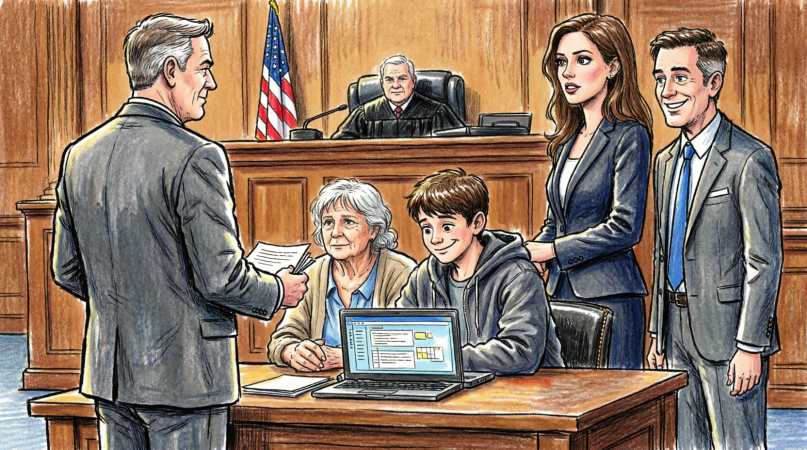
Her face twisted. “Enough. You are a child. You are autistic. You don’t know how ugly the world is.”
“I know,” Aarav said. “You were my first proof.”
No one moved.
Then Priya made her mistake.
She threw the mask away.
“You think you can insult me?” she shouted. “I gave birth to you. Without me, you are nothing. That old woman kept you alive, fine. But I am your mother. The law will see that. You don’t even know how to speak to investors without shaking. You can’t attend one loud meeting without headphones. You think you can run a company? You need me. And whether you like it or not, I will control every rupee until you are old enough—and after that, we will see.”
Aarav’s eyes did not blink.
“Thank you,” he said.
Priya looked confused.
Aarav turned the laptop toward Mr. Menon. “Second folder.”
Mr. Menon opened it. His eyes widened.
“What is this?” I whispered.
Aarav touched my hand. “The reason I smiled.”
On the screen were scanned papers. Not one or two. Many.
Company incorporation documents.
Intellectual property assignment.
Board resolutions.
Trust deed.
Letters from investors.
Medical capacity evaluation.
A notarized statement.
Mr. Menon read faster and faster, and with every page his face changed from fear to disbelief to something like joy.
“Aarav,” he whispered, “when did you do all this?”
“Three months ago,” Aarav said. “Investor uncle said sudden money brings sudden relatives. I researched. Then I asked him to help me contact proper lawyers. Not to replace you, Menon uncle. For company law.”
Mr. Menon laughed once, breathless. “Replace me? Beta, today I am happy to be replaced.”
Priya’s lawyer snatched one paper, read it, and went still.
“What is it?” Priya demanded.
Aarav answered for him.
“The app is not mine alone. The code belongs to a private company. I own shares, but voting control is held by a protective trust until I turn twenty-one. Nani is trustee. Two independent trustees must approve major decisions. No single guardian can transfer ownership.”
Priya stared at him.
“The money from the investment,” he continued, “is not in my personal account. It is company capital. Founder salary is limited. Education fund is protected. Nani’s medical fund is protected. No parent can touch it.”
Her husband stepped forward. “That cannot be legal.”
The lawyer said nothing.
That silence was answer enough.
Aarav opened one more file.
“This is my statement,” he said. “Recorded before a child welfare counselor. It says I do not want to live with Priya Rao. It says I consider Shanta Rao my primary caregiver. It includes school records, hospital records, therapy bills, neighbor statements, and proof of abandonment.”
Priya’s lips parted. “You planned this?”
Aarav looked at her.
“No. I protected us.”
Us.
Not me.
Us.
I had spent eleven years protecting him from the world. Quietly, secretly, patiently, he had grown strong enough to protect me back.
The next week, we went to court.
I had never been inside a courtroom before. The benches were hard. The fans turned lazily overhead. Priya came in a pale blue saree this time, softer, simpler, as if cotton could make her innocent.
When the judge asked her why she had returned after eleven years, she cried.
Real tears, perhaps.
Or practiced ones.
She said she had been young. Depressed. Afraid. She said poverty had broken her. She said she had thought of Aarav every day.
I looked at my grandson.
He sat beside me with headphones around his neck, not over his ears. His hands were clasped tightly, but he did not hide.
Then Mr. Menon played the recording.
Priya’s own voice filled the courtroom.
“Protect the asset.”
“Control every rupee.”
“You are autistic.”
“You need me.”
No one interrupted.
Even the ceiling fan seemed to slow.
After that, Mr. Menon submitted the documents. The court-appointed counselor submitted her report. Aarav answered the judge’s questions himself.
The judge asked, “Do you understand who Priya Rao is?”
Aarav said, “Yes. Biological mother.”
“Do you wish to live with her?”
“No.”
“Why?”
He took three breaths.
Then he said, “Because she came back for money before she came back for me.”
Priya began sobbing.
Aarav did not look at her.
The judge dismissed her emergency petition. She refused financial guardianship. She ordered that my caregiving role be formally recognized and that any future contact would require Aarav’s consent and counseling approval.
When the gavel fell, I did not understand all the legal words.
I only understood that my grandson was not being taken from me.
Outside the courtroom, Priya waited near the steps.
For the first time, she had no lawyer speaking for her.
“Amma,” she said.
I stopped, though every bone in my body wanted to keep walking.
She looked older in the sunlight. Smaller.
“I made mistakes,” she whispered.
“Yes,” I said.
“I was alone too.”
“So was he.”
Her eyes filled again. “Can I at least talk to him?”
I turned to Aarav.
For many years, I had answered for him because the world would not wait for his words. But that day, I waited.
Aarav looked at Priya.
“No,” he said.
Priya flinched as if slapped.
He added, “Not today. Maybe not ever. That is my decision.”
Then he took my hand and walked down the steps.
That night, Pune smelled of rain and frying onions. Our flat was the same small flat. The wall still had a damp patch near the window. The dining table still had one shaky leg. The blue toy train still sat on the shelf above Aarav’s books.
I made dal.
Aarav chopped coriander too finely, the way he always did.
For a long time, we ate without speaking.
Then he said, “Nani.”
“Haan, beta?”
“Are you sad?”
I placed my spoon down.
I could have lied. Grandmothers are famous for lying with love. We say we are not tired when our knees burn. We say we have eaten when the rice is not enough. We say we are fine when our hearts are breaking quietly.
But Aarav had always deserved the truth.
“Yes,” I said. “A little.”
His shoulders tightened.
“Because of me?”
I reached across the table and touched his wrist, lightly, the way he liked.
“Never because of you. I am sad because my daughter forgot how to be a mother. But I am not sorry. Not for one day with you.”
He stared at the dal.
“I was afraid,” he said.
“In court?”…………………………………………………………………………………………………………………………………………………………………………………………………………………