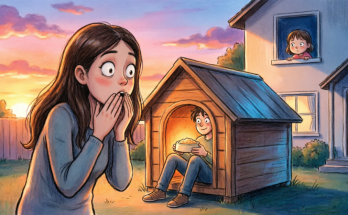
I wanted to confront him. I wanted to slam the vasectomy record on the table and demand an explanation. I wanted to ask him how he could hold me while I cried and still lie by omission. I wanted to scream at him for letting his parents treat me like a broken appliance.
But Sophie’s voice echoed in my head: Not yet. Not alone. Not without a plan.
So I waited.
Waiting is its own kind of violence, but it can also be strategy.
Thanksgiving arrived like a deadline.
I dressed carefully. Navy dress. Pearl earrings—my grandmother’s, not Gloria’s, because something in me wanted my own lineage against theirs. I put on lipstick the color of blood, the kind that says, I am here, and I am not small.
Daniel barely looked at me as we drove to the club. His hands gripped the steering wheel too tight. His jaw worked like he was chewing something bitter.
“You okay?” I asked.
“Yeah,” he said. “Just… holiday stress.”
I glanced at him. He didn’t glance back.
At the club, the coat check attendant smiled and took our coats. The hallway smelled faintly of polish and old money. The private dining room doors were heavy, the kind designed to muffle anything inconvenient.
Inside, the room hummed with polite conversation and expensive perfume. Gloria kissed cheeks. Mason shook hands. People laughed too loudly.
Sophie caught my eye across the room and gave me a small nod.
I didn’t know what Mason was planning until he slid the folder to me. I didn’t know he would do it at the table, in front of everyone. I didn’t know he would bring Vanessa in like a trophy.
But I knew, the moment my fingers touched the divorce papers, that Sophie had been right to prepare me.
Because what Mason did wasn’t just about ending a marriage. It was about humiliation. It was about control. It was about showing me my place.
So I signed.
I signed because I refused to give him the scene he expected. I signed because I refused to beg. I signed because in that moment, I realized something: Mason’s power depended on people reacting the way he wanted. If I didn’t react, if I stayed calm, I took something from him.
And I signed because Sophie had told me something the night she brought those papers: “Sometimes you sign first so you can speak second,” she’d said. “Sometimes you let them think they won so you can control what happens next.”
So I signed, and then Sophie stood.
When Mason pulled the first document from her envelope, his confidence began to drain.
He read the header. Evanston Urology Center. Medical record. Bilateral vasectomy.
I watched Mason’s eyes move across the words. I watched his mouth tighten. I watched a faint tremor appear in his hands, small at first, then harder to hide.
He read it again, slower.
Then he pulled out the second document—the pregnancy confirmation. Blood work dates. An ultrasound image with a printed heartbeat rate beside it, the tiny flicker of proof frozen into grayscale.
Mason’s face went pale in a way that reminded me of water draining from a bathtub. Slowly at first, then all at once.
He looked up at Daniel.
“Is this—” Mason started, voice rough, and for the first time I heard something in it that wasn’t authority. Confusion. Panic.
“It’s real,” Sophie said calmly. “Both of them. The medical record is certified. The pregnancy is confirmed by her OB with blood work dated eleven days ago.”
The room passed quiet and went somewhere else entirely.
No one moved. It felt like the air had been sucked out and everyone was holding their breath in the vacuum.
Gloria’s lips parted. “Daniel,” she said, and her voice sounded scraped clean, like someone had sanded away the polish.
Daniel stared at the tablecloth. His jaw was tight. He looked like a man trying not to drown in a room full of water.
I turned toward him, and my voice came out steady, almost eerily so. “You had a vasectomy,” I said.
Not a question. A fact.
Daniel didn’t answer.
“Four years ago,” I continued, because I needed to say it out loud, because words make truth solid. “Before we met. And you never told me.”
Still nothing.
“You sat at this table,” I said, my gaze flicking briefly to the faces around us, “and you let your father slide divorce papers at me because I—quote—failed to provide an heir. And you knew. You have known the entire time.”
Something moved across Daniel’s face then. Not full guilt. Not a sobbing apology. More like the edge of guilt, the outline of it—the look of a man who has spent years carefully not thinking about something and has just been forced to think about it all at once.
“Rachel,” he said quietly, and his voice cracked on my name.
“Don’t,” I said.
The word was sharp and calm, and it cut him off completely.
I turned back to Mason. He was still holding the papers. His fingers had gone stiff around them like he didn’t know whether to crush them or let them fall.
“You spent two years,” I said, and my voice remained steady even as my chest burned, “treating me like I was broken.”
Mason’s mouth opened, then shut.
“You sent your wife’s articles about fertility diets to my email address,” I continued, eyes flicking to Gloria. “You made comments at dinner about decisions and timelines and legacy. You sat me down in your study after our first anniversary and told me the Hargrove family had certain expectations and that you hoped I understood what was at stake.”
I paused, letting the words settle.
“You brought another woman to Thanksgiving dinner,” I said softly, “and had her wear your wife’s jewelry.”
Gloria flinched like I’d slapped her.
Mason’s nostrils flared. He was a man unused to being named.
“And your son,” I said, turning my gaze back to Daniel for a beat, “never told any of you the truth. Not once. Because it was easier to let everyone believe it was me.”
The room held its breath.
Vanessa, standing near the wall now, shifted slightly. Her face had lost its coached confidence. She looked, suddenly, like someone who had walked into a room under false pretenses and wasn’t sure how to leave without being burned.
I looked at Mason again.
“I’m going to have this baby,” I said.
My voice didn’t rise. It didn’t need to.
“My baby,” I added, and the possessiveness in my tone surprised even me. But it wasn’t the possessiveness of ownership. It was the possessiveness of protection. “Mine. Not the Hargroves’. Not anyone’s legacy.”
Mason’s throat bobbed as he swallowed.
“This child will be raised with my grandmother’s stories and my mother’s steadiness,” I continued, and my gaze flicked briefly to my mother in my mind, to Sophie standing like a guardian. “He’ll have Sophie at every birthday. He’ll know exactly what kind of people his father’s family are.”
Gloria made a sound—a soft, broken inhale.
“Which is why,” I said, “they will not be part of his life.”
Vanessa spoke then, very quietly, as if afraid to break the room further. “I didn’t know,” she said.
I looked at her.
She held herself very still. Her hand was clasped around her wrist like she was restraining herself. Her eyes were wide, not with malice, but with shock. For the first time, she looked young.
“I know,” I said, surprising myself with the gentleness. “I can see that.”
Vanessa’s lips parted like she wanted to say more, but she didn’t. She glanced at Gloria’s pearls in her ears as if suddenly aware they were evidence too. Then she turned and walked out of the dining room without drama, slipping through the arched entrance like a ghost exiting a haunted house.
Mason stared at the door she’d left through, then back at the papers in his hands.
Sophie’s voice stayed calm, almost professional. “If you need clarification,” she said, “the OB is prepared to provide additional documentation regarding conception possibility post-vasectomy. There is medical literature on partial reversal over time. It’s rare, but documented.”
Harold, Mason’s business partner, cleared his throat and—because Harold was apparently incapable of fully inhabiting drama—picked up his fork and took a bite of pie.
The sound of silverware against plate was absurdly loud.
I picked up my purse.
I found Sophie’s eyes across the table. She nodded once, barely perceptible. The nod of someone who had driven to my apartment at nine at night with proof and held my hand through an ultrasound and sat through Thanksgiving dinner like a quiet lit fuse waiting for the right moment.
I loved her so much in that moment it almost knocked the breath out of me.
“The signed papers are in front of you,” I said to Mason, and my voice stayed even. “I imagine your lawyers can take it from here. I’ll have my lawyer contact yours on Monday.”
Mason’s jaw tightened, but he didn’t speak. He couldn’t. Not with twenty-two witnesses watching his control slip.
I looked at Daniel one last time.
He finally looked up. His eyes were red-rimmed, his face drawn. He looked like someone trapped in the consequences of his own silence.
I waited for an apology. Not because it would fix anything, but because it would prove he was human.
Daniel’s lips moved, but no sound came out.
I realized, in that moment, that he truly didn’t have a voice of his own. Not against Mason. Not against Gloria. Not even for me. His whole life had trained him to survive by disappearing.
And I could not build a life on someone’s disappearance.
I turned away.
I walked out of that dining room, through the wood-paneled hallway, past the coat check attendant and his jazzy radio, and out through the heavy front doors into the cold November air.
The club’s stone steps were cold against the backs of my thighs as I sat down. My breath came out in pale clouds. The parking lot lights made small gold circles on the asphalt. Somewhere far away, a car engine started. Somewhere closer, someone laughed, the sound muffled by the building.
I sat there and breathed.
For two minutes, I just breathed.
Then the door opened behind me.
Sophie stepped out and sat down beside me, handing me my coat. She must have collected it from the coat check while I walked out. She slipped it around my shoulders like she was wrapping me in safety.
“You okay?” she asked.
“I don’t know yet,” I admitted, and the honesty felt like a relief.
“That’s honest,” Sophie said. “What’s happening in there?”
“A lot,” Sophie replied after a beat. “Gloria is crying. Mason is yelling at Daniel very quietly, which is somehow worse than regular yelling. Vanessa left out the side door. Harold is eating his pie because Harold is a practical man.”
I laughed.
It surprised me, the laugh. It came up from somewhere underneath the grief and exhaustion, from a place I didn’t know I still had access to. It wasn’t joy. It was release—pressure leaving my chest.
“He’s going to fight the divorce terms,” I said, voice low. Not Daniel—Mason. Mason would fight because Mason didn’t lose.
“Let him,” Sophie said, and there was something fierce in her calm. “The house is in your name equally. We have two years of documented fertility pressure. We have the vasectomy record. We have the Thanksgiving witnesses. If he looks at you sideways, I will personally turn this into a civil harassment claim and hand it to a judge like a gift.”
I leaned my head against Sophie’s shoulder. Her coat smelled like her—laundry detergent and peppermint gum.
“You’ve been thinking about this for a while,” I murmured.
Sophie snorted softly. “Since the second time Gloria forwarded you a fertility article,” she said.
“I’ve been ready for eight months,” I admitted.
My stomach twisted as I said it, because admitting it meant admitting I’d been unhappy longer than I wanted to acknowledge. It meant admitting that the marriage I thought I was building had been cracking for almost a year.
Above us, the sky was clear and cruelly cold. Chicago in November doesn’t do gentle. It does honest.
“I’m scared,” I whispered. “About the baby. About doing it by myself. About all of it.”
Sophie’s arm tightened around my shoulders. “You’re not by yourself,” she said. “You have me. You have your mom. And you have your grandmother’s pearls, which, for the record, look much better on you than the ones Gloria gave away tonight.”
I touched my earrings automatically.
“They really do,” Sophie added, and her voice softened. “And your kid is going to have the most stubborn, loyal, terrifyingly competent women in his corner.”
I exhaled shakily, letting her words settle into the empty places inside me.
Two minutes later, my phone buzzed.
A text from Daniel: Please come back inside. Please.
I stared at it, then set my phone face down on the stone step.
“No,” I said quietly, mostly to myself.
Sophie nodded as if she heard the decision click into place.
The divorce took five months.
People imagine divorce as one dramatic courtroom scene, one speech, one final gavel. In reality, at least for me, it was paperwork and meetings and waiting. It was lawyers explaining things I already half-knew and Sophie translating the legal language into plain words. It was Daniel’s lawyers trying to negotiate politely while Mason’s ego thrashed behind the scenes.
At first, Mason did try to fight.
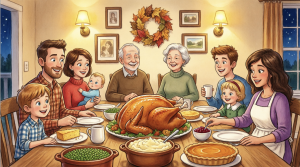
His attorney sent letters that sounded firm and offended. They questioned the validity of documents. They floated the idea that the pregnancy “raised concerns.” They hinted, delicately, at paternity.
Sophie’s firm responded with a different kind of letter—one that did not hint. It laid out the evidence like a table set for dinner: the vasectomy record, the fertility pressure emails, the forwarded articles, the texts, the Thanksgiving witnesses, the OB’s medical statement about vasectomy failure rates and documented partial reversals.
It also included, at Sophie’s suggestion, a single sentence that made Mason’s attorney go very quiet:
Any attempt to malign Ms. Hargrove’s character or insinuate infidelity will be met with immediate action for defamation, emotional distress, and harassment, supported by a documented pattern of fertility coercion.
Sophie called me after that letter went out. “They’re going to fold,” she said. “Not because they suddenly grew a conscience. Because Mason cares more about how this looks than about being right.”
Three weeks later, Daniel’s lawyers called Sophie’s firm and said their client was prepared to be cooperative.
Cooperative. Like a child agreeing not to throw a tantrum.
The settlement ended up fair—not generous, not vindictive. Fair. The house was mine. The financial settlement wasn’t life-changing, but it was enough to steady the ground. Daniel agreed to terms regarding the baby that made one thing very clear: he would not be part of the child’s life.
I didn’t know whether that agreement came from guilt, fear, or relief. Maybe all three.
Mason Hargrove turned out to be, above all else, a man who cared deeply about appearances. A contested divorce with documented spousal pressure and a vasectomy he hadn’t known about looked bad—bad for his club, bad for his business, bad for his legacy. He chose to let me leave cleanly rather than risk me dragging the truth into public.
There was no apology. There was no admission of wrongdoing. There was only damage control.
Fine. I didn’t need their words anymore. I needed my own life.
In January, I asked my mother to move in.
She didn’t hesitate. She sold her small townhouse in Indianapolis with a calm efficiency that made my heart ache. She drove up with boxes labeled in neat handwriting. She took the second bedroom and insisted on paying rent—token rent, an amount I told her was unnecessary.
She paid anyway because she is Linda Chambers, and she believes in contributing, not owing.
My house—my house now, in my name—changed when my mother moved in. It got warmer. Not just in temperature, but in feeling. She cooked soup on Sundays without being asked. She hummed while she folded laundry. She watched me with quiet concern and didn’t treat my independence like an inconvenience.
Some nights, I woke up panicking, hand on my stomach as if checking the baby was still real. My mother would appear in the doorway, hair messy, and sit on the edge of my bed without speaking until my breathing slowed.
“You’re safe,” she’d say softly.
And slowly, I started to believe her.
My son was born on a Tuesday in late June.
Labor is not like movies. It is not one neat scream and then a baby. It is hours of pain that feels like your body is trying to split open and become something new. It is time moving strangely. It is sweat and shaking and cursing and then, suddenly, a moment of silence right before the world changes.
Sophie was in the delivery room. My mother was in the delivery room. They argued the entire time about whether the TV in the corner should be on or off.
“Turn it off,” my mother insisted. “She needs calm.”
“She needs distraction,” Sophie argued. “Put on something mindless.”
“I don’t want to hear commercials while my daughter is pushing a human out of her body,” my mother snapped.
“I don’t want her focusing on the pain!” Sophie shot back.
Meanwhile, I was gripping the bed rail and thinking, If you both don’t shut up, I will name this child Spite.
And somehow, in the middle of the pain, I loved them both so much I didn’t care.
When James finally arrived—red-faced, furious, perfect—my world narrowed to one sound: his first cry. It was raw and righteous. It sounded like insistence. Like a declaration.
My mother sobbed openly. Sophie wiped her eyes, pretending she had something in them. The nurse placed James on my chest, and his skin was warm and damp, his little body heavy with life.
He had dark hair—thick, already curling slightly at the edges. My mother said he had my grandmother’s mouth. Sophie said he had my stubborn chin.
I named him James after nobody in particular because I wanted him to be his own beginning.
I didn’t name him after Mason. I didn’t name him after Daniel. I didn’t name him after legacy. I named him something simple and solid, a name that could belong to anyone and no one.
James.
Mine.
In the months that followed, my life became small in the best way: feedings, naps, diaper changes, tiny socks that vanished in laundry, the way James stared at ceiling fans like they were gods. My mother read to him in the afternoons, her voice steady. Sophie visited constantly, sometimes to hold James, sometimes to sit at my kitchen table and make sure I was eating something besides toast.
Sometimes, in the quiet, grief would rise unexpectedly. Not grief for Daniel, exactly, but grief for the version of my life I had believed in: the idea of a partner who would stand beside me, the idea of being welcomed into a family, the idea of joy shared instead of bargained.
When grief rose, I let it. I didn’t shove it down to be “fine.” I didn’t apologize for it. My therapist—yes, I got a therapist, because Sophie would have personally scheduled one for me if I hadn’t—told me grief is not weakness. It’s processing.
Processing. Another word from my world of spreadsheets, suddenly applied to the heart.
Through Marcus—who eventually stopped seeing Sophie but somehow stayed in touch with me anyway—I heard rumors about the Hargroves.
Vanessa left by December. Marcus said it like an aside, but I noticed the timing. Vanessa had walked into that Thanksgiving dinner confident, coached, wearing Gloria’s pearls like a crown. She walked out looking like a woman who had realized she was being used as a prop.
Mason suffered some kind of professional humiliation—some business deal that collapsed. Marcus insisted it was unrelated, but he also mentioned, quietly, that several of Mason’s longtime associates stopped returning his calls around the same time.
Gloria began going to therapy on Tuesdays. Marcus mentioned it casually, as if it were gossip, but it sat in my mind in a strange, unbitter way. Therapy meant something had cracked. Therapy meant Gloria had looked in a mirror and seen something she couldn’t ignore.
Daniel moved to Seattle.
I didn’t ask for details. I didn’t want them. Daniel was a chapter of my life that taught me something hard and important. I didn’t need to keep rereading it.
Sometimes, late at night while James slept, I would think about Daniel—not with burning anger, because anger takes up space and I had a baby who needed all of mine, but with a kind of quiet sadness.
Daniel had been shaped by his father’s voice the way clay is shaped by hands. Mason’s expectations had molded him. Gloria’s quiet approval had rewarded compliance. Daniel had learned to survive by being agreeable, by avoiding conflict, by disappearing.
He made a private decision four years before he met me. A permanent decision. And then he lacked the courage to speak it.
In trying to protect himself from his father’s disappointment, he made me the target of it instead.
He lost in the end—not because of the divorce, not because of the settlement, but because he would never know his son.
James, at seven months old, did not know any of this.
He was deeply interested in ceiling fans and my mother’s reading glasses. He laughed when Sophie made a particular face—one that scrunched her nose and widened her eyes like a cartoon. He fell asleep in the car within minutes of any highway on-ramp. He was, as far as I could tell, entirely himself from the very beginning: unhurried, particular, completely unimpressed by legacy.
One Sunday afternoon in February, I was sitting on the living room floor with James, stacking soft blocks that he immediately knocked over and then studied with deep seriousness, when my mother came in from the kitchen and sat on the couch behind me.
She watched us for a moment. Then she said, “You know what you did at that dinner?”
“What?” I asked, handing James a blue block that he tried to eat.
My mother’s voice was thoughtful. “You didn’t leave before you signed,” she said. “You signed first. You read every page and you signed, and then you said what needed to be said.”
I blinked, surprised she’d been thinking about it like that. “Okay,” I said cautiously. “And?”
My mother leaned forward slightly. “Most people would have either run out or caused a scene,” she said. “They would have given Mason exactly what he wanted: a spectacle he could use to paint them as unstable.”
She paused.
“You did it properly,” she said.
The word struck me—properly—because it was a word my mother used about thank-you notes and table settings and the way you address elders. Properly was a word of manners.
But here, she used it like a word of courage.
I thought about the way my hand had moved across those pages, signature after signature. I thought about how terrified I’d been, how my stomach had churned, how my heart had pounded—and how I’d stayed calm anyway.
“I was terrified,” I admitted.
“I know,” my mother said, and her voice softened. “That’s what made it proper.”
James looked up at me with large, even eyes, as if he too found this a reasonable point. He shoved the blue block into his mouth with determination.
I took it gently from him and handed him the green one instead. He considered it for a moment, then accepted it, apparently satisfied.
Outside the window, Chicago in February was gray and cold and entirely indifferent. Cars moved through slush. The sky hung low. The city didn’t care about my divorce or my baby or the Hargroves.
But inside the house, it was warm. Something simmered on the stove—my mother’s soup, the one she made every Sunday without being asked. James’s laughter bubbled when Sophie’s name popped up on my phone and I put her on speaker, because James had somehow learned her voice meant silly faces were coming.
Somewhere across town, Sophie was probably on the phone giving someone calm, thorough advice about their options, because that’s what Sophie does: she helps people build exits and futures.
I looked around my living room—the soft blanket on the couch, the baby toys scattered like evidence of life, my mother’s knitting bag tucked into the corner, the framed ultrasound photo on the shelf—and I thought, This is the life I’m building.
Brick by careful brick.
Not on the foundation someone else laid for me. Not on a legacy designed to trap me. Not on a marriage held together by silence.
On ground I chose, kept, and stood on.
Even when it shook, it was enough.
It was actually more than enough.
And sometimes, when James drifted to sleep with his tiny fist curled around my finger, I would think of that Thanksgiving table—the manila folder, the waiting quiet, the pearls glittering like borrowed power—and I would feel, not triumph, but clarity.
They thought they were ending me.
They were only giving me the final proof I needed to start.