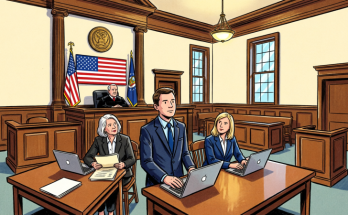
I took my time. I read every page. I let my eyes travel across each line, each clause. Division of property. Settlement amount. A six-month maintenance offer. A tidy, controlled exit designed to keep the Hargroves unblemished. I noticed what wasn’t there, too—no mention of infidelity, no mention of children, no mention of fertility. Just clean legal language that made the dissolution look mutual, civilized.
My hands were steady, which surprised me. I had expected to shake, to rage, to collapse. Instead, something in me went cold and clear, the way it does when you realize a building is on fire and your only job is to get out.
When I finished reading, I set the folder down.
Mason leaned forward slightly. “The terms are more than generous, Rachel. You’ll keep the house. There’s a settlement. Six months—”
“I know what the terms say,” I said. My voice sounded calm, and that calm startled even me. “I just read them.”
Mason’s lips curved in satisfaction. He nodded as if he’d taught me something.
Daniel still hadn’t looked at me.
“There’s one more thing,” Gloria said.
Her voice was careful, rehearsed. She stood and moved to the arched entrance of the dining room. She gestured to someone in the hallway.
A woman walked in.
She was maybe twenty-six or twenty-seven. Dark hair, styled. Green dress that fit like it had been tailored. Shoes that cost more than the rent on my first apartment. She smiled at the room with the confidence of someone who had been coached on exactly how to smile in exactly this room.
She walked toward Daniel’s side of the table.
Daniel’s body stiffened, but he didn’t stand.
She leaned down, close to his ear, and whispered something I couldn’t hear.
The pearl earrings she wore caught the light.
And my stomach dropped.
I recognized them instantly. I had seen those pearls in Gloria’s jewelry box eighteen months earlier, when Gloria had shown me her “family pieces” the way some women show off heirloom china. She’d run her thumb across those earrings and said, “These have been in the Hargrove family for three generations. I can’t wait to pass them down.”
She had passed them down.
Just not to me.
Mason’s voice cut through my thoughts. “Rachel,” he said, as if I needed instruction, “this is Vanessa.”
Vanessa. The woman from the photograph in the hallway. Daniel’s college girlfriend. The one Gloria still displayed like a relic of a better future.
“Daniel and Vanessa have known each other a long time,” Mason continued. “She’s a wonderful woman. And she—well, she doesn’t need your introduction.”
The implication hung in the air like smoke.
Vanessa stood beside Daniel, her hand resting lightly on the back of his chair as if she already belonged there. Gloria watched her with a satisfaction that made my skin crawl.
Daniel still didn’t look at me.
My fingers closed around the pen.
I signed the divorce papers. Every page, every line that required my name. I took my time with each signature. The room stayed so quiet I could hear the coat check attendant’s radio faintly playing jazz down the hall, the saxophone sliding through notes like nothing in the world mattered.
When I finished, I closed the folder and placed it back in front of Mason.
Then I looked at Daniel one last time.
“You could have talked to me,” I said. I kept my voice even, but I felt the words scrape on the way out. “That’s all I ever needed from you. For you to just talk to me.”
Daniel’s jaw tightened. His eyes flicked up—briefly, almost painfully—then dropped again.
He didn’t say anything.
I hadn’t expected him to. But I needed to say it anyway, for myself, so that years later I would remember: I gave him the chance. I named what he refused to name.
I folded my napkin neatly, because even in betrayal, my body remembered manners.
I pushed back my chair.
And that’s when Sophie stood up.
Sophie had been so quiet through the entire performance that I think most of the room had forgotten she was there. She hadn’t eaten her pie. She hadn’t touched her wine. She’d sat with her hands folded in her lap like someone waiting for the right moment to strike a match.
Now she stood and reached into her jacket.
“Before Rachel leaves,” Sophie said, her voice level and calm, “I have something for Mason.”
Her tone made heads turn.
She pulled out a small brown envelope and held it across the table.
Mason stared at it like it was an insult. Then he looked at Sophie. Then at me.
“What is this?” he asked.
“Open it,” Sophie said.
Mason didn’t move at first. He was accustomed to being the one who handed things to other people, not the other way around. He sat there for a moment, looking at the envelope like it might bite him.
Gloria’s voice cut in, soft but sharp. “Mason.”
Very slowly, Mason picked it up. He opened the flap.
I watched his face as he pulled out the first document.
I had seen the contents eleven days earlier, in my apartment, at nine o’clock at night, when Sophie arrived without calling first.
I remember the way she’d knocked—quick, urgent. I remember opening the door to find her standing there with no coat despite the cold, a stack of papers tucked under her arm like evidence.
“I need you to look at these,” she’d said without preamble. “And I need you to be brave.”
My stomach had dropped then too, but in a different way. That night, my life was still technically intact. Daniel was still my husband. We still slept in the same bed. I still had reasons—thin ones, maybe, but reasons—to believe the marriage could be repaired.
Sophie stepped inside, kicked off her shoes, and sat at my kitchen table like she owned it, which was one of the things I loved about her. She placed the stack of papers between us.
“What is this?” I’d asked.
Sophie’s eyes held mine. “Proof,” she said. “And a plan.”
Eleven days earlier, I was still learning how to hold proof without it shattering me.
It started with the pregnancy test.
I hadn’t even meant to take it. I’d been tired, nauseous in the mornings, and my cycle had always been irregular because of PCOS. I’d blamed the fatigue on stress and the nausea on my stomach being irritated from yet another “fertility friendly” diet Gloria had sent me—a diet that had me eating more chia seeds than any human should.
But one morning, while Daniel was in the shower, I opened the bathroom drawer and stared at the box of tests I’d bought months earlier “just in case.” There was one left.
I took it almost as a joke, almost to prove to myself that my body was still doing the same frustrating thing.
I set it on the counter and brushed my teeth, not letting myself hope.
When I glanced down again, two lines stared back at me.
For a full minute, my brain refused to process it. Like the concept of pregnancy belonged to other women, other stories, not mine.
Then my knees went weak.
I slid down to the bathroom floor and laughed once—a sound that turned into a sob so fast I barely recognized it as mine.
I pressed my palm against my stomach, which still felt like my stomach, flat and ordinary, and whispered, “No way,” like someone might be listening.
Daniel knocked on the bathroom door. “Everything okay?” he called.
“Yes,” I choked out, wiping my cheeks quickly. “Just—dropped something.”
I don’t know why I lied. Habit, maybe. The instinct to protect good news until it’s safe.
I took another test later that day. Positive. Then another. Positive again.
I called Sophie first, because Sophie is the person you call when you need reality more than romance.
She answered on the second ring. “Hey, accountant lady. What’s—”
“I’m pregnant,” I whispered, and my voice cracked.
There was a pause so brief it was almost a blink. Then Sophie said, “Okay. Sit down. Breathe. Tell me exactly what the test said.”
I laughed through tears. “It said I’m pregnant, Sophie.”
“Okay,” Sophie repeated. “Okay. I’m coming over.”
Sophie arrived twenty minutes later with coffee and a bagel like this was a normal crisis she could solve with carbohydrates. She looked at the tests lined up on my bathroom counter like they were a math problem.
“Okay,” she said again, softer. Then she hugged me so hard my ribs hurt.
“I didn’t think it would happen,” I whispered into her shoulder.
“I know,” she murmured. “But it did. That’s real.”

My mother drove up from Indianapolis the next day. She didn’t come with balloons or loud excitement. She came with groceries, a warm coat, and the kind of steady presence that makes chaos feel survivable.
We went to my OB together, Sophie on one side of me, my mother on the other. The nurse called my name, and my knees trembled like I was walking into court.
The ultrasound room was dim. The gel was cold. The doctor moved the wand and frowned slightly—then smiled.
“There,” she said.
On the screen, something tiny flickered. Not a shape I could name yet. Just a pulse. A rhythm.
A heartbeat.
I covered my mouth and cried quietly, tears sliding down my cheeks without sound. My mother’s hand squeezed mine. Sophie’s fingers threaded through my other hand like an anchor.
“Eight weeks,” the doctor said, surprised. “Based on measurements.”
Eight weeks. The number felt impossible and perfect.
On the drive home, my mother kept glancing at me like she was afraid I’d disappear. “You’re sure you want this?” she asked gently, not because she doubted, but because she respected that choice belonged to me.
“Yes,” I said without hesitation. “More than anything.”
Sophie stared out the window, quiet in a way that made me uneasy. That night, after my mother went to bed in my guest room, Sophie sat at my kitchen table with a mug of tea and said, “Rachel, I need you to listen to me.”
I rolled my eyes halfheartedly. “Here we go.”
“I’m serious,” she said. “I’m happy for you. I am. But you are in a family system that treats your fertility like a job performance review. And you are married to a man who cannot stand up to his father.”
I bristled. “Daniel loves me.”
Sophie’s gaze didn’t waver. “Love isn’t the only thing that matters. Power matters. Money matters. Control matters. Your safety matters.”
“I’m fine,” I insisted.
Sophie leaned forward. “Then why haven’t you told Daniel yet?”
The question landed like a stone.
I opened my mouth, then closed it.
I had imagined telling Daniel in a sweet way—wrapping the ultrasound photo in tissue paper, watching his face light up, letting that joy overwrite the last year of pressure and awkwardness. I’d pictured us calling his parents together, hearing Gloria’s shriek of delight, watching Mason’s proud smile.
But when I tried to imagine it, something in my chest tightened. Not excitement. Fear.
Because a part of me knew Daniel would not react the way I wanted him to.
And I didn’t know why.
“I was waiting,” I said weakly. “For the right moment.”
Sophie’s voice was calm, but her eyes were sharp. “Rachel, when people have secret lives, they panic at surprises.”
“Daniel doesn’t have a secret life,” I snapped, defensive.
Sophie held up a hand. “Maybe he doesn’t. Maybe he’s just a coward. Either way, I want you to be protected.”
Protected. The word made my stomach twist.
“From what?” I asked.
Sophie exhaled slowly. “From being trapped,” she said. “From being blindsided. From being treated like the villain if something goes wrong.”
I stared down at my hands. The ring on my finger felt heavier than it used to.
“How do I get protected?” I asked quietly.
Sophie’s mouth tightened. “By getting information,” she said. “By making a plan. By not telling anyone anything until you understand the full landscape.”
“That sounds… paranoid,” I murmured.
“It’s smart,” Sophie corrected. “And you’re smart. You just keep trying to be kind enough that no one can hurt you. But kindness doesn’t stop people like Mason Hargrove.”
My mother, upstairs, shifted in her sleep. The house creaked. Outside, Chicago wind pressed against windows.
Sophie reached into her bag and pulled out a folder of her own—thinner than Mason’s would be, but heavy with intent. “I did some digging,” she said.
“What kind of digging?” I asked, suspicious.
“The kind I do every day,” Sophie replied. “Not illegal. Not magical. Just… noticing things.”
Sophie had always been good at noticing things. In college, she’d been able to tell when our roommate’s boyfriend was lying from the way his voice rose at the end of sentences. She’d been able to predict breakups before they happened. She’d watched people the way I watched numbers.
She slid a page toward me. It was an insurance claim summary printed from a portal.
I blinked. “What is this?”
“Daniel’s health insurance portal,” Sophie said. “The one you have access to because you’re listed as his spouse on the plan. You told me last month you handle the household budgeting. You told me Daniel barely looks at mail. So I asked you for the login to help you find out what your fertility monitoring was costing. Remember?”
I remembered. I’d handed Sophie my phone, grumbling about deductibles and paperwork, and she’d navigated the portal like she’d been born in it.
Sophie tapped the paper. “While I was looking, I saw an old claim,” she said. “Four years ago. Evanston Urology Center. Procedure code that jumped out at me.”
My throat tightened. “What procedure code?”
Sophie’s eyes held mine. “Vasectomy,” she said.
For a moment, my brain refused to process it, the same way it had refused to process the pregnancy test.
“That’s… no,” I whispered. “Daniel would have told me.”
Sophie didn’t flinch. “Would he?” she asked gently, like Ethan Vale might have asked someone the truth with soft eyes.
I stared at the paper. The date. The clinic name. The code.
A high-pitched ringing started in my ears.
“Maybe it’s wrong,” I said, reaching for denial like it was oxygen. “Maybe it’s a billing mistake.”
“Maybe,” Sophie allowed. “So I did more digging. I called the clinic. I didn’t ask for his records. I asked for confirmation that he was a patient, which they couldn’t give me. But they did confirm something else.”
My skin prickled. “What?”
“That the procedure code is correct,” Sophie said. “That they perform elective vasectomies. That the claim amount matches their typical charge. And then—” She hesitated. “Rachel, I didn’t want to go further without you. So I talked to someone at my firm. They pulled something.”
“What?” My voice sounded thin.
Sophie’s jaw tightened. “A certified copy of the operative note,” she said.
I stared at her. “How?”
“Because you’re preparing for legal action,” Sophie replied simply. “Because my firm works with attorneys who can request records through proper channels when there’s a reasonable belief of deception. Because Daniel’s insurance claim provides probable cause that the record exists. Because the attorney I work with is a bulldog when she hears ‘fertility coercion.’”
My stomach rolled.
Sophie slid the second document toward me. It was a medical record, stamped and certified, black ink clean and unforgiving. Bilateral vasectomy. Elective. Patient: Daniel Hargrove. Age: thirty-one.
The room tilted, not physically, but emotionally. Like the ground under my marriage had been pulled away.
Daniel. The man who held me while I cried about PCOS. The man who told me it didn’t matter. The man who sat through dinners while his parents treated me like broken machinery.
He had made a decision—permanent, private—four years before I met him. And he had never told me.
Not when we were dating. Not when he proposed. Not when we were married. Not when his mother forwarded fertility articles like they were instructions. Not when his father slid expectations onto my shoulders.
He had watched silently, passively, cowardly, while everyone blamed me for something his own body had been deliberately altered to prevent.
I covered my mouth with my hand and stared at the record until my eyes blurred.
Sophie’s voice was soft. “Rachel,” she said. “This changes everything.”
My mother came downstairs in her robe, drawn by the quiet. She took one look at my face and moved fast, her presence firm. “What happened?” she asked.
Sophie explained in careful, plain language. My mother listened without interrupting. When Sophie finished, my mother sat down slowly, like she needed to ground herself.
Then she looked at me, and her voice was very calm. “Sweetheart,” she said, “we are going to protect you.”
I started to cry again, silently at first, then in shaking sobs. My mother pulled me into her arms the way she had when I was a child with nightmares. Sophie sat across from us, eyes bright, hands steady.
“I’m pregnant,” I choked out again, like repeating it made it real.
“I know,” my mother murmured. “I know, honey.”
Sophie wiped at her own eyes quickly, as if refusing to make it about her. Then she leaned forward. “Okay,” she said, voice shifting into practical mode. “Here’s what we do. We do not tell Daniel yet. Not until we have a plan. Not until you decide what you want.”
“I want the baby,” I whispered.
“Okay,” Sophie said. “Then we plan for that. We plan for you, and the baby, and the possibility that Daniel and his family are not safe.”
My mother squeezed my hand. “You can come home,” she said immediately. “To Indianapolis. We can make room. We can—”
“No,” I said, surprising myself with the firmness. “I don’t want to run. Not yet.”
Sophie nodded slowly. “Then we don’t run,” she said. “We prepare.”
Eleven days before Thanksgiving, I sat at my kitchen table with my best friend and my mother and stared at proof that my marriage had been built on omission. I felt like someone had opened a trapdoor under my life and I was still falling.
“What about the pregnancy?” I asked, voice small. “What if they accuse me of cheating?”
Sophie’s eyes sharpened. “That’s why the vasectomy record matters,” she said. “It explains why the pregnancy seems impossible. And we have medical documentation that says failure is rare but possible. We get the doctor’s statement. We get blood work dates. We get everything.”
My mother’s voice was steady. “You keep every document,” she said, like she was teaching me something important. “You don’t trust anyone else with the narrative.”
Sophie reached into her bag and pulled out a yellow legal pad. “Okay,” she said. “We list what we know. Then we list what we need.”
It felt surreal, treating my life like a case file, but it also felt… calming. Numbers and lists are my comfort language. This was Sophie meeting me in mine.
“What we know,” Sophie said, writing as she spoke. “Mason and Gloria want a grandchild. They think you’re the obstacle. Daniel has a vasectomy. He hid it. Daniel has been passively allowing you to be pressured and blamed. That means he is capable of letting you take the fall for something he did.”
My stomach twisted. My mother’s hand stayed on my shoulder.
“What we need,” Sophie continued. “We need to understand Daniel’s intentions. We need to know if he’s planning to leave you. We need to know if his family is planning something. We need to protect your assets. We need to protect your custody rights. We need to protect you physically and emotionally.”
“How do we find out his intentions?” I asked.
Sophie’s expression turned grim. “By watching,” she said. “By documenting. By not confronting him without support.”
That night, after Sophie left and my mother went upstairs, I lay in bed beside Daniel and listened to him breathe. His back faced me. He had always slept like that—turned away, curled slightly inward, as if even in sleep he was guarding himself.
I stared at the ceiling and felt something crack inside me—not love, exactly, but trust.
In the days leading up to Thanksgiving, I moved through my life like an actress. I smiled at Daniel. I answered Gloria’s calls with polite warmth. I attended a family dinner where Mason joked about “grandkids” and I forced myself not to flinch.
At home, I hid my prenatal vitamins inside an old tea tin. I scheduled doctor’s appointments under “work meeting” in my calendar. I created a new email folder and saved every fertility article Gloria had sent, every text from Mason that mentioned timelines, every message from Daniel where he said, “They don’t mean anything by it.”
Sophie taught me how to build a record. “If it’s not written down,” she said, “it didn’t happen in court.”
I hated that my life had become something that might need court. But part of me also felt relieved, like I was finally naming the reality I’d been swallowing.
Daniel changed in subtle ways during those eleven days. He became more distant, more careful. He took calls from Mason outside on the porch. He started coming home later from work. When I asked how his day was, he answered with vague words: “Fine,” “Busy,” “Long.”
Once, when I came into the living room unexpectedly, I caught him staring at his phone with an expression I couldn’t read—something like dread.
He looked up too quickly and said, “Hey,” like he’d been caught doing something wrong.
“Everything okay?” I asked, casual.
“Yeah,” he said, too fast. “Just… Dad stuff.”
I nodded, pretending I believed it.
Inside, my chest felt tight…….