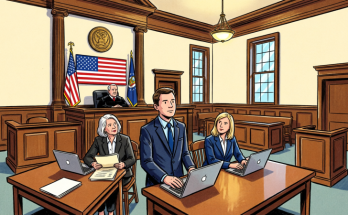
Victoria’s lawyer began sending letters—a cascade of accusations, demands, and veiled threats. They claimed emotional harm, unfair manipulation, improper influence over my mother, hidden documents.
Each envelope stirred a familiar tightness in my chest.
Each time, I forwarded them to Margaret.
She handled them with that same professional precision I’d seen so many years ago at Mom’s bedside.
They have no legal standing, she assured me over the phone. They’re trying to rattle you. Don’t let them. Your mother knew exactly what she was doing, and she followed every requirement to the letter.
Still, the letters stung—not because they had teeth, but because they showed me how determined Victoria was to claw back what she believed she’d lost. Not the memories. Not the history. Just the asset.
When that strategy failed to gain traction, Victoria deployed her favorite weapon: social pressure.
Mutual relatives and family friends began reaching out, some with carefully worded concern.
I heard there was some… disagreement about the beach house, your stepmother told us you’re refusing to share it, sweetheart, are you sure this is what your mother would have wanted?
Others were more blunt.
I can’t believe you’d do that to your father, Alex. After everything he’s been through?
I replied to very few of them.
The truth was, I’d spent most of my life trying to prove I wasn’t difficult. That I could bend, compromise, shrink myself to fit the spaces Victoria allowed me to occupy. Standing my ground now felt strangely, wildly, like breathing fresh air after years in a cramped room.
Still, it was lonely sometimes.
One sunny morning, as I was repainting the porch railing—this time a softer white that matched my memories more than the glossy showroom shade Victoria had chosen—I heard a car door slam.
I expected it to be the property manager or maybe a neighbor. Instead, when I turned, cloth rag in one hand, paintbrush in the other, I saw Lily standing there.
She looked… different without her mother.
Smaller. Like a person instead of a persona.
She wore jeans and an oversized sweatshirt, her hair pulled into a messy ponytail, dark roots showing through the dyed blond. Her phone was still in her hand, but it hung at her side instead of being held up like a shield.
“Can we talk?” she asked.
Her voice was tentative, fingers fidgeting with her keys.
A dozen responses flickered through my mind—sarcastic, bitter, dismissive. Almost all of them had sharp edges.
Instead, I set the brush down on the tray and wiped my hands on the rag.
“Sure,” I said. “Come sit.”
I gestured toward the porch swing. Mom had installed it when I was twelve after I’d declared that every porch in every movie ever had a swing and it was an injustice we didn’t. Dad had grumbled about chains and support beams; Mom had arrived the next weekend with brackets, screws, and an air of cheerful determination. By Sunday afternoon, we had a swing.
Lily and I sat on it now, the chains creaking softly as we settled into the worn cushions. The ocean stretched out in front of us, shimmering under a sky so clear it hurt.
For a few long seconds, we just listened to the waves.
Lily seemed to gather herself. Then she reached into her bag and pulled out a stack of papers, edges crumpled, some of them still bearing faint fold lines.
“I found these in Mom’s—Victoria’s—desk,” she said, stumbling over the name.
My heart gave a small, wary lurch. Papers hidden in a desk, coming from Victoria’s office, rarely meant anything good.
But when she handed them to me, my breath caught.
I recognized the handwriting instantly.
Mom’s.
“They’re letters your mom wrote to you before she died,” Lily said softly. “Victoria never gave them to you.”
My fingers trembled as I took the stack, the paper soft and thinned from being handled. The first envelope had my name written on the front, the ink slightly smudged from what looked like a tear.
And inside—inside was Mom’s voice, captured in loops and lines.
I blinked rapidly, fighting the burn of tears. “Why are you giving them to me now?”
Lily stared out at the water. “Because I’m starting to realize that maybe everything I thought I knew about our family isn’t exactly true.”
A gull cried overhead, wheeling in a lazy arc.
“Dad’s talking about divorce,” she said, barely above a whisper. “He and Victoria… they’ve been fighting. A lot. About the house. About you. About… everything. I heard things I wasn’t supposed to hear. And I started thinking about… all the times Mom said stuff about you. About how you were selfish, or jealous, or dramatic.”
She swallowed. “And then I watched you that day with the cops. You weren’t dramatic. You were… calm. That lawyer said Mom—I mean, your mom—put the house in your name years ago. Victoria knew that. She pretended she didn’t.”
She glanced at me, eyes glistening. “So I went through her desk.”
“That,” I said, unable to keep a small, humorless smile from tugging at my lips, “is the most rebellious thing I’ve ever heard you say.”
She huffed out a laugh, surprised. “Yeah, well. Guess you’re a bad influence.”
We fell silent again.
“I owe you an apology,” she said suddenly. “For… everything.”
I opened my mouth to brush it off, to say something about how it didn’t matter, but the words felt wrong. It did matter. It all mattered.
“For all those years I believed everything Mom said about you being jealous and vindictive,” she continued. “She always told me you’d try to steal attention from me, that you thought you were better. Whenever you didn’t come to something, she said it was because you were sulking. I never… I never questioned it.”
She squeezed her keys until they clicked. “But you were just protecting what was rightfully yours. What your mom left you.”
I thought about the countless family dinners I hadn’t been invited to, the holidays I’d spent with friends because “it seemed like you’d be more comfortable doing your own thing,” the graduation party I’d only witnessed through filtered photos.
“It was never about the house,” I said. “Not really. The house was the last piece of Mom that she could still protect. She knew someone would try to take it if she didn’t.”
Lily nodded, biting her lip. “Those letters,” she said, nodding toward my hands, “you should read them. Your mom… she wrote about you a lot. About how proud she was. Victoria kept them from you because… I think she couldn’t stand the thought of anyone being more important than her.”
The words landed like a stone and then dissolved into something else—understanding, maybe, and sorrow for a version of Lily who’d never stood a chance.
Later that evening, after Lily had left—with a promise, tentative but real, that she’d be back—I sat on the porch alone, the stack of letters in my lap.
They were dated across those final months of Mom’s life. Some were short, written in what I knew had been the most exhausted days. Others ran several pages, full of stories from her childhood, recipes for things we’d always made together, reminders to “never trust a man who doesn’t like dogs,” and “always wear sunscreen even if it looks cloudy, Alex, I mean it.”
In each one, she repeated the same theme in different words: her love for me and her trust that I would know what to defend when she was gone.
In the final letter, dated just a few days before she died, she’d written:
Remember, sweetheart, our strength isn’t in the walls of a house, but in the courage to protect what matters most. The house is just a symbol. You are the legacy.
Tears blurred the ink until the words became little rivers on the page.
I sat there until the sun sank and the sky turned violet, then deep blue, the waves whispering secrets against the shore.
The next morning brought another visitor.
My father.
He stood at the bottom of the porch steps for a moment, looking up at the house like he was seeing it through new eyes. His hands were shoved into the pockets of his windbreaker, his hair blowing in wisps around his forehead.
“Hey,” I said from the porch, closing the screen door behind me.
“Hey,” he replied.
We stared at each other for a beat, then at the roses. They were starting to perk up, new buds appearing where the damage had been worst.
“I’ve been a fool,” he said quietly. “For a long time.”
I didn’t rush to contradict him. He seemed to need to say it out loud.
“I let Victoria…” He exhaled, shoulders slumping. “I let her make me forget what was important. Your mother. You. This place. I thought I was just trying to move forward, to survive the loss. But somewhere along the way, I stopped looking at what I was walking toward and just kept my eyes shut.”
He looked up at me, his eyes red-rimmed. “Your mother would be so disappointed in me.”
“She’d be frustrated,” I admitted. “But disappointed? I don’t know. She understood more than you think.”
I held up the letters.
“She wrote these. She knew there would be a… gap between what she wanted and what you could handle after she was gone. She tried to bridge it.”
We spent the afternoon in the living room, the leather couch creaking under us despite its polished surface. I dug out old photo albums from the attic and spread them across the coffee table. We flipped through them slowly.
He pointed out stories I’d never heard—how my grandparents had saved every spare dollar for years to buy the land for the house, how the first summer they’d lived here they’d slept on mattresses on the floor because they couldn’t afford beds yet, how Mom had once declared she’d never marry a man who didn’t love the ocean and then promptly fallen for him on a rainy day at a bookstore inland.
“I remember this,” he said, tapping a photo of Mom and me covered in paint flecks, grinning in front of the wall we’d decorated with our sea-life mural. “She was so proud of you. She kept telling everyone you had an eye for color.”
“She told me the same thing when I painted my nails purple,” I said, smiling faintly. “You said I looked like a bruise. She said I looked like a storm.”
We laughed, the sound tentative at first, then more genuine.
Years of hurt didn’t vanish in one afternoon. But something shifted. The distance between us, woven from silences and misunderstandings, began to thin.
Victoria made one final attempt to reclaim the house about a week later.
I was in the kitchen, carefully prying off one of the bland white backsplash tiles to reveal the edge of one of our old hand-painted ones beneath, when I heard the unmistakable slam of a car door.
I sighed, already bracing myself.
She walked in like she still owned the place, trailed by a well-dressed woman carrying a leather portfolio and wearing high heels entirely unsuited for the sandy path.
“This is the real estate agent,” Victoria announced. “We’re getting the house appraised. It’s wasted on you, Alexandra. You clearly can’t appreciate its market value.”
I wiped tile dust off my hands and leaned against the counter.
“Market value,” I repeated. “Right.”
The agent opened her portfolio, flipping through some documents, trying to maintain her professional smile despite the tension in the room. “Mrs. Harrison said—”
I held up a hand. “I’m sure she did. But I’m afraid there’s been a misunderstanding. I’m the owner of this property.”
The agent blinked. “But Mrs. Harrison said her husband—”
“Signed it over,” I finished. “He tried. But legally, he couldn’t. The beach house is held in trust. My trust.”
I walked to the sideboard and retrieved copies of the trust summary Margaret had suggested I keep on hand. I handed them to the agent.
She skimmed them. Her expression shifted quickly from polite interest to alarm.
“I… I see,” she said. “Well, I’m terribly sorry for the confusion. I was under the impression—”
“You were under the impression I had something that belonged to her,” I said. “It’s a common mistake.”
The agent flushed. “I think I should leave.”
She packed up her things in record time and practically bolted for the door, heels clicking a retreat.
Victoria stood in the middle of the living room, chest heaving, eyes blazing. “This place is wasted on you,” she snarled. “All this emotion poured into a pile of wood and stone. You don’t even care about what it’s worth.”
“Oh, I care,” I said softly. “Just not in the way you mean. This house is priceless. The market has nothing to do with it.”
“You think you’ve won,” she spat. “This isn’t over. You can’t keep me out of this family forever.”
I smiled then—not cruelly, just tired and certain.
“I don’t have to keep you out,” I said. “You’ve been doing that all by yourself.”
For the first time, I saw something beyond anger in her eyes.
Fear.
Victoria left in a swirl of perfume and outrage. She didn’t slam the door this time. She closed it carefully, as if afraid of breaking something she no longer had the power to repair.
In the months that followed, the storm around the beach house slowly died down.
Lily started visiting more regularly.
At first, she arrived like someone testing ice—one foot, then the other, ready to spring back if it cracked. We took cautious walks along the beach, talking about neutral things: her classes, my job, random memories from childhood. Then one day, about halfway through a conversation about nothing particularly important, she stopped and said, “Do you remember that year you brought me here just the two of us?”
I did.
It had been the summer before Mom got sick. Victoria had been away at some conference, and Dad had been swamped with work. Lily had been fourteen, and I’d been seventeen, home from my first year of college. I’d driven us both up to the beach house in my old beat-up car, windows down, music blaring.
“You taught me how to body surf,” she said, smiling faintly. “I thought I was going to drown. You kept telling me to relax and just go with the wave.”
“You kept screaming,” I recalled. “Even when the water was only waist-deep.”
We laughed, and something eased between us.
It didn’t happen all at once, but stitch by stitch, we started sewing a new kind of relationship—one not orchestrated by Victoria, not mediated through competition or comparison. Just two women who’d been pulled into the same orbit by chance and grief, trying to figure out what it meant to be sisters.
Dad filed for divorce.
I found out from Lily first, then from him when he came up to the house one afternoon, looking oddly hopeful and terrified at the same time.
“I don’t know who I am without someone telling me what to do all the time,” he confessed as we sat on the porch, watching the waves. “Your mother never did that. She suggested. She nudged. But she never… directed me. Victoria did.”
“So maybe now you get to find out,” I said.
He smiled ruefully. “At my age?”
“At any age,” I replied.
The beach house became what it was always meant to be again: a gathering place, a refuge, a place where people could show up exactly as they were and be welcomed.
I kept my apartment in the city. My work, my friends, my life there still mattered. But every chance I got, I drove or flew back to the coast, unlocking the front door to a house that didn’t just hold memories anymore—it held possibilities.
We hosted holidays that felt like real celebrations instead of fragile performances. Friends came up for long weekends. My aunt from my mom’s side visited and walked the garden with me, pointing out which plants my grandmother had loved best. Kids—friends’ children, cousins, neighbor’s grandkids—ran along the porch, feet thudding, laughter echoing.
Mom’s garden flourished again.
The hydrangeas bloomed in huge, unruly clusters, the colors shifting from blue to pink depending on the soil. The roses climbed the trellises, their scent drifting through open windows on warm evenings. I planted herbs in the raised beds—basil, thyme, rosemary—and found myself using them in the recipes Mom had written down in her letters.
The kitchen tiles slowly transformed back into a patchwork of our original designs. Some tiles were irretrievable, lost to renovations, but I started painting new ones inspired by the old. It felt like collaborating with Mom across time.
One evening, near the end of summer, I was sitting on the porch swing alone. The sky was doing that thing it did only here, where it seemed to stretch taller, the colors layered like someone had taken a paintbrush and dragged it slowly from horizon to zenith. The air was warm, but a hint of autumn coolness nipped at its edges.
I shifted on the swing, reaching down to adjust one of the cushions. My fingers brushed something rough taped underneath the armrest.
Curious, I fumbled around until I found the edge of an envelope.
My heart kicked up a notch.
The tape crackled as I peeled it away. The envelope slid into my lap, its paper yellowed, the flap sealed but not tightly. On the front, in my mother’s familiar handwriting, was a single word.
Alex.
My hands shook a little as I opened it.
Inside was a letter, shorter than some of the others, but somehow heavier.
My dearest Alexandra, it began.
If you’re reading this, it means you found your way back home. I knew you would. You’ve always been stronger than anyone gave you credit for—including yourself sometimes.
I glanced up at the horizon, swallowing.
This house isn’t just wood and stone, she’d written. It’s our history, our love, our legacy. But it’s not the legacy because it belongs to you; it belongs to you because of who you are. You are my greatest achievement, sweetheart. Not the garden, not the house, not any of the projects I poured myself into. You.
Take care of this place if you can. Fill it with laughter and people who see you, not just who they want you to be. But more importantly, take care of yourself. Don’t let anyone convince you that you’re difficult for wanting to protect what matters. That’s not difficulty. That’s courage.
All my love,
Mom
The words blurred as tears spilled over, sliding hot and unbidden down my cheeks.
I held the note to my chest and listened.
To the waves crashing rhythmically against the shore. To the wooden creak of the swing. To the distant laughter of a neighbor’s child chasing fireflies.
Victoria had tried to steal my inheritance.
She’d tried to claim ownership of a house she saw as a prize, a status symbol, a thing to leverage. She’d tried to rewrite the narrative so I was the problem, the jealous outsider, the one who needed to be “banned.”
But she had never been able to grasp the truth.
The real legacy wasn’t the deed in a file or the trust document in a lawyer’s office.
It was this: every sunset viewed from this porch; every storm watched from behind those windows, the glass rattling while we huddled under blankets; every shell collected along the shore and lined up on the windowsill; every story Mom had read to me in the hammock; every whispered conversation of apology and forgiveness that had unfolded here in the months since I’d taken it back.
It was my father rediscovering who he was when he wasn’t being told. It was Lily learning to question what she’d been taught. It was me, finally accepting that wanting to protect something didn’t make me selfish.
Mom had known that all along.
And now, finally, standing my ground on the porch she’d loved, with the seawind lifting the edges of her last letter in my hands, so did I.
THE END.