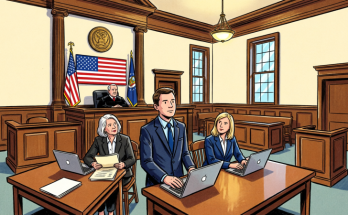
Monday morning found me sitting in a wood-paneled office that smelled like dust, leather, and old paper, with my wedding ring still too new on my hand and Grandpa’s unopened box between my knees.
Mr. Quillin sat behind his desk in a three-piece suit that looked older than I was. His eyes were kind in that devastating way older men sometimes have when they know exactly how badly you’ve been hurt.
“Your grandfather talked about you constantly,” he said after we sat down. “You were his pride and joy.”
I looked at the papers spread across his desk and asked the only question that mattered.
“Then why didn’t he protect me?”
Mr. Quillin’s expression changed.
“Oh, Seraphina,” he said softly. “He did.”
He opened a folder and began laying out documents one by one.
A trust.
Property titles.
Bank statements.
Accounting reports.
Your grandfather, it turned out, had done what my parents never had: he had believed in me enough to plan for my future.
He had created an ironclad trust.
Everything was mine.
The house. The investment accounts. Three rental properties. Cash reserves. Funds set aside for education and “transition.” All of it was meant to transfer to me on my twenty-fifth birthday or my wedding day, whichever came first.
My father had been appointed temporary executor. Temporary.
I was twenty-six.
I had been twenty-six for eight months.
“He was legally required to transfer everything to you in February,” Mr. Quillin said.
Alaric leaned forward. “That’s fraud.”
“Several kinds, yes.”
I tried to speak and failed the first time.
“How much?”
Mr. Quillin looked down at the summary page.
“Based on your grandfather’s final accounting, plus appreciation and current values, roughly three hundred ninety thousand dollars in assets. More, if the rental income had been properly handled. Another sixty-one thousand should have remained liquid across protected accounts.”
I thought I might faint.
All my life, my parents had acted as though I was dependent on them, lucky for scraps, burdensome when I asked for anything.
All the while they had been living in my house, spending my inheritance, and telling me Grandpa had left them everything except a few savings bonds and sentimental items.
My fingers were numb when I opened the box.
Inside were letters.
Dozens of them, bundled in tissue paper, all in my grandfather’s cramped, spidering hand.
I opened the top one.
My dearest Saraphina,
If you are reading this, then I am gone and you have finally reached the age I hoped would protect you. I know your parents. More importantly, I know you. I know how easy it is for love to make you generous beyond wisdom. I have left everything to you because no one else is worthy of it. Your father is not a wicked man, but he is a weak one. Your mother mistakes control for love. They will tell lies. They will make you feel selfish for taking what is yours. Do not believe them.
I had to stop there because the tears came so violently I could barely see.
Alaric took the letter from my shaking hands and kept reading aloud while I cried.
When you were seven, you spent your tooth fairy money on soup for me because I was sick and you wanted to help. I knew then what kind of soul you had. That is why I began putting money away for you. Not because you were fragile, but because you would one day need freedom from people who would mistake your goodness for weakness.
Mr. Quillin slid a tissue box toward me without a word.
“There’s more,” he said gently. “Your grandmother also created a separate trust they never found. Smaller. Fifty-one thousand. She wanted you to have choices.”
I laughed through my tears at the word choices.
All these years I had thought my life was narrow because I wasn’t enough. But it had been narrowed on purpose.
My grandfather had seen it.
He had tried to leave me a door.
We spent two hours signing documents.
Injunctions. Asset freezes. Notices of dispute. Criminal complaints. Every signature felt like a nerve being reconnected. Painful, but clean.
When it came time to discuss the house, Mr. Quillin said, “Legally, it’s yours. We can begin eviction proceedings immediately.”
My childhood home.
The house where I had been told I couldn’t stay overnight because it was “too difficult to host.” The house where my mother had told me a wedding celebration would be too much work. The house they had renovated with my money while telling me life was tight.
I looked at Alaric. He squeezed my hand.
“We’ll think about that part,” I said.
Mr. Quillin nodded. “No rush. But understand this, Seraphina. They redid the kitchen, added the pool, finished the basement. All with your funds.”
The pool.
I remembered asking once if I could have a small bridal lunch in the backyard and my mother saying the space just wasn’t nice enough for guests.
I almost laughed again.
Before we left, Mr. Quillin handed me one more letter from the box.
In it, Grandpa wrote:
If by now you know the truth, then I hope you also know this: what they took from you was never your worth. They could not touch that. Not unless you handed it over. Choose a family that chooses you. Blood is an accident. Love is a decision.
I folded the letter carefully and put it back in the envelope.
By Wednesday, the papers were served.
By Thursday, the town knew.
Not because I had gone public with everything. Because my father had gone to church prayer group and asked for support for his “troubled daughter who was choosing money over family,” and someone recorded it.
But by then people were already talking. Someone remembered the cruise photos. Someone else remembered my wedding post. Someone connected it to the trust paperwork that had started circulating among people who loved gossip more than oxygen.
And once the first crack appeared, other stories came pouring out.
Church fund loans never repaid.
Borrowed money for “emergency surgery” that had actually funded cosmetic work.
Patterns of deceit people had ignored because my parents always wore respectability so well.
Then came the video from Cassian, Isolde’s ex-boyfriend.
He looked straight into the camera and said, “I dated Isolde for three years. I watched that family make Seraphina cook Thanksgiving dinner and then tell her the table was full. I watched them take her car and bring it back empty. I watched them cash birthday checks meant for her and tell her the relatives forgot. They destroyed that girl’s self-worth for sport. So no, I’m not surprised she sued.”
The video went everywhere.
People wanted interviews.
Podcasters sent messages.
Random strangers wrote to say they had lived through the same kind of family and were rooting for me.
I turned everything off.
I didn’t need to be the face of anyone’s discourse. I needed to survive my own life.
My father hired a lawyer who had once been disbarred, which told us plenty.
My mother started calling everyone she knew, trying to recast herself as the victim of an unstable daughter.
Isolde went live on TikTok crying that I had always been jealous of her, that I was trying to ruin her because Grandpa loved her more. Unfortunately for her, someone immediately posted the will. Grandpa had left her his golf clubs.
The internet was unkind about this.

Monday morning, TV vans appeared outside our apartment building because my mother had tipped off local media that I was “holding my aging parents hostage with legal maneuvering.”
The reporters, to my surprise, had actually researched the story.
“Is it true your parents missed your wedding to go on a cruise paid for with your inheritance?” one asked.
“Can you comment on the fraud allegations?” asked another.
We didn’t answer.
We just walked past.
Later that night, while we were having dinner with Alaric’s parents, the police called.
My father had tried to break into our apartment.
The neighbor’s doorbell camera caught him, drunk and wild-eyed, using a credit card to jimmy the lock. When that failed, he started kicking the door and yelling that he was reclaiming his property.
The police had arrested him on the spot.
When Officer Bramwell asked if I wanted to press charges, I looked through the cruiser window at the man who had let my mother erase me for years and then steal from me with a signature.
“Yes,” I said.
My mother lunged toward me then, outraged, as though I had violated some sacred law of daughterhood. Alaric stepped in front of me before she could get close.
“How could you do this to your own father?” she shrieked.
I looked at her and felt, for the first time in my life, almost nothing.
“You raised Isolde,” I said. “You tolerated me.”
It was the most honest sentence I had ever spoken to her.
That seemed to silence even her.
The case moved faster after that.
The court froze the accounts. My father’s arrest for attempted breaking and entering made the civil case impossible to minimize. His lawyer dropped him after the restraining order violations piled up. My parents offered to “settle” by returning the house if I dropped everything else.
Mr. Quillin advised against it.
“Desperate people do desperate things,” he warned.
He was right.
There were more lies. More public posts. More crying videos from Isolde. More attempts to spin me as unstable, selfish, cruel.
But the evidence was overwhelming now, and for once evidence mattered more than performance.
Within six weeks, the judge ruled in my favor on every count.
The house was mine.
The rental properties were mine.
The remaining funds were mine.
Restitution was ordered.
My father got probation and a criminal record.
My mother was sentenced to community service on related fraud findings.
Isolde wasn’t charged, but the internet punished her plenty for the video where she tearfully insisted Grandpa loved her more while his actual will contradicted her in black-and-white legal language.
The sheriff removed them from the house.
When I walked through it afterward, an odd sensation came over me.
Not triumph.
Not revenge.
Just grief, shaped differently.
The furniture had been bought with my money. The renovations had been paid for with my money. But the house still held my childhood in its walls, and that made it complicated in ways the law could never fix.
My room had not been lovingly preserved. It had simply been forgotten. Boxes of my old report cards, art projects, journals, and letters were stacked in the basement like things someone meant to deal with and never bothered to.
There were photo albums where my image had been cut out.
Not metaphorically.
Physically.
Scissors through my body, leaving careful gaps between Isolde and my parents where I used to be.
Alaric held one of the albums and whispered, “That’s creepy.”
“No,” I said, looking at the empty spaces. “It’s sad. They had to work so hard to hate me.”
I sold the house.
I could not imagine raising children in a place built on so much distortion. I did not want my future tethered to those rooms.
Before closing, though, I did one final thing.
I invited them all.
My parents couldn’t legally come, of course, because of the restraining order. But the rest of them came. Aunts, uncles, cousins, family friends. The same people who had gone on the cruise. The same people who had watched me be diminished for years and called it family dynamics.
They arrived expecting drama, maybe forgiveness, maybe a chance to explain.
Instead, I stood in the backyard where my mother had once told me it would be too inconvenient to host anything, and I told them the truth.
“My grandfather left me everything because he saw what all of you saw and ignored,” I said. “He saw the favoritism. The lies. The neglect. The theft. He tried to give me a way out.”
Someone started to interrupt. I didn’t let them.
“You all knew enough to post vacation photos during my wedding ceremony,” I said. “So don’t tell me you didn’t know.”
Silence.
Absolute silence.
Then I held up a stack of cease-and-desist notices.
“I’m selling this house. The money will go into a trust for my future children. They will never know any of you. They will never wonder why a grandmother loves their cousin more. They will never be told they are too sensitive when they point out unfairness. They will never be trained to accept crumbs and call it love.”
Uncle Leander said weakly, “We’re family.”
“No,” I said. “We’re related. Family shows up. Family doesn’t steal. Family doesn’t choose a cruise over a wedding.”
Some of them cried.
Some got angry.
Some left muttering about ingratitude.
Only one stayed behind.
My younger cousin, seventeen, pale and furious and brave.
“When I’m eighteen,” she asked quietly, “can I call you?”
I hugged her.
“Always.”
Two weeks later, the house sold above asking price to a family with three loud children and a dog that ran in circles through the backyard like joy itself. They painted the house yellow. They installed a swing set. They planted a garden where my mother had once arranged decorative stones and called it landscaping.
I drove past months later and saw bikes in the driveway and muddy sneakers on the steps and laundry flapping on a line out back.
For the first time, it looked like a home.
Not a museum. Not a hierarchy. A home.
A year later, on our first anniversary, Alaric took me back to the courthouse.
No crowd. No flowers. No drama. Just us, a judge, and his secretary.
“I want to marry you again,” he said, smiling in that impossible earnest way of his. “Now that you know who you are. Now that you’re free.”
I cried through the entire five-minute ceremony.
That night his family took us to dinner. Rowena baked the cake herself. His father made a toast to strength and survival. His sisters decorated the private room with little paper stars because apparently my life had become a movie whether I liked it or not.
Later, on our balcony, I opened the last letter from Grandpa’s box.
It was labeled: Open when you are happy.
I had been afraid to read it before that.
Inside, he wrote:
If you are reading this, then you have already done the hardest part. You chose yourself when they taught you not to. I know they will call you cruel. They will say you abandoned family. But when you have given your whole life to others, it is not theft to take back what is yours. It is not selfish to insist on dignity. I hope by now you are laughing often. I hope you have someone kind beside you. And if that husband of yours is decent, tell him thank you for me. You deserve to be cherished. All my love, Pops.
I folded the letter and looked across at Alaric.
“He knew,” I whispered. “He knew I’d find someone who loved me.”
Alaric smiled. “He knew you’d eventually believe you deserved it.”
Two years later, when our daughter was born, we named her Grace after my great-grandmother—the one family story Grandpa used to tell with pride, the woman who had once been the outcast and had built a beautiful life anyway.
My mother sent a card after the birth announcement appeared in the local paper.
Just signed, Grandma.
I mailed it back unopened.
Once, through a lawyer, Isolde asked if I would contribute to her wedding because “family helps family.”
I sent her a check for fifty-one dollars.
In the memo line I wrote: Exactly what you contributed to mine.
She never cashed it.
The old house is yellow now.
The swing set is weathered from use. There’s a vegetable garden in the back. Kids’ bikes litter the lawn where I used to mow in the heat while Isolde stayed inside. Sometimes when I pass it, I think not of what was taken from me there, but of what Grandpa actually gave me.
Not land.
Not money.
Permission.
Permission to leave.
Permission to stop begging for a love that was never going to be offered honestly.
Permission to build a family where showing up is the standard, not the miracle.
This morning, while I was at work, my phone buzzed.
A message from Alaric.
Mom made that soup you love. Dinner at our place tonight. Don’t be late.
I smiled so hard the receptionist asked what happened.
I texted back: Wouldn’t miss it.
Because that is what family does.
They show up.
And finally, so do I.