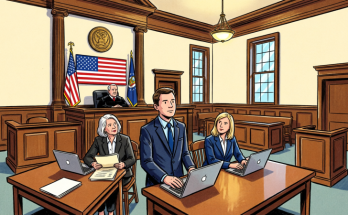
I was driving about two car lengths behind them, George explained. The weather was terrible, so I was being cautious. I saw the vehicle slow down on the shoulder, then start moving again. Then I saw the back door open and someone fall out onto the road. What did you do? I slowed down, thinking maybe I should stop and help.
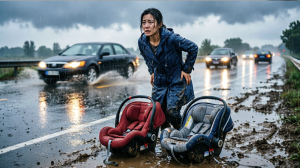
But before I could pull over, I saw something that made me sick to my stomach. I saw a woman lean out of the passenger window and throw what looked like a baby carrier. The courtroom erupted. The judge had to call for order. My mother was crying, but they weren’t tears of remorse. They were tears of self-pity.
George continued, describing how he’d seen the second car seat thrown, how he’d watched me stumble to my feet and gather my babies.” He pulled over briefly. He explained, “But I’d been so focused on my children that I hadn’t noticed him. He’d followed me to make sure I reached safety, staying far enough back that I wouldn’t feel threatened.
” “Why didn’t you call the police immediately?” Angela asked. “My phone was dead,” George said. But I made sure she got to that gas station and then I went home and charged my phone. When I saw the news report the next day about a woman and twins found on the highway, I knew I had to come forward. Gerald tried to poke holes in George’s testimony during cross-examination, suggesting his memory might be faulty or that he hadn’t seen clearly through the rain.
But George remained steady, his account never wavering. Barbara’s testimony brought several jurors to tears. She described the condition I was in when I’d stumbled into that gas station, soaked to the bone, bleeding, my shoulder visibly dislocated, clutching two screaming infants. She’d kept the towel she’d wrapped us in, which had been entered into evidence.
They were still stained with blood and mud. I’ve worked in healthcare for 30 years, Barbara said. I’ve seen a lot of trauma, but I’ve never seen a mother so broken and yet so determined. She could barely stand, but she wouldn’t let go of those babies. She kept saying, “I have to keep them safe over and over.
” The defense called their witnesses next. They brought in friends from church who testified that my parents were pillars of the community. They called my father’s business associates who spoke about his integrity and generosity. They even called Kenneth which turned out to be a massive mistake. Kenneth took the stand in an expensive suit, his hair perfectly styled, looking every inch the successful businessman he pretended to be.
He painted a picture of our marriage that bore no resemblance to reality. According to him, “I’d been an unstable wife who constantly started arguments and made false accusations. She was always threatening to leave, Kenneth said smoothly. Always claiming I’d hurt her when I’d never laid a hand on her. I think she enjoyed the drama, the attention it brought her.
Vincent’s cross-examination was masterful. He started gently, asking Kenneth about his education, his career, his previous relationships. Kenneth relaxed, thinking he’d gotten away with his lies. Then Vincent pulled out a police report from Connecticut, dated 8 years before I’d met Kenneth.
A woman named Patricia Dunn had filed charges against him for assault. The case had been dropped when Patricia suddenly moved out of state. Do you remember Patricia Dun? Vincent asked. Kenneth’s face pad. That was a misunderstanding. A misunderstanding that resulted in her being hospitalized with a fractured jaw. She dropped the charges. It was proven to be false.
Actually, Vincent said, pulling out another document, the charges were dropped because Ms. Dunn was too afraid to testify, but I have hospital records right here documenting her injuries. Would you like me to read them to the jury? Kenneth stammered, his composure crumbling. Vincent didn’t let up. He produced evidence of three other women who had filed restraining orders against Kenneth in different states.
He showed medical records from my marriage documenting injuries Kenneth claimed never happened. By the time Vincent finished, Kenneth looked like exactly what he was, a serial abuser who’d finally been exposed. The damage to my parents defense was catastrophic. They’d stake part of their credibility on Kenneth’s testimony, and Vincent had demolished it.
My parents defense team tried to recover. Vanessa took the stand and claimed she’d been following our parents’ orders, that she’d been afraid to disobey them. She cried extensively, but her tears seemed performative. Several jurors looked openly skeptical. The prosecution’s rebuttal was devastating. Angela called a forensic psychologist who’d evaluated all three defendants. Dr.
Patricia Walsh explained that their actions demonstrated premeditation and intent, not a heat of the moment decision. The decision to remove a postpartum mother and newborn infants from a vehicle during a severe storm miles from any exit demonstrates clear intent to cause harm. Dr. Walsh testified this wasn’t an impulsive action.
They had multiple opportunities to reconsider. They chose to proceed with endangering these lives. George testified next, describing exactly what he’d seen from his vehicle. His account matched mine perfectly. Barbara testified about the condition I was in when I arrived at the gas station. The police officers described the scene, the evidence they collected, and my demeanor during their investigation.
My parents’ defense tried to paint me as a vindictive daughter seeking revenge for an imagined slight. They brought up my divorce, implying it proved I was unstable and manipulative. Kenneth even testified on their behalf, lying through his teeth about what our marriage had been like. But Vincent destroyed their narrative piece by piece.
He introduced hospital records from my marriage showing multiple visits for suspicious injuries. He brought in Kenneth’s arrest record from a different state where he’d been charged with assault against a previous girlfriend. He systematically proved that everything my family claimed was a fabrication.
The jury deliberated for 6 hours. When they returned, they found my parents and Vanessa guilty on all counts. My mother collapsed in her seat. My father stared straight ahead, expressionless. Vanessa wept dramatically, but nobody in that courtroom felt sympathy for her. The sentencing came 2 months later. My father received four years in prison.
My mother received three years. Vanessa, because she’d driven the vehicle and participated in the assault, received 5 years. The judge was particularly harsh in her remarks. What you did to your daughter and grandchildren represents a level of cruelty I rarely see in my courtroom, she said. You prioritized your pride and your social standing over the lives of three helpless people.
You will serve every day of your sentence. The civil case settled shortly after. My parents’ assets were substantial and Vincent negotiated a settlement that would ensure financial security for me and the twins for years to come. They liquidated their house, their savings, their retirement accounts.
By the time everything was resolved, I had enough money to buy a modest home, complete my education, and start a college fund for Emma and Lucas. The settlement negotiations had been tense. My parents attorneys initially offered what they clearly thought was generous, enough to cover medical expenses and a small cushion. Vincent laughed in their faces.
Your clients threw a postpartum woman and two newborns out of a moving vehicle during a storm,” he’d said coldly during one negotiation session. “They’re facing prison time and have been convicted of multiple felonies. They’re lucky we’re even willing to settle the civil case rather than pursuing maximum damages through trial.
” The final settlement amount was substantial enough that I’d never have to worry about keeping a roof over our heads or food on the table. It included payments for pain and suffering, emotional distress, future therapy costs for both me and the twins, and punitive damages. My parents had to sell everything.
the house I’d grown up in, the vacation property they’d owned in the mountains, even my mother’s jewelry collection. Part of me felt a twisted satisfaction watching them lose everything. The house where I’d celebrated birthdays and holidays, where I believed I was loved, it got sold to strangers. My mother’s engagement ring, which she’d always said would be mine someday, went to an auction house.
My father’s vintage car collection, his pride and joy, got liquidated piece by piece. But mostly, I just felt empty. This wasn’t the victory I’d wanted. I’d wanted parents who loved me, who chose me and my children over their pride. Instead, I got money and legal vindication. It felt hollow. The months following the settlement were strange.
I had resources now, but didn’t quite know how to use them. I’ve been surviving on government assistance and freelance scraps for so long that having actual financial security felt unreal. Barbara helped me navigate everything, introducing me to a financial adviser who helped me invest wisely and set up the twins college funds.
Buying our first house was surreal. It was a modest three-bedroom in a neighborhood with good schools and safe streets. The yard had a big oak tree, perfect for a swing set. The previous owners had left the garden in good condition, full of flowers that would bloom in spring. Standing in that empty living room on moving day, I cried for an hour.
These are good tears, right? Barbara asked, wrapping an arm around me. I think so, I managed. I just never thought we’d have this. A real home somewhere that’s actually ours. Emma and Lucas were 2 years old by then, toddling around the empty rooms with wonder, their voices echoing off the bare walls. They had no memory of the tiny subsidized apartment we’d been living in.
No recollection of the nights I cried silently in the bathroom so they wouldn’t hear. This house would be their first real memory of home. I enrolled in online courses to finish my degree, studying during nap times, and after bedtime. Graphic design had always been my passion, but Kenneth had made me quit my job early in our marriage.
He claimed he wanted to provide for me, but really he’d wanted to control me. Without income, I’d been trapped. Now I was reclaiming that part of myself. I took advanced courses in digital design, learned new software, and started building a portfolio of work I was actually proud of. My freelance business grew steadily.
What started as occasional small jobs turned into regular clients, then retainer agreements, then more work than I could handle alone. That’s when I hired my first employee, a recent graduate named Melissa, who reminded me of myself before Kenneth. She was talented but uncertain, full of potential but lacking confidence.
I mentored her the way I wish someone had mentored me, teaching her not just design skills, but also how to value her work and set boundaries with clients. Why are you being so nice to me? Melissa asked one day after I’d spent an hour helping her problem solve a difficult client situation. Because someone was nice to me when I needed it most, I said simply.
And because you deserve it, the business grew. I hired two more designers, then an account manager, then a marketing specialist. What had started as survival turned into something I built with intention and care. We worked on branding for small businesses, marketing campaigns for nonprofits, and design projects for corporations.
Every new client felt like proof that I’d made it, that I’d become someone beyond what happened to me. Emma and Lucas thrived. They started preschool and came home each day full of stories about their friends and teachers. They had no idea how different their lives could have been. No concept of the poverty and struggle we’d escaped.
That was exactly what I wanted for them. A childhood unmarred by trauma, full of security and love. Barbara remained our constant. She picked the twins up from preschool on days when I had client meetings. She taught them to bake cookies and told them stories about her own daughter, keeping Julie’s memory alive. She came to every doctor’s appointment, every school event, every milestone.
You know, you don’t have to do all this. I told her once. You’ve already done so much for us. I’m not doing it because I have to, Barbara replied. I’m doing it because I want to. You three are my family now. That’s what real family look like, I realized. Not obligation or blood relation, but choice. Barbara chose us every single day, showing up with love and consistency.
My biological family had thrown us away when we needed them most. Barbara had taken us in when we were strangers. The twins called her grandma Barbara without any prompting for me. The first time Emma said it, Barbara cried happy tears and hugged them both tightly. She was the grandmother they deserved, the one who would never dream of hurting them.
I started dating again when the twins were three, though cautiously. Kenneth had broken something in me, shattered my ability to trust easily. But my therapist encouraged me to try to not let his abuse steal my future along with my past. I went on awkward coffee dates with men from apps, sat through dinners where conversation felt forced, and learned to recognize red flags early.
There was Michael, who seemed nice until he made a comment about how I should smile more. Date over. There was Brandon, who talked only about himself for 2 hours straight. No second date. There was Chris, who got angry when I said I needed to end the evening early because Barbara had called about Lucas running a fever. Blocked immediately.
But there were decent men, too. I dated a teacher named Aaron for 4 months before we mutually agreed we weren’t compatible long term. I saw a lawyer named Keith for a while, though we eventually realized we worked better as friends. Each relationship taught me something about what I wanted and what I wouldn’t tolerate.
The twins were my priority, though. Any man I dated had to understand that they came first, always. If someone couldn’t handle me cancelling plans because Emma had a nightmare or Lucas was sick, they weren’t right for us. My children had already lost so much they wouldn’t lose my attention to someone who didn’t value them.
I changed our names legally, severing all ties to my birth family. I became someone new, someone stronger. I finished my degree online while the twins grew from infants to toddlers. I built a successful freelance graphic design business, eventually hiring other designers and expanding into a full agency. Emma and Lucas knew nothing of their early trauma.
I told them age appropriate versions of our story as they grew older, but I never filled them with hate for the family who’d abandoned us. I wanted them to understand that some people are unable to love properly, that sometimes walking away is the strongest choice you can make. Barbara remained a constant presence in our lives. She became Grandma Barbara, the twin surrogate grandmother, and my adopted mother.
She taught me what real family looked like. Not perfect, but loving. Not always easy, but always present. 5 years passed. Emma and Lucas started kindergarten. My business thrived. We lived in a comfortable house in a safe neighborhood with good schools. I’d even started dating again, cautiously, having learned to recognize red flags early.
Then one evening, my doorbell rang. I opened it to find my mother standing on my porch. She looked 10 years older than when I’d last seen her, her hair completely gray now, her face lined with exhaustion. Prison had not been kind to her. “Please,” she said quietly. “Please let me explain.
” I stood in the doorway, frozen. Every instinct screamed at me to slam the door in her face, but curiosity went out. I stepped outside, pulling the door closed behind me. I wouldn’t let her into my home, into the sanctuary I’d built for my children. You have 5 minutes, I said coldly. I’m so sorry. Tears rolled down her face.
I know that’s not enough. I know nothing will ever be enough, but I need you to know that I’m sorry. Prison gave me a lot of time to think, to realize what I’d done. I destroyed everything because of my pride. Your pride almost killed my children. I said flatly. Your pride did kill any chance of a relationship with them.
What do you want, Mom? I want to know my grandchildren. I want to try to make amends. Your father is sick. Cancer. He has maybe 6 months left. He wants to see you before he dies. I laughed. A harsh sound devoid of humor. He wants to see me after everything. Tell him I said no. Please. I know we don’t deserve your forgiveness, but he’s dying.
Can’t you find it in your heart, too? Where was your heart that night? I interrupted. Where was your compassion when you threw my babies into a ditch? Where was your mercy when I begged you to stop? She had no answer. She just stood there crying, her shoulders shaking with sobs that left me unmoved. You taught me an important lesson that night, I continued.
You taught me that biology doesn’t make a family. Love makes a family. Showing up makes a family. You and dad and Vanessa, you failed at the most basic requirement of being family. You chose your image over your flesh and blood. I know, she whispered. I know, and I’ll regret it for the rest of my life. Good, I said simply. You should.
Now, leave my property before I call the police and report you for violating the restraining order that’s still in effect. Her eyes widened. Please, just let me see them for a moment. Just let me see Emma and Lucas. I won’t even speak to them. I just want to see they’re okay. They’re more than okay, I told her. They’re thriving…………………………………………………………………………