They were healthy and beautiful, and I would do anything to protect them. My marriage to Kenneth had been a nightmare that I’d finally escaped. But my family saw it differently. To them, divorce was worse than endurance. Suffering in silence was preferable to breaking sacred vows. Mom, I ventured quietly, testing the waters.
Thank you for coming to get us. I know this isn’t easy, but I appreciate Don’t. Her voice cut through the car like a blade. Don’t you dare thank me for cleaning up your mess. My sister snorted from the driver’s seat. Vanessa had always been the golden child, married to a successful lawyer, living in a house that looked like it belonged in a magazine.
She’d made it clear during my entire pregnancy that she thought I was an embarrassment to the family. The divorce had only confirmed her beliefs. It wasn’t a mess, Mom. Kenneth was abusive. You know that. I showed you the bruises, the hospital reports. Every marriage has difficulties. My father interjected, his voice cold. You just gave up. You didn’t try hard enough.
I felt tears burning behind my eyes, but refused to let them fall. How many times had we had this conversation? How many times had I explained that trying harder wouldn’t stop Kenneth’s fists or his cruel words? My parents had never accepted it. In their world, appearances mattered more than truth. The rain intensified, hammering against the roof of the car.
Emma stirred slightly, making a small sound that tugged at my heart. I reached over and gently touched her tiny hand, and she settled again. Lucas remained deeply asleep, his chest rising and falling in that miraculous rhythm that still amazed me. “Where will you go after this?” Vanessa asked, her tone conversational but laced with malice.
“Back to that horrible apartment Kenneth left you.” “Ill figure it out,” I said quietly. “I always do. You’ve brought shame on this entire family,” my mother said, her voice rising. “Do you understand that? Everyone at church knows. Everyone in our neighborhood knows. Your father’s business partners know. They all know that my daughter couldn’t keep her marriage together.
My daughter the quitter. My father added bitterly. Couldn’t handle a few rough patches. Rough patches. He called years of abuse. Rough patches. I wanted to scream, to shake them, to make them understand. But I’d learned long ago that some people are determined to see what they want to see regardless of evidence. At least Kenneth had the decency to be humiliated by all this.
Vanessa said he called dad last week. You know, apologized for your behavior. My blood ran cold. He what? He called and apologized for how things turned out. My father confirmed. Took responsibility like a man. Said he tried everything to make the marriage work, but you were too stubborn, too modern, too influenced by all those feminist ideas.
I couldn’t believe what I was hearing. Kenneth had manipulated them, played the victim, and they’d eaten it up. The man who had broken my ribs, who’ locked me in a room for hours, who destroyed my phone so I couldn’t call for help. They saw him as the wrong party. “Stop the car,” my mother said suddenly. Vanessa glanced at her. What? I said, “Stop the car.
” My mother’s voice was still. I can’t do this anymore. I can’t sit here pretending everything is fine when it’s not. I can’t bring this disgrace into my home. My heart began to pound. Mom, what are you talking about? Get out, she said, turning to look at me for the first time since we’d left the hospital. Her eyes were hard, empty of the warmth I remembered from childhood.
Get out of this car right now. Are you insane? I stared at her in disbelief. It’s pouring rain. The babies are only 3 days old. Vanessa had already started pulling over to the shoulder. The car rolled to a stop on the side of the highway. Rain pounding so hard that I could barely see the road ahead.
Mom, please, I begged, panic rising in my chest. Please don’t do this. They’re just babies. They haven’t done anything wrong. You did this, my father said, his voice devoid of emotion. You made your choice when you divorced your husband. Now live with the consequences. Dad, please. I’m your daughter. These are your grandchildren.
Please don’t. He grabbed my hair suddenly, yanking my head back with brutal force. Pain exploded across my scalp as he opened the door beside him and dragged me toward it. I screamed, trying to grab onto something, anything. But the car was moving again. Vanessa had pulled back onto the highway and my father was pulling me out of a moving vehicle. Dad, no. The babies.
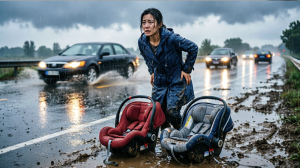
He shoved me hard and suddenly I was falling. I hit the wet pavement with crushing force, my shoulder taking the brunt of the impact. Gravel tore through my clothes and scraped my skin raw. I lay there for a moment, stunned and gasping for breath, rain soaking through to my bones. Then I heard Emma cry. The sound pierced through my shock like lightning.
I scrambled to my feet, my body screaming in protest, just in time to see my mother lean out of the car window. She held Emma’s car seat in her hands. No, I shrieked, running toward them. Don’t you dare. My mother’s face was a mask of disgust. Divorced women don’t deserve children. She screamed over the storm and through the car seat.
Everything happened in slow motion. I watched Emma’s car seat arc through the air and land in the muddy ditch beside the road. Her cries intensified, terrified whales that cut straight through my soul. Before I could reach her, I saw Lucas’s car seat follow, landing beside his sisters with a horrible thud.
I ran to them, my feet slipping on the wet pavement, my body on fire with pain. I scooped up Emma’s car seat first, checking her frantically. She was screaming, but appeared unharmed, protected by the car seats design. Lucas had woken up and joined her in crying. both of them red-faced and terrified. The car had stopped again.
I looked up, hope flaring stupidly in my chest that they’d come back to their senses. Vanessa got out of the driver’s seat and walked toward me. For a moment, I thought she would help. She was my sister after all. We’d grown up together, shared secrets, fought over toys and clothes and boys. She stopped in front of me, looked at me, kneeling in the mud with my screaming babies, and spat directly in my face.
“You’re a disgrace,” she hissed. “Don’t ever contact us again.” She walked back to the car and drove away. I watched the tail lightss disappear into the storm, kneeling there on the side of the highway with my three-day old twins crying in their car seats. Rain poured down on us, mixing with my tears, with a mud, with the absolute devastation of what had just happened.
I don’t know how long I knelt there. Time seemed to stop. My mind couldn’t process what had occurred. My parents, the people who were supposed to love me unconditionally, had thrown me and their infant grandchildren out like garbage. My sister had driven away without a second glance. Emma and Lucas needed me. Their cries pulled me back to reality.
I carefully picked up both car seats, ignoring the burning pain in my shoulder and started walking. I had no phone, no money, no idea where I was going. The nearest town was miles away, but I couldn’t stay on the highway. I spotted a gas station sign in the distance and headed toward it. Each step felt impossible.
My body wanted to give up, to sink into the mud and never move again. But my babies needed shelter, needed warmth, needed safety. So, I kept walking. I held them close, trying to shield them from the rain with my own body, murmuring reassurances that I wasn’t sure I believed. It’s going to be okay, I told them over and over. Mommy’s got you. We’re going to be okay.
The gas station seemed to get farther away with each step. My vision blurred from rain and tears and exhaustion. I’d just given birth 3 days ago. My body hadn’t healed. Every movement tore at my stitches, sent fresh pain radiating through my cord dot, but I couldn’t stop. If I stopped, we might not survive. Headlights appeared behind me.
I turned trying to flag down the car, but it drove past without slowing. Then another car and another. Nobody stopped. Nobody wanted to help a bedraggled woman walking along the highway in a storm with two babies. Finally, I reached the gas station. The overhead lights felt too bright after the darkness of the storm.
I stumbled inside, water streaming from my clothes, my baby still crying. The clerk behind the counter looked up in shock. Please, I gasped. Please help us. I need to call someone. I need Oh my god, the clerk said a woman probably in her 50s with kind eyes. She came around the counter immediately. What happened to you? Are those babies okay? They threw us out.
I sobbed, the words tumbling out. My family threw us out of the car. Please, I need help. I don’t have my phone. I don’t have anything. The woman whose name tag readed Barbara took charge immediately. She called the police, got us towels, and helped me get Emma and Lucas out of their wet car seats. Another customer, a man named George, gave me his jacket.
Barbara made me sit down and check the babies over with practiced hands. I used to be a labor and delivery nurse, she explained. These little ones look fine, just scared and cold. But you need medical attention. That shoulder looks bad. The police arrived within 20 minutes. I gave them my statement while Barbara held my babies, cooing at them softly.
The officers looked increasingly disturbed as I explained what had happened. One of them, Officer Martinez, had children of his own. He kept shaking his head in disbelief. “Ma’am, do you want to press charges?” he asked. I hesitated. “Press charges against my own parents? Against my sister?” But then I looked at Emma and Lucas, now come in Barber’s arms, and something hardened inside me.
What they’d done was attempted murder. They’d thrown three-day old infants into a ditch during a storm. “Yes,” I said firmly. “I want to press charges.” The next few hours passed in a blur. The police took photos of my injuries, collected my wet clothes as evidence, and called child protective services to check on the twins.
Barbara stayed with me through all of it, even though her shift had ended. She eventually drove me to the hospital where doctors examined Emma and Lucas and determined they were miraculously unharmed. I, however, had a dislocated shoulder, torn stitches from my C-section, severe bruising, and signs of shock.
They admitted me overnight for observation. Barbara arranged for a social worker to come see me in the morning. That’s when I met Gretchen Reynolds. She was a social worker who specialized in domestic violence cases, and Barbara had called in a favor to get her to see me. Greten listened to my entire story without interruption, her expression growing more serious with each detail.
“You have grounds for multiple charges,” she said when I finished. “Assault, child endangerment, reckless endangerment, potentially even attempted murder, depending on how the prosecutor sees it. But more importantly, right now, you need a safe place to go and resources to get back on your feet.” She helped me apply for emergency housing assistance, food stamps, and other benefits.
She connected me with a lawyer who agreed to take my case pro bono. His name was Vincent Marshall, and he was a bulldog in a suit. Within a week, he filed charges against my parents and Vanessa, obtained restraining orders, and started the process of pursuing civil damages. The criminal case moved slowly, as these things do.
My family hired expensive lawyers, and tried to spin the narrative. They claimed I’d become unstable after the divorce that I jumped from the car in a psychotic episode that they’d been trying to help me, but the evidence told a different story. The location where they’d left me was miles from the nearest exit. My injuries were consistent with being forcibly removed from a moving vehicle.
And most damning of all, there were witnesses. Turned out that George, the man who’d given me his jacket at the gas station, had actually seen what happened. He’d been driving behind my family’s car and witnessed the entire incident. He came forward immediately when police contacted him providing a statement that corroborated every detail of my account.
The media picked up the story. Family abandons woman newborn twins in storm read the headlines. My parents carefully curated image shattered overnight. My father’s business partners distanced themselves. My mother’s church friends stopped calling. Vanessa’s husband, embarrassed by the publicity, filed for divorce. I felt no satisfaction in their downfall.
I was too busy trying to survive. Barbara had taken me and the twins into her home temporarily, refusing to hear any objections. She had a spare bedroom and a big heart, and she insisted we stay until I got on my feet. I lost my daughter to domestic violence 20 years ago. She told me one night while we fed the twins together.
Her husband murdered her when she tried to leave. I couldn’t save her, but maybe I can help you. I cried in Barbara’s arms that night, mourning the family I’d lost, the mother I’d never be able to save, the friend and Barbara’s daughter who’ died too young. But I also felt determination growing inside me. I would survive this. I would build a life for my children.
I would become someone they could be proud of. The emergency housing came through after 3 weeks. It was a small two-bedroom apartment in a decent neighborhood subsidized by the state until I could get back to work. Barbara helped me furnish it with donations from her church and secondhand fines. Slowly, I began to rebuild.
I’d been a graphic designer before my marriage to Kenneth had derailed my career. He’d isolated me from my work contacts and convinced me to quit my job. But I still had my skills and my portfolio. I started taking freelance jobs, working during the twins naps, and after they went to bed at night. It was exhausting, but every dollar I earned felt like a victory.
Vincent kept me updated on the legal proceedings. My parents had pleaded not guilty to all charges. Vanessa had done the same. They were facing criminal prosecution and a civil lawsuit. Their lawyers tried repeatedly to negotiate a settlement, but Vincent advised against it. “They need to face justice.” He said, “What they did was reprehensible.
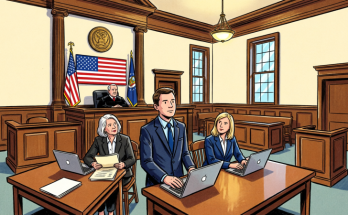
Don’t let them buy their way out of consequences.” The trial began eight months after that horrible night. I testified first, walking the jury through every detail. I showed them photos of my injuries, medical records documenting the twins condition when we arrived at the hospital, and the psychological evaluation that confirmed I showed no signs of the instability my family claimed.
Sitting in that witness box felt surreal. I could see my parents across the courtroom dressed in their finest clothes, looking like respectable members of society. My mother wore pearls and a conservative navy dress. My father had on an expensive suit. They looked nothing like the people who had thrown their grandchildren into a muddy ditch.
The prosecutor, a sharp woman named Angela Winters, guided me through my testimony with patience and precision. She asked me to describe my marriage to Kenneth, and I laid out years of abuse in clinical detail. Every emergency room visit. Every time he’d isolated me from friends, the time he’d locked me in our bedroom for 2 days without food because I disagreed with him about something trivial.
And your family knew about this abuse? Angela asked. I told them everything. I confirmed. I showed them bruises. I gave them copies of police reports. My mother saw fingerprint bruises around my neck from when Kenneth tried to strangle me during my seventh month of pregnancy. What was her response? She told me I must have provoked him.
She said marriage requires sacrifice and that I needed to be more submissive. My mother’s lawyer objected, but the judge overruled. The jury looked horrified. Several jurors kept glancing at my parents with obvious disgust. Angela then walked me through the night of the abandonment. I had to relive every terrible moment, the growing tension in the car, my mother’s sudden order to stop, my father’s hands in my hair.
Several jurors looked away when I described watching my baby’s car seats arc through the air. “What went through your mind in that moment?” Angela asked softly. “That they were going to die,” I said, my voice breaking despite my efforts to stay composed. That I’d failed to protect them. That this was how their story would end before it had even begun.
Cross-examination was brutal. My mother’s attorney, a slick man named Gerald Hartford, tried to make me seem hysterical and unreliable. He questioned every detail of my account, suggesting I’d exaggerated or fabricated elements. “Isn’t it true that you have a history of attention-seeking behavior?” he asked. “No,” I said firmly.
“But you’ve been treated for depression, haven’t you?” “After years of abuse and isolation, yes. My therapist diagnosed me with PTSD from domestic violence. So, you admit you have mental health issues?” Vincent objected before I could respond. Council is attempting to stigmatize mental health treatment. The witness sought appropriate care for trauma, which demonstrates responsibility, not instability.
The judge sustained the objection, but Gerald had planted seeds of doubt. That’s how these things work. You can’t ring a bell. When George took the stand, everything changed. He was a retired postal worker, a grandfather of five, with no connection to me or my family. He had nothing to gain from lying. Angela had him describe what he’d witnessed…………………………………………………………………………