“I love you,” I said, and it was true, which was the worst part. “But you don’t get access anymore.”
Then I turned and walked into the carriage house.
Inside, the air smelled like home—my herbs, my clean floors, the faint scent of Nora’s strawberry shampoo. The space felt both small and immense. Like a sanctuary.
Nora dropped her backpack on the floor and exhaled dramatically. “That was a lot,” she said.
I gave a shaky laugh. “Yes. It was.”
She looked up at me. “Are we safe now?”
The question tore through me.
“Yes,” I said, though my voice cracked. “We’re going to be safe.”
I didn’t waste time.
The next morning, I called a locksmith.
It felt strange to hire someone to do what I could easily do myself. I knew how to change locks. I knew how to install hardware. I’d done it a hundred times for other people, other projects.
But I needed to break the pattern.
I needed to stop being the woman who fixes everything alone.
When the locksmith arrived, he was a middle-aged man with a kind face and a tool belt that clinked softly. He looked at the door, then at me. “New deadbolts?” he asked.
“Yes,” I said. “High security.”
He nodded without asking questions. Professionals know not to pry into other people’s pain.
He drilled, installed, tested. The sound of metal clicking into place felt like punctuation.
End of one sentence. Beginning of another.
When he handed me the new keys, they were heavy and bright. They looked like possibility.
After he left, I hired an electrician.
Again, something I could technically do—at least some of it. But I wanted a paper trail. I wanted a neutral professional to inspect the systems and confirm everything was safe. I wanted to stop relying on my own competence as a shield against betrayal.
The electrician, a young woman with short hair and a no-nonsense attitude, tested the carbon monoxide detector, the smoke detectors, the wiring. She raised her brows at one point. “This battery compartment looks like it’s been messed with,” she said.
My throat tightened. “It has.”
She met my eyes. She didn’t ask who. She just nodded once. “Well,” she said, voice firm. “It’s all secure now.”
By noon, the carriage house felt different.
Not bigger. Not magically safer. But something had shifted.
It felt like mine.
That evening, my phone lit up nonstop.
Missed calls from my mother. From my father. From Ava. Then my mother again from the landline, because guilt likes to try multiple channels.
I watched the screen vibrate, my stomach tightening with each ring.
Then I set the phone facedown and let the silence settle.
Instead of answering, I wrote a letter.
One page.
No anger. No dramatic flourishes. Just clean lines, like good architecture.
Mom, Dad, Ava,
I love you. That hasn’t changed.
What has changed is access.
You do not get keys anymore. You do not get to decide what is mine. You do not walk in, tamper with my home, or plan my timeline.
If you want a relationship with me, it will have boundaries. It will involve accountability. It will involve therapy, because what happened is not normal and not okay.
This isn’t revenge. It’s closure.
Clara.
I printed it, sealed it, and walked across the yard in the evening light. The grass was damp. The main house windows glowed softly.
I opened their mailbox and slid the letter in.
The thunk of paper hitting metal felt heavier than a signature.
Three days later, my father showed up on the sidewalk outside the carriage house.
Not at the door—because he couldn’t. Because the new locks said no.
He stood with his arms crossed, posture rigid, like he was trying to summon authority.
“You’re making this bigger than it needs to be,” he said, voice strained.
I stepped out onto the small porch, keeping the screen door between us like a polite barrier. Nora was inside, watching cartoons, unaware.
“You made it big,” I said. “When you filed paperwork to remove me from my home.”
He flinched slightly. “Your mother can’t sleep,” he said, as if that should move me.
A familiar tug stirred—my old reflex to soothe my mother’s distress.
I pressed my fingers into the porch railing until my knuckles went pale. “She’s not sick,” I said quietly. “She’s disappointed she didn’t win.”
My father rocked on his heels. His gaze flicked toward the window, as if hoping to catch a glimpse of Nora.
“We were trying to help Ava,” he said again, and the repetition made it sound like a prayer he’d been taught to recite.
“I know,” I said. “And in doing so, you showed me exactly where I stand.”
He opened his mouth, closed it. His eyes looked tired suddenly, not angry, just… worn.
“You don’t understand,” he said finally. “She needs—”
“She wants,” I corrected softly. “And wanting isn’t wrong. But taking isn’t the only way to get something.”
He stared at me for a long moment. Then his shoulders sagged a fraction. “You’ve always been strong,” he said, almost accusingly.
I felt a bitter smile tug at my mouth. “Strong doesn’t mean disposable,” I said.
He blinked, as if the concept was new.
“I’m not shutting you out forever,” I added, because despite everything, the love was still there, thorny and inconvenient. “But it’s going to be different now.”
He swallowed. “Your mother wants to talk.”
“Therapy,” I said. “Like I wrote.”
His jaw tightened. “We don’t need therapy.”
I looked at him calmly. “Then you don’t need access,” I said.
He stared at the ground, then nodded once, stiffly, and walked away.
When he disappeared around the corner of the main house, I exhaled slowly, my body shaking.
Inside, Nora called, “Mom! Come see, the dog is doing a funny dance!”
I closed my eyes for a second and let her voice anchor me back to what mattered.
That week, something unfamiliar happened: quiet.
No drop-ins. No surprise texts disguised as concern. No casseroles left on my porch like peace offerings. No requests for help fixing something. No calls asking me to “just stop by for a minute.”
At first, the quiet felt raw. Like a bruise exposed to air.
Then it started to feel restful.
Ava, of course, didn’t do quiet.
She posted on Instagram a week later: a photo of her holding a set of condo keys, smiling wide, her white blazer replaced with a pastel sweater. Caption: Homeowner vibes.
The comments were confetti. So proud! You deserve this! Queen! Manifested!
My stomach tightened when I saw it. Not because she’d gotten a condo—good. Fine. Let her have it.
But because the post was so clean. So detached from the damage she’d tried to cause.
She’d taken a selfie with a key and erased the part where she’d tried to take mine.
I stared at the screen for a long moment, then set my phone down.
Peace doesn’t need witnesses.
Instead, I spent my weekend with Nora.
We went to the hardware store, because she loved it there. She loved the rows of screws and the smell of wood and the way you could choose pieces to build something. She called it “the grown-up toy store.”
We bought wood for a loft bed I’d promised her. Her room in the carriage house was small, and she wanted more floor space to play.
“Can we make stairs with drawers?” she asked, eyes bright. “So I can hide my treasures.”
“We can,” I said, and for once, the promise didn’t feel like another burden. It felt like a gift.
We spent the afternoon measuring, cutting, sanding. Nora wore a tiny pair of safety goggles that made her look like a determined scientist. She held screws for me with solemn focus. She painted the finished wood in a soft sky blue, insisting it would make her room “feel like flying.”
When we finished, she climbed up and sat on the bed, grinning. “This is the best,” she declared.
I smiled, wiping sawdust off my hands. “Yeah,” I said softly. “It is.”
The next day, she made a sign for our front door.
She cut a piece of cardboard, painted it carefully, and wrote in large letters: HOME.
Then, underneath, in smaller letters, she added: NO SECRET VISITS.
I stared at it, throat tight. “Honey,” I murmured, “you didn’t have to—”
She looked up, serious. “It’s important,” she said. “Secrets like that are bad.”
“Yes,” I whispered. “They are.”
We hung the sign on the inside of the door, where it would greet us every time we came home.
A reminder. A boundary. A child’s clear truth.
In the following weeks, my mother began texting again.
We overreacted.
Can we talk?
We miss you.
My father sent one message: Family is messy.
Ava sent: Let’s talk like adults.
The phrase made me laugh once, bitterly, because adults don’t pull batteries out of safety equipment to force people out of their homes.
I didn’t respond immediately to any of them.

Silence, I learned, is a boundary that doesn’t need exclamation points.
I started therapy myself.
Not because I thought I was broken, but because I wanted to understand why it had taken legal papers and a child’s bravery for me to finally say no.
My therapist, Dr. Rios, was a woman with warm eyes and a direct voice. In our first session, she asked, “When did you learn that love was conditional?”
The question hit like a hammer.
I stared at my hands for a long time before I answered. “When I was young,” I said quietly. “When being strong made me invisible.”
She nodded slowly. “And now?”
“Now,” I said, voice catching, “I’m trying to learn that being strong doesn’t mean being used.”
At home, I built new routines.
Every Sunday morning, Nora and I tested the carbon monoxide detector.
It became a ritual.
She’d stand on a chair, press the button, and wait for the beep with wide eyes.
When it beeped, she’d grin. “The alarm still works,” she’d announce proudly.
“Good,” I’d answer, and the word carried more weight than she knew.
Because now it wasn’t only about safety equipment.
It was about trust.
It was about knowing we were safe because we had made ourselves safe, not because we were relying on people who thought safety was negotiable.
Sometimes, on quiet evenings, I’d sit by the window again and look out at the backyard lights.
The main house was still there. The same porch. The same windows. The same walls that had once held my childhood.
But the feeling was different.
The peace I felt now wasn’t borrowed. It wasn’t dependent on my usefulness. It didn’t require me to shrink.
It was mine.
One afternoon, a month after court, I ran into Ava at the grocery store.
She appeared at the end of the cereal aisle like a surprise test. Her hair was styled perfectly. Her nails were done. She wore a smile that looked practiced in a mirror.
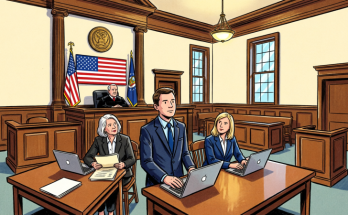
“Clara,” she said, tone light, as if we’d last spoken at a family barbecue and not in a courtroom where a child exposed her sabotage.
I kept my face neutral. “Ava.”
She stepped closer, lowering her voice. “We should talk.”
“We are,” I said, placing a box of oats into my cart.
Her smile tightened. “You made me the villain,” she whispered.
I looked at her calmly. “You cast yourself,” I said.
Her eyes flashed. “You always do this,” she hissed. “You always act like you’re better than everyone.”
I felt something in me settle, like a beam locking into place.
“I don’t think I’m better,” I said. “I think I’m done.”
She scoffed. “Enjoy your little shack.”
I glanced at my cart—milk, eggs, screws, because yes, I was the kind of person who bought screws at the grocery store because I might need them later. Because building and fixing was still part of me, but now it was on my terms.
“I will,” I said, voice steady.
Then I walked away.
My heart pounded as I moved through the aisles, but it wasn’t fear.
It was adrenaline from choosing myself.
That night, I told Nora about seeing Ava, in a gentle way.
Nora listened, then said, “Aunt Ava is mad because she got caught.”
“Yes,” I said softly.
Nora nodded, then went back to coloring. She drew a house with a dragon curled around it, eyes closed, peaceful.
Later, after she fell asleep, I opened my drawer and looked at the court order.
It was in a clear sleeve, crisp and official. I didn’t keep it like a trophy. I kept it like a map.
A reminder of what was real when people tried to rewrite reality.
Because the hardest part of manipulation isn’t the cruelty. It’s the way it makes you doubt your own perception.
The court order said: you are not imagining this.
Some mornings, I woke up aching with grief. Not for the house—I had that—but for the idea of family. For the illusion I’d carried like a lantern, hoping it would light my way.
On those mornings, I made coffee, sat at the table, and let the sadness be present without trying to fix it immediately.
That, too, was new.
I stopped checking Ava’s Instagram.
I stopped waiting for my mother’s apology to come wrapped in the right words.
I started paying attention to the life in front of me.
Nora learned to ride her bike without training wheels in the driveway, wobbling and laughing, her hair flying behind her.
I got a small promotion at work—nothing dramatic, but enough that my boss said, “We couldn’t do this without you,” and for once, the words didn’t feel like a trap. They felt like appreciation that didn’t come with entitlement.
Ethan showed up more consistently, taking Nora every other weekend without complaint, bringing her back with her hair slightly messy and her cheeks pink from playing outside.
One evening, he lingered on my porch after dropping her off. He looked at the new deadbolts, then at me.
“You okay?” he asked softly.
I hesitated, then said the truth. “I’m learning.”
He nodded, eyes gentle. “She’s lucky to have you,” he said.
I swallowed. “I’m lucky to have her,” I replied.
Because that was the real miracle in this story, not Ava’s first home or my legal victory.
It was my daughter, standing up under cold courtroom lights with her small hands steady, protecting a truth I hadn’t even known was in danger.
Weeks turned into months.
My mother did eventually agree to therapy.
Not immediately. Not willingly. But after enough unanswered texts and enough silence that couldn’t be guilted away, she showed up to Dr. Rios’s office with my father, both of them stiff and defensive.
Ava didn’t come.
In the first joint session, my mother cried and said, “I just wanted everything to be fair.”
Dr. Rios looked at her calmly. “Fair to whom?” she asked.
My mother’s mouth opened, then closed.
My father said, “Ava needed help.”
Dr. Rios nodded. “And Clara didn’t?”
Silence filled the room like dust.
I sat with my hands clasped in my lap, my heart pounding, resisting the urge to rescue them from discomfort.
My mother finally looked at me then, really looked.
Her eyes were raw. “I didn’t think you’d leave,” she whispered.
The words were both an admission and a wound.
Because what she meant was: I didn’t think you’d stop accepting this.
I swallowed hard. “I didn’t think you’d try to take my child’s home,” I said, voice shaking slightly. “I didn’t think you’d choose Ava’s want over Nora’s safety.”
My mother’s shoulders shook. “I’m sorry,” she said, and the words were small, but they were something.
My father stared at the carpet. His voice, when it came, was rough. “I didn’t know about the detector,” he said quietly.
A flare of anger sparked. “You didn’t know because you didn’t ask,” I said. “Because you didn’t want to know.”
He flinched.
Dr. Rios watched us all. “Accountability,” she said gently, “is not about punishment. It’s about truth.”
Truth.
That word again. The thing Nora had offered without hesitation.
Therapy didn’t fix everything. It didn’t magically turn my family into the warm, safe unit I’d wanted. It didn’t make Ava suddenly remorseful or my father suddenly expressive.
But it created a space where denial couldn’t hide as easily.
Over time, my mother started saying things like, “I see now how we relied on you.” My father started admitting, in his stiff way, “We put too much on you.”
Sometimes, that was all I got.
And I learned that sometimes, it had to be enough.
Ava remained distant.
She sent occasional texts—carefully worded, half-apologies that never quite took responsibility.
I’m sorry you felt hurt.
I didn’t mean for things to go that far.
We should move on.
Move on, as if moving on erased what she’d done.
I didn’t respond.
Not because I wanted revenge, but because I needed to honor my own boundary.
Trust is not automatic. It’s built, like anything else that needs to hold weight.
And Ava had proven she couldn’t be trusted with mine.
One quiet evening, months later, Nora and I sat on the porch steps eating popsicles.
The sky was turning pink. The air smelled like cut grass and summer heat fading.
Nora licked her popsicle thoughtfully. “Mom,” she said, “do you think Grandma and Grandpa are good people?”
The question landed gently, but it was heavy.
I looked out at the yard. The main house stood there, still, as if listening.
“I think they’re complicated,” I said carefully. “I think they love us. And I think they made very wrong choices.”
Nora frowned. “Why?”
I sighed. “Sometimes people love in a way that’s… selfish,” I said. “They love what you do for them more than they love what you need.”
Nora considered this, then nodded slowly. “Like when someone only wants to play with you if you have the good toys.”
A small laugh escaped me. “Yes,” I said softly. “Exactly like that.”
Nora took another lick, then said, “But we have our own toys now.”
My throat tightened. “Yes,” I whispered. “We do.”
Later that night, after she went to bed, I walked through the carriage house and touched the walls lightly, almost absent-mindedly.
The smooth paint. The solid door. The new locks. The detectors blinking steady green.
I paused at Nora’s sign by the door.
HOME.
NO SECRET VISITS.
I traced the letters with my fingertip and felt something in me settle fully, like a foundation finally cured.
I used to think freedom would feel loud. Like a dramatic moment, like a door slamming, like applause.
But freedom wasn’t loud at all.
Freedom was quiet and steady.
Freedom was waking up without dread.
Freedom was hearing Nora laugh in the morning and knowing no one could quietly sabotage our safety to force us out.
Freedom was a key turning in a lock that only I controlled.
That night, I sat by the window again, the same place where I’d once stared out at the backyard lights and wondered if I was too trusting or too tired to believe myself.
The lights were still there. The main house was still there.
But this time, the peace I felt wasn’t an illusion.
It was real.
I reached into my pocket, pulled out the new key, and held it in my palm.
Metal, cool, solid.
I thought about the courtroom. The cold lights. The way my lungs had locked up. The way my mother couldn’t meet my eyes. The way my father looked through me. The way Ava wore white as if guilt could be washed.
And I thought about Nora, standing up, small hands steady, offering truth without fear.
I didn’t imagine the harm.
I didn’t exaggerate it.
I just outgrew my willingness to carry it.
I stood, walked to the door, and checked the lock out of habit.
Click.
The sound was simple. Final. Clean.
Like closure, not caution.
Boundaries aren’t cruelty. They’re seat belts.
And mine finally fit.