As I moved through the rooms, the floorboards creaked under my feet. The place I’d rebuilt felt suddenly fragile, not physically—structurally it was sound—but socially, legally. Like the ground under me could be declared not mine with the stroke of a pen.
“You and me, kid,” I whispered to the walls. “We’re going to need to stand strong.”
Calm isn’t weakness. It’s armor that doesn’t clatter.
And I was done being easy to move.
The official notice came soon after: a court date. A hearing. A chance for my parents to tell a judge that the home I’d made was not mine to keep.
When I told Nora we had to go to court, her brows knit together. “Like on TV?” she asked.
“Not like TV,” I said, brushing her hair. “More boring.”
“Why do we have to go?”
Because grown-ups sometimes behave like children, I thought. Because family doesn’t always mean safe. Because I didn’t want to lie to her anymore, and I didn’t know how to explain betrayal in words a seven-year-old could carry.
“Because we have to tell the truth,” I said instead.
Nora nodded solemnly. “Okay.”
A few days later, my attorney—a patient man named Mr. Halpern—met me in his office. He was in his fifties, with kind eyes and a suit that looked like it had been worn through many difficult conversations. He listened as I laid out the story, my voice controlled, my hands clenched.
He didn’t interrupt when I talked about the renovations, about Nora’s hospital stay, about Sunday dinner, about my mother’s folder in the café.
When I finished, he leaned back and sighed. “Families do cruel things under the banner of fairness,” he said quietly.
“Can they do this?” I asked.
He spread my documents on his desk, flipping through them. “They can try,” he said. “But you have a strong argument that you’ve established tenancy, even without a formal lease. You’ve paid utilities, made substantial improvements, and you have written communications that indicate permission and reliance. And if they’ve engaged in harassment or sabotage—”
“I don’t have proof of sabotage,” I said bitterly. “Just… the feeling that they’ve been planning this.”
Mr. Halpern looked at me carefully. “Feelings don’t win cases,” he said gently. “Evidence does.”
I nodded. I knew that.
I just didn’t know how to gather evidence when the cruelty wore smiles.
I didn’t know my daughter was already doing it for me.
Two weeks before the hearing, something small happened that I didn’t fully notice at the time.
I was in the kitchen making dinner—pasta and roasted vegetables—while Nora sat at the table drawing. She had a habit of narrating her drawings out loud like she was making a documentary. “This is our house,” she said, coloring a rectangle. “And this is the tree. And this is you. And this is me. And this is… a dragon, because dragons protect things.”
I smiled. “Good dragon.”
Later, after she went to bed, I stepped into the living room and felt a faint draft near the front door. I knelt, checked the seal, adjusted the weather stripping. The carbon monoxide detector on the wall blinked once, normal.
I thought nothing of it.
The next day, I noticed the detector’s battery compartment wasn’t fully closed. I frowned, clicked it shut, then went on with my morning.
Still, I didn’t think anything of it. I assumed it was me. I assumed I’d been careless.
Because when you’ve spent your life taking responsibility, your first instinct is always to blame yourself.
The hearing arrived like a storm you could see on the horizon but still couldn’t prepare for.
That morning, I dressed Nora in a simple blue dress and cardigan. She insisted on wearing her sneakers with tiny stars on them because they made her “feel brave.”
In the car, she hummed quietly, swinging her feet, her backpack on her lap. She’d packed her tablet, a book, and snacks, because she hated being bored.
I gripped the steering wheel so tightly my hands ached. Every red light felt too long. Every other car felt too close. My mind ran through worst-case scenarios like a script I couldn’t stop reading.
If we lost, where would we go? How quickly would we have to move? How would I explain it to Nora? How would I keep her stable? Would my parents feel triumphant? Would Ava’s smile widen?
By the time we reached the courthouse, my body felt like it was vibrating.
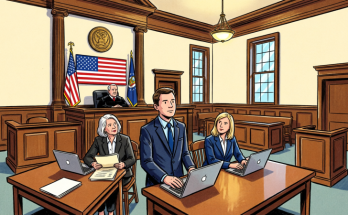
Inside, the air smelled like paper and disinfectant and something else—fear, maybe. We sat on a hard bench outside the courtroom. Mr. Halpern murmured to me about procedure, about speaking only when asked, about keeping my tone steady.
Across the hallway, my parents and Ava arrived.
My mother’s eyes flicked toward me and then away. My father stared at his shoes. Ava’s white blazer glowed under the hallway lights like a spotlight.
“Hi,” Ava said softly, approaching as if she was doing me a favor.
I didn’t respond.
She looked at Nora and smiled brightly. “Hey, sweetie!”
Nora stared at her for a moment, then looked down at her own hands. She didn’t smile back.
Ava’s smile faltered, just a fraction. “We should talk,” she murmured to me.
“In court,” I said.
She exhaled sharply, then returned to her parents’ side.
When the bailiff called our case, my heart slammed against my ribs.
We entered the courtroom, and everything narrowed.
That’s how it feels when your life is being decided by strangers: your world compresses to the width of a table, the sound of your own breathing, the weight of your daughter’s small hand squeezing yours before she sat down.
My parents’ lawyer stood and delivered his polished story. Permissive use. Informal arrangement. A younger daughter’s dream of home ownership. A reasonable request. A hardworking sister who could “figure it out.”
He looked at the judge as if inviting her to nod along.
When I stood, my knees nearly buckled, but I didn’t let them. I spoke about Nora’s illness, about needing a safe space, about being given permission, about investing money and labor. I spoke about reliance, about stability, about how this wasn’t simply an adult child “refusing to leave.” It was a mother protecting her child’s home.
I offered documents. Receipts. Photos. Messages.
The judge’s face stayed neutral, but her eyes sharpened when she read certain lines.
Then Ava stood.
She clasped her hands together, the picture of earnestness. “I’m not trying to hurt anyone,” she said. “I’ve been working hard. I’ve been saving. I just… I want a safe home. I’m tired of feeling like I’m behind everyone else. Clara always has it together. She always has options.”
Always.
As if my steadiness had appeared magically, not built from years of sacrifice.
My father muttered, “She’s ungrateful,” under his breath, loud enough for me to hear.
The judge raised a hand. “Enough,” she said firmly.
My mother’s lips trembled, but she still didn’t look at me.
And then, behind me, a small movement.
Nora.
She stood up from her seat.
The sound of a child standing in a courtroom is strangely loud, like a dropped fork in a quiet room. It turns heads. It disrupts the adult illusion that children aren’t paying attention.
“Nora,” I whispered, reaching back instinctively.
She tugged gently at my sleeve, then looked past me toward the judge. Her chin lifted. Her hands were small, but steady.
“Can I show you something?” she asked, voice clear in the quiet room.
My heart stopped.
The judge blinked, surprised. “And you are?”
“Nora,” she said. “I’m Clara’s daughter.”

The judge’s eyes softened slightly. “What do you want to show me, Nora?”
Nora hesitated for half a second, then said, “Something Mommy doesn’t know.”
My stomach dropped.
I turned toward her, confused, a sharp fear flaring—fear that she’d say something wrong, fear that she’d get hurt, fear that my family would twist her words the way they twisted mine.
But Nora’s gaze was steady.
The courtroom seemed to hold its breath.
The judge looked at Mr. Halpern. He looked at me, startled. “Your Honor,” he began.
The judge held up a hand. “Let’s hear what she has,” she said slowly. “Proceed, Nora.”
Nora nodded, as if accepting a mission.
She unzipped her backpack and pulled out her tablet.
I stared at her, my mouth slightly open. “Nora—what is that?”
She didn’t answer me. She walked forward with careful steps until she stood near my attorney, holding the tablet with both hands. Her fingers moved quickly, familiar with the device in a way that made me suddenly realize how much of her inner world existed outside my sight.
“It’s from our camera,” she said, glancing at the judge. “The one in the living room. I saved it.”
My blood ran cold.
We had a small security camera in the carriage house, installed after Nora’s hospitalization because I wanted peace of mind. It was supposed to be for safety, for monitoring, for reassurance. I rarely checked it. Life was too full.
The judge leaned forward slightly. “What does it show?”
Nora looked up at me for a brief moment, and there was something in her eyes—something older than seven.
“It shows the truth,” she said simply.
Then she pressed play.
On the tablet screen, our living room appeared—familiar, ordinary. The couch I’d scrubbed clean. The small table with Nora’s crayons. The soft afternoon light through the window.
A timestamp in the corner marked the date and time.
And then the front door opened.
My mother stepped inside first, glancing around quickly. Ava followed behind her, closing the door with a careful, quiet motion that made my skin crawl. They moved with the ease of people who believed they belonged there.
My mother went straight to the small mail basket by the door and began rifling through envelopes.
I heard murmurs—thin, conspiratorial—picked up by the camera’s microphone.
Ava walked toward the wall where the carbon monoxide detector was mounted.
My breath caught.
On-screen, Ava reached up with practiced fingers and popped the battery compartment open. She slid the battery out smoothly, as if she’d done it before.
My mother’s voice, faint but clear: “Ava, don’t touch that.”
But her tone wasn’t alarmed. It wasn’t a real warning. It sounded like performance—like she wanted to be able to claim she’d objected without actually stopping anything.
Ava laughed under her breath. “If the inspection fails,” she said, “she’ll have to move. It’s faster.”
The room went so silent I could hear the hum of the lights overhead.
My mother didn’t stop her.
On-screen, my mother lifted a stack of papers from the table—my architectural sketches, my permit documents, the neat piles of proof I’d been collecting. She flipped through them, lips pursed.
“We’ll say we thought they were old,” she murmured.
Ava slid the battery into her pocket like it was candy.
Then, from somewhere off camera, a small voice.
Nora’s voice.
“Hi, Auntie,” she said sweetly.
Ava turned toward the sound, and her face transformed instantly. The mask snapped into place with frightening speed.
“Hey, sweetie!” Ava chirped. “Secret, okay? Don’t tell Mommy.”
Nora’s voice again, uncertain. “Why?”
“Because it’s a surprise,” Ava said lightly.
And my mother—my mother—laughed softly.
The clip ended.
For a moment, the courtroom was a vacuum. No one moved. No one spoke.
I couldn’t breathe. My chest felt locked, like my ribs were bars. My ears rang.
My mother’s face had gone pale. Her lips parted, then closed again. Her eyes—finally, finally—flicked toward me.
My father stared at the tablet like he couldn’t comprehend it. Like he wanted it to be fake. Like he wanted the world to undo itself.
Ava’s white blazer suddenly looked obscene.
The judge’s eyes were no longer neutral. They were sharp, cold, offended on behalf of something more than law—on behalf of basic decency.
She leaned back slightly and looked directly at my mother and sister. “Is this accurate?” she asked, voice controlled but edged.
My mother’s mouth worked soundlessly. “We—” she began, then stopped.
Ava’s attorney stood quickly. “Your Honor—”
The judge raised a finger, and the room froze again. “Here’s what we are not going to do,” she said, calm but cutting. “We are not going to pretend this is a simple family dispute about opportunity.”
Her gaze held Ava. “We are not going to frame sabotage as empowerment.”
Ava’s face flushed. “It’s not—”
The judge turned her attention to my mother. “You entered your daughter’s home without permission and tampered with safety equipment,” she said, voice low with fury. “Do you understand what that could have done?”
My mother’s eyes filled with tears. “We didn’t mean—”
“Intent does not erase risk,” the judge snapped.
Then she looked down at the file, at my receipts, at Nora’s video evidence, at the petition that suddenly looked like what it was: not a request for fairness, but a weapon.
The judge picked up her pen.
The sound of pen on paper was the loudest sound in the world.
“Motion denied,” she said. “Petition dismissed with prejudice. And I am issuing an injunction against the plaintiffs from entering, tampering with, or otherwise interfering with the defendant’s occupancy and safety of the dwelling.”
My knees nearly gave out. I gripped the edge of the table.
The judge’s voice softened slightly as she looked at me. “Get your locks changed,” she said, not unkindly. “And consider additional protective measures.”
I nodded, unable to speak.
Then the judge’s gaze flicked toward Nora, who stood still, tablet clutched to her chest like a shield. “You did a brave thing,” she told her.
Nora’s shoulders relaxed a fraction. She nodded solemnly, as if bravery was just another job that needed doing.
My mother began to sob quietly. My father stared ahead, face rigid. Ava’s lips parted, but no sound came out. Her attorney gathered his papers with frantic movements, his polished demeanor cracking.
We walked out of the courtroom in a daze.
Outside, the hallway air felt warmer, heavier. My legs shook as if I’d run miles. Mr. Halpern squeezed my shoulder gently. “You won,” he said.
Won.
The word felt strange. Like victory didn’t quite fit when the battlefield had been my own family.
Nora tugged my hand. “Mom?” she asked softly.
I looked down at her. “Why didn’t you tell me?” My voice trembled, not with anger, but with shock.
Nora’s brow furrowed. “I didn’t want you to be sad,” she said, matter-of-fact. “And I didn’t know if it mattered until today.”
My throat tightened so hard I thought I might choke. I knelt in the hallway, ignoring the looks from strangers passing by, and pulled her into my arms.
“You kept it,” I whispered into her hair.
She hugged me back, small arms fierce. “I saved it,” she said. “Because dragons protect things.”
In the car on the way home, I kept glancing at her in the rearview mirror. She stared out the window, swinging her feet, as if she’d just done a normal school presentation.
I felt a wave of guilt crash over me.
How much had she seen? How much had she carried silently because I’d been so focused on staying “calm” that I didn’t notice my daughter was watching my world fracture?
When we pulled into the driveway behind the main house, the main house looked the same as always. The siding. The porch light. The curtains.
But it felt like a stranger’s place now. A building I’d once known intimately, now foreign.
I parked, took Nora’s hand, and walked toward the carriage house. Behind us, I heard the main house door open.
My father’s voice carried across the yard. “Clara.”
I stopped but didn’t turn immediately.
My mother’s voice, strained: “Please.”
Ava didn’t speak at all.
I turned slowly and looked at them standing on their porch like ghosts.
My mother’s eyes were red. My father’s face was tight. Ava stood behind them, arms crossed, her white blazer now wrinkled, stained by the day.
For a moment, I felt a familiar tug—an old reflex to smooth things over, to soothe, to fix. The part of me that wanted to rush toward my mother’s tears and say, It’s okay, it’s okay, even when it wasn’t.
But then I looked down at Nora.
She squeezed my hand, and I remembered the video. The casual cruelty. The safety equipment. The laughter.
My reflex snapped.
“No,” I said quietly. Not to a specific request. To the whole pattern. To the whole role.
My father’s eyes narrowed. “You embarrassed us,” he said, voice rough.
“In a room you chose,” I replied.
My mother stepped forward a fraction. “Clara, we—”
“Don’t,” I said, and even I was surprised by the steadiness in my voice. “Not here. Not now.”
Ava’s jaw tightened. “You’re acting like we tried to kill you,” she hissed.
The word kill made my stomach twist, because hadn’t she, in a way? Hadn’t she been willing to risk my daughter’s safety to “speed things up”?
“You tried to make my home unsafe,” I said, each word deliberate. “You tried to force me out by sabotage.”
My mother flinched like I’d slapped her.
“We didn’t think—” she began.
“That’s the problem,” I said. “You didn’t think about Nora. You didn’t think about me. You thought about Ava getting what she wanted.”
My father’s hands curled into fists. “We were trying to help your sister.”
“I know,” I said. “You always are.”
My father’s eyes darted toward the carriage house window, toward the life he’d just tried to dismantle.
“She’s the baby,” he muttered, like it explained everything.
The phrase hit me like a memory.
She’s the baby.
Ava had been the baby since she was born. The baby when she broke her arm at eleven and got an avalanche of attention, while I quietly did dishes and kept the house clean. The baby when she dropped out of college, and my parents said, “She’s finding herself.” The baby when she bounced between jobs, and my parents said, “She’s creative.” The baby when she spent money she didn’t have, and my parents bailed her out. The baby when she cried, and the whole world tilted.
“She’s thirty,” I said softly. “If you want to buy her a home, buy her a home. But stop asking me to be the mattress under her fall.”
My father’s face shifted—something like pain flickering through. He looked older suddenly.
My mother’s mouth trembled. “Clara, please,” she whispered.
I looked at them, and grief rose in me like a tide. Not just anger. Not just betrayal. Grief for the family I’d wanted them to be……………………….
Click Here to continuous Read Full Ending Story👉: Parents Sued to Evict Me From My Own Build__PART3(ENDING)