Part 4
They tried to move in anyway.
I should’ve expected it. People who believe rules don’t apply to them rarely change their minds because of paper. They change their minds because consequences get loud.
Three days after the dinner, I got a call from my upstairs tenant, Mr. Alvarez.
“Ms. Wade? There’s a truck outside,” he said. “And a man’s trying to open your front door.”
My stomach went cold. “Did you call the police?”
“I didn’t know if I should,” he said. “He said he’s your brother.”
“I’ll be there in ten minutes,” I said, already grabbing my keys.
When I pulled up, Mason’s SUV was parked crookedly in front of the duplex. A rented moving truck idled behind it. Brianna stood on the sidewalk with her arms crossed, directing two teenage movers like she was orchestrating a wedding.
Mason was at my front door, jiggling his key in the lock.
The key I’d given him years ago for emergencies. The one he’d never returned. The one he now treated like ownership.
I parked, stepped out, and called, “Mason.”
He turned, irritation flashing. “Finally.”
I walked up, keeping my voice steady. “That key doesn’t work anymore.”
He blinked. “What?”
“I changed the locks,” I said. “After you threatened me.”
Brianna’s jaw dropped. “You changed the locks on your own house? That’s insane.”
“It’s my house,” I said. “Not yours. Not Mom’s. Not Dad’s.”
Mason stepped closer. “Zee, stop being dramatic. The kids are excited. We already packed. We’re doing this.”
I pulled out my phone and held it up. “I’m calling Ariel.”
“Ariel who?” Brianna snapped.
“My property manager,” I said. “And security for Zelda Holdings.”
Mason laughed like that was ridiculous. “You don’t have security.”
“I do now,” I said, and hit call.
Ariel arrived in twelve minutes with a calm expression and a clipboard. She didn’t look like someone you argued with. She looked like someone who had ended arguments for a living.
“Mr. Wade,” she said, polite and firm. “This property is under management. You do not have a lease. You are attempting unauthorized entry.”
Mason puffed up. “I’m family.”
Ariel nodded. “That’s not a legal category.”
Brianna’s voice rose. “This is harassment! She’s doing this to humiliate us.”
Ariel didn’t blink. “If you do not leave, we will contact law enforcement. We already have documentation of your prior notice.”
Mason looked at me, betrayed. “You’d call the cops on your own brother?”
I held his gaze. “You’re the one who brought a moving truck without permission.”
Behind him, Mr. Alvarez had opened his upstairs window slightly, watching. A neighbor across the street stood on her porch, phone in hand. Consequences were already gathering an audience.
Mason’s face tightened. “Fine. But you’re going to regret this.”
He turned and barked at the movers to stop. Brianna hissed something sharp under her breath, scooped up a box, and slammed it back into the truck like it was my fault gravity existed.
They left, tires squealing just enough to be childish.
When the street quieted again, I realized my hands were shaking after all. Not from fear of Mason. From the grief of knowing this was who my family had chosen to be.
Ariel handed me a document. “We filed a trespass notice,” she said. “If they return, police can act faster.”
“Thank you,” I said, voice thin.
She studied me for a moment. “Are you safe?”
I nodded. “I am. I’m just… surprised.”
Ariel’s mouth tightened slightly. “Don’t be. People react badly when they lose access to what they felt entitled to.”
That night, my phone filled with messages.
My mother: How could you do this to your brother?
My father: You’ve disgraced this family.
Mason: You’re dead to me.
Brianna: I hope you enjoy dying alone in that duplex.
I stared at the last message for a long time.
Then I blocked their numbers.
Not forever, maybe. But for now. I needed quiet to think, and they didn’t know how to exist without noise.
The next morning, Wade Mechanical’s office manager, Linda, called me.
I almost didn’t answer. My father’s company was still a knot in my stomach.
But Linda’s voice was strained. “Zelda… are you really the owner now?”
“I am,” I said carefully.
There was a long pause. “Does that mean we’re losing our jobs?”
The question hit me harder than my family’s insults. Because these employees weren’t villains. They were people who showed up early, worked hard, and didn’t deserve to be collateral damage in my father’s pride.
“No,” I said. “No one’s losing their job because of this. I need to meet with you and the team.”
Linda’s exhale sounded like she’d been holding her breath for months. “Thank God.”
That day, I drove to the company building and walked into the place I’d visited only a handful of times as “Mason’s little sister.”
The receptionist looked up, startled. Linda hurried out and ushered me into a small conference room.
The walls were covered in old photos—my dad shaking hands with clients, Mason posing with equipment like a model. It smelled like dust and machine oil and history.
Linda slid a stack of overdue notices across the table. “He’s been hiding this,” she said quietly. “We’re weeks away from missing payroll.”
I felt my stomach drop. “How bad?”
She swallowed. “Bad.”
I stared at the papers, then at Linda’s worried face.
I thought of my father pounding the table about generations.
Generations didn’t pay people.
Money did.
Responsibility did.
And if my father wouldn’t handle it, I would.
Part 5
Buying a company is easy on paper. Running one is a different kind of endurance.
The first thing I did was bring in a neutral auditor—someone who didn’t care about my family drama, only numbers. Within a week, we found the truth: my dad had been moving debt around like furniture, hoping no one would notice the floor was collapsing. He’d delayed vendor payments, borrowed against future contracts, and used emergency loans to cover payroll while insisting everything was “fine.”
Mason wasn’t innocent in it. His “growth initiative” had drained cash fast, and when it failed, he’d walked away like the universe owed him forgiveness.
The employees knew something was wrong. They just hadn’t been allowed to name it.
When I called an all-staff meeting, my father wasn’t there. He refused. Said he “wouldn’t be lectured” in his own company.
So I stood in the warehouse, facing forty workers in steel-toe boots and tired eyes, and I told them the truth.
“I’m Zelda,” I said. “I know some of you know me as Mr. Wade’s daughter. But I’m here as the owner of record now. I’m not here to punish anyone. I’m here to keep the doors open.”
A murmur moved through the group.
Linda stood near the front, arms folded, watching me carefully.
“I’ve reviewed the finances,” I continued. “We’re going to restructure debt. We’re going to renegotiate vendor terms. And we’re going to stop pretending this is sustainable unless we change how we operate.”
A hand lifted—one of the senior techs, Jorge. “Are we getting paid Friday?”
“Yes,” I said immediately. “And going forward, payroll is the non-negotiable. Everything else comes after.”
The relief in the room was almost physical.
That evening, my father showed up at my duplex unannounced, pounding on the door like he still owned the right to my space.
I didn’t open it. I spoke through the door.
“This is my home,” I said. “You can’t just show up.”
His voice was thick with rage. “You stole my company.”
“I bought debt you defaulted on,” I replied. “Legally.”
“You’re doing this to punish me,” he snapped. “To embarrass me.”
I pressed my forehead against the door, eyes closed. “Dad, I’m doing this to keep your employees from missing payroll.”
Silence.
Then, quieter, he said, “You’re turning everyone against me.”
“No,” I said. “Your choices did that.”
He left without another word, but the next day a letter arrived from his attorney—demanding I return the company “to preserve family legacy,” claiming I’d manipulated a vulnerable situation.
I forwarded it to my lawyer with one line: We expected this.
The legal fight didn’t explode immediately. It simmered. Threats became emails. Emails became demands. Demands became a lawsuit filed under my father’s name, though I suspected my mother was behind the push. She loved the idea of family as control, and control was slipping through her fingers.
Mason started a smear campaign, too—telling extended relatives I’d “gone crazy,” telling cousins I’d “kicked out babies,” telling anyone who’d listen that I’d become greedy.
It almost worked on some people. Because family stories stick, even when they’re wrong.
But I had something my family never valued until they needed it: receipts.
My lawyer filed responses. The auditor’s report. The debt purchase documentation. The payment history showing default. The chain of ownership.
Truth is boring until it saves you.
Meanwhile, I kept running Wade Mechanical.
We cut waste. We ended Mason’s fantasy expansion. We invested in training for techs. We offered small raises tied to performance and safety. We started bidding on contracts my father avoided because they required transparency.
Within three months, the company stabilized enough to breathe.
Linda pulled me aside one afternoon. “You know,” she said, voice quiet, “a lot of us stayed because we didn’t want to abandon this place. But we were scared. We thought we’d go under.”
I nodded. “I was scared too.”
She studied me. “Your dad doesn’t understand what you did. But the workers do.”
That night, I sat in my duplex with a spreadsheet open, balancing budgets for both the properties and the company, and I felt something unexpected.
Not joy.
Peace.
Because for the first time, my survival didn’t depend on whether my family approved of me.
It depended on my decisions.
Mason tried one more angle in month four. He called from a number I hadn’t blocked—his friend’s phone.
“Zee,” he said, voice softer, like he was trying out a new mask. “Look, this got out of hand. We just need a place. Let us rent the duplex. Family rate.”
I almost laughed.
“Fill out an application,” I said. “Same as everyone.”
His voice hardened. “You’re really going to make me do that?”
“Yes,” I replied. “Because you’re not special.”
He exhaled sharply. “Brianna’s furious.”
“I don’t care,” I said. “Tell her the master bedroom isn’t available.”
There was a long silence. Then, in a smaller voice, Mason said, “Dad says he’ll never forgive you.”
I looked around my home—the worn couch I’d saved for, the framed photos I’d taken on solo trips, the quiet I’d built.
“I’m not asking him to,” I said. “I’m asking him to stop trying to take.”
I hung up, and for the first time in my life, I didn’t feel guilty about it.
Part 6
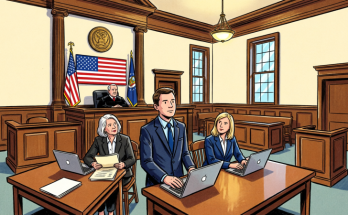
The lawsuit didn’t make it to a dramatic courtroom showdown.
It made it to mediation—two beige rooms, stale coffee, and a mediator who spoke in calm tones like everyone involved was reasonable.
My father sat on one side with my mother and their attorney. He looked smaller than he used to, not physically, but in spirit—like the act of losing control had shrunk him. My mother wore her “injured” face, the one that said I had personally attacked her by refusing to be obedient.
Mason didn’t come. Brianna did, though, sitting behind my parents like a shadow, whispering in my mother’s ear, eyes sharp.
On my side, my attorney sat with a neat stack of documents. I sat with my hands folded, posture straight, refusing to look like the villain they wanted.
The mediator started with the usual. “We’re here to find a solution that avoids prolonged litigation.”
My father’s attorney launched immediately. “My client believes this acquisition was unethical. His daughter took advantage of confidential family information—”
“It wasn’t confidential,” my attorney said calmly. “It was public record. Debt filings. Defaults. Liens.”
My father’s face reddened. “You think you’re so smart,” he muttered, just loud enough for me to hear.
I met his eyes. “I think I’m tired.”
My mother gasped like I’d slapped her. “After everything we’ve done for you—”
My attorney raised a hand slightly. “We’re not here for emotional arguments. We’re here for legal facts.”
The legal facts were simple: the bank sold debt, I bought it, shares transferred, ownership changed.
But mediation isn’t just about facts. It’s about what people are willing to accept without losing face.
The mediator asked, “Mr. Wade, what do you want?”
My father’s jaw tightened. “My company back.”
“And what are you offering in exchange?” the mediator asked.
My father’s eyes flicked away. He had nothing to offer. He didn’t have money. He didn’t have leverage. He had only entitlement.
My mother leaned forward. “She should give it back because she’s family.”
The mediator’s expression didn’t change, but her tone cooled. “That’s not a legal basis.”
Brianna whispered something to my mother, and my mother’s face sharpened. “Fine. Then she should at least let Mason move into the duplex. They have children.”
I felt heat rise in my chest, but my voice stayed level. “My duplex has tenants. And Mason attempted unauthorized entry. I will not reward that behavior.”
My mother’s eyes flashed. “You’d rather strangers live there than your own brother?”
I looked at her steadily. “My tenants pay rent and respect boundaries.”
Silence.
The mediator tried a different angle. “Zelda, are you willing to sell the company back? At fair market value?”
My father straightened slightly, as if he’d suddenly found hope.
I shook my head. “No.”
My father’s face twisted. “Greedy.”
I didn’t flinch. “Responsible.”
Then I slid a folder across the table. “This is the auditor’s report showing we were two weeks from missing payroll,” I said. “This is the restructure plan I implemented. This is the new contract pipeline. This is the fact that the company is healthier now than it was under my father’s leadership.”
My father stared at the papers like they were written in another language.
The mediator looked through them, impressed despite herself. “This is… substantial.”
“It’s what the employees deserved,” I said quietly.
My mother’s voice softened, trying a different weapon. “Zelda… honey… you can’t do this alone forever.”
There it was. The loneliness hook. The one they’d used my whole life.
I smiled, small and sad. “I’m not alone. I have a team. I have friends. I have a life you don’t bother to know because it doesn’t revolve around Mason.”
My father slammed his hand on the armrest. “So you’re just going to destroy your family?”
I leaned forward slightly. “No. I’m refusing to be destroyed by it.”
The mediator took a deep breath. “What would resolution look like for you?”
I didn’t answer right away. Because part of me still wanted the impossible: a real apology, a real shift, my parents seeing me as a person instead of an extension cord.
But mediation wasn’t therapy. It was negotiation.
“I’m willing to do this,” I said. “Wade Mechanical remains under Zelda Holdings. My father can stay on as a paid consultant if he agrees to professional conduct and no interference. Mason will not be hired unless he applies for an open position and meets requirements. The duplex will not be offered for free. If Mason wants to rent any property owned by Zelda Holdings, he applies like everyone else and pays market rate.”
My mother’s face turned shocked. “You’re treating your own family like strangers.”
I tilted my head. “I’m treating everyone the same.”
Brianna let out a sharp laugh. “That’s insane.”
My attorney spoke calmly. “Those terms are reasonable and, frankly, generous.”
My father’s attorney whispered to him. My father’s face moved through rage, humiliation, and something else—fear, maybe. Because the truth was, he didn’t have another path that ended with him in control again.
He looked at me. “If I accept, you’ll let me keep my title?”
The question made my stomach twist. His pride still clung to words.
“You can have a title,” I said. “You can’t have ownership.”
He swallowed hard.
My mother leaned toward him, whispering urgently. Brianna’s eyes narrowed like she was calculating how to twist this into a story where she still won.
Finally, my father spoke, voice tight. “Fine. Consultant.”
My mother’s eyes widened. “Harold—”
He cut her off. “Enough.”
The mediator exhaled slowly, relieved. “Okay. We’ll draft an agreement.”
As we stood to leave, my mother grabbed my wrist, her nails biting slightly. “You think you’re free now,” she hissed, low enough no one else heard. “But you’ll come back. You always come back. You’ll need us.”
I pulled my wrist from her grip gently, like removing a splinter. “No,” I said. “I won’t.”
I walked out of the beige room into sunlight, and it felt like stepping into air after years underwater…….