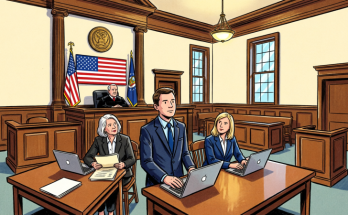
Rodrigo Del Valle, Esq. Senior Partner.
The office was in a building less ostentatious than the Velasco Tower, but it still featured glass doors, an impeccable receptionist, and that expensive silence that makes you breathe softly so as not to stain it. When I gave my name, the woman looked up immediately, as if I were already expected.“We’ve been expecting you, Ms. Sofia.”That chilled me more than anything else.Rodrigo Del Valle was a man in his sixties, wearing a dark suit, with perfectly combed gray hair and a weary gaze—the kind that has seen too much and kept quiet about even more. He didn’t offer me coffee or the smiles of a friendly lawyer. He simply closed the door, pointed to the chair across from his desk, and opened a thick, wine-colored folder.
“Your mother first came to see me eleven years ago,” he said. “She returned many times after that. Always alone.”“I want to know the truth.” He observed me as if he were comparing my face to another face from decades ago. “Your mother didn’t want the truth to destroy you. She wanted it to serve you.” He pulled several documents from the folder. Bank statements. Deeds. Certified copies. Business reports filled with handwritten notes. My mother’s handwriting—firm, contained, cold.“Maurice Velasco didn’t just send those deposits. He also set up a trust fund in your name when you were born.”
I felt the air leave the office. “How much?” “Enough to change your life… and to sink his, if used at the right moment.” I didn’t know if I was trembling from fear or rage. Rodrigo turned the folder toward me. There was a figure written on the last page. I didn’t understand it at first. It seemed too large to belong to someone like me—someone who used to count pennies before getting on the bus.
“This can’t be.”“It can. Your mother never touched that money. She watched over it. She let it grow. And over the years, she gathered something even more valuable than that.”He pointed to the underlined clippings, the notes, the reports. “Evidence.” He then explained what my mother had discovered. The Velasco Group wasn’t the clean empire featured in magazines. They had inflated numbers, hidden debts in shell companies, and diverted money from private hospitals to paper construction firms. Everything was rigged so that Maurice appeared untouchable. But three years ago, when Leo took over management, he started making mistakes. Arrogant mistakes. Too confident in the family name. Too stupid to understand that a corrupt structure can also collapse from within.
My mother had spent years observing. Learning. Waiting.
“Why didn’t she do it herself?” I asked, my voice cracking. “Why did she leave this to me?”
Rodrigo held my gaze.
“Because she was sick, Sofia. And because she wanted to give you a choice she was never given.”
He opened a white envelope. Inside was a letter. I recognized my mother’s handwriting before I even touched it. I read it right there.
“Sofi:
If you’re reading this, I couldn’t stay to help you carry what’s coming. Forgive me for that. I didn’t leave you an inheritance so you could live on your knees before anyone. I left it so you would never again have to depend on the compassion of a cowardly man.
Maurice was never poor in money. He was poor in soul.
Thomas was the only man who loved you without having to. Don’t let him go for the sake of biological ties.
You decide what to do with your truth. You can go far away, study, start over. Or you can cut open the monster and show the world the rot inside.
I only ask one thing: don’t become like them.
With love,
Mom.”
I cried in silence. Not like in the movies. Not pretty. I cried doubled over that sheet of paper, with rage leaking from my eyes and an unbearable tenderness breaking my heart. When I looked up, I already knew what I was going to do.
“I want to see him.”
Rodrigo didn’t seem surprised.
“Then we have to do it right.”
Over the next two weeks, my life became something else. I left the tea shop. I locked myself away to study papers, names, dates, transfers, and corporate structures. I learned words that had never existed in my world: leverage, triangulation, subsidiary, accounting simulation. By day, I reviewed files. By night, I returned home and sat with Thomas in the kitchen, under the same yellow lightbulb, eating beans while he pretended not to worry.
One night he found me awake at three in the morning, surrounded by papers.
“You’re starting to look like your mother,” he said.
I thought he said it with pain. But when I looked up, I saw pride.
“She had that same face whenever something got into her heart.”
I put down my pen.
“Did it ever make you angry to raise me, knowing everything?”
Thomas stood there, leaning against the doorframe.
“Of course it did. It made me angry. It made me ashamed. It made me afraid. But it never made me doubt. You were my daughter from the first time I held you.”
That finally broke me. I got up and hugged him with almost violent strength. He smelled of cigarettes, cheap soap, and home. The only real home I had ever had in my life.
“Whatever happens,” he whispered into my hair, “don’t forget who taught you how to stand up.”
The day of the Velasco Group anniversary arrived like a date my mother had written before she died. A charity gala. The press. Investors. Cameras. Maurice would give a speech on social responsibility and the future of the company. Rodrigo secured an invitation in my full legal name, with a surname that, until then, had felt too heavy in my mouth.
Sofia Velasco.
The event receptionist looked at me twice. She surely saw the borrowed dress—simple but elegant—and the nerves poorly hidden under my makeup. I walked in with my back straight, remembering my mother’s last instruction: Don’t let him look down on you.
The ballroom glittered with gold, crystal, and untouchable people. Maurice was at the back, surrounded by executives, wearing that domesticated smile of a respectable man. Rebecca looked like an ice queen. Leo went from table to table, carrying himself as if the world were a carpet laid out for his shoes.
When his eyes met mine, I recognized it all at once: the smugness, the casual cruelty, the habit of humiliating without getting his hands dirty. He frowned. He didn’t know who I was yet.
I waited until Maurice took the stage. He spoke of growth, of ethics, of family. Family. The word opened something dark inside me. Rodrigo, at the back of the room, gave a slight nod.
It was time.
I stood up among the tables. My voice sounded louder than I felt.
“Are you also going to talk about the daughters you abandon, or does that not fit into the speech?”
The entire room went silent. Maurice froze, one hand on the lectern. Rebecca turned as if she had been slapped. Leo immediately looked for security.
“Miss, please take your seat,” someone said.
I wasn’t listening to anyone anymore. I pulled the old photograph from my purse and held it high.
“My name is Sofia. I was born eighteen years ago. The same month that a seamstress, whom this family dragged through the mud, started receiving deposits. My mother died a few weeks ago. But before she died, she left me enough truth so that today, no one here can keep pretending.”
There were murmurs, phones being raised, cameras turning. Leo stepped off the stage in a fury.
“Get her out of here.”
“Touch me and I’ll report you in front of every camera,” I said, never taking my eyes off Maurice. “Just as I am reporting this.”
Rodrigo stepped forward then and handed a folder to several journalists who were already closing in like sharks. Reports, transfers, shell companies, embezzlement. Everything organized. Everything clear. Everything lethal.
Maurice’s face shifted first to panic and then to an old, useless sadness that earned no sympathy from me.
“Sofia…” he said.
It was the first time I had heard my name in his voice. And I felt nothing.
“Don’t speak my name as if you know me.”
Rebecca stood up, white with rage. “This is extortion.”
“No,” I replied. “The extortion was what you did to my mother for eighteen years. This is called the final accounting.”
Maurice stepped off the stage slowly, looking like a much older man than he had at the beginning of the evening. He tried to approach. I took a step back.
“I tried to protect you both,” he said.
I let out a dry laugh. “Sending money in secret isn’t protecting. It’s paying for silence.”
The press was already on him. Flashes cut across his face. Leo shouted orders that no one followed. Rebecca demanded lawyers. And I, in the middle of that collapse, realized something unexpected: I didn’t feel powerful. I felt tired. Terribly tired.
Maurice looked at me with eyes that were my own, and for that, they disgusted me more.
“What do you want?”
I thought of my mother sewing until her hands hurt. Of Thomas setting aside money for my school supplies when there wasn’t even enough for shoes. Of myself, picking up bills from the floor with my dignity in pieces… no, correcting myself: refusing to pick them up.
Then I understood that the answer wasn’t revenge. It was freedom.
“I don’t want your name,” I said. “I don’t want your pity. I don’t want you to recognize me now just to clear your conscience in front of the cameras. I want you to pay. With money, with lawsuits, with shame, with everything that’s coming. But I’m not staying here to see if you learn how to be human. It’s too late for that.”
I handed a notary, whom Rodrigo had brought, the trust fund documentation and my signed decision. Half would go to a scholarship in my mother’s name for the daughters of workers unjustly fired. The other half would fund my studies, Thomas’s pending knee surgery, and a life far away from them.
“My mother left me a choice,” I said, no longer shouting. “And I choose not to rot at your table.”
No one spoke. I turned around. Maurice said my name again, but this time I didn’t stop.
Outside, the night air was cold and clean. Behind me, the shouting, the reporters, and the scandal continued, shattering like glass. But I only saw a figure leaning against the curb, smoking with the sad patience of someone who has waited a lifetime.
Thomas.
“Well?” he asked as I approached.
I looked at him. I thought of everything I had lost and the only true thing I still had.
“It’s over.”
He dropped the cigarette, crushed it with his boot, and opened the taxi door for me. We got in without saying much. The city rushed by, damp behind the window. In my lap, I held my mother’s letter, carefully folded. For the first time since her death, it didn’t ache like a void. It burned like a flame.
When we got home, before going inside, I looked up. The sky in our neighborhood rarely showed stars, but that night, I’d swear there was one.
“You did well,” Thomas said.
I shook my head. “I did it the only way I could.”
“That’s how important things get done.”
I went into my mother’s room one last time. Her needles, her threads, the faint smell of camphor and cheap cream were still there. I sat on her bed and left the letter on the quilt. Then I opened the savings book, tore out the final page, and wrote beneath her name:
“No one is going to look down on us anymore.”
I closed the book and took a deep breath. The next morning, when dawn broke, I wasn’t rich, or an orphan, or an heiress, or a bastard.
I was something else.
I was the daughter of a woman who had endured hunger without bending and of a man who had loved me without owing me anything.
And for the first time in my life, that felt greater than any name