I Came Home 2 Days Early. My Son Was Not In His Room. My Mom Said He Was Staying At My Sister’s House. I Drove There. When I Arrived, The Boy Was Tied Up. His Suitcases Were Already At The Graveyard.
1 A.M. 30 Minutes Later, The Police Stormed In…
Part 1
I changed my flight because I wanted to be the kind of mother who surprised her kid in the best possible way.
That was the thought in my head when I rolled my suitcase down our front walk at a little after midnight, hair still smelling faintly like stale airplane air and hotel shampoo, my shoulders sore from two days of smiling through a sales conference in Phoenix. I had imagined Austin hearing the front door, running out in his dinosaur pajama pants, crashing into me so hard I’d almost drop my bag. I even bought him a plastic snow globe from the airport gift shop with a cactus inside it because he collected ugly little things like they were treasure.
The porch light was off.
That should have told me something.
Usually, when I traveled, my mother insisted on “helping out,” which mostly meant she let herself in, rearranged my kitchen, and made remarks about how hard it was for children when their mothers worked. But she always left the porch light on. Always. She said a dark house made a family look neglected.
I opened the front door with my own key and stepped into a kind of silence that felt wrong immediately. Not peaceful. Not asleep. Hollow.
The living room lamp was on in the corner, throwing a weak yellow circle across the rug. There was a mug in the sink with a lipstick print on it. Cinnamon air freshener floated through the house, one of my mother’s favorites, trying and failing to cover the smell of old coffee and furniture polish. My suitcase wheels thumped once over the hardwood, and I winced at the noise, then smiled to myself, already picturing Austin grumbling from his room that I’d woken him up.
“Austin?” I called softly.
No answer.
I set my suitcase by the stairs and climbed up, my travel backpack tugging on one shoulder. I passed the framed school photo from second grade—the one where Austin’s cowlick refused to obey and his grin looked like he knew a secret. My chest warmed. Then I pushed open his bedroom door.
His bed was empty.
Not just empty. Untouched.
The blanket with the faded rockets on it was folded back too neatly, and the stuffed shark he slept with every night was sitting upright in the corner of the mattress like someone had placed it there for a picture. Austin never left that shark like that. He slept with it smashed under his chin, one fin bent backward.
I crossed the room fast and put my hand on the sheet.
Cold.
I checked his bathroom. Empty. Closet. Empty. Under the bed, which was ridiculous, because he was eight and thought hiding under beds was “for babies,” but I checked anyway.
“Austin?”
The house stayed silent.
My skin went hot and then cold so quickly it felt like stepping from a sauna into snow. I pulled out my phone and called my mother before my brain could get any farther ahead of itself.
She answered on the third ring, voice thick with sleep in a way that sounded practiced.
“Alicia?”
“Where’s Austin?”
A beat. Not long. Just enough.
“At your sister’s,” she said. “He wanted a sleepover.”
I gripped the edge of Austin’s desk so hard my fingers slipped on a smear of dried glue. “At Brenda’s?”
“Yes,” she said, too smooth now, too awake. “They’re planning a little outing tomorrow. He was excited.”
I stared at the glow-in-the-dark stars on my son’s ceiling, peeling at the edges. Brenda hated children. She didn’t just dislike noise or messes. She hated the sticky hands, the interruptions, the unpredictability of kids. Once, when Austin was five, he knocked over a coaster at her apartment and she looked at him like he’d spit in her face. She had never offered a sleepover. Never once asked to take him anywhere. She forgot his birthday three years in a row and called him “the boy” when she was irritated.
“Put him on the phone,” I said.
“He’s asleep.”
“At Brenda’s?”
My mother sighed, the sigh she used when she wanted the world to know she was dealing with a difficult woman. “Alicia, it’s after midnight. Don’t start. He’s fine.”
“Why is his bed cold?”
“Alicia—”
“Why didn’t you text me?”
“I didn’t think I needed permission for a child to enjoy his family.”
The words slapped. Not because they were cruel. Because they were my mother. She always reached for guilt before truth.
I left the room and moved down the hall, checking the guest room out of pure instinct, as though Austin might somehow be there. Empty. I could hear my own breathing now, too loud in my ears.
“Which outing?” I asked.
Another pause.
“The zoo.”
It was January.
I said nothing.
She tried again. “You’re exhausted. Go to sleep. Pick him up in the morning.”
“I’ll call Brenda.”
At that, her voice sharpened. “Don’t you dare wake her up acting crazy.”
Crazy.
That word, from my mother, had always meant I was standing too close to a truth she wanted me away from.
I ended the call without saying goodbye.
For one second I just stood there in the hallway with my phone in my hand, hearing the old house settle around me, pipes ticking in the walls. Then I opened the app connected to Austin’s smartwatch. David had insisted on it last year after Austin wandered off at a county fair trying to follow a balloon guy. We only used it twice after that, both harmless, both boring.
The map took two seconds to load.
Those were the longest two seconds of my life.
Then the little blue dot appeared.
Not near Brenda’s townhouse.
Not even on her side of the city.
It blinked inside St. Bartholomew Cemetery.
I actually stopped breathing. I know people say that when they mean they gasped, but I mean my lungs forgot what to do. I stared at the map while my pulse hammered in my throat so hard it made me nauseous.
At the bottom of the screen, under the location pin, was the timestamp.
1:07 a.m.
Current.
I called Austin’s watch. It rang once. Then disconnected.
I ran.
I didn’t lock the house. I didn’t turn off the lamp. I didn’t even take my suitcase back out to the car. I just grabbed my keys from the bowl by the door and sprinted into the freezing dark with my conference badge still hanging stupidly around my neck.
In the car, I called 911 before I pulled away from the curb.
The operator kept asking me to slow down, to repeat myself, to tell her exactly what I saw. But all I could see was that blue dot blinking among the dead while my mother’s lie was still warm in my ear.
When I turned onto the main road, the cemetery address lit up on my dashboard map, and my hands shook so badly I nearly missed the light.
I didn’t know yet what I was driving toward.
I only knew my son was not where he was supposed to be, and the first person who should have protected him had lied to my face.
Then the gates of St. Bartholomew’s rose out of the dark ahead of me, and the blue dot stopped blinking.
Part 2
The cemetery gates were half open.
That detail lodged in my mind in a weirdly sharp way, even through the panic. One wrought-iron side stood still, and the other swayed a little in the wind, making a slow metal groan like the place itself was trying to warn me off. My headlights swept over old stone angels, black trees, and frozen grass silvered by frost.
I slammed the car into park and left the engine running with the driver’s door open.
The cold hit like a slap. Not clean cold. Wet, January Ohio cold that slid down your sleeves and found the back of your neck. Gravel crunched under my flats as I ran between rows of headstones, my phone flashlight bouncing wildly over names and dates and marble gone green with age.
The operator was still in my ear through my AirPods, her voice tinny and far away.
“Ma’am, officers are en route. Do not approach if you see—”
I saw a car first.
Brenda’s gray sedan sat under a huge oak near the older section of the cemetery, driver’s side door open, interior light glowing weakly. A cigarette ember flared in the dark. Then I saw her, one hip leaned against the car, smoking like she was outside a bar waiting for a friend.
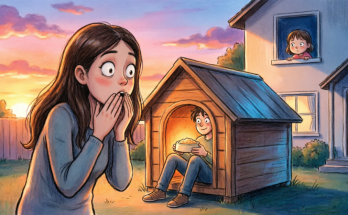
And beside her, tied to a rusted iron fence, was my son.
For half a second the whole world went soundless.
Austin was on the ground with his knees drawn up, wrists bound in front of him with thick rope. Silver duct tape covered his mouth. He wore his blue winter coat, but it was unzipped and hanging off one shoulder. His cheeks were raw red from the cold. Two suitcases stood upright beside him like someone had packed for a trip.
Then he lifted his head and looked at me.
I have never seen relief hit a human face so hard.
His eyes widened, filled instantly, and he made this strangled sound behind the tape that I still hear sometimes when I wake up at night.
Brenda took one last drag from her cigarette, flicked it onto the frozen ground, and crushed it under her heel.
“You came fast,” she said.
I didn’t remember dropping the phone, but suddenly the 911 operator’s voice was gone and both my hands were free. My legs felt numb and electric at the same time.
“What did you do?” I heard myself say.
Brenda shrugged. She looked almost bored. Her blond hair was pulled into a messy knot, and she had on my mother’s old camel coat, the one with the missing button. The familiarity of it made the scene even sicker.
“I’m making a point,” she said. “You don’t listen unless something costs you.”
I moved toward Austin.
She stepped in front of me. “He’s fine.”
“He’s freezing.”
“He’s learning.”
Those two words cracked something in me.
I hit her.
Not elegantly. Not bravely. Not like the women in thriller movies who know exactly where to strike. I just threw myself at her with every ounce of animal panic in my body. We slammed into the side of her car hard enough to rock it. She cursed and clawed at my face. I shoved her away and she slipped on the frost, went down on one knee, still yelling.
Austin made another muffled sound.
I dropped in front of him so fast I nearly fell. His hands were icy through the rope. The duct tape came off with a horrible ripping sound and he sucked in air so sharply he started coughing.
“Mom,” he sobbed. “Mom, Mom—”
“I’m here. I’m here. Baby, I’m here.”
My fingers shook so badly I couldn’t work the knot. I yanked at it anyway. My nails bent back. My breath came out in white bursts. He was trembling so hard his teeth clacked together.
Behind me Brenda stood up and said, almost conversationally, “Maybe now you’ll sign what you should’ve signed months ago.”
I froze for one second.
Sign what?
Then red and blue lights exploded across the headstones.
Several squad cars came through the gate at once, beams cutting across the cemetery, engines growling over the graves. Officers jumped out shouting commands.
“Hands where I can see them!”
Brenda lifted both hands and immediately started screaming. “She attacked me! She’s unstable! This is a family misunderstanding!”
One officer rushed toward me and Austin, another toward Brenda. I kept one arm around my son while I fumbled the rope loose with the other. An officer knelt beside us, gloved hands calm and quick.
“Ma’am, let me help. Sir, can you hear me? What’s your name?”
“Austin,” he whispered, voice shredded.
When the rope finally came away, I pulled him straight into my chest. He felt terrifyingly light and stiff, like I was holding a bundle of frozen branches under a little-boy coat. He buried his face in my shoulder and clung so hard it hurt.
Brenda was still shouting.
“She overreacts to everything! Ask him! Ask the kid! It was a lesson!”
The officer handcuffing her said, “A lesson in what?”
She actually laughed. A dry, ugly sound. “In consequences.”
I stood up with Austin in my arms and turned just enough to look at her.
“Stay away from us,” I said.
My voice didn’t sound like mine. It sounded flat. Used up. Like something had burned clean through it.
An EMT wrapped a foil blanket around Austin while another checked his pupils and temperature. Somebody put my dropped phone in my coat pocket. Somebody else asked if Brenda had any weapons. I answered questions automatically while staring at the two suitcases.
One was Austin’s red roller bag from summer camp.
The other was mine.
I knew it from the broken zipper pull.
That chilled me almost as much as seeing him tied to the fence. Brenda hadn’t grabbed random luggage. She had packed with intent. This wasn’t some impulsive drunk stunt. This was prepared.
At the hospital, everything smelled like bleach, hot plastic, and coffee that had been sitting too long on a burner. They got Austin into a room quickly because of the cold exposure. Mild hypothermia, the doctor said. Fright response. No visible head injury. They wanted to keep him overnight and have a child trauma specialist see him in the morning.
I sat on the side of his bed and rubbed his shin through the blanket because he flinched whenever anyone touched his hands.
“Mom?” he whispered sometime around four.
“Yeah.”
“Did I do something bad?”
It took me a second to answer because my throat had closed up completely.
“No,” I said. “No, baby. You did everything right.”
He stared at the heart monitor for a while, listening to its steady beep. “Aunt Brenda said if I was brave, you’d finally stop being selfish.”
I closed my eyes.
Before I could respond, the door opened and my mother walked in.
She was wearing a cream sweater and pearl earrings like she’d gotten dressed with care. Her lipstick was perfect. Her face, though, had that pinched injured look she used whenever she wanted sympathy before anyone had accused her of anything.
She glanced at Austin once. Barely. Then at me.
“You called the police on your sister?”
I stood up so fast the chair legs scraped.
“She tied him to a fence in a cemetery.”
My mother pressed a hand to her chest. “Oh, for heaven’s sake, Alicia, don’t be dramatic. Brenda said she was scaring him, not hurting him. It was a prank that got out of hand.”
“A prank?”
Austin turned his face into the pillow.
“She’s under enormous pressure,” my mother went on. “You know she’s struggling. She owes money, and people have been threatening her. She isn’t herself.”
I stared at her. “You knew.”
Her eyes shifted.
And there it was. The answer. Not in words. In that tiny movement.
“You knew,” I said again, quieter this time.
My mother’s voice softened into the one she used when I was a child and she wanted my obedience to feel like comfort. “Family handles family. You didn’t need to humiliate her.”
I pulled out my phone, found the call recording from earlier, and hit play. Her voice filled the room telling me Austin was happily asleep at Brenda’s. Calm. Easy. Lying without effort.
When it ended, my mother looked at the floor.
“Get out,” I said.
“Alicia—”
“Get out.”
She drew herself up, offended now. “You’re making a terrible mistake.”
“No,” I said. “The terrible mistake was ever trusting you.”
A nurse stepped in because my voice had risen. Then security. My mother cried on cue, dabbing her eyes, telling them there had been a misunderstanding. I didn’t move. I didn’t soften. I watched them escort her down the hall while the fluorescent lights made everything look harsh and tired and real.
When the room was quiet again, I sat back down beside Austin.
He was staring at the door.
“Mom,” he whispered.
I leaned close enough to smell hospital soap in his hair.
“Grandma gave Aunt Brenda your office key,” he said. “I saw it.”
Part 3
David got to the hospital just after sunrise with his tie crooked and his overnight bag still in his hand.
He had flown back from Chicago on the earliest thing moving once I called him. I knew from the rasp in his voice that he hadn’t slept. He came into the room, saw Austin, and all the color left his face so fast it scared me.
Then he set the bag down and wrapped both of us up in his arms.
David was not a dramatic man. He fixed things. Paid bills on time. Knew where the extra batteries were. When I spun out, he got quieter, steadier. That morning his coat smelled like cold air and airport coffee, and when he kissed the top of Austin’s head, his mouth trembled.
“I’m here,” he said.
Austin clung to him for maybe five full seconds before pulling back, which told me more about the damage than any doctor had. Usually David could get ten uninterrupted minutes of hero worship from that child just by walking through the door with a cinnamon roll.
The detective assigned to the case met us in a consultation room later that morning. Detective Ruiz. Mid-forties maybe, dark eyes, no nonsense, the kind of voice that made you sit a little straighter without knowing why. She had a legal pad, a paper cup of coffee, and the expression of somebody who had already heard too many adults explain the unexplainable.
She told us Brenda had been booked overnight on kidnapping, child endangerment, unlawful restraint, and several related charges while they continued investigating.
“Kidnapping?” I repeated, almost stupidly. The word felt too big, too cinematic, too much like something that happened on the news to families other than mine.
Ruiz held my gaze. “She transported your child without your consent, restrained him, and there is evidence she intended to keep him away from you for at least some amount of time. That counts.”
My eyes went to the suitcases in my mind again.
David asked, “Did she say why?”
Ruiz looked down at her notes. “She’s inconsistent. First she said it was a joke. Then she said she was teaching him resilience. Then she said you people forced her hand over a house dispute.”
The room went very still.
I said, “What house dispute?”
Ruiz watched my face for a second, measuring something. “That may be what we need you to help us figure out.”
Back at home that afternoon, the house felt ruined in a way that had nothing to do with broken locks or disorder. It looked almost normal. That was what made it so ugly. The lamp still glowed in the living room where I’d left it. My suitcase still sat by the stairs like a dumb little monument to the life I’d had twenty-four hours earlier.
Austin went with David to pick up some clothes and his tablet while I met Ruiz and another officer in my office.
Office sounded grander than it was. It was the small room off the dining area where I kept my work laptop, billing files, and the household documents David and I were old enough to care about now: mortgage papers, insurance, wills, Austin’s birth certificate, tax returns. The room smelled faintly of printer toner and the lavender candle I lit when I paid bills, as if debt could be made prettier by scent.
Every drawer in my desk had been opened.
Not torn apart. Searched.
That was worse.
Ruiz crouched by the filing cabinet and pointed to a scratch near the lock. “She tried this first.”
The spare key Austin mentioned explained the front door. It did not explain why Brenda had come straight here.
We pulled the camera footage from the interior security system David had installed after a rash of neighborhood break-ins the year before. I had forgotten we even had a camera angled toward the front hall and office doorway because normal life has a way of making precautions feel theatrical until the day they aren’t.
The footage loaded in grayish, timestamped clips.
At 8:14 p.m., Brenda let herself in.
She was wearing a knit hat and gloves, moving with the confidence of someone who expected no interruption. My mother stepped in right behind her, carrying Austin’s backpack.
My stomach dropped so violently I had to brace a hand on the desk.
On the screen, Austin came into frame a second later. His head was down. He was carrying his stuffed shark by one fin.
“Austin,” I whispered at the monitor, uselessly.
Brenda knelt in front of him. I couldn’t hear the words, but I saw the false sweetness in her body language, the pointed finger toward the stairs, the little clap of her hands as if this were all some game. Austin hesitated. My mother put a hand on the back of his neck and steered him toward the kitchen.
Then Brenda went straight into my office.
Not his room. Not the pantry. Not the linen closet where normal people hid birthday gifts.
My office.
She opened drawers, rifled folders, flipped through a binder, crouched to check the locked cabinet. She swore when it didn’t open. She yanked a stack of paperwork from the shelf, scattered it, scanned quickly, and shoved most of it back.
Ruiz paused the video. “What would she be looking for?”
I stared at the frozen image of my sister in my chair, in my house, reaching with my hands toward my life.
“There was a blue file box,” I said slowly. “Metal. Top shelf of the closet.”
David looked at me. “The property stuff?”
I nodded.
The property stuff.
When Aunt Elena died three years earlier, she left me her house—the one we lived in. Not because I manipulated an old woman, despite Brenda’s favorite version of events. Because I had spent years taking Aunt Elena to appointments, helping with groceries, fixing internet passwords, and listening when she talked. Brenda showed up twice a year, usually right before Christmas, smelling like expensive perfume and impatience. Aunt Elena saw things clearly. That had always been Brenda’s real grievance.
The house was legally mine before I married David. We refinanced later together, but the original deed and estate paperwork were still in that blue box, along with some old family documents and the terms of Elena’s trust.
David went to the closet and came back a second later.
“The box is gone.”
I sat down hard.
Ruiz asked a few more questions, but my brain kept splitting in two directions at once. One part stayed practical—yes, that was missing, no, Brenda had no legitimate claim, yes, my mother knew the layout of the house. The other part kept drifting toward Austin walking through my front hall with his shark in one hand and my mother’s palm pressed between his shoulder blades.
After Ruiz left, David found Austin curled up on our bed, not his own. He didn’t want to be upstairs alone. He didn’t want his room with its familiar posters and baseball trophies and the empty square on the desk where his watch charger sat. Trauma does that, the therapist told us later. It makes the ordinary feel contaminated.
That night, after Austin finally slept between us with every light in the room on, I went back downstairs and watched the footage again without sound.
This time I caught something I’d missed.
At 8:12 p.m., two minutes before Brenda came through the door, my mother stood on the porch looking around like she wanted to make sure no one was watching. Then she reached into her purse and handed Brenda a key.
Not the spare house key.
A smaller one on a blue plastic tag.
The key to my office cabinet.
I paused the video there, my mother’s fingers still touching my sister’s hand.
It wasn’t panic. It wasn’t a mistake. It wasn’t family chaos spilling over the edges.
It was planning.
And if they had planned this much before I got home, I still didn’t know what they had planned next.
Part 4
By the time Austin came home from the hospital, he had stopped asking if he was in trouble and started asking more dangerous questions.
“Did Grandma know it was going to be cold?”
“Why did Aunt Brenda bring my shark if she was mad at me?”
“Can people go to jail if they’re family?”
Those questions came at odd moments. While I buttered toast. While I helped him pull on socks. While I stood in the bathroom doorway pretending I wasn’t timing how long he took to stop crying after a nightmare. Trauma, I learned quickly, is not a neat dramatic thing. It leaks. It shows up in the cereal aisle and at bedtime and in the way a child suddenly needs the shower curtain open because closed spaces feel like a trap.
The house became a command center.
David upgraded the cameras. Detective Ruiz connected us with a victim advocate. I changed every lock and every password I could think of. The locksmith drilled into the front door while Austin sat on the couch with noise-canceling headphones and watched cartoons he wasn’t really watching. Metal shavings glittered on the porch like frost.
I also found the first wave of the social fallout.
Cousins texted. An aunt left me a voicemail saying I should be ashamed of “dragging family through the mud.” A woman from church, who had never once invited us to dinner but somehow always knew everyone’s business, sent a message that said, “Praying for reconciliation in this misunderstanding.”
Misunderstanding.
As if Austin had accidentally tied himself to a fence in the dark while my sister happened to stand nearby smoking.
Then two days after Brenda made bail—which my mother paid for, because of course she did—the rumors got uglier.
A private Facebook group for local moms started whispering that I had staged the whole thing to punish my sister over money. Someone said Austin was “dramatic” and “always looking for attention.” Someone else claimed my work travel made me unfit. I stared at the comments at one in the morning with my jaw clenched so hard it ached, while David stood behind me rubbing the back of my neck and saying, over and over, “Don’t answer them. That’s what they want.”
He was right.
I hated that he was right.
The first time I saw Brenda after the arrest was at Kroger.
I was buying bananas, peanut butter, and the only brand of frozen waffles Austin would currently eat because trauma had narrowed his acceptable food list down to about six things. The grocery store smelled like wet cart wheels and bakery bread. I had a list in one hand and my phone in the other because I’d started needing to know exactly where Austin was every minute he was out of my sight. David had him at therapy across town and had promised to text when they were heading home.
I turned down aisle nine and almost rammed my cart straight into my sister.
She was wearing oversized sunglasses indoors, which she pushed up into her hair the second she saw me. Her face was puffy in a way that said either crying or drinking or both. Beside her stood my mother holding a basket of herbal tea and cat food, like they were on a perfectly ordinary errand.
“Alicia,” my mother said, shocked in the fake way people get shocked when they hoped for a scene and then received one.
Brenda blocked the cart with her leg.
For a second I smelled her perfume—cheap vanilla layered over cigarette smoke. I remembered that smell drifting through the cemetery air while my son shivered against iron.
“You enjoying the attention?” she asked.
I looked at my mother. “Move.”
Brenda barked out a laugh. “You really sold it, you know that? The hysterical mother thing. The tears. The police. I almost believed you.”
I said nothing.
That bothered her more than if I’d shouted.
“You always do this,” she went on, louder now. “You twist everything until you’re the victim. Maybe if you didn’t parade around like you’re better than everyone, people wouldn’t hate you.”
A couple near the cereal shelves slowed down. An employee stocking soup turned his head.
My mother stepped closer to me and lowered her voice like she was offering wisdom. “Don’t engage, Alicia.”
I almost smiled at that.
Brenda jabbed a finger toward my face. “Tell them how you leave your kid all the time. Tell them how none of this would’ve happened if you were actually home.”
Something in me went very still.
I reached down, moved her leg out of the way with the front of my cart, and said, in a voice loud enough for the aisle and the next aisle and probably produce, “The only person who abused my son is the woman who tied an eight-year-old boy to a fence in a cemetery.”
Silence dropped like a tray.
Brenda’s mouth opened. Closed.
The employee with the soup cans froze mid-shelf. The older couple stared. Somewhere near the dairy section, a child started whining for cookies and it sounded bizarrely normal against the dead stop in aisle nine.
My mother grabbed Brenda’s elbow. “Come on.”
Brenda yanked free. “You think you won?”
I leaned toward her just enough for her to smell the coffee on my breath.
“I think you made the biggest mistake of your life,” I said.
Then I took my cart and walked away while my legs shook so hard I could barely keep them straight.
That night, after Austin fell asleep with his bedroom lamp on and the door wide open, David and I sat at the kitchen table with the laptop between us and watched the outside camera feeds.
He had turned into the kind of husband who checked the locks twice and kept a flashlight beside the bed. I had turned into the kind of wife who startled at the ice maker.
At 11:43 p.m., a figure appeared at the edge of the driveway.
Hood up. Hands in pockets. Standing still.
The camera quality wasn’t good enough to identify a face, but the posture was familiar in a way that made my skin tighten. The person stood there for a full minute, looking toward the house, then walked along the side yard and disappeared.
David rewound it.
We watched again.
This time, just before the figure moved out of frame, a second shape stepped briefly into view near the hedges. Smaller. Older. The porch mic crackled with wind, then picked up a woman’s whisper.
“He’s awake.”
I knew that voice.
My mother.
The clip ended before I could see who she was talking to.
Part 5
The next morning, Detective Ruiz didn’t try to soften her reaction when we showed her the footage.
“That’s witness intimidation at minimum,” she said.
She took a copy of the video, sent a patrol car through our street twice that day, and told us to document everything. Every text. Every call. Every car idling too long outside. Every account trying to friend me from nowhere. She said it in a practical tone, but I heard the subtext clearly enough: this was not over.
Austin had therapy at three.
His therapist, Dr. Klein, worked out of an office painted in soft greens and beiges with a basket of fidget toys on the low table and a diffuser that smelled like orange peel. Everything in there was designed to say safe, safe, safe. Austin hated it the first session because nothing that tries that hard ever feels natural to a child. By the third session, he had picked a seat shaped like a beanbag baseball glove and started talking in bursts.
That afternoon, while I waited in the hall pretending to read old magazines, Dr. Klein came out and asked if I had five minutes.
Austin stayed inside drawing.
“He disclosed a little more about the cemetery,” she said.
Every muscle in my back tightened.
Dr. Klein kept her voice steady. “He said Brenda told him they were going on a trip. That his clothes were packed because he’d be gone until you ‘made the right choice.’”
I felt the floor tilt under me just a little.
“Did he say what choice?”
“He heard the words sell and sign. He’s not clear on context.” She paused. “He also said your mother packed his inhaler herself.”
I stared past her shoulder into the office. Austin was bent over a piece of paper, drawing something in heavy black strokes. I could only see the top of his head.
“He has asthma,” I said automatically.
“I know.”
That was the point, of course. You don’t pack a child’s inhaler unless you expect to keep him long enough to need it.
When Austin came out, he handed me the drawing without speaking.
It was a fence.
Not a graveyard, not a person, not a monster with pointy teeth the way movie trauma looks. Just a black iron fence on white paper, every bar pressed so hard the crayon had broken twice.
At home, I called the bank because Ruiz had suggested locking down anything tied to the property. The woman in the fraud department put me on hold for eleven minutes, then came back sounding suddenly much more alert.
“Mrs. Mercer,” she said, “did you recently authorize a home equity inquiry and preliminary sale document request?”
My mouth went dry. “No.”
“There was an online submission yesterday using your name, your husband’s email, and partial property records.”
I looked across the kitchen at David, who was helping Austin glue cotton balls onto a school project cloud. His eyebrows lifted at my face.
“Can you send me everything?” I asked.
They did.
The email attached to the submission was David’s real work email. The phone number was an old landline that used to belong to my mother before she switched carriers. The signature on the digital form was my name, misspelled in exactly the way Brenda used to misspell it when we were teenagers and she wanted to needle me: Alisha with an s.
It should have been almost funny.
Instead it made my hands cold.
David read over my shoulder. “My email?”
I turned to him.
And because fear makes bad things grow extra heads, a thought flashed through me before I could stop it.
Could she have gotten it from him somehow?
The second the thought appeared, shame followed. David saw both on my face.
He took one slow breath. “Check my sent mail. Check my browser history. Check whatever you want.”
I hated him for being calm because it meant he had nothing to hide and I had almost handed my fear to the wrong person.
We checked everything anyway.
Nothing.
No suspicious sends. No weird logins from his devices. No drafts. No contact with Brenda. Just normal work garbage and fantasy football emails and the confirmation from the Chicago hotel where he’d stayed.
By evening I was exhausted in that hollow, electric way that makes even the refrigerator hum feel hostile. David ordered takeout we barely touched. Austin sat cross-legged on the couch watching a movie with the volume too low because loud sounds still made him jump.
Around nine, someone knocked on the front door.
Not rang the bell. Knocked.
Three hard, deliberate thuds.
David went still. I grabbed my phone. He checked the camera feed first, then opened the door with the chain on.
It was Mrs. Donnelly from next door, bundled in a red coat with snow melting into the fur trim of her hood. She was in her seventies, nosy in a harmless way, the kind of neighbor who knew everyone’s trash day and once left us zucchini bread because she’d made too much.
“I thought you should have this,” she said.
She held out a printed still image.
“I finally figured out how to get the picture off my doorbell camera,” she added, half proud, half apologetic.
I took the page.
It was timestamped the night I was supposed to come home.
In the picture, my mother stood beside Brenda’s open trunk.
She was loading Austin’s red duffel bag into it.
Next to the duffel sat two suitcases.
One of them was mine.
Part 6
I didn’t sleep at all that night.
I lay in bed beside David and stared at the ceiling fan turning shadows around the room while my brain replayed Mrs. Donnelly’s printout over and over. My mother’s posture in the image was so ordinary. That was the worst part. No panic. No coercion. No sign she was doing something she shouldn’t. Just a woman loading a child’s bag into a trunk the same way she might load groceries.
Deliberate.
Prepared.
Participating.
At 4:12 a.m., Austin padded into our room carrying his shark and climbed between us without a word. David shifted automatically, half asleep, and pulled the blanket over him. Austin’s feet were cold against my shin.
I thought, This is what she risked. This warm little body that still smelled like bubble bath and detergent and little-boy sweat. This trust.
By morning I had no patience left for pretending maybe my mother had been manipulated.
Detective Ruiz got the neighbor’s photo. The bank froze everything related to the house. We also hired a private investigator on our lawyer’s recommendation, which felt dramatic until the investigator, a square-faced woman named Tasha in sensible boots, turned up two things in one day that made me feel naive.
First, Brenda had been in serious debt for months. Not just credit cards and bad choices. Gambling debt, payday lenders, a bounced check to a local bookie who’d been charged twice before with assault. Second, someone had contacted a discount realtor three weeks earlier about a fast off-market sale of our house “due to urgent family need.”
The inquiry had come from an IP address traced back to my mother’s condo.
When Tasha said that, I laughed.
It wasn’t amusement. It was the sound a person makes when reality has gone so crooked there’s nothing left to do with it.
That afternoon Child Protective Services showed up.
A woman in a navy coat and flat shoes stood on my porch with a clipboard and the practiced expression of someone who expected tears, anger, or both. An anonymous complaint had been filed, she said, alleging emotional instability, frequent abandonment, and possible physical intimidation in the home.
I knew instantly who had done it.
Still, the humiliation burned.
She had to inspect the house. She had to ask Austin age-appropriate questions. She had to look in the fridge, in his room, at the medicine cabinet, as if the woman whose child had just been abducted by family might secretly be the danger all along.
Austin answered politely but clung to my sweater sleeve so hard he stretched it out.
David made coffee for the investigator because he is better than I am in moments like that.
When the woman finally left, satisfied there was no safety risk in our home, I went into the pantry, shut the door, and cried as quietly as I could so Austin wouldn’t hear.
By evening, anger had replaced humiliation.
I drove to my mother’s condo alone.
David wanted to come. I told him no. Not because I was brave. Because there are some fights that turn you back into the child you used to be, and I could already feel twelve-year-old me at the edges of my skin, the one who got blamed for Brenda’s lies because Brenda cried prettier.
My mother lived in a brick building near the river, the kind with fake brass numbers and a lobby that smelled like dust and artificial flowers. She opened the door before I knocked, as if she had been watching for me.
“You shouldn’t be here,” she said.
I almost laughed at that too.
“Did you call CPS on me?”
She folded her arms. “If you’re asking whether I’m concerned about Austin’s environment, yes.”
I stared at her. “His environment?”
“You’re unstable,” she said, and there was an old ease to it now, an old comfort in blaming me. “Always have been. You get dramatic. Vindictive. Brenda made a terrible mistake, but you are destroying this family.”
I stepped into the condo without asking. The place smelled like lemon polish and the floral powder she’d worn my entire life. Every surface looked arranged for inspection.
“You packed his inhaler,” I said. “You packed clothes. You lied to me. You watched her take him.”
“She needed leverage.”
The sentence was so naked, so monstrous in its simplicity, that for a second I just looked at her and waited for the rest. For the explanation that would make it slightly less insane.
It never came.
“She owed dangerous people,” my mother said instead. “You have that house sitting there. Elena should have divided things properly. Brenda had every right to expect—”
“Expect?” My voice cracked upward. “You don’t kidnap a child because you expect real estate!”
My mother flinched, then hardened.
“You always had something Brenda didn’t,” she snapped. “Stability. Luck. People trusted you. Elena adored you. Do you know what that did to her?”
I felt something inside me shut like a locked door.
No protest. No plea. No hope left.
“She tied my son to a fence.”
“And he’s alive, isn’t he?”
I wish I could say I slapped her or screamed or shattered something expensive. That would sound satisfying. The truth is colder. I just looked at her until she shifted under it.
Then I said, “You will never see him again.”
I turned and walked out.
As I reached the elevator, a man from the unit across the hall called my name. Mr. Pritchard. Retired mail carrier, always smelled like peppermint and wool.
“I heard some yelling,” he said awkwardly. “Wanted to make sure you were okay.”
“I’m fine.”
He hesitated, then held out his phone. “I didn’t know if this mattered. Your mother asked me to email this to her printer last week because she couldn’t get the Wi-Fi working.”
On the screen was a scanned document.
A sales worksheet for my house.
My forged name at the bottom. Brenda’s number listed as secondary contact. And under special conditions, typed in neat black text: Child with custodial owner may stay temporarily with family during transition.
I felt sick all the way to my bones.
This had never been about one wild night, one cracked-out prank, one desperate debt spiral. They had built a plan around taking my child and my home at the same time.
When I got back to the car, my phone lit up with a motion alert from our back camera.
Someone was at our house.
Part 7
I drove home so fast the city blurred into red lights and wet pavement.
Halfway there, David called.
“Don’t come in the front,” he said before I could speak. “Police are here.”
Every muscle in my body went rigid.
“What happened?”
“The alarm tripped. She came in through the kitchen window.”
She.
Not they.
I pulled onto our street and saw the squad cars first, their lights washing the houses in pulsing color. Blue, red, blue, red. Our neighbors’ curtains twitched. The winter air tasted like metal and wet dirt when I got out of the car.
David met me at the sidewalk. He had Austin wrapped in a blanket against his chest, shoes on the wrong feet, face pale but composed. Austin’s eyes were huge and glassy over David’s shoulder.
“I had him in the den,” David said. “We were doing homework. I heard the glass. I hit the panic button and got him into the powder room.”
I touched Austin’s back. He was shaking.
An officer came out the front door holding a crowbar in an evidence bag.
Another walked Brenda down the porch steps in handcuffs.
She looked feral. Hair half out of its ponytail. Mascara smeared. Breath puffing white in the cold. There was a scrape on her cheek and a rip in one knee of her jeans where she’d apparently gone down fighting. Even then, even caught, she wore that same outraged expression she’d had in the hospital. As if the problem in every room was still somehow me.
When she saw me, she twisted so hard the officer had to tighten his grip.
“This is your fault!” she screamed. “All of it! You greedy bitch!”
Austin buried his face in David’s coat.
I took one step forward before Ruiz caught my arm.
“Not tonight,” she said quietly.
“Did she say anything?”
Ruiz’s mouth flattened. “Enough.”
Later, when Austin was settled at Mrs. Donnelly’s with a police officer stationed outside and David was giving his statement, Ruiz let me watch the footage from our kitchen camera.
Brenda came in at 6:17 p.m. through the broken window over the sink. She landed badly, swore, and limped to the counter. She had gloves, a flashlight, and the crowbar. She moved with the frenzy of someone who thought time had narrowed to a knife edge.
She went straight to the junk drawer, then the desk by the breakfast nook, then upstairs.
Not to electronics. Not to jewelry.
Looking.
In Austin’s room, she yanked open drawers and dumped bins of Lego onto the carpet. In my room, she tore through the closet and dragged down storage boxes. She was talking to herself the whole time, sharp little bursts the mic only partly caught.
“Where is it… where did she move it… Mom said…”
In my office she finally lost it. She slammed the crowbar into the desk hard enough to split one corner and screamed, “You think you can take everything!”
That clip made my heart pound so hard I thought I might throw up.
Ruiz paused at the best frame: Brenda wild-eyed beneath the ceiling light, my son’s homework calendar still hanging on the wall behind her.
“She thought you were out?” I asked.
Ruiz nodded. “Your mother texted her that David’s truck was gone. She must’ve missed that he borrowed your neighbor’s for mulch last weekend and took his own car to pick up Austin.”
So my mother had been watching again.
Of course she had.
Then Ruiz showed me the list they found in Brenda’s coat pocket.
It was torn from a legal pad and folded into quarters. At the top, in Brenda’s cramped slanted writing, were the words:
Blue box
Safe deposit key
Elena papers
Austin if needed
Underneath, in different handwriting—my mother’s neat church-bulletin script—were three smaller words.
Hurry before Alicia.
For a second I had to look away. Not because I was shocked anymore. That stage had passed. Because seeing my mother’s handwriting attached to my son like a task on a shopping list made something primal rise up in me that felt almost dangerous.
“What happens now?” I asked.
Ruiz didn’t sugarcoat it. “Now the charges get uglier.”
That should have comforted me. It did, a little. But it also meant everything about this would become public in a new way. The list. The cameras. The forged documents. The fact that my mother was in it deeper than anyone had guessed.
David found me in the dining room after the police left, standing in the middle of the mess with a trash bag in one hand and a broken picture frame in the other. Our house smelled like shattered glass, cold air, and the sour chemical stink from the alarm system.
He took the frame from me.
“Go sit down,” he said.
“I’m not going to sit down.”
“Then stand and breathe.”
I looked at him. Really looked. The dark circles under his eyes, the tightness in his jaw, the steady way he still moved toward me instead of away. It would have been easy for this to hollow a marriage out. Easy for blame to find cracks. Instead he had turned into a wall I could lean against.
“What if they’d gotten to him again?” I asked.
David’s face changed. Just slightly. Enough.
“They didn’t,” he said.
That was not an answer to my fear. It was an anchor thrown over it.
Two days later, the prosecutor called. They had extracted deleted texts from Brenda’s phone.
Some were useless. Some were ugly.
One, sent from my mother three hours before I landed home early, read: If she comes back and refuses again, use the boy. She’ll sign.
I sat on the edge of our bed with the phone to my ear and stared at the indentation Austin’s head had left in the pillow.
My son had not been collateral damage.
He had been leverage.
Part 8
The weeks before trial were somehow worse than the emergency itself.
An emergency gives you tasks. Call this person. Sign that form. Hold your child. Stay awake. Trial prep gives you repetition. The same story told to strangers in different suits. The same footage viewed from slightly different angles. The same horror translated into timelines and exhibits and probable cause language until the rawest thing that has ever happened to you starts sounding like office paperwork.
The prosecutor, Naomi Beck, was younger than I expected and sharper than anyone my mother would have respected, which meant I liked her instantly. She wore navy blazers and flat shoes and never wasted a word. When she came to prep me for testimony, she spread copies of the texts, the fraud documents, and still images from the cameras across my dining table like a brutal family scrapbook.
“She’s going to say this was about desperation, not malice,” Naomi said. “She’s going to say she never meant physical harm.”
I looked at the cemetery photos taken by police. The fence. The rope. The frost white on the ground.
“She packed his inhaler,” I said.
Naomi nodded. “Exactly.”
Austin was not going to testify live. Thank God. The judge approved a recorded forensic interview instead, and even knowing that, I still felt sick every time I imagined his small voice moving through a courtroom filled with adults who had failed him in one way or another.
My mother hired a lawyer too.
That almost hurt more than anything. Not because she had the right to defend herself. Because it meant she had money for defense after telling me for years she couldn’t afford to replace her own water heater, couldn’t afford a better car, couldn’t afford anything except, apparently, bail for Brenda and a strategy for surviving consequences.
She sent one last message before I blocked the number permanently. Not an apology. Not even close.
You are enjoying this more than you should.
I didn’t answer.
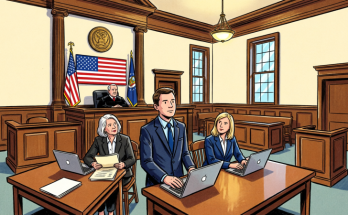
The first day in court, the hallway outside smelled like floor wax, old paper, and burnt coffee from the machine near the vending area. My heels clicked too loudly on the tile. David kept one hand on the middle of my back, not steering, just there. A quiet point of contact so I wouldn’t float off.
Brenda looked smaller at the defense table than she had in my mind. Not softer. Smaller. Jail had dried her out. Her skin was papery, and the blonde in her hair had turned the color of old straw. But her eyes were the same: hot, restless, always searching for the next person to blame
My mother sat behind her in a gray wool suit and a pearl necklace, as if she were attending an unfortunate fundraiser.
That almost undid me.
Not the sight itself. The familiarity of it. I had seen that exact posture at school concerts, graduations, Easter service. Respectability worn like armor over rot.
When I took the stand, the wooden rail felt smooth and cold under my hand.
Naomi walked me through the basics first. My name. My age. My relationship to Austin and Brenda. My travel schedule. The day I came home early. She did not rush me, which was smart, because the details came back with sensory force the second I started speaking. The empty bed. The cold sheets. My mother’s voice on the phone, too calm. The cemetery gate grinding in the wind. Austin’s face.
When the prosecutor played the 911 call, I had to look at the judge’s bench instead of the speakers. Hearing my own voice crack on my son’s name was worse than hearing Brenda scream later. My terror sounded helpless. Animal.
Then came the defense attorney.
He was silver-haired, expensive, and gentle in exactly the way that meant danger. He started sympathetic.
“This must have been frightening, Mrs. Mercer.”
“Yes.”
“And you were under extreme stress?”
“Yes.”
“And you and your sister had a history of disagreement about family property?”
I felt Naomi rise beside me to object, then sit when the judge allowed some line of questioning about motive.
“Yes,” I said carefully.
“So there were tensions long before this incident.”
“Tensions are not kidnapping.”
A murmur passed through the room. The attorney smiled like I’d made his point.
He tried next to turn my work travel into negligence. Asked how many nights I’d spent away that year. Asked whether Austin sometimes stayed with my mother. Asked whether my sister might have felt the child needed more “family support.”
I answered each one without giving him extra blood.
Yes, I travel. No, not excessively. Yes, my mother helped sometimes. No, that did not authorize her or Brenda to remove my child. No, my job did not make what happened remotely normal.
Then he shifted toward the house.
“Isn’t it true,” he said, “that your sister believed she had been unfairly excluded from inheritance discussions?”
I thought of Aunt Elena’s dry hands folded over mine at the hospital years ago. I thought of Brenda skipping her chemo appointments but showing up the week the will was read.
“She believed many things,” I said. “That doesn’t make them true.”
When I stepped down, my knees were shaking hard enough that I had to grip the table edge. David squeezed my hand once. Hard. Proud.
Then the prosecutor called Detective Ruiz, then the bank investigator, then the forensic tech who authenticated the deleted texts and the camera timestamps. Piece by piece, the shape of the plan came into focus for the room: the office search, the forged sale request, the surveillance of our house, the break-in, the note.
My mother’s face stayed composed through all of it.
Until Naomi introduced the text: If she comes back and refuses again, use the boy. She’ll sign.
Then for the first time, my mother lowered her eyes.
At the end of the day, Naomi stopped me in the hall before we left.
“Tomorrow is stronger,” she said.
“How?”
She looked at me for a second, then answered plainly.
“Because tomorrow the jury hears your son.”
I went home with that sentence lodged under my ribs like glass.
Part 9
I did not want the jury to hear my son.
I wanted them to know enough to convict without ever hearing the thin, careful way trauma had taught him to choose words. I wanted the law to somehow be both effective and merciful. Of course it was neither. It was procedure. It was timing. It was evidence. It was adults in hard chairs listening to a child explain fear in complete sentences because complete sentences seem more reliable than tears.
Austin’s recorded interview played just before lunch.
The courtroom lights dimmed slightly for the monitor, and every tiny sound got louder. Paper shifting. Someone clearing a throat. The air vent ticking overhead.
Austin sat in the video in a room with yellow walls and a basket of Legos behind him. He wore his favorite green hoodie. His sneakers didn’t touch the floor from the chair.
The interviewer asked easy questions first. His age. His school. His shark’s name.
“Chomper,” Austin said.
A few people smiled. I hated that too.
Then the questions turned.
Did he remember the night Aunt Brenda picked him up?
Yes.
Who told him he was going?
Grandma.
What did Grandma say?
That Mom was busy and I should be helpful.
Did he want to go?
A pause. A shrug. “Not really.”
Why not?
“Aunt Brenda doesn’t like when I touch stuff.”
The jurors’ faces changed at that. Small shifts. One woman’s mouth tightened. An older man in the front row of the box leaned back and crossed his arms more firmly.
Austin went on. He said Brenda told him it was a trip. He said Grandma packed his clothes and medicine. He said they drove for a while and he thought they might be going to a cabin or maybe the airport because of the suitcases.
Then his voice got quieter.
The interviewer asked what happened at the cemetery.
Austin picked at a loose thread on his sleeve for several seconds before answering.
“She said if Mom loved me enough, she would sign the papers.”
The courtroom went so silent I could hear someone’s bracelet slide against the wood.
“What papers?” the interviewer asked.
“I don’t know. House papers maybe.” He swallowed. “Grandma said not to make it harder.”
My stomach turned over.
The interviewer, very gently, asked what Brenda did then.
Austin’s hands twisted together in his lap. “She put tape on me because I was crying too loud.”
He said she told him the dead people would help him be brave. He said he was cold. He said he asked for his mom three times and Brenda told him, “That depends on her.”
By then I wasn’t looking at the screen anymore. I was looking at my mother.
She sat with her spine straight and her purse in her lap, staring at the monitor like she was watching weather.
No visible remorse. No tears. Just a tiny pulse jumping in her neck.
After lunch, Brenda took the stand.
I didn’t know until then that rage could look pathetic.
She cried. Of course she cried. She said she had been under terrible strain. She said she never meant to harm Austin. She said she only wanted to scare me into “having a conversation” about “shared family property” because I had iced her out for years. She said the cemetery was chosen because it was private, not because she intended psychological harm. She said the rope was “symbolic.”
Symbolic.
I bit the inside of my cheek so hard I tasted blood.
Naomi stood for cross-examination with a yellow legal pad in her hand and an expression that should have made Brenda ask for a plea deal right there.
“Ms. Mercer,” Naomi said, “do you hate children?”
Defense objected. Sustained.
Naomi nodded and shifted seamlessly. “Isn’t it true you previously told multiple witnesses that Austin was, quote, too sticky to bring into your home?”
Brenda stiffened. “I don’t remember.”
“Isn’t it true you texted your mother on June 14 that the boy is ruining everything?”
“I was upset.”
“Isn’t it true you entered your sister’s house while she was away, used a key supplied by your mother, searched specifically for property documents, and removed a file box?”
“I was trying to protect family assets.”
“By restraining an eight-year-old in freezing weather?”
“I told you, I never intended—”
Naomi held up the note from Brenda’s pocket. “What does Austin if needed mean?”
For the first time, Brenda had no ready shape to put on her face. Her mouth actually fell open.
Naomi let the silence stretch.
Then: “Needed for what?”
Brenda looked at the jury, then at her lawyer, then down at her own hands.
The answer never came.
My mother took the stand next.
She lied better.
She said she was worried about Brenda’s mental state. She said she thought the outing would be “dramatic but harmless.” She said the text about using the boy was an expression made in panic, not instruction. She said she never imagined the cemetery.
Naomi brought up the neighbor’s doorbell image of her loading Austin’s bag into the trunk.
My mother said she thought they were going to a motel.
Then Naomi brought up the sales worksheet printed from my mother’s condo. The one mentioning temporary custody during transition.
That finally cracked something.
Not guilt. Anger.
“You don’t understand what Brenda has suffered,” my mother snapped. “Everything was always handed to Alicia.”
There it was.
Not love gone wrong. Not confusion. Not fear.
Resentment with a manicure.
By the time closing arguments ended, the day felt stretched thin as old fabric. Naomi didn’t overplay anything. She laid it out plainly: a child taken, restrained, terrorized, and used as leverage in a financial scheme supported by a grandmother who chose one daughter’s desperation over a grandson’s safety.
The jury went out at 4:18 p.m.
We were told it might take hours. It might take until tomorrow.
As people stood and shuffled and the courtroom emptied into murmuring hallways, Brenda turned in her chair and looked straight at me. There was no sister left in that look. No history worth saving. Just hatred and the ugly certainty that if she ever got the chance, she would do harm again.
I held her gaze until the bailiff stepped between us.
Then I walked out to wait and thought one clear, terrible thought:
Either the jury had seen the monster I saw, or the world was still willing to call a monster misunderstood.
Part 10
The jury came back in two hours.
I remember that because time had gone strange while we waited. Minutes stretched, then collapsed. I drank one paper cup of courthouse coffee that tasted like burnt dirt and couldn’t have told you whether I swallowed any of it. David sat beside me with his hand around mine, not speaking unless I did. Mrs. Donnelly had Austin at home with a pizza and strict instructions to keep him away from every television in America.
When the bailiff finally stepped into the waiting room and said, “They’re ready,” my legs forgot they belonged to me.
The courtroom felt smaller on reentry, packed tighter with air and eyes and consequence.
The foreperson was a middle-aged woman in a blue sweater. She held the verdict form with both hands. Her voice shook only once.
Guilty on kidnapping.
Guilty on child endangerment.
Guilty on burglary.
Guilty on attempted fraud.
Guilty on witness intimidation.
Guilty on unlawful restraint.
Each count landed like a brick being set down, one after another, until there was finally something solid where the chaos had been.
Brenda made a sound I can only describe as fury breaking open. She half stood, swore at the jury, swore at Naomi, swore at me. Her lawyer yanked at her sleeve. The bailiff moved in. Across the aisle, my mother went white and still.
I didn’t cry.
People probably expected me to. Instead I felt an almost frightening emptiness, like my body had been braced against impact for so long that relief had nowhere to go.
Sentencing came three weeks later.
The judge, an older woman with steel-gray hair and a voice that carried without effort, did not indulge Brenda’s performance. Not the sobbing. Not the excuses. Not the claims that addiction and family pressure had made her act outside herself. She acknowledged the debt spiral, yes. The unstable circumstances, yes. Then she looked over her glasses and said something I will remember for the rest of my life:
“Hardship explains motive. It does not excuse cruelty.”
She sentenced Brenda to fifteen years.
Not because the law wanted to make an example of her, as my mother hissed to anyone who would listen in the hall. Because she had abducted a child, terrorized him, attempted to coerce a property transfer through him, and then escalated again by breaking into our home.
There were additional hearings after that. Protective orders. Civil actions. Restrictions. Motions filed by people billing by the hour for the wreckage of blood ties. My mother avoided criminal charges by cooperating late and through legal maneuvering I still resent, but the family court judge granted our request for a permanent no-contact order regarding Austin. She was not to approach him, message him, send gifts, contact his school, contact us through third parties, or so much as breathe in our direction if the law could help it.
That mattered.
Not as much as prison. But it mattered.
What surprised me most was what happened after.
I expected triumph. Some clean movie ending where the bad people are removed and the house fills back up with peace. That isn’t how aftermath works. The verdict closed one door. It did not undo the smell of fear that still seemed trapped in Austin’s room some nights. It did not erase the way he checked windows before bed. It did not make my office feel like mine again.
And it did not heal what the house had become.
Every corner held evidence. The front hall where my mother had handed over the keys. The kitchen window Brenda had shattered. The stairs Austin climbed not knowing he was being moved like an object in someone else’s plan. Even the backyard made me tense because I’d started imagining watchers in every dark shape beyond the fence.
One night in early spring, David and I sat at the kitchen table after Austin finally fell asleep and looked at each other over two untouched mugs of tea.
“I can stay here and fight for the house,” I said. “Or I can choose us.”
David didn’t answer immediately. That was one of the reasons I loved him. He never rushed the moment that mattered because he wanted the discomfort over.
Finally he said, “What do you want when you picture Austin at ten? At twelve?”
I looked past him to the dark window over the sink.
“I don’t picture this house,” I said.
So we sold it.
Not because Brenda won. Not because my mother had been right about anything. Because ownership and attachment are not the same thing, and I was done sacrificing my son’s peace to prove a point to people who would never deserve it.
We moved six months later to North Carolina for David’s remote role and because Austin had fallen in love with a swim camp brochure pinned in his therapist’s office. Wilmington gave us salt air, softer winters, and a small two-story house with blue shutters and none of the old ghosts.
The civil judgment and restitution orders eventually took what they could from Brenda’s remaining assets and family trust share. Every bit of it went into Austin’s therapy, schooling support, and a fund David joked should be called “for anything joyful.” I didn’t correct him.
On our last morning in Ohio, I walked through the empty old house one final time.
No furniture. No toys. No family photos. Just sunlight on bare floors and the faint echo of movers’ tape ripping from boxes. In Austin’s room, there was a pale square on the wall where his bookshelf had stood. In the office, the dent in the desk corner from Brenda’s crowbar was still there.
I touched it once.
Then I walked out and locked the door.
Two weeks after we settled into North Carolina, the first letter arrived from prison.
My name on the front.
Brenda’s return address in the corner.
I held it over the kitchen trash while the ocean air moved the curtains and Austin laughed somewhere upstairs because David had let him build a pillow ramp off the guest bed.
I did not open it.
But I didn’t throw it away yet either.
I stared at that envelope so long my fingers went numb, and I wondered whether some part of me still wanted an apology from someone who had never once chosen decency when cruelty might serve her better.
Then a second envelope arrived three days later.
This one from my mother.
Part 11
By the time the letters came, our new life had started to feel real.
Not perfect. Real.
There is a difference.
Our house in Wilmington sat on a quiet street lined with crepe myrtles and mailboxes decorated more enthusiastically than necessary. In the morning, the air smelled faintly of salt and wet wood. Some evenings you could hear gulls even though the beach was a short drive away. Austin chose the room at the back because the light came in slantwise and gold after school and because, in his words, “This one doesn’t remember anything bad.”
That sentence nearly folded me in half when he said it.
He started swim lessons two weeks after we arrived. The first day, he stood on the pool deck in navy trunks with his shoulders up near his ears and his shark towel clutched in both hands. Chlorine hung thick in the air. Kids shrieked. Whistles blew. Everything about it should have overwhelmed him.
Instead he looked at the water like it was something worth learning.
Coach Renee, who wore mirrored sunglasses on top of her head and called every child “friend,” crouched beside him and said, “We go one step at a time.”
So he did.
One step, then another.
Therapy continued. Nightmares still came, though less often. He still wanted the hallway light on. He still asked sometimes whether Grandma knew our address. I always answered the same way.
“She’s not allowed near us.”
Allowed. Not can’t. I was careful with that word. Children understand rules before they understand evil. For a while that was enough.
As for me, I stopped jumping at every unfamiliar car. I learned where the grocery carts stuck in the parking lot. I found a coffee shop with cinnamon scones and a barista who remembered my order. I unpacked the blue ceramic bowl Aunt Elena once gave me and set it by the new front door for keys. Little acts. That is what rebuilding is made of. Not revelations. Repetition.
The letters sat unopened in the junk drawer for four days.
I wish I could tell you I was above temptation. I wasn’t. I picked them up more than once. Held them to the light. Noticed my mother had used her formal handwriting and Brenda had pressed so hard with her pen that the indentations showed through the paper. I imagined the contents constantly.
Your sister is sorry.
Your sister was sick.
You know how family is.
Austin should not be taught to hate.
I made mistakes.
You made them too.
That last one especially. My mother’s favorite shape of apology had always been shared blame.
On the fifth day, Austin came into the kitchen while I was looking at the envelopes again.
“What are those?” he asked.
“Nothing you need to worry about.”
He climbed onto a stool and looked at them anyway, because he was eight and because children can smell tension the way dogs smell rain.
“Is it from them?”
I didn’t answer fast enough.
He touched the corner of the one from prison with one finger, then pulled his hand back like it might stain him.
“Do you have to read it?”
There are moments when motherhood is not guidance but witness. You stand there and realize the child in front of you has already learned something about survival that no child should need.
“No,” I said.
He thought about that. “Then don’t.”
Simple. Clean. Honest.
That afternoon, while Austin was at the pool and David was on a work call upstairs, I took both letters to the kitchen sink. I turned on the exhaust fan because the smoke detector in this house was overachieving, and I struck a match from the box we used for birthday candles.
The prison envelope curled first, edges blackening inward. My mother’s went next, the paper catching with a brief yellow flare before collapsing into soft gray ash. The air filled with the dry, bitter smell of burnt glue and ink.
I watched until every word I had refused to read was gone.
Not out of denial.
Out of choice.
People talk about forgiveness as if it is the mature ending to every wound. As if healing is only noble when it leaves the door cracked open for the people who caused the damage. I don’t believe that. I think some people mistake access for grace. I think some doors should close so completely the hinges forget they were ever there.
I did not forgive Brenda.
I did not forgive my mother.
I do not plan to.
That isn’t bitterness talking. It’s recognition. They looked at my son and saw a bargaining chip. They looked at my home and saw a prize. They looked at me and saw a woman they could shame into surrender if they pressed the right bruise hard enough.
They were wrong.
That evening, I drove Austin home from swim practice with the windows cracked to let out the chlorine smell. His hair was still damp, and he had a red line across one cheek from his goggles. He talked the whole way about learning to float on his back without panicking and how Coach Renee said he kicked like a maniac but in a promising way.
At a stoplight, he leaned his head against the seat and asked, “Do bad people stay bad forever?”
The sun was low, turning the edges of everything copper. A guy on the corner was dragging a kayak toward his truck. Somewhere nearby somebody was grilling, and the smell of smoke and barbecue drifted through the window.
I thought about prisons and courtrooms and old resentments polished for years like silver. I thought about my mother’s face when she said, And he’s alive, isn’t he? I thought about Brenda in the cemetery under the oak, cigarette ember bright as an eye.
Then I looked at my son.
“Some do,” I said. “That’s why we stay away from them.”
He nodded like that made sense. Maybe because now it did.
When we got home, David was in the kitchen making grilled cheese, the skillet hissing with butter. Austin ran in to tell him about floating. I hung up my keys in the bowl by the door and stood there for one quiet second, listening.
Pan on the stove. My husband laughing. My son talking over himself. No footsteps in the yard. No hidden key exchanges. No lies waiting in the next room wearing a familiar face.
Just our life. Hard won. Ordinary in the holiest way.
I went to the sink and rinsed the last gray ash down the drain.
Then I dried my hands and joined my family.
THE END!
Disclaimer: Our stories are inspired by real-life events but are carefully rewritten for entertainment. Any resemblance to actual people or situations is purely coincidental