Part 4
Detective Kevin Walsh didn’t smile when Roger introduced him.
He was mid-forties, sharp-eyed, the kind of man who looked like he’d slept in his clothes in the past. Roger told him the basics. I told him the rest. Ivy’s whisper. The payments. The fake urn. The mystery woman. The surveillance.
Walsh listened without interrupting. When I finished, he asked one question that made my stomach turn.
“Mr. Harper,” he said, “did you ever see your daughter’s body?”
“No,” I admitted. “Closed casket. The fire was—”
“Severe,” Walsh finished, tone neutral. “Dental records. Identified by the husband. Correct?”
“Yes.”
Walsh’s mouth tightened. “All right. Here’s what we do next.”
We went back to watching Brad, but now we weren’t just curious old men with a camera.
Walsh ran the mystery woman’s plate the moment Roger captured it.
Natalie Hughes.
The name hit me like a slap.
Willow’s best friend since college.
The woman Willow had been supposedly driving home from the night of the accident.
Walsh dug deeper. Natalie wasn’t grieving. Natalie wasn’t missing a friend. Natalie had been seen in town multiple times. Alive. Fine. Living her life.
Walsh didn’t say it out loud yet, but his eyes did.
Something about the original story didn’t hold.
On day four of surveillance, Brad broke routine. He left mid-morning and drove to an industrial warehouse off East Industrial Avenue. He stayed forty-five minutes and left.
We returned at night, parked across the street, and waited.
A single light glowed in an upper window.
Walsh’s team set up quietly, unmarked vehicles tucked into shadows, plainclothes officers ready.
Roger and I stayed in the car, hands cold on our knees.
“You sure about this?” I asked Walsh through the window when he checked in.
Walsh’s voice was low. “Your granddaughter’s scared. The urn is fake. And Brad’s meeting Natalie Hughes in secret. We’re past sure.”
At 8:47 p.m., the silver sedan pulled in.
Brad and Natalie got out together and entered the warehouse with a key.
Walsh nodded once. “Move.”
They didn’t rush in like a movie. They waited for the right moment. Officer safety. Evidence. Procedure.
Then the audio feed crackled through the earpiece Walsh handed Roger.
At first, just footsteps on concrete.
Then a woman’s voice.
Thin. Tired. Familiar.
I leaned forward, breath caught.
“Brad,” the woman said, and my skin went electric. “Why are you here?”
Walsh’s eyes flicked to me.
Roger’s mouth fell open slightly.
Because I knew that voice.
Even after seven years, even after grief had tried to bury it, I knew it the way you know a song that raised you.
“Willow,” I whispered.
Walsh held up a hand, focused. “Listen.”
Brad spoke, casual, like he owned the air. “I brought Natalie. You’ve been asking questions.”
A pause. A shaky inhale.
“You promised,” Willow’s voice said. “You promised I could go home when it was safe.”
Natalie’s voice cut in, cool and hard. “It’s never going to be safe. That was the point.”
My vision blurred. My chest hurt like someone was sitting on it.
Walsh’s jaw tightened.
Inside the warehouse, Willow spoke again, and it sounded like she was trying not to cry.
“I want to see Ivy.”
Brad laughed once. “Ivy doesn’t need you.”
I surged forward before I could stop myself. Walsh gripped my shoulder through the window frame.
“Mr. Harper,” he hissed, “stay in the car.”
“That’s my daughter,” I choked.
“I know,” Walsh said. “But if you blow this, we lose them.”
The audio continued.
Willow’s voice, small. “I didn’t do anything wrong. I didn’t—”
Brad’s tone sharpened. “You pushed Natalie. You remember? You did this to yourself.”
My blood ran cold.
So that was the story they’d built. A trap. A false guilt.
Natalie spoke, almost bored. “If you behave, we’ll keep bringing you pictures. That’s what you want, right? Pictures of Ivy?”
A sound like paper rustling. Then Willow made a broken noise, half sob, half gasp.
Walsh’s eyes narrowed. “That’s unlawful imprisonment,” he muttered. “Clear as day.”
Roger’s hands were shaking on the earpiece. Mine were shaking everywhere.
And then, through the audio, Willow whispered something that terrified me more than anything so far.
“Dad,” she said, voice cracking. “If he ever finds out you’re watching… he’ll hurt Ivy.”
Walsh moved immediately. “Go,” he ordered into his radio.
Officers poured toward the warehouse door.
But I barely registered the movement, because all I could think was this:
My daughter wasn’t dead.
My daughter was alive.
And someone had been holding her somewhere cold and hidden while I sent them money and mourned her in my living room.
Seven years of grief turned, in an instant, into seven years of fury.
And now, the truth was opening its mouth wide.
Part 5
The warehouse door swung open under a flood of flashlights and shouted commands.
“Police! Hands where we can see them!”
The audio in my ear exploded into chaos—footsteps, a startled gasp, Brad shouting, Willow crying out.
I didn’t wait for permission. I got out of the car, but Walsh caught my arm before I could run straight into danger.
“Stay behind me,” he said, firm enough that I obeyed.
Inside, the warehouse smelled like dust and metal and cold concrete. A battery lamp glowed in a back corner where someone had tried to make a life: a twin bed, a folding table, a hot plate, and a wall covered in photos of Ivy. Every school portrait. Every missing tooth grin. Every piece of my granddaughter’s childhood, taped up like a prisoner’s calendar.
Willow sat on the edge of the bed, thinner than I could comprehend, hair pulled back, eyes wide with fear and disbelief as officers fanned out.
Brad stood in front of her like a guard, one hand lifted as if he could talk his way out of anything. Natalie was near the side door, keys in her hand, expression flat.
Willow’s eyes found mine.
“Dad?” she whispered.
That one word collapsed seven years of sorrow into a single moment. My knees nearly buckled.
I stepped forward, and Willow flinched—not from me, but from the idea that someone could touch her without permission.
Walsh moved fast, cuffing Brad while another officer took Natalie. Brad tried to twist toward Willow.
“She’s lying!” he barked. “She’s unstable! She wanted to disappear!”
Walsh shoved him forward. “Save it for your attorney.”
I reached Willow and knelt, keeping my voice low, gentle, the way it used to be when she was little and woke from nightmares.
“It’s me,” I said. “You’re safe.”
Willow’s face cracked. She started to sob, whole-body shaking, and I pulled her into my arms. She felt like bone and fabric. Too light. Too fragile. Like someone had been surviving on fear and scraps.
“I’m sorry,” she gasped. “I’m so sorry. About Mom. About Ivy. About—”
“Later,” I said into her hair. “We’ll talk later. Right now, you’re coming home.”
Walsh turned to me after securing the scene. “Mr. Harper, we’re taking them in. Fraud. Conspiracy. Unlawful imprisonment. We’ll add charges as we uncover the full scope.”
“What about my daughter?” I asked, my voice raw.
“Victim,” Walsh said, clear and certain. “Not suspect. Not today. Not ever, based on what we’ve heard.”
Outside, Willow squinted at the night air like it was too bright, like she’d forgotten the world could be open. Walsh offered her a blanket. She wrapped it around herself and leaned into me, trembling.
“Where’s Ivy?” she whispered.
“In bed,” I said. “At Brad’s house. She’s safe. I swear to you.”
Tears streamed down Willow’s cheeks. “She told you,” she breathed. “She knew something was wrong.”
“She did,” I said. “She saved us.”
The investigation moved quickly after that because lies built on paperwork leave fingerprints everywhere.
Walsh obtained warrants. They pulled financial records, emails, burner phones. They found offshore accounts and transfers—money I’d sent, money Brad had siphoned, money Natalie had helped move.
They uncovered the ugliest part: Brad had leveraged Willow’s panic with a staged “accident” in her apartment, a fake scenario designed to make her believe she’d harmed Natalie. Then he’d used a contact at the morgue—his cousin—to manufacture a death record and a cremation. Coffee grounds and cinnamon in a brass urn to seal the deception.
Willow’s “death” was paperwork, staged fire damage, and my own grief doing the rest.
Brad and Natalie thought they’d built a perfect scam.
They didn’t account for a seven-year-old who loved her grandpa enough to risk whispering the truth.
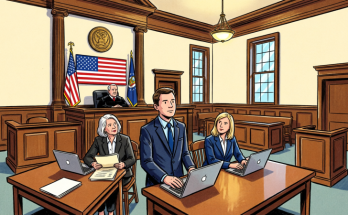
In court, the wire recording and warehouse evidence crushed them. The jury heard Brad’s arrogance, Natalie’s coldness, their plans to flee, their control tactics. The verdict came back guilty.
Brad received a long federal sentence. Natalie received one, too. The cousin from the morgue took a plea and went down for his part.
Then came family court.
Brad’s parental rights were terminated.
I was granted custody of Ivy.
And Willow—alive, shaken, determined—was given what she hadn’t had for seven years: the chance to rebuild.
We did it slowly, because you don’t stitch a torn life back together in a weekend.
At first, Ivy met Willow in a therapist’s office with soft pillows and careful words. Ivy stared at Willow like she was looking at a ghost made real. Willow cried quietly but didn’t rush. She let Ivy lead.
When Ivy finally crawled into Willow’s lap, it wasn’t dramatic. It was small. Like a bird deciding it was safe to land.
“Mom?” Ivy whispered, as if trying the word on for size.
Willow pressed her face into Ivy’s hair and breathed like she’d been underwater for years.
“Yes,” she said. “I’m here.”
Harper Family Market became our anchor again. Willow started working mornings with me, relearning ordinary life: ringing up coffee, laughing with Mrs. Patterson, stocking shelves. Ivy did homework at the little table in the back office where Gloria used to sit and drink tea.
On Sundays, we visited Gloria’s grave.
Willow brought white roses. Ivy brought drawings. I stood between them and told my wife out loud what I’d wanted to scream at the sky for years.
She’s home.
Our girl is home.
One evening, months after the trial, I took the fake urn off the mantle for the last time. I cleaned it out, scrubbed the brass until it shone, and then I put it in a box in the closet—empty, harmless, done.
In its place, I framed a photo: Willow, Ivy, and me in the store doorway, all three of us squinting into sunlight, all three of us alive.
Willow’s voice still shakes sometimes when she talks about those seven years. Ivy still has nightmares some nights. I still wake up reaching for Gloria before remembering.
But the story changed.
It isn’t the story of a daughter who died and a family that survived without her.
It’s the story of a granddaughter who told the truth, a grandfather who finally listened, and a mother who came back from the dead to find her child.
And every January now, I don’t send forty thousand dollars into a lie.
I spend that month making sure the people I love are safe in the same house, eating at the same table, laughing at the same dumb jokes.
Because after what I discovered, I learned the hard way that love isn’t a payment.
Love is showing up, staying close, and never letting anyone turn your family into a transaction again.
Part 6
The first time Willow tried to walk into a grocery store after the warehouse, she froze in the doorway.
Not because of the noise or the lights. Because of the ordinary.
People grabbing baskets. A kid whining for cereal. A cashier laughing at something a customer said. Normal life moved around her like a river, and Willow stood on the bank like she wasn’t sure she was allowed to step in.
I’d driven her to a small market on the other side of town, not mine, because I didn’t want our regulars crowding her with questions. We’d parked, walked up, and then she stopped so abruptly I nearly bumped into her.
“Dad,” she whispered, eyes wide. “What if someone recognizes me?”
“You’ve been ‘dead’ for seven years,” I said gently. “Most people won’t.”
“But what if they do?” Her breathing sped up. “What if they think I’m… lying? What if they think I’m crazy?”
I put a hand on her back, steady, the way Gloria used to do when Willow spiraled.
“We’re going to take this one step at a time,” I said. “And if it’s too much, we leave. No shame.”
She nodded, but I could see how hard she was fighting. She took one breath, then another, and finally stepped inside.
She lasted three minutes.
A man walked past with a cart and said, “Excuse me,” politely, nothing threatening at all—and Willow flinched like he’d raised his hand. Her whole body tightened, and she whispered, “I can’t,” and turned around so fast her hair swung across her face.
Back in the car, she cried with her forehead against the steering wheel.
“I feel stupid,” she said.
“You’re not stupid,” I replied. “Your body learned survival in a cage. It’s going to take time for your body to believe you’re free.”
Time. That’s what everyone said, like it was a medication you could take on schedule.
The world outside the warehouse didn’t understand the kind of time Willow had lived in. Her days there weren’t hours. They were endurance. Waiting for Brad’s footsteps. Waiting for food. Waiting for permission to exist. Waiting for the next lie to be reinforced.
And now she had to do something even harder than surviving.
She had to become alive again.
Legally, she was dead.
A death certificate existed. A cremation record existed. Insurance claims had been filed and closed. There were tax documents tied to her “estate.” Even small things like her library card were locked behind a status the system considered final.
Detective Walsh helped with what he could, but the bureaucracy was a beast. We met with a state attorney who specialized in identity restoration for people falsely declared dead. He said words that made me want to throw a chair.
“Administrative resurrection,” he called it.
Willow sat beside me in his office, hands folded tight in her lap.
“It happens more than you’d think,” the attorney said, almost casually. “Clerical errors, fraud, mistaken identities.”
Fraud, yes. That word fit like a glove.
But hearing it in a clean office with framed diplomas didn’t match the reality of a warehouse bed and photos taped to concrete walls.
The attorney laid out steps: court orders, fingerprinting, affidavits, DNA confirmation. We needed to prove she was Willow Harper without relying solely on a face that had changed.
The DNA test was simple. The emotional part was not.
They swabbed Willow’s cheek in a sterile clinic, then swabbed mine.
Willow stared at the little cotton tip like it could bite.
“This is real,” she whispered.
I squeezed her hand. “It’s real.”
Two weeks later, results came back confirming parent-child relationship with the kind of certainty grief had stolen from us.
The judge signed a document declaring Willow Harper alive.
Willow cried when she held it. Not from joy exactly—more like exhaustion. Like she’d been holding her breath for seven years and finally got permission to exhale.
The local paper found out within days.
They ran a story with a headline that made me sick: WOMAN DECLARED DEAD FOUND ALIVE AFTER YEARS.
Reporters showed up at Harper Family Market asking for interviews. Customers whispered. People stared.
I wanted to protect Willow from all of it, but you can’t put someone back into hiding because the world is noisy.
So we decided, together, what we would do.
We didn’t tell every detail. Ivy’s privacy mattered. Willow’s trauma mattered. But we didn’t hide the truth either.
We told enough to shut down rumors and stop people from filling the silence with imagination.
The truth was strong enough. It didn’t need decoration.
Still, attention brought danger.
Brad’s attorney filed motions. He claimed Willow “consented” to hiding. He claimed I’d manipulated her. He claimed my money was a “gift,” not fraud.
Walsh and the prosecutors swatted those arguments down with evidence: recordings, financial trails, the warehouse itself.
But the most unsettling thing came in the mail a month after Brad’s arrest.
A letter.
No return address.
Inside was a single line written in blocky, angry pen:
YOU TOOK EVERYTHING FROM ME. I’LL TAKE SOMETHING BACK.
My hands went cold. I showed Walsh immediately. He took it, bagged it, and assigned a patrol unit to increase drive-bys near my house and the store.
Willow saw the change in my face.
“What is it?” she asked.
“Nothing you need to worry about,” I lied.
She stared at me, and I realized she’d spent seven years reading lies like weather.
“It’s him,” she said quietly.
I didn’t answer. Didn’t have to.
That night, Ivy came over for dinner and chattered about school while Willow stirred spaghetti sauce like she was trying to remember how ordinary life worked. Ivy’s laughter filled my kitchen, and for a moment I almost forgot we were still being hunted by the echoes of Brad’s choices.
After Ivy went to bed, Willow sat at the table and looked at me.
“Dad,” she said, “I need to tell Ivy the truth.”
I swallowed. “She’s seven.”
“She’s seven and she already knows something was wrong,” Willow replied. “She warned you. She’s not fragile. She’s confused.”
Confused was an understatement. Ivy had lived half her life believing her mother died in a fire. Now her mother was sitting in her grandfather’s kitchen making sauce.
The therapist suggested we tell Ivy in pieces, like building a bridge instead of throwing her across a canyon.
So we did.
The first conversation happened on my living room couch, with Ivy between us and a box of tissues on the coffee table.
Willow’s voice shook. “Ivy, sweet pea… the story you were told about me isn’t true.”
Ivy’s brow furrowed. “But Dad said—”
“I know,” Willow whispered. “And Dad was wrong.”
Ivy stared hard at Willow, like she was trying to solve a puzzle.
“You’re my mom?” she asked.
Willow nodded slowly. “Yes.”
Ivy’s eyes filled with tears, and then she did something that made my heart break and heal at the same time.
She reached out and touched Willow’s wrist like she was checking if she was real.
“Why didn’t you come?” Ivy whispered.
Willow’s face crumpled. “I wanted to. I tried. But I was trapped, and I didn’t know how to get out.”
Ivy’s chin trembled. “I was scared.”
“I know,” Willow said, pulling Ivy gently into her lap. “I’m so sorry. I’m here now. I’m not going anywhere.”
I watched them hold each other, mother and daughter meeting for the first time in the same timeline, and I realized the ending of this story wasn’t going to be a courtroom sentence.
It was going to be the long, difficult work of making home safe again.
And that, in some ways, was harder than catching the criminals.
Because you can arrest a man.
You can’t arrest the damage he leaves behind……