Part 7
When the trial date was set, Brad tried to bargain through his attorney.
Not with remorse. With leverage.
He offered to “cooperate” if the state reduced charges. He offered to “provide additional names,” like he was doing everyone a favor. He offered to “make a statement” about being “misunderstood.”
Walsh didn’t look impressed when he told us.
“He’s fishing,” Walsh said. “He wants control.”
“Control is his addiction,” Willow muttered.
And then, two days later, control took a new shape.
I was closing Harper Family Market when I noticed a car idling across the street. Dark SUV, windows tinted. Not a customer. Not anyone I recognized.
My instincts—old, sharpened by grief and years of being too trusting—went rigid.
I locked the door, flipped the sign, and stood behind the glass watching.
The SUV didn’t move.
I pulled out my phone and called Walsh.
“Stay inside,” Walsh said. “Do not go out. I’m sending a unit.”
I watched the SUV in the window reflection as I pretended to clean the counter. Ten minutes later, a patrol car rolled by slowly. The SUV turned on its signal and pulled away like it had been waiting for permission to disappear.
Walsh took my statement, wrote it down, and sighed.
“This is intimidation,” he said. “It may not be Brad directly, but it’s connected.”
That night, I didn’t sleep.
Willow didn’t either.
We sat at my kitchen table with mugs of tea neither of us drank, Ivy asleep down the hall, and the house full of the kind of silence that feels like a threat.
“He’s going to come after Ivy,” Willow whispered.
“No,” I said firmly. “We’re not going to let that happen.”
But the truth was, the fear made sense. Brad had already used Ivy as a leash. He’d used her photos to keep Willow obedient. He’d used my love for Ivy to keep money flowing.
Why wouldn’t he try again?
Walsh helped us get a protective order and arranged for extra security measures: cameras at my home, cameras at the store, a safe drop-off plan for Ivy’s school that kept her routine predictable but protected.
I hated that it came to that. Hated that normal life required planning like a military operation.
But I’d learned something the hard way.
Bad people don’t stop being bad just because they got caught. They just change tactics.
In the middle of all this, Ivy’s teacher called me.
“Mr. Harper,” she said carefully, “Ivy seems… distracted.”
My throat tightened. “How so?”
“She startles easily,” the teacher said. “She flinched when a boy slammed his locker. And she asked me today if people can ‘pretend to be dead.’”
I squeezed my eyes shut.
The therapist warned us this would happen. Ivy’s brain was trying to make sense of the impossible. Her fear was looking for patterns.
When I picked her up that day, she climbed into my car and stared out the window.
“Grandpa,” she said softly, “if Mom was alive… does that mean Dad lied?”
I didn’t answer quickly. I wanted to say something neat and simple. But there was no neat and simple.
“Yes,” I said at last. “Your dad lied about big things.”
Ivy’s voice went smaller. “Did he lie about loving me?”
That question hit my chest like a fist.
I pulled into a parking lot and turned off the engine so I could look at her.
“Listen to me,” I said. “You are lovable. You are loved. Nothing your dad did changes your value.”
Ivy’s eyes filled with tears.
“But did he love me?” she asked again, because kids don’t accept comfort when they want truth.
I swallowed.
“I think,” I said carefully, “your dad loves himself more than he loves other people. And that’s not your fault.”
Ivy wiped her cheeks with her sleeve. “Mom loves me.”
“Yes,” I said, voice rough. “Your mom loves you so much it almost destroyed her.”
That night, Willow sat with Ivy on the couch and braided her hair while Ivy watched cartoons. It was such a small scene—two bodies close, hands moving, Ivy leaning into the contact like a plant leaning into sun.
I walked into the kitchen, opened the fridge, and stared blankly at leftovers because I didn’t know what to do with the ache in my chest.
I thought about Gloria again.
I thought about how she would’ve reacted to this truth—relief mixed with rage, grief mixed with joy. I pictured her face when she realized the urn was fake, and the thought made me nauseous.
So I did something I’d avoided for seven years.
I drove to Lake Rayburn alone.
It was a cold evening, and the water was flat and dark. I stood on the dock where Willow used to jump in every summer, hair flying, laughing like the world couldn’t touch her.
In my jacket pocket, I carried a small jar of coffee grounds and cinnamon I’d kept from the fake urn. Walsh had returned it after it was entered into evidence.
It wasn’t sacred.
But it represented the lie that had stolen Gloria’s last months.
I unscrewed the jar, held it over the water, and whispered, “I’m sorry, Gloria.”
Then I poured it out.
The grounds scattered over the surface and sank. The cinnamon caught in the wind for a second like dust, then disappeared.
It wasn’t closure. Not really.
But it felt like throwing a stone through a frozen lake. It made a crack.
On the drive home, my phone buzzed with a message from Walsh.
They found another offshore account. Larger. Brad moved money again. We’re freezing it tonight.
My hands tightened on the wheel.
“How much?” I typed back at a stoplight.
Walsh replied: More than you sent. He was taking from other people too.
That’s when the full terror of it landed.
Brad hadn’t just scammed me.
He’d built a life on lies, and my family was only one chapter.
And if we were only one chapter, it meant two things.
One: there would be more victims.
Two: Brad had practiced.
The trial wasn’t just about justice for my family anymore.
It was about stopping a man who’d perfected the art of stealing love and turning it into a paycheck.
And as the court date approached, I realized the scariest part of what I’d discovered wasn’t the warehouse, or the fake urn, or even the money.
It was how easily Brad had worn the mask of a grieving husband while he did it.
Because if a man can lie that well, the truth isn’t just hidden.
The truth is hunted.
Part 8
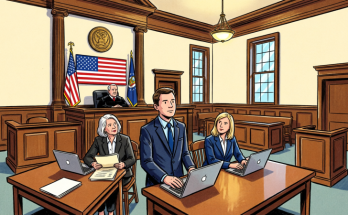
Brad’s trial began in January, and the courthouse smelled like old paper and stale coffee.
Willow wore a plain blue sweater and kept her hands clasped tightly in her lap, like if she let go she might float apart. Ivy stayed home with a family friend and her therapist; the courtroom wasn’t a place for a child, no matter how much of this story belonged to her.
When I took the stand, I expected my voice to shake.
It didn’t.
I surprised myself.
I told the jury about the phone call at three a.m., the closed casket, the urn. I told them about Gloria’s decline and death. I told them about the yearly transfers and the way Brad never offered proof. I told them about Ivy’s whisper in the park, the surveillance, the fake ashes, the warehouse.
Brad’s attorney tried to paint me as a grieving old man who’d misunderstood things, who was confused, who “jumped to conclusions.”
Walsh’s evidence made that impossible.
The prosecution played the recordings. They showed photos of the warehouse setup. They entered the fake urn contents as evidence. They presented bank records, offshore transfers, messages between Brad and Natalie that talked about “keeping her compliant” and “milk him in January.”
Milk him.
I stared at that phrase on the screen and felt my jaw tighten until it hurt.
Then Willow took the stand.
She didn’t look at Brad when she sat down.
She looked at the jury, at the judge, at the truth.
Her voice shook at first, then steadied as she spoke. She explained how she’d been manipulated into believing she’d hurt someone. How Brad had framed “hiding” as protection, then turned it into imprisonment. How Natalie had participated, how they’d used Ivy’s photos as leverage.
When she described the wall of pictures in the warehouse, her voice broke.
“She grew up without me,” Willow whispered. “And I watched her grow up through tape and printer paper.”
A woman on the jury wiped her eyes.
Brad stared at his hands.
Not remorseful. Just irritated.
Like Willow’s pain was inconvenient.
When the prosecution showed proof Natalie Hughes had been alive and well the whole time, Willow’s shoulders shook.
She didn’t cry loudly. She cried like someone mourning not a death, but a theft.
Seven years stolen.
In the hallway during a break, Willow leaned against the wall and pressed her knuckles to her mouth.
“I’m scared,” she whispered.
“Of what?” I asked.
“That they’ll make me look stupid,” she said. “That they’ll say I chose it. That I wanted to run away.”
I took her shoulders gently. “You didn’t choose captivity. You chose survival.”
Willow’s eyes met mine, shining. “Mom would’ve hated this,” she murmured. “The attention. The ugliness.”
“I know,” I said. “But Mom would’ve hated you being trapped more.”
The verdict came back guilty on all major counts.
Brad was sentenced to a long federal term.
Natalie, too.
The cousin at the morgue took a plea and went down.
The judge ordered restitution.
But money wasn’t the part that mattered.
Family court terminated Brad’s parental rights.
The judge looked at Willow and said something I’ll never forget.
“This child deserves stability,” she said. “And stability begins with truth.”
I was granted custody.
Willow was given supervised visitation at first, not because anyone doubted her love, but because Ivy’s mind had been through too much to handle a sudden, full shift. The court wanted transitions that protected Ivy’s nervous system, not just adult emotions.
Willow accepted it with a nod.
Afterward, in the parking lot, she whispered, “I’ll do whatever it takes.”
And she did.
She showed up to every therapy session.
She learned how to answer Ivy’s questions without flooding her with adult pain.
She asked permission before hugging. She didn’t take it personally when Ivy pulled away. She didn’t demand the title Mom. She let Ivy decide when it felt safe.
Some days were hard.
Ivy would say, “Dad used to do it this way,” and Willow would flinch like she’d been slapped.
Other days were miraculous.
Ivy would run into the room after school and shout, “Mom, look!” like she’d always had the word in her mouth, waiting.
One afternoon, months after the trial, Ivy grabbed Willow’s sleeve the same way she’d grabbed mine in the park.
“Mom,” she whispered, “are you gonna disappear again?”
Willow’s whole face crumpled. She knelt until she was at Ivy’s level and spoke with a steadiness that came from deep determination.
“No,” she said. “Never. Even when I’m scared, I’m staying.”
Ivy stared at her like she was testing the promise.
Then she nodded once, solemn, and climbed into Willow’s arms.
It wasn’t smooth from there. Healing never is.
Willow had nightmares. Sometimes she woke up thinking she was back on that warehouse bed, listening for keys in the door.
I had my own ghosts. I’d wake up hearing Gloria’s voice, feeling the empty space beside me, and I’d sit in the dark and wonder how I was supposed to forgive myself for not opening that urn sooner.
Willow caught me staring at it once, the empty space on the mantle where it used to sit.
“You couldn’t have known,” she said quietly.
“I should’ve questioned,” I replied. “I should’ve—”
“Dad,” she interrupted gently, “you loved me. That’s what he used against you. Don’t punish yourself for loving.”
That sentence changed something in me.
Because it was true.
Brad had weaponized love.
And now, our job was to reclaim it.
In the spring, we held a small memorial at Lake Rayburn.
Not for Willow—she was alive.
For the years we lost. For the lies. For Gloria.
We brought flowers. We brought a framed photo of Gloria laughing, taken the summer before everything shattered. Ivy held the frame carefully like it was fragile.
We stood on the dock, and Willow spoke into the wind.
“Mom,” she whispered, “I’m here. I’m sorry. I’m going to live a life you’d be proud of. I’m going to be the mother Ivy deserves.”
Ivy looked up at the sky and said, “Hi, Grandma.”
And I felt it then—something like peace trying to enter the cracks.
Not complete peace. Not yet.
But enough.
Enough to breathe.
Enough to keep going.
Enough to believe that our story could be more than terror.
It could be a rebuilding.
And we were building.
Part 9
Five years later, Harper Family Market has a café.
It sounds small when you say it out loud, like adding a coffee bar is the big happy ending. But if you’d told me back when I was staring at a brass urn full of coffee grounds that one day I’d watch my daughter run a business while my granddaughter made muffins in the back, I would’ve thought you were cruel for teasing me with something impossible.
The café sits in what used to be our storage corner. Willow designed it herself—warm lights, mismatched chairs, a chalkboard menu Ivy rewrites whenever she’s bored. We sell cinnamon rolls on Saturdays.
Real cinnamon.
Every time the smell hits the air, Willow pauses for half a second, eyes distant, then she keeps moving. Trauma doesn’t vanish. It learns to live beside you.
I’m seventy-three now. My hands ache more. I don’t lift heavy boxes anymore; Willow yells at me if I try. Ivy, twelve and tall, carries them instead with the swagger of someone who thinks adulthood is a destination and not a million tiny responsibilities.
She calls me Grandpa like it’s a title, not a relationship.
Willow is legally restored in every way that matters. She has her birth certificate, her Social Security number, her name back on a driver’s license. The first time she held that plastic card, she cried in the parking lot.
“Look,” she whispered, as if she couldn’t believe it. “I exist.”
You don’t appreciate existence until it’s been stolen.
Willow rebuilt herself in layers.
Therapy. Support groups. Night classes at community college. Then a degree in business administration because she said, bluntly, “I refuse to ever be powerless again.”
Ivy rebuilt too.
The nightmares faded. The flinching got rarer. But some scars stayed invisible and sharp.
She doesn’t like closed doors. She hates surprises. She watches adult faces like she’s reading weather.
When she was ten, she asked me, “Do you ever miss Dad?”
I didn’t answer fast, because you don’t lie to a child who’s learned what lies cost.
“I miss the idea,” I said carefully. “The idea of a dad who would’ve done right by you.”
Ivy nodded once, like she understood the difference.
Brad’s name still comes up sometimes because the legal system moves slowly and because evil doesn’t stop trying to negotiate.
Brad appealed twice. Denied.
He requested a parole hearing early. Denied.
He tried to send a letter to Ivy through the court. The judge denied contact again.
Natalie tried to bargain for reduced time by offering information on other scams Brad had been involved in. Walsh told me quietly, “He had other victims.” It made my stomach turn, but it also made something else click.
This wasn’t an accident of grief.
This was a pattern.
Sometimes I think about how close we came to never finding Willow. If Ivy hadn’t whispered. If I hadn’t believed her. If I’d kept sending money like a faithful fool.
That thought still terrifies me.
But it also reminds me of what saved us.
Not law enforcement first. Not luck first. Not money first.
A child’s truth.
On the anniversary of Gloria’s death each year, we go to the cemetery in the morning and Lake Rayburn in the afternoon. It’s become a ritual that feels like stitching.
At the cemetery, Ivy brings fresh flowers and tells Gloria about school—tests, friends, the boy who keeps trying to impress her by skateboarding badly.
At the lake, Willow sits on the dock with her shoes off and lets the water touch her toes like she’s reminding herself she’s here, she’s free.
One summer evening, Ivy asked Willow a question that made time stop.
“Mom,” she said, “do you forgive Dad?”
Willow stared at the water for a long moment.
“I don’t forgive what he did,” she said finally. “But I don’t let him live inside me anymore.”
Ivy frowned. “What does that mean?”
“It means,” Willow said, turning to look at her daughter, “I don’t carry him like a weight. I carry you.”
Ivy’s eyes filled. She leaned into Willow’s shoulder.
Then she looked at me and said, “Grandpa… do you forgive him?”
I thought of Gloria’s hollow eyes in those last months. I thought of coffee grounds in a brass urn. I thought of Willow’s whisper through a wire in a warehouse.
“No,” I said honestly. “I don’t forgive him.”
Ivy watched my face carefully.
“But,” I added, “I also don’t let him decide who I become.”
Ivy nodded slowly.
That night, back at home, I opened a drawer and pulled out a small envelope I’d kept for years. Inside was a letter I’d written to Willow when I believed she was dead. I’d never sent it anywhere. There was nowhere to send it.
It was messy, full of apologies and memories and love.
I handed it to Willow.
“I wrote this when I thought you were gone,” I said quietly. “You don’t have to read it if you don’t want.”
Willow took it with careful hands like it might burn.
Later, I found her in the café after closing, sitting alone at a table, the letter open in front of her. Tears ran down her face.
“You loved me so much,” she whispered when she saw me. “Even when you thought I was ashes.”
“I love you now,” I said. “More, because you’re here.”
Willow laughed softly through tears. “I’m really here.”
“Yes,” I said. “You’re really here.”
That’s the ending I never thought I’d get.
Not a perfect ending. Not a clean one. Life doesn’t hand those out often.
But a clear one.
My granddaughter is safe.
My daughter is alive.
The man who exploited our grief is behind bars.
And the money I used to send into a lie now goes into Ivy’s future—college savings, therapy, vacations, the kind of ordinary joys that make a childhood feel secure.
Sometimes, on Saturdays at Riverside Park, Ivy and I still get ice cream. Chocolate chip for me, strawberry swirl for her. We sit on that same bench under the old oak tree.
Last week, she bumped my sleeve and leaned in, just like she did the day she changed everything.
“Grandpa,” she whispered, smiling this time, “I’m glad you followed him.”
I looked at her—this brave, stubborn kid who saved a family with a whisper—and my throat tightened.
“Me too,” I said.
And for the first time in a long time, the memory of terror didn’t lead the story.
Love did.
THE END!
Disclaimer: Our stories are inspired by real-life events but are carefully rewritten for entertainment. Any resemblance to actual people or situations is purely coincidental.