Later that year, Caldwell tried one last thing.
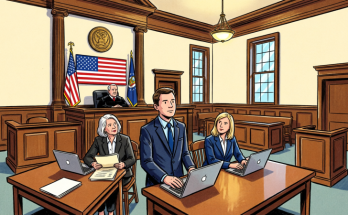
From prison, he filed a civil suit against us. Claimed defamation. Claimed emotional distress. Claimed my daughter ruined his son’s future. The paperwork was messy and desperate, the legal equivalent of spitting through bars.
My daughter read the complaint and laughed once, short and clean.
“He still thinks the world owes him,” she said.
“What do you want to do?” I asked.
She looked at me with that same steady gaze she’d had in the school conference room years ago.
“We respond,” she said. “And we finish it the right way.”
She built the response like a wall. Evidence. Recordings. Court transcripts. Admissions. Every lie turned into a document. Every document turned into a nail.
The suit was dismissed.
The judge wrote a note in the order about abuse of process and harassment.
Caldwell’s last attempt to control the story became another exhibit of who he was.
When the final notice came in the mail, my daughter held it for a moment, then set it down.
“Is it over?” I asked.
She breathed out slowly. “For him,” she said. “Yes.”
She looked up at me and smiled, small and certain.
Not because she was happy he suffered.
Because she understood something he never would.
Power isn’t loud.
It doesn’t demand someone lick a shoe.
Power builds systems that make bullies irrelevant.
And that’s exactly what she was doing.
Part 9
The first time my daughter’s name showed up in a national memo, she didn’t tell me.
I found out because a colleague called me at 5:40 a.m. with the kind of voice that means something has already spread.
“You seeing this?” he asked.
“What?” I said, already awake, already standing.
He sent a screenshot. A briefing header from a federal task group that monitored patterns of intimidation and abuse of authority. Under “case exemplars,” there was a paragraph about a former police chief, a coerced apology demand, an attempted home intimidation, and a minor who refused to break.
The memo didn’t mention my job. It didn’t mention the unit I trained. It didn’t mention anything that could compromise anything.
But it mentioned her.
As a precedent. As a catalyst. As a reminder that the old tricks weren’t staying in the dark anymore.
When I confronted her about it that night, she shrugged like it was nothing.
“It’s not my name,” she said. “It’s the pattern.”
“Your name is attached to the pattern,” I replied.
She looked up from her laptop, eyes steady. “Good,” she said. “Let it scare the right people.”
That was when I realized she’d crossed a line that can’t be uncrossed. Not a line into danger. A line into significance.
Once you become proof, you can’t go back to being just a person.
The memo triggered something bigger than either of us expected. Other towns started calling. Other families. Other girls who’d been punished for surviving. Mothers with tight voices and fathers with hands that shook when they tried to stay calm.
My daughter’s clinic calendar filled so fast she had to start turning people away, and turning people away made her angrier than losing sleep.
“They’re everywhere,” she said one night, staring at a stack of intake forms. “Same script. Different faces.”
I watched her read a statement from a fourteen-year-old who’d been cornered in a storage closet by a boy who thought he owned the hallway. Suspended for “aggressive behavior.” Required to attend “anger counseling.” The boy was sent back to class with a warning.
My daughter’s jaw tightened.
“I want their policies,” she said.
“Whose?” I asked.
“All of them,” she replied.
So she built a case not against one boy, not against one principal, not against one corrupted badge. She built it against a machine that ran on the same fuel everywhere: comfort, reputation, and the belief that girls are easier to silence than boys are to discipline.
She requested records. She demanded camera footage. She made administrators put their “concerns” into writing. She forced them to name who pressured them.
And when they tried to hide behind vague phrases, she did what I’d taught her without ever meaning it to become this sharp.
She waited.
She let the silence stretch until the truth couldn’t breathe.
Then it came out like it always does: donations, local connections, family influence, a parent on the board, a phone call from someone with a title.
The first school settled quietly. The second fought. The third tried to smear her online, calling her anti-school, anti-family, anti-boys.
My daughter didn’t flinch.
She filed anyway.
And that’s when someone decided to change the game.
The first real threat didn’t come as a brick. It came as a leak.
A small local blog published a post about me.
Not my name, not my unit, but enough to point in my direction. A photo taken from far away at a parking lot, grainy but recognizable if you knew me. The caption used a phrase that made my blood run cold: black ops instructor.
The post was written like gossip, but it wasn’t gossip. It was a marker.
A way of saying: we can name you if we want.
I showed it to my daughter at the kitchen table. She read it twice and then set the phone down gently.
“They’re trying to scare you,” she said.
“No,” I replied. “They’re trying to scare you through me.”
Her eyes lifted. “It won’t work,” she said.
I leaned in. “It might,” I said, not to frighten her, but because truth keeps you alive. “Not because you’ll fold. Because people around you will get hurt if someone decides you’re too expensive.”
She didn’t blink. “Then we make it more expensive for them,” she said.
I stared at her for a long second. The calm. The certainty. It didn’t come from arrogance. It came from knowing what it cost to back down.
“Tell me what you’re thinking,” I said.
My daughter turned her laptop toward me. On the screen was a draft: a proposed statewide policy template for schools, with mandatory reporting language, hallway camera retention rules, bathroom access protocols, and disciplinary guidelines that treated harassment like what it was.
“Sunlight,” she said. “I’m going to build something they can’t whisper around.”
“That’s slow,” I warned.
She nodded. “Good,” she said. “Slow lasts.”
The leak didn’t stop. It escalated.
A second blog ran a piece suggesting my daughter was “using trauma for attention.” A third claimed she’d “trained in lethal combat” and was a “danger to students.” The language was sloppy, the intent precise: make her sound like a threat so the system could justify treating her like one.
Then someone tried to bait her into reacting.
A man approached her in a courthouse hallway after a hearing, camera already in hand, voice raised loud enough to attract phones.
“So you’re the girl who breaks boys’ arms?” he shouted.
My daughter stopped walking and looked at him with calm eyes.
“I’m the woman who reads policies,” she said.
The man blinked, thrown off.
She stepped around him like he was furniture and kept going.
The clip went viral anyway, but not the way he wanted. People laughed at him. Commenters called him pathetic. The script had stopped working on enough people that the bait didn’t hook like it used to.
That’s when the next threat came from someone smarter.
A letter arrived at our house, no return address, typed instead of handwritten. The tone was polite, almost professional.
Stop. We can make you both disappear without touching you.
My daughter read it and set it down.
“That’s a real one,” she said.
“Yes,” I agreed.
She looked at me. “Are you scared?”
I considered the question carefully. “I respect what fear is for,” I said. “But no. Not like they want.”
She nodded, and I watched something settle behind her eyes.
“Okay,” she said. “Then we finish the next step.”
The next step wasn’t a fight. It was an announcement.
My daughter arranged a public hearing with the state education committee. She didn’t invite drama. She invited data, testimony, victims, and the kind of quiet truth that makes politicians sweat.
On the day of the hearing, she wore a simple suit and carried a binder thick enough to knock sense into a table.
She testified without tears. Not because she didn’t feel anything. Because she understood tears sometimes make people comfortable. They let them pity you instead of listening.
She spoke about the bathroom incident that started her story, but she didn’t stay there. She moved outward, case by case, showing the pattern like a map.
“Schools punish girls for surviving,” she said. “Because it’s easier than punishing boys for crossing boundaries. And because adults are afraid of powerful parents.”
Then she looked directly at the committee chair.
“Your job,” she said, “is to make fear irrelevant.”
The room went quiet. Not the quiet of politeness. The quiet of impact.
By the end of the hearing, the committee voted to advance the policy package to a full legislative session.
Outside, reporters tried to swarm her. She gave one statement and then stepped back, letting the girls who’d been silenced speak for themselves.
That night, my daughter sat at our kitchen table, finally letting her shoulders drop.
“You did it,” I said.
She shook her head. “I started it,” she replied. “They’ll fight the rest.”
“Let them,” I said.
She smiled faintly. “Exactly,” she said.
And then her phone buzzed.
Unknown number.
One message.
You just made this national.
She showed it to me.
I read it once and felt the old instinct tighten, not toward violence, but toward preparation.
“They’re warning you,” I said.
My daughter’s eyes stayed calm.
“No,” she replied. “They’re admitting I matter.”
Part 10
The law passed eighteen months later.
Not perfectly. Nothing passes perfectly. People in suits always shave the edges off truth to make it fit through doors. But the core survived: mandatory reporting, independent review, protections against retaliation, real consequences for staff who buried harassment, and a statewide standard that didn’t allow schools to hide behind reputation.
When the governor signed it, cameras flashed. Smiles were wide. Speeches were polished.
My daughter stood off to the side, hands folded, expression neutral. Not because she wasn’t proud. Because she knew signatures don’t change culture by themselves. They give culture something to lean on when it decides to change.
After the ceremony, the governor’s aide approached my daughter with a rehearsed grin.
“We’d love if you’d say a few words,” the aide said.
My daughter glanced at the microphone, then at the row of girls standing behind the press line—some of them the ones who had testified, some of them just watching, hungry for proof that the world could move.
She stepped to the mic.
She didn’t thank politicians. She didn’t praise committees.
She said, “If you corner a girl, don’t be surprised when she pushes back. The goal isn’t to make girls gentler. The goal is to make boys accountable.”
Then she stepped away.
The clip ran everywhere.
It made some people furious.
It made other people breathe for the first time in years.
The backlash came, predictable and loud. Commentators who’d never set foot in a school bathroom made it about “gender wars” and “softness” and “kids these days.” They tried to twist her words into something they could dismiss.
My daughter didn’t respond.
She didn’t debate strangers with microphones. She did what she’d always done.
She built.
She founded an advocacy center that trained school staff on policy compliance and trauma-informed investigations. She created a hotline staffed by people who actually answered. She partnered with legal aid groups. She trained young lawyers to document, to file, to push without becoming addicted to the fight.
She became the person principals feared—not because she was cruel, but because she made them accountable.
And then something happened that I didn’t expect.
She softened.
Not in her principles. In her body.
She laughed more. She slept more. She stopped scanning every restaurant exit.
One evening, years after the brick through the window and the letter without a return address, I found her sitting on the back porch with a cup of tea, watching the sunset like it was allowed to be beautiful.
“You okay?” I asked, the old question still living in my mouth.
She nodded. “Yeah,” she said. “I think I am.”
I sat beside her, and the quiet between us didn’t feel like a threat.
“Do you ever think about him?” I asked.
She didn’t ask who. She knew.
She exhaled slowly. “Sometimes,” she admitted. “Not like before.”
“Do you hate him?” I asked.
My daughter considered it, and the answer she gave was the cleanest ending I could have imagined.
“No,” she said. “He’s not worth hate. Hate keeps a person alive in your head.”
I nodded. “So what is he worth?”
She looked at the sky, then back at me.
“He’s worth a policy,” she said. “He’s worth a system that makes men like him fail by default.”
That night, I realized the story was truly over, not because Caldwell was gone, not because his badge was stripped, not because his last lawsuit had been dismissed.
It was over because my daughter had stopped carrying him as a weight.
She carried only what mattered.
A few months later, my daughter invited me to a training session at her center. Not combat. Not self-defense. A classroom of school administrators, counselors, and resource officers sat in folding chairs, pens ready, faces wary.
My daughter stood at the front and said, “You don’t need to be brave. You need to be clear. Clear beats brave when it comes to policy.”
She walked them through scenarios: reporting chains, evidence handling, interview structure, how to protect a student without making them perform their trauma for adult comfort.
One older administrator raised his hand and said, “What if the parent is influential?”
My daughter paused and let the silence stretch until the man shifted uncomfortably.
Then she said, “Then the policy matters more.”
The man nodded slowly, like he’d just been handed a key.
After the session, she walked with me to the parking lot.
“You did good,” I told her.
She smiled. “So did you,” she said.
I frowned. “I didn’t pass the law.”
She looked at me, steady and sure.
“You trained me to choose,” she said. “That’s the whole thing. I chose not to become a weapon. I chose to become a wall.”
We stood there in the late afternoon light, and I felt something in my chest settle into a quiet finality.
My daughter had been asked to apologize and lick a shoe.
Instead, she built a world where no one had to.
And when she got into her car and drove away, she didn’t glance in the mirror like she expected someone to follow.
She just drove forward.
Because she finally lived in a future she’d helped create—one where the silence wasn’t fear anymore.
It was peace.
THE END!
Disclaimer: Our stories are inspired by real-life events but are carefully rewritten for entertainment. Any resemblance to actual people or situations is purely coincidental.