She joined the debate team. She volunteered at the animal shelter. She kept her grades sharp and her eyes sharper.
One afternoon, I found her in the garage, wrapping her hands.
“You’re training?” I asked.
She nodded. “I want more control,” she said.
I leaned against the doorframe. “Control over what?”
“Over me,” she said.
That answer mattered.
So we trained differently.
Less about breaking. More about leaving. More about de-escalation. More about how to use your voice like a tool, how to use boundaries like walls that don’t crumble.
We trained how to walk into a room and know where the exits were without looking like you were afraid.
We trained how to ask for help loudly.
We trained how to live.
Months later, the trial started.
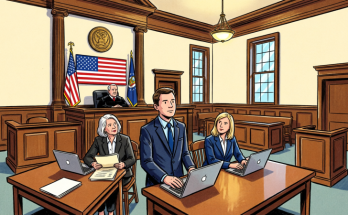
Caldwell was charged with conspiracy, intimidation, misuse of authority, and unlawful possession confirmations tied to his crew. Some of the criminals flipped on him immediately. They weren’t loyal. They were hired. That kind of loyalty is always rented by the hour.
In court, Caldwell tried to look dignified. He wore suits. He avoided eye contact with the jury. His lawyers used words like misunderstanding, emotional overreaction, personal dispute.
Then my driveway footage played.
Then the audio.
Then his own voice demanding humiliation, talking about collecting.
The jury didn’t need drama. They had clarity.
He was convicted.
Sentenced.
His badge was removed in a ceremony that wasn’t ceremonial at all—just a quiet administrative act that turned him into what he’d always been under the costume: a bully who’d been handed a legal shield.
The boy’s father demanded my daughter apologize and lick his shoe.
In the end, he was the one who went down on his knees in court, not to apologize, but to beg for leniency.
The judge didn’t give it.
Afterward, outside the courthouse, my daughter stood beside me as reporters shouted questions.
“Do you feel safe now?” someone asked her.
She looked at the cameras with calm eyes and said, “I felt safe when I knew how to defend myself. I feel safer now that people believe girls.”
Then she walked away, not running from the noise, not basking in it either.
Just leaving.
Because she didn’t need to prove she was powerful.
She already knew.
Part 5
Years later, when people in town told the story, they turned it into something simpler than it was.
They made my daughter a legend.
They made me a scary father with a mysterious job.
They made Caldwell a one-time villain, like the town could scrub him out and claim it had learned.
But the truth was messier.
The truth was a girl who had to decide what kind of person she wanted to be in the worst moment of her life.
The truth was a system that tried to punish her for surviving, until the system’s own rot got dragged into daylight.
The truth was that none of it ended cleanly.
Not at first.
My daughter—older now, taller, steadier—stood on a graduation stage in a cap and gown and scanned the crowd the way she always scanned a room. Not because she expected danger, but because awareness had become part of her, like bone.
She spotted me near the aisle and lifted her chin just slightly.
I nodded back.
After graduation, she didn’t go into the military.
People assumed she would. They assumed training meant destiny.
She chose law.
Not the soft kind.
The kind that goes after institutions.
The kind that reads policy the way I used to read terrain.
In her second year, she called me from campus late at night.
“Dad,” she said, voice quiet.
“What’s wrong?” I asked, already standing, already feeling that old instinct.
“Nothing,” she said. “I just… I had a client at the clinic. A girl. She got suspended for fighting back.”
My jaw tightened. “What happened?”
“Same story,” she said. “Different hallway.”
I closed my eyes and breathed out slowly. “What are you going to do?”
There was a pause, then her voice steadied. “What you taught me,” she said. “I’m going to be useful.”
She won that case.
Not with violence. With records. With calm. With persistence that made administrators talk too much.
She built a reputation the way real reputations are built—quietly, case by case, until the people who tried to ignore her realized they couldn’t.
On the tenth anniversary of the night Caldwell showed up on our street, my daughter invited me to a small event.
No press.
No speeches.
Just a community center room full of women and girls sitting in folding chairs, listening.
My daughter stood at the front with a whiteboard behind her.
She didn’t tell them to fight.
She taught them how to notice.
She taught them how to leave.
She taught them how to say no with their whole body.
She taught them how to report and document and insist until someone with power had to hear them.
At the end, a little girl raised her hand. “What if they don’t believe me?” she asked, voice trembling.
My daughter—my once-small Lila—looked at her and smiled gently.
“Then you keep speaking,” she said. “And you find the people who know how to listen. They exist. Sometimes you have to build them.”
The girl nodded, swallowing hard.
I stood in the back of the room and felt something in my chest ease that I hadn’t realized was still clenched.
After the event, my daughter walked out with me into the cool night air. Streetlights hummed. Cars passed. The world looked normal, which was its own kind of victory.
She slipped her hand into mine for a second—an old habit returning briefly—and then let go.
“You know,” she said, almost casually, “the principal called me last week.”
I glanced at her. “Yeah?”
She nodded. “Different principal,” she said. “Different school. Same opening line.”
I waited.
She looked at me, eyes bright with a calm that wasn’t naive.
“He said, ‘Your student broke a boy’s arm.’”
My jaw tightened automatically, but she held up a hand.
“And I asked why,” she said. “And he said, ‘He cornered her. She defended herself.’”
I breathed out slowly.
“What did you say?” I asked.
My daughter’s smile sharpened, not cruel, just certain.
“I said,” she told me, “she showed mercy.”
She paused, letting the words settle between us like a promise.
“And I said,” she continued, “if you punish her for surviving, you’ll answer to me.”
We walked to our cars in silence.
Not the silence of fear.
The silence of something finished.
Because the ending wasn’t the police chief losing his badge.
The ending was my daughter learning she never needed anyone’s permission to stand upright.
And the future was her making sure other girls learned it sooner.
Part 6
The town tried to move on like the whole thing had been a storm that passed.
They repainted the school bathroom. They held assemblies about respect. They sent out a glossy newsletter with photos of smiling kids and captions about community. People love paper shields. They love pretending a fresh coat of paint can change what’s underneath.
My daughter kept going to class. She kept her head down and her eyes up.
And for a while, it seemed like the ending we’d earned was going to hold.
Then the first brick came through the window.
It happened at 2:14 a.m. Not random. Not kids being kids. The timing had intent in it. The sound woke the house like a gunshot. Glass scattered across the living room floor, glittering in moonlight. My daughter came out of her bedroom in socks, calm as if she’d rehearsed the moment in her sleep.
“You okay?” I asked.
She nodded once. “They missed,” she said.
I looked at her, then at the hole in my window. “That’s not the point,” I said.
Her mouth tightened. “I know.”
On the street, nothing moved. No footsteps running away. No engine roaring off. Whoever did it didn’t want to be seen. They wanted the message delivered by silence.
I swept the yard, checked the camera feeds, called it in. The responding patrol officer was polite, but his posture screamed discomfort. He knew whose name haunted the case even though Caldwell was already in cuffs.
“Probably teenagers,” the officer said, too fast.
I stared at him until he stopped talking.
“Probably,” I repeated.
He swallowed. “We’ll file the report,” he said.
After he left, my daughter sat at the kitchen table and watched me clean glass out of the carpet with a shop vacuum.
“Dad,” she said quietly, “he can still reach us, can’t he?”
That was the question people don’t like, because it means they have to admit the badge was never the whole weapon. The weapon was the network that badge built.
“Yes,” I said. “He can try.”
She nodded, absorbing it like weather.
The next week brought more “random” things.
A note tucked under our wiper: traitor.
A dead rat left on the porch.
An anonymous post on a local forum claiming my daughter was “violent” and “unstable” and that I “trained her to hurt boys.”
The words were sloppy. The intent wasn’t.
My daughter read the post once and slid the phone back to me.
“They’re trying to make me the problem again,” she said.
“Yes,” I replied.
She didn’t flinch. “What do we do?”
I leaned back in my chair and watched her face. There was no fear in it. Just readiness. That readiness made me both proud and angry at a world that forced it into her.
“We document,” I said. “We don’t chase. We don’t react loud. We let them keep talking until they hang themselves.”
She smiled faintly. “Like you did at the school.”
“Exactly,” I said.
The third incident was the one that made the pattern obvious.
A car followed my daughter from school. Not close enough to be obvious. Not far enough to be accidental. It tailed her for six turns, through neighborhoods it didn’t belong in.
She didn’t panic. She didn’t speed. She didn’t go home.
She drove to the police station.
She parked under the front lights.
The car hesitated, then rolled past, slow, like it was memorizing her face one last time.
My daughter called me from the station lobby.
“Someone followed me,” she said.
“I know,” I replied.
“You know?” she asked, surprised.
“I saw it on the school’s external camera feed,” I said. “I asked for access after the bathroom incident. They said no. Then they said yes when everything fell apart.”
There was a pause. Then she exhaled.
“I’m glad you’re you,” she said quietly.
I didn’t answer that with jokes. “Stay there,” I said. “I’m coming.”
When I arrived, two officers met me with forced friendliness. They weren’t Caldwell’s men, but they’d lived under Caldwell’s shadow. It takes time for a department to unlearn fear.
My daughter stood beside me and told her story with clean clarity. No drama. No exaggeration. Just facts.
A week later, the car was identified. Registered to a man with a record. One of the twelve from my street.
He claimed he’d been “curious.” He claimed he “just happened” to be driving behind her. He claimed everything criminals claim when they can’t admit motivation.
The detective investigating the intimidation pattern looked me in the eye and said, “Someone is leaning on these guys.”
“Yes,” I replied.
He lowered his voice. “We suspect he’s still making calls from inside.”
I nodded once. “Then you need to listen to his calls,” I said.
The detective exhaled. “We’re working on it.”
I didn’t push. Pushing makes people defensive. I just waited. Waiting makes people do their jobs when they realize you won’t go away.
Two weeks later, Caldwell’s jail calls became evidence.
He hadn’t asked anyone to hurt us directly. He wasn’t stupid.
He’d asked for “pressure.”
He’d asked for “a reminder.”
He’d asked for “the girl to learn her place.”
And the people he called understood exactly what those words meant.
That was the thing Caldwell never understood about my daughter.
He thought humiliation would break her.
All it did was reveal him.
Part 7
The hearing about intimidation happened on a Tuesday.
Courtrooms are always colder than they need to be. Cold makes people compliant. Cold makes people want to get it over with and go home. It’s another quiet tool the system uses.
My daughter sat beside me, hands folded, posture steady. She wore a simple blouse and slacks, hair tied back. She looked like a student. She looked like what people wanted her to look like.
Until she spoke.
The prosecutor played Caldwell’s recorded jail call. His voice came through the speakers, smug and casual, like he was ordering dinner.
“Just remind them,” he said. “Make it uncomfortable.”
The judge’s face tightened.
Caldwell sat at the defense table in cuffs, eyes hard, trying to look unbothered. His lawyer shifted in his seat like he could feel the ground changing under him.
When the recording ended, the judge leaned forward.
“Mr. Caldwell,” the judge said, voice quiet, “do you understand you are speaking about intimidating a minor?”
Caldwell’s eyes flicked to my daughter. For a moment, it looked like hate. Then it looked like confusion. Like he couldn’t understand why she was still standing upright.
“She ruined my son’s life,” Caldwell said, voice tight.
My daughter didn’t move. She didn’t blink.
The judge’s voice sharpened. “Your son cornered her in a girls’ bathroom,” he said. “Your son is responsible for his actions.”
Caldwell laughed once, bitter. “She could’ve walked away.”
My daughter spoke then, calm as a blade being set on a table.
“I tried,” she said. “He blocked the door.”
The judge looked at her. “Thank you,” he said gently.
Caldwell’s lawyer tried to object, tried to turn it into teenage drama, tried to smear my daughter as “trained,” as if training was some sinister thing.
The prosecutor asked the question that mattered.
“Captain Caldwell,” she said, emphasizing the fall from Chief like a bruise, “why did you demand she apologize and lick your shoe?”
Caldwell’s mouth tightened. “Respect,” he said.
The prosecutor’s voice didn’t change. “Respect,” she repeated. “Or control?”
The courtroom went quiet.
Caldwell didn’t answer.
He didn’t need to. The silence was loud enough.
The judge added time to his sentence for intimidation conspiracy. Not years. Enough months to matter. Enough to send a message: the court had stopped treating his power like a natural law.
Outside the courthouse, reporters tried to corner my daughter.
“How does it feel?” one asked. “To win?”
My daughter looked at them like she was bored.
“I didn’t win,” she said. “I survived.”
Then she turned to me as we walked to the car.
“Dad,” she said, “I have something to ask.”
I glanced at her. “Go ahead.”
“Why did you teach me?” she asked. “Not the moves. The calm. The part where you don’t fill the silence.”
I drove for a minute without answering, because the truth was long.
“I teach people for a living,” I said finally. “Most of them are adults. Most of them think strength is noise.”
My daughter nodded.
“I taught you because the world doesn’t always protect girls,” I continued. “And because I knew one day someone would try to tell you that your safety mattered less than their ego.”
She looked out the window. “You knew it would happen.”
“I didn’t know when,” I said. “But I knew the kind of world we live in.”
She was quiet for a moment. Then she said, “I want to protect other girls.”
I glanced at her. “How?”
Her voice stayed steady. “I want to study law,” she said. “I want to be the person in the room who can’t be ignored.”
A slow warmth spread through my chest. Not pride like a trophy. Pride like a quiet exhale.
“You’d be good,” I said.
She smiled faintly. “I know,” she replied, and it wasn’t arrogance. It was clarity.
That night, I sat alone on the back porch and listened to the neighborhood sounds. A distant TV. A dog barking. A car door closing.
Normal life.
I thought about Caldwell in his cell, realizing his threats had become paperwork and consequences. I thought about the boy, learning too late that entitlement doesn’t heal bone or reputation.
And I thought about my daughter, choosing a future that wasn’t about fighting harder, but about building a world where girls didn’t have to fight at all just to be believed.
Part 8
Two years later, my daughter’s first case wasn’t in a courtroom.
It was in a school office.
Different town. Different principal. Same smell of disinfectant and avoidance. Same beige walls covered in motivational posters that meant nothing when the door closed.
The principal sat behind his desk, hands clasped, voice careful.
“We have a situation with one of your clinic clients,” he said.
My daughter sat across from him, notebook open, pen ready. She didn’t bring her father. She didn’t bring fear. She brought preparation.
“What happened?” she asked.
The principal cleared his throat. “A boy reports he was injured.”
My daughter didn’t blink. “Why?” she asked.
The principal hesitated. “He says she attacked him.”
My daughter tilted her head slightly. “In what location?” she asked.
The principal’s eyes flicked away. “Near the bathrooms,” he said.
“Which bathrooms?” my daughter asked.
The principal swallowed. “The girls’ bathroom.”
My daughter’s pen paused.
The principal tried to keep going. “We don’t tolerate violence—”
My daughter held up a hand. “Stop,” she said, not loud, but final. “Tell me what the cameras show.”
The principal’s mouth tightened. “The hallway camera doesn’t—”
My daughter leaned forward. “You have cameras,” she said. “You have time stamps. You have witnesses. You also have a legal obligation to protect students. So tell me what the cameras show.”
The principal looked at her like he was finally recognizing something: she wasn’t a kid he could talk down to. She wasn’t a parent he could placate.
She was a problem.
He opened a folder and slid it across the desk.
Video stills. A boy following a girl into the girls’ bathroom. A hand catching the door before it could close. The girl pushing back.
My daughter’s voice stayed calm. “So,” she said, “he entered the girls’ bathroom.”
The principal didn’t answer.
My daughter tapped the still frame with her pen. “And she defended herself,” she said.
The principal’s shoulders sagged slightly. “We’re under pressure from the boy’s family,” he muttered.
My daughter smiled faintly. “So was I,” she said. “Once.”
The principal looked up sharply. “Excuse me?”
My daughter kept her tone even. “If you suspend her,” she said, “I will file. If you expel her, I will escalate. If you erase this boy’s behavior to protect your reputation, I will make your reputation the least of your problems.”
The principal stared at her, face pale.
My daughter closed her notebook. “Now,” she said, “here’s what you’re going to do.”
She didn’t threaten violence. She didn’t need to.
She threatened daylight.
The girl wasn’t suspended. The boy was. The school added new bathroom monitoring protocols and revised its harassment reporting system under scrutiny it couldn’t ignore.
My daughter called me afterward.
“It worked,” she said.
I smiled into the phone, alone in my kitchen. “Of course it did,” I said.
There was a pause. Then she asked, softly, “Dad… did you ever worry I’d become too hard?”
I leaned against the counter and looked out the window at the yard where she used to practice footwork with chalk lines on the ground.
“Yes,” I admitted. “I worried about that.”
“And?” she asked.
I chose my words carefully. “Hard isn’t the enemy,” I said. “Cruel is.”
My daughter was quiet for a moment. Then her voice softened.
“I’m not cruel,” she said.
“No,” I agreed. “You’re not.”…..