When my parents tried to take all seven Florida homes, the judge read my letter and started to laugh
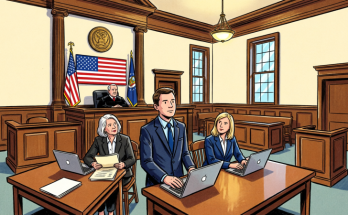
In court, my parents claimed all seven Florida homes as theirs. The judge glanced down at the thick letter I handed him, let out a quiet, surprised laugh, and said, “Well… this is interesting.”
I still remember the way their faces drained of color—my dad’s jaw tightening, my mom’s hands freezing in mid‑smile. It wasn’t a cruel laugh. It was the kind a man makes when the truth is so different from what he expected that he can’t help himself. He leaned in, lowered his voice slightly, and those four words—well, this is interesting—landed like a gavel inside my chest.
For the first time in years, I felt something that cut through the exhaustion and the long, lonely drives down Highway 1 in the Florida Keys: vindication. The kind that hits you right in the sternum. The kind that makes every sleepless night, every doubt, every mile between the Navy base and my grandmother’s small pastel cottages finally mean something.
But that moment—the judge’s quiet laugh, my parents’ stunned silence—was only the turning point.
Everything that mattered started long before that, with a phone call I wish I never had to take.
My name is Elena Ward. I’m a Lieutenant in the United States Navy, a logistics officer who spends most of her time making sure ships, people, and supplies end up exactly where they’re supposed to be. I’ve deployed out of bases along the East Coast more times than I can count. I know how to pack a sea bag in the dark, how to function on four hours of sleep, how to give calm orders when everything feels like it’s falling apart.None of that prepared me for what my brother said when I stepped off a transport plane and turned my phone back on.
There were three missed calls from a local Florida number and one text from Kyle.
Call me now. It’s Grandma.
The world narrowed to that one word. I walked off the jet bridge into bright American sunshine that didn’t feel real, my boots suddenly too heavy. By the time I reached baggage claim and got him on the line, my hands were shaking.
“She’s gone, Lena,” he said. “Grandma’s gone.”
Rosalind Ward. The woman who raised me when my parents couldn’t or wouldn’t. The one who made sure my shoes actually fit, my lunches were packed, and somebody was in the stands clapping when I got an award at school. In our little corner of coastal Florida, everybody knew her. Shop owners in the Keys, church friends, old Navy veterans who rented her cottages year after year—they all had a story about Rosalind.
And she owned something else too: seven small vacation homes scattered along the Florida Keys, all a short drive off Highway 1.
They weren’t luxury resorts. They were charming, stubborn little places painted in pastel blues, greens, and yellows. Tin roofs that sang in the rain. Hammocks out front. Old ceiling fans that clicked at night. Every cottage had its quirks—the sticky back door on number three, the pelican that always perched on the railing near number five, the porch step on number seven that sagged just enough to squeak.
I grew up sweeping those porches, trimming those hedges, repainting shutters in the heat of June while the humidity wrapped around me like a heavy blanket. Every time I complained, Grandma would tap the rail and say, “These houses will take care of you someday, sweetheart. You just have to take care of them first.”
When I heard she was gone, my first thought—after the grief hit hard enough to blur my vision—was of those cottages. Not because of the money. Because they were hers. They held her laugh in the walls, her recipe cards taped inside cabinet doors, her handwriting on every shelf note that said things like, Don’t forget to dust and Please water the plant.
I called my parents, Mark and Linda, expecting… something. Maybe shared grief. Maybe a plan. Maybe one small moment where we all acknowledged that we had lost the same person on the same Florida soil.
Instead, my dad said, “We’re handling everything. No need for you to get involved.”
My mom followed up, her tone tight and dismissive. “You’re too busy with your Navy life anyway.”
That should have been my first clue that something was off. But I was jet‑lagged, still smelling like aircraft fuel and sea air, and grief has a way of muffling instincts. So I let it go—for a few days.
I drove down Highway 1 with the windows cracked, the humid Keys air pushing against my face. I spent that first week visiting Grandma’s favorite places: the little white church on the corner with its peeling steeple, the old bakery in town where she bought key lime pie, the worn wooden dock behind her main house where she’d sit every evening with sweet tea and watch the light break over the water.
People hugged me, cried with me, told me story after story about how she had helped them, fed them, given them a place to stay when life went sideways. A teenage cashier at the grocery store told me Grandma once paid for her mom’s groceries when their card declined. An older man at the bait shop said Rosalind had kept his family from losing their rental more than once.
It grounded me. It reminded me who she was and, by extension, who I wanted to be.
Three days later, I drove to my parents’ house expecting an actual conversation about the estate—the cottages, the arrangements, the funeral, something. Their neighborhood felt different from the Keys: more manicured lawns, more identical roofs, more air‑conditioned silence.
They were sitting stiffly at the dining room table when I walked in, a neat stack of folders lined up in front of them like soldiers on parade.
My dad cleared his throat. “We’ve decided to assume full ownership of the properties.”
I blinked. “Full ownership? Grandma always told me—”
“She told you nothing,” my mother cut in sharply. “You were a child.”
I swallowed. “There’s a will,” I said quietly. “She told me there was.”
They exchanged a look that made my stomach drop.
“There is no will,” my father said, each word clipped and precise, as if he’d rehearsed them. “The properties automatically transfer to us.”
“That doesn’t sound right,” I said.
“It’s the law,” he replied. “And frankly, after everything we’ve done for those houses, we deserve them.”
I almost laughed. They had done nothing. Grandma had been the one repainting, fixing, calling handymen. I had been the one home on leave, trimming bushes and cleaning gutters. My parents showed up for photo ops and holidays. That was about it.
Still, Navy training taught me that anger clouds judgment. So I took a breath, let it settle low in my chest, and kept my voice level.
“Can I at least see the paperwork?” I asked.
My mother stood, gathered the folders into her arms like they were priceless artifacts, and held them against her chest. “There’s nothing for you to read.”
Then she added, with a coldness that stung more than I expected, “You should be grateful we’re not asking you to reimburse us for the funeral.”
It was like she’d reached across the table and flicked off a light inside me.
I walked out that night with a pit in my stomach. Something was wrong. Something was missing. And most of all—where was Grandma’s will?
Because I knew, down to my bones, she would never leave things in chaos. She was a planner, a list maker, the kind of woman who labeled the back of every photo with who was in it, where it was taken, and which holiday it was.
A week later, one of Grandma’s long‑term tenants, a woman who had rented cottage number four every winter for as long as I could remember, slipped a plain envelope into my hand while I was visiting the property.
“She told me to give you this,” the tenant whispered. “Said it was important.”
Inside was a short note in Grandma’s familiar looping handwriting.
If anything ever happens to me, look in the safe. You’ll know what to do.
She’d never mentioned a safe. Not once.
After a long conversation with the bank, a stack of identification documents, and more paperwork than any civilian should have to deal with, I found it: a safe deposit box under her name at a branch right off Highway 1.
Inside were binders filled with property records, old handwritten ledgers, deposit slips, tenant agreements going back decades, and an unsigned copy of a will that listed me as the person she wanted to maintain the cottages and keep rent affordable.
Unsigned.
Not enough to be valid in court, not in Florida. But it was something—a trail, a clear picture of what she wanted, even if it wasn’t officially sealed.
I sat in my car in the bank’s parking lot with that unsigned will in my lap and the Florida heat turning the steering wheel hot under my hands. I held on to that hope like a life raft.
For the next month, I visited every tenant, every local friend of hers, every small business she’d supported. Piece by piece, a picture started to come together, and it did not cast my parents as grieving children doing their best.
It made them look like people who had been circling the estate for years, waiting.
Every conversation, every scrap of paper, every off‑hand comment built the case. My grandmother’s properties weren’t meant to be grabbed and sold. They were meant to be preserved. They were meant for me to protect.
That’s how I ended up with a court date in a Florida courthouse with my parents on the other side of the aisle.
The morning after the hearing notice arrived in the mail, I stood in my grandmother’s small kitchen—the one that still smelled faintly of citrus cleaner and the lavender soap she loved—and felt a heaviness in my chest I hadn’t felt since my earliest days in Navy boot camp.
There’s a particular kind of weight that comes from preparing for a battle you never wanted to fight. You tell yourself you’re strong enough, disciplined enough, trained enough. But family wounds knock the wind out of you in ways no drill instructor ever could.
I leaned against the counter, listening to the hum of the old refrigerator. It was the same fridge Grandma had owned since the late ’90s, still covered in faded magnets from all fifty states. One of them—a little pelican from Key Largo—was tilted crooked.
I reached up and straightened it.
“Everything looks better when it’s lined up just right, sweetheart,” she used to say.
She was right. She was always right.
Nothing in my life felt lined up now.
My parents hadn’t spoken a word to me since the night at their dining room table. My brother, Kyle, had sent exactly one text.
You’re ruining everything. Stop.
No punctuation. No explanation. No surprise. Kyle had spent most of his adult life drifting between half‑finished jobs and bad habits, always a step away from getting it together and a step away from losing it again.
Still, the message felt less like frustration and more like a warning.
I deleted it and slipped my phone into my pocket.
That afternoon, I drove back out to the cottages, determined to take inventory of everything I could still control. The sun hung low over the water, the Gulf shimmering like hammered gold. It was the kind of beautiful Florida day Grandma loved. She would have stood on one of those porches with her iced tea and said something like, “See? Even when the world’s upside down, the Keys stay steady.”
But the Keys didn’t feel steady now.
As I walked the gravel path between the cottages, I noticed details I had overlooked before: freshly replaced gutters my parents had claimed they paid for, a brand‑new AC unit on cottage four, a pile of unused lumber stacked near cottage six.
I hadn’t approved any of it. I hadn’t seen any invoices.
Had my parents really taken over maintenance—and if so, with what money?
One of the long‑term tenants, a soft‑spoken retired Coast Guard man named Frank, stepped out onto his porch and lifted a hand.
“Lieutenant Ward,” he called.
He always used my rank, not for formality, but as a quiet show of respect.
I climbed the steps. “Afternoon, Frank.”
He studied my face for only a second before sighing. “You all right? You look like someone stole your compass.”
I sank down onto the top step beside him. “Maybe they did.”
He nodded slowly, like he’d already guessed half of it. “Your grandma told me more than she told most folks. She didn’t trust your parents to handle these places. Said they didn’t understand people, only money.”
Hearing it out loud stung in a way even my parents’ words hadn’t.
“Did she ever mention signing a will?” I asked.
Frank hesitated, then nodded. “She mentioned meeting with someone—said it was to make things official. After that, she seemed relieved.”
Official.
That word echoed in my mind. She had used it with me, too.
If she had completed the will, why was the only copy an unsigned version hidden in a safe deposit box my parents never mentioned? Where was the signed version? Who would benefit from it disappearing?
I thanked Frank and continued my walk, feeling a storm of questions building inside my chest.
Near cottage seven, I saw a figure I didn’t expect.
My father.
He was talking to a man in a polo shirt holding a clipboard—a real estate agent. My father spotted me, his shoulders stiffening. The agent followed his gaze, offered me a polite nod, then walked toward his car.
Dad’s jaw moved the way it always did when he was irritated but trying to pretend he wasn’t.
“What was that?” I asked.
“None of your business,” he replied. “We’re evaluating options.”
“Options for what?” I pressed.
“The future.” He brushed his hands off as if he were dusting away dirt that wasn’t there. “These places need real management, Elena—not some Navy fantasy.”“You’re trying to sell them,” I said.
He didn’t deny it.
“They’re ours. We can do what we want.”
“You’re acting like Grandma never existed,” I said quietly.
His eyes softened for a brief second, then hardened again. “She didn’t understand how much responsibility these places are. She didn’t know what she was asking for.”
“She knew exactly what she was asking for,” I said. “She trusted me.”
He scoffed. “She trusted you because she spoiled you.”
I almost laughed. Me, spoiled. I’d earned every inch of my life in sweat, discipline, and long deployments. But I didn’t bother arguing. There are some conversations you can’t win on facts.
He turned to walk away and paused with his hand on the truck door. “Drop the hearing, Elena. It’s embarrassing.”
I stood there on the gravel, stunned, while he drove off, dust hanging in the humid air.
As soon as I got into my car, I called my attorney.
Her name was Andrea Wallace, a sharp but steady Florida lawyer who had spent twenty years handling estate disputes up and down the state.
We had met after I asked a fellow officer if he knew anyone who handled complicated family cases. His mother, it turned out, had nearly lost her home in a similar mess. Andrea had saved it.
When I told her what I had just seen, her voice shifted instantly.
“They’re preparing to move quickly on the properties,” she said. “We need to act now.”
“Without a signed will,” I said, staring at the cottages in my rearview mirror, “what do we really have?”
“You don’t need the entire will,” Andrea replied. “You need proof there was one—and that something happened to it.”
That word went through me like a bell.
Proof.
A few days later, I went back to the church where Grandma had volunteered for years. The pastor, a gentle man with kind eyes and the kind of calm that fills a room, welcomed me into his small office.
“Your grandmother left something with me,” he said, reaching into a locked drawer. “She said it was just in case someone tried to rewrite her story.”
He placed a sealed envelope on the desk. My hands trembled as I peeled back the tape.
Inside were several items: a handwritten note from Grandma, a copy of an earlier, partially signed will, a notarized letter stating her intent to leave me managerial rights over all seven homes, and a detailed list of beneficiary instructions.
But one page stopped my breath.
It was a photocopy of a notary logbook entry, listing the date, time, and witness names for the signing of her final will.
My heart raced. “Pastor,” I whispered, “this is… this is everything.”
He nodded. “She trusted you for a reason, Elena.”
That night I sat at Grandma’s worn kitchen table, every document spread out in front of me like puzzle pieces. I could feel the weight of her love and her planning in every line. This wasn’t about money. It never had been. It was about her legacy and the truth she wanted protected.
The hearing didn’t just feel necessary anymore. It felt inevitable.
The following week became a blur of miles on the car, lukewarm gas‑station coffee, and long conversations with people who had loved my grandmother in ways my parents never seemed to understand. If the first phase of this story was realizing something was wrong, this phase was where all the loose threads began to tighten, quietly but unmistakably, into a strong rope.
I started, again, at the church. It was the natural place. Grandma’s second home. The fellowship hall smelled like lemon cleaner and potluck casseroles, just like always.
The moment I walked in, half a dozen older women stood up, arms wide.
“Elena, honey,” Mrs. Parker said, pulling me into a hug. “Your grandma would be so proud you’re standing up for her.”
I hadn’t realized how tired I looked until I saw the concern in their faces. There’s a certain comfort only older women can give—the kind that settles your spirit before it calms your body.
They sat me down, pressed a mug of hot tea into my hands, set a plate of lemon bars that tasted exactly like Grandma’s in front of me.
“We heard what your parents are trying to do,” one woman whispered. “Your grandmother told us years ago she didn’t trust them with the cottages.”
“Not even a little,” someone else added.
The words landed like a weight.
“Did she ever talk about signing a final will?” I asked.
“Oh yes,” Mrs. Parker said firmly. “She told us she had an appointment with a notary. Said she was relieved to finally make it official. Those were her exact words.”
Official. Always that word.
If she had signed it, why was there no trace of the document itself?
The women encouraged me to talk to a man named Samuel Rohr, a retired notary who lived a few streets away. “He knew your grandmother well,” they said. “Sharp as ever.”
I knocked on his door that afternoon. A tall, white‑haired man answered, leaning slightly on a cane. His eyes were bright behind his glasses.
“Lieutenant Ward,” he said before I could introduce myself. “I heard you might be coming.”
He invited me in, insisting I take the recliner “because this thing cost more than my first car, and somebody ought to enjoy it.” His humor loosened the knot in my chest.
“Sir,” I began, “I was told you may have helped my grandmother with a will.”
He folded his hands and nodded. “Yes. She called me one week before she passed. Said she wanted you to have oversight of the cottages because you understood people, not just numbers. We met at her kitchen table. She had her documents ready. She signed the final will right in front of me.”
My breath caught. “She signed it.”
“Oh yes,” he said, tapping his temple. “Clear as day. I logged it like any other notarization. She had two witnesses—neighbors of hers. Good folks. I stamped the document myself.”
“Do you still have the logbook?” I asked.
He stood, shuffled to a bookshelf, and pulled out an old leather‑bound book. Its pages were yellowed at the edges.
“Here,” he said, handing it to me. “Page seventy‑two.”
I opened it carefully. There it was: her name, the date, the time, the two witness signatures, his notary seal. Clear. Undeniable. Final.
Tears stung my eyes, not from sadness this time, but from relief so strong it made my ribs feel too tight.
“Mr. Rohr,” I whispered, “this means everything.”
“I know,” he said softly. “That’s why I kept the book right where I could find it. Something told me you’d need it.”
I left with a photocopy of the logbook entry, my hands shaking as I understood exactly what it meant. The will existed. The will had been signed. The will had gone missing after her death.
That wasn’t an accident.
Someone had removed it. Someone stood to gain a lot from its disappearance.
And I suddenly knew exactly who had the most to gain.
I called Andrea as soon as I got into my car. She answered on the first ring.
“Elena, any luck today?” she asked.
“You need to hear this,” I said.
I laid everything out: the notary’s confirmation, the witnesses, the logbook, the envelope from the pastor. Andrea went quiet for a long moment.
“Elena,” she said finally, her voice low, “this is major. This isn’t just suspicion anymore. This is evidence that a signed will went missing under highly questionable circumstances.”
I closed my eyes. “And I’m starting to think my parents knew exactly what they were doing.”
Andrea exhaled slowly. “We’re going to need sworn statements from the witnesses and the notary. Get them as soon as possible. I’ll help coordinate.”
Halfway back to the cottages, my phone buzzed again. It was the pastor.
“I found something else in the church storage,” he said. “Something your grandmother left behind. I think you need to see it.”
I turned the car around.
He led me into a small office lined with cardboard boxes. From one of them, he pulled a heavy manila envelope sealed with layers of clear tape. My grandmother’s handwriting curved across the front.
For Elena, if anything happens.
Inside were decades of rent ledgers, notes about each tenant, copies of correspondence with her lawyer, and, most hauntingly, a letter addressed directly to me.
My dear Elena,
If you are reading this, I could not finish what I wanted to. I trust you with the cottages because they are not just properties. They are the stories of every person who stayed to find peace. Protect them, and be careful around those who want what they did not earn.
Love,
Grandma
I swallowed hard. This was more than an estate. This was her life’s work, and she knew, somehow, that my parents might try to take what they had never nurtured.
That evening, as I drove back toward Grandma’s main house, the sun was dropping over the bay, washing the sky in oranges and purples so vivid they almost didn’t look real. Florida sunsets have a way of making even the hardest days look softened at the edges.
Grandma always said sunsets were God’s way of reminding us that endings can still be beautiful.
But this ending wasn’t here yet. Before anything could get better, the truth had to come out.
The cottage porches glowed in the dusk as I pulled into the gravel lot, each little house looking more like a promise than a building. I held the envelope against my chest and knew that tomorrow would be a turning point.
For the first time since Grandma died, I didn’t feel like I was walking blind. I had proof. I had purpose.
And I had her voice, in ink and memory, guiding me forward.
The next morning, I woke before sunrise without an alarm. Years of deployments had trained my body to snap awake when something serious needed to be done. That day, everything felt serious.
The evidence I had gathered wasn’t just paperwork. It was the backbone of a story my parents had tried to erase.
Andrea had told me to meet her at her office in Key Largo at nine. I arrived ten minutes early, coffee in hand, wearing my service khakis. Not because I needed to, but because they helped me remember who I was: someone who doesn’t run, doesn’t lie, doesn’t fold.
Andrea’s office was small and practical, walls lined with bookshelves and framed certificates from Florida law schools and bar associations. When she walked in, she had a yellow legal pad in one hand and a pen tucked behind her ear.
“Good morning, Lieutenant,” she said. “You look like someone ready to take on Congress.”
“Just my family,” I answered.
She smiled once and motioned for me to sit.
“Let’s get to work,” she said. “What you brought me yesterday changed everything.”
She spread the documents across her desk—the photocopy of the notary’s logbook, the pastor’s envelope, the earlier drafts of the will, the letter from Grandma. She handled each page with the care of someone assembling a puzzle whose edges mattered.
“Elena,” she said carefully, “you need to understand how significant this is. Florida law is strict about wills. But when a signed will disappears under suspicious circumstances, especially when the people who benefit from that disappearance immediately take control of the assets, courts pay attention.”
“You mean this could be treated as a serious legal issue?” I asked softly.
“Yes,” she said. “I’ve seen situations like this turn into something much bigger. I’ve also seen courts step in quickly to protect what’s left. I’ve seen families fracture over far less than seven properties in the Florida Keys. This isn’t rare. It’s just painful.”
I nodded, trying to absorb that.
“What’s our next move?” I asked.
“Sworn statements,” she said. “From the notary, from the witnesses, from the pastor. Once we have those, we present everything at the hearing. The judge will likely halt all sales, all transfers, all income distribution until the situation is sorted out.”
“And my parents will fight,” I said quietly.
“They will,” she agreed. “And you need to be ready for that.”
I looked out the window at the parking lot, at the palm trees swaying lightly in the Florida breeze. “I’m Navy,” I said. “I’m prepared.”
She smiled faintly. “Good. Because this isn’t just a legal case. It’s a test of character—yours and theirs.”
The next few days were a whirlwind of signatures, notary stamps, and witness recollections. Mr. Rohr signed his affidavit with trembling hands but steady eyes. The neighbors who had served as witnesses confirmed the exact day Grandma had gathered them at her kitchen table. The pastor wrote a carefully worded statement about Grandma’s intentions for the cottages and the documents she had entrusted to him.
Every piece fit. Every word supported the truth.
Meanwhile, my parents acted as if everything were normal. My father continued managing the cottages as though nothing had changed, giving instructions to handymen, posting online ads for future bookings, and holding family meetings without me. He spoke to local vendors like he was the unquestioned owner.
Kyle, on the other hand, became increasingly erratic. One evening, as I was locking up cottage three, he pulled into the gravel lot with his headlights blinding me. The truck’s engine idled loud in the humid night.
He stepped out, eyes unfocused, shoulders tense.
“What are you doing, Elena?” he demanded.
“I’m doing what Grandma would have wanted,” I said calmly.
He pointed a shaky finger at me. “You’re trying to take everything. Everything she worked for.”
“No,” I replied. “I’m trying to preserve it.”
“You think you’re better than us because you’re Navy,” he snapped. “You think your uniform makes you right.”
“No,” I said quietly. “But telling the truth matters. And ignoring it doesn’t make it go away.”…….