He flinched like the words hit something raw inside him, then slammed his truck door and drove off so fast gravel spit into the trees.
I stood alone in the dark, breathing in the thick Florida night air, letting the sting of the moment dissolve. I felt sadness more than anger. Sadness for the boy Kyle used to be—the big brother who’d carried me on his shoulders at the county fair, the teenager who taught me how to fish off that very dock behind Grandma’s house.
Somewhere along the way, he’d gotten lost.
I tipped my head back and whispered into the night, “Grandma, I hope I’m doing this right.”
Two days later, I received a letter from the court confirming the hearing date. Andrea and I met again at her office to review everything.
“Elena,” she said as she handed me a thick folder, “this is your case. It’s strong—stronger than most I’ve seen.”
I held the folder, feeling its weight—heavy with responsibility, light with hope.
“Are you ready?” she asked.
I thought about my Navy training: storms at sea, difficult leaders, impossible schedules, long deployments away from American soil. None of those had shaken me as deeply as this battle with my own family.
“Yes,” I said. “I’m ready.”
Andrea gave a small nod. “Good. Walk in with your head high. Speak only when addressed. Answer clearly and calmly. The judge will notice.”
“And my parents?” I asked.
She exhaled. “They’ll try to rattle you. Stay composed. The truth is on your side.”
I smiled slightly. “The truth and a lot of paperwork.”
She laughed once. “That too.”
That night, I sat on the porch of Grandma’s main house. The air was warm, tinged with the smell of salt and hibiscus. I looked out at the cottages, each one glowing softly in the evening light, and felt her presence everywhere.
The chimes on the front porch jingled gently in the breeze. The hammock swayed empty but familiar.
Grandma used to say, “Integrity is the quiet kind of strength. Most people won’t see it, but everyone feels it.”
I repeated those words under my breath like a promise.
When I finally stood, I felt steadier than I had in weeks. The truth was on my side. The law, I hoped, would be too. And most importantly, Grandma was on my side.
I went inside, turned off the lights, and whispered into the darkness, “I’m ready for the hearing. Ready to finish what you started.”
I arrived at the courthouse earlier than necessary. Old Navy habits. I liked having time to stand still before walking into a battle—to feel the ground under my boots, to breathe in the air and remind myself I was there for a reason.
The Florida sun was barely stretching over the courthouse roof when I walked up the steps, folder tucked under my arm, uniform pressed and sharp. Inside, the air‑conditioning hummed over polished floors and rows of wooden benches that had probably held decades of family disputes just like mine.
A bailiff with a friendly mustache nodded at me. “Ma’am,” he said with quiet respect when he saw the uniform.
I nodded back. I didn’t feel strong, but something about being recognized for my service steadied my nerves.
Andrea arrived moments later, dressed in a dark suit and carrying a briefcase full of our evidence. She looked calm—calmer than I felt.
“You ready?” she asked.
I exhaled. “As ready as I’ll ever be.”
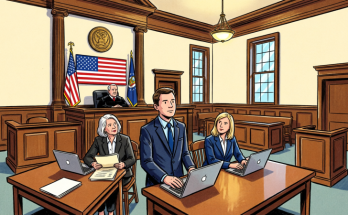
When the courtroom doors opened, my parents were already inside. My father sat confidently in the front row, legs crossed, one arm casually stretched over the bench as if he were about to watch a show. My mother sat beside him, smoothing her skirt with exaggerated calm. Kyle leaned against the back wall, arms folded, looking like he wanted to be anywhere else. His left foot tapped restlessly, a tell‑tale rhythm of nerves.
None of them looked at me.
Andrea leaned over. “Remember,” she murmured. “Do not react. Let their behavior speak for itself.”
We took our seats at the petitioner’s table.
The judge entered and everyone rose. He was an older man with silver hair and clear blue eyes, the kind of judge who looked like he’d seen every possible family tangle cross his bench.
“Please be seated,” he said.
The courtroom settled.
“Today’s case involves the estate of Rosalind Ward,” he began, scanning the docket. “Allegations of disputed inheritance, potential document issues, and contested property control.”
My father straightened proudly.
“We’ll begin with the respondents,” the judge said.
My father stood, smiling.
“Your Honor,” he said, “the seven vacation homes in the Florida Keys belong to us. There is no will. They were passed to me and my wife by right. Our daughter is trying to stir up trouble. She doesn’t deserve anything from those properties.”
My mother nodded, lips pressed into a thin line.
The judge blinked once, slowly, almost like he was absorbing the boldness of their statements.
“Thank you,” he said. “Please sit.”
Then he turned to me.
“Ms. Ward,” he said, “you submitted an envelope and supporting documentation before this hearing. Please step forward.”
My heartbeat thudded in my ears, but my feet carried me with the ease of someone walking onto a parade deck.
I handed him the packet—the carefully prepared stack Andrea and I had assembled.
The judge opened it, pulled out the documents, and began scanning through the pages. The room felt like it held its breath.
He read the photocopy of the notary’s logbook entry. He read the pastor’s letter. He read the affidavits from the witnesses. He flipped through the copies of Grandma’s earlier wills, the rent ledgers, the correspondence about her intent to keep the cottages affordable.
Then he stopped on one page, his eyebrows lifting.
He read it again. Then again.
And he laughed.
Not mocking. Not cruel. A soft, surprised laugh—the sound of a man who had just watched a tower of false assumptions tilt.
My parents stiffened.
The judge leaned forward, tapped a finger on the page, and said quietly, almost conversationally, “Well… this is interesting.”
Everything inside the courtroom shifted.
My father’s confidence evaporated in an instant. My mother’s careful smile crumbled. Kyle’s foot stopped tapping.
The judge cleared his throat.
“According to the evidence provided,” he said, “a final will was indeed signed and notarized by the decedent. Witnesses logged. The disappearance of that will, coupled with immediate attempts to assume full control of the properties, raises very serious questions.”
My father’s face went pale. My mother gripped the bench so tightly her knuckles whitened.
“However,” the judge continued, “the purpose of this hearing is not to determine anyone’s legal liability today, but to ascertain rightful management of the estate while these questions are addressed.”
He looked toward me.
“Ms. Ward,” he said, “please explain, in your own words, your grandmother’s intentions for these properties.”
I swallowed, steadied myself, and spoke.
“My grandmother raised me,” I said. “These cottages weren’t just buildings to her. They were homes for people who needed rest, healing, or a break from hard times. She wanted them kept affordable. She told me that since I was a teenager. She said I understood the people who stayed there.”
I paused. “She trusted me.”
The judge nodded slowly.
“The documents seem to support that,” he said.
He turned to my parents.
“Do either of you have an explanation for the missing will?” he asked.
My father opened his mouth, but no words came out. He looked confused, angry, cornered. My mother reached for his hand, but he pulled away, eyes darting from the judge to the documents to me.The judge waited five seconds. Ten.
No answer.
He sighed.
“Given the circumstances,” he said, “I am issuing an immediate order to halt any sale, transfer, or modification of the seven properties. Furthermore, temporary managerial authority will be granted to Ms. Ward until further proceedings can clarify the status of the will.”
My mother gasped. “She’s misrepresenting everything—”
The judge raised a hand.
“Enough,” he said. “You will speak through counsel from this point forward.”
Andrea leaned toward me.
“This is the best outcome possible for today,” she whispered.
But the judge wasn’t done.
He removed his glasses and looked at my parents with an expression I can only describe as disappointment.
“Family disputes are painful,” he said. “But attempting to override clear written wishes and a formally signed document is unacceptable. I strongly advise all parties to consider mediation before this escalates further.”
My parents sat frozen, pale and motionless.
The judge stood.
“Court is adjourned,” he said.
The gavel struck.
For a moment, the entire room stayed still. Even the dust motes seemed suspended in the sunlight. Then Kyle moved first, storming out without a word. My mother rose shakily, refusing to meet my eyes. My father lingered a second longer, staring at me with something between fear and regret.
And me?
I exhaled the deepest breath I’d taken in months.
It wasn’t victory. Not yet. But it was the truth laid out plain as day. A foundation I could stand on. A turning point Grandma would have understood.
The courthouse parking lot was already thinning out by the time I stepped outside. People drifted to their cars in quiet clusters, murmuring about their own hearings, their own families, their own troubles. Meanwhile, I stood still beneath the fading Florida sun, feeling something I hadn’t felt since the day Grandma died.
Clarity.
Andrea walked beside me, her heels tapping softly on the pavement.
“That was a turning point,” she said. “The judge’s reaction speaks volumes.”
I nodded, but my mind wasn’t on the judge. It was on my parents—the way their faces drained of color as the truth was read out loud.
You grow up thinking parents are infallible pillars. But sometimes, they’re just people—flawed, frightened, and capable of disappointing you in ways you never imagined.
We reached my car before Andrea turned to me.
“There’ll be mediation,” she said. “He made that clear.”
“I know,” I replied.
She paused.
“You need to decide what you want the outcome to be, Elena. Not legally—emotionally.”
She said it like she already sensed the struggle in my chest.
“Think on it,” she added, then headed to her car.
I sat in mine for a long minute, staring through the windshield at the palm trees lining the courthouse steps. The world didn’t look different. But I did.
Two days later, mediation was scheduled.
It wasn’t in a courtroom, just a plain conference room with beige walls and a long wooden table. A carafe of coffee sat in the middle, untouched. The air smelled faintly of printer toner and old carpet. Funny how the battles that shape your life don’t always happen in dramatic places.
My parents arrived before me. Dad sat stiffly, tie perfectly straight, his chin lifted in stubborn pride. Mom avoided my eyes entirely, keeping her gaze fixed on a framed painting of a beach that looked like it had been bought at a garage sale. Kyle didn’t show up. That didn’t surprise me.
Andrea placed our folder on the table. Across from us, their attorney—a tired‑looking man with thinning hair—stacked his papers neatly.
The mediator, a soft‑spoken woman in her fifties, began with practiced calm.
“We’re here today to discuss a path forward regarding the cottages of Rosalind Ward,” she said.
My father interrupted almost immediately.
“This is unnecessary,” he said. “We didn’t hide anything. That notary must be confused.”
Andrea remained still, her voice even.
“Three witnesses,” she said. “Three sworn statements. And a logbook entry that matches the date your wife filed her inheritance claim.”
My mother flinched.
The mediator lifted a hand.
“Let’s keep this civil,” she said. “Mr. and Mrs. Ward, your daughter provided substantial evidence.”
Dad’s jaw ticked. “Those cottages were meant for the family.”
“They were,” I said softly. “Grandma intended them to be managed, not sold off for quick cash.”
Mom finally spoke, her voice thin.
“We needed the money, Elena.”
I blinked. “Money you never mentioned.”
Dad snapped, “It wasn’t your concern.”
I looked at him carefully—really looked at him. For the first time, I saw not a villain, but a frightened, aging man trying to cling to control of a life that hadn’t turned out the way he expected.
He wasn’t heartless by nature. But stress can twist people.
“What happened?” I asked, softer now.
Mom’s shoulders sagged.
“Your father retired early. Kyle needed loans. We… we got behind,” she said. “The cottages looked like the only solution.”
Dad closed his eyes as if that admission hurt more than the hearing.
“And you didn’t tell me,” I whispered.
“You were gone,” he said. “Always gone. Deployments, bases, training. We didn’t want to worry you.”
The irony hit me hard. They had shut me out to protect me—and in doing so, they’d created the very fight they feared.
The mediator leaned forward.
“Elena,” she said, “do you want to respond?”
I took a slow breath.
“I want the cottages managed the way Grandma intended,” I said. “Affordable. Cared for. Stable. I want the rental income reinvested into upkeep. I want them protected from being sold off.”
Dad scoffed. “And where does that leave us?”
“Not cut out,” I said. “Not punished.”
They looked at me, confused.
“I’m willing to agree to a small stipend,” I continued. “Enough to keep you afloat. Paid from the cottage revenue. But I take over management—legally, fully. No sales. No real estate agents. No secret deals.”
Andrea shot me a quick glance, surprised but impressed.
Mom whispered, “You’d do that… after everything?”
“I’m Navy,” I said simply. “I don’t turn my back on family, even when they turn theirs on me.”
The room fell silent.
The mediator wrote notes slowly, then nodded.
“This is a workable compromise,” she said.
Dad stared at the table.
“What about Kyle?” he asked.
I swallowed.
“Kyle isn’t my responsibility,” I said. “But if he wants help, I’ll support him getting real treatment.”
Dad’s expression cracked—not shattered, but softened, like a man realizing his daughter was stronger than he’d ever given her credit for.
Mom wiped her eyes.
“We weren’t fair to you,” she said. “We shut you out.”
I nodded. “Then start doing the opposite.”
The mediator finalized the terms. Andrea reviewed the language. Their attorney sighed with visible relief.
Then the mediator asked the one question no courtroom can force, but every family needs.
“Is there anything you’d like to say to each other before we conclude?” she asked.
My mom looked at me first.
“We weren’t fair to you,” she repeated. “We should have trusted you.”
Dad swallowed.
“I knew your grandmother trusted you,” he said. “I should have trusted you, too.”
I nodded. “Then start now.”
Outside the building, the sunlight felt warmer than it had in weeks. The breeze carried the scent of mangroves from the nearby bay. Andrea exhaled deeply.
“You handled that impressively,” she said. “Most people want revenge. You wanted resolution.”
“I wanted peace,” I replied. “Grandma deserved that. And maybe I do, too.”
Andrea held out her hand.
“Congratulations, Lieutenant,” she said. “You did the right thing.”
As she drove away, I stood beneath the wide Florida sky and let the weight of the past month settle. Not crushing anymore—just present, like a memory that shapes you without breaking you.
The cottages were safe. My parents were humbled, not destroyed. Kyle… his path was still uncertain.
But mine—for the first time in a long time—felt clear.
The first morning I woke up with full legal management of the cottages, the Florida Keys sunrise felt different. More personal, somehow.
The sky stretched open in soft shades of peach and gold. As the light filtered through the slats of Grandma’s old blinds, I felt a calm I hadn’t known in years settle behind my ribs.
It wasn’t triumph. It wasn’t payback.
It was something quieter, steadier. Peace, maybe. Or closure. Or the start of something that finally felt like my own.
I padded into the kitchen barefoot, the tile cool beneath my feet, and poured myself a cup of coffee. Grandma’s old mug—the one with the chipped handle and the faded picture of a pelican—sat waiting in the cabinet exactly where she always kept it.
I took it down, filled it, and stepped out onto the porch.
From there, I could see all seven cottages: pastel blues, greens, and yellows glowing in the early light. A few tenants were already outside—an older couple sipping coffee on their porch swing, a young veteran stretching on the steps of cottage three, and Frank watering his potted tomatoes like he did every morning.
They waved.
I waved back.
It felt like coming home, not just to a place, but to a purpose.
After everything that happened, it would have been easy to turn bitter or cold. But bitterness never healed anything. It just rots the inside of a story that deserves to grow.
I walked down the steps and made my morning rounds, checking the gutters, sweeping stray leaves, greeting tenants like old friends. This was the life Grandma built—simple, honest, anchored in service.
And now it was mine to protect.
Around midmorning, as I was repainting the porch railing on cottage four, I heard footsteps behind me.
I turned to see my parents standing at the base of the steps.
They looked smaller somehow. Not physically—just quieter. Humbled. Like people who had survived their own storm.
“Morning,” I said, setting the paintbrush in its tray.
My mother cleared her throat.
“We didn’t want to interrupt,” she said.
“You’re not,” I replied.
Though the truth was, I still felt the old tension rise in my shoulders. Healing wasn’t instant. It was practice—a choice you had to make more than once.
Dad nodded toward the cottage.
“Looks good,” he said.
“Thank you,” I answered.
There was a long pause.
Then Mom spoke, her voice softer than I’d heard in years.
“We wanted to say thank you,” she said. “For… for not putting us in a worse position.”
I leaned against the porch railing.
“I never wanted to hurt anyone,” I said. “I just wanted Grandma’s wishes honored.”
“We know,” she whispered.
Dad shifted his weight.
“I wouldn’t have blamed you if you’d pushed harder in court,” he said quietly. “I know I didn’t handle things the right way.”
I studied him for a moment. His eyes were tired—the kind of tired men get when they’ve spent too long holding on to pride like it’s armor.
“She trusted you,” he said slowly. “I should have trusted you, too.”
Mom touched his arm.
“We’ve been talking about making things right,” she said. “About helping where we can. Maybe volunteering. Maybe even coming by sometimes to see if you need a hand.”
I smiled. Not wide. Not forced. Just real.
“You’re welcome here,” I said. “But the cottages won’t be sold. Not ever.”
Dad let out a breath that sounded like acceptance.
“We understand,” he said.
As they walked away hand in hand—something I hadn’t seen since I was a child—I felt a knot inside me loosen. Not completely. But enough.
Enough to believe that reconciliation wasn’t just a pretty word. It was possible. Slow, but possible.
Later that afternoon, I found Kyle sitting on the edge of the dock behind Grandma’s house, feet dangling over the water. I hadn’t expected him to be there.
He stared out across the shimmering bay, shoulders stiff, face blank.
I sat beside him without saying anything.
Sometimes silence is the only bridge between siblings who don’t know how to start.
After a long few minutes, he said quietly, “I’m checking into a program. A real one. Not the half‑hearted stuff I told you about before.”
I looked at him, surprised but hopeful.
“That’s good, Kyle,” I said.
He swallowed hard.
“I messed up,” he said. “I know that. I got lost for a long time.”
I nudged his shoulder lightly.
“Then find your way back,” I said.
He let out a shaky breath.
“I don’t deserve your help,” he murmured.
“That’s okay,” I said softly. “Sometimes you help because it’s deserved. Sometimes you help because it’s needed.”
He wiped his eyes with the back of his hand.
“You’re too good,” he said. “You know that?”
I laughed once.
“No,” I said. “Just stubborn.”
We sat there a while longer, watching the sun dance across the water. For the first time in years, I felt like maybe—just maybe—my family wasn’t broken beyond repair.
The next few weeks unfolded easily, almost gently. I hired a local handyman and restored the gardens. I repainted the shutters and worked on updating the rental system so long‑term tenants could stay without fear of sudden hikes. I put everything in writing—clear terms, fair prices, predictable renewals.
Word spread fast that Rosalind’s cottages were being cared for again. Former tenants returned to visit like old friends, bringing stories about the summers they’d spent here, the milestones they’d celebrated in these little Florida rooms.
Every night, I wrote a few lines in a small journal, something Grandma used to do. On the last page, I copied her handwritten words from the letter she left me.
Protect them and be careful around those who want what they did not earn.
Beneath it, in my own handwriting, I added, Forgive when possible. Heal when you can. Lead with integrity.
One evening, while watching another breathtaking sunset from the porch—the sky painted in streaks of orange, pink, and gold over the American coastline—I felt an idea forming in my heart. Gentle but certain. A message.
Something I wished people would carry with them after hearing my story.
So I stood, walked inside, and set my phone on the table in front of me. I opened the audio app I’d been using to record small updates and took a breath.
When I finished recording, I listened back.
“If you’ve made it this far,” I said in the message, “thank you for being here with me. My grandmother believed that honor wasn’t about medals or titles. It was about choosing truth, even when it costs you something, and choosing kindness, even when it hurts.”
I paused in the recording, then added, “If this story touched you, share it with someone who might need a reminder of what family can be. And if you’d like to hear more stories like this, I’d be grateful if you stayed with me. We still have so many lessons to learn together.”
I stopped the recording and smiled to myself.
Not every story gets a perfect ending.
But this one—this one got an honest ending.
And that, I thought as the last light faded over the Florida Keys, would have made Grandma proud.