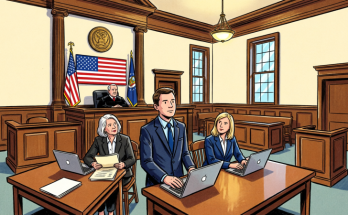
Christina sat in the row behind them with Jonathan, dressed in a perfectly tailored blazer and a look of wounded indignation. Jonathan’s expression was carefully neutral, but his eyes darted around, taking everything in.
I sat at the other table with Rebecca, my posture straighter than I felt. She placed a hand briefly on my arm, a grounding touch.
The judge—a woman in her fifties with tired eyes that suggested she’d seen every permutation of family drama—took her seat and called the case.
My parents’ lawyer went first, painting a picture of a confused old man, of a close-knit family blindsided by an “unexpected document.” He implied that I’d taken advantage of my grandfather’s affection, that I’d somehow tricked him into signing away what should have been my parents’ rightful inheritance.
Rebecca didn’t even roll her eyes. She just sat there, pen tapping, waiting her turn.
When it came, she stood and dismantled his narrative one piece at a time.
She submitted the medical records. Played the video of my grandfather at the chess tournament, his laughter filling the courtroom. “Checkmate, you old fox,” he said on the screen, pointing at his opponent’s king. “Age doesn’t mean I can’t think one move ahead.”
She read the notary’s statement into the record. She walked through the timeline: the will drafted and notarized years before his death, the absence of any evidence that he’d been coerced. His documented tendency to see me as the responsible one.
Then she turned, very deliberately, to my parents.
“Mr. and Mrs. Holmes,” she said, “when your father passed, did you inform your daughter that a will existed?”
My mother shifted. “We… we didn’t know.”
“You didn’t know,” Rebecca repeated. “Did you make any effort to find out? Did you contact his attorney? Check with the county? Search his files?”
My mother hesitated. My father swallowed.
“We… we thought there wasn’t one,” my father said. “He never mentioned it.”
“Are you saying he never mentioned wanting to provide for Michelle?” Rebecca asked. “Because we have testimony that he spoke at length about leaving the house to her.”
He faltered. “He… said things. You know how old people are. They talk.”
“And when you took out a mortgage on the property,” she continued, “did you inform the bank that you were not, in fact, the legal owners? That there was a will bequeathing the property to someone else?”
Their lawyer objected to the implication of fraud. The judge sustained, but the point hung there anyway, heavy and toxic.
Rebecca shifted tactics.
“Michelle,” she said, turning to me, her voice softer. “Can you describe your understanding, at the time your grandfather died, of what would happen to the house?”
I took a breath.
“I believed my parents,” I said. “When they told me there was no will. I believed them when they said they would ‘always take care of it.’ When they asked me to help pay the mortgage to save it from foreclosure, I thought I was saving the family home. For all of us. For my grandfather’s memory. I postponed buying my own place. I paid off the entire mortgage. And then, years later, they told me I had forty-eight hours to leave. No conversations. No gratitude. Just an ultimatum.”
My voice wavered only slightly on the last word. I let it. If these people wanted to stay in denial, they could at least be confronted with the emotional cost of their decisions.
The judge’s gaze moved from me to my parents, lingering. She asked a few questions of her own—about timelines, about conversations, about who knew what when. It became increasingly clear that my parents’ ignorance about the will was not so much a matter of innocence as it was of selective blindness.
After closing arguments, the judge recessed for an hour. We filed out into the hallway, where the fluorescent lights and hard benches turned everyone into washed-out versions of themselves.
My mother sat huddled beside my father, whispering furiously. Christina paced, heels clicking, her eyes occasionally darting toward me with a mixture of anger and something like fear.
I stood by a window with Rebecca, watching the rain streak down the glass.
“You’re doing well,” she said quietly. “However this goes, you’ve told the truth.”
“I shouldn’t be here at all,” I said, the absurdity of it washing over me. “We shouldn’t be fighting over something my grandfather was so clear about. He would hate this.”
“Your grandfather also trusted you to protect what was his,” she said. “Sometimes honoring someone’s wishes means fighting the people who are supposed to honor them with you.”
The judge returned sooner than I expected.
We filed back into the courtroom. Everyone sat. The room held its breath.
“In the matter of the estate of Frank Holmes,” the judge began, her voice level, “after reviewing the will, the medical and testimonial evidence, and the arguments presented, it is the court’s determination that Mr. Holmes was of sound mind when he executed his will. The document is valid. The bequest of the property at [address] to his granddaughter, Michelle Holmes, stands.”
My mother made a small choking sound. My father’s shoulders slumped as if someone had cut the strings supporting him.
“The court further finds,” the judge continued, “that the current occupancy of the property by Mr. and Mrs. Holmes is unauthorized. Eviction is granted. They will vacate the premises within thirty days. Damages for unlawful occupancy will be assessed as outlined in Ms. Holmes’s filing, subject to further review if necessary.”
The gavel came down with a soft thud. Just like that, it was done.
Outside the courthouse, the air smelled like wet asphalt and exhaust. I stood on the steps, feeling lightheaded.
“That’s it?” I asked Rebecca. “They just… have to leave?”
“That’s it,” she said. “They could appeal, but they’d be throwing money at a wall. The law is very clear. Frank wanted you to have that house. Now you do.”
“Now I do,” I repeated.
But when I pictured the house, I didn’t see a home anymore. I saw empty rooms, bare walls, echoes of raised voices. I saw my mother’s face as she told me there was no will, my father’s as he asked me to save what he’d recklessly endangered. I saw Christina, standing in the kitchen at five a.m., telling me I had forty-eight hours.
“I don’t want to live there,” I said.
“You don’t have to,” Rebecca replied. “Ownership doesn’t require occupancy. You can rent it. Or…”
“Sell it,” I said.
Her eyebrows lifted, but she nodded. “If that’s what you want, we can make that happen.”
What I wanted was distance. Not just geographical, but emotional and financial. I wanted to untangle my future from the knot of obligations and guilt that house represented.
So we sold it.
The listing agent couldn’t believe how quickly it moved. “Solid bones,” she said, walking through the now mostly empty rooms as we prepared to show them. “Quiet neighborhood. Great yard. With a few cosmetic updates, this place will fly off the market.”
I did not tell her about the invisible cracks in the history. I did not tell her that every corner of the house had been soaked in a kind of emotional corrosion for years.
A young couple bought it—a teacher and a nurse, according to their application. They walked through with shining eyes, talking about where they’d put the crib, the garden they wanted to plant. When they made an offer at asking price, I accepted immediately.
At closing, I signed the papers with a hand that barely shook. The check that landed in my account afterward was large enough to make my breath catch. Years of sacrifice, and theft, and legal battles converted into numbers on a screen.
I moved my furniture out of storage and into a new apartment—bigger, sunnier, with white walls and floor-to-ceiling windows that overlooked the river. Not a house, not yet, but mine. Entirely mine.
I invested a chunk of the sale money into index funds and a few carefully chosen stocks, letting my inner spreadsheet nerd revel in the projections. I paid off the last of my student loans, even though the interest rate was low. I put a portion into a “Future Home” account that felt different now—less like a distant hope, more like a genuine possibility.
As for my parents and Christina, the aftermath rippled through their lives in ways I hadn’t anticipated but also, if I was honest, couldn’t bring myself to grieve.
Christina’s marriage collapsed without the promise of a “free house” hanging in the air.
I heard about it third-hand, through a mutual acquaintance who didn’t realize I was no-contact. Apparently, the fights between her and Jonathan had started almost immediately after the eviction notice. Arguments about money, about whose fault it was that they’d “lost” the house they’d never legally had. About his reputation taking a hit when colleagues learned he’d tried to orchestrate an illegal eviction.
“He said she’d misled him,” the acquaintance reported, eyes wide over her latte. “About the will, about the finances. He wanted no part of it when it blew up. And she… well, Christina never could stand not getting what she wanted.”
They separated within six months. The divorce filings, which I accidentally found online one night when insomnia met morbid curiosity, cited “irreconcilable differences.”
My parents, once fixtures in the neighborhood, fled town when the truth spread.
It was hard to hide something like that in a community where everyone knows everyone’s business. People talk. They talk in grocery store aisles, at PTA meetings, at church socials.
“Oh, did you hear about the Holmeses? Took out a mortgage on their daughter’s house. Lied about the will. Tried to kick her out. Can you imagine?”
Some neighbors sided with them at first; loyalty is a stubborn thing. But paperwork doesn’t lie. As more details emerged—mortgage documents, the will, the timeline—the story shifted. Sympathy turned into discomfort, which turned into avoidance.
My parents sold what they could and moved, according to one of my mother’s distant cousins, to a smaller town in another state. Somewhere cheaper, where no one knew their history. Where they could reinvent themselves as unfortunate victims of a “family misunderstanding” instead of what they had actually been: people who’d treated their daughter like a safety net, then cut her loose as soon as they thought they didn’t need her.
I blocked every number.
Every attempt at contact—calls, texts, emails, even a handwritten letter that arrived one day, my mother’s looping script all over the envelope—went unanswered. I stored the letter in a drawer, unopened. Maybe one day I’ll read it. Maybe I won’t.
No address. No access.
For the first time in my life, there was no direct line connecting my choices to their disappointment.
Months later, I left Portland altogether.
I’d always loved the city’s moss-covered trees and gray skies, the way the rain made everything smell like wet earth. But after everything that had happened, every street seemed to hold a memory. The coffee shop where I’d first told Rebecca I suspected the will existed. The hardware store where my grandfather used to take me to pick out nails “for important projects.” The courthouse, looming over downtown like a monument to both justice and pain.
When a startup in Denver reached out with an offer—project manager, substantial salary bump, interesting work—I said yes. It felt impulsive in the moment, but in hindsight, it was the natural next move.
New city. New job. New life.
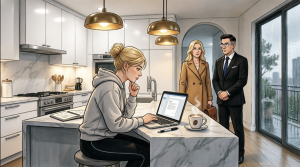
Denver was sunnier than I’d expected. Literally. The sky seemed to stretch wider, bluer, the mountains carving a jagged horizon that made Portland’s hills look like gentle suggestions.
I found an apartment in a modern building with a rooftop garden and a gym I pretended I’d use more than I actually did. I unpacked my things slowly, arranging them not the way they’d been in my old house but in ways that felt right for this new space.
The sofa took its place under the living room window. The TV mounted on the wall opposite. The dining chairs clustered around a smaller, lighter table I bought from a local craftsman. My bookshelf went up, filled with programming manuals and novels and a framed photo of my grandfather, positioned not as a shrine but as a quiet anchor.
I hung curtains—different ones, in a soft linen that filtered the sunlight into something gentle. I bought a plant. Then another. When one died, I didn’t berate myself; I just learned which species did better in that corner and moved on.
Work was intense. The startup lived up to the cliché: long hours, fast pivots, jargon-heavy meetings about “scaling” and “runway” and “user acquisition.” But I liked the challenge. As a project manager, I got to do what I’d always done instinctively—organize chaos into timelines and deliverables—only now, people appreciated it. They thanked me for it. They paid me well for it.
I still woke at five a.m., mostly out of habit. Only now, when I sat down at my kitchen counter to drink coffee and check my emails, I did so in a space that no one could threaten to take from me. Every object I saw—the kettle, the mugs, the quirky salt and pepper shakers I’d bought on a whim at a craft fair—belonged to me by purchase, by choice, not as some fragile favor balanced on someone else’s goodwill.
A year after the court case, Rebecca visited.
She flew in for a conference and extended her trip by a weekend. When she arrived at my apartment, suitcase in hand, she stopped just inside the door and looked around.
“This feels like you,” she said, setting her bag down.
I followed her gaze. The living room, with its mix of modern and slightly worn-in furniture. The kitchen, where a small ceramic dish shaped like a fox held my keys. The balcony, where a couple of hardy plants clung to life despite my occasional neglect.
“It does, doesn’t it?” I said.
She walked over to the bookshelf, tracing a finger along the spines. “No law books,” she observed. “Tragic.”
“I was hoping to create a space free of unnecessary tension,” I replied. “I’ll just invite you over to ruin that manually.”
She laughed, then paused at the photograph of my grandfather. “He’d like this place,” she said. “Lots of light. Good view.”
“He’d try to fix something that doesn’t need fixing,” I said. “Probably that kitchen cabinet door that doesn’t quite close all the way.”
She opened and closed it experimentally. It made a soft click, stopping just shy of fully flush. “He’d be right,” she said. “This would drive him nuts.”
We ordered takeout and ate on the balcony, the city stretching out below us. The air was cooler up there; the sounds of traffic floated up muted.
“At any point,” she asked after a while, “did you think about… not pushing it? About just taking your stuff and walking away from the house, the will, everything?”
“Initially?” I said. “Yeah. For about two minutes while I was on hold with the moving company. Part of me thought, ‘Take the furniture. Let them keep the rest. You’re making good money; you can build again.’”
“And?” she prompted.
“And then I thought about my grandfather,” I said. “About how seriously he took responsibility. How furious he would have been if he’d known what they did with his house. How much he trusted me to be the one who didn’t flinch when things got hard.”
I took a sip of my drink, the ice clinking softly. “I realized walking away would have felt like betraying him. Not because of the money, though that mattered. But because of the principle. They lied. Repeatedly. They used me. And they thought they could get away with it because I’m the ‘nice’ one. The ‘logical’ one. The one who forgives.”
“And you decided not to,” she said.
“I decided to stop letting forgiveness be their get-out-of-consequences-free card,” I replied. “I still don’t wish them ill, exactly. I’m not sitting here hoping they trip and fall down a metaphorical flight of stairs. But I’m also not going to keep cushioning their landings. They needed to hit the ground hard enough to notice the impact.”
Rebecca watched me for a moment, then nodded. “You know,” she said, “revenge gets romanticized a lot. People love a good ‘she got them back’ story. But what you did… I wouldn’t even call it revenge.”
“What would you call it?” I asked.
“Alignment,” she said. “You aligned reality with what should have been true all along. You reclaimed what was yours, enforced boundaries, and then let the chips fall where they naturally would. If that feels like revenge to them, that says more about their expectations than about your actions.”
I thought about that later, lying in bed as the city lights blinked outside my window.
I hadn’t been reborn by revenge. I hadn’t emerged from the ashes of my old life as some dramatically new creature, hardened and cynical, swearing never to trust anyone again.
What I had done was quieter, but in its way, more radical.
I had returned to myself.
To the girl who used to sit with her grandfather in the living room, listening to him explain why he always thought three moves ahead in chess. “It’s not about tricking the other player,” he’d say. “It’s about understanding the consequences of your own moves. You think, ‘If I do this, what will that allow? What will it prevent? What will it say about what I value?’”
To the young woman who went into software engineering because she liked puzzles, because she liked the feeling of making something orderly out of chaos. Who kept receipts not because she anticipated betrayal, but because she believed in accountability.
Somewhere along the way, I’d let my family convince me that my value lay in how much I could absorb. How much I could give. How much I could sacrifice for “the greater good”—a phrase that somehow always seemed to benefit everyone else more than it did me.
Taking the house back, legally and financially, and then choosing to sell it on my terms, was not about punishing them. It was about recalibrating my sense of where I ended and they began.
They had taught me, in the harshest possible way, that unconditional loyalty to people who see you as a resource to exploit is not noble. It’s self-erasure.
In the year that followed, small things reminded me of this shift.
The first time I said no to staying late at work because I’d promised myself a quiet evening with a book, and I didn’t immediately drown in guilt.
The first time I turned down a friend’s request to crash on my couch “for a few weeks” while they figured things out, suggesting instead a list of short-term rentals. I helped them research, offered emotional support, but did not offer my home as a solution to a problem they’d created.
The first time a man I’d been casually seeing made a joke about how “it must be nice to have a woman who’s so put-together; you probably make everyone around you better,” and I replied, “It is nice. It’s also not free,” and watched his face as he realized I wasn’t complimenting him.
I still woke at five a.m., most days. I still wrote code with my coffee. I still liked lists and color-coded folders and the satisfaction of crossing tasks off my to-do list.
The difference was that the projects now were mine.
“Upgrade my life,” I sometimes wrote at the top of a page. Then underneath: therapy appointments, investment check-ins, solo hikes on weekends, the name of a new restaurant I wanted to try, a reminder to call Rebecca just to talk, not because I needed her professional expertise.
I thought about my family less as time went on. Not because I’d forgiven them in some grand, cinematic epiphany, but because they simply… faded. Like a program that had once run constantly in the background, draining memory and slowing everything else down, finally being uninstalled.
Every so often, a random memory would surface—a childhood Christmas, my father teaching me to ride a bike, my mother braiding my hair before school—and I’d feel a complicated twinge. Grief for what we could have been if they’d seen me as a daughter instead of a safety net. Relief that I no longer had to contort myself into the shape they wanted.
My grandfather’s voice, though, did not fade.
In my mind, he still stood in that Portland house, pencil in hand, marking my height against the doorway.
“Someday you’ll be the one to protect this house,” he’d said.
I had. Just not in the way any of us had expected.
I hadn’t kept its walls standing forever. I hadn’t ensured it stayed in the family for generations. Instead, I’d protected what the house represented: the idea that the person who shoulders the responsibility, who shows up, who quietly pays the bills and does the work, deserves to be respected. To be consulted. To be honored.
In letting go of the physical structure, I’d preserved something more important: myself.
And as I sat on my Denver balcony years later, watching the sun sink behind the mountains, laptop open to a new project and coffee cooling beside me, I realized that for the first time in my life, the foundation I was building on wasn’t someone else’s. It was mine.
No ultimatums. No forty-eight-hour deadlines.
Just time. And space. And the quiet, steady certainty that I would never again invest my whole heart and bank account into a house where someone could walk in at five a.m. and tell me I didn’t belong.
THE END.