She did not speak to me for two weeks after that conversation. But on the wedding day, she put on her best fake smile and pretended everything was fine. That was my mother’s specialty, pretending everything was fine while judging everyone silently.
Grandpa Chester arrived in his old truck, the 1987 Ford that he had been driving since before I was born. The engine rattled as he pulled into the parking lot, drawing disapproving looks from my father’s colleagues and their luxury sedans. But Grandpa did not seem to notice or care. He stepped out of the truck with a smile on his face and a gift bag in his hand. He was wearing a suit I had never seen before, navy blue, a little outdated in cut, but clean and pressed and clearly well cared for. Later, Naomi told me she had seen a photo of him wearing that same suit at my parents’ wedding forty years earlier. He had kept it all those years, waiting for an occasion important enough to wear it again.
When I saw him walking toward the venue, I almost cried.
“You look beautiful,” he told Naomi when he met her at the reception line.
He had insisted on waiting in line like everyone else, refusing my attempt to bring him in through a side door.
“My grandson is a lucky man.”
“I think I am the lucky one,” Naomi said. “He talks about you all the time.”
“All good things, I hope.”
“He says you are the wisest person he knows.”
Grandpa Chester’s eyes glistened. He reached out and took her hands in his.
“You take care of him, okay? He is special, this one. Not like the others.”
“I know. That is why I am marrying him.”
He hugged her then, this woman he had only met a handful of times, and I saw tears running down his weathered cheeks. I had to look away or I would have started crying too.
The reception was awkward, as I knew it would be. My father’s colleagues clustered in one corner talking about business and golf and the market. My mother’s friends clustered in another corner talking about renovations and vacations and whatever else they talked about. Preston and Bridget circulated the room, networking, schmoozing, treating my wedding like a business opportunity. Grandpa Chester sat at the family table, mostly alone, watching everything with those calm, observant eyes. I tried to spend time with him, but there were so many people demanding my attention, so many hands to shake and pictures to take.
It was near the end of the reception, when things were winding down, that he found me.
“Declan,” he said, pulling me aside. “I have something for you.”
He reached into the inside pocket of his suit jacket and withdrew a small worn book. A passbook, the kind banks used to give customers before everything went digital.
“What is this?”
“Your wedding present. For your future. For Naomi. For the children you are going to have.”
He pressed it into my hands.
“Do not tell anyone about this. Not your father, not your mother, nobody. Just keep it safe until the time is right.”
“Grandpa, I do not understand.”
Before I could say anything else, my father appeared at my elbow.
“What is that?” Gordon asked, reaching for the passbook. “What did he give you?”
“It is nothing, Dad. Just a card.”
But my father was faster than me. He grabbed the passbook out of my hands and opened it.
“First Cleveland Savings and Loan.” He started to laugh. “Chester, this bank does not exist anymore. It closed thirty years ago.”
“It was acquired,” Grandpa Chester said quietly. “The account is still active.”
“Active with what? The fifty dollars you deposited in 1971?”
Gordon waved the passbook in the air.
“This is worthless, Chester. This is literally worthless. The account was probably closed decades ago. Even if it still exists, there is nothing in it.”
“Give it back,” I said.
“I am doing you a favor, son. Saving you the embarrassment of walking into a bank with this garbage.”
He turned to my mother, who had appeared beside him.
“Lorraine, look at this. The old man is giving Declan a passbook from a bank that does not exist.”
My mother shook her head.
“Chester, honestly. Could you not have just given him a check like a normal person?”
“There is nothing normal about being broke,” Preston said, joining the conversation, because he could never resist an opportunity to mock someone. “Face it, Grandpa. You have nothing to give. You have never had anything. Why pretend otherwise?”
“Give it back,” I said again, my voice harder this time.
My father looked at me with surprise. Then he shrugged and tossed the passbook at me. I caught it against my chest.
“Fine. Keep your worthless souvenir. But do not say I did not warn you when you walk into whatever bank absorbed First Cleveland and they laugh you out of the building.”
“I will keep that in mind.”
Grandpa Chester caught my eye. He winked. And in that wink, I saw something I did not understand at the time. Confidence. Certainty. The look of a man who knew exactly what he was doing.
“Take care of that passbook,” he said, loud enough for everyone to hear. “It is more valuable than any of them know.”
My father snorted.
“The senility is getting worse. Somebody should really look into a home for him.”
Grandpa Chester just smiled.
I kept the passbook. I put it in my nightstand drawer under my watch and my spare keys, and I left it there. I told myself I would go to the bank someday, just to see, just to know. But the weeks turned into months, and the months turned into years, and doubt crept in the way it always does. What if my father was right? What if the account was closed? What if there really was nothing, and going to the bank would just confirm what everyone already believed, that Grandpa Chester was a sweet old man who had nothing to give? I could not bear to have that confirmed, so I left the passbook in the drawer and pretended it did not exist.
Grandpa Chester died on a Tuesday morning in February. He went peacefully in his sleep in the same bed where he had slept next to my grandmother for 56 years. The neighbor found him when she came to check on him and he did not answer the door. I was the one who identified the body. I was the one who called the funeral home. I was the one who sat in that tiny house, surrounded by 50 years of a simple life, and cried for the last good man in my family.
The funeral was small, a few neighbors, a few old friends from the mill, people who actually knew Chester and cared about him. My father came, but he complained about the cheap casket. My mother came, but she left early for a hair appointment. Preston came, but he spent most of the service on his phone. Bridget came, but she brought her own hand sanitizer and refused to sit in the pews.
I gave the eulogy because no one else would.
“My grandfather Chester was not a rich man,” I said, standing at the podium, looking out at the sparse congregation. “He did not have a big house or a fancy car. He did not travel the world or build a business empire. By all the measures that society uses to judge success, he had nothing. But by the measures that actually matter, he had everything. He had a wife who loved him for 56 years. He had a home that was always warm and welcoming. He had a laugh that could fill a room. He had patience that could calm any storm. He had wisdom that he shared freely with anyone who asked. He taught me that the simple things are the things that matter. A cold glass of lemonade on a hot day. A Sunday afternoon with nothing to do but talk. A handshake that means something. A promise that you keep. I will miss him every day for the rest of my life. And I will try every day to be the kind of man he was. Not rich in money. Rich in the things that count.”
My father checked his watch during my eulogy. My mother whispered something to Bridget. Preston was not even pretending to pay attention. But Naomi was crying, and Theo, four years old and not really understanding what was happening, held my hand when I sat back down and said,
“That was good, Daddy.”
That was enough.
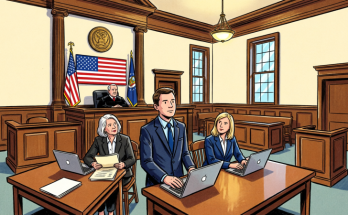
The reading of the will happened two days later at a lawyer’s office in Cleveland. My father was there, of course, ready to receive whatever meager inheritance Chester had left behind. Preston and Bridget were there too, more out of obligation than expectation. I was there because I had to be.
The lawyer, an old man named Howard who had known Chester for decades, read the will in a quiet, respectful voice.
“To my son Gordon, I leave my house at 4412 Elmwood Drive, to be sold or kept as he sees fit.”
My father nodded, satisfied. The house was worth maybe $95,000. Not much, but something.
“To my grandchildren Preston and Bridget, I leave my savings account at Ohio National Bank to be divided equally between them. The current balance is approximately $28,000.”
Preston and Bridget exchanged disappointed looks. Fourteen thousand each was not worth the trip.
“To my grandson, Declan, I leave my 1987 Ford pickup truck and my toolbox.”
My father laughed out loud.
“A thirty-seven-year-old truck and a rusty toolbox. That sounds about right.”
“The truck and the toolbox are already in Declan’s possession,” Howard continued, ignoring my father. “Chester gave them to him last year.”
“So Declan gets nothing?” Bridget asked, barely hiding her smile.
“The will has been fully executed. The estate is closed.”
My father stood up, brushing off his pants like the whole experience had somehow dirtied him.
“Well, that was a waste of time. At least we got the house.”
“You already have the passbook,” Preston said to me, smirking. “Enjoy your fifty cents, little brother.”
They left. All of them. My father, my mother, Preston, Bridget. They walked out of that lawyer’s office without a backward glance, already discussing how to sell Grandpa Chester’s house. I stayed behind. Howard was watching me with an expression I could not read.
“Mr. Mercer,” he said after the others were gone, “your grandfather was a remarkable man.”
“I know.”
“Do you? Do you really know?”
I did not understand what he meant. Not then. But I would.
The next morning, I went to the bank.
I do not know why that morning. Maybe it was the way Preston had smirked at me. Maybe it was the way my father had laughed. Maybe it was just time. Finally, after five years of doubt. Maybe it was the feeling that if I did not go now, I never would, and I would spend the rest of my life wondering.
I woke up at five, the way I always do before a job site. But instead of putting on my work clothes and heading out, I sat on the edge of the bed and looked at the passbook. I had taken it out of the nightstand drawer the night before, the first time I had really looked at it in months. The cover was soft with age, the corners rounded from decades of handling. The pages inside were yellowed, the ink faded but still legible. March 15th, 1971. $8,000. My grandfather’s handwriting. Careful and neat.
Naomi woke up and found me sitting there.
“Declan, what are you doing?”
“I am going to the bank.”
“What?”
“The passbook. Grandpa’s passbook. I am going to find out if there is anything in it.”
She sat up, rubbed her eyes.
“Now? It is five in the morning.”
“I know. I just… I have to know. I have been wondering for five years, and I need to know.”
She looked at me for a long moment. Then she nodded.
“Okay. Do you want me to come with you?”
“No. This is something I need to do alone.”
I put on my work clothes because I had a job site to get to afterward, and I drove to the National Ohio Bank branch downtown. It was the largest branch in the city, the one most likely to have records going back decades. I got there before it opened and sat in my truck in the parking lot, watching the employees arrive, watching the lights come on inside. At nine o’clock exactly, I walked through the doors.
The branch was modern, all glass and chrome and digital screens. Nothing like the old savings and loans I remembered from my childhood. I felt out of place immediately, a man in work boots and a flannel shirt holding a yellowed passbook from a bank that had not existed for decades. I waited in line like everyone else. I watched the tellers help customers with normal requests, deposits, withdrawals, account inquiries, normal banking business for normal people on a normal morning…………..
Click Here to continuous Read Full Ending Story👉: Dad said closed. Bank said open. Grandpa knew_part3(ending)