The first person who laughed when the lawyer said I’d inherited the motel was my husband.
He didn’t laugh out loud. It was just a soft breath through his nose, the kind of sound a man makes when the world has finally confirmed what he already believes about you. Still, in that formal little office with the sealed curtains and the polished walnut desk, it landed louder than anything else.
I turned my head and looked at him.
Michael didn’t bother hiding it. His mouth tilted at one corner, amused and faintly disgusted, like he’d just seen the punchline to a joke he’d been expecting all along.
Across from me, my sister Olivia sat very straight in her chair. She had always sat that way, as if posture alone could separate her from the rest of us. Her cream blazer looked expensive. Her hair had not moved in spite of the rain outside. Her husband, Andrew, held her hand in both of his and squeezed when the lawyer said, “The downtown apartment portfolio, including the Jefferson, the Carlisle, and the West End properties, will pass to Olivia Bennett.”
Olivia’s eyes shone immediately.
Andrew smiled the smile of a man who had just become richer without having done a single thing to earn it.
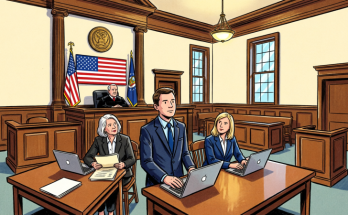
Then the lawyer adjusted his glasses, glanced down at the next page, and said, “The Sunset Highway Motel, including the office, land, fixtures, and attached acreage, will pass to Emma Bennett.”
For one suspended second, no one spoke.
Then someone in the back of the room cleared their throat.
It was my aunt Jean who broke first, not with a laugh exactly, but with a tiny sound in her chest that became a smile she tried to hide with her hand. Olivia lowered her face, pretending to study her lap, but I knew my sister. She was smiling too. Andrew was not pretending at all. And Michael—my husband of ten years, the father of my two sons—leaned back in his chair and let out a longer breath, almost impressed by the cruelty of it.
A motel.
Not a beautiful building in the city. Not polished apartments with waiting lists and rooftop views. Not steady rent checks from young professionals and medical residents and corporate tenants. A roadside motel forty minutes outside Chicago with a flickering sign, twelve rooms, and a parking lot full of cracks.
A broken motel that people passed without seeing.
I remember blinking slowly, once, twice, because grief does strange things to the brain. Three weeks earlier, I had been holding my father’s hand in a hospital room while the monitors hummed and his breathing came shallower and shallower. Three weeks earlier, I had still been someone’s daughter in the active sense, not the past tense. And now I was sitting in a lawyer’s office while the people closest to me silently sorted my father’s life into piles of value and embarrassment.
The lawyer kept reading. Bank accounts. Insurance. A vintage watch that went to my cousin because he had once admired it. My father’s tools to a retired employee from the maintenance company who had worked for him for thirty years. It all blurred after that. I heard words, but they didn’t arrange themselves into meaning.
I only came back fully when the lawyer said, “Your father left separate letters for each of you. These are to be delivered after the will reading.”
He slid one envelope toward Olivia, one toward me.
Mine had my name written in my father’s hand. Emma. No flourish, no extra line, just my name the way he always wrote it—solid, deliberate, upright.
I touched the envelope but didn’t open it there. Neither did Olivia. My sister tucked hers neatly into her handbag, and I could tell by the way her fingers pressed the leather that she already believed whatever was inside would only confirm what she thought she knew.
That our father had trusted her with the real future.
And me? He’d left me with a ruin.
Outside, the rain had become colder, harder. We stood beneath the stone overhang while the valet brought the cars around. Olivia reached for my arm with the brightness of a woman who knew she had won but wanted to look gracious about it.
“Emma,” she said, tilting her head, “I’m sure there’s something you can do with it.”
Something about the way she said it made me feel twelve years old again, standing in the kitchen while she explained basic things to me I already knew.
I smiled because I had years of practice. “I’m sure there is.”
Andrew rubbed his hands together against the cold. “It could be a fun little project,” he said. “You know. Rustic. Roadside charm.”
Michael looked at him and laughed under his breath again.
I did not answer. I just got into the car, tucked my father’s envelope into my purse, and stared out the windshield while the wipers pushed the rain away in tired little sweeps.
Michael drove in silence for nearly twenty minutes.
He was never loud when he was most angry. That was one of the things people didn’t understand about him. Strangers liked him immediately because he smiled easily, knew how to ask questions, could make a story out of anything. He ran a small contracting business and had spent ten years building the kind of reputation that looks like confidence from a distance. But at home, when things didn’t go his way, he grew quiet in a manner that felt like a room losing oxygen.
I had learned to fear quiet more than shouting.
The city thinned behind us. Wet pavement gleamed under the streetlights. I could still smell the lawyer’s office in my clothes—leather, coffee, old paper.
At the first red light after the expressway, Michael spoke without looking at me.
“Well,” he said, “at least one daughter got the real assets.”
I turned my face toward the window. “We just buried my father.”
“I’m aware.”
The light changed. He pressed the gas harder than necessary.
I should tell you that this wasn’t the first time Michael had spoken to me as if I were something slightly disappointing he had accidentally purchased. It had not started that way. When I met him, I was twenty-four and finishing my second year as office manager for a mid-sized dental practice in Oak Park. He was all forward motion then. Funny. Ambitious. Capable with his hands. He’d show up to dates smelling like cedar and sawdust and wind, like he had built something useful that day. I loved that about him. I loved how solid he seemed.
Later, after the wedding and the babies and the years of unpaid bookkeeping I did for his business at night after the children were asleep, I began to understand that some men love your labor long before they love you.
But that understanding came slowly. Like rot in wood. By the time you notice it, the structure has already changed.
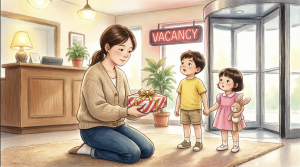
At home, the boys were upstairs playing in their room with the kind of shrieking joy only children can sustain after a rainy afternoon indoors. Noah was eight and had recently become very serious about facts. He corrected maps, weather forecasts, and anyone who used the wrong dinosaur name. Eli was five and still soft in the face, with a habit of dragging his blanket everywhere when he was tired. They were the best things in my life and the only things that made me brave more often than I actually felt brave.
Olivia and Andrew came over at six.
The dinner had been Michael’s idea, though he framed it as family. “We should all eat,” he’d said in the lawyer’s parking lot. “Talk through next steps.”
What he meant was that Olivia’s inheritance was worth discussing.
I made roasted chicken, mashed potatoes, green beans, and a salad none of the men touched. I set the table. I cut Noah’s food smaller than necessary because he still forgot to chew when he was excited. Eli spilled water. Olivia barely noticed because she was busy telling us about an investor Andrew knew who was already interested in “restructuring the city assets into a stronger growth model.”
My father’s body had not been in the ground a full month.
Halfway through dinner, Michael lifted his wine glass and turned toward Olivia.
“Well,” he said, “at least one daughter got the real assets.”
Andrew laughed. Olivia gave him a playful little push as if to say don’t be rude, but she was smiling when she did it.
Even Aunt Jean, who had dropped by with a pie and stayed because no one told her not to, gave a strained little smile into her napkin.
I felt heat rise under my skin.
Noah looked from face to face, confused in the way children get when adults have started talking in codes.
“What motel?” Eli asked, because he had heard the word earlier and liked repeating adult nouns.
Michael took a sip of wine. “The one your grandpa left Mommy,” he said. “Out by the highway.”
“A motel sounds fun,” Noah said brightly. “Do they have vending machines?”
Olivia laughed as if that were adorable and not devastating.
I smiled for my sons. “Maybe,” I said.
But inside, something small and private had already started to splinter.
After they left, I loaded the dishwasher in silence. The boys were upstairs asleep by nine-thirty. I heard the television turn on in the living room and then off again fifteen minutes later. Michael walked into the kitchen and leaned against the counter with his arms crossed.
“A motel,” he said again.
I kept my eyes on the plates in the sink. “Yes.”
“A broken highway motel.”
“It’s still property.”
He made a face at that. “Olivia gets income-producing real estate in the city and you get an abandoned sign and mildew.”
I dried my hands slowly. “It belonged to my father.”
His mouth hardened. “Your sister builds wealth. You inherit garbage.”
The words struck harder than I expected because some part of me had been hoping for one kind sentence all day. One small act of tenderness. A hand on my back. A quiet, We’ll figure it out.
Instead, he looked at me like I had personally embarrassed him by being chosen for the wrong thing.
I said, “I didn’t write the will.”
“No,” he said. “But somehow this still fits you.”
I stared at him. “What does that mean?”
He pushed off the counter. “It means Olivia knows how to move through the world. It means she sees opportunity, knows how to talk to investors, knows what a serious asset looks like.” He took one step closer. “And you…”
The silence stretched.
“And me?” I asked.
He looked straight at me then, without heat, without hesitation.
“You’re useless.”
There are words that hit like slaps and words that land deeper because they touch an old bruise. Useless was not a new fear in me. It was the fear behind every unpaid hour I spent doing my husband’s books. Behind every doctor’s appointment and school pickup and late-night spreadsheet and forgotten meal. Behind every conversation where Michael explained my own life to me in a tone usually reserved for employees.
Still, hearing it plainly changed something.
I think he saw it in my face because instead of apologizing, he looked toward the staircase where our sons were sleeping and said, “Take them.”
My body went still.
“Go live in that motel,” he said. “If that’s what your father thought you were worth, then go.”
For a moment I genuinely believed he would walk the words back. That he would hear himself and stop. That he would remember the boys upstairs, the ten years behind us, the fact that grief had already left me thin and raw.
He did not.
“You heard me,” he said. “Go.”
I did not cry. Not then.
I went upstairs with my heart banging like a fist against a locked door. I stood in the boys’ room for a full ten seconds, looking at them asleep, their small bodies tangled in blankets. Then I opened the closet and took out two duffel bags.
I packed with the mechanical calm people mistake for strength. Jeans. Sweatshirts. Socks. Underwear. Noah’s asthma inhaler. Eli’s blanket. Toothbrushes. Two stuffed animals. My purse. My father’s envelope. The folder with our insurance cards. Phone chargers. A box of granola bars from the pantry. It is amazing what a woman can gather in twelve minutes when she understands that no one in the house is coming to stop her.
When I came back downstairs with the bags, Michael was sitting on the couch staring at his phone.
He glanced up once. “You’re being dramatic.”
“I’m leaving because you told me to.”
He shrugged, already bored by the consequences of his own cruelty. “Fine.”
Noah woke when I lifted him from bed and asked if there had been a fire. Eli cried because he thought he had done something wrong. I buckled them into the back seat in the cold dark while the porch light buzzed overhead. Michael did not come outside.
The drive to the Sunset Highway Motel took forty-two minutes.
I know that because I watched the clock the entire way. Rainwater blurred the road. Eli fell asleep almost immediately, one fist wrapped around his blanket. Noah stayed awake longer, peering out the window.
“Are we moving?” he asked quietly.
“Just for a little while,” I said.
“Is Daddy coming later?”
I tightened my hands on the wheel. “Not tonight.”
He absorbed that in silence. Eight-year-olds can feel the shape of an earthquake even when they don’t know the word for it.
The motel appeared all at once after a bend in the road, crouched near the highway like something left behind by an older version of the world. The sign was taller than I remembered, SUNSET MOTEL in faded orange letters, but only SUN, MO, and part of the T were still lit. The parking lot was empty except for a rusted vending machine on one side and a collapsed planter near the office.
The place looked tired.
Not dead exactly. Just tired. Like it had been waiting too long.
I had been there as a child, though not often. My father bought it when I was eleven, back when the old highway route still brought steady traffic through that stretch. I remembered summer afternoons sitting in the office while he checked receipts and talked to the handyman. I remembered the smell of coffee and old carpet and machine oil. I remembered Olivia hating every minute of it, saying it was gross, asking when we could go back to the city buildings that had elevators and marble lobbies.
“You like this place too much,” she’d once told me when we were teenagers and Dad had brought us to help inventory linens. “It’s weird.”
Maybe she was right. I liked places that asked for patience.
The office door stuck before it opened.
The smell hit me first: dust, stale air, old wood, something faintly chemical beneath it. Not rot, not exactly, but neglect. I found the breaker panel by memory and coaxed a few lights on. The front desk was still there, the key cubbies behind it mostly empty. A bell sat near the register, tarnished green around the edge. One wall clock had stopped at 3:14 sometime in a different season.
I walked the row of rooms with my phone flashlight and found one near the office that seemed less grim than the others. The sheets were clean but cold from disuse. I wiped every surface I could reach with baby wipes from the diaper bag I still kept out of habit. I spread our jackets over the bedcovers. Noah helped without complaining. Eli barely opened his eyes when I lifted him down.
“Adventure?” he mumbled.
“Adventure,” I whispered back.
They were asleep within minutes.
I stood in the doorway watching them, both boys curled inward, their faces peaceful in spite of everything. Outside, trucks hissed past on the highway. The motel made settling noises around us, small groans of old wood and pipes and cooling metal. This was not the life I had imagined when I married at twenty-four. It was not the life I imagined when I painted our nursery pale green or when I sat in school gyms for parent nights or when I made monthly budgets that somehow always had Michael’s needs written larger than mine.
Around midnight, when I was sure the boys were deeply asleep, I went back to the office.
The lamp behind the front desk still worked. I switched it on and sat in my father’s old chair, and the sight of it almost undid me. The brown vinyl was cracked at one seam. The armrest had a place worn smooth by his hand. On the desk sat an adding machine older than I was, three dust-covered guest ledgers, and a ceramic mug with no handle. This room held him everywhere and nowhere.
I opened the first drawer. Receipts, yellowed and curled at the corners.
The second: old brochures for roadside attractions, a half-empty box of pens, some dead batteries.
The third: nothing but two rubber bands hardened with age.
I kept searching because anger needs somewhere to go. Maybe I wanted proof that my father had seen what everyone else saw and chosen me anyway. Maybe I wanted to understand whether this had been love or apology or obligation. Maybe I wanted a reason not to call my sister and say, You won. Are you happy now?
That was when I noticed the cabinet behind the desk.
It was small, built low into the wall paneling, and somehow it looked newer than everything around it. Cleaner, too. Less dust settled on its surface. A brass lock shone dully in the lamplight. Beside it, hanging from a nail, was a key.
I stared at that key for a long time.
Why would my father leave a key in plain sight?
Outside, a truck roared past and the window glass trembled. My hands were suddenly cold. I reached for the key and felt my pulse in my fingertips. It would have been easier, in that moment, for the cabinet to be empty. Easier for the motel to be exactly what everyone said it was. Garbage. A mistake. A sad little leftover from a father who had favored one daughter and pitied the other.
But if it was empty, then maybe Michael was right.
I put the key in the lock.
It turned too easily, as if someone had used it recently.
Inside the cabinet were files. Thick cream envelopes. A rolled-up map secured with a rubber band. And a small metal box.
No cash. No dramatic bag of diamonds. No movie-version salvation.
My heart sank and then lifted again because papers can matter more than money if you know how to read them.
I took out the rolled map first.
It was a land survey of the property. The motel buildings sat in one rectangle, the parking lot in another. But behind the last row of rooms, beyond the scrub grass and the shallow ditch, a wide strip of land had been marked in blue. A line crossed the back acreage at an angle and continued past the property edge toward the highway.
I frowned. I didn’t understand it yet.
I opened one of the envelopes.
Inside were letters. Most bore city logos. Others came from companies I had never heard of. The dates were recent. Disturbingly recent. One from three months earlier. Another from six weeks after my father’s last hospital stay. Why was he still getting formal correspondence about the motel when he could barely stand long enough to shave?
I read the first page.
Proposed highway extension.
I read the second.
Future commercial zoning review.
I read the third.
Preliminary redevelopment notice.
My body went absolutely still.
I opened the next envelope. Inside was an offer letter. Not for the motel business. Not for the shabby rooms or the old sign or the office furniture. For the land. Specifically the rear acreage and contiguous access corridor.
The number at the bottom was so large I had to read it twice.
Then a third time.
I sat down very slowly in my father’s chair.
The motel was not valuable because of the rooms.
It was valuable because of where it sat.
The back stretch of the property lined up directly with a proposed new highway ramp. If the extension went through, the sleepy dead-end frontage would become a major commercial exit. The sort of exit that births gas stations, chain hotels, fast-casual restaurants, pharmacies, logistics hubs. The sort of exit people build around, fight over, make fortunes on.
My hands shook so hard the papers rustled.
Every letter from the developers ended the same way: Offer declined.
My father had known.
He had known, and he had kept saying no.
I reached for the metal box next. It was locked, but taped to the underside of the map was another smaller key. My father had arranged all of this, step by step, as if he were laying a trail for someone he trusted to follow.
Inside the metal box was one handwritten note.
It was folded once. My name was on the outside.
Emma,
If you are reading this, then I am gone.
For a moment I couldn’t breathe.
I unfolded the paper carefully because my hands had started to tremble.
I know what people will think when they hear the will. Let them think it.
I didn’t give you the motel because it is small. I gave it to you because it is strong.
I pressed one hand to my mouth.
The city will approve the highway project within the year. When that happens, this land will become more valuable than anything your sister received.
I had to stop reading then because tears came too fast and too hot. Not gentle tears. The sort that shake you from the spine outward because relief and grief are cousins and they arrive arm in arm when you least expect them.
He knew.
He had known exactly what he was doing.
Below that, in his tight upright handwriting, he had written:
You have always been the one who reads before she acts. You notice what other people dismiss. Olivia sees buildings. You see foundations. This property needs patience, not applause, and patience has always been your gift.
There was more.
Do not sell in fear. Do not let anyone rush you. When the offers come, ask for equity, not only price. The rooms are old, but the ground is not. Ground matters most.
At the bottom he had added one last line:
You are not less because loud people failed to recognize your value.
I bent forward with the note in both hands and cried silently in the office of a motel everyone thought was worthless.
When the tears passed, I read the note again. Then I reread every letter in the cabinet from beginning to end, slower this time. There were traffic studies, zoning notices, draft site sketches. One company name appeared more often than the others: Horizon Developments. Their most recent letter ended with a request for a final meeting the following month.
They were still interested.
My humiliation from dinner shifted shape. It did not disappear, but it became smaller than what sat in front of me. Michael’s word—useless—still hurt, but suddenly it felt like something he had thrown from a lower place.
I put every document back exactly where I had found it. I locked the cabinet. I returned the keys. I went back to the room where my boys slept and stood by the window until nearly dawn, looking past the parking lot to the strip of land behind the motel.
Waiting, my father had written.
The motel was not dying.
It was waiting.
The next morning, before the boys woke, my phone rang.
Olivia……….