I met her gaze. “You mean the way you were perfectly willing to let me leave the first time, if it benefited Chloe?”
She had no answer.
Ethan stepped aside to clear the doorway for me. Daniel stared at the floor. My father opened his mouth, probably to restore authority he no longer had, then thought better of it.
As I reached the door, Chloe called after me, voice shaking with fury and panic, “You think you’ve won?”
I looked back over my shoulder.
“No,” I said. “I think you married your punishment.”
Then I walked out.
By that evening, I thought the worst was behind me.
I was wrong.
Because at 9:17 p.m., while I was checking into a hotel three miles away, my phone lit up with a number I had not seen in years.
My grandmother’s attorney.
And when I answered, he said, “Ms. Bennett, I believe your sister may have triggered the early release clause in your grandmother’s estate.”
Part 3
I sat down on the edge of the hotel bed before the attorney finished introducing himself.
His name was Howard Lin, and I remembered him vaguely from my grandmother Eleanor’s funeral five years earlier: silver hair, precise voice, the kind of man who never wasted a word unless it mattered. If he was calling at nearly ten o’clock on a Friday night, it mattered.
“I’m sorry,” I said, pressing a hand against my forehead. “Could you repeat that?”
“There is an estate clause,” Howard said, “that activates if another party attempts to obtain, impersonate, or divert assets intended for you through fraud or coercion. We were notified this afternoon of a suspicious document inquiry involving your name, which led us to review related records. Your sister’s recent marriage and the identity concerns surrounding it may have triggered that clause.”
For a moment, I just stared at the hotel wall.
My grandmother had been the only person in my family who ever saw Chloe clearly. Eleanor Bennett had loved us both, but she was not sentimental. She used to say character was what remained after envy stripped away manners. At the time, I thought it sounded harsh. Now it sounded prophetic.
“What does the clause do?” I asked.
“It releases control of certain assets directly to you instead of holding them in trust until age thirty-five.”
I was thirty-two.
The original trust structure had been designed to delay access because my grandmother did not trust my parents to pressure me into bad decisions after her death. She had been kind, but not naïve. Apparently she had also prepared for something even uglier: fraud from within the family.
Howard continued, “This does not mean unlimited funds will appear tomorrow morning. It means legal control transfers to you upon verification. The estate includes the Vermont lake house, her municipal bond portfolio, controlling shares in Bennett Packaging, and two charitable endowments.”
I closed my eyes.
Bennett Packaging was the family business on my mother’s side, though calling it a family business was generous. My grandfather built it; my parents lived off it; my grandmother preserved it. Over the last decade, my father had served as a ceremonial executive while more competent people did the work. If control shifted to me, he would lose the influence he had treated like birthright.
“Have my parents been informed?” I asked.
“Not yet. We intended to contact you first.”
“Good.”
Howard paused. “There is another complication.”
Of course there was.
“We have reason to believe your sister, possibly with outside assistance, requested duplicate copies of estate-related identification records two months ago.”
I stood up so fast my knees hit the side table.
“What records?”
“Signature exemplars. Historical beneficiary summaries. Nothing sufficient to seize assets directly, but enough to support exploratory fraud.”
I paced the room. “Can they do anything with that?”
“Not now. We have frozen internal access. But Ms. Bennett, you need separate counsel immediately. Not because I think you are at fault. Because this may evolve quickly.”
I thanked him, took down the name of a litigation attorney in Boston, and hung up.
For the next ten minutes, I stood at the window overlooking the parking lot, watching headlights move across wet pavement. My family had not just betrayed me emotionally. They had moved into document fraud, estate interference, and possible identity theft while I was spending my savings to help clinics ship refrigeration units and antibiotics overseas.
The comparison was so obscene it almost became funny.
Then Ethan texted.
We need to talk. It can’t wait. I’m downstairs.
I almost ignored him. Almost. But the day had already become a courtroom without walls, and he was too connected to the damage to avoid.
When I came down, he was seated in the far corner of the hotel lobby, tie loosened, jacket folded beside him. He stood as I approached.
“You look exhausted,” he said.
“That makes two of us.”
He nodded toward the seating area. “May I?”
I sat, but not close.
For a moment, neither of us spoke. The soft jazz from the lobby speakers made the conversation feel absurdly civilized.
Finally, Ethan said, “Daniel left your parents’ house.”
“Shocking.”
“He’s staying at a corporate apartment for now. He also agreed to provide a formal statement if investigators ask.”
“That would be the first useful thing he’s done.”
A shadow of a smile crossed Ethan’s face, then disappeared. “Fair.”
I folded my hands to stop them shaking. “Why are you here?”
“Because I owe you the truth.”
“Late for that.”
“Yes,” he said. “It is.”
That disarmed me more than any defense would have.
He inhaled carefully. “When those emails started, I didn’t just doubt you because of the questions about money. I doubted you because I thought you had emotionally checked out months before.”
I frowned. “I told you why I went overseas.”
“I know. And I said I supported it.”
“You didn’t?”
“I thought I did. But the closer the departure got, the more I felt like you were proving you could build a life that didn’t include me.”
I stared at him. “So instead of saying that, you assumed I was secretly scheming for your family’s money?”
“When you put it that way, I sound terrible.”
“You were terrible.”
He let that sit. “Yes.”
I leaned back, anger returning in a steadier form. “Do you know what hurt most? Not the breakup. Not even the accusations. It was that you knew me well enough to know greed disgusts me, and you still believed the worst version of me because it matched your fear.”
His jaw tightened. “You’re right.”
I almost laughed at how unsatisfying simple agreement could be.
He glanced at the bakery box he had brought and carried in with him. “The cake is still in my car, by the way.”
“Ethan.”
“I know. Not the point.”
Silence again.
Then I said, “My grandmother’s attorney called.”
His expression sharpened instantly. “About the estate?”
“You know about that too?”
“I know there were old clauses designed to protect you. I don’t know details.”
I told him enough to wipe the color from his face. When I finished, he exhaled and looked toward the lobby windows.
“This is bigger than I thought,” he said.
“Yes.”
“Will you go after them?”
The question landed heavier than he intended. Not legally—I would do what was necessary there. He meant emotionally, publicly, decisively. Would I finally stop protecting people who had never protected me?
I thought about my mother’s tears, my father’s silence, Chloe’s permanent hunger for what was mine. I thought about my grandmother, who had prepared for this with the weary foresight of a woman who understood her descendants too well.
“I’m not going after them,” I said. “I’m stepping out of the path and letting consequences hit.”
That same night, with Howard’s help, I retained counsel. By Saturday morning, notices went out freezing any estate-related action tied to my name. By Sunday, my father had left four voicemails ranging from pleading to outraged. My mother sent long messages about family unity. Chloe sent none. That meant she was scared enough to stay quiet or arrogant enough to wait for a better angle.
Monday brought the first real collapse.
A local business reporter called asking whether I wished to comment on “governance changes” at Bennett Packaging. I learned then that Howard had moved faster than expected. Because my grandmother’s clause had triggered and because certain voting shares were tied to control conditions, an emergency board review had already begun. My father had been asked to step aside pending legal clarification.
He called me thirty seconds after the article draft hit his inbox.
“You would destroy your own father?” he shouted the moment I answered.
I sat in my hotel suite—upgraded now only because Howard insisted privacy mattered—and listened without interrupting.
“You are humiliating this family over a misunderstanding.”
“A misunderstanding?” I said at last. “You blessed identity fraud at brunch.”
“I did no such thing.”
“You blessed what you thought was profitable. That’s worse.”
He went quiet.
Then came the line I had been waiting for my whole life.
“What do you want?”
Not How do we fix this? Not How are you? Not What do you need?
What do you want.
I looked out at the gray harbor beyond the hotel glass and answered with total calm.
“I want you to stop calling this love when it’s management.”
He hung up.
By midweek, the rest unraveled fast. Daniel filed for annulment on grounds of fraudulent inducement and identity misrepresentation. Ethan’s firm formally separated itself from any matter involving his brother. Richard Vale, the “friend” Chloe had consulted, turned out to be under federal scrutiny already. Once his name surfaced in connection with estate documents, people started cooperating quickly.
My mother came to the hotel on Thursday without warning.
She looked smaller than I had ever seen her. Not older, exactly. Just reduced, as if all the elaborate certainty she wore as social armor had been peeled away.
“I need to talk to you,” she said in the lobby.
I considered leaving her there. Instead, I let her sit across from me for fifteen minutes.
She cried. She apologized. She said she had only wanted security for Chloe because Chloe was “fragile,” because Chloe always made reckless choices, because Chloe needed more help.
“And I didn’t?” I asked.
She blinked.
“That’s the point, Mom. You never saw my pain because I handled it. You treated competence like armor. You assumed the child who survived needed less love than the child who caused damage.”
She covered her mouth and sobbed.
For once, I did not move to comfort her.
“I’m not cutting you off forever,” I said. “But I am done participating in lies. If you want any place in my life, it starts with truth. Public truth. Not private tears.”
She nodded because she had no bargaining position left.
Chloe was the last one to come.
She appeared two days later, sunglasses on, hair tied back, no ring. She met me in the attorney’s conference room because I refused to see her anywhere else.
For the first minute, she said nothing. Then she laughed once, softly, like she still thought she could charm her way out.
“You really turned everyone against me.”
I almost admired the delusion.
“No,” I said. “You did that yourself. I just stopped standing where your shadow could cover me.”
She pulled off the sunglasses. Her eyes were red-rimmed, but not from remorse. From rage and sleeplessness.
“I hate you,” she said.
“I know.”
“You always act like you’re better than us.”
“No,” I replied. “I act like choices matter.”
That landed.
She looked down at the tabletop. “I thought if I married money once, everything would calm down.”
“Money doesn’t calm character. It magnifies it.”
Her chin trembled. “Do you know what it was like growing up next to you? Grandma trusted you. Teachers loved you. People respected you. You walked into rooms and made everyone believe you deserved good things.”
I sat very still.
“There it is,” I said. “Finally. Not love. Not confusion. Envy.”
She looked away.
For the first time in our lives, there was nothing left to argue about.
Months later, the dust settled into something like a new map. Daniel’s annulment went through. Criminal charges did not fully materialize against Chloe, largely because the worst schemes were interrupted before completion, but civil exposure and public disgrace were enough to flatten the world she had built out of borrowed status. My father resigned from Bennett Packaging. A professional management team took over under board supervision. My mother entered therapy, which I considered the first practical thing she had done in years.
As for Ethan, we did not get back together.
That surprised everyone except me.
He apologized more than once, sincerely and without defense, and in time I believed the apology. But trust is not revived by chemistry or history or the ghost of a wedding that never happened. Sometimes love ends not because it was false, but because when it was tested, it bent toward fear instead of truth.
I returned to overseas work six months later, this time on my own terms and with my grandmother’s endowment funding a women’s medical supply initiative we had once talked about over tea at her lake house. I kept the house. I restored the porch she loved. I donated the wedding dress.
Not because it was ruined.
Because I was done letting that fabric belong to betrayal.
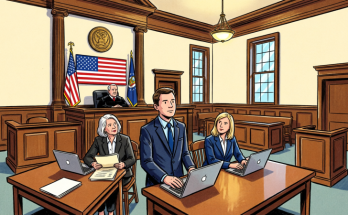
The last time I saw Chloe, she looked at me across a courthouse hallway with the hollow expression of someone meeting the consequences she once believed were reserved for other people. She did not speak.
Neither did I.
I simply walked past her, carrying my own name, my own future, and a life nobody in that family could steal again.