“You’re right,” he said. “I haven’t told you much.”
“Because there isn’t much to tell?” Emily snapped.
He reached into his jacket and took out his phone.
No theatrics. No flourish.
He opened a page, took one step forward, and held the screen where all three of them could see.
I knew what it showed before I saw their faces.
His company site. Leadership page. Latest annual report header. His name. Founder and chief executive officer. The company valuation listed in the article linked beneath it was more money than my father would likely see in several lifetimes.
Emily leaned in first.
Then all the blood left her face.
My father blinked rapidly. “You run that?”
“I founded it,” Liam said.
Mom put a hand to her chest. “Why didn’t you say something?”
He looked at her for one beat, not unkind, not pleased.
“Because success doesn’t excuse disrespect,” he said. “And respect shouldn’t require success.”
Grandma smiled then, just a little.
It might have been my favorite moment of the entire ordeal.
Dad struggled for composure. “That still doesn’t justify this public humiliation.”
“What you did to her was humiliation,” I said. “This is accountability.”
Emily shook her head, as if rejecting reality on principle. “So what, now? You parade his money around and pretend you’ve won some moral argument?”
Liam put the phone away. “No. I showed you because you’ve mistaken simplicity for weakness from the day we met. That mistake ends now.”
Ms. Alvarez stepped in before any of them could recover.
“You are required to respond to the mediation notice by Tuesday. Failure to do so will move this into formal court proceedings without the benefit of negotiated resolution.”
Mom’s voice wavered. “Mediation?”
“Yes.”
Dad stared at the documents in his hands as though they might rearrange themselves into something survivable if he looked hard enough.
Grandma adjusted the strap of her purse on her shoulder.
“I’m going home now,” she said. “Anna will take me.”
Then she turned and began walking away.
That was it. No grand final speech. No collapse. Just choice.
For years I had watched her make herself smaller to keep the household smooth. In that moment she seemed taller than everyone there.
As we walked toward the parking garage, Emily’s voice rose behind us, fraying under the strain of consequences she had never imagined would reach her.
“This is going to ruin everything!”
Liam looked back once.
“No,” he said. “It’s going to reveal everything.”
And it did.
The weeks before mediation were uglier than the confrontation at the airport, though much quieter.
Dad hired his own attorney, then replaced him with another. Mom alternated between tears and outrage. Emily sent long messages to cousins and family friends framing herself as the victim of an unstable grandmother manipulated by an envious younger sister. A few relatives believed her. Most, once they heard enough details, went silent in the way people do when they discover they have accidentally attended the wrong side of a story for years.
Daniel disappeared almost completely. Whether from prudence or cowardice, I never found out.
One afternoon Emily showed up at my apartment unannounced.
I almost didn’t let her in. But some part of me wanted, foolishly, to see if there was anything left in her other than vanity and reflex.
She came inside wearing cream trousers and anger like perfume.
“I cannot believe you’re doing this over a misunderstanding,” she said before she had fully crossed the threshold.
I closed the door.
“Grandma being left at the airport wasn’t a misunderstanding.”
Emily rolled her eyes. “That again. We told you, Dad thought the trip would be difficult for her.”
“Then why invite her?”
“She assumed.”
“No,” I said. “She packed.”
Emily looked away first.
That told me more than any confession could have.
She moved further into the living room, taking in the shelves Liam and I had built together, the drafts spread across my table, the life she had never bothered to understand.
“You’ve always hated that things come easier to me,” she said.
I stared at her.
There are some sentences so absurd they need a moment to settle before you can answer them.
“Easier?” I repeated. “Is that what you call being handed other people’s money and told you deserve it more?”
She crossed her arms. “I worked for my life.”
“So did I.”
Her laugh was brittle. “Freelancing from coffee shops is not the same as building a real career.”
There it was. Real. Again.
A real career. A real wedding. A real life.
My family had always been obsessed with authenticity they could measure from the outside.
I looked at Emily and saw, suddenly, not a golden child but a woman so overfed on validation she could no longer tell the difference between worth and applause.
“You know what the saddest thing is?” I asked.
She frowned. “What?”
“You actually believe them.”
For the first time, uncertainty flickered across her face.
I went on before she could recover.
“You think being chosen means you’re better. You think being admired means you’re right. You think if enough people clap while you walk into a room, then whatever you take from others becomes justified. That’s not success, Emily. That’s dependency in expensive packaging.”
She slapped the edge of my dining table with her hand.
“You’re jealous.”
“No,” I said. “I’m free.”
She left without another word.
When the door shut, my hands shook so hard I had to sit down.
Liam came in twenty minutes later with groceries and found me staring at the wall.
He set the bags down immediately.
“What happened?”
I told him.
When I finished, he knelt in front of me and rested his forearms on my knees.
“Are you okay?”
The question undid me more than the fight had. I laughed once, then cried, then laughed again because crying felt both too late and exactly on time.
“I think so,” I said. “I just… I spent so many years believing if I could explain myself perfectly enough, they would understand.”
“And now?”
“Now I think understanding was never the problem.”
He nodded.
“Some people need you confused,” he said. “Clarity threatens the arrangement.”
The mediation happened six weeks after the airport.
There was nothing cinematic about it.
No courtroom. No dramatic objections. No gavel cracking through the air.
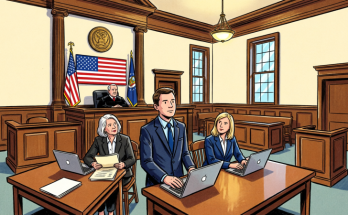
Just a long conference table in a quiet office downtown, one mediator with a composed face and a legal pad, two attorneys, a court-appointed financial reviewer available by phone, and a family forced for once to sit with facts they could not charm, soften, or outtalk.
Grandma sat beside me in a navy cardigan, her hands folded neatly. Liam sat behind us, not because he needed to speak, but because support can be a kind of testimony too.
Dad sat across the table, looking ten years older than he had at the airport. Mom kept twisting a tissue between her fingers until it shredded. Emily arrived late, somehow still trying to wear indignation like she thought it was jewelry.
The mediator began with process, then requested a review of the records.
Statements were laid out.
Transfers listed.
Dates matched.
Amounts tracked.
The pattern, once reduced to numbers and timelines instead of family mythology, was devastatingly clear.
Dad tried first.
“These were family funds,” he said. “There was never malicious intent. I moved money as needed with the expectation of replacing it.”
Ms. Alvarez asked, “With explicit informed consent?”
Dad bristled. “She trusted me.”
“That is not an answer.”
Mom tried next.
“Margaret gets overwhelmed by paperwork,” she said. “We were helping. She has always needed help with administrative things.”
Grandma turned toward her daughter.
“No,” she said. “I needed honesty.”
The mediator looked up. “Mrs. Wilson, in your own words, did you understand that your money was being used for wedding expenses?”
Grandma took a breath.
“I understood that my son occasionally managed things for convenience. I did not understand that my accounts were being used to fund choices I had not approved. And when I asked questions, I was made to feel as though I was the problem for asking.”
The mediator wrote that down.
Emily, who had been silent up to then except for sighing dramatically, finally spoke.
“I feel like everyone is ignoring context. This wedding involved obligations. Vendors. Daniel’s family. Deposits that had to be made quickly. Dad was trying to keep everything afloat.”
The mediator looked at her. “Using your grandmother’s money without her informed consent?”
Emily hesitated just long enough to matter.
“I assumed it had been discussed.”
“Did you ever ask?”
She looked away.
There are entire moral failures contained in the direction of a person’s eyes.
The financial reviewer joined by speakerphone and summarized the findings with devastating calm. Repeated transfers. Lack of transparent accounting. Revoked access confirming concern. A pattern consistent with financial exploitation regardless of whether the initial intent had been framed as temporary family borrowing.
Dad’s attorney attempted to reframe it as informal intergenerational support.
Ms. Alvarez countered with the lack of disclosure, the coercive dynamic, the manipulation of Grandma’s perceived confusion, and the direct connection to wedding expenditures.
Then the mediator did something I had not expected.
He asked me if I wanted to speak.
For a second I almost said no. Old habits rise quickly.
Then I looked at Grandma.
She gave me the smallest nod.
So I spoke.
I did not perform. I did not give them the dramatic eruption they could later dismiss as emotion. I simply told the truth.
About the dinner. The envelope. The phrase real wedding. The years of unequal treatment that had taught everyone in the family, especially Emily, that resources naturally flowed toward her. The airport. The way concern had been used as cover. The way confusion had been assigned to Grandma whenever clarity threatened anyone else’s comfort.
When I finished, the room was very quiet.
The mediator folded his hands.
“What I am hearing,” he said slowly, “is not a single accounting error. I am hearing a longstanding family pattern in which power, access, and credibility were unevenly distributed, and that pattern appears to have facilitated misuse of assets belonging to a vulnerable older adult.”
Dad opened his mouth. Closed it.
Mom started crying then, quietly, into the ruins of her tissue.
Emily said, “This is insane.”
No one answered her.
By the end of the session, the outcome was set.
Grandma’s funds were to be fully restored through structured payments overseen by the court. Dad’s access to any of her accounts was permanently revoked. Formal accounting procedures were established. Additional penalties were suspended contingent on compliance, which was a mercy Grandma herself requested because, as she later said, “I wanted protection, not revenge.”
That distinction mattered to her.
It ended up mattering to me too.
Because what I felt as we walked out of that building was not triumph.
It was release.
Dad did not look at me on the way out.
Mom did, but only briefly, her face full of the tragic confusion of someone forced at last to see herself reflected in consequences.
Emily was furious, but beneath the fury I saw something I had never seen in her before.
Fear.
Not fear of punishment, exactly.
Fear of not being the center of the moral universe.
Grandma updated her will two weeks later.
She did it quietly. No dramatic announcements. No threats.
She simply met with Ms. Alvarez, made her decisions, and signed the papers.
When I asked later if it had been hard, she considered the question for a long moment.
“No,” she said. “Hard was spending years pretending not to notice what was happening because I thought naming it would destroy the family. This”—she tapped the signed copy once—“is housekeeping.”
I laughed so hard I startled myself.
After the mediation, my parents’ world did not collapse in one theatrical crash. It thinned. Quietly. Predictably. Certain illusions require a steady supply of unquestioned control, and once that supply is cut off, they begin to starve.
Emily’s wedding shrank.
I heard this through a cousin first, then through neighborhood gossip, then finally in a clipped message from my mother that pretended the downsizing had always been the plan. The ballroom became a private room at a smaller venue. The imported flowers disappeared. The weekend accommodations thinned. The custom monograms, I was told, had already been printed and had to be used despite everything, which struck me as exactly the kind of absurdity Emily would preserve on principle.
I was not invited.
Neither was Grandma.
That hurt less than you might think. By then I had stopped confusing invitation with belonging.
Grandma moved out of my parents’ house by choice.
That decision, more than the legal proceedings, seemed to shake everyone who knew us. They had gotten used to her being part of the furniture there—beloved in theory, useful in practice, rarely imagined as independent.
But she found a small one-story house near a garden center on the edge of town. It had green shutters, creaky floors, and a patch of backyard big enough for roses, hydrangeas, basil, tomatoes, and whatever else she decided to coax back into the world.
The first morning after she moved in, I arrived with coffee and found her standing in the sunlight with gardening gloves tucked into the pocket of her cardigan, surveying the yard like a woman greeting land after a long exile.
She looked lighter.
Not younger exactly. Something better than that.
Unburdened.
“I forgot,” she said, “how much room there is in a day when no one is managing you.”
Liam built her raised beds the following weekend.
She insisted on helping. He insisted on pretending not to notice when she gave him more instructions than necessary. I painted the fence. We ordered sandwiches. At one point I looked up and saw the three of us there together—sawdust in Liam’s hair, dirt under Grandma’s fingernails, a streak of white paint across my wrist—and felt something I had never really felt in my parents’ house.
Home.
As for me, something shifted too.
Helping Grandma through the legal process had done more than expose my family. It had exposed me to a part of myself I hadn’t fully trusted before—the part willing to speak, organize, protect, insist.
Ms. Alvarez asked one afternoon, almost casually, if I had ever considered advocacy work.
“You’re good with people in vulnerable positions,” she said. “And you understand how silence functions inside families.”
I thought about that for days.
Then I enrolled in a community advocacy program focused on supporting older adults navigating neglect, coercion, and financial abuse.
The classes were held in a plain brick building beside a public health center. Nothing about it looked glamorous. Fluorescent lights. Folding chairs. Coffee in paper cups. Handouts with stapled corners.
I loved it immediately.
Maybe because I had spent my entire life watching people be disbelieved in subtle ways. Maybe because I knew what it felt like to have reality minimized until you started apologizing for your own perceptions. Maybe because helping Grandma had taught me that protection is not always loud. Sometimes it’s paperwork. Sometimes it’s sitting beside someone while they say the truth in a room that has always interrupted them.
I learned about guardianship misuse, housing coercion, predatory caregiving, capacity assumptions, and the legal mechanisms meant to safeguard dignity after families fail to do it themselves.
I also learned how often those systems fall short.
Which made the work feel even more necessary.
Liam never once treated my new direction like a side project.
When I came home late from training, he had dinner warming. When I doubted whether I had the right to enter that kind of work professionally, he said, “You’ve been training for it your whole life. Now you just have language and structure.”
Sometimes I caught myself staring at him with the kind of gratitude that feels almost dangerous because it reveals how little some people have expected for so long.
One evening, months after the mediation, we were sitting on Grandma’s patio while she watered the evening primroses and the sky turned the soft blue of worn denim.
Liam looked at me and said, “We still need to decide what kind of wedding we want.”
I laughed.
After everything, our actual wedding planning had become almost hilariously secondary.
“Something real,” I said.
He smiled. “Define real.”
I looked toward Grandma, who was gently untangling a vine from the patio railing.
“No audience required,” I said. “No performance. Just the people who know how to love us.”
He reached for my hand.
“Good,” he said. “That’s the only kind I ever wanted.”
We got married in early autumn.
Not in a ballroom. Not under chandeliers. Not in front of hundreds of strategically selected witnesses.
We got married in Grandma’s backyard.
By then the roses were between bloom cycles, but the hydrangeas were enormous and pale, and the herb beds smelled like sun and pepper and earth. Liam strung lights through the fence the night before. A friend of mine arranged flowers in old glass jars. We borrowed folding chairs. We rented nothing extravagant. I designed the invitations myself. Grandma baked two cakes because she didn’t trust bakeries to get the icing right. Liam wore a navy suit with no tie. I wore an ivory dress so simple my mother would have called it unfinished.
It was perfect.
Forty-two people came.
No one was there to evaluate us.
No one was there to rank the event against anyone else’s.
There was laughter. Good food. Wind moving softly through the leaves. At one point Liam’s nephew knocked over a tray of lemonade and three people dove to help at once. Someone’s shoe got stuck in the grass. Grandma cried twice and denied it both times. During the vows, a dog barked from two houses over and made everyone laugh in the middle of my most serious sentence.
In other words, it was alive.
Before the ceremony, while I stood in Grandma’s bedroom fastening the tiny pearl buttons at the back of my dress, she came up behind me with trembling hands and adjusted my veil.
Not because I needed adjusting. Because she needed a moment.
“You know,” she said, looking at me in the mirror, “your father was wrong.”
I met her eyes in the reflection.
“I know.”
She smiled.
“This is what a real wedding looks like.”
I nearly cried my makeup off then and there.
Instead I kissed her cheek.
When the ceremony started, Liam was standing under the arch he had built himself the week before, one hand clasped over the other, watching the path with an expression so open and unguarded it made the whole world narrow pleasantly around him.
I walked toward him with Grandma on one arm.
Not because I needed giving away.
Because I wanted walking forward to feel like a choice made with one of the people who had taught me how to survive long enough to make it.
There were no speeches about legacy. No performative blessings. No father-daughter dance arranged to reassure anyone about family unity.
There were vows.
Mine began with the truth.
“I grew up believing love was something you earned by becoming useful, impressive, easy to display. Then I met you, and you loved me before I performed a single thing. You loved me when I was quiet, uncertain, angry, tired, hopeful, and still learning how to take up space. You never asked me to become legible to you. You simply saw me. And because of that, I became easier to see to myself.”
Liam’s eyes were wet before I finished.
His vows were worse for my composure.
He talked about steadiness. About gardens. About how the most beautiful things he had ever seen were the ones built slowly and tended consistently. About how I made a home feel more truthful just by standing inside it. About how protecting people and loving them are not the same thing, but how he intended to do both, every chance he got.
By the time we kissed, Grandma was openly crying and making no attempt to hide it.
It remains the happiest day of my life.
Not because it fixed everything.
Not because it erased what had happened.
But because it proved something I had needed proved for years: joy does not have to be sanctioned by the people who withheld it from you.
After the wedding, life did what life does. It kept moving.
My parents and I did not reconcile in any sweeping, cinematic way.
Mom sent a letter once. Four pages. Half apology, half self-defense. She said she had made mistakes. She said she had been trying to hold the family together. She said she hoped one day I would understand the pressures they had been under.
I read it twice and realized it was still asking me to do the labor of interpretation for her.
I didn’t answer right away.
Months later, I sent back three sentences.
I understand more than you think. That is why I set boundaries. If you want a relationship with me, it will need to be built on truth, not revision.
She did not write again for a long time.
Dad never apologized.
That used to matter to me. Then it mattered less. Then almost not at all.
Emily’s marriage, from what I heard, lasted less than two years. I don’t tell you that with satisfaction. Just with the dry recognition that performances often collapse when the audience goes home.
Sometimes she appeared on social media in carefully edited fragments—vacations, professional milestones, glasses of wine held at flattering angles. I stopped looking.
I had my own life to tend.
Grandma flourished in her little house.
That is the only word for it.
She hosted Sunday lunches in the backyard. She joined a gardening group. She baked less because, she claimed, “you two are trying to make me plump out of guilt,” and then baked anyway. She learned online banking, badly at first and then with increasing confidence, and took wicked pleasure in mentioning it.
“I reconciled my statements myself,” she announced one afternoon over soup, as if sharing news of a military victory.
Liam applauded.
I did too.
At the advocacy center, I completed my program and started working part-time assisting older adults and families with resource navigation, documentation, and early intervention support.
Some days the work was heartbreaking.
Some days it was infuriating.
Some days it was mostly forms and waiting rooms and trying to explain to exhausted people that no, they were not overreacting, and yes, their instincts mattered.
But every so often there was a moment—a woman straightening in her chair as she realized someone believed her, a widower finally understanding the paperwork his son had hidden from him, an elderly man laughing with relief because someone had said, “Let’s slow down and go through this together”—that made everything feel sharply, almost painfully worthwhile.
One rainy afternoon, nearly a year after the airport, I sat with a woman named Gloria in the center’s small conference room while she told me in a whisper that her nephew had started “helping” with her pension and she wasn’t sure if she was being paranoid.
The old version of me would have rushed to soothe.
The new version knew better.
I asked questions.
I listened.
I gave her language.
And halfway through the conversation, I had the strange sensation of feeling my own life fold in on itself and make sense.
When I got home that evening, Liam was in the kitchen making soup. He looked up as I came in.
“How was your day?”
I set my bag down and leaned against the counter.
“Important,” I said.
He smiled a little. “Good important or hard important?”
“Both.”
He nodded as if those had always been neighbors.
Later, after dinner, we drove to Grandma’s house because she had texted something cryptic about a rosebush emergency that turned out to be nothing more serious than aphids and impatience.
The three of us stood in the fading light with garden gloves and spray bottles, and Grandma, after directing us with unnecessary authority for twenty minutes, sat down on the patio bench and looked at me for a long moment.
“What?” I asked.
She shook her head gently.
“I was just thinking,” she said, “how strange it is that the people who tried hardest to make you feel small ended up pushing you toward the life you were meant to have.”
I sat beside her.
The yard smelled like basil and damp soil. Liam was a few feet away, carefully inspecting a rose stem as if the aphids might respond to logic.
“I wish it hadn’t taken so much hurt,” I said.
Grandma reached over and covered my hand with hers.
“Maybe,” she said. “But hurt is not the same as defeat.”
We sat there quietly after that.
The sky deepened. A porch light flicked on. Somewhere down the block a radio started playing an old song Grandma loved, and she hummed the chorus under her breath.
I thought about the girl I had been in my parents’ house—careful, useful, quiet, always measuring herself against other people’s approval. I thought about the woman sitting there now, dirt under her nails, ring on her finger, work that mattered waiting for her in the morning, no longer asking to be chosen by those who had made a habit of withholding.
The spotlight never really did land on me in that house.
For a long time, I thought that meant I had failed some invisible test.
Now I know better.
Some lights are too narrow to recognize a whole person.
Some rooms are too crowded with performance to hold the truth.
And some loves—the best ones, the lasting ones—do not arrive as spotlights at all.
They arrive as warm cookies pressed into your hand for balance.
As a man in a worn sweater carrying folding tables without being asked.
As a grandmother in a garden, finally saying no.
As your own voice, one day, steady where it used to shake.
If my father were to ask me now what kind of wedding I had, what kind of life I built, what became of the daughter he so often overlooked, I think I know how I would answer.
A real one.
And finally, entirely, mine.