“I have known since Grace was two years old that she is not my biological child. I chose to raise her anyway. I choose now to leave her my legacy because she alone has proven worthy of it. This decision requires no further validation.”
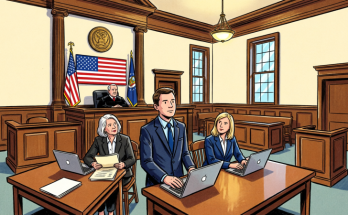
The world narrowed to the sound of paper moving in Dalton’s hands.
My mother closed her eyes.
Naomi’s face drained of color so quickly it made her makeup look theatrical, masklike.
I sat absolutely still because if I moved, even slightly, I thought I might shatter.
Two years old.
He had known since I was two.
And yet he stayed. Raised me. Signed my school forms. Held my hand crossing streets. Stood at my graduation in a navy suit pretending not to cry.
Something in my chest hurt with new edges.
Not because he wasn’t my biological father.
Because he knew. And I had spent my entire life interpreting his quietness as distance when maybe part of it had always been something heavier. Some private burden. Some arrangement he carried mostly alone.
Dalton continued.
“Eight months before his death, Mr. Ellington retained a private investigator to document any attempts to manipulate or interfere with his estate. The investigator gathered substantial evidence.”
He placed a stack of documents on the table.
Even from where I sat, I could see the neat tabs dividing sections.
Payments. Withdrawal records. Consultation notes. Email printouts.
Naomi’s attorney straightened in his chair. “We were not informed of any investigatory material.”
“You were not required to be,” Dalton said coolly.
He lifted the first set of documents.
“These records demonstrate unauthorized withdrawals totaling fifty thousand dollars from accounts reserved for medical and household administration during Mr. Ellington’s illness. They also document consultations with three separate estate lawyers regarding the legal standing of a non-biological child, discussions about amending inheritance distribution, and the purchase of a DNA test mailed to Naomi Ellington’s home address before being gift wrapped.”
Naomi’s mouth opened.
“That’s ridiculous,” she said. “That was a joke.”
No one answered immediately. Sarah didn’t even glance at me. She just began writing something slowly on her pad.
Dalton picked up a final sheet—cream paper, folded once.
“Mr. Ellington requested that I read this aloud.”
He unfolded it.
“Naomi,” he read, “I know what you’ve been planning. I watched you pressure your mother. I watched you mistake greed for cleverness and cruelty for power. I hoped you would choose differently. These consequences are your own doing.”
A sound came out of Naomi that didn’t quite belong to speech. Half gasp, half protest. Her attorney leaned toward her sharply and whispered, with barely controlled urgency, “Do not contest this. There’s a no-contest clause. You will lose everything.”
But Naomi was beyond listening.
“This is fraud,” she said, voice rising. “Grace manipulated him. She tricked a dying man—”
Sarah stood.
She didn’t raise her voice. She didn’t need to.
“The will explicitly acknowledges Grace’s parentage,” she said, “and documents Mr. Ellington’s reasoning. Any contest would be frivolous and would trigger the no-contest clause immediately. That includes acceleration of outstanding loans and repayment obligations, currently estimated at approximately two hundred thousand dollars.”
The silence after that was different.
Not shock this time.
Calculation.
Naomi’s head whipped toward Dalton. “That’s not a loan,” she said. “He gave me that money.”
“Not according to the estate records,” Dalton replied. “It is documented as an advance against discretionary inheritance, recoverable upon contest or interference.”
My mother finally spoke.
“Naomi,” she whispered.
Just that. Her name. But this time it sounded like grief, not performance.
Naomi didn’t look at her.
“This should be mine,” she said instead, turning toward me with something close to hate burning through the panic. “All of it. I’m the real daughter. I’m the one who stayed.”
I rose more slowly than she had.
My voice, when it came, surprised me with how calm it sounded.
“You didn’t stay, Naomi,” I said. “You controlled. You hovered. You treated loyalty like a weapon. You built your whole life on a secret you thought would make you important.”
She stared at me with eyes that had gone wild and glossy.
Before she could answer, Dalton said, “There is one more item.”
He reached for a smaller envelope.
“This is for Grace.”
I took it with hands that barely felt attached to me and slid my finger under the seal.
Inside was one sheet of paper. My father’s handwriting. Slanted, controlled, unmistakable.
Grace,
You spent your life believing you were invisible. You were not. I saw your strength, your kindness, your integrity, and the grace with which you bore things no child should have had to bear. You were my daughter not by blood, but by choice, and I leave you my legacy with absolute certainty that you will honor it better than anyone else in this room. If you are reading this, then the truth has finally been weaponized against you. I am sorry I did not stop it sooner. I thought protecting you meant silence. I was wrong. Let this be the one thing I do without hesitation. I choose you openly now.
The room disappeared.
I could hear nothing for a few seconds except my own breathing.
When I looked up, Naomi had finally understood the full shape of what had happened.
This wasn’t my triumph.
It was her defeat, meticulously designed by the man she had underestimated most.
The hearing ended in fragments after that.
Naomi left first, her attorney half-pulling her out before she could say something irreparable. My mother stayed seated until the room was almost empty, staring at her hands as if they no longer belonged to her. Dalton spoke quietly with Sarah about next steps. Papers were signed. Copies exchanged. Deadlines established.
I moved through it all in a state that wasn’t numbness exactly. More like delayed impact. As though some part of me knew I would fall apart later and had courteously set the collapse for a more private hour.
It came in the hotel room that night.
I sat on the edge of the bed still in my coat, still holding my father’s letter, and cried so hard I could barely breathe.
Not because I had “won.”
Because he had known.
Because he had loved me.
Because he had also failed me in ways that no inheritance could erase.
Both things were true, and grief makes room for contradictions no courtroom ever can.
The legal fallout moved faster than Naomi expected.
Her attorney withdrew the next morning after reviewing the investigator’s file in full. She found another lawyer, tried to contest anyway, and watched the judge dismiss the challenge almost immediately. The no-contest clause held. Her remaining inheritance vanished. The two hundred thousand in prior “advances” became personal debt owed back to the estate. The fifty thousand in unauthorized withdrawals remained separately actionable.
For the first time in my life, Naomi looked small.
Not changed. Not humbled. Just cornered by consequences she had always assumed were for other people.
My mother came to see me a week later in Austin.
I almost didn’t let her in.
But curiosity has always been one of my flaws, and some truths are too old and sharp to leave outside on the porch.
She sat on my couch with both hands folded in her lap and told me everything.
About the man in the photograph.
Daniel Hartman, she said. A man she had loved before James. They had broken apart badly, then drifted back into each other for one disastrous stretch during the first years of her marriage. She got pregnant. Daniel wanted her to leave James. She didn’t. She chose safety, reputation, structure. She chose the life that looked correct from the outside.
James found out when I was nearly two.
He had suspected before, she said. I had Daniel’s mouth. Daniel’s ears. Daniel’s blood type.
I listened without interrupting.
She cried while she spoke, but her tears did not move me the way they might once have. Because even in confession she centered herself—her fear, her guilt, her impossible choices, her shame. She talked about how hard it had been to live with the lie. How Naomi overheard the truth as a teenager and used it like a knife ever since. How James had insisted that I remain his daughter legally and privately, how he refused divorce because he “would not punish a child for adult sins.”
When she said that, something inside me twisted.
Punish a child.
Because that was exactly what had happened anyway. Just slowly. Indirectly. Elegantly enough that no one had to name it.
“I want to make things right,” my mother whispered when she finished.
I looked at her.
She still had the same beautiful hands. The same careful voice. The same ability to sound sincere at moments when sincerity cost her the least.
“I believe you want that,” I said.
Hope flickered across her face.
Then I continued.
“But making things right starts with letting me live a life that is not built around your secrets.”
The hope went out.
That, more than anger ever could have, seemed to wound her.
Good, a colder part of me thought. Some truths deserve to leave scars.
In the months after, Sarah helped me settle the estate.
We did it quietly.
Accounts were transferred. Property evaluated. Tax issues resolved. Naomi’s debts documented. The house in Denver—beautiful, expensive, full of ghosts—was the hardest part. I walked through it one last time before deciding. The walls held too much silence. Too many meals where my voice vanished. Too many birthdays where Naomi got the center and I got the leftovers.
I sold it.
I did not keep the dining table. I did not keep the chandelier. I took only what mattered: my father’s letters, a set of old books with his penciled notes in the margins, one landscape painting from his study, and the photograph with forgive me on the back—not because I had forgiven, but because truth belongs with the person who survived it.
Then I left Denver behind.
I chose Oregon because no one in my family had ever mentioned wanting to go there. Which sounds like a joke, but it wasn’t. I wanted distance so complete it had weather in it. I wanted rain and fir trees and a coastline that made people feel small in the right way. I wanted a place that had nothing to do with old money, old lies, old dining rooms.
I found a house outside Portland with a long porch, pale wood floors, and windows that let in the kind of gray light that feels soft instead of bleak. I arranged my life there carefully. Not lavishly. Just honestly. I kept my job remotely for a while, then shifted into a consulting role that let me choose my time. I learned to garden badly. I bought mugs I actually liked instead of the ones that looked correct. I painted one room the green of deep moss because no one was there to tell me it was “too much.”
Sometimes I still think about my father.
Not with uncomplicated tenderness. He doesn’t get that. Love doesn’t erase omission. He knew the truth and still allowed me to grow up in a house where I was made to feel peripheral. He may have believed his quiet loyalty was enough. It wasn’t. He may have believed protecting me meant preserving the illusion. It didn’t.
And yet.
He chose me in the one place where choice could no longer be taken back.
That matters too.
The first winter in Oregon, I framed his letter and kept it in a drawer instead of on a wall. I wasn’t ready to make a relic out of a man who had loved me and failed me in the same breath. Some relationships remain too complicated for display.
As for Naomi, I stopped following the details after the first year. I heard enough through Sarah to know the broad shape of things. Debt. Legal restrictions. A downsized house. The kind of anger that curdles when it can no longer find a useful target. I did not gloat. I did not check public records for sport. Naomi had spent too many years living in my mind rent-free. Consequences could have her. I wanted space.
My mother wrote twice after I moved.
The first letter was long and apologetic and full of phrases like if only and I hope someday. I read it once and filed it away. The second was shorter. She said she had started therapy. She said she was learning to live with the choices she made. She said my father had left more than money behind—he had left her the knowledge that she had failed the wrong child.
I didn’t answer either letter.
Silence, used correctly, can be an act of mercy. Not all conversations deserve resurrection.
Some endings aren’t loud.
They aren’t courtroom victories or slammed doors or speeches that make everyone in the room finally understand what they did to you.
Sometimes they are quieter than that.
Sometimes they are the decision not to explain anymore.
Not to argue your right to exist. Not to absorb someone else’s shame as if it were proof of your own inadequacy. Not to keep returning to the same table hoping the people sitting there will someday act like family.
Now, when rain taps at my Oregon windows and I make coffee in the morning, I think about that silver box on the table and the way Naomi smiled when she pushed it toward me.
She thought she was handing me humiliation.
What she actually handed me was the end of confusion.
And there is a strange peace in finally knowing which pain is yours to heal and which was never yours to carry.
Sometimes freedom doesn’t arrive as joy.
Sometimes it arrives as clarity.
And that is enough to build a life on.