Part 3
The first time Grandma smiled again, it was so small I almost missed it.
It happened on the fifth day in the hospital. A nurse had helped her sit up a little, propping her with pillows. The sunlight through the window was thin and wintery, but it painted her face with something gentle.
I was feeding her broth with a plastic spoon like she was a child, and my hands kept shaking because I was terrified of hurting her. Every rib under her skin felt like an accusation.
She swallowed, winced, then looked at me.
“You always were impatient,” she whispered.
I froze. “What?”
Her eyes softened. “You wanted to grow up fast,” she said. “Now look at you. All grown.”
It was the closest thing to a joke she’d made in years.
I laughed, and the laugh turned into something ugly in my throat. I covered my face with one hand, embarrassed by my own noise.
Grandma reached for my wrist, her fingers weak but warm.
“Hey,” she breathed. “Still here. Still me.”
That tiny smile wasn’t forgiveness. It wasn’t closure. It was proof that the woman I loved had survived the dark long enough to reach the light again.
But recovery wasn’t a straight line. Some hours she was lucid. Other hours she drifted into confusion, asking where my grandpa was, or why it was so cold, or when we were going home.
Every time she asked about my parents, I felt my stomach knot.
At first, I avoided telling her anything about the arrest. I didn’t want to put more weight on her fragile body. But she wasn’t a child. She’d endured the worst part. She deserved truth.
On the seventh day, she looked at me and said, “They’re going to say it was my fault.”
My breath caught.
“What?” I managed.
“Your mother,” Grandma said softly. “She’ll cry. She’ll say she tried. She’ll say I was difficult. Your father will blame money. They always blame something else.”
She stared out the window, and her voice went flatter, like she was reciting a weather report.
“They told me you didn’t ask about me,” she said.
That line hit me harder than any threat.
My throat burned. “That’s not true.”
Grandma turned her head slowly toward me. “I know,” she said. “But down there… it gets quiet. You start believing whatever they feed you.”
I wanted to go back in time and scream at my sixteen-year-old self. I wanted to kick the basement door down with my bare feet. I wanted to erase every moment I’d chosen doubt over action.
Instead, I sat beside her and said, “I’m here now.”
Grandma squeezed my hand. “That’s what matters.”
But outside that hospital room, the world kept spinning, and it wanted answers.
Detective Ruiz was assigned to the case. He was in his forties, calm-eyed, the kind of man who didn’t raise his voice because he didn’t need to.
He met me in a small consultation room near the nurses’ station. A social worker sat nearby taking notes, her face tight with controlled anger.
“Daniel,” Ruiz said, “I need you to walk me through everything your parents told you about your grandmother.”
So I did. Every vague answer. Every shut-down question. Every time they made me feel guilty for wanting to visit her.
Ruiz listened without interrupting, his pen moving steadily.
“Did your parents ever mention a facility name?” he asked.
“No.”
“Did you ever see paperwork?” he asked.
“No.”
“Did your grandmother have a pension? Savings?” he asked.
“Yes,” I said, and a cold thought slid into place. “She had a monthly pension from my grandpa’s union. And social security.”
Ruiz’s gaze sharpened. “Do you know who managed that money?”
My stomach sank. “My dad.”
The social worker exhaled slowly, like she’d expected that.
Ruiz nodded. “We’re going to look at finances. If there’s fraud involved, it strengthens the case. Elder abuse charges are serious already, but financial exploitation adds weight.”
He paused. “I need to ask you something hard. When you opened the basement door, you saw chains. Did you see any injuries consistent with restraint?”
I swallowed. “I don’t know. She had bruises, but she’s fragile. She…” I couldn’t finish.
Ruiz’s voice stayed even. “We’ll document everything medically. The doctors will help.”
After that, the case stopped being just my nightmare. It became a machine. Evidence collection. Statements. Warrants. Photographs. Medical reports. Forensic documentation from the basement. It felt surreal to see my house treated like a crime scene—because it was.
For the first time, my parents’ rules didn’t matter. Their authority didn’t matter. A warrant made the whole house belong to the truth.
When I went home to grab clothes, yellow tape marked the front door. An officer stood guard. Inside, the living room looked the same—same couch, same family photos—except now it felt like a set after the actors had left.
In the hallway, my mother’s perfume still lingered, sweet and cloying, and it made me nauseous.
I went into my parents’ bedroom only because Detective Ruiz asked me to identify anything that might be relevant: Grandma’s documents, bank statements, medical paperwork, old legal files.
I opened drawers with shaking hands.
I found a folder labeled Healthcare, which made my heart pound.
Inside were printed forms with a facility name—one I recognized from my earlier searches, except now it felt like a lie wearing a real outfit. Admission paperwork. Medical notes. A signature line that looked like my mother’s.
Detective Ruiz took it and studied it for a long time.
“This is forged,” he said quietly, and the words landed like a stone.
I felt dizzy. “How do you know?”
Ruiz tapped a line. “Wrong formatting. Wrong physician ID. This facility confirmed they’ve never had her.”
The lie had a body now. Ink. Paper. Proof.
I kept searching because I didn’t know how to stop. In a locked desk drawer, I found bank statements.
Large withdrawals. Regular transfers into an account I’d never heard of. The memo lines were vague, like someone trying not to leave a trail.
Ruiz photographed everything. Bagged evidence. Logged it.
Then he asked me if my parents had talked about moving.
And suddenly I remembered something my mom had said two months earlier, casually, over dinner.
“Wouldn’t it be nice to start fresh somewhere warm?”
At the time, it sounded like a daydream.
Now it sounded like a plan.
A week later, the prosecutor assigned to the case, Laura Kim, met me in her office. She was sharp, direct, and didn’t waste time comforting people with false hope.
“We have strong charges,” she said. “Unlawful imprisonment. Elder abuse. Neglect. Fraud. Theft. Possibly conspiracy if we find any help from others.”
She looked at me steadily. “But juries respond to stories. They need to hear what it was like.”
My throat tightened. “You want me to testify.”
“I’m not going to force you,” she said. “But your testimony could be decisive. Especially since you’re their son. It shows this wasn’t a misunderstanding. It wasn’t ‘caregiving gone wrong.’ It was deliberate.”
Deliberate.
That word haunted me.
When I left her office, I walked out into the winter air and realized something terrible.
I had spent years being trained to protect my parents’ image. To keep family secrets. To accept half-truths.
Now the truth was going to require me to do the thing I’d been conditioned never to do.
Publicly break them.
At the hospital that evening, I sat with Grandma and watched her sleep. Her breathing was steadier now, though her body still looked like it had been emptied.
I whispered, “I’m going to make sure they never touch you again.”
Grandma’s eyes opened slightly, and she looked at me like she was seeing straight through my anger.
“Don’t let hate eat you,” she murmured.
I swallowed hard. “I don’t know how not to hate them.”
Grandma’s fingers curled around mine.
“Love outlives hate,” she said again, barely audible. “But love… doesn’t mean you let people hurt you.”
In that moment, I understood the difference for the first time.
Love wasn’t soft. Not always.
Sometimes love was a door kicked open. Sometimes love was calling 911. Sometimes love was telling the truth in a courtroom even if it shattered the last illusion you had left.
And I was ready to tell it.
Part 4
Once the prosecutors started digging, the story got worse.
I didn’t think that was possible. I thought the basement was the bottom. The basement felt like the bottom of everything—literally and morally.
But cruelty has layers, and so does greed.
Detective Ruiz called me on a Tuesday afternoon while I was sitting in the hospital cafeteria staring at a vending machine like it had answers.
“We pulled your grandmother’s pension records,” he said. “Your father filed a change-of-address request three years ago.”
My stomach clenched. “Change of address?”
“To your house,” he said. “Not new. But he also filed documents to become her financial representative. The paperwork looks legitimate at first glance.”
“Is it?” I asked, already knowing.
Ruiz’s pause told me everything.
“We’re verifying signatures,” he said. “But there’s more. We found a separate bank account opened in your mother’s name around the same time your grandmother ‘moved.’ Thousands deposited monthly, matching the pension amount.”
My hands went numb. “So they didn’t just… keep her down there. They were stealing from her.”
“Yes,” Ruiz said. “And they filed tax paperwork listing your grandmother as living in a care facility. They created a paper trail designed to answer questions before anyone asked them.”
A paper trail. Like they were planning for suspicion.
Like they knew what they were doing.
After I hung up, I sat there, shaking. The cafeteria smelled like burnt coffee and cheap fries, and I suddenly wanted to throw up.
That night, I went back to the house with Detective Ruiz and a forensic team. I’d avoided it since the basement discovery, but now it felt necessary. The truth lived there, and we needed it all.
Walking through the front door felt like walking into a lie I used to live inside.
The forensic techs moved through rooms photographing details: the basement lock, the stairs, the bucket, the mattress. They documented everything in calm, clinical voices that made my skin crawl because their calmness made it feel normal.
It wasn’t normal.
Ruiz asked me to show him where my dad kept important papers. I led him to a small safe hidden behind coats in the hall closet.
I didn’t know the code.
Ruiz had a warrant and a locksmith.
When the safe opened, the air inside smelled like paper and metal. Ruiz reached in and pulled out folders.
One folder was labeled Retirement.
Another: Property Sale.
My pulse hammered.
Ruiz flipped through the property folder and frowned. “Your father was preparing to sell the house.”
“To who?” I asked.
“An LLC,” he said. “Buyer address out of state.”
A chill swept over me. “They were going to run.”
Ruiz nodded grimly. “Looks like it.”
Then he pulled out something that made my throat close: a passport application form.
Not for my parents.
For my grandmother.
New photo slot empty. Signature line blank.
“Why would they—” I started.
Ruiz didn’t answer right away. His eyes stayed on the document.
“Sometimes,” he said carefully, “people like this plan for multiple outcomes. If someone asked questions, they could claim she traveled. Or they could attempt to move her without leaving a trail.”
I stared at the form until the words blurred.
It wasn’t just neglect. It wasn’t just rage.
It was planning.
Ruiz closed the folder and looked at me. “Daniel, I want to be clear. What you did—calling us, getting her out—you likely saved her life. She might not have survived much longer down there.”
I nodded, but the compliment didn’t comfort me.
Because another thought had taken root.
If my parents were capable of that, what else were they capable of?
In the weeks that followed, my town became a hive of whispers. People who’d once greeted my parents with smiles now avoided my eyes in the grocery store like I was contagious.
Some offered sympathy.
Others offered something worse: curiosity.
I heard rumors that my dad’s friends were calling him “misunderstood.” That my mom’s church group was saying she was “overwhelmed.” That if Grandma had just been easier, none of it would’ve happened.
Those comments ignited my anger like gasoline.
At night, I lay in bed in the small guest room of a friend’s house—because I couldn’t sleep in my own home anymore—and I replayed every memory of my parents.
My dad teaching me to tie a tie. My mom clapping at my high school graduation. The family vacation photos where we all smiled.
Had it always been fake? Or did something break in them?
Laura Kim prepared me for trial the way you prepare someone for a storm: calmly, thoroughly, without pretending it won’t hurt.
“They’ll try to paint you as emotional,” she said. “Or confused. They might say you’re exaggerating. Your father may claim he was protecting the family from your grandmother’s ‘decline.’ Your mother may cry.”
I swallowed. “What do I do?”
“You tell the truth,” she said. “Slowly. Clearly. You don’t argue. You describe.”
She slid a folder toward me. “We have medical documentation. We have basement photos. We have financial records. But juries remember a human voice. They remember you saying you carried her.”
I stared at the folder. My name was typed on a witness list.
I thought about my parents’ faces when the police arrived. The way my mom said, What have you done? like I’d broken a vase and not uncovered a prison.
In the hospital, Grandma continued improving in small steps. She graduated from broth to soft food. She could sit up longer. She started asking for tea again, weakly insisting, “Not that sad hospital stuff.”
One evening, I brought her a small cinnamon roll from a bakery near the hospital, and she took one bite and closed her eyes like the taste was a memory.
Her eyes opened and found mine.
“They’ll be angry,” she said softly.
“I don’t care,” I replied, and my voice came out too harsh.
Grandma’s hand lifted, trembling. She touched my cheek like she had when I was little.
“I know,” she whispered. “But you still have to live after the anger.”
I swallowed. “I don’t know how to live after this.”
Grandma’s eyes held mine steadily, stronger than her body.
“By choosing,” she said. “Not reacting. Choosing.”
The word echoed in me.
Choosing.
My parents had chosen cruelty. Chosen greed. Chosen to lock her away.
Now I had to choose what kind of man I would be after discovering that the people who raised me were capable of evil.
When the trial date was set, I didn’t feel ready.
But readiness wasn’t the point.
Justice wasn’t a feeling. It was a decision.
And I was going to stand up in that courtroom and tell the truth, even if my voice shook, even if my knees trembled, even if it meant I would never again be the son my parents wanted.
They didn’t deserve that son anyway.
Part 5
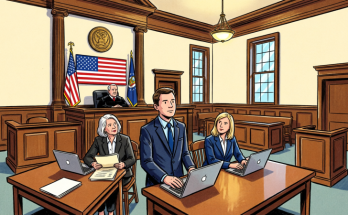
The courthouse smelled like old carpet and coffee that had been reheated too many times.
It was the kind of building that looks ordinary from the outside, like justice is supposed to be normal and boring. But inside, my heart thudded against my ribs like it was trying to escape.
Grandma didn’t come in person. She was too fragile, and the doctors said stress could knock her back weeks. Instead, her testimony was recorded with a special advocate present. I watched a clip of it once with the prosecutor and then refused to watch again. I didn’t want the image of Grandma describing her captivity to replace the image of Grandma laughing in her kitchen.
But my parents were there.
They sat at the defense table dressed like they were going to a job interview. My mother wore a soft sweater in a color that made her look gentle. My father wore a pressed suit and a serious expression that said he was the one being wronged.
It was theater.
And for a moment, the old conditioning tugged at me: the instinct to protect the family, to keep the story neat.
Then I remembered the mattress. The bucket. The chains.
The jury filed in, twelve strangers who didn’t know me, didn’t know my parents, didn’t know the version of our family we performed for the neighborhood.
Thank God.
Laura Kim opened with facts. She didn’t dramatize. She didn’t shout. She laid out the timeline like stepping stones.
Three years. A basement locked from the outside. No bathroom. Minimal food. Forged documents. Stolen pension payments.
When she finished, the courtroom felt colder.
The defense attorney, a slick man with a careful smile, tried to soften it. He talked about caregiver strain. About the difficulty of dementia. About family stress.
He used words like overwhelmed and complicated.
He did not say padlock.
He did not say chains.
When it was my turn to testify, my legs felt like someone had replaced my bones with water.
I walked to the witness stand anyway.
I raised my right hand. Swore to tell the truth.
I sat down and stared at the microphone like it was a gun.
Laura asked me to start with my relationship to Grandma.
I told the jury about cinnamon and biscuits and the spoon I used to lick. I told them about Grandma’s laugh and her phrase, love outlives hate.
Then Laura asked the question that turned my stomach.
“What did your parents tell you happened when your grandmother left the house?”
“They said she moved to a facility,” I said. My voice sounded steadier than I felt. “They said she needed special care. They told me not to ask.”
“Did they tell you the name of the facility?” Laura asked.
“No.”
“Did you visit her?” Laura asked.
“No,” I admitted, and shame rose like bile. “They wouldn’t let me.”
Laura nodded, letting the jury absorb that.
Then she guided me to the weekend they left town.
I described the keys. The lock. The smell. The flashlight beam catching on Grandma’s eyes.
I described carrying her up the stairs.
My voice cracked when I said, “She was so light.”
I heard a juror inhale sharply.
Laura showed the basement photographs. The bucket. The mattress. The chains.
My mother began to cry silently at the defense table. Her shoulders shook. She dabbed her eyes with a tissue as if she was the victim of a tragedy.
My father stared straight ahead, jaw clenched, eyes hard.
Laura asked, “What did you do next?”
“I called 911,” I said. “Because I thought she was going to die.”
The courtroom went silent enough that I could hear the hum of the overhead lights.
Then it was the defense attorney’s turn.
He approached the stand like a man strolling toward something he believed he owned.
“Daniel,” he began gently, “you love your grandmother, correct?”
“Yes.”
“And you were shocked when you found her, correct?”
“Yes.”
He nodded sympathetically. “Is it possible—just possible—that your parents were trying to keep her safe? That they were doing their best in a difficult situation?”
My hands tightened in my lap.
“No,” I said.
He smiled slightly, like I was being dramatic. “You’re young. You weren’t handling the day-to-day care. You didn’t see what your parents saw. People with cognitive decline can be unpredictable. Aggressive, even.”
I stared at him. “She wasn’t aggressive,” I said. “She was starving.”
He shifted tactics. “But you didn’t witness the three years. You didn’t see what happened down there daily. So you can’t say for certain—”
“I can say for certain,” I cut in, and the judge looked up sharply.
The defense attorney lifted his hands. “Please, just answer—”
“I can say for certain because there was a padlock on the outside,” I said, voice rising despite my effort to stay calm. “Because there was a bucket for a toilet. Because there was no bathroom. Because she had no phone. Because there were chains on the wall. Because she was kept there like she didn’t matter.”
The defense attorney’s smile faded.
He tried again, softer. “Daniel, you understand that by testifying you’re sending your parents to prison.”
I swallowed. My throat burned.
“I understand,” I said. “They sent my grandmother to the basement.”
A murmur rippled through the courtroom before the judge banged the gavel.
The defense attorney stepped back, his expression tight now.
Laura Kim had me step down. My legs nearly gave out when I hit the aisle. I walked past my parents without looking at them.
But I felt my father’s stare on my back like a brand.
During a break, I sat in the hallway with a paper cup of water I couldn’t drink. Laura leaned against the wall nearby, watching the courtroom doors.
“You did well,” she said.
I laughed once, bitter. “My hands were shaking.”
“You told the truth,” she replied. “That’s what matters.”
Across the hall, I saw my mother whispering to her attorney, eyes red but face composed enough for anyone watching.
My father didn’t speak. He sat with his hands clasped, staring at the floor like he was planning something.
I suddenly remembered his threat: This isn’t over.
For the first time since the arrest, fear slid under my anger.
Because my parents were losing control.
And people who crave control don’t always accept losing quietly……