Instead, over dinner—takeout eaten off paper plates because we didn’t have dishes that belonged to us anymore—I dropped just enough bait.
“Ramirez thinks the SIM card payments might be from a stolen account,” I said casually, like it was gossip. “Can you believe that? Someone stealing identity stuff to cover their tracks.”
My wife’s eyes widened. She nearly choked on her food.
Hook.
She forced a laugh that sounded like a broken hinge. “People are crazy,” she said, voice too high.
I nodded, eyes down, pretending to be overwhelmed.
That night, when she thought I was asleep, she was on the burner phone again, typing furiously.
I watched her through half-closed eyes, the glow of her screen reflecting in her pupils.
She turned away from me, shielding the phone with her shoulder like a teenager.
I didn’t need to see the message. I knew it.
He suspects nothing. Just a few more days.
And because Ramirez had tapped her line, every word went straight to the task force.
Two days later, I arranged the meeting.
I told my wife the police wanted us both to come in for follow-up questions.
Her face tightened. “Do we have to?” she asked, voice strained.
“Yes,” I said, gentle, like I was comforting her. “They said it’s important.”
At the station, Ramirez sat across from us with the calm precision of someone about to open a wound.
He laid it out: the payments, the messages, the second phone.
My wife’s face drained of color like someone had turned off a light behind her eyes.
She looked at me, finally, truly—like she was seeing me as something other than a tool.
“Kevin,” she whispered. “Please. You don’t understand. I didn’t mean for it to go that far.”
I didn’t answer.
I let her words hang in the air like smoke.
Ramirez leaned forward. “We’re bringing Eric in,” he said evenly. “We have enough to question him.”
My wife’s breath hitched.
And then she broke.
“He’ll never talk,” she blurted. “He’ll disappear before you find him.”
Just like that, she admitted he was real. Alive. Her co-conspirator.
Ramirez’s eyes flicked to me, sharp.
We had her.
But I wasn’t finished.
Because exposing my wife wasn’t enough if Eric could slip away and become a rumor. A faceless man in a kid’s drawing. A shadow that might show up again somewhere else.
I wanted him in cuffs.
I wanted him where he couldn’t whisper “shh” at anyone ever again.
So I stopped Ramirez before the arrest paperwork was filed.
“Not yet,” I said again.
Ramirez’s jaw tightened. “Mr. Carter—”
“If you take her now, he runs,” I said. “We need him.”
Ramirez studied me for a long moment, then nodded once.
That night, they released her on purpose.
They let her believe she’d slipped through. They let her believe I’d cracked and refused to testify. They staged it carefully—paperwork, warnings, a lecture about insufficient evidence for immediate detention, all of it designed to look like the system had failed.
And I played my part.
I acted the weary husband. The man too broken to fight. The man still tangled in love.
I even hugged her at the curb outside the station.
She clung to me like she was grateful.
But her eyes weren’t grateful.
They were calculating, already running the next move.
Exactly what I needed.
Within an hour, she messaged Eric.
And Eric bought it.
Because men like Eric always think they’re smarter than everyone else. They think they can read people like books. They think they can walk through fire and come out clean.
Her message came through the tap:
We’re in the clear. Meet me tomorrow. We can talk about the insurance money.
Insurance money.
The phrase made bile rise in my throat.
The next night, I drove her to the rendezvous point.
My daughter was safely with my sister across town, far from danger, surrounded by people who actually loved her. She’d fallen asleep on my sister’s couch with a blanket tucked up to her chin, exhausted from a week of fear.
My wife sat in the passenger seat of my car, jittery, biting her nails.
“You sure about this?” she asked, trying to sound casual. “Meeting him… isn’t that risky?”
I kept my tone flat. “You wanted to meet him,” I said. “Didn’t you?”
She looked away, jaw tight.
The warehouse loomed in the dark on the edge of town, abandoned, windows broken like empty eyes. The kind of place teenagers dare each other to explore. The kind of place no one goes unless they want privacy.
I parked under a flickering streetlight.
My wife got out first, moving quickly, like she’d rehearsed the walk. She slipped inside through a side door that hung crooked on its hinges.
I followed, heart steady in a way I didn’t recognize.
Because this wasn’t the police’s sting.
It was mine.
Every step—the tapped phone, the fake forgiveness, the staged release, the meeting—had been orchestrated by me and a man who’d seen enough lies to know when to use them.
Inside, the warehouse smelled like dust and old oil. My footsteps echoed. The darkness felt thick, like the air itself was watching.
And then I saw him.
Tall. Shaved head. Broad shoulders.
He stepped out of the shadows like he belonged there, like the darkness was his.
For half a second my brain refused to process the shape of him.
Then recognition slammed into me so hard my chest hurt.
Eric.
My best friend.
The man who’d toasted my wedding with a stupid joke that made everyone laugh. The man who’d held my daughter when she was a baby and said, “She’s got your eyes, man.” The man I’d trusted with my keys, my home, my life.
Eric smirked when he saw me.
“Guess the little family reunion didn’t go as planned, huh?” he said.
My wife gasped, turning, eyes wide. For a heartbeat she looked confused—like she hadn’t expected me to follow. Like she thought she’d kept me on a leash.
Then her face sharpened into anger.
“What are you doing here?” she hissed.
I didn’t answer her.
I stared at Eric and felt something inside me break cleanly—like a bone snapping, no longer bending.
Before Eric could say another word, flashlights exploded around us.
A sudden flood of white light.
Shouts.
“Hands up! Now!”

Armed officers surged from every corner, guns raised, voices commanding, boots pounding on concrete.
Eric froze, bravado evaporating in an instant.
My wife screamed.
I just stood there, calm, watching the web tighten.
Eric tried to move—one step back, instinctive—but an officer slammed him against a pillar and cuffed him so fast it looked like choreography.
My wife fell to her knees, sobbing, hands reaching toward me like I was still her lifeline.
“Kevin, please,” she cried. “I didn’t mean—”
I didn’t look at her.
I didn’t answer.
Because if I looked, I might see the woman I once loved and hesitate. And hesitation was what she’d counted on. The softness Eric had mocked. The weakness they’d planned to exploit.
So I kept my eyes on the officers as they read charges out loud: conspiracy to commit arson, attempted murder, fraud. Words that sounded like they belonged to strangers, not my life.
Eric’s face twisted with rage as he was dragged out, his smirk gone.
“You set me up,” he spat at me as they hauled him past.
I met his eyes once. “You set yourself up,” I said quietly.
My wife was shoved into the back of a squad car, still crying, still begging.
As the door swung open, she looked at me with a face I’ll never forget—not guilt, not love, but desperation. The realization that her plan had failed and she had no control left.
“Kevin,” she whispered, voice cracking. “Please.”
I stepped forward.
Not to comfort her.
Not to touch her.
I shut the door myself.
The click was loud in the night.
Too late.
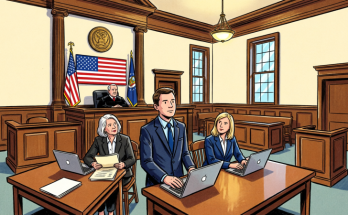
The trial didn’t take long.
The evidence was overwhelming: texts, bank transfers, burner phones, surveillance footage from the corner market where she’d actually been, not Target. Eric tried to play tough at first, trying to frame it as a misunderstanding, a “financial dispute,” a “messy personal situation.”
But when the jury heard my daughter’s recorded statement—her tiny voice describing a tall man with hollow eyes who put a finger to his lips and crept upstairs—the room went ice cold.
There are some truths that cut through everything.
A child’s fear is one of them.
Eric’s mask cracked. He shifted blame. He tried to paint my wife as the mastermind. My wife tried to claim she’d been manipulated, that Eric had pressured her, that she never meant for it to “go that far.”
But the paper trail didn’t care about excuses.
Her messages were there, plain as daylight.
I’ll fix it. Trust me.
Fix it.
As if my life was a problem to solve.
They were both convicted.
Sentenced to years behind bars. Years to sit in concrete rooms and stare at walls and replay the moment everything collapsed.
When the verdict was read, I didn’t feel triumphant.
I felt tired.
Justice doesn’t make you whole. It just stops the bleeding.
For months afterward, I had nightmares of that whisper.
Daddy, we have to get out right now.
Sometimes in the dream I ignored her. Sometimes the explosion came while we were still inside. Sometimes I woke up drenched in sweat, heart racing, grabbing for my daughter’s small hand like it might vanish.
But over time, the whisper changed in my mind.
It became less a nightmare and more a reminder.
My daughter had saved us.
Not the police. Not my instincts. Not luck.
Her.
Her raw, unfiltered sense that something was wrong. Her refusal to swallow fear for the sake of being polite. Her courage to tug my sleeve and insist on being heard.
We rebuilt slowly.
Not a new house—insurance money was tangled in investigations and legal holds and paperwork that moved at the speed of bureaucracy—but a new life.
A small apartment at first. New routines. New locks. Curtains we chose together. A nightlight in her room shaped like a star. A simple rule: if she felt scared, she didn’t have to justify it. She just had to tell me.
We went to therapy. Both of us.
My daughter drew pictures again, but now they were parks and sunshine and animals with big smiling faces, not shadowy men with hollow eyes. Sometimes she’d still wake up trembling and crawl into my bed, and I’d hold her until her breathing steadied.
One evening, months later, as the sun dipped low and painted the apartment walls gold, she sat beside me on the couch with her knees tucked up and her hair falling into her eyes.
“Daddy,” she asked softly, “are we safe now?”
I pulled her close, feeling the warm weight of her against my side, the realness of her existence.
“Yes,” I said, and my voice didn’t shake this time. “We’re safe.”
She hesitated. “Because mommy and Eric are… gone?”
The question hit like a bruise.
I chose my words carefully, because children deserve truth without terror.
“We’re safe,” I said, “because we listened to you. And because we told the truth. And because the people who wanted to hurt us can’t reach us anymore.”
She leaned into me, quiet for a moment.
Then she whispered, almost like she was testing it. “I saved us.”
“You did,” I said, kissing the top of her head. “You saved us.”
She smiled—a small, tired smile.
And in that smile I felt the final lesson settle into place, heavy and clear:
Betrayal cuts deepest when it comes from the people you love most.
But survival—real survival—is built on trust.
Even when that trust comes from the smallest voice in the room.
Especially then.
Because the smallest voice was the one that saw the truth first.
And because I will spend the rest of my life making sure she never has to whisper to be heard again.