Part 5
Two weeks later, Priya called me.
“Your father filed a civil claim,” she said.
My stomach dropped. “Against me?”
“Yes,” Priya replied. “Defamation. He’s claiming you ‘interfered with Chelsea’s career’ and ‘spread false information’ that caused financial damages.”
I let out a short laugh that sounded more like disbelief than humor.
“But it wasn’t false,” I said.
“I know,” Priya replied. “And that’s why this is a bluff. He wants to intimidate you. Drain you. Pull you back into fear.”
My jaw tightened. “What do we do?”
Priya’s voice stayed calm. “We respond. We demand discovery. And we use the truth.”
Discovery meant they’d have to open their lives to scrutiny—financial records, communications, sponsor agreements, internal messages. Things they’d hidden behind their perfect image.
My father didn’t want that.
He wanted me scared enough to fold.
Instead, I met Priya in her office and signed the paperwork to fight.
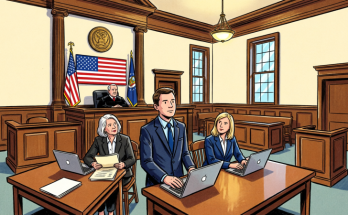
The first hearing was small and procedural. My father arrived in a suit that didn’t fit quite right anymore, face tight with rage and panic. My mother sat behind him, chin lifted, pretending this was righteous.
Chelsea wasn’t there.
She never showed up for things that required accountability.
The judge listened, unimpressed, and set dates for discovery.
Outside the courtroom, my father tried to step into my space, voice low and venomous.
“You think you’re clever,” he hissed. “You think you can destroy us and walk away.”
I didn’t flinch. Priya stood beside me like a wall.
“I’m not discussing anything without counsel,” I said.
My father’s eyes burned. “You’re nothing without us.”
Priya’s voice was cool. “Sir, step back.”
He stepped back, but his glare promised more.
Weeks passed. Discovery began.
Priya requested sponsor contracts, bank statements, internal correspondence—anything tied to Chelsea’s “career” and my father’s “business deal.”
And that’s when the real unraveling started.
Because my father’s deal wasn’t just a loan.
It was a web.
He’d taken money from multiple private investors under the promise of returns tied to Chelsea’s brand. He’d used the family home as collateral. He’d moved funds between accounts in ways that looked… questionable. He’d inflated projections. He’d disguised debt as income.
In short, he’d built a house of cards.
And my evidence—the sponsor proof, the screenshots, the backstage videos—wasn’t what destroyed him.
It was what exposed the shaky foundation he’d already built.
One of the investors, after seeing the discovery requests, demanded a full audit.
Then another.
Then the bank.
Suddenly, my father’s defamation suit wasn’t a weapon against me.
It was a spotlight.
And he was standing in it.
Priya called me one afternoon, voice sharp with controlled excitement.
“Allison,” she said, “we found something.”
“What,” I asked, heart pounding.
“A recorded email chain,” she replied. “Chelsea’s sponsorship manager warned your parents months ago that Chelsea’s behavior was a liability. Your father responded with—”
Priya paused.
“He responded with a promise to ‘handle it’ and asked if there was a way to ‘keep the sponsors quiet’ with ‘additional incentives.’”
My stomach turned. “Incentives?”
“Money,” Priya said simply. “Or favors. It implies bribery.”
A week later, the defamation suit collapsed. My father’s attorney withdrew, citing “irreconcilable differences.” Translation: he didn’t want to be dragged into the mess.
Then the bank accelerated foreclosure proceedings.
Then the investors filed claims.
Then, worst of all for my parents, the story leaked.
Not from me.
From the legal process itself, from records that became public, from people who finally realized the “perfect family” narrative had been a mask for a long time.
Local news picked it up: Regional pageant controversy linked to financial fraud investigation.
Chelsea’s name was suddenly attached to words like liability, misconduct, and scandal.
Sponsors didn’t just leave.
They ran.
My phone buzzed with unknown numbers for days. Reporters. Neighbors. People who wanted the story.
I didn’t answer.
I wasn’t interested in fame.
I was interested in freedom.
One evening, after a long shift, I sat in my apartment and realized something that surprised me.
I didn’t feel revenge anymore.
I felt closure.
Because what I’d truly ruined wasn’t their lives.
It was their lie.
And once the lie broke, their lives collapsed under the weight of what they really were.
Part 6
The call came at midnight.
A number I didn’t recognize.
I almost ignored it, but something in my gut told me it wasn’t a reporter.
When I answered, a small voice spoke.
“Allison?”
It took me a second to place it.
Then my chest tightened.
It was my aunt Marlene—my mother’s younger sister—the only relative who had ever tried to slip kindness into the cracks of my childhood.
“Marlene,” I said, voice cautious.
She exhaled shakily. “I shouldn’t call this late. I just… I need you to know what’s happening.”
I sat up straighter. “What happened?”
Marlene’s voice lowered. “Your dad got arrested.”
The room tilted.
“For what?” I asked.
“Fraud,” she whispered. “They raided his office. They took boxes. Chelsea’s sponsor manager is cooperating. Your mom is losing it. They’re saying you did this.”
A cold calm spread through me.
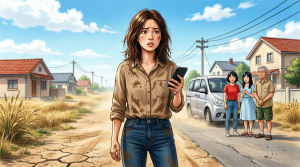
“No,” I said quietly. “He did this.”
Marlene’s breath hitched like she wanted to agree but was afraid.
“I know,” she said softly. “But they’re spiraling. And your father is blaming you for everything. He’s… he’s dangerous when he’s cornered.”
My grip tightened on the phone.
“Thank you for telling me,” I said.
Marlene hesitated. “Allison… are you safe?”
That question, simple and sincere, made my throat burn.
“I am,” I said. “I have a lawyer. I’ve documented everything.”
Marlene exhaled in relief. “Good. Because your mom is telling people you’re unstable. That you’re trying to extort them.”
I laughed once, bitter. “Of course she is.”
“They want sympathy,” Marlene said. “They want someone to rescue them again, and you’re not there.”
Silence stretched between us.
Finally, Marlene said, “I’m proud of you.”
I closed my eyes.
No one in my family had ever said that without strings attached.
“Thank you,” I whispered.
After the call, I sat in the dark, listening to the hum of my refrigerator and the distant city noise outside my window.
My father arrested.
My mother spinning lies.
Chelsea’s sponsors cooperating.
It was all bigger than the highway now.
And yet, it had started there.
Leg room.
That was what they’d used to justify leaving me in the dark.
Leg room, like my life was a minor inconvenience.
I thought of the shelter volunteer telling me I was safe. Of Jessa standing in front of my parents at the diner. Of Priya’s calm voice as she turned their intimidation into accountability.
Family wasn’t blood.
Family was who stood between you and harm.
The next week, Priya filed for a protective order based on the harassment, the intimidation, and my father’s escalating behavior.
The judge granted it quickly.
No contact.
No approaching my workplace.
No approaching my home.
The piece of paper didn’t heal anything, but it drew a line.
For the first time in my life, the line was on my side.
A month later, the foreclosure went through. My parents lost the house.
Chelsea moved out of state, trying to outrun her name.
My mother moved in with Marlene for a short time until Marlene—finally fed up—told her she couldn’t stay if she kept blaming me.
My mother left in a storm of accusations.
My father faced charges.
And I kept going to work.
I kept saving.
I kept building a life that didn’t require me to shrink.
One cold morning, as I walked to my car, my phone buzzed with a message from an unknown email address.
It was Chelsea.
You think you’re the hero.
I stared at the words for a long moment.
Then I typed one sentence.
I’m not the hero. I’m the survivor you tried to erase.
I didn’t send it.
I deleted it.
Because I didn’t need Chelsea to understand.
I didn’t need my parents to admit the truth.
The truth had already done what it does best.
It had surfaced.
It had shattered the mask.
And it had set me free.
Part 7
Two years after the highway, I stood in a small office wearing a blazer that fit me like it belonged to me.
Across the desk, a manager slid paperwork toward me.
“Congratulations,” he said. “Assistant manager position. Full-time. Benefits.”
My hands trembled slightly as I signed. Not because I was scared.
Because I was finally stepping into something I’d earned without anyone else taking credit.
That night, I went home and opened my window, letting cool air fill my apartment. I didn’t have much—still a small place, still cheap furniture—but it was mine. No one could throw me out of it.
I made tea and sat at my table, thinking about how revenge had changed shape over time.
At first, it had been a fire in my chest. A need to make them feel what I’d felt on the highway.
Then it became strategy.
Then it became accountability.
And now it was something else entirely.
A quiet, stubborn refusal to return.
My phone buzzed.
A voicemail from Marlene.
“Allison,” she said, voice gentle, “I don’t know if you want updates, but… your dad took a plea deal. He’s getting time. Not a lot, but enough that he won’t be running anyone’s life for a while.”
I listened twice, then set the phone down.
I didn’t feel joy.
I felt the kind of relief you feel when a storm finally passes and you can see the shape of the damage clearly.
A few weeks later, I got a letter in the mail.
Not from my parents.
From the court.
It was notification about restitution. Some of the money my father had taken improperly would be returned to investors. My name wasn’t on it. I wasn’t part of that case.
But enclosed was a second envelope.
A forwarded letter.
Chelsea’s handwriting.
I opened it slowly.
Allison,
I hate you for what happened.
I hate you for making them look bad.
I hate you for being the one who lived.
I read that line twice.
Then she wrote:
But sometimes I remember that night, and I can’t sleep. I tell myself it was just a joke. That you would’ve been fine. That you were dramatic.
But the truth is… I wanted you scared. I wanted you small.
And you didn’t stay small.
So I guess this is what happens when you don’t get what you want.
There was no apology.
There was no growth.
Just the raw honesty of entitlement.
I folded the letter and slid it into a folder labeled Evidence, not because I planned to use it, but because keeping truth was how I protected myself now.
Then I threw the envelope away.
Chelsea could keep her hate.
It didn’t belong to me.
On a Sunday morning, I drove out to the stretch of highway where it had happened.
I didn’t tell anyone. I didn’t make a dramatic pilgrimage. I just went, because part of me wanted to see it in daylight.
The shoulder looked smaller than my memory, the gravel less sharp, the road less endless.
But when I stepped out of my car, the cold air hit my face and my body remembered anyway—the fear, the numbness, the waiting.
I walked to the exact spot where I’d knelt.
Then I stood there and said out loud, quietly, as if speaking to that version of myself in the dark.
“You made it.”
The wind moved past me.
I didn’t cry.
I got back in my car and drove away.
Because the ending wasn’t returning to the trauma.
The ending was leaving it behind.
My parents lost their house. My father lost his freedom. Chelsea lost her image.
But the real thing they lost—the thing they could never replace—was access to me.
They had thrown me out for leg room.
Now they would live the rest of their lives with the space they demanded.
Empty.
And I would live with the space I fought for.
Mine.
THE END!
Disclaimer: Our stories are inspired by real-life events but are carefully rewritten for entertainment. Any resemblance to actual people or situations is purely coincidental.