“This is entirely standard operating procedure for a contested estate,” he said calmly, his voice a soothing balm over the phone line. “His lawyer is simply testing the structural integrity of the trust. He’s shaking the fence to see if any boards are loose.”
“Will it hold?” I asked, gripping the kitchen counter.
“Yes,” Thomas said with absolute, unwavering certainty. “If what you showed me in this office is the complete picture, it will hold against a hurricane.”
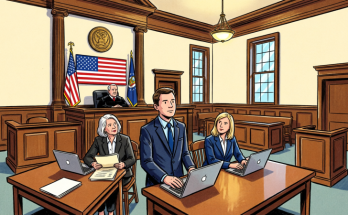
That word again. Hold. The first preliminary hearing was an exercise in bureaucratic tedium. We sat in a painfully plain, windowless courtroom with scuffed beige walls, humming fluorescent lights, and uncomfortable wooden benches. There were no television cameras eager for a scoop, no reporters furiously scribbling on notepads. There was just a bored-looking judge, two attorneys shuffling papers, a court clerk typing monotonously, and a handful of exhausted-looking people waiting for their own miserable cases to be called.
Daniel sat at the petitioner’s table across the aisle. He didn’t look at me when I walked in. He looked terrible. He looked pale, tired, and aged.
When our specific case docket was finally called, the judge—a stern woman in her fifties—adjusted her reading glasses and quickly skimmed the preliminary filing. Daniel’s high-priced attorney immediately stood up and aggressively argued that the Swiss trust had been secretively and maliciously structured in a way that unfairly, illegally limited his client’s rightful access to what should have been standard marital property inheritance under the strict laws of the Commonwealth of Virginia.
Thomas Reeves stood up slowly, buttoning his jacket. He responded steadily, without an ounce of theatrical outrage.
“Your Honor, the trust in question predates any relevant legal claim of the petitioner by over two decades,” Thomas said, his voice projecting easily through the quiet room. “It was legally, transparently established under international banking laws, properly and continuously funded by the decedent’s own capital, and explicitly referenced in the decedent’s final, notarized will. There is absolutely zero evidence of undue influence by my client.”
I sat in my hard wooden chair and listened to the clinical words without physically reacting. This wasn’t a passionate fight for a father’s legacy. It was a forensic audit.
The judge requested additional, heavily certified documentation from the Swiss bank and scheduled a follow-up hearing for the following month.
Outside the courtroom, in the echoing marble hallway, Daniel finally turned and spoke to me directly for the first time in weeks.
“You know you could end this entire circus today,” he said, his voice tight with stress.
“How, Daniel?” I asked, stopping to face him.
“Just split the damn money,” he hissed, glancing around to make sure no one was listening. “Settle it out of court.”
“It’s not mine to split,” I said, repeating the mantra I had internalized.
“It’s twelve million dollars!” he whisper-shouted, his eyes wide with desperation. “Nobody over there in Switzerland would know or care! You’re the trustee, you have the power!”
“That’s not true,” I replied softly. “Dad would know.”
Daniel shook his head in absolute disbelief, letting out a harsh, mocking laugh. “You’re turning him into a saint! You’re making him into something much bigger and nobler than he ever actually was!”
“No, Daniel,” I said quietly, looking at my broken older brother. “I’m finally discovering who he actually was.”
The next court hearing brought a mountain of translated documentation. Swiss banking certifications, decades of complex investment records, redacted statements of consistent disbursements to the anonymous beneficiaries. Everything was impeccably clean. Everything was flawless. Thomas handled the aggressive cross-examination from Daniel’s lawyer with the immense, infuriating patience of someone swatting away a persistent fly.
Then came the third appearance. And something entirely unexpected happened.
The four-star general appeared.
He didn’t make a grand, cinematic entrance through the double doors. He simply walked into the courtroom quietly before the session began, wearing an impeccably tailored civilian suit instead of his uniform, and took a seat in the back row behind us. He sat completely still until Thomas formally called him to the stand as a character witness.
The general walked to the witness box, swore the oath, and testified with a calm, terrifyingly grounded authority. There were no emotional theatrics. There was no grandstanding.
“I served with Mr. Turner for many years,” the general said, his gravelly voice commanding the absolute attention of everyone in the room, including the judge. “He was a man of unparalleled discipline, honor, and profound integrity. I was personally, intimately aware of his long-standing intention to establish a private, long-term financial support structure for specific, severely wounded service members.”
Daniel’s attorney, clearly sweating, tried to gently imply that the general, given his high rank, had somehow exerted undue influence over my father in pressuring him to create the charitable trust instead of leaving the money to his family.
The general didn’t raise his voice a single decibel. He simply looked at the attorney with eyes as cold as deep water.
“Counselor, no one on this earth influenced that man to do anything he did not already firmly believe was his moral duty,” the general said. “If anything, he was the one who influenced the rest of us.”
There was a palpable, immediate shift in the atmospheric pressure of the room after that sentence. True authority, when it is steady and unforced, carries immense, crushing weight.
After the general stepped down from the stand, the judge called for a brief recess to review the complete file in her chambers. The waiting was agonizing. When she finally returned to the bench and sat down, her ruling was swift, measured, and entirely devoid of emotion.
“I have reviewed the extensive documentation,” the judge stated, looking out over the courtroom. “The trust established in Geneva is entirely legally valid. It predates any alleged familial conflict by twenty years. There is absolutely no credible evidence of undue influence, coercion, or lack of transparency on the part of the decedent or the successor trustee.”
She looked directly at Daniel’s attorney. “The petitioner’s claim is dismissed with prejudice.”
Just like that. There was no dramatic slamming of a heavy wooden gavel. There was no triumphant applause from a gallery. There was just a quiet, administrative end. Dismissed.
Outside the courthouse, standing in the bright, unforgiving midday sun, Daniel didn’t speak to me at first. He stood awkwardly beside his massive truck, staring down at the cracked concrete pavement, his shoulders slumped in defeat.
“You really weren’t going to bend, were you?” he said finally, not looking up. “You really would rather let me lose publicly and pay tens of thousands in legal fees.”
“I didn’t make you file the lawsuit, Daniel,” I said gently.
He looked up at me then, squinting against the sun, and for the very first time since Dad died, the blinding anger seemed thinner, worn away.
“He really never trusted me,” Daniel said quietly, his voice cracking with a vulnerability that broke my heart.
“Daniel, that is not what this was about.”
“It sure as hell feels like it,” he whispered, wiping a hand across his mouth.
I didn’t argue with him. Because in some ways, in the cold, hard light of reality, he was absolutely right. Dad had trusted me with the oversight of millions of dollars and the lives of dozens of fragile families. He hadn’t trusted Daniel. But that didn’t mean he didn’t love Daniel. Trust and love are entirely separate currencies, and they are almost never distributed in equal measure.
“I am not your enemy, Daniel,” I said, taking a step toward him.
Daniel gave a tired, cynical half-smile. “Feels like you are.”
He opened the door of his truck, climbed in, and drove off before I could formulate a response, leaving me standing alone on the courthouse steps.
That night, I returned to the empty Norfolk house. I walked directly to the hall closet, moved the coats aside, and knelt in front of the small biometric safe bolted to the floor. I had found the override combination written backward on the inside cover of one of Dad’s old fishing notebooks a few weeks prior.
I punched in the numbers. The heavy steel door clicked open.
Inside the small, dark space, there were no hidden millions, no secret Swiss account numbers. There were exactly three items:
A perfectly, tightly folded American flag, encased in clear plastic from a ceremony held decades ago.
A faded, slightly water-damaged photograph of Dad standing with three other men. None of them were wearing military uniforms; they were in jeans and t-shirts, smiling broadly on a sunny dock somewhere.
And a small, yellowed piece of notepad paper, featuring his unmistakable block handwriting.
Steady wins. That was it. That was the entirety of his hidden treasure. There were no grand speeches written down, no lengthy instructions about how to exact revenge on greedy relatives, no philosophical musings on the nature of wealth. Just two words. Steady wins.
Daniel had lost the probate case publicly, yes. But far more significantly than that, he had permanently lost the comfortable, self-serving illusion that Dad’s quiet, frugal life meant he was a small, insignificant man.
The trust remained completely intact. The anonymous beneficiaries scattered across the country would seamlessly continue receiving their vital support checks without ever knowing a legal battle had threatened their survival. And I now held the full, unencumbered authority to shape exactly how the family portion of the trust would be handled.
But winning in a court of law felt significantly less satisfying than I had naively expected. It didn’t feel like a triumphant victory. It felt like a heavy responsibility had simply been legally confirmed. And responsibility, as my father knew better than anyone, isn’t loud. It isn’t boastful. It’s just steady.
Winning in court didn’t magically fix anything between my brother and me. It only settled the legal paperwork.
For a full week after the judge’s ruling, Daniel didn’t call. There were no angry text messages, no bitter emails. Just a profound, echoing silence.
I went back to my life. I returned to my job at the shipping logistics firm, filing compliance reports during the day, and spending my evenings working securely via encrypted channels with the Swiss office. I meticulously reviewed case files, ensured the next round of disbursements went out exactly on schedule—medical bills in Texas, tuition payments in Ohio, mortgage assistance in Florida. Life moved relentlessly forward, the exact way it always does.
But something deep inside my chest kept constantly returning to that one specific line in Dad’s handwritten letter. You don’t advertise help. You just provide it.
Daniel wasn’t one of the named, wounded veterans. He wasn’t a designated beneficiary. But he also wasn’t excluded from humanity. He was my brother.
I took a half-day off work and drove up the interstate to Richmond on a rainy Thursday afternoon.
Daniel’s townhouse complex looked exactly the same as it always did: slightly run-down. The grass in his tiny front yard was an inch too long, the paint on the trim was peeling, and the porch light bulb was burned out. His truck was parked haphazardly in the driveway.
I walked up the steps and knocked firmly on the door.
It took a minute, but he finally opened it. He was wearing sweatpants and a faded t-shirt, looking like he hadn’t slept well in a month.
“I figured you’d show up here eventually,” he said, not smiling, but not slamming the door either.
“Can I come in?”
He sighed heavily and stepped aside, gesturing into the dim interior.

The townhouse smelled like burnt coffee and old, damp carpet. On the kitchen counter, a towering stack of past-due bills and final-notice envelopes sat like a monument to his anxiety. I looked at the envelopes, but I didn’t make a comment.
We sat down opposite each other at his small, wobbly dining table.
“I’m not here to argue with you, Daniel,” I said, folding my hands on the table.
“Then why the hell are you here?” he asked, his posture defensive. “Come to take a victory lap?”
“Because this was never about winning.”
He gave a faint, deeply skeptical smile. “Sure felt like it was. You humiliated me in there.”
“I am not dissolving the trust, Daniel,” I said, establishing the baseline immediately. “That part is legally finalized and absolutely non-negotiable.”
“Yeah, I figured that out,” he muttered, looking away.
“But,” I continued, leaning forward slightly, “Dad built a specific provision into the legal framework for ‘family stabilization.’ It was designed to be highly structured, heavily controlled, and strictly accountable.”
Daniel slowly turned his head to look back at me, his eyes narrowing in suspicion. “So, what exactly does that mean for me?”
“It means I have the legal authority to allocate specific funds from the trust’s yield annually for you. But only if you explicitly agree to professional financial counseling and total oversight of those funds.”
His jaw tightened again, the familiar defensive wall slamming back into place. “You want to monitor my spending? Like I’m a teenager?”
“I want to prevent the cycle from repeating, Daniel. I want to actually fix the leak, not just keep bailing water out of the boat.”
“I’m not a child!” he snapped.
“No,” I said, keeping my voice perfectly calm. “You’re my older brother.”
The room went entirely quiet. The only sound was the hum of the refrigerator.
“I spent the last week reviewing all of Dad’s old financial records,” I continued softly. “He paid off your maxed-out credit cards twice. He covered the massive shortfall on your failed business loan. He provided the entire down payment for this exact townhouse.”
Daniel looked down at his hands, his anger suddenly deflating, replaced by profound shame. “He never made me feel small about it,” he whispered. “When he handed over the checks, he never yelled.”
“I am not trying to make you feel small now,” I said.
“Then why the insane conditions? Why the oversight?”
“Because he believed in setting boundaries, Daniel,” I said. “And so do I.”
Daniel stared blankly at the scarred surface of the table for a long time. “You really think I can’t manage my own money, don’t you?” he said, the hurt evident in his voice.
“I think you haven’t managed it successfully yet,” I replied. It wasn’t intended to be cruel. It was simply a statement of factual history.
He exhaled slowly, a long, trembling breath. “I just wanted him to be proud of me,” he said, the core truth finally spilling out onto the table. “I kept trying to build these big companies, to hit the jackpot, so I could show him I was a success. So he would finally look at me the way he looked at you.”
“I know, Daniel,” I said gently. “But he never said it to me, either. He wasn’t a man of affirmations.”
“But he showed it!” Daniel argued, looking up, his eyes glassy with unshed tears. “You got the trust. You got the keys to the kingdom. That says enough.”
“No,” I corrected him softly. “It says he trusted me to protect it. That is a completely different thing than love. He loved you enough to keep bailing you out. He loved you enough to build a safety net into the trust specifically for you, even knowing you would fight it.”
We sat there in the dim light for a long, heavy moment, the ghosts of our childhood hovering in the air between us.
“I am officially offering you this, Daniel,” I said, laying out the terms clearly. “A structured, aggressive debt repayment plan. A certified financial advisor, paid for by the trust, who you will meet with monthly. A capped, monthly distribution that goes directly toward your living expenses, strictly tied to your measurable progress. No massive lump sum payouts. No blank checks. No ‘investment capital’ for new business ideas.”
“And if I tell you to go to hell and say no?”
“Then absolutely nothing changes,” I said evenly. “You handle those bills on the counter yourself.”
He nodded slowly, processing the reality of his situation. “You’d really just walk away and let me sink?”
“I already walked away once,” I reminded him. “In the courtroom. That wasn’t out of revenge, Daniel. It was reality. I will protect the trust.”
Daniel leaned forward, resting his elbows heavily on the table and rubbing his temples. “I don’t want to be the pathetic guy who sued his own sister over money,” he confessed, his voice thick.
“Then don’t be that guy,” I said.
He gave a short, tired laugh, finally looking at me with a shred of genuine affection. “You always talk exactly like Dad.”
“I learned from the best.”
We spent the entire next hour sitting at that wobbly table, reviewing his brutal, unforgiving numbers. We tallied what he owed, what his interest rates were, and what it would realistically take to stabilize his financial situation over a grueling five-year plan instead of seeking a magical one-night fix. It wasn’t glamorous work. There were no tears of joy, no hugging, no cinematic breakthroughs. It was just spreadsheets, hard truths, and the agonizing implementation of discipline.
When I finally stood up to leave, the sun had gone down. Daniel walked me to the front door, pausing with his hand on the knob.
“You really flew all the way to Switzerland?” he asked, as if the reality of it was finally sinking in.
“Yes.”
“And he really built all that? Secretly? Just… helping guys out?”
“Yes, he did.”
Daniel shook his head slowly in awe. “I always thought he was just this small, boring man,” he admitted softly.
“He wasn’t,” I said.
Neither of us said anything more.
As I drove my car through the dark, rain-slicked streets back to Norfolk, I realized something incredibly important. Revenge, or winning a fight, isn’t always about completely crushing the person across from you. Sometimes, true victory is simply about refusing to let resentment dictate the final outcome. Daniel had aggressively tried to force the trust open with a sledgehammer. Instead, he was now voluntarily stepping into a rigid structure. Not because I had successfully humiliated him in court, but because I hadn’t let that humiliation be the end of the story.
Dad had lived his life quietly, deliberately. And sitting in the driver’s seat, watching the highway lines blur past, I was finally beginning to understand exactly why.
A full year after the local judge had dismissed Daniel’s probate claim, the two of us stood shoulder-to-shoulder at Arlington National Cemetery.
We weren’t there because the legal trust required a ceremonial visit. We weren’t there because a lawyer or a general asked us to be. We were there simply because it felt like the right thing to do.
The white marble headstone looked exactly the same as it had on the freezing day the general had approached me and told me to fly to Geneva. It was clean, simple, and unadorned. There was no extra, flowery inscription added to the bottom, just his name, his rank, and the stark dates of his birth and death. Dad never liked unnecessary decoration in life, and he certainly wouldn’t have wanted it in death.
Daniel had visibly aged in those twelve months, but not in a physical, deteriorating way. He had aged in his posture. The frantic, anxious, sharp edge that used to define him had noticeably softened. He stood straighter, grounded. He had successfully, if painfully, completed his first full year of intensive financial counseling. Working with the trust’s advisor, he had managed to pay down nearly half of his crushing consumer debt. He had swallowed his immense pride and sold the massive, gas-guzzling second truck he didn’t need. He had methodically closed the high-interest credit lines that used to feel like essential lifelines but were actually anchors dragging him under.
He hadn’t magically become a perfect, flawless person. He still had bad days, moments of frustration. But he had become steady.
The offshore trust, meanwhile, continued operating exactly, flawlessly, as Dad had designed it. Medical payments were wired out quarterly. Two children of former SEAL teammates had successfully started their freshman years of college that fall, their tuition fully covered. A young widow in Texas had kept her family home because her ballooning mortgage was quietly, anonymously brought current by a shell company operating out of Geneva.
There were no flashy press releases sent to news organizations. There were no black-tie foundation galas with wealthy donors clapping for themselves. There was just the steady, relentless application of help where it was needed.
Daniel stood with his hands deep in his coat pockets, glancing sideways at the marble headstone.
“I really used to think he was just holding out on us,” Daniel said, his breath pluming in the crisp air.
“He was holding something,” I replied, looking at the carved letters of Dad’s name. “Just not what we selfishly thought.”
Daniel nodded, a slow, contemplative movement. He turned his head to look at me. “Do you ever… do you ever wake up and wish you’d just split it? Taken the millions and walked away?”
“No,” I answered immediately, without hesitation.
He looked at me carefully, searching my face for a lie. “Even back when I sued you? Especially then?”
“Especially then,” I confirmed.
That earned a small, genuine smile from my older brother. We stood there together for a while longer in the comfortable silence. The wind moved the small flags planted in the grass the exact same way it had on the day of the funeral. Some things, the important things, don’t change. They don’t need to.
Before we finally turned to leave the cemetery and walk back to our separate cars, Daniel cleared his throat awkwardly.
“I was wrong,” he said, staring at the grass. “About him. And… about you.”
“I know, Daniel,” I answered softly.
He didn’t say anything more. He didn’t need to. The apology was accepted, the slate wiped as clean as it was ever going to be.
On the long drive back down to Norfolk, I thought about the very first time I had opened Dad’s handwritten letter in that quiet, wood-paneled office overlooking the gray waters of Lake Geneva.
Money changes how people listen. He was absolutely right. For a few ugly, chaotic months, Daniel had only been able to hear the sound of the numbers. And if I was being completely, brutally honest with myself, so did I. Hearing that you have sudden control over twelve million dollars can make your pulse quicken and your imagination run wild with selfish possibilities.
But over time, the intoxicating allure of the raw number had faded into the background. What remained, solid and immovable, was the structure. The crushing responsibility. The legacy. Dad hadn’t left me wealth so I could enjoy a life of leisure and luxury. He had left me a rigorous standard to maintain.
There were definitely nights over the past year when I had felt utterly overwhelmed sitting at my kitchen table. The endless legal paperwork, the complex oversight of international wire transfers, the heavy, agonizing decisions about who exactly qualified for medical assistance and how much capital to release from the reserves. But every single time I felt the exhaustion creeping in, every time I felt tempted to simplify it, to sell off the assets, to reduce the complexity and turn his profound legacy into something easier and smaller to manage… I thought about the way he had lived his life.
No medals displayed on the wall. No boasting war stories. Just quiet, relentless, unyielding steadiness.
Daniel now meets voluntarily with his financial advisor once a month. He emails me his progress updates and budget spreadsheets voluntarily, not because I demand them as his trustee, but because he actively chooses to share them with his sister. We still disagree sometimes. We still argue. We still have decades of complicated history between us, but we no longer have a mountain of toxic resentment sitting squarely at the center of the table.
The Geneva trust will continue long, long after I am eventually gone. It is legally structured that way. The Swiss office has impenetrable succession protocols, legal safeguards, and redundant layers of administrative review. Dad didn’t think in terms of months or even years; he thought in decades. He thought generationally. That’s a concept I simply didn’t possess the maturity to understand when I was younger.
I used to think that loud, visible success was what mattered most in the world. Bigger houses, faster corporate promotions, public recognition, the admiration of peers.
Now, sitting in the quiet of my life, I see it entirely differently.
Steady wins.
If you have ever sat alone at a scarred kitchen table the day after a funeral, surrounded by the physical detritus of a life, and wondered what someone really left behind in this world, you know exactly what I mean.
It is rarely just the money in the bank. It is the patterns they laid down. It is the discipline they maintained in the dark. It is the silent, enduring example you ultimately choose to either follow or reject.
My father was a retired Navy SEAL. There were no shiny medals hung on his living room wall, no glorious stories told to wide-eyed children. He lived his life quiet, and he died the exact same way. But he didn’t leave this world quietly. He left behind a fortress of instructions. He left behind a lifeline for people walking in the dark.
And, most importantly of all, he trusted me enough to follow them.