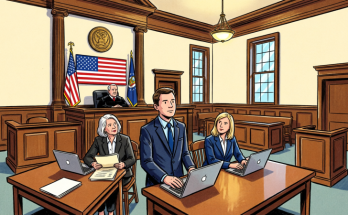
He tried to get ahead of the story, which is what guilty men do when they sense the tide turning. He stood behind a podium with the Ironvale logo gleaming, cameras aimed, reporters crowding.
He delivered a rehearsed statement about “commitment to transparency” and “unfounded allegations.”
Then the questions started.
“Mr. Lair,” one reporter asked, “can you explain the payments to the consulting firm Lumisphere Analytics, which doesn’t appear to exist as a registered entity?”
David’s smile twitched.
Another reporter: “Is it true city planners were compensated through third-party contractors linked to your development permits?”
David’s voice tightened.
And then the fatal blow:
“Have you seen the leaked Ironvale audit report?”
David’s eyes flashed with panic.
Because yes—while he was preparing his press conference, my team had published it.
Not as a rumor. Not as gossip.
As documents. As evidence. As a file too heavy to deny.
By end of day, Ironvale stock had crashed twenty-three percent in three hours.
Sponsors pulled out. Partnerships died mid-signature. Investors demanded answers. Employees—people who had nothing to do with David’s bribery—showed up to work with dread in their stomachs.
David called me five times. His voicemail went from furious to pleading to empty.
Marissa sent a second email. Then a third. Each one more desperate, the polite veneer slipping.
I ignored them all.
Because the truth was, the reunion had never been the real battlefield.
It had been the opening scene.
The real fight was always going to happen somewhere quieter.
Somewhere private.
Where no one could hide behind chandeliers and applause.
So I sent one final invitation.
A private dinner.
Just the three of us.
Marissa arrived first.
No diamonds this time. No glowing confidence. She wore a simple dress, expensive in its understatement, but it couldn’t mask the tremor in her hands. She sat rigidly at the table in the private room of a downtown restaurant and glanced around as if expecting cameras.
There were none.
David followed ten minutes later, jaw clenched, fidgeting with his cufflinks. His suit was still expensive, but he wore it like a man trying to remember how to breathe while drowning.
“What do you want, Daniel?” Marissa asked immediately, voice sharp with fear disguised as anger.
I didn’t answer right away.
I placed a sleek black box on the table and slid it toward them.
David stared at it like it might bite. Marissa’s fingers hovered, then pulled back.
“Open it,” I said.
David hesitated. Marissa glared at him, then reached forward and lifted the lid.
Inside was a framed photograph.
A high school photo.
Me, pants soaked, face red, eyes wide with humiliation.
Marissa beside me, laughing.
David—twenty years younger, just a boy then—smirking in the background.
The air in the room shifted. Even the soft restaurant lighting couldn’t warm it.
“I used to think this was the worst day of my life,” I said quietly.
Neither of them spoke. They couldn’t.
“Now,” I continued, “it’s the reason I built everything.”
Marissa swallowed, eyes fixed on the photo as if it were evidence of a crime scene.
“I’m not here for revenge anymore,” I said. “I’m here for the final deal.”
David blinked. “Deal?”
I smiled slowly.
“One signature from you,” I said, “and your entire company belongs to me.”
Marissa gasped aloud, hand flying to her mouth.
David’s face hardened. “That’s insane.”
“Is it?” I asked gently. “Your stock is tanking. Your investors are spooked. Your permits are under federal scrutiny. You have a lawsuit swarm coming that will tear Ironvale apart whether you fight it or not.”
David’s jaw worked as he swallowed. His eyes kept flicking to the framed photo, unable to look away.
“What happens if I don’t sign?” he asked, voice quieter now.
I leaned forward, calm enough to be terrifying.
“Then tomorrow morning,” I said, “the SEC gets my complete file. The IRS gets the financial tracing. Your largest investors get the internal emails.”
Marissa’s face went paper-white. “You won’t get away with this,” she muttered.
I looked at her with something that surprised me: pity.
“Marissa,” I said softly, “you got away with it for twenty years.”
Her lips trembled.
“I’m just catching up,” I finished.
David stared at the pen I placed on the table as if it weighed a thousand pounds.
“Don’t do it,” Marissa hissed. “This is—David, don’t—”
But David was already breaking. His confidence had been built on the belief that consequences could be bought off. That everything could be smoothed with a handshake, a donation, a PR statement.
This wasn’t PR.
This was gravity.
His hand trembled as he picked up the pen.
The moment the ink touched paper, I felt something unclench in my chest—something I’d carried since seventeen that I hadn’t even realized was still knotted.
Closure.
Not because he’d suffered. Not because Marissa looked broken.
Because the world had finally acknowledged what had been done.
David signed slowly, reluctantly, but fully.
I slid the signed contract into my briefcase and stood.
“Enjoy the rest of your evening,” I said.

Marissa shot up, panic breaking through her bitterness. “Wait—Daniel. What do you even want with Ironvale?”
I paused at the door and looked back.
“Nothing,” I said.
Her eyes widened. “Nothing?”
“I’m dismantling it,” I said, voice flat. “Piece by piece. Starting Monday.”
Marissa’s knees buckled. She grabbed the edge of the table to stay upright.
David didn’t move. He just stared into his empty glass as if his reflection had betrayed him.
I left them there in the private room, the framed photo between them like a mirror they couldn’t escape.
Back at my apartment, I placed that old high school photo on a shelf beside the signed contract.
The boy in the picture was gone.
And the man standing in his place had just ended a dynasty.
But there was one person I hadn’t faced yet.
The person whose voice had shaped my life long before Marissa ever did.
My father.
The man who told me I’d never be enough.
The man who mocked me for reading, who called my sensitivity weakness, who treated my quiet like a defect.
He’d never come to the reunion. He wouldn’t step into rooms where he couldn’t control the narrative.
So I went to him.
I didn’t call.
I didn’t warn him.
I drove across town to the small, cracked house he refused to leave, the one I’d offered years ago to renovate when my company first started taking off. He’d called it a waste on a failure like me.
The neighborhood was quieter than I remembered, trees taller, sidewalks more broken. The house itself looked smaller, like time had been shrinking it while his pride kept him trapped inside.
I walked up the steps. Each one creaked under my weight, the wood worn thin from decades of stubborn footsteps.
I knocked.
There was a pause, shuffling, the sound of a deadbolt.
Then the door opened.
My father stood there, older than I’d expected. His shoulders had sagged. His eyes were still sharp, but the cruelty in them had dulled into something more complicated—regret, maybe, or exhaustion.
He looked me up and down as if searching for the boy he remembered.
“I saw you on TV,” he said finally, voice rough. “Didn’t think it was real.”
“It’s real,” I replied.
He glanced past me, expecting bodyguards or cameras or some performance of wealth.
I’d come alone.
His mouth tightened, and for a second his face twitched with something like shame.
“I didn’t mean what I said back then,” he muttered. “I was just angry.”
He stepped back slightly, letting the door open wider, not quite inviting me in, not quite blocking me.
“You were always quiet,” he continued, words stumbling out as if he wasn’t used to saying them. “Sensitive. Not like your sister.”
I studied him.
This man had been my first bully. Not loud like Marissa, not theatrical. Quietly disappointed. Quietly dismissive. The kind of cruelty that sits at the dinner table and calls it “tough love.”
“You told me I’d amount to nothing,” I said, calm and clear.
He looked away.
“We all make mistakes,” he said.
Mistakes.
That word again. The blanket word people use to smother accountability.
I reached into my jacket and pulled out an envelope.
It looked ordinary—cream paper, sealed.
His eyes flicked to it.
“This is the deed to this house,” I said. “I bought it last year.”
His face twitched with surprise.
“You can stay here rent-free for life,” I continued.
He stared at me as if he didn’t know what to do with kindness that came without strings.
Then I added, “On one condition.”
He swallowed. “What condition?”
“You never call me your son again,” I said.
His mouth opened, then closed.
“Not to the neighbors,” I continued, voice steady. “Not to the press. Not even to yourself.”
His eyes widened, hurt flaring. “Daniel—”
“I’m not doing this out of bitterness,” I said quietly. “I’m doing it because I’m done being shaped by your expectations. I’m done being the version of myself you could tolerate.”
He stood there, silent, hands gripping the doorframe.
For a moment, I saw the man beneath the disappointment—a man who had been raised to believe softness was failure, who had passed that poison on because he didn’t know any other language.
But understanding someone doesn’t mean you hand them your throat.
I slid the envelope into his hand.
He held it like it weighed more than paper.
I turned.
And I walked away.
Behind me, the door remained open, but he didn’t step out. He didn’t call after me. He didn’t apologize.
Maybe he couldn’t.
Outside, the air felt different—lighter, like my lungs were finally learning a new rhythm.
In my pocket was a letter I’d written to myself five years ago when I was broke and alone, sleeping on a mattress on the floor of a studio apartment, wondering if any of it would ever be worth it.
I’d titled it: For When You Finally Win.
That night, back in my apartment, I opened it.
My handwriting on the paper looked younger, shakier.
I read the words I’d written to my future self—warnings, reminders, promises.
Don’t let success turn you into them.
Don’t confuse power with cruelty.
Remember the kid in the photo. Protect him.
And when you finally have the chance, choose peace over applause.
I sat there for a long time with the letter in my hands.
Then I smiled.
Because I had won.
Not in the way Marissa would define winning—not with diamonds and public performances and a crowd clapping.
I had won in the only way that ever mattered.
I had walked back into the room that once made me small and I had stayed standing.
I had taken the humiliation that shaped me and turned it into a weapon against the system that loves bullies.
I had faced the people who wrote my pain into my history and rewritten the ending.
And for the first time in my life, the silence inside me wasn’t empty.
It was calm.