Part 6
The morning of the C-section, the hospital smelled like antiseptic and nerves.
David arrived with another bouquet of white roses. His hands were damp when he took mine. His smile shook at the edges.
“Today,” he said, “we finally meet our boys.”
Our boys.
The words sounded stolen.
Linda came too, dressed like she was attending a wedding. She kissed my cheek with cold lips and said, “Everything will be fine.”
I let the nurses lead me away before I could say what I really wanted: Not because of you.
In the operating room, bright lights glared down like interrogations. My lower body went numb with anesthesia. Dr. Reyes stood above me, calm and focused.
“You’re doing great,” she said.
Then came pressure. Tugging. A pause.
A cry sliced through the air—loud and furious, like a tiny person demanding to be taken seriously.
My whole body shook with relief.
“Baby A,” Dr. Reyes said, smiling. “Strong lungs.”
A second cry followed less than a minute later. Just as loud. Just as determined.
“Baby B,” she said, and her voice warmed. “Look at that. He’s just as strong.”
I sobbed, unable to stop. They held them up for a moment—two tiny, wrinkled faces, two pairs of clenched fists.
My sons.
Alive.
Both of them.
Back in my recovery room, David hovered, pale, pretending joy. Linda stood beside him, her smile stretched too tight.
“When can we see them?” Linda asked immediately.
“After they’re checked,” I said, voice weak but steady.
A nurse stepped in, professional and firm. “Visiting hours are limited. Mom needs rest.”
Linda bristled, but she didn’t argue. Not with hospital staff.
For the first time in weeks, I felt safe behind the authority of people who didn’t care about Linda’s opinions.
When the babies were brought to me for feeding, I held them carefully, overwhelmed by the weight of them. Two warm bundles. Two tiny mouths. Two lives I’d almost lost.
My mom and Jessica visited later, smiling through tears. They watched my boys through the nursery glass like it was sacred.
“What are their names?” my mom asked softly.
I hadn’t told David my new choice yet, because it didn’t belong to him anymore.
“Ethan,” I said, touching the first baby’s tiny hand. “And Matthew.”
Jessica grinned. “Strong and gift,” she said. “Perfect.”
David came the next day with a twin stroller brochure, talking about cribs and schedules and “our future” as if he hadn’t tried to erase it.
I nodded. I smiled. I played the part.
Because timing mattered.
When discharge day came, my mom and Jessica arrived early with the car seats and paperwork. The boys were bundled in matching blue outfits. My body ached from surgery, but my mind felt sharper than it had in months.
Then David walked in with the white roses.
He froze when he saw the babies in their seats, my mom holding the diaper bag, Jessica standing like a guard.
“What’s going on?” he asked. “I thought we’d go home together.”
I looked at him, and for a moment I saw the man I’d married—the man I’d wanted to believe in.
Then I remembered the floor. The darkness. Linda’s voice telling him not to call.
“We’re not going home together,” I said.
His face tightened. “Emily—”
“I know everything,” I said, voice quiet but clear. “About Anna. About the plan to stay until the birth and then leave. About the medication in my system. About what you and your mother discussed.”
David went pale. “You’re—this is—”
“Don’t,” Jessica snapped. “Don’t try to gaslight her. Not today.”
My mom stepped forward, calm as a blade. “You will not take her anywhere,” she said. “You will not touch the babies. If you cause a scene, we call security and the police.”
David’s jaw clenched. “They’re my children.”
“You tried to make sure they weren’t,” I said.
He flinched, like the truth had a physical impact.
I pulled a folder from the diaper bag—the preserved lab results, Dr. Reyes’s notes, Anna’s written statement, the saved email.
“I have evidence,” I said. “And I have witnesses. If you come near us without permission, I use it.”
David stared at the folder like it was a weapon. His eyes darted to my mom, to Jessica, to the nurse in the hallway who had paused to watch.
For the first time, he looked genuinely afraid.
His voice dropped. “What do you want?”
“A clean separation,” I said. “And distance.”
Linda wasn’t there. Maybe she sensed the storm. Maybe she was waiting outside, assuming she’d still win.
David swallowed hard. Then, in a voice that sounded like defeat, he said, “Fine.”
He stepped aside.
I didn’t thank him.
I didn’t comfort him.
I left with my sons, my mother, and my best friend into a bright spring day that smelled like blooming trees and second chances.
Part 7
The first week after leaving the hospital felt like living inside a hurricane made of diapers, feeding schedules, and adrenaline.
My mom’s rented apartment became our safe house. Two bedrooms, thin walls, a kitchen that always smelled faintly of laundry detergent. We set up cribs in the bedroom and a rocking chair by the window where the morning light pooled like honey.
I slept in short bursts, waking at every squeak, every sigh. I learned the difference between Ethan’s hungry cry and Matthew’s annoyed cry. I learned how to swaddle with one hand while holding a bottle with the other. I learned that fear can sit in your chest even when everything is finally quiet.
David texted. At first it was apologetic.
Can I see them?
I’ll do anything.
Please talk to me.
Then it shifted.
You can’t keep my sons from me.
My mom didn’t do anything.
You’re making this bigger than it is.
That was when Jessica said, “Okay. Enough.”
The attorney Jessica found moved fast. We filed for emergency temporary custody, citing medical evidence and risk of harm. Dr. Reyes provided documentation. Dr. Kim agreed to verify the lab findings. Anna gave a sworn statement. The neighbor who called the ambulance described hearing a thud, then silence, then my weak cries through the door.
The judge granted a temporary protective order within days. David was allowed contact only through attorneys. Visitation, if any, would be supervised pending investigation.
Linda showed up once—outside the building—wearing sunglasses and righteous fury. She didn’t get close. My mom called the police. Linda left before they arrived, but the message was clear: she still believed she could intimidate her way into control.
The detective assigned to our case—a woman named Sergeant Alvarez—interviewed me in my mom’s living room while Ethan slept on my chest and Matthew sprawled on a blanket like he owned the world.
Alvarez didn’t promise miracles. She asked precise questions. She collected copies. She spoke to the hospital. She spoke to Anna. She spoke to David.
When David was confronted with the email, he claimed it was “fantasy,” “stress,” “not serious.” When confronted with the lab results, he said I must have taken something without remembering.
Linda claimed I was vindictive. She called me unstable. She insisted I’d always “hated her” and now I was trying to punish her.
Alvarez listened and then said, flatly, “Medical evidence doesn’t care what you insist.”
The criminal case moved slower than the custody case, because proving exactly who administered the drug was hard. But the pattern mattered: the refusal to call an ambulance, the abandonment, the affair, the timing, the medical findings. The judge in family court didn’t need a criminal conviction to decide what was safe for the children.
David’s supervised visitation was offered—two hours a week at a monitored center.
He refused.
Not because he didn’t want to see the boys.
Because it wasn’t on his terms.
That refusal told me everything I needed to know.
Over the following months, the divorce unfolded like a slow, ugly unmasking. David tried to negotiate quietly at first, offering money, offering apologies, offering promises that sounded rehearsed.
Then the emails came out in discovery. More than one. Messages between David and Linda, discussing “options.” Messages with Linda’s casual cruelty. Messages with David’s cold compliance.
The court saw them.
So did I.
One afternoon, after a hearing, David approached me in the hallway. Security stood nearby, but he leaned in anyway, eyes frantic.
“You’re ruining my life,” he hissed.
I stared at him, exhausted, holding Matthew in a carrier and a diaper bag over my shoulder.
“You ruined your own life,” I said quietly. “I’m just not letting you ruin mine.”
He opened his mouth like he wanted to argue, but no sound came out.
Because there was nothing left to defend.
In the final decree, I was granted primary custody with strict conditions: no unsupervised contact, no contact with Linda, mandatory therapy and parenting classes if David ever wanted a chance at expanded visitation.
Linda was formally barred from contact with my children.
A piece of paper can’t erase fear, but it can build a fence.
A year passed. Then another.
David faded into the distance the way people do when they lose control: slowly, bitterly, inevitably. Linda sent one letter through her attorney that was mostly accusations. My lawyer filed it away and told me not to respond.
I didn’t.
My energy belonged to my sons.
Part 8
On Ethan and Matthew’s second birthday, my mom baked two small cakes—one with blue frosting, one with green—because she said even twins deserve their own spotlight. Jessica decorated the living room with balloons and a banner that read HAPPY BIRTHDAY, and my boys toddled around in sock feet, laughing like the world had never tried to break us.
Watching them, it was hard to connect this life to the hospital ceiling crack, the beeping monitors, the cold terror of hearing only one heartbeat for a moment in the night.
But I remembered.
I remembered because forgetting felt dangerous.
I moved back into my own place when the boys were one. A small townhouse with a fenced yard and a kitchen big enough for chaos. I went back to work part-time at first, then full-time, taking editing projects from home. My company made accommodations. My life became a careful structure of schedules and support and small victories.
Some nights, after the boys went to sleep, I sat on the porch with tea and listened to the quiet. The quiet used to feel like loneliness. Now it felt like safety.
David tried to come back into the picture once, about six months after the divorce was finalized. He filed a request to revisit visitation terms, claiming he’d “changed.” He showed up to the hearing with a new haircut, a new girlfriend, and the same underlying entitlement.
The judge asked for proof of completed therapy and parenting classes.
David didn’t have it.
He blamed “work.”
He blamed “stress.”
He blamed me, indirectly, by describing how “hard” everything had been.
The judge denied the request.
That was the last time I saw him in person.
Linda never tried again, not directly. The court order and the threat of arrest did what my politeness never could: it shut her down. In a strange way, that was the final lesson. Some people interpret kindness as weakness until the law arrives like a locked door.
The “secret” I learned in that hospital—the twins—turned into the greatest, loudest, most exhausting gift of my life. Ethan became the one who ran toward everything. Matthew became the one who watched first and then sprinted like he’d been saving his energy for the perfect moment. They looked identical to strangers, but to me they were as different as sunrise and thunder.
One evening, near the end of summer, I took them to the beach.
It wasn’t dramatic. Just sand, a cheap umbrella, a cooler with fruit and juice boxes. My mom sat nearby, building lopsided sandcastles. Jessica arrived later with a bag of chips and a laugh that carried over the wind.
Ethan dashed to the water and squealed when the waves touched his feet. Matthew held my hand tighter, cautious, eyes tracking everything.
I watched them and thought about that dream I used to have in the hospital—the two figures on the horizon, one fading, one disappearing, my helpless panic.
That dream never came back.
Instead, I had a new one: my boys running, alive, solid, leaving footprints that the tide couldn’t erase fast enough.
As the sun lowered, painting the water orange, my phone buzzed with an unknown number. For a split second, my body tightened the way it always did when the past tried to reach through the present.
I looked.
It was nothing important. A spam call.
I put the phone back in my bag and exhaled. I didn’t realize until that moment how many months it had been since I’d felt real fear of David and Linda. Not because the risk magically disappeared, but because my life had grown stronger around it, like a scar that no longer splits open.
When we packed up to leave, Ethan was sticky with sand and joy. Matthew was sleepy, head on my shoulder.
My mom walked beside me, steady. Jessica followed, chatting about nonsense, the kind of nonsense that only happens when life is normal.
I thought of the version of myself from that night at the apartment—the one who begged for an ambulance, the one who heard “she’s pretending,” the one who went dark and almost didn’t come back.
If I could speak to her now, I wouldn’t tell her everything will be okay, because that’s too simple and too false.
I’d tell her something truer:
You will survive this.
You will see your children’s faces.
You will learn that the people who tried to control you were never the center of your story.
You were.
And as I buckled my sons into their car seats and closed the doors, I looked at them—two small, miraculous lives—and I knew the ending with complete certainty.
Linda didn’t get to write my story.
David didn’t get to rewrite it.
They tried to take my babies from me, and instead, they lost access to our lives.
I drove home with the windows down, the air warm and salty, my sons humming to themselves in the backseat, and for the first time in a long time, my future didn’t feel like something I had to fight for.
It felt like something I finally owned.
Part 9
Two weeks after the beach day, Sergeant Alvarez called while I was wiping peanut butter off Matthew’s cheek and trying to stop Ethan from feeding crackers to the dog I didn’t even own.
“Emily,” Alvarez said, her voice steady, all business. “I wanted to give you an update.”
I didn’t sit down, even though my knees suddenly felt weak. I learned early that news about David and Linda never arrived gently.
“Okay,” I said, keeping my tone calm for the boys. “I’m listening.”
“We ran additional checks on the medication exposure,” she said. “It’s complicated, but we found something we didn’t have before.”
My heart thudded once, hard. “What?”
“A pharmacy purchase,” Alvarez said. “Not in your husband’s name.”
I pressed my palm against the counter. “Linda.”
Alvarez paused, just a beat. “Yes. Linda.”
The kitchen felt too bright. The ceiling fan clicked quietly. Ethan babbled to himself, blissfully unaware that my past had just shoved the door open again.
“How?” I whispered.
“We subpoenaed records after your hospital lab results were preserved,” Alvarez said. “We matched dates. A local pharmacy filled a prescription for misoprostol under Linda’s name two days before your collapse. We also pulled surveillance footage.”
My mouth went dry. “And it’s her.”
“It’s her,” Alvarez confirmed. “Clear enough to identify.”
I closed my eyes for a moment. Relief and fury tangled together. Relief that it wasn’t all smoke. Fury that it was real.
“What happens now?” I asked.
“There’s enough to move forward,” Alvarez said. “At minimum: reckless endangerment, tampering, assault. Potentially more, depending on the DA’s decision and how they frame harm to a pregnant person.”
I swallowed hard. “And David?”
Alvarez exhaled. “David’s more complicated. We don’t have him on the purchase, but we have your statements, the abandonment, the email, and Anna’s testimony about the conversation. We’re interviewing him again. We’re also looking at whether he had access to administer it.”
My fingers tightened around the phone. “He did,” I said quietly. “He brought me drinks. He was with me all night.”
“I know,” Alvarez said. “We’re building the timeline carefully.”
After the call, I stood in the kitchen for a long time while my sons made joyful chaos at my feet. Their laughter should’ve brought me peace. Instead it reminded me of how close I’d come to never hearing it.
That evening, I told my mom and Jessica. My mom’s face did something I hadn’t seen in years: it went blank. Not numb. Focused. The way it looked when she handled something that couldn’t be handled with kindness.
Jessica said, “So it’s finally catching up to her.”
“Maybe,” I said.
My mom reached across the table and squeezed my hand. “Whatever happens,” she said, “you already won. Your boys are here. You’re here.”
I nodded, but my stomach still churned.
Because winning didn’t mean safe. Winning didn’t mean they stopped trying.
Three days later, my attorney called with a warning.
“David’s filed another motion,” she said. “This time he’s requesting unsupervised visitation.”
I actually laughed, a sharp sound that startled even me. “On what planet?”
“He’s claiming you’re alienating him,” she said. “He claims the supervised center is ‘humiliating’ and that he’s ‘proved stability’ in his life.”
“Stability,” I repeated, staring at the stack of diapers on my couch. “He couldn’t even call an ambulance.”
“I know,” she said. “But family court is its own world. We’ll respond. We’ll present the new criminal investigation update. That will matter.”
It did matter. A lot.
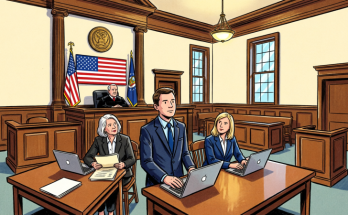
At the hearing, the judge listened to David’s attorney argue that David was a devoted father who’d been unfairly painted as a villain. David sat behind the table with a practiced, wounded expression, as if he was the one who’d been betrayed.
Then my attorney stood and calmly presented the facts: preserved hospital lab results, Anna’s sworn statement, and now, a confirmed pharmacy purchase and footage connecting Linda directly to the medication.
David’s face tightened like someone had pinched a nerve.
The judge’s eyes sharpened. “Mr. Johnson,” she said, addressing David directly, “given the ongoing criminal investigation, this court is not expanding your access. In fact, I’m reducing your options until we have clarity.”
David’s jaw clenched. “Your Honor—”
“Enough,” she said. “This is about safety.”
That word landed in me like a blessing and a warning at once.
After the hearing, David followed me into the hallway.
My attorney stepped between us immediately, but David called my name like he couldn’t help himself.
“Emily,” he said, voice low, furious. “You’re doing this on purpose. You’re trying to destroy my mother.”
I stopped. I turned just enough to look at him.
“She did this,” I said, keeping my voice quiet. “Not me.”
His nostrils flared. “She was trying to help.”
I stared at him, stunned by the insanity of the statement.
“Help by poisoning me?” I asked.
His eyes flickered, just for a second. Something like panic. Something like guilt. Then he snapped his face back into anger.
“You have no proof she poisoned you,” he hissed.
I didn’t argue. I didn’t need to.
Because now I did have proof. And for the first time, he knew it too.
When I walked out of the courthouse, my hands were steady. Not because I wasn’t scared. Because the fear was finally pointing outward, where it belonged, instead of inward.
That night, after the boys fell asleep, I sat on the floor of their room and listened to them breathe. Two quiet rhythms. Two soft, steady reminders.
I thought about Linda’s voice in my apartment that night, confident and cruel: She’s pretending.
I thought about how close I’d come to disappearing.
And I realized something that surprised me.
I didn’t want revenge.
I wanted a locked door.
A final one.
Part 10
A month later, the District Attorney decided to file charges against Linda.
When Alvarez told me, I didn’t cry. I didn’t cheer. I just felt my shoulders drop, like I’d been holding them up near my ears for years.
“Linda Harris is being charged with assault and reckless endangerment,” Alvarez said. “And they’re adding a separate charge for administering a medication without consent.”
“And David?” I asked, because the name still had weight, even after everything.
Alvarez’s tone tightened. “We’re not there yet,” she said. “But he’s not out of this. Not if the evidence supports complicity.”
The day Linda was arraigned, I didn’t attend. I stayed home with my boys and made pancakes shaped like animals that looked nothing like animals. I let my sons smear syrup on their cheeks. I needed normal more than I needed to watch Linda’s face when the law finally told her no.
But the news traveled fast anyway.
My phone buzzed with a message from a number I didn’t recognize.
You’re ruining our family. You’ll regret this.
No name. No signature. But I knew the voice behind it.
I took a screenshot and sent it to Alvarez. Then I blocked the number.
Jessica called that night, furious. “Linda’s telling people at church you’re lying,” she said. “She’s saying you had postpartum psychosis. She’s trying to make you look unstable.”
My stomach tightened. “Of course she is.”
“She wants to poison the well,” Jessica said.
“Let her,” I replied, and my own calm surprised me. “The court doesn’t run on gossip.”
A week later, Anna agreed to meet me for coffee.
I hadn’t seen her since that night in the hospital. In my head she’d stayed frozen in that moment: frightened eyes, shaking hands, guilt like a heavy coat she couldn’t take off.
In real life, she looked different. Still nervous, but steadier. Her hair was pulled into a simple ponytail. She held her cup with both hands, like she needed something warm just to stay anchored.
“I’m sorry,” she said immediately.
“I know,” I said.
She blinked. “You do?”
“You wouldn’t be here if you weren’t,” I said. “And you didn’t have to come forward. You did anyway.”
Tears rose in her eyes. “I feel sick when I think about it,” she whispered. “He lied to me so easily. I believed him.”
“David’s good at that,” I said.
Anna looked down. “Linda called me,” she said quietly.
My blood chilled. “When?”
“Two days ago,” she said. “She left a voicemail. She said if I testify, she’ll ‘make sure everyone knows what kind of woman I am.’”
I exhaled slowly. “Did you save it?”
Anna nodded and slid her phone across the table. The voicemail was there, Linda’s voice silky with threat, disguised as righteousness.
I recorded it and sent it to Alvarez.
“That helps,” I said softly.
Anna flinched. “I don’t want to be part of this anymore,” she admitted. “But I can’t… I can’t pretend I didn’t hear what I heard. If I stay quiet, then I’m helping them.”
“You’re not helping them,” I said. “You’re helping my boys.”
Anna’s eyes flicked up, and for a moment she looked like she might collapse under the weight of that responsibility.
“I’ll testify,” she whispered. “Whatever happens.”
The criminal case moved with slow, grinding inevitability. Linda’s attorney tried to argue medical ambiguity. Tried to say the metabolites could’ve come from “environmental exposure.” Tried to paint me as hysterical.
Dr. Reyes shut that down with facts. Dr. Kim explained the lab process. The pharmacy footage was hard to argue with.
Linda refused a plea deal at first.
She insisted she’d done nothing wrong.
She insisted she was a concerned grandmother.
Then Alvarez called me one morning with a sharper voice than usual.
“We found texts,” she said. “Between Linda and David.”
My stomach turned. “About what?”
“About timing,” she said. “About ‘making sure she rests’ and ‘keeping her calm’ and ‘not calling anyone’ because ‘it will make her dramatic.’”
I stared at the wall, my mind flashing back to my apartment, my numb arms, Linda’s words.
And then Alvarez said the sentence that made my blood go cold.
“One message reads: If we can’t fix it before the birth, we fix it after.”
I couldn’t speak.
Alvarez continued, “We don’t know exactly what she meant yet. But it’s enough for the DA to push harder. Linda’s attorney called this morning asking about plea terms.”
When I hung up, I walked into my sons’ room and watched them play, building a tower of blocks just to knock it down laughing.
Fix it after.
If Linda couldn’t get rid of them before they were born, what had she planned to do once they were here?
My hands shook for the first time in months.
My mom watched my face and didn’t ask what happened. She just stood, crossed the room, and locked the deadbolt like she’d been waiting for the moment to take the next step.
“We’re adding cameras,” she said calmly. “Today.”
And for the first time, I didn’t argue that it was overkill.
Because I finally understood: Linda’s cruelty wasn’t a mood.
It was a method.
 :
: