Part 11
If the first two years after the hospital were about survival, the third year became about rebuilding.
Not just diapers and schedules and legal paperwork. Something deeper. The parts of me that had gone quiet because loud emotions felt dangerous.
I started therapy again, not because I was falling apart, but because I was tired of pretending I wasn’t still carrying that night inside me.
My therapist, Dr. Carver, asked me on the first session, “What scares you most now?”
I surprised myself by answering honestly: “That I’ll raise my sons to think love looks like control.”
Dr. Carver nodded like she’d heard that fear before. “Then we teach them something else,” she said. “And we teach you to believe you deserve it too.”
I started saying no without explaining myself.
No, you can’t babysit.
No, we don’t do surprise visitors.
No, I don’t owe anyone a second chance.
The more I practiced, the less guilty I felt. It was like my spine remembered it was allowed to hold me upright.
Ethan and Matthew started preschool at three. The first day I dropped them off, they ran toward the play area like they’d been waiting their whole lives for finger paint and tiny chairs.
I stood in the doorway longer than necessary, heart tight, because letting them out of my sight still felt like handing the world a piece of my soul.
The teacher, Ms. Bailey, smiled at me. “They’ll be okay,” she said gently, as if she could see the fear behind my polite face.
“I know,” I lied.
I walked back to my car and sat there for a moment, breathing.
My phone buzzed.
A new message from my attorney: Linda accepted a plea offer.
I stared at the text. My pulse slowed instead of speeding up.
Linda’s plea meant no trial. No public spectacle. No dragging Anna and the doctors through weeks of testimony. It meant a sentence, conditions, a documented conviction.
It also meant Linda was admitting, in the only language she respected, that she had lost.
A week later, David sent an email through his lawyer requesting “family mediation.” He claimed he wanted to “heal” and “move forward.”
My attorney asked if I wanted to respond.
I told her no.
Not because I was afraid. Because I was done negotiating with someone who thought poisoning and abandonment were just “mistakes.”
That fall, I took a job offer from a publishing company that let me work hybrid. It felt like stepping back into the world on my own terms. My coworkers didn’t know my story, and I liked it that way. I didn’t want to be the woman with the scandal. I wanted to be the woman who delivered good work and drank coffee and talked about books.
One day, during a company volunteer event, I met a man named Noah. He worked in operations. He was the kind of person who didn’t talk over others and didn’t fill silence with ego. He handed me a pair of gloves and asked, “You good with raking leaves?”
I laughed. “I have twins. I can handle leaves.”
We started talking in small increments. Weather. Work. Parenting. I didn’t tell him everything. I didn’t have to. He didn’t push.
It took me months to realize that was the point.
When I finally mentioned, casually, that my sons’ father wasn’t involved, Noah just nodded. “That’s hard,” he said simply. “If you ever need a hand carrying something, tell me.”
No pity. No interrogation. No advice.
Just a normal offer from a normal person.
I went home that night and sat on my porch while my sons slept. I listened to the quiet. I realized my body wasn’t waiting for a threat the way it used to.
Not because danger disappeared.
Because I had built layers of safety: locks, cameras, boundaries, allies, evidence, and a mind that no longer argued with itself about whether something was wrong.
Dr. Carver called it integrating the trauma.
I called it finally believing my own instincts.
In December, the court finalized Linda’s sentencing: probation, mandated counseling, no contact with me or my children for a decade, and a formal acknowledgment of wrongdoing on record.
A decade.
It sounded like a long time until I remembered Ethan and Matthew would be teenagers then.
A decade wasn’t just a punishment.
It was a childhood.
On the night the no-contact order was reaffirmed, I tucked my sons into bed and Ethan asked, “Mommy, why do we have cameras outside?”
My throat tightened.
“To keep us safe,” I said, brushing his hair back.
“From monsters?” Matthew asked sleepily.
I paused, then chose the truest answer I could give a four-year-old.
“From people who don’t know how to be kind,” I said.
Ethan yawned. “We’re kind,” he mumbled.
“Yes,” I whispered. “You are.”
I sat with them until they fell asleep, then walked into the hallway and leaned against the wall, breathing through the wave of gratitude that hit me out of nowhere.
Not the gratefulness you feel when things are perfect.
The kind you feel when things are real.
Because my boys were alive.
And so was I.
Part 12
It would’ve ended there, neatly, if Linda knew how to accept limits.
But Linda didn’t accept limits.
She only paused when the consequences were loud enough.
One afternoon in early spring, Ms. Bailey called me from the preschool.
“Emily,” she said gently, “I don’t want to alarm you, but we had a situation.”
My stomach dropped. “What kind of situation?”
“A woman came to the front desk,” she said. “She claimed to be the children’s grandmother. She asked to see them.”
My hands went cold. “Linda.”
Ms. Bailey hesitated. “Yes. She said her name was Linda. We told her she couldn’t have access. We asked her to leave.”
“And did she?”
“She did,” Ms. Bailey said, “but she was… upset. She said some things. She called you unstable.”
I closed my eyes. Of course she did.
“Are the boys okay?” I asked.
“They never saw her,” Ms. Bailey assured me. “We followed your file instructions.”
I’d given the preschool copies of the custody order and the no-contact order the first day they enrolled. I’d felt ridiculous doing it then, like I was being dramatic.
Now I felt sick with vindication.
I picked the boys up early and drove straight to Alvarez’s office.
Alvarez didn’t look surprised. She looked annoyed in a professional way, like Linda was a roach that kept showing up no matter how many times you sealed the cracks.
“Violation of the order,” Alvarez said. “We’ll file it.”
“Will it matter?” I asked.
“It matters,” Alvarez said. “It shows pattern. It shows she can’t comply.”
Two days later, Linda showed up again. This time at the park near my townhouse, as if she’d been watching our routine.
I saw her across the playground—styled hair, sunglasses, that posture of entitlement.
My heart slammed into my ribs.
Ethan and Matthew were on the swings, laughing. I didn’t want to alarm them. I didn’t want them to see fear in my face and learn that fear was normal.
I walked toward them calmly, lifted them off the swings with a cheerful, “Okay, time to go!” like it was nothing.
Linda started toward me.
“Emily,” she called, voice syrupy. “Let me see my grandsons.”
I kept my smile fixed. “We’re leaving,” I said, loud enough for nearby parents to hear.
Linda’s smile tightened. “This is ridiculous,” she hissed, dropping the sweetness. “You can’t keep them from me forever.”
“Yes,” I said, and my voice was steady. “I can.”
She stepped closer, and I felt something in me turn hard.
“I have rights,” she snapped.
I looked her directly in the eye. “You have a court order,” I said. “And you’re violating it.”
For a second, Linda looked like she might actually grab me. Then she noticed the other parents watching. The way people subtly shifted, paying attention. The way a woman near the slide had already pulled out her phone.
Linda’s face went carefully blank.
“This isn’t over,” she said softly.
Then she turned and walked away like she was the injured party.
I buckled my sons into the car with shaking hands. Ethan asked, “Who was that lady?”
“A person we don’t talk to,” I said, forcing calm.
Matthew looked at me with the serious, watchful eyes he’d had since birth. “You’re scared,” he said.
I swallowed. “I was startled,” I corrected, because I didn’t want to give fear a permanent home in their vocabulary.
But later, after they were asleep, I sat on my kitchen floor and cried quietly into my hands. Not because Linda had won. Because she reminded me how fragile safety can feel.
Noah came over that night. I hadn’t even told him the full story yet, but he’d noticed the cameras and the extra locks and the way I flinched when unknown numbers called.
I finally told him everything, sitting at my table in the dim kitchen light: the collapse, the hospital, the secret twins, the poison, the court orders, Linda showing up again.
Noah listened without interrupting. When I finished, he didn’t offer a grand solution. He didn’t say, “I’ll fix it.” He didn’t make it about his anger.
He just said, “I’m really sorry you went through that.”
Then, after a moment, he added, “What do you need right now?”
The question nearly broke me, because it was so simple and so rare.
“I need to feel like it’s not just me guarding the door,” I admitted.
Noah nodded. “Then it’s not just you,” he said.
He helped me install an extra motion light the next day. He didn’t push his way into my life. He just stood beside it, offering sturdiness.
A week later, Linda was arrested for repeated violations of the no-contact order.
Alvarez called me with the update. “She kept pushing,” she said. “Now the judge’s patience is gone.”
I looked out at my yard where Ethan and Matthew were chasing bubbles, their laughter floating over the grass.
For the first time, Linda’s shadow felt like it was finally shrinking.
Not because she changed.
Because the world stopped tolerating her.
Part 13
The hearing for Linda’s violations happened fast.
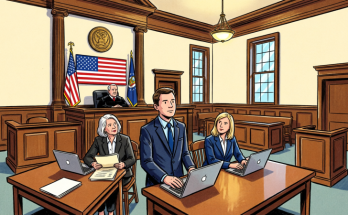
This time, the judge didn’t look interested in Linda’s excuses. Linda tried anyway, of course. She stood at the podium with her shoulders back, voice trembling with manufactured emotion.
“I’m a grandmother,” she said. “I love my family. I’ve been kept away unfairly—”
The judge held up a hand. “Ms. Harris,” she said, “you were convicted and given clear conditions. You violated them repeatedly. This court is not here to hear your feelings about consequences.”
Linda’s mouth tightened.
The DA recommended short-term jail time for the violations along with stricter probation terms. Linda’s attorney argued for leniency, citing her “community standing.”
The judge’s response was cold and simple: “Community standing doesn’t excuse endangering others.”
Linda was taken into custody that day.
I didn’t feel joy. I felt something closer to a door finally latching.
After that, something unexpected happened.
David folded.
Two days after Linda’s arrest, my attorney called. “David wants to negotiate,” she said. “He’s offering to terminate his parental rights voluntarily in exchange for no criminal referral attached to him.”
I stared at the wall. “So he admits he’s afraid.”
“It’s a fear move,” my attorney said. “But it also might be a gift.”
I thought of my sons. Of the constant low-level vigilance. Of the future.
“What does it mean?” I asked.
“It means,” she said, “he gives up legal rights and obligations. No custody fights. No surprise filings. No forced contact.”
“And child support?” I asked.
“He’s offering a lump settlement,” she said. “It’s not nothing.”
I didn’t care about the money as much as I cared about the permanence.
I met with my attorney in person, then took a night to think.
I thought about the ethics of letting him walk away. I thought about how society tells women to fight for fathers to stay involved, even when those fathers are dangerous or absent by choice. I thought about what kind of story my sons would one day ask me to explain.
In the end, I chose the option that made the most sense for the children I actually had, not the imaginary ideal family I once wanted.
I accepted David’s offer, with conditions: full termination, no contact, no access through third parties, and acknowledgement that Linda was barred permanently.
David signed.
He didn’t look relieved.
He looked like a man shrinking away from his own reflection.
I thought I would feel satisfied.
Instead, I felt strangely sad for the version of my sons that would never know what a healthy father looked like.
But then I reminded myself: they wouldn’t be missing a father.
They’d be missing a threat.
That spring, I took Ethan and Matthew back to the beach.
This time, it wasn’t just a day trip. It was a small vacation with my mom and Jessica, rented cottage, cheap towels, and sand everywhere no matter how many times you shook it out.
On the second morning, I woke early before the boys, made coffee, and stepped outside. The ocean air hit my lungs like medicine. The sky was pale pink, and the water moved in slow, steady breaths.
I realized my body wasn’t scanning for danger.
It was just… breathing.
Noah joined us later that day. Not as a stepdad. Not as a replacement. Just as a person who cared about us enough to show up consistently.
He played with the boys in the sand, letting them bury his feet and laughing when Ethan tried to bury his knees too. He didn’t force affection. He didn’t demand loyalty. He didn’t act entitled to their love.
He earned their comfort the only way you can: time, patience, respect.
That night, after the boys fell asleep, Noah and I sat on the porch listening to waves. My mom’s laughter drifted from inside where she and Jessica were cleaning up dinner.
Noah leaned back and said softly, “You’ve built something strong.”
I stared out at the dark water. “It didn’t feel like building,” I admitted. “It felt like surviving.”
“Surviving is building,” he said.
I thought about that. About how every boundary, every legal document, every camera, every therapy session, every night I chose calm for my sons instead of chaos—it was all construction. It was all the architecture of a life that wasn’t defined by what happened to me, but by what I did next.
The next morning, Ethan and Matthew ran into the water together, shrieking as the cold waves slapped their ankles. They looked back at me, faces bright, and yelled, “Mom! Come!”
I stood, walked toward them, and for the first time in a long time, I didn’t feel like my feet were sinking.
I felt like I was moving forward.
Part 14
When Ethan and Matthew turned five, they started kindergarten.
The night before their first day, they insisted on sleeping in the same bed, limbs everywhere like two puppies. I sat on the edge of the mattress and watched them, still amazed that they existed.
Two heartbeats I didn’t even know were there until the hospital told me.
Two lives Linda tried to erase.
Two boys who now argued about which superhero was stronger and whether pancakes should be eaten with fingers.
Life can be brutal and absurd at the same time.
The morning of their first day, they put on matching backpacks and ran to the bus stop like they’d been waiting their whole lives for it. I stood beside my mom, coffee in hand, heart tight in that familiar way.
“You okay?” my mom asked quietly.
I nodded. “I’m always okay and not okay,” I admitted.
She smiled. “That’s motherhood,” she said.
When the bus pulled up, the boys climbed on and waved from the window. Ethan pressed his face to the glass. Matthew waved more carefully, still watchful, still tender.
The bus drove away.
And something in me unclenched.
Not because I stopped worrying.
Because I realized I trusted the life I’d built.
A few weeks later, I received a court notice in the mail about Linda’s final probation review. I hadn’t thought about her in months. She’d served time for the violations and was now under stricter supervision. The no-contact order remained permanent. The state had moved her case into a category that made future violations an automatic arrest.
I stared at the notice for a long moment, then put it in a folder and walked away.
Linda had become what she always feared: irrelevant.
That fall, I married Noah in a small ceremony in my backyard. Not because I needed a savior. Not because I wanted to prove something to David or Linda. Because Noah had been steady for years. Because he understood that love isn’t a speech. It’s a pattern.
Ethan and Matthew carried the rings in a little box and took the job so seriously they barely blinked. Jessica cried openly. My mom smiled so hard her cheeks shook.
When Noah said his vows, he looked at me like he wasn’t trying to own me.
He was trying to honor me.
After the ceremony, Ethan asked, “Does this mean Noah is our dad now?”
Noah crouched and met his eyes. “It means I’m Noah,” he said gently. “And I’ll always show up for you. You can call me whatever feels right.”
Matthew considered that, then said, “Can we call you Coach Noah?”
Noah laughed. “Absolutely.”
That night, after everyone left and the yard was quiet, I sat on the porch steps with Noah. The string lights glowed softly above us. Inside, my sons slept, worn out from cake and dancing.
Noah took my hand. “Do you ever think about them?” he asked quietly.
I knew who he meant. “Sometimes,” I admitted. “Not as much as I used to.”
“Does it still hurt?”
I thought of the hospital ceiling crack. Of waking up alone. Of the two heartbeats on the monitor. Of the word pretending. Of the lab results and the courtroom.
I thought of my sons’ laughter. Of my mom’s steady hands. Of Jessica’s fierce loyalty. Of the locked doors and cameras that once made me feel paranoid and now just felt like common sense.
“It hurts the way a scar hurts,” I said. “Not every day. Not bleeding. But it reminds me.”
Noah nodded like he understood.
I leaned my head against his shoulder and looked up at the stars.
For years, I’d wanted the story to end with justice in a dramatic sense—someone confessing, someone collapsing, someone apologizing properly.
But that wasn’t how life worked.
The real ending was quieter.
The real ending was my sons running toward the bus without fear.
It was me opening my front door without checking the peephole three times.
It was the absence of Linda’s voice in my head.
It was the fact that when I dreamed of the beach now, the two figures on the horizon didn’t fade.
They ran toward me.
And I ran toward them.
Because I wasn’t sinking anymore.
I was moving.
And no one—no mother-in-law, no weak husband, no poison disguised as help—was ever going to take that from me again.