Part 8
The day Marcus was released early on good behavior, I found out through a news alert, not a phone call.
The system notified Amanda. The system notified his attorney. The system did not notify me, because I’d made sure no one could use my number as a bridge back into my life.
Still, seeing the headline made my chest tighten.
Not because I feared he’d show up with a bat or a plan. Marcus wasn’t physical like that. He was strategic. He was the kind of dangerous that arrives with paperwork, charm, and a sad story.
Diana called that afternoon. “I’m not trying to alarm you,” she said, which meant she was trying to prepare me. “He’s requested a modification of the no-contact order. He’s claiming he wants reconciliation.”
“And?” I asked.
“And we’re opposing it,” Diana said. “Amanda’s opposing it. The court isn’t eager to reward a pattern of coercion with access.”
I exhaled. “Good.”
A week later, I found an envelope in my mailbox. No return address. My name in familiar handwriting.
Marcus.
My body reacted before my brain did: a quick adrenaline spike, palms damp, breath shallow.
I took the envelope inside and set it on the counter.
I didn’t open it.
Instead, I called Diana.
“I got a letter,” I said.
“Don’t open it,” she replied immediately. “Bring it to my office. We’ll log it.”
Thirty minutes later, the envelope sat in an evidence sleeve on Diana’s desk.
She didn’t look surprised. “This is what he does,” she said. “He tests boundaries. If the door is locked, he knocks. If that fails, he tries a window.”
“What’s the plan?” I asked.
“The plan is consistent enforcement,” Diana said. “We file. We document. We don’t engage.”
A month passed. Then another. Marcus attempted contact through an old cousin I barely knew. Then through a former family friend. Each time, Diana responded with the same short legal notice: Cease contact. Further attempts will be reported.
On the third attempt, Marcus finally showed up in person.
Not at my house. He was smart enough to avoid trespassing charges.
He waited outside my firm’s building, leaning against a pillar like he was there to surprise me with coffee. He wore a suit that didn’t quite fit, hair neatly cut, expression carefully composed.
When I stepped out, my stomach dropped, then steadied. The security guard at the front desk had already texted me: Your brother is outside. Want us to call police?
I typed back: Not yet. Stay alert.
Marcus smiled when he saw me. The same old smile. The one that used to make me soften.
“Sarah,” he said warmly. “Hey. Can we talk?”
I kept my voice neutral. “You’re violating the no-contact order.”
His smile flickered. “Come on. I’m not threatening you.”
“You don’t have to threaten me to violate the order,” I replied.
He lifted his hands slightly, palms out. “I just want to apologize. I’m different now. Prison changed me.”
“Then respect the boundaries,” I said.
His eyes narrowed a fraction. “You’re still mad.”
“I’m still protected,” I corrected.
He stepped closer, lowering his voice like we were sharing something intimate. “You don’t understand what it was like. Mom—”
“Don’t,” I said, sharper now. “Don’t blame Mom. Don’t blame Amanda. Don’t blame me. Your choices are yours.”
His jaw tightened. “You always talk like you’re a judge.”
“I don’t have to be a judge,” I said. “I have evidence. And I have a court order.”
I turned slightly toward the security guard visible through the glass doors. The guard’s hand hovered near his phone.
Marcus noticed. His expression shifted again, sliding into wounded.
“I’m your brother,” he said, as if that was a key that should unlock everything.
“And I’m not your bank,” I said calmly. “Or your cover story. Or your emotional punching bag.”
For a moment, anger leaked through his mask. “You think you’re so righteous,” he hissed. “You built your whole life on making me look like the bad guy.”
I stared at him. “You built your whole life on exploiting people. That’s why you ended up where you did.”
His face flushed. He looked around, suddenly aware of the sidewalk, the people passing, the cameras above the entrance.
Then he did what he always did when he realized he wasn’t winning: he switched tactics.
“You know,” he said, voice turning soft, “the kids miss you. They’d love it if you helped more. College is expensive.”
There it was.
The hook.
I felt something inside me settle, hard and clear.
“Goodbye, Marcus,” I said.
I walked back inside and nodded to the security guard. “Call the police,” I said quietly. “And document everything.”
Marcus didn’t fight when officers arrived. He didn’t have to. He already got what he wanted: he’d tested the boundary.
But the boundary held.
That night, Caleb called me.
“Mom said Dad showed up at your work,” he said, voice tense.
“Yes,” I said gently. “He did.”
“Are you okay?” Caleb asked.
I swallowed, surprised by the question. The fact that the kid was learning the right priorities.
“I’m okay,” I said. “And you’re okay too. Your dad’s choices aren’t yours to carry.”
Caleb was quiet, then said, “I hate him for making everything complicated.”
I didn’t rush to soothe. I didn’t say, Don’t hate. I didn’t say, He loves you. I didn’t lie.
“It’s okay to feel what you feel,” I said. “And it’s okay to protect yourself.”
After we hung up, I sat in the dark living room and realized something strange.
The confrontation that would’ve wrecked me years ago had lasted five minutes.
And then it ended.
Because I ended it.
Part 9
Ten years after the slap, I stood in the same office where it happened, but it didn’t feel like a crime scene anymore. The French doors were still there. The desk was different. The walls held framed photos now: my team at the foundation’s first fundraiser, Amanda and the kids at a beach trip, Diana and me holding a ribbon at a financial abuse awareness event.
The space held my life, not my trauma.
The foundation had grown into a network. We partnered with courts in three states. We trained bank tellers, family lawyers, social workers, even HR departments, because financial coercion doesn’t only happen in marriages or divorces. It happens in kitchens, in phone calls, in whispered guilt trips.
It happens where people think love means access.
On the foundation’s tenth anniversary, Judge Harrison gave the keynote. He spoke about systems, about evidence, about how often abuse hides behind the word family.
Then he looked at me and said, “Sometimes justice begins with a camera and a woman who refuses to be shamed into silence.”
People clapped. I smiled. Not because the praise was comfortable, but because it was true.
After the event, Amanda and I sat outside under string lights with paper plates of cake. Caleb was in college now, on a scholarship partly funded by the trust Amanda and I had built. Mariah, the younger child, was talking about studying criminal justice, furious at how easily adults can lie and get away with it.
“They’re going to be okay,” Amanda said, watching her kids laugh across the lawn.
“They are,” I agreed.
Amanda hesitated, then said, “I got a message. From your mom’s counselor.”
My stomach didn’t clench this time. It just went still.
“She’s sick,” Amanda said softly. “They think she doesn’t have long.”
I sat quietly, feeling the complicated truth: I didn’t wish death on my mother, but I also didn’t wish her back into my life as she’d been.
“What are you going to do?” I asked.
Amanda shook her head. “Nothing. She’s not my mother.”
Right.
I took a slow breath. “I don’t know,” I admitted.
Later that night, I called Diana.
“Legally,” I said, “what happens if Mom dies? Any remaining issues? Estate?”
Diana was practical as always. “Minimal,” she said. “Her assets are tied up. Restitution orders. Debts. But we’ll monitor for anything that tries to touch you.”
“Of course,” I said.
Then I sat in my office and stared at the faded scar in the mirror of the dark window. I could barely see it now.
I thought about visiting my mother. Not for her. For me.
Not for reconciliation. For closure on my terms.
Dr. Salazar had asked me once, “If you visited, what would you want to say?”
I’d answered honestly: I want to say you don’t get to define love as harm anymore.
So I went. Mediated. Guard present. Diana informed. Boundaries clear.
My mother looked smaller behind the glass, hair thin, skin pale. Her eyes were still sharp, but tired.
“You came,” she said, voice raspy.
“I came to speak,” I replied. “Not to negotiate.”
She swallowed. “I didn’t mean—”
“You did,” I said calmly. “You meant to control me. You meant to take. You meant to punish me for saying no.”
Her eyes watered. Real tears this time or just a new version of the old tool, I didn’t know. It didn’t matter.
“I thought you owed us,” she whispered.
“I didn’t,” I said. “And I don’t.”
Silence stretched.
Then, quietly, my mother said, “I was jealous.”
The words surprised me. Not because jealousy didn’t make sense, but because she’d never admitted anything that made her look small.
“You were smart,” she continued, voice shaking slightly. “You left. You made something. And Marcus… he was always easier.”
I felt something loosen in my chest. Not forgiveness. Understanding. A clearer picture of the machine I’d escaped.
“Easier isn’t love,” I said.
My mother’s gaze dropped.
“I’m not here to punish you,” I added. “The courts did that. Life did that. I’m here to tell you this: what you called family was abuse. And I won’t carry it anymore.”
She nodded once, almost imperceptible.
“I’m glad,” she whispered. “That you… stopped.”
I didn’t say, I forgive you. Because forgiveness isn’t a requirement for peace.
I stood. “Goodbye, Mom,” I said.
Outside, the air felt cleaner than I expected. I walked to my car and sat for a moment with my hands on the steering wheel, breathing.
The ending I needed wasn’t my mother transformed into a different person. It was me walking away without guilt.
Back at home, I opened my phone and scrolled past blocked contacts, past old threads I never needed to read again.
Then I texted Amanda.
I’m home. Want to do dinner this week?
She replied almost immediately.
Yes. And Caleb says hi. He’s proud of you.
I smiled, warmth spreading through my chest in a way that felt earned.
Family, I’d learned, isn’t the people who share your blood and demand your sacrifice.
Family is the people who respect your no.
And the life you build when you finally say it.
Part 10
The first time I slept through the night after visiting my mother, I woke up confused.
No jolting at 3:00 a.m. No clenched jaw. No replaying the slap like my brain was trying to scrub the moment clean and failing. Just darkness, then morning light through the curtains, ordinary and soft.
I lay there for a while, listening to the quiet of my house, and realized something that felt almost too simple to name.
I was done.
Not done in the angry way people imagine when they talk about cutting off family. Not done in a dramatic, scorched-earth way. Done in the way you finish a long, brutal book and close the cover because you finally reached the last page and nothing inside it can surprise you anymore.
That day, I went to my office early. The building smelled like fresh coffee and printer toner, the familiar scent of a life built on my own decisions. My assistant, Talia, looked up from her desk and smiled.
“Big day,” she said.
“It is,” I replied.
We had a foundation board meeting at noon, followed by a press conference at two. Then, at four, a final hearing in family court to formalize the last of the protective conditions around Marcus’s contact attempts.
People kept telling me it was a lot for one day, like I was tempting fate.
But I liked it.
If my old life had been defined by chaos I didn’t choose, I wanted my new life to be defined by structure I did. I wanted to finish every loose thread like tying off a vine to a trellis—clean, secure, intentional.
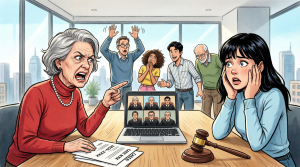
At noon, the foundation board gathered around the same long table where I’d announced the launch years ago. Diana sat to my right, still sharp, still unreadable until you learned her tells. Amanda sat across from me, relaxed in a way that would’ve been impossible a decade earlier. Caleb joined by video from campus. Mariah sat beside Amanda, now a young adult with the kind of seriousness that made me think she’d become a judge someday, if she decided the world needed more of them.
The agenda was packed: budgets, new partnerships, expansion into two more states, a pilot program with banks to flag suspicious “family-managed” accounts.
But the last item on the agenda was mine.
I slid a folder across the table.
“Succession plan,” I said simply.
A few eyebrows lifted. Diana’s did not. Of course it didn’t.
“I’m not going anywhere,” I added, anticipating the fear behind the looks. “This isn’t about anxiety. It’s about stewardship. The foundation can’t be built on one person’s spine.”
Amanda smiled faintly. “That’s very you,” she said.
I nodded. “I learned from the best.”
I didn’t say my mother. I meant the people who taught me stability without conditions—Diana, Amanda, my team, the clients who had become allies. The idea was simple: if I got hit by a bus, or burned out, or simply wanted to step back someday, the foundation would still run. Victims would still have resources. The work would still be there.
Because the whole point of escaping exploitation is building something that doesn’t require a single person to keep bleeding.
We approved it unanimously.
At two, the press conference was brief. Cameras, microphones, the usual bright, hungry attention. The headline was supposed to be about our expansion.
But someone asked what they always asked.
“Ms. Williams,” a reporter said, “would you say your family tragedy is what made this possible?”
I felt the old irritation spark, the urge to say, Don’t reduce my life to their harm.
Instead, I gave the truth in a way that couldn’t be misquoted.
“I’d say my family’s choices taught me what to prevent,” I answered. “And my choices taught me what’s possible.”
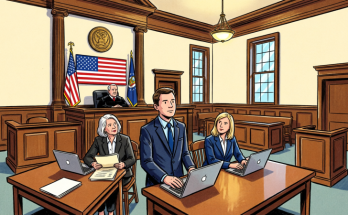
At four, Diana and I went to the courthouse. The hallway was the same kind of cold as years ago, but it didn’t bite anymore. It felt like a place that served a purpose. A tool, not a threat.
Marcus wasn’t there in person. His attorney appeared on a screen, his face pixelated, voice flat. Marcus himself had been warned after the last violation that showing up would mean immediate arrest.
Judge Harrison presided, older now, but still carrying that sharpness that had steadied me at the beginning.
Diana presented documentation: the letter, the in-person attempt at my firm, the intermediaries, the ongoing pressure through subtle channels.
Marcus’s attorney argued that Marcus wanted “reunification” and that “family bonds” deserved consideration.
Judge Harrison listened without expression.
Then he spoke.
“Mr. Williams’s pattern of coercion is well-documented,” he said. “Reunification requires respect for boundaries, not repeated attempts to breach them. This court is extending the no-contact order indefinitely.”
He paused, then added something I didn’t expect.
“And the court commends Ms. Williams for her restraint. It is not the victim’s responsibility to manage an abuser’s emotions.”
My throat tightened. Not because I needed validation from a judge, but because hearing that sentence in a courtroom felt like the world correcting itself.
Gavel down. Order extended.
That was it.
One line on paper, backed by the weight of the system, sealing off a door that had always been left cracked open for Marcus to shove through.
When we stepped outside, the sky had shifted toward dusk. The air smelled like rain in the distance, clean and metallic.
Diana walked beside me to the car.
“You okay?” she asked.
I nodded. “I feel… quiet.”
“That’s the sound of peace,” she said, as if peace were an office policy she’d always intended to enforce.
That evening, Amanda hosted dinner at her house. Not a celebration in the loud sense, but in the real sense: food, laughter, normalcy that had been earned the hard way.
Caleb joined by video again, face filling the screen as he showed us the tiny dorm kitchen where he’d learned to cook pasta that wasn’t burnt.
“Look,” he said, holding up a saucepan proudly. “I’m surviving adulthood.”
Amanda rolled her eyes, smiling. “Barely.”
Mariah leaned into frame. “Caleb got an A on his finance exam,” she announced like she was reporting a crime.
Caleb groaned. “Why would you tell them that?”
“Because Aunt Sarah would be proud,” Mariah said, and her eyes flicked to me.
I felt warmth spread through my chest.
“I am proud,” I said. “And I’m also proud you’re learning finance from professors instead of from Marcus.”
Amanda laughed, and the kids laughed too, because the truth didn’t have to be heavy to be real.
After dinner, while Amanda packed leftovers into containers and Mariah argued with Caleb about whether ramen counts as cooking, I stepped out onto the back porch alone.
The night was cool. The neighborhood was quiet, porch lights dotting the street like small steady stars. Somewhere inside, Amanda’s life continued in warm, ordinary sounds: dishes clinking, voices overlapping, a dog’s nails clicking on hardwood.
I pulled out my phone and opened the foundation’s group chat. A new message sat at the top from a case manager.
Client safe. Protective order granted. Bank accounts secured. She cried from relief. Says thank you.
I read it twice, then set the phone down.
A decade ago, I would’ve been the one crying from relief, alone, trying to convince myself I wasn’t a monster for saying no.
Now, I was watching other people reach that moment sooner.
I didn’t need my mother to become kind. I didn’t need Marcus to become honest. I didn’t need apologies that would never be clean.
I had something better.
A life where the people around me didn’t demand my sacrifice to prove love.
A life where the law, the evidence, and the boundaries all pointed in the same direction: protection.
Inside, Amanda called my name. “Sarah! You leaving without dessert?”
I smiled, the sound coming out softer than laughter but warmer than silence.
“Coming,” I called back.
Before I stepped inside, I looked up at the night sky and thought of the moment that started all of this: my mother’s hand, my bleeding cheek, the red recording light on my laptop.
It had felt like the end of my family.
It was actually the beginning of my freedom.
And that was the most perfect ending I could imagine.
Not revenge.
Not forgiveness.
Just peace—earned, documented, and finally mine.
THE END!
Disclaimer: Our stories are inspired by real-life events but are carefully rewritten for entertainment. Any resemblance to actual people or situations is purely coincidental.