Part 4
The police report for the vandalism was the first of many. Detective Rogers stayed assigned to my case because the financial portion had expanded quickly, branching into federal territory like a weed that had been growing underground for years.
Two days after the courthouse meeting, an FBI agent named Lila Grant sat in my kitchen with a tablet and a careful, no-nonsense expression.
“Ms. Williams,” she said, “we’re investigating multiple fraudulent loans and forged documents tied to your identity. We’re also looking at asset concealment connected to your brother’s divorce.”
I took a slow breath. “How bad is it?”
Agent Grant’s eyes flicked over her notes. “So far, we’ve identified over two million dollars in fraudulent activity. Some of it appears to be your brother. Some appears to be coordinated with your mother.”
Two million.
My stomach turned, but a strange clarity followed. This wasn’t about my refusal to pay eight hundred thousand. That had just been the newest demand in a long pattern of extraction.
Grant continued, “We’ll need your cooperation, records, and any communications you’ve saved. Text messages, emails, voicemails.”
“I have everything,” I said. It surprised me to hear it come out so confidently, but it was true. After Marcus forged my signature on a loan years ago and laughed it off as a ‘mix-up,’ I’d started keeping receipts like my life depended on it.
Because in a way, it did.
Amanda and I met for coffee the next week. Not because we suddenly became best friends, but because we were the two people Marcus had exploited most, and there was comfort in comparing notes with someone who didn’t minimize.
Amanda looked exhausted, the kind of exhaustion that lives in your bones. But her gaze was steady.
“He told me you were greedy,” she said. “He said you hated him, that you wanted him to fail.”
I gave a short, humorless laugh. “He told me you were vindictive and trying to ruin him.”
Amanda nodded. “Classic.”
She took out her phone and showed me screenshots: Marcus transferring money out of their joint account, Marcus insisting she was “bad with finances,” Marcus claiming his ‘business expenses’ required secrecy.
“And Rachel?” I asked carefully.
Amanda’s mouth tightened. “Rachel admitted it. She cried. Said she ‘fell in love.’ Like it was a romantic tragedy instead of betrayal.”
I didn’t know what to say to that, so I said the only thing that felt honest. “I’m sorry.”
Amanda’s eyes softened. “Me too. But I’m also… grateful. That your mother finally went too far in front of the wrong people.”
I touched the fading cut on my cheek. “So am I.”
Over the next month, the legal machinery moved faster than I’d ever seen it move when it came to my family. Protective orders were served. Marcus’s access to certain accounts was frozen. My credit was locked down. My mother tried to contact me through relatives, but the injunction gave those attempts consequences.
And the family court judges weren’t subtle about how today’s evidence affected Marcus’s divorce.
Amanda’s attorney filed emergency motions: revised custody considerations, financial penalties, sanctions for fraud, and requests for supervised visitation given the pattern of coercion and instability.
Marcus’s response, through his attorney, was predictable: he tried to make me the villain.
He claimed I was sabotaging him out of jealousy. He claimed I had promised to fund the settlement. He claimed my firm was “shady” and that I was using my money to control the family.
Agent Grant asked if I wanted to press charges for the assault.
“Yes,” I said immediately.
That surprised my younger self, the version of me who used to swallow pain to keep peace. But peace built on my silence wasn’t peace. It was surrender.
Mom’s arraignment happened first. Assault, attempted extortion, and a list of financial crimes that expanded every time investigators pulled another thread. She wore a pastel cardigan to court and cried dramatically, as if tears could erase video.
Marcus’s arraignment followed. Fraud. Identity theft. Forgery. Asset concealment. Harassment.
When he was led out, he looked at me with that familiar mixture of rage and plea. “Sarah,” he called, voice cracking. “Please. The kids need their father.”
I stood still.
“They need safety,” I replied, loud enough to carry, “and they need their college funds more.”
After the hearing, Diana and I sat in her office and went over next steps.
“We’ll file a civil suit,” she said. “Restitution is one thing. A civil judgment is another. It follows them. It creates leverage. It can help you recover.”
“And the family?” I asked, because part of me still braced for backlash from relatives who’d prefer I keep quiet.
Diana’s expression turned flat. “Anyone who thinks you should be their ATM can volunteer to fund Marcus’s consequences themselves.”
I exhaled, almost laughing. Diana was blunt in a way I’d learned to appreciate.
That night, I sat alone in my office, the same place Mom had slapped me. The French doors reflected my face: bruising nearly gone, scar fading, eyes sharper than before.
I opened my contacts and hovered over Mom’s name.
My phone asked, Are you sure?
It seemed like the question was about more than a number.
Yes, I thought. I’m sure.
I blocked her.
Then I blocked Marcus.
I sat back in my chair and waited for guilt to crash into me like it always had.
It didn’t.
What came instead was a strange, quiet calm, like stepping out of a storm and realizing you didn’t have to run back into it just because you grew up there.
Part 5
A year later, I sat in a federal courtroom with Amanda beside me, our shoulders almost touching like we were bracing against the same wind. The past twelve months had been a blur of interviews, subpoenas, forensic accounting, and the kind of paperwork that makes you realize how easily a charismatic person can weaponize systems built on trust.
Agent Grant had been right. Two million had been the start.
By the time prosecutors finished, they’d mapped nearly a decade of fraud: forged documents, hidden assets, loans in my name, loans in Amanda’s name, even a few in my father’s name, pulled out of retirement accounts like someone siphoning gas.
My father had never been as loud as Mom, but his silence had always been its own form of permission. He wasn’t on trial, but he wasn’t innocent either. He’d signed things he claimed not to understand. He’d looked away when Mom “handled” the finances.
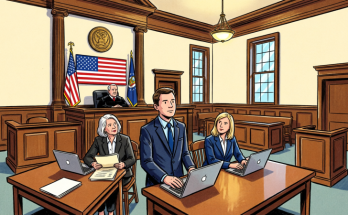
When the clerk announced, “All rise,” I stood with everyone else as Judge Reeves entered. He was tall, gray-haired, and carried the kind of presence that made you sit straighter without knowing why.
We sat. The courtroom settled into a hush.
Judge Reeves looked down at the defendants. Mom in one chair, Marcus in another. Both dressed conservatively, both trying to look smaller than their crimes.
“Before sentencing,” Judge Reeves said, “victim impact statements may be given.”
My prepared statement trembled slightly in my hands as I approached the podium. Not because I was afraid of them anymore, but because my younger self was still somewhere inside me, stunned by the fact that this was real: my mother and brother facing consequences that couldn’t be cried away.
I looked at the judge. Then I looked at Marcus and Mom.
They wouldn’t meet my eyes.
“For years,” I began, voice steady, “I believed family meant sacrificing everything for each other. I was taught that love meant giving until it hurt and then giving more.”
I paused and felt the old guilt rise like a reflex. Then I kept going.
“What I wasn’t taught was the difference between support and exploitation.”
Mom dabbed at her eyes with a tissue. The same performance she’d used at every family gathering when someone challenged her. The same tears that used to make me apologize for having boundaries.
This time, I didn’t apologize.
“My mother and brother didn’t just steal my money,” I continued. “They stole my trust, my sense of safety, and years of my life. They used my success as a weapon, turning every achievement into an obligation.”
I glanced at Marcus. His jaw was tight. He looked angry, not remorseful.
“The slap that day in my office wasn’t the first violence,” I said. “It was just the first caught on camera. The real violence was years of manipulation, threats, and financial abuse.”
I let the words land.
“Family shouldn’t require you to bleed to prove loyalty,” I finished. “And love shouldn’t come with a price tag.”
I stepped back.
Amanda took the podium next. Her voice shook at first, then steadied as she spoke about their children, about drained college funds, about Marcus convincing her she was “bad with money” while he hid accounts and lied to her face.
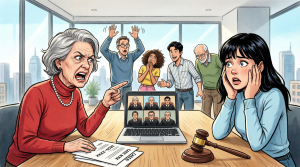
When she finished, the courtroom felt heavier, like the air itself was tired of secrets.
Judge Reeves addressed the defendants.
“Mrs. Williams,” he said, “Mr. Williams, your actions show a calculated pattern of exploitation. The court does not consider this a family dispute. The court considers this organized financial abuse.”
He looked down at his notes. “This case involved forged signatures, identity theft, fraudulent loans, and deliberate attempts to conceal assets during divorce proceedings. It also involved assault and attempted extortion.”
He paused.
“The court sentences you to eight years in federal prison for financial fraud. Additional penalties will be imposed for assault and extortion.”
Mom made a sound like a gasp and a sob combined.
Marcus finally lifted his head and looked at me. “Sarah,” he said, voice cracking. “Please. The kids need their father.”
I stepped forward, not to the podium, just enough that my voice carried.
“They need stability,” I said. “Which is why I already set up trust accounts for them that you can’t access.”
Marcus blinked, stunned. Mom’s head snapped toward me with fresh rage.
Amanda’s hand found my arm after the hearing, gripping tight. “You didn’t have to do that,” she whispered.
“I wanted to,” I said. “They’re innocent.”
Outside the courthouse, reporters gathered. They wanted quotes. They wanted drama. They wanted a clean narrative.
I gave them none of it.
“I hope my family gets help,” I said, and that was the truth as far as it went. “And I hope other people recognize financial abuse before it escalates.”
Then I walked away with Amanda, feeling something in my chest loosen further. Not forgiveness. Not closure like a movie ending.
Freedom.
The next day, in my firm’s boardroom, I made an announcement.
“We’re launching the Family Financial Abuse Prevention Foundation,” I said, looking around the table at people who had supported my work but didn’t know the full story until recently. “We’ll fund legal support, education, and emergency resources for victims of familial financial exploitation.”
One board member, an older man who’d built his own success from nothing, nodded slowly. “You’re turning pain into purpose,” he said.
“I’m turning lessons into infrastructure,” I replied. “So people don’t have to reinvent survival alone.”
The foundation’s first case came sooner than I expected: a young entrepreneur whose parents demanded she sell her startup to pay her brother’s gambling debts. Her hands shook as she showed us texts: You owe us. Family sacrifice is love.
I didn’t give her a speech. I gave her a plan: lock credit, document threats, legal counsel, boundaries.
“No,” I told her gently. “Real family protects you from harm. They don’t demand you harm yourself.”
That night, I went home and stood in my office where everything had changed. The French doors reflected my face again.
The scar on my cheek from Mom’s rings had faded.
But the lesson hadn’t.
Part 6
Six months after sentencing, I received a letter from the prison counselor assigned to my mother’s unit.
It wasn’t from Mom directly. The no-contact order still stood, and I’d made it clear through Diana that any attempts to reach me would be documented and dealt with.
The counselor wrote in careful, professional language: Your mother has begun participating in behavioral therapy programming. She has acknowledged patterns of manipulation and harm. She has asked whether you would consider a mediated visit in the future.
I read the letter twice, then set it on my kitchen counter and stared at it like it was a puzzle with no satisfying solution.
Part of me felt nothing. Part of me felt rage. Part of me felt that old, stubborn hope that maybe she could become someone else.
My therapist, Dr. Salazar, listened quietly when I brought it up.
“What do you want?” she asked.
“I want…” I hesitated, because wanting anything involving my mother felt dangerous. “I want her to respect my boundaries. I want her to stop rewriting history.”
Dr. Salazar nodded. “Do you believe a visit would give you that?”
I imagined Mom behind a prison table, tears ready, voice ready, blame ready. I imagined the rush of old patterns inside my body.
“No,” I admitted.
“Then you already have your answer,” Dr. Salazar said.
I wrote back a single sentence through Diana.
When you can respect my boundaries as much as you want my forgiveness, we can talk.
It wasn’t cruel. It was accurate.
In the years that followed, I built a life that didn’t orbit Marcus’s crises or Mom’s demands.
Amanda and I became something I hadn’t expected: friends. Not the kind who talk every day, but the kind who show up without conditions. We shared the strange bond of having loved someone who used love like leverage.
Marcus’s kids visited me monthly, supervised through arrangements Amanda and the court approved. We never spoke badly about their father in front of them. We didn’t need to. Children are observant. They’d lived through enough to understand that “Dad promises” weren’t reliable.
What we did talk about were boundaries. Safety. Money as a tool, not a test.
On one visit, Marcus’s oldest, Caleb, asked, “Is Dad mad at you?”
I kept my voice gentle. “Your dad made choices that hurt people,” I said. “Sometimes when people face consequences, they blame others instead of themselves.”
Caleb frowned. “Like when I got caught cheating on a math test and said the teacher was mean?”
I almost smiled. “Exactly like that.”
He absorbed it quietly, then asked, “So… it’s not your fault?”
“No,” I said. “It’s not.”
That conversation did more for my healing than I expected. Speaking truth simply, without anger, without apology, felt like rewiring something deep.
At the foundation, cases kept coming. A nurse whose sister had drained her savings. A small business owner whose parents opened credit cards in his name. A retired teacher whose son had coerced her into signing over property.
Patterns repeated. Love used as currency. Guilt used as a weapon. Silence demanded in the name of family.
We created workshops. Partnerships with local courts. Training materials for financial advisors to recognize red flags. Amanda even spoke at an event once, voice steady, eyes fierce.
“Abuse doesn’t always leave bruises,” she said. “Sometimes it leaves debt.”
On the anniversary of the slap, I didn’t mark the date publicly. I didn’t need to. But I did something private.
I walked into my office, opened the desk drawer where I kept the old folder of transfers and threats, and looked at it one last time.
Then I moved it into a locked archive box labeled Past.
Not because I wanted to forget.
Because I wanted to store it where it belonged: as evidence of what I survived, not as something that dictated my daily life.
That night, I found an old family photo album in a storage bin. I flipped through pages of birthdays and holidays and smiling faces.
For years, looking at those photos had made me ache. I’d mourned the family I thought I was supposed to have. The family that looked normal in pictures.
Now, as I stared at my mother’s practiced smile, I realized something that landed with a strange peace.
The family I mourned never really existed. It was a facade maintained by my sacrifice and their demands.
But from those ashes, something real had grown.
Amanda and the kids. Friends who celebrated my boundaries. Colleagues who respected my work. A foundation family built not on obligation but on choice.
I closed the album and set it aside.
In bed, I touched the faint mark on my cheek. The scar was nearly invisible now, but I could still feel it sometimes when the weather changed.
A reminder.
Family shouldn’t hurt.
Love shouldn’t cost.
And the bravest word I’d ever learned wasn’t yes.
It was no.
Part 7
Three years after sentencing, my firm hit a milestone: assets under management reached a number I’d once considered impossible when I was eating ramen and Googling “how to register an LLC” at midnight.
My board wanted a celebration. A gala, a press release, the usual corporate victory lap.
I agreed to something smaller: a dinner with staff, foundation partners, and a few close friends. No speeches. No spotlight. Just gratitude.
Halfway through dessert, Diana tapped her glass.
“I’m going to break the no-speech rule,” she said, and the room laughed.
She lifted her fork slightly like a pointer. “Sarah built something rare,” she said. “Not just a business. A boundary.”
People clapped. I felt my face heat, uncomfortable with praise in the way you get when you were raised to believe pride was arrogance.
After dinner, as people lingered in small clusters, Amanda came up beside me with two coffees in paper cups. “For the road,” she said.
I took one. “Thank you.”
Amanda sipped hers, then said, almost casually, “I got a letter.”
My stomach tightened automatically. “From Marcus?”
“From his counselor,” she clarified. “He’s asking for contact. Says he’s changed.”
I didn’t respond right away. Because I knew what Amanda meant: the system loves stories of redemption. People want to believe incarceration equals transformation. Sometimes it does. Often, it doesn’t.
“What do you think?” I asked.
Amanda’s expression was tired, but clear. “I think he wants access,” she said. “To the kids. To money. To sympathy. I don’t think he wants accountability.”
I nodded slowly. “Your instincts have been right about him for years.”
Amanda’s laugh was short. “My instincts were right. My hope was just louder.”
We stood in silence for a moment. Then she said, “The kids asked about him again.”
“How did you handle it?” I asked.
Amanda shrugged. “Truth. Age-appropriate. No demonizing. But also no pretending.”
That was the line we walked every day. Not rewriting history, but not turning the kids into battlegrounds.
The foundation held a training event with local judges that winter, focusing on financial coercion in divorce proceedings. Judge Harrison attended. He looked older, but his eyes were still sharp.
After the session, he approached me.
“You did something important,” he said simply.
“I just… turned on a camera,” I replied.
Judge Harrison’s mouth tightened into something that might’ve been a smile. “You put the truth where it couldn’t be dismissed,” he said. “Most people never get that chance. Or they’re too trained to stay quiet.”
I remembered sitting in my office that morning, heart pounding, hands steady. I remembered the red recording light. I remembered my mother’s hand.
“Staying quiet felt safer,” I admitted.
“It always does,” Judge Harrison said. “Until it isn’t.”
That spring, Marcus’s appeal on the federal case was denied. The ruling was short, crisp, unromantic.
Denied.
Final.
I didn’t celebrate. I didn’t feel joy about my brother losing. I felt something simpler and more necessary: the door closing.
A month later, Mom’s prison counselor sent another update. My mother continued to request mediation. She continued to express “regret.” She continued to frame it as “family conflict.”
Diana read the counselor’s notes and said, “She still won’t name what she did.”
“What do you mean?” I asked.
“She says she ‘lost control.’ She says she ‘had no choice.’ She says you ‘pushed her.’” Diana’s eyes were flat. “That’s not accountability.”
I exhaled slowly. “Then the answer stays no.”
That summer, I took my first real vacation in a decade. Not a work trip disguised as a break. A real vacation. I went to a cabin near a lake, left my laptop at home, and brought only a paperback novel and a journal.
On the second day, sitting on the dock with my feet in cold water, I realized something that startled me.
I wasn’t waiting anymore.
For Mom to change. For Marcus to apologize. For the family to become something it never had been.
I’d built a life that didn’t require their permission.
That evening, my phone buzzed with a message from Caleb, now a teenager.
Aunt Sarah, can you come to my school thing next Friday? Mom said it’s okay.
I smiled, warmth spreading through my chest.
Of course, I texted back. Wouldn’t miss it.
Sometimes people ask what “healing” looks like.
For me, it looked like showing up for a kid’s school event without scanning the room for danger.
It looked like sleeping through the night.
It looked like saying no without explaining myself.
It looked like a life where love wasn’t debt………………………….