His daughter—the one he had described as incompetent—owned three properties.
He had lost his house.
I owned three.
Eva wasn’t crying anymore. She was staring at the back of Anders’s head with a look I recognized instantly.
Recalculation.
When the script collapses, she writes a new one.
In the gallery, Aunt Carol sat perfectly still, hands flat on her thighs. Michael Turner stared at the exit.
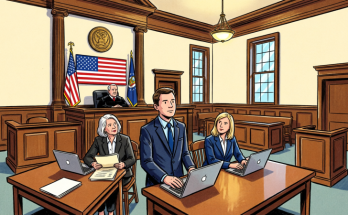
Judge Castillo spoke quietly.
“Continue.”
The bailiff turned to the third tab.
“Asset item three,” he said, “supplemental document. Independent forensic audit prepared by Hargrove and Dunn, certified public accountants.”
His voice remained even. It didn’t need emphasis.
“Findings: Between January of the prior year and September of the current year, Anders Lind and Eva Lind executed unauthorized financial transactions totaling three hundred eighty-nine thousand, four hundred twenty dollars using the personal identifying information of Helena Marie Lind.”
Judge Castillo raised his hand.
“Stop.”
The bailiff fell silent.
The judge stared at the page for several seconds. Then he removed his glasses slowly and placed them on the bench.
He looked at Anders.
He looked at Eva.
He looked at Keading, whose face had gone pale.
“Security,” Judge Castillo said calmly.
Two officers entered through the side door and positioned themselves near the exit.
Anders shot to his feet, chair scraping loudly against the floor.
“That’s—this is a misunderstanding, Your Honor,” he said quickly. “I am her father.”
“Mr. Lind,” Judge Castillo said evenly, “sit down.”
Anders sat.
His hands were shaking now—the same hands that had tapped in confidence minutes earlier.
Eva’s face had drained of color. The handkerchief lay forgotten at her feet.
I didn’t move.
I didn’t speak.
I let the documents do what documents do best.
They told the truth.
Then the courtroom door opened again.
Noah.
He wore a UT Austin hoodie and jeans, backpack slung over one shoulder. A twenty-one-year-old who had ridden a bus through the night to get here.
His eyes found mine.
I gave him the smallest nod I could without breaking.
Claire stood.
“Your Honor,” she said, “we have one additional witness. Noah Lind, age twenty-one, son of the petitioners.”
Anders twisted in his chair. “Noah—what are you—”
He stopped himself, glanced at the judge, lowered his voice. “What are you doing here?”
Noah didn’t answer him.
He walked to the witness stand, took his seat, and faced Judge Castillo directly.
“Your Honor,” Noah began, steady despite the exhaustion in his face, “one week ago I overheard my father speaking by phone with his attorney from our garage. I was in the adjacent kitchen. He did not know I was present.”
He pulled a folded sheet from his pocket.
“My father stated, and I am quoting: ‘She’s probably got thirty or forty grand saved. That’ll cover a few months. Once the guardianship goes through, I sell her car, deal with the lease, and restructure everything.’”
The courtroom was silent.
“He referred to my sister as ‘the girl,’” Noah continued. “He also said, ‘Just get me the signature. She won’t fight it. She doesn’t have it in her.’”
For the first time, Noah looked at Anders.
“Dad didn’t file this petition because he’s worried about Helena,” Noah said clearly. “He filed it because he’s broke and he thought she was an easy target.”
Anders lunged forward in his chair.
“Noah, you’re betraying your family—”
The gavel cracked against the bench.
“Mr. Lind,” Judge Castillo said sharply, “one more word and I will hold you in contempt. Do you understand?”
Anders’s mouth opened. Closed. He sank back into his seat, hands gripping the armrests. His polished watch caught the fluorescent light one last time like a cheap reflection.
On the stand, Noah turned toward me.
“I’m sorry I didn’t say something sooner,” he said quietly.
I pressed my lips together.
I couldn’t speak, but I held his gaze and hoped he understood there was nothing to forgive.
Judge Castillo removed his glasses again, placing them carefully on the bench.
The courtroom was completely still. Security at the doors. Anders frozen in his chair. Eva motionless. Keading staring at a spot on the table like he wished he could disappear into it.
“The court has heard sufficient evidence to rule,” Judge Castillo began, each word deliberate.
“First: the petition for guardianship over Helena Marie Lind is denied.”
He paused.
“There is no credible evidence—none—that the respondent lacks capacity for self-care or financial management. On the contrary, the evidence presented demonstrates a level of financial discipline and competence that many adults, including this court, would consider exceptional.”
The words settled over the room like dust.
“Second,” he continued, “the psychological evaluation submitted by the petitioners was prepared without direct examination of the respondent. This court considers that document at best grossly negligent and at worst a deliberate attempt to mislead. The matter will be referred to the Texas Medical Board for review.”
Anders’s jaw tightened.
“Third,” Judge Castillo said, leaning forward slightly, “the forensic audit establishes prima facie evidence of identity theft, financial fraud, and misuse of a revoked power of attorney to obtain credit in another person’s name.”
He looked directly at my parents.
“These are not civil matters,” he said. “They are criminal matters.”
He turned to the clerk.
“I am ordering the full record of these proceedings, along with the forensic audit and supporting documentation, to be transmitted to the Dallas County District Attorney’s Office for criminal investigation.”
Then back to them.
“Mr. and Mrs. Lind,” he said, “you are not to leave this county until further notice. Do you understand?”
Anders did not respond.
Eva gave the faintest nod.
The gavel came down.
“This hearing is concluded.”
The sound echoed against the wood-paneled walls and humming lights—indifferent, mechanical, continuing as systems always do.
Anders stared at his polished shoes.
The courtroom he had entered expecting to control had turned into something else entirely.
I had imagined this moment for years.
It didn’t feel like victory.
It felt like finally exhaling after holding my breath for eleven years.
Outside Department 7, the granite floors amplified every step.
Claire walked on my left. Noah a few paces behind.
“Helena.”
Anders’s voice. He was coming toward us quickly, suit jacket undone, tie loosened, composure unraveling.
Keading had already peeled off toward the elevators.
“You need to stop this,” Anders said, voice strained. “The referral to the DA. Tell your lawyer to withdraw it. I am your father.”
A security officer stepped closer.
Claire positioned herself slightly in front of me.
“Mr. Lind,” she said calmly, “my client is under no obligation to speak with you. I strongly suggest you maintain distance.”
Anders ignored her. His eyes locked onto me—not commanding, not furious.
Desperate.
It was the first time in my life I had seen Anders Lind look desperate.
It didn’t feel satisfying.
It felt exhausting.
He turned toward Noah.
“Son, you don’t understand,” he said. “They manipulated you—”
“Stop,” Noah said quietly.
Noah’s voice was calm, but it cut.
“No one manipulated me,” he said. “You did this.”
Eva reached for my arm.
Her fingers brushed my sleeve. Cold. Shaking.
“Helena, please,” she whispered. “I’m sorry. I’m so sorry.”
I stopped and turned to face her.
And I said the simplest truth I had.
“Mom,” I said, “your apology doesn’t erase $389,420 in unauthorized transactions in my name.”
Her face crumpled.
“You need a lawyer now,” I added. “Not me.”
Then I turned back toward the glass doors.
Sunlight poured through the exit like something opening.
I didn’t look back.
There was nothing behind me I needed anymore.
The system moved slowly at first, then all at once.
Two weeks later, the Dallas County District Attorney formally opened an investigation.
Anders was charged with three felony counts: identity theft, financial fraud, and filing fraudulent documents with the court.
Eva was charged as an accessory.
Dr. Leonard Bishop received notice from the Texas Medical Board that his license was under review for issuing a clinical evaluation without examination. His practice website went offline the following month.
Daniel Keading did not face criminal charges, but the state bar initiated an ethics inquiry. Claire told me those inquiries rarely ended careers, but they followed people like shadows.
Anders’s contractor license—already suspended during bankruptcy proceedings—was permanently revoked once felony charges were filed. Even if he prevailed criminally, the licensing board had its own standards. A fraud indictment exceeded them.
The HELOC was closed. The credit cards canceled. The forged applications invalidated. Unauthorized charges reversed. My credit report corrected line by line like scrubbing graffiti off a wall someone else had vandalized.
The total stolen: $389,420.
Every dollar documented.
Every dollar ordered returned.
People later asked if I pushed for maximum penalty.
I didn’t.
I didn’t ask for punitive damages. I didn’t seek interviews. I didn’t want headlines.
I asked for two things:
The return of what was taken.
And the removal of every fraudulent mark from my financial record.
That was enough.
I didn’t need revenge.
I needed my name back. Clean, intact, mine.
The week the DA filed charges, Claire secured a restraining order. Judge Castillo reviewed the record and signed it the same day.
Five hundred feet. No direct contact. No indirect contact. No messages through anyone else.
A clear line in legal language: this is the boundary, and you put yourself on the other side of it.
I changed the locks. Changed my number. Placed a credit freeze with all three bureaus.
No one opens anything in my name again without verified in-person authorization.
The following Monday at 7:58 a.m., I walked back into the Dallas County Clerk’s Office.
Same desk. Same chipped mug. Same fluorescent lights.
Susan Caldwell was already there.
Instead of her usual nod, she placed a small espresso on my desk.
“I read about the hearing,” she said.
She didn’t ask for details. After a war, what you offer someone is normal.
“Are you all right?” she asked quietly.
For the first time in a long time, I said the truth.
“Yes,” I said. “I am.”
Susan nodded and went back to work.
So did I.
Property transfers. Tax liens. Trust filings.
The county kept moving.
A restraining order isn’t punishment.
It’s a boundary.
It says: this is the line.
You do not cross it.
I didn’t draw that line out of hatred.
I drew it because I finally understood something simple:
Love without boundaries isn’t love.
It’s access.
The Saturday after the hearing, Noah came to see my apartment for the first time.
He stood in the doorway of my 450-square-foot studio, backpack over one shoulder, staring around like he’d miscalculated reality.
“You live here,” he said.
“Yes,” I replied.
“And you own three properties,” he added slowly, like he was still trying to reconcile the image of his sister with the reality of her ledger.
“The rent is reasonable,” I said simply.
Noah laughed.
A real laugh, not the careful one he used growing up under Anders.
He stepped inside and sat on the floor because there was only one chair.
“I’m sorry,” he said quietly. “I should have said something sooner.”
“That wasn’t your fight,” I told him. “You were a kid.”
“I made it my fight,” he said. “Because it was wrong.”
I looked at him—twenty-one, exhausted, determined—and felt something warm expand in my chest.
Bravery doesn’t always look like shouting.
Sometimes it looks like taking a bus through the night and telling the truth in a room that scares you.
We ordered pizza and ate on the floor with paper plates, tap water, and the window open to let in the evening air. Traffic drifted in like white noise.
“Helena,” Noah said after a while.
“Yeah?”
“Will you teach me about investing?” he asked.
I stared at him for a second, then smiled.
“Step one,” I said, “open a Vanguard account.”
Noah grinned.
“Step two,” I added, “never tell Dad.”
He laughed again, and for the first time in years, my studio didn’t feel small.
It felt right.
Six months later, Anders accepted a plea deal.
Two years probation. Two hundred hours of community service. Full restitution in structured payments.
Eva received probation with cooperation credit.
Neither went to prison.
The system handled them the way it handles first-time non-violent offenders: firmly, without spectacle.
The Plano house was foreclosed and auctioned. They moved thirty miles away into a one-bedroom apartment. I know because Noah mentioned it once, then changed the subject.
We don’t speak.
Not because of the restraining order.
That’s just the legal boundary.
The real boundary was built over thirty-four years of being told I wasn’t enough.
At work, I was promoted. Senior records analyst. A small raise. A new nameplate.
I placed it beside the framed receipt for my final student loan payment.
Two documents—one marking the end of debt, one marking the beginning of being seen.
I still live in the studio, but now I’m looking at houses. Not as investments. As a home.
A kitchen big enough to cook real meals.
A yard where I can sit in the sun and owe no one an explanation.
Someone asked if I’ve forgiven my parents.
I thought about it.
“Forgiveness is my choice,” I said. “Consequences belong to the court.”
And that’s where it stays.
Because I didn’t survive Anders Lind by becoming loud.
I survived by becoming precise.
By keeping records.
By letting documents speak.
By knowing that the truth, written down, is louder than any man who thinks he owns the room.