Emily had taken screenshots of the destination when she noticed the next morning.
A motel two towns over.
Another screenshot showed messages between Ethan and Maya on a web app still open in the browser.
I saw my name.
I saw the words authorized user.
I saw Maya asking, “Can she reverse it?” and Ethan answering, “Not if it looks like I had permission.”
My stomach twisted.
“Why didn’t you tell me right away?” I asked Emily, though my voice came out broken instead of angry.
Her eyes filled with tears.
“Because you were crying,” she said.And I thought if I told you, you would get scared and call him.
I didn’t want him to come back.”
Then she showed me the last thing.
It was not hacking.
It was not some impossible movie trick.
It was something a child could do because she paid attention when adults underestimated her.
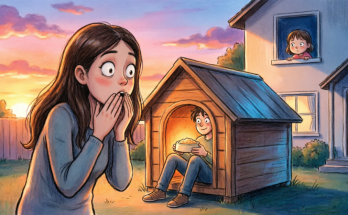
Emily had opened the family safety app I had installed on her tablet months earlier, the one I used to find the device when she misplaced it around the house.
When Ethan borrowed her tablet and packed it by mistake with his things, it kept sharing its location.
The blue dot had moved from our house to the motel.
Then to a storage facility.
Then to a small rental cabin near the state line.
Emily had taken screenshots every time it moved.
She had emailed them to herself and, because she did not know what else to do, she had sent the folder to the one adult she trusted besides me.
Her teacher, Mrs.
Alvarez.
That was why Ethan was panicking.
Mrs.
Alvarez had not brushed it off as a child’s story.
She had called the school counselor.
The counselor had called me, but I had been on the phone with the bank and missed it.
Then, after seeing the screenshots and hearing the recording, they contacted the police department handling my report.
The bank had received supplemental evidence that morning.
Maya’s linked account had been flagged.
Ethan did not know any of that yet.
He only knew their escape had started closing around them.
“Listen to me,” Ethan said, and now his voice had changed.
It was softer, desperate.
The old Ethan.
The brother who knew how to sound wounded when cornered.
“Laura, you need to call them and tell them this is a misunderstanding.
I was going to pay you back.
I just needed a reset.
Maya and I were in trouble.”
“You emptied my savings,” I said.
“I borrowed it.”
“You disappeared.”
“I panicked.”
“You laughed about me crying.”
Silence.
That silence was the first honest thing he gave me.
Maya grabbed the phone.
Her voice came through sharp and breathless.
“You don’t understand what you’re doing.
If this becomes a criminal case, everyone’s life gets ruined.
Ethan’s, mine, yours.
Do you really want your daughter dragged into court because she recorded private conversations?”
Emily flinched.
I stood up.
For two days, I had felt helpless.
I had felt small.
I had felt like the mistake was mine because I had trusted the wrong person.
But hearing Maya try to scare my child burned something clean through me.
“Do not ever mention my daughter again,” I said.
Maya scoffed.
“Or what?”
Before I could answer, there
was a pounding sound on their end of the call.
Three hard knocks.
Then a muffled voice.
“Ethan Mitchell? Open the door.”
Maya stopped breathing.
Ethan whispered, “No.
No, no, no.”
The line filled with movement.
A chair scraping.
Maya crying.
Ethan saying something I could not understand.
Then the call went dead.
I stood in the kitchen staring at my phone, my pulse thudding in my throat.
Emily burst into tears.
I crossed the room and pulled her into my arms.
She clung to me like she had been holding herself together for days and had finally been given permission to be a child again.
“I’m sorry,” she sobbed.
“I didn’t know what to do.
I just wanted you to not lose everything.”
I held her tighter.
“You did nothing wrong,” I whispered, though I knew the world was more complicated than that.
I knew there would be questions, statements, procedures, adults with clipboards asking my little girl to repeat things she should never have heard.
But in that moment, all I could feel was the fierce ache of knowing my ten-year-old had protected me while I was trying to protect her.
The next week was brutal.
Ethan and Maya were found at the cabin near the state line.
They had split the money between two accounts, one prepaid card, and a cash withdrawal they claimed was for “travel expenses.” Maya insisted she thought Ethan had permission.
The recording made that lie fall apart quickly.
The bank’s fraud department moved slowly, but the police report, the location history, and the recorded conversation changed everything.
Ethan had not simply spent money while authorized.
He had documented intent to deceive, transfer, conceal, and flee.
That distinction mattered.
Not all the money came back at once.
Some of it was gone, wasted on motel rooms, cash withdrawals, and whatever fantasy they had built for themselves.
But the frozen account recovered a large portion.
The rest became part of restitution.
When I saw the first returned deposit appear in my account, I sat down on my bedroom floor and cried again.
This time, it was different.
It was not helplessness.
It was relief arriving so hard it hurt.
My mother called me after Ethan was arrested.
She had heard his version first, of course.
In his version, I had overreacted.
Emily had misunderstood.
Maya had been manipulated.
The money was going to come back eventually.
“He’s still your brother,” my mother said.
I looked through the doorway at Emily doing homework at the kitchen table, her pencil moving carefully across the page as if she had not just lived through something that would leave marks for years.
“He is also the man who stole from my child,” I said.
My mother went quiet.
People always talk about forgiveness like it is a door you are cruel for keeping locked.
They do not talk enough about what happens when the person outside that door is still holding the crowbar.
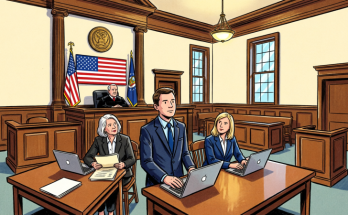
Ethan pleaded guilty months later.
He stood in court wearing a shirt I recognized because it had once been my father’s.
He did not look at me at first.
He looked at the floor, at his lawyer, at the judge, anywhere but my face.
When the judge asked whether he wanted to say anything, Ethan
finally turned.
For one foolish second, I thought he might apologize to Emily.
Instead, he said, “I made a mistake.”
A mistake.
As if he had forgotten to return a borrowed sweater.
As if he had not planned it, mocked me, vanished, and then screamed at my daughter when she became the reason he got caught.
I felt Emily’s hand slip into mine.
She squeezed once.
I did not speak to Ethan that day.
I did not need to.
The recording had spoken.
The screenshots had spoken.
The empty bank accounts had spoken.
After court, my mother cried in the parking lot and asked if I would ever forgive him.
I watched Emily climb into the car, small and brave and far too quiet.
“Maybe someday I’ll stop being angry,” I said.
“But he doesn’t get access to us again.
Not to my home, not to my money, not to my daughter.”
That was the boundary that saved us.
It took time to rebuild.
I picked up extra work.
I negotiated bills.
I changed every password, closed old accounts, froze credit, and learned more about financial access than I ever wanted to know.
Emily started seeing a counselor because bravery does not mean a child walks away untouched.
For weeks, she kept asking if Ethan knew where we were.
For weeks, I promised her the locks were changed.
Then one evening, almost a year later, she sat beside me on the couch and asked, “Are you mad that I didn’t tell you right away?”
The question broke my heart in a quiet place.
I turned off the television and faced her.
“No,” I said.
“I’m sorry you felt like you had to fix it.
That was never your job.”
She leaned against me.
“But I did help, right?”
I kissed her hair.
“You helped more than anyone.”
The money mattered.
Of course it did.
Losing it had almost crushed us.
Getting most of it back gave us room to breathe again.
But the real damage was not financial.
It was the moment I realized trust could be used as a weapon by someone who knew exactly where you were softest.
Ethan thought I was weak because I loved my family.
He thought Emily was invisible because she was a child.
In the end, the person he underestimated most was the one who saw him clearly.
I still do not know what I would have done if Emily had not kept those screenshots, if that tablet had not stayed in his bag, if her teacher had not taken her seriously.
Maybe the bank would have shrugged.
Maybe Ethan would have vanished long enough to spend everything.
Maybe I would have spent years blaming myself for trusting him.
That is the part people argue about when they hear the story.
Some say Emily should never have been involved.
Some say I should have seen the red flags sooner.
Some say family deserves forgiveness, no matter what.
But I know what I saw in that courtroom.
I saw a man who called betrayal a mistake only after he was caught.
And I saw my daughter, ten years old, holding my hand like she was the adult in the room.
Part 12 — The Letter Emily Never Meant Me to Read
Almost two years passed before I found the letter.
Not because Emily hid it well.
But because children hide things in places adults stop looking.
Inside old sketchbooks.
Under mattress corners.
Between pages of school notebooks no one opens after summer break.
I found it by accident while cleaning her closet before middle school started.
The paper was folded carefully into quarters, tucked inside a faded purple journal with a broken zipper.
At first, I thought it was homework.
Then I saw my name written across the top in Emily’s careful handwriting.
Mom.
I should have stopped.
Every parent knows there are thoughts children deserve to keep private.
But something about the date written beneath my name made my chest tighten.
Three days after Ethan stole the money.
My hands suddenly felt cold.
I unfolded the letter slowly.
And by the second sentence, I had to sit down on the floor.
“Mom,
I know you’re trying not to cry where I can see you.
But I can still hear it through the wall at night.”
The room blurred instantly.
I kept reading.
“I’m writing this because I think grown-ups forget things when they get scared.
You kept saying everything would be okay, but your eyes looked like when Grandma died and you thought nobody noticed.”
I covered my mouth.
The paper shook in my hands.
“I know Uncle Ethan is bad now.
I know you don’t want me to hate him because he’s your brother.
But I do hate him a little.
And I feel bad for hating him because you taught me not to.”
That sentence nearly broke me completely.
Because children do not simply survive betrayal.
They absorb it.
Quietly.
Deeply.
In places adults cannot immediately see.
The letter continued.
“When I heard them talking in the guest room, I got scared.
Not because of the money.
Because of you.
I thought if he could hurt you that much, maybe he didn’t love you anymore.
And if family can stop loving you, then maybe anybody can.”
I started crying then.
Not the silent crying I had mastered during the bank calls and court hearings.
Real crying.
The kind that folds your body inward.
My daughter had carried fears I never even knew existed.
“I didn’t tell you right away because you already looked broken.
And I thought maybe moms can only survive one bad thing at a time.”
I closed my eyes hard.
God.
She was ten years old.
Ten.
And trying to ration my pain like medicine.
The final part of the letter hurt worst of all.
“If I ever have kids one day, I hope they tell me when they’re scared.
I hope I notice faster than the adults around me did.”
There are sentences that change how you understand your own life.
That was one of them.
Because suddenly I realized something unbearable:
Emily had not only survived Ethan’s betrayal.
She had survived watching me collapse under it.
And children remember both.
I sat on the closet floor for almost an hour with that letter in my lap.
Not moving.
Just thinking.
About all the nights I thought I had hidden my fear well enough.
All the moments I believed I was protecting her by pretending to be stronger than I felt.
Children always know.
Maybe not every detail.
Maybe not every bill or legal document or bank account.
But they know when safety changes shape inside a home.
That evening, after dinner, I asked Emily to sit with me on the porch.
She was twelve by then.
Longer legs.
Older eyes.
Still carrying traces of the little girl who once sat in a bathroom stall whispering, Mom, look.
I handed her the folded letter carefully.
Her entire face changed the moment she recognized it.
“Oh my God,” she whispered.
“You found that?”
I nodded.
Emily grabbed the paper quickly, embarrassed.
“I didn’t mean for you to read it.”
“I know.”
She stared at the porch floor.
For a few seconds neither of us spoke.
Then I said quietly:
“You thought I was broken.”
Her eyes filled immediately.
“You were.”
The honesty hurt because it was true.
I looked out across the yard.
“I think I tried so hard to protect you from what was happening that I forgot something important.”
“What?”
“You were already living through it too.”
Emily wiped her nose with her sleeve exactly the way she did as a little girl.
“I was scared all the time after they left,” she admitted softly.
“I thought Uncle Ethan might come back angry.”
“I know.”
“No,” she whispered.
“I don’t think you did.”
That sentence settled between us heavily.
Because trauma creates parallel experiences inside the same house.
I had lived through financial devastation.
Emily had lived through emotional uncertainty.
I feared losing stability.
She feared losing safety.
Both were real.
Both mattered.
“I’m sorry,” I said quietly.
Emily looked startled.
“For what?”
“For not realizing sooner how much this hurt you too.”
Her face crumpled then in a way I had not seen since she was very small.
“I didn’t want you to feel worse,” she cried.
“You already looked so sad all the time.”
I pulled her into my arms immediately.
And suddenly we were both crying for different versions of the same wound.
There on the porch, holding my daughter while summer thunder rolled softly in the distance, I understood something I wish more adults recognized:
Children do not need perfect parents.
They need truthful ones.
Not parents who never fall apart.
Parents who teach them how people survive honestly after they do.
That night changed something between us.
Not dramatically.
Not magically.
But permanently.
After that, Emily started talking more openly when things frightened her.
And I stopped pretending strength meant silence.
Sometimes healing begins the moment people stop performing stability for each other.
Three months later, Emily’s school assigned a personal essay titled:
Describe someone who changed your understanding of courage.
I expected her to write about teachers.
Or firefighters.
Or athletes children admire for obvious reasons.
Instead, she wrote about me.
She left the essay on the kitchen counter accidentally before school.
I know I probably shouldn’t have read that either.
But I did.
And one paragraph has stayed with me ever since.
“My mom cried a lot after my uncle stole our money.
But she still got up every morning.
She still made my lunch.
She still checked my homework.
She still hugged me before bed even when she looked tired enough to fall over.
Before all this happened, I thought brave people were people who never got hurt.
Now I think brave people are the ones who keep loving others while they heal.”
I sat at the kitchen table holding those pages and cried harder than I had cried at Ethan’s sentencing.
Because children are watching us all the time.
Not when we’re impressive.
When we’re real.
Ethan wrote twice from prison during those years.
The first letter blamed Maya.
The second blamed addiction, stress, fear, bad influences, financial desperation, childhood resentment, everything except himself.
I never answered either one.
Not because forgiveness is impossible………………………………