I shrugged. “If you want the house, you can have the shell. That’s what you’ve been treating it as anyway.”
At exactly twelve o’clock, the intercom buzzed.
“Michelle?” The voice crackled through the box. “It’s Daniel, from Green Mountain Movers.”
I walked to the panel, pressed the button, and buzzed them in.
The moving truck looked almost comically large in the driveway, dwarfing my father’s aging sedan. Daniel and his crew stepped out, wearing matching navy t-shirts with the company logo, heavy work gloves tucked into their back pockets.
Daniel himself was in his late thirties, maybe early forties, with the kind of solid build that comes from lifting other people’s lives for a living. He took one look at my expression and didn’t ask any of the questions I could see flickering behind his eyes.
“Afternoon,” he said simply. “You Michelle?”
“I am,” I said. “Thank you for coming.”
He nodded toward the house. “You got everything labeled?”
“Yes.”
He stepped inside, his gaze sliding over the living room. I watched, almost clinically, as his eyes moved from sofa to TV, to the Post-its, to my parents hovering awkwardly by the kitchen doorway.
“Alright, team,” he called over his shoulder. “Everything with a yellow tag. Treat it like glass.”
They moved with calm efficiency. No chatter, no judgment. The sofa went first, its bulk maneuvered through the front door with practiced angles and grunts. Watching it leave, I expected to feel something—sadness, nostalgia, at least a pang. All those imagined family movie nights that never quite materialized, the evenings I’d spent there alone after my parents went to bed, the rare time Christina had sat beside me and actually seemed present.
But I felt… nothing. Or rather, I felt something very specific: closure.
That wasn’t nostalgia leaving the house. It was an invoice fulfilled.
The TV followed, dismounted from the wall with care. One of the movers asked where the box was for it, and I produced it from the garage—of course I’d kept it; of course I knew exactly where it was. The washer and dryer were next, carefully disconnected and wheeled out on dollies. The microwave came down from its perch, the toaster unplugged, the coffeemaker lifted from its spot beside the sink.
Christina watched, aghast.
“You can’t do this,” she muttered, more to herself than to me. “You can’t actually—Mom! Say something!”
My mother sat at the edge of the now-naked dining table, her hands clasped tightly in her lap. She looked as if she’d aged ten years in twelve hours. “She has the receipts,” she said softly. “It’s her right.”
My father said nothing. He stood in the corner, arms crossed, jaw clenched so hard I could see the muscles twitch.
The dining chairs, my carefully chosen modern set, disappeared next. They left the old table standing alone, its mismatched wood stain suddenly more obvious without the distraction of upholstery.
“Table stays?” one mover asked, pausing.
“Yes,” I said. “It was my grandfather’s.”
By two in the afternoon, the house echoed. The curtains were gone, leaving the windows bare and unsoftened. The area rugs had been rolled up and carried out, revealing scuffed hardwood beneath. The hum of the appliances was gone, replaced by a hollow stillness.
The warmth I had financed, the comfort I had curated—all gone.
I photographed the movers’ final receipt with my phone, the paper crisp under my fingers. Documentation mattered. It always had.
“Everything you wanted is loaded,” Daniel said, handing me the original. “We’ll take it to the storage facility address you texted. They’ll be expecting us?”
“Yes,” I said. “Thank you. I’ll meet you there in a bit.”
He nodded once, then glanced back at the house. “Good luck,” he said quietly.
I wasn’t sure which of us he was talking to.
I walked through the house one last time. The living room’s bare walls felt bigger, the nail holes where picture frames had hung now small, accusing eyes. My bedroom, stripped of everything but the built-in closet and the faint height marks on the doorframe, looked like a hotel room between guests.
In the kitchen, the counter was empty, the outlines of the appliances still visible in faint dust lines. The refrigerator remained—an ancient beast my parents had bought before I could walk. It, along with the stove and the dishwasher, had been theirs long before the financial near-collapse. My fingerprints weren’t on those invoices.
On the bare dining table, I placed a single key—the front door key I’d been using for nearly three decades. It looked smaller than I remembered.
I stood there for a moment, listening. No hum of the coffee maker. No murmur of a television. Just the rain tapping on the windows and the faint wheeze of the old refrigerator.
“Michelle,” my mother whispered from the doorway.
I turned.
Her eyes were red-rimmed, mascara smudged. “You don’t have to leave like this,” she said. “We could talk. Work something out.”
“We tried talking,” I said gently. “You talked at me at five this morning. You already made your choice. This is me making mine.”
She flinched as if I’d thrown something. “We’re still your parents,” she said. “We thought you were doing this for the family.”
“I was,” I said. “I just didn’t realize I wasn’t included in your definition of ‘family.’”
She covered her mouth with her hand, shoulders shaking. I felt a flicker of sympathy, but it was distant, as if I were watching someone cry on a screen. I’d spent years feeling guilty on her behalf. It had hollowed me out. There was very little room left for guilt.
“Goodbye, Mom,” I said.
She didn’t answer.
I walked out the front door without looking back.
Forty-eight hours later, my phone exploded.
I’d spent those two days in a strange limbo, shuttling between the storage unit where my possessions now lived in anonymous stacks and the small, temporary apartment I’d rented—a one-bedroom with beige walls and a balcony overlooking a parking lot. It wasn’t much, but it was mine, paid for with money that hadn’t been siphoned off into someone else’s debt.
With the practical chaos handled, my brain had tried to circle back to what had happened, but every time it did, a heavy, exhausted numbness descended. I went through the motions: I answered emails from work, attended Zoom meetings, wrote code. No one on my team knew that in between fixing bugs, I was also uprooting the only home I’d ever known.
Then, on the dot—forty-eight hours after the moment Christina had walked into my kitchen and delivered her ultimatum—my screen lit up with missed calls.
Christina. Mom. Dad. Numbers I didn’t recognize, probably Jonathan’s colleagues or relatives. The voicemail icon grew a little red digit.
I ignored the first few calls. Then, curiosity prying at me, I tapped into the voicemail.
“There’s nothing here,” Christina’s voice cracked through the speaker, pitching high with disbelief. “She took everything. The house is empty. What are we supposed to—how could you do this, Michelle? Call me back. Call me back now.”
Another message from my father followed, his voice resigned and shaky. “Michelle, this… this was too much. You’ve gone too far.”
Too far.
The phrase lodged somewhere deep in my chest and turned slowly, like a piece of glass.
Had I? I had, for once, simply drawn a line at the boundary between my labor and their entitlement and refused to pretend the line didn’t exist.
If that was “too far,” then maybe their map had been upside down all along.
That evening, I sat across from my best friend and attorney, Rebecca, in her glass-walled office downtown. The city sprawled beyond the floor-to-ceiling windows, a grid of lights on wet asphalt. Her office was a study in cool professionalism—dark wood desk, a single potted plant that refused to die, shelves lined with law books and binders labeled with names that weren’t mine.
My receipts, dog-eared and worn, looked almost vulgar spread across her sleek desk. Beside them lay an old photograph of my grandfather, Frank, holding a beer and laughing at some joke I couldn’t remember.
“I don’t want defense,” I said quietly, my fingers tracing the edge of the photograph. “I want offense.”
Rebecca leaned back in her chair, studying me. She was a few years older than me, with sharp eyes and a steady presence, the kind of person you wanted on your side in a storm. We’d met in college—me the logic-driven computer science major, her the philosophy student who loved arguing about ethics late into the night. Somewhere along the way, she’d switched tracks to law school, and I’d gone into software engineering. We’d stayed in each other’s orbits.
“What are you thinking?” she asked.
I looked up at the photograph. My grandfather’s eyes crinkled at the corners, his mouth open mid-laugh. He’d spent countless afternoons in that house, fixing things with stubborn pride, telling us stories about “the old days” which, to my child brain, might as well have been another planet.
He’d died when I was twenty-two. Heart attack. One minute he’d been beating my father soundly at chess in the living room, the next he was clutching his chest and sliding off the chair. The paramedics had come, but they’d been too late.
I remembered, vividly, standing in that same living room as my parents told us there was no will. No instructions. No last wishes in writing. The house, they’d said, would naturally pass to them. “We’ll always take care of it,” my mother had promised, her eyes swollen from crying.
At twenty-two, grief-stricken and naïve, I hadn’t questioned it.
Now, sitting in Rebecca’s office, the suspicion that had been buzzing at the edges of my mind finally settled into words.
“I don’t think the inheritance was clean,” I said. “I think my grandfather left something. And I think my parents hid it.”
Her eyes sharpened as if someone had flipped a switch behind them. “Go on.”
“My grandfather wasn’t careless,” I said. “He planned everything. His garden, his finances, his stupid chess openings. He’d been talking about ‘making things official’ for years before he died. There’s no way he didn’t leave a will. But when I asked, my parents said there wasn’t one. That we just had to ‘trust them.’ And now, after everything with the mortgage, after lying about how bad it was until they were desperate, after letting me pay it off, after trying to evict me from the house I saved, I just… I don’t trust them. Not about anything. Especially not about him.”
Rebecca was already typing, the keys clacking a staccato rhythm. “Give me his full name,” she said. “And the approximate date of death. Hospital, if you know it. County. Anything.”
I gave her everything I remembered, down to the name of the paramedic who’d patted my shoulder as they wheeled his body away. She took it all down. Her jaw was set, the lines of her face hardening.
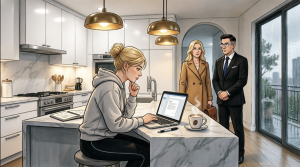
“Alright,” she said finally. “Leave this with me. If there’s something official, I’ll find it. And if they buried it—figuratively speaking—I’ll dig it up.”
Two days later, she texted me: Come to the office. Now.
I felt my pulse jump as I rode the elevator up, my reflection in the mirrored walls looking oddly composed. On the twenty-first floor, the receptionist waved me through; she’d learned my face over the years, even if my legal issues had so far been blessedly minor.
When I stepped into Rebecca’s office, she didn’t bother with small talk. No jokes about the weather, no quips about her latest impossible client. She just turned her monitor toward me, her expression taut.
“Brace yourself,” she said.
On the screen was a scanned document: slightly yellowed paper, neat type, a seal embossed at the bottom. Across the top, in formal font: LAST WILL AND TESTAMENT OF FRANK HOLMES.
My grandfather’s full name looked unfamiliar in that context, as if someone had dressed him up in a suit too stiff for him.
Rebecca scrolled, skimming past the legal preamble, until she reached a paragraph in the middle. She zoomed in until the words filled the screen.
All real estate, including the residence in suburban Portland, Oregon, shall be bequeathed solely to my beloved granddaughter, Michelle Holmes.
My throat tightened.
I read the sentence once, twice, three times, as if repetition might change it. It didn’t.
“That means…” I began.
“That means the house was legally yours the moment he died,” Rebecca said, her voice steady but vibrating with controlled anger. “Your parents had no right to treat it as theirs. They had no right to tell you there was no will. They had no right to take out a mortgage on a property that was not legally in their names and then ask you to pay it off. And they certainly had no right to try to evict you from a house that was, in fact, yours.”
I stared at the words until they blurred. In my mind, scenes from the last decade rearranged themselves like puzzle pieces suddenly snapping into different slots.
My grandfather, measuring my height against the doorway with a dull pencil, saying, “Someday you’ll be the one to protect this house, you know.”
I’d laughed, thinking he was being sentimental. “Protect it from what? Wolves?”
“From everything,” he’d said. “Houses need guardians. People forget that.”
It hadn’t been a sweet comment. It had been instructions.
Now, looking at his will, I realized he’d tried to give me the tools to fulfill them. And my parents had quietly, deliberately taken those tools away.
I felt something colder than rage settle over me. Rage burns hot; it consumes quickly. This was different. This was clarity. It was the feeling of a lens sharpening into focus.
“Teach them reality,” I said, my voice calm.
Rebecca’s mouth curved into a smile that could cut glass. “With pleasure.”
The next day, a certified letter hit the mailbox at my old house. Two letters, technically; we sent one to my parents and one to Christina and Jonathan at their condo, just in case they tried to claim ignorance.
The first enclosure was a detailed inventory of the items I’d removed, cross-referenced with purchase receipts and timestamps. It asserted my ownership of each item, documented the circumstances of their removal, and firmly warned against any attempt to file false theft reports. It cited Oregon statutes on malicious prosecution and defamation, with references and case law.
The second enclosure was simpler, but heavier.
It laid out, in clean, unambiguous language, that I was the legal owner of the property at [address redacted here, but printed clearly there] by virtue of my grandfather’s will. A copy of the will, duly recorded, was attached.
It informed my parents that their continued occupancy of the property was unauthorized and unlawful. It demanded they vacate within a legally prescribed period. It stated that, effective immediately, damages would accrue daily for unlawful occupancy, calculated at fair market rental value plus additional penalties.
It did not sugarcoat anything.
Rebecca sent them via certified mail, with return receipt requested. She also, at my insistence, emailed scanned copies to all relevant parties. No one could claim they hadn’t received them.
Calls flooded in.
Dozens, then more. Some from my parents, some from Christina, some from numbers I didn’t recognize. I watched them roll in and let them go to voicemail.
Rebecca answered one.
I was sitting on her office couch, knees drawn up, when her phone lit up. She glanced at the screen, then at me. “Your mother,” she said.
“Put it on speaker,” I said.
She did.
“Rebecca,” my mother’s voice screeched immediately, raw with fury. “What is this? What have you done? You—you can’t just—where is Michelle? Put her on the phone. Right now.”
“Good afternoon, Mrs. Holmes,” Rebecca said calmly, as if the woman were asking about a parking validation. “As stated in the letter, all communication should be in writing from this point forward. I’m happy to answer any legal questions you have.”
“I don’t want to talk to you,” my mother snarled. “I want to talk to my daughter. This is some mistake. There was no will. We told her that years ago. Your so-called ‘document’ is—”
“Is a valid will recorded with the county,” Rebecca interrupted. “It’s been verified. I would strongly advise you to retain your own counsel if you plan to contest it. In the meantime, Michelle will not be speaking with you directly. All communication goes through our office. As you also saw in the letter, damages will accrue daily for unlawful occupancy.”
“You ungrateful—” My mother’s voice cracked, breaking off into a choked sob. “After everything we did for you, Michelle! After raising you, after—”
Rebecca pressed the mute button and looked at me. “Do you want to hear the rest?” she asked.
I shook my head.
She ended the call.
“They’ll hire a lawyer,” I said.
“Of course,” she replied. “And then they’ll realize how weak their position is. Still, we’ll be ready.”
They did hire a lawyer. A conservative older man with a silver mustache and a reputation, according to Google, for “aggressive advocacy.” He filed a challenge to the will, claiming my grandfather had not been of sound mind when he drafted it. That he’d been unduly influenced. That he’d “forgotten” he had another grandchild.
“Interesting,” Rebecca said when she read through the filing. “They never seemed too concerned about his mental state when they were cashing birthday checks.”
She built our case methodically, like constructing a bridge.
Medical records showing my grandfather’s cognitive assessments, all within normal limits until his death. Affidavits from friends who played chess with him weekly, describing his sharp mind and sharper tongue. Video from a local senior center’s chess tournament, in which he’d been recorded laughing and trash-talking his opponent with unambiguous lucidity.
She gathered his bank records, showing years of meticulous account management. His taxes, filed on time. His long-standing pattern of doing exactly what he said he would do.
She even tracked down the notary who’d stamped his will. The woman, now retired, remembered him. “Oh, Frank,” she said in her deposition. “He came in with his granddaughter. Made a big fuss about how she was the responsible one. Said he was leaving the house to her so she’d always have someplace safe. It was very sweet, actually.”
I didn’t remember being there. Maybe I’d blocked it out, or maybe my brain had filed that day under “routine errands.” In my early twenties, I’d signed a lot of forms without fully understanding their weight.
When the hearing date came, my stomach felt like a fist.
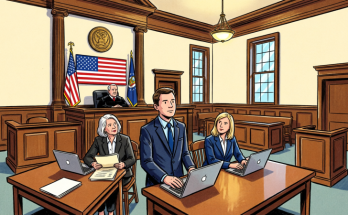
The courtroom was smaller than I’d expected, more beige than dramatic. No high drama wood paneling, no sweeping balconies. Just rows of wooden benches, a judge’s bench, two tables facing each other like opponents in a chess game.
My parents sat at one table, their lawyer beside them. My mother’s face was pale, lips pressed tight. My father looked even older than he had in my memories of the last few weeks; his hair, once salt-and-pepper, seemed mostly salt now……………
Click Here to continuous Read Full Ending Story👉: Sister Demanded I Vacate My House in 48 Hours_PART3(ENDING)