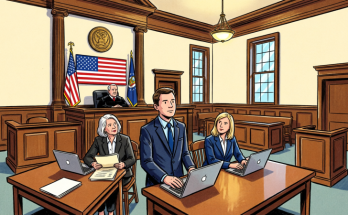
The bank teller’s hands stopped moving on the keyboard. She looked at her screen, then at me, then back at the screen. Her face had gone pale.
“Sir,” she said, her voice barely above a whisper, “I need to get my manager.”
I sat there in the plastic chair, holding my grandfather’s worn passbook in my hands. The same passbook my father had ripped away from me five years ago at my wedding. The same passbook everyone had laughed at, the same passbook I had kept in my nightstand drawer for half a decade because I could not bring myself to throw away the last gift my grandfather ever gave me.
“Is something wrong?” I asked.
“No, sir. Nothing is wrong. I just… I need to get my manager. Please wait here.”
She practically ran to the back of the bank. I looked down at the passbook again. It was old, yellowed, the cover worn soft from decades of handling. First Cleveland Savings and Loan was printed on the front in faded blue letters, a bank that had not existed under that name since 1987. Inside, the first entry was dated March 15th, 1971. A deposit of $8,000. My grandfather’s handwriting, neat and careful in the space where customers used to record their own transactions. My father had said this passbook was worthless. My mother had said I should not embarrass myself. My brother had laughed and said there were probably fifty cents in the account, if the account even still existed. But I had come anyway because my grandfather had asked me to. Because twelve years of Sunday visits had taught me to trust him. Because the look in his eyes when he handed me this passbook at my wedding was not the look of a senile old man. It was the look of someone giving away something precious. I should have come sooner, but life gets in the way and doubt creeps in. And when everyone you know tells you something is worthless, you start to believe them. I wish I had not believed them.
The manager appeared from the back, a middle-aged woman in a gray suit with a name tag that said Patricia Holloway, Branch Manager. She was followed by another man, older, wearing a more expensive suit. He had the look of someone who had been interrupted from something important.
“Mr. Mercer?” Patricia asked, approaching my chair. “I am Patricia Holloway. This is David Chun, our regional director. He happened to be visiting our branch today.”
“Is there a problem with the account?”
Patricia and David exchanged a look. Then David pulled up a chair and sat down across from me.
“Mr. Mercer, there is no problem. Quite the opposite, actually.”
He glanced at the passbook in my hands.
“That account has been active since 1971. It was opened at First Cleveland Savings and Loan, which was acquired by Ohio National in 1987, which was then acquired by United Midwest in 2003, which was then acquired by us, National Ohio Bank, in 2015. Through all those acquisitions, the account remained active.”
“Active? My father said it would have been closed decades ago.”
“Normally, yes. Dormant accounts are typically closed after a certain period of inactivity, but this account was never dormant.”
David paused.
“Mr. Mercer, your grandfather made a deposit every single month for fifty-two years, two hundred dollars a month without fail, from March 1971 until February of this year.”
I stared at him.
“That is not possible. My grandfather was broke. He lived in a tiny house. He drove a truck from 1987. He wore the same clothes for thirty years.”
“I cannot speak to his lifestyle choices. I can only tell you what the records show.”
David leaned forward.
“Mr. Mercer, perhaps you should come to my office. This is a conversation that requires some privacy.”
I followed them to a corner office with glass walls and a view of the Cleveland skyline. Patricia closed the door behind us. David sat behind the desk and typed something into his computer.
“The initial deposit in March 1971 was $8,000,” he said, reading from the screen. “Quite a large sum for that time. Your grandfather then established an automatic transfer of $200 per month from a checking account at the same institution. That transfer continued uninterrupted for fifty-two years.”
“Fifty-two years of two hundred dollars a month,” I said, doing the math in my head. “That’s about a hundred and twenty-five thousand in deposits.”
“Yes. But this was a high-yield savings account with compound interest. And in 1985, your grandfather converted a portion of the funds into certificates of deposit, which were then rolled over repeatedly at favorable rates. In 1992, he also purchased dividend-reinvesting shares in several blue-chip stocks through our investment arm.”
“My grandfather did all that? He barely finished high school.”
“Someone did it. The records show the decisions were made in person at this branch with proper identification.”
David turned the monitor so I could see it.
“Mr. Mercer, the current balance of the account, including all associated investment holdings, is $3,412,647.31.”
The room tilted. I grabbed the arm of my chair.
“That is not possible,” I heard myself say. “That is not… My grandfather was poor. Everyone knew he was poor. He lived like he did not have two pennies to rub together.”
“The account says otherwise.”
David’s voice was gentle.
“Mr. Mercer, are you all right? Can I get you some water?”
“Three million dollars? My grandfather had three million dollars?”
“Three point four million, yes. And according to the beneficiary designation on file, updated in 2019, it all belongs to you.”
I did not remember leaving the bank. I did not remember driving home. I just remember sitting in my truck in the driveway, staring at the passbook in my hands, trying to understand how the man everyone had dismissed as a poor, senile old fool had quietly accumulated a fortune and left it all to me. I should have seen it coming. Twelve years of signs, all pointing to this exact moment.
My grandfather, Chester Raymond Mercer, was born in 1940 in a small town outside Cleveland. He grew up poor, genuinely poor, the kind of poor where you split a single egg among three children for breakfast. His father worked in a steel mill until the work destroyed his lungs. His mother took in laundry until her hands were raw and cracked. They never had anything, and Chester grew up believing that was just how life worked for people like them. He got a job at the same steel mill when he was seventeen, lying about his age to get hired. He met my grandmother Rose at a church picnic when he was twenty-two. They married six months later, moved into a tiny house on the east side of Cleveland, and started the life that everyone in my family would eventually look down on. They never had much, or at least that is what everyone thought. Chester worked at the mill for forty-three years, never missing a day, never complaining, never asking for more than he was given. Rose worked as a seamstress, then as a school cafeteria worker, then as a cleaning lady, always contributing, always saving, always making do with less.
They had one son, my father Gordon, who grew up embarrassed by his parents’ modest life and determined to escape it. He went to college on scholarships and loans, got a business degree, climbed the corporate ladder at a manufacturing company, and eventually became a regional manager with a nice house in the suburbs and a wife who had never known poverty. Gordon rarely visited his parents. He was too busy, he said, too important. He had meetings and golf games and social obligations that could not be rescheduled for Sunday dinner with his father. But he always had time to remind everyone how far he had come, how much better he had done than his parents, how the Mercer name finally meant something thanks to him.
My mother Lorraine was cut from the same cloth. She came from a middle-class family that considered itself upper class, and she spent her life trying to climb higher. She tolerated Chester and Rose the way you tolerate an embarrassing relative at holidays, with forced smiles and quick exits. My brother Preston was the golden child, three years older than me, smarter, more ambitious, more everything. He became a financial consultant, married a woman from a wealthy family, and moved to a house in the suburbs that was even bigger than our parents’ house. He had two children who attended private schools and took tennis lessons and had never met their great-grandfather more than a handful of times. My sister Bridget was the middle child who desperately wanted to be the golden child. She married a dentist, had three children, and spent her life trying to keep up with Preston while looking down on everyone below her on the ladder she was climbing. And then there was me, Declan Patrick Mercer, the youngest, the disappointment, the one who became an electrician instead of a business executive, who married a woman from a working-class family, who lived in a modest house and drove a used truck and never seemed to understand that the whole point of being a Mercer was to be better than where you came from.
I was the only one who visited Grandpa Chester.
It started when I was twenty-one, just after I finished my apprenticeship and got my first real job. I was driving past his neighborhood on my way home from a job site, and I thought, Why not? I had not seen him in months. It would only take a few minutes. Those few minutes turned into three hours. Grandpa Chester and I sat on his porch drinking lemonade, talking about everything and nothing. He asked about my work. And unlike everyone else in my family, he actually listened to the answers. He told me stories about the steel mill, about my grandmother, about the Cleveland of his youth. He laughed at my jokes and told a few of his own. When I left that evening, he grabbed my hand and held it for a moment.
“You come back anytime, Declan,” he said. “This old man gets lonely sometimes.”
So I came back the next Sunday, and the Sunday after that, and the Sunday after that. For twelve years, without fail, I visited Grandpa Chester every single week. I brought my girlfriend Naomi to meet him after we had been dating for six months. I brought her again when she became my fiancée. I brought our son Theo to meet his great-grandfather when he was three weeks old. Those Sunday visits became the anchor of my life. No matter what else was happening, no matter how stressed I was about work or money or family drama, I knew that Sunday afternoon would be peaceful. I knew Grandpa Chester would be sitting on his porch with a pitcher of lemonade, ready to listen, ready to share, ready to remind me that the simple things in life were the things that mattered most.
We had rituals, Grandpa and I. I would bring donuts from the bakery on Fifth Street, the same bakery that had been there since he was a young man courting my grandmother. He would make lemonade from scratch, the recipe passed down from his mother, with just the right balance of sweet and sour. We would sit on the porch if the weather was nice, in the kitchen if it was not, and we would talk for hours. He told me stories I had never heard anywhere else, about growing up during the Depression when having a full belly was a luxury, about meeting my grandmother at that church picnic, how she was wearing a yellow dress and laughing at something her friend said, and how he knew in that moment that he would marry her or die trying, about working at the steel mill, the heat and the noise and the danger, and how he came home every day grateful to be alive.
“You learn something working in a place like that,” he told me once. “You learn that every day is a gift. You learn that the things people chase, the money, the status, the fancy houses, none of it matters when a beam falls wrong or a furnace explodes. What matters is who waits for you at home. What matters is who you are when no one is watching.”
He asked about my life too. Not the polite questions my parents asked, the ones that were really about whether I was meeting their expectations. Real questions. About what I was working on. What problems I was solving. What made me happy. What kept me up at night.
“You are good at what you do,” he said once after I described a particularly complicated job. “You solve problems. You make things work. That is a gift, Declan. Not everyone can do that.”
“It is just electrical work, Grandpa. It is not exactly saving lives.”
“No. What happens when the power goes out in a hospital? What happens when the lights fail in a home where a child is afraid of the dark? What happens when a family’s heat stops working in January?”
He shook his head.
“You keep the world running, Declan. Do not ever let anyone tell you that does not matter.”
I thought about that conversation often, especially when my father made comments about my career, about how I could have done something more impressive, more prestigious, more worthy of the Mercer name.
Grandpa Chester never made me feel like I was not enough. He made me feel like I was exactly who I was supposed to be.
“Why do you keep going there?” my father asked me once at a family dinner where Grandpa Chester had not been invited. “What do you even talk about?”
“Life,” I said. “Work. Theo. Whatever is on our minds.”
“What could he possibly have to say about life? He worked in a factory for forty years. He has never been anywhere, never done anything, never accomplished anything worth talking about.”
“That is not true.”
“Name one thing he accomplished, one thing that matters.”
I could not answer him, not the way he wanted. I could not point to degrees or promotions or houses or cars. All I could point to was a life lived simply, honestly, with grace and humor and love. And I knew my father would not understand that. So I stopped trying to explain. I just kept visiting. Every Sunday, rain or shine, for twelve years.
My grandmother Rose died when I was twenty-five. Grandpa Chester was devastated. They had been married for fifty-six years, and he told me once that he had never spent a single night away from her in all that time.
“She was my whole world,” he said, sitting on the porch the Sunday after her funeral. The rest of the family had gone home hours ago. I was the only one who stayed. “I do not know how to live without her, Declan.”
“You will figure it out, Grandpa. One day at a time. That is what she used to say.”
He wiped his eyes with a handkerchief that had seen better days.
“One day at a time. She was always the strong one.”
I held his hand while he cried. I was twenty-five years old, and I had never seen my grandfather cry before. It broke something in me and healed something else at the same time.
After Rose died, my visits became even more important. Grandpa Chester was alone now, rattling around in that tiny house with no one to talk to except me. My father visited once, maybe twice, in the nine years between Rose’s death and Chester’s death. Preston visited never. Bridget visited once, complained about the smell, and never came back. But I came every Sunday. And over those nine years, I learned more about my grandfather than I had ever known before.
I learned that he and Rose had won a lawsuit against the steel mill in 1971 after he was injured in an accident that nearly cost him his leg. They were awarded $15,000, a fortune at the time, and everyone expected them to spend it. Buy a bigger house. Buy a new car. Take a vacation.
They did not spend it.
“They thought we were crazy,” Grandpa Chester told me once, about three years before he died, “putting that money in the bank instead of enjoying it. But Rose and I talked about it for a long time. We decided we would rather have security than stuff. We would rather know that money was there, growing, waiting, than have a nice car that would rust in ten years.”
“So you just left it there all these years?”
“We added to it when we could. A little here, a little there. Rose was good with money. She had a head for numbers. She figured out how to make it grow.”
“How much is in there now, Grandpa?”
He smiled, that mysterious smile he had whenever he was keeping a secret.
“Enough. More than enough.”
I did not ask again. It was not my business. And honestly, I assumed he meant enough to pay for his funeral, maybe leave a little something to his grandchildren. I never imagined the truth.
The wedding was the moment everything changed.
Naomi and I got married on a Saturday afternoon in June, five years ago now. It was a small wedding, just family and close friends, at a venue that we could barely afford but that Naomi had fallen in love with the moment she saw it. An old barn converted into an event space, with string lights and wildflowers and a view of the countryside that made you forget you were only twenty minutes from downtown Cleveland.
I remember being nervous, not about marrying Naomi. I was certain about that. But about having my whole family in one place. About Grandpa Chester being there surrounded by people who looked down on him. About the inevitable comments, the sidelong glances, the barely concealed disdain.
My mother had tried to convince me not to invite him.
“He will be out of place,” she said during one of our planning meetings. “He does not have anything appropriate to wear. He will embarrass himself and you.”
“He is my grandfather. He is coming.”
“At least make him sit in the back, away from Gordon’s colleagues.”
“He is sitting in the front row, Mom. Right where he belongs.”
“Declan, be reasonable. Your father has important clients coming. Do you want them to see—”
“See what? An old man who loves his grandson? An old man who has never missed a Sunday visit in twelve years? An old man who actually cares about me instead of what I can do for his career?”…………..