When I drifted back into my body, I expected a face. I expected my mother’s perfume and her practiced concern, the one she wore like jewelry—sparkling, expensive, and meant to be seen. Instead, what greeted me was a hand.
Tan. Perfect nails. Impatient fingers swiping a tablet screen in the clinic lobby downstairs as if she were flicking through photos of a beach she hadn’t gotten tired of yet.
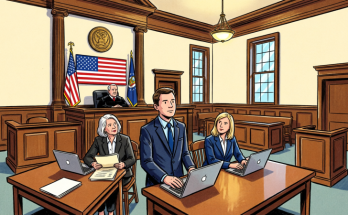
I didn’t actually see that moment. I was upstairs, pinned to an ICU bed, learning how to pull air into my lungs without my heart reacting like I’d just sprinted a mile. But hospitals carry sound the way seashells carry ocean—everything echoes, even the things you aren’t meant to hear. Later, a nurse told me about my mother’s expression when the receptionist said, in that syrupy customer-service voice meant to soften hard truths, “We just need to confirm the visitor log before discharge, ma’am.”
My mother had smiled automatically. Then her thumb froze mid-scroll.
Her lips parted. The color drained from her face in a way no amount of tanning could hide.
“No,” she whispered, because the log had a name on it. Not once. Not twice. Over and over, night after night, like a signature in wet cement.
Ethan Vale.
The nurse described it as if she were narrating a documentary about a predator realizing the trap had snapped shut. My mother looked at the printed paper again and again, as if sheer disbelief might erase the ink. The receptionist kept talking—policy, compliance, family privacy—while my mother stared at a simple list that had somehow become a set of receipts.
And even though I hadn’t witnessed it, even though I’d been upstairs with a heart monitor singing my failures in bright green spikes, something sharp and unfamiliar sparked in my chest when I heard about it.
Proof.
My name is Rowan. I’m twenty-nine, and I spend my nights in a room full of glowing monitors, headsets, and voices that break apart in my ears. I’m a 911 dispatcher in the suburbs outside San Diego where the lawns are trimmed, the cars are polished, and the quiet is manufactured like a product. People think dispatchers answer phones.
What we really do is hold strangers together while the world cracks open.
I have listened to a woman hide in a closet while someone kicked her bedroom door in.
I have listened to a man whisper goodbye to his brother after a crash pinned him in twisted metal.
I have listened to a little kid give me an address through sobs and sniffles because his mom wasn’t waking up and he didn’t know what else to do.
I have also listened to my own family take me apart, slowly, politely, with smiles and expectations and that special kind of love that behaves like a contract you never signed.
The job wasn’t what burned me down. It scorched, yes. It left ash in corners of my mind. But the fire that gutted me started at home.
In our house, my brother Logan was the sun. Everything rotated around him. He had that easy kind of beauty people forgive. Blond hair that looked like it belonged on surf posters, a grin that made teachers soften and strangers offer discounts. He was “gifted,” “driven,” “destined,” according to my mother’s constant narrations. She said it the way people talk about lottery tickets, as if his potential itself was a kind of currency.
And maybe it was.
I was the one who made sure the bills got paid.
I was the one who remembered due dates, called repairmen, picked up prescriptions, handled the awkward conversations with insurance. I was the backup battery in the family’s remote control—only noticed when I stopped working.
It started with small requests, the kind you can’t refuse without feeling like a monster.
“Can you cover the copay just this once?” my mother would ask, voice sweetened with urgency. “It’s a weird month.”
“Your father’s medication went up,” she’d say later, eyes wide with helplessness. “You know how tight things are.”
“Logan needs airfare,” she’d say another time, like she was announcing a weather report. “This competition is a big deal. It could be his future.”
Every ask came wrapped in the same packaging: praise that made refusal feel like betrayal. You’re strong, Rowan. You’re the responsible one. You’ll figure it out.
My father didn’t praise. He used absence like a weapon. If I hesitated, even for a second, his silence would stretch just long enough for shame to bloom.
“Do what you want,” he would say.
In my family, that translated to: Do what we want, or we will punish you with distance.
So I did.
I bled money so quietly I almost convinced myself it wasn’t bleeding. Home repairs. Logan’s “temporary” debts. Emergency vet bills for a dog my parents insisted they loved but never budgeted for. My father’s medical expenses. Random “surprises” like the water heater dying or the car needing new tires right when my mother had already paid for Logan’s new board.
It added up like snow in the dark. By the time I allowed myself to do the math, it was more than ninety thousand dollars over five years—maybe more if you counted the “just until next month” transfers that never returned.
But money wasn’t the worst thing I gave.
I gave time.
I gave sleep.
I gave my body.
The warning signs were easy to dismiss because my life had been built around dismissing myself. My hands started to tremble at the end of shifts, tiny shakes that made me grip my coffee harder. My vision would blur if I stood up too fast. Words slipped out of reach mid-sentence, like my brain had been dipped in water and the ink was running.
Food started to feel optional. Some nights I lived on vending machine crackers, the kind that tasted like salt and cardboard, and whatever cold coffee I could keep myself awake with. The idea of cooking felt absurd. The idea of sitting down to eat felt like a luxury meant for other people.
At work, I was known as calm. Reliable. The dispatcher who could talk someone through the worst night of their life without letting her voice crack. The one the rookies watched when a call spiraled, because if Rowan stayed steady, the room stayed steady.
At home, I was known as useful.
On the night my body finally revolted, the dispatch room felt wrong from the start. Too bright. Too warm. The air thick with recycled breath and stress. I was finishing my third night shift in a row because someone had called out and the overtime pay had seemed like the only responsible choice. Responsible—my favorite chain.
A call hit my screen, a red flash and a shriek in my headset.
An older woman was screaming so hard it sounded like her throat was tearing. “He’s not breathing—my husband—please, please!”
My training snapped into place like armor. My voice shifted into the tone I could summon even half-asleep: low, clear, steady.
“Ma’am, I’m here. Put the phone on speaker if you can. Lay him flat on his back. Center your hands on his chest—right between the nipples. We’re going to do compressions together.”
She was sobbing, gasping like a drowning person, but she listened. I counted with her. One, two, three, four, keeping the rhythm in my own head like a metronome, forcing my voice to be the spine she could cling to.
I have given CPR instructions a thousand times. I could do it in my sleep.
That night, my body tried.
Mid-sentence, my brain caught. Not a stumble—more like a glitch. The words were there, but my tongue felt thick, heavy, wrong. My vision smeared. The fluorescent lights above me stretched into white blades.
“Keep going,” I tried to say. “Stay with me, ma’am, keep—”
The sentence fractured.
The room tilted.
For a heartbeat, I could feel my own pulse sprinting, wild and irregular, like an animal slamming itself against a cage. Then the floor rose up and swallowed everything.
I remember my headset hitting the desk with a plastic crack.
I remember someone shouting my name, sharp and terrified.
I remember my coworker’s voice, stripped of professionalism, pure panic: “Call an ambulance—now!”
Then nothing.
When I woke again, the ceiling above me was hospital-white—so clean it looked like it was designed to erase anything messy, anything human. Machines beeped at my side, steady and unsympathetic. My mouth tasted like metal and dryness. My chest ached deep, as if someone had wrung my heart out like a washcloth and left fingerprints inside my ribs.
I turned my head automatically, because you’re trained to check your surroundings, to locate your people.
I expected my mother’s face hovering, my father’s stiff posture, Logan’s performative concern. That’s what families do, right? They show up. They sit in uncomfortable chairs and pretend the inconvenience is love.
The chair beside my bed was empty.
No jacket thrown over the arm like someone had been there long enough to get cold. No flowers. No bag with my toothbrush and clean underwear. Nothing but a plastic cup of water and the hum of a building that didn’t care who I was.
A nurse stepped into my line of sight. Dark hair twisted into a practical bun, tired eyes softened by kindness, hands moving with the efficient gentleness of someone who has touched too many fragile bodies.
“Hey,” she said quietly. “Welcome back. I’m Dana.”
My voice came out like sandpaper. “My family…”
Dana paused. It was a tiny pause, but my whole career has trained me to hear what people don’t say. That pause was a lie forming.
“They came by,” she said carefully.
“How long?” I asked.
Her gaze held mine, steady the way mine had held strangers on the phone. “About twenty minutes.”
The number hit like a slap. Twenty minutes. That wasn’t a visit; it was a check-in. A receipt. Proof of presence they could claim later.
“Why—” My throat tightened. “Why did they leave?”
Dana adjusted something on my IV line, buying time. “They said they had travel plans.”
I let out a breath that sounded almost like a laugh, except there was no humor in it. “Where?”
Dana didn’t even need to look at a chart. “Cancun.”
Of course.
Logan had a surfing event, one of those glossy international competitions that were half sponsors, half Instagram. My mother had talked about it for months like it was the Olympics. She’d repeated the same line every time I looked tired or tried to set a boundary: He needs this, Rowan. Don’t be selfish. This is big for his future.
I stared at the ceiling, feeling something hollow open in my chest that had nothing to do with arrhythmia.
Dana’s tone shifted into the clinical. “You collapsed from extreme exhaustion and a cardiac rhythm issue. You’re lucky we caught it when we did.”
“Lucky,” I echoed, tasting the word like something bitter. Alive, yes. But there’s a particular loneliness to waking up in an ICU room and realizing the people who were supposed to care had decided you were stable enough to leave behind.
I swallowed, my throat tight. “Did they… ask about me?”
Dana’s expression stayed professional, but something sharpened in her eyes. “Your mother asked about paperwork. Your father asked what you’d be able to do when you got out.”
“What I’d be able to do,” I repeated softly, as if I were an appliance being repaired.
Dana hesitated, then added, “Your brother asked if you were stable.”
Stable. Like a shipment. Like a package that might break in transit.
When they returned my phone the next day, it buzzed nonstop like an insect trapped in glass. Missed calls. Text messages that felt like demands disguised as concern.
Call me. Don’t make this hard. We need to talk.
Logan sent a photo of the beach—sunset, waves, his bare feet in the sand—with “lol” in the caption, as if my heart hadn’t malfunctioned less than twenty-four hours ago.
I stared at the screen until my eyes burned. Then I set the phone face down because anger takes energy, and my body had none to spare.
The ICU days blurred into a strange rhythm—vitals, blood draws, nurses’ footsteps, the steady drip of fluids. Time in a hospital doesn’t move like normal time. It expands and contracts around pain, around sleep, around the little victories of sitting up without dizziness.
On the fourth night, Dana came in to check my monitors. Her gaze slid toward the glass door, then back to me.
“Do you… get many visitors?” she asked, casual on the surface but weighted underneath.
I huffed a dry laugh. “Clearly not.”
Dana’s mouth twitched in something that wasn’t quite a smile. “Actually,” she said, lowering her voice, “you do.”
I blinked, sure I’d heard wrong. “I do?”
“There’s been someone,” she said. “Every night.”
A ripple of cold moved over my skin. “Who?”
Dana didn’t answer immediately, as if she were deciding whether to cross some invisible line.
“He came the first night after your family left,” she said finally. “He asked for your room number. He didn’t even go in. He stood by the glass for hours.”
My throat tightened. “He didn’t come inside?”
She shook her head. “No. He just stayed. Like he didn’t want to wake you. Like he wasn’t sure he was allowed to be here.”
I tried to picture it—someone choosing a hospital hallway over a bed. Someone standing in the dim night light outside my room, watching the machines keep me alive.
“What does he look like?” I asked.
Dana’s eyes softened. “Tall. Quiet. Mid-forties, maybe older. He has this… careful way of moving. Like he doesn’t want to disturb anything.”
“That’s… weird,” I murmured.
Dana’s voice dropped even more. “He asked the billing department about your account.”
My pulse kicked up. “Why would he—”
“He paid it,” Dana said simply.
I stared at her, certain exhaustion had turned reality into a hallucination. “What do you mean, he paid it?”
“Your account shows paid,” she repeated. “Anonymous on paper, but it was him. I saw him sign. He didn’t want you told, but… I couldn’t not tell you.”
The room felt suddenly too small. The beeping of the monitor grew louder, as if it were reacting to my shock.
A stranger—someone—had paid my hospital bills while my family sipped cocktails under a Cancun sky.
When you’ve spent your life purchasing scraps of affection with compliance, you start to recognize real care by how unfamiliar it feels. It lands wrong, like a foreign language spoken in a room where you’ve only ever heard shouting.
That night, I couldn’t sleep. My mind ran in circles around the idea of someone outside my door, watching. Protecting. Waiting.
Near midnight, I saw him.
At the end of the corridor, where the lights were dimmer, a tall figure moved slowly, as if the quiet itself mattered. He stopped outside my room. He didn’t enter. He stood by the glass, his face half-hidden by reflection, his posture rigid with something that looked like restraint.
I lifted my hand weakly.
For a second, he didn’t move. Then he nodded once—small, almost private, like a promise made without words.
He sat down in the chair outside my door and stayed.
There was a strange comfort in that stillness, and it frightened me because comfort had always come with strings in my life. Comfort was a down payment on future demands. But he asked for nothing. He just existed there, a quiet presence in a hallway that smelled like antiseptic and exhaustion.
The next morning, when Dana came to check my vitals, I asked her straight. “What’s his name?”
Her gaze held mine, weighing something. Then she sighed. “It’s in the log,” she said. “But if you want to know… his name is Ethan Vale.”
The name hit me like a dropped glass.
Ethan Vale.
My mother used to say it like a curse when she thought I wasn’t listening. It wasn’t part of our family stories; it was part of the family’s shadows. I remembered hearing it once when I was twelve, my mother hissing it into the phone in the kitchen late at night, her voice sharp and scared. I remembered my father’s jaw tightening when I asked who she was talking about. I remembered Logan’s smug little grin when he realized I didn’t know something.
Ethan Vale had been a ghost in our house. A name used to slam doors. A name that made my mother’s eyes go hard.
“Why is he here?” I whispered.
Dana’s eyebrows rose. “That’s… not something I can answer. But he asked about you like he—” She stopped herself. “Like he cared.”
Cared.
That word felt dangerous.
On day eight, when I could sit up long enough to sip broth without falling asleep halfway through, he finally stepped into my room.
He stayed near the doorway, hands clasped like he was trying not to take up space. In the hospital’s fluorescent light, I could see his face clearly for the first time: lines at the corners of his eyes, not just from age but from strain. A jaw that looked like it had learned to hold back words. Hair dark with threads of gray. Eyes that were tired in a way that had nothing to do with sleep.
Life-tired.
“Rowan,” he said softly, like the name was something precious he hadn’t been allowed to say out loud.
My heart monitor sped up, beeping faster as if it could sense my panic.
“Why are you here?” I asked, because I didn’t know what else to do with the sudden flood of adrenaline.
He swallowed, Adam’s apple bobbing. “I didn’t want you to be alone.”
The simplicity of it gutted me. No apology dressed up as an excuse. No guilt trip. Just a truth.
“You know my mother,” I said. It wasn’t a question. The way the name had lived in my childhood made it inevitable.
He nodded once. “A long time ago.”
My chest tightened, not from pain this time but from something sharper. “What are you to me?”
He looked down at his hands, as if his palms held a script and he didn’t know if he was allowed to read it. Then he lifted his gaze to mine.
“I’m someone who should have been here sooner,” he said.
It wasn’t an answer, but it was close enough to feel like a cliff edge.
I wanted to demand the full story right then. I wanted to rip the truth out of him the way I’d ripped addresses and descriptions out of panicked strangers on the phone. But my body was still fragile. My mind still fogged around the edges. And some truths are too big to hold when you’re still learning how to breathe.
So I did what I’d always done.
I filed it away.
I watched him.
He didn’t touch anything in the room unless I offered. He didn’t sit in the chair beside my bed until I nodded permission. He didn’t talk over me, didn’t tell me how I should feel. He just stayed, and when the nurses came in, he stepped back like he knew how hospitals worked, like he knew how to be invisible when needed.
After a while, I realized something unsettling.
He moved like someone who had learned patience the hard way.
On day ten, my mother returned.
I heard her before I saw her—her voice bright and offended in the hallway, the tone she used when she wanted people to know she was important.
“I’m here for my daughter,” she announced, loud enough for half the floor to hear. “I need the discharge paperwork.”
Dana appeared in my doorway a minute later, expression tight. “Your mother’s downstairs,” she said quietly. “They gave her the visitor log.”
Ethan’s jaw tensed like he’d been expecting this storm all along.
A few minutes later, my mother burst into my room like she owned the building.
Her hair was glossy, styled. Her skin glowed with sun-kissed arrogance. She wore white linen like she was stepping off a yacht, not walking into an ICU. Her smile was too wide, too cheerful—performance, not comfort.
“There you are,” she said, as if I’d been hiding from her.
I didn’t answer.
She scanned the room—blanket, water cup, the paperback someone from work had dropped off—then narrowed her eyes. “Why was I given a visitor log?”
I kept my voice even, steady in that dispatcher way. “Hospital policy.”
“Don’t play cute,” she snapped, and there it was—the private tone she used when she thought kindness wasn’t necessary. “I’m here to take you home.”
“Take me,” I echoed softly. “Like luggage.”
Her face tightened. “Watch your mouth.”
“Where were you?” I asked, because my words had finally caught up to my rage. “When I woke up alone in ICU?”
She waved a hand like my question was an insect. “You were stable. Logan had his competition. You know that.”
Stable again.
“You flew to Cancun,” I said, tasting the words like poison, “with your golden boy.”
Her eyes flashed. “Don’t call him that.”
“Why not?” I asked. “It’s accurate.”
She stepped closer, voice dropping to a hiss. “You always make everything about you.”
A laugh scraped out of my throat, harsh and small. “That’s rich coming from someone who came back tan and angry demanding my discharge.”
Her jaw clenched. “We have bills, Rowan. This can’t drag on.”
There it was. Not worry. Not guilt. Bills.
Ethan appeared in the doorway behind her.
My mother froze like she’d walked into a wall.
Her head turned slowly, and for the first time, I saw something real in her expression.
Fear.
“What are you doing here?” she hissed.
Ethan’s voice didn’t rise. “Visiting.”
My mother’s eyes narrowed like blades. “You don’t get to be here.”
Ethan’s gaze flicked to me, then back to her. “I do.”
Something in the air shifted, like pressure before a storm.
Then my father arrived behind my mother, drawn by conflict the way sharks are drawn by blood. He looked at me—not at the monitors, not at the bruises, not at the IV lines. His eyes were hard, assessing, as if I were a problem he needed to solve.
“What did you do?” he demanded.
I blinked slowly. “Hello to you too.”
My mother recovered first, the way she always did when control was threatened. She pointed at me like I was misbehaving. “She’s being dramatic. She’s letting him manipulate her.”
My father’s eyes snapped to Ethan. “Who are you?”
Ethan met his stare without flinching. “Someone who stayed.”
My father’s mouth tightened. “This is family business.”
“Funny,” I said, voice low. “You treated me like a bill, not family.”
My mother stepped forward again, anger replacing fear because anger is safer. “Rowan, enough. You’re coming home today.”
“No,” I said.

It was a simple word. I’d used it thousands of times at work—no, stay on the line, no, don’t go back inside, no, don’t touch the weapon—but I’d almost never used it at home.
My mother blinked like she hadn’t heard me correctly. “Excuse me?”
I took a slow breath. My hands trembled, but my mind felt sharper than it had in months. “I’m not signing a discharge today,” I said. “And you can’t sign it either.”
My mother’s eyes narrowed. “What are you talking about?”
“I changed my emergency contact,” I said. “You’re not it.”
Her face went pale. “You can’t.”
“I already did,” I replied. “Paperwork. Administrator. Legal forms. You don’t have access to my medical decisions.”
My father stepped closer, voice dropping into that cold place he saved for power. “You owe us.”
There it was—the family motto, spoken like scripture.
I looked him straight in the eyes. “I paid you more than ninety thousand dollars in five years,” I said. “Consider that the final installment.”
My mother’s voice snapped into venom. “That money was for the family. For your brother. For your father’s health.”
“And what was left for me?” I asked. “A collapse on a dispatch floor and an empty chair in ICU?”
Her lips curled. “You’re alive, aren’t you? Stop making it a tragedy.”
I stared at her, stunned by the bluntness of it. Like survival alone was supposed to be gratitude.
“I’m alive because my coworker called an ambulance,” I said, “and because he—” I nodded toward Ethan—“showed up when you didn’t.”
My father’s face hardened. “If you cut us off—”
“When I cut you off,” I corrected, voice calm as glass. “Not if.”
He stopped, as if the correction had slapped him.
“You’ll regret this,” he said.
I smiled, small and tired. “I already regretted the last five years.”
My mother turned on Ethan, desperate to regain the narrative. “You don’t get to rewrite history.”
Ethan’s reply was quiet, precise. “I’m not rewriting anything. I’m correcting what you hid.”
My mother’s eyes flickered—calculation, panic, anger. How to spin this. How to win.
But she didn’t have an audience here. Not the kind she liked. There were nurses, staff, a man with a visitor log, and me. No neighbors to impress. No relatives to charm. No friends to recruit into her story.
So she did the only thing she could do without losing her mask entirely.
She left.
She stormed out first, shoulders stiff, hair swinging like a weapon. My father followed, throwing me one last look that said I was no longer useful. His gaze held no sadness, only inconvenience.
When the door shut, the silence that followed felt like oxygen returning to a room that had been sealed too long.
My hands started shaking harder. The adrenaline that had kept me upright faded, leaving nausea and a sharp sting behind my eyes.
Dana stepped closer and tucked my blanket around me with the gentle efficiency of someone who had seen too many battles fought in too small spaces. “You did good,” she murmured.
“I feel like I’m going to throw up,” I admitted.
“That’s normal,” she said. “Your body’s catching up to what your heart already knew.”
Ethan stayed near the window, not moving closer, not taking space he hadn’t earned.
“I didn’t want to pressure you,” he said quietly. “I just… I couldn’t let you be alone.”
I stared at the empty chair beside my bed, the one my family had never warmed. Ten days. Ten nights. One man behind glass, saying nothing, asking for nothing, just refusing to let me disappear.
“What happens now?” I asked, my voice smaller than I wanted it to be.
Ethan looked at me the way you look at something fragile you’re afraid to break—not pitying, not hovering, just careful.
“Now you heal,” he said. “And you decide who gets access to you.”
The hospital discharged me on my timeline, not my mother’s. It took another week before the cardiologist was satisfied, before my vitals stopped dancing, before I could walk the hallway without seeing stars. They gave me pamphlets about arrhythmia, stress, nutrition, sleep, as if those things were simple switches I could flip.
I signed paperwork with a hand that still trembled.
Dana hugged me in the discharge bay, a brief squeeze that felt like more family than anything I’d received in years. “Call if you need anything,” she said, and I believed her, which scared me because trust had become something I rationed.
Ethan waited near the exit like he’d waited near my door—present, steady, not demanding.
“Do you have someone to pick you up?” Dana asked.
I glanced at Ethan. He didn’t step forward, didn’t volunteer himself like an entitlement. He just met my gaze and waited for my decision.
“I do,” I said.
Outside, the sun was too bright, too normal. Cars moved through the parking lot like nothing had happened. People pushed strollers and carried coffee and lived their lives, unaware of the war I’d just fought in an ICU room.
Ethan’s truck was old but clean, the kind of vehicle someone keeps because it works, not because it impresses. He opened the passenger door for me, then waited while I eased myself in carefully, mindful of the soreness in my chest.
As we pulled out of the hospital lot, my phone buzzed.
A voicemail from my mother.
Another from my father.
A text from Logan: You okay? Mom’s freaking out. Call us.
I stared at the screen until my jaw hurt from clenching.
Ethan didn’t ask. He didn’t tell me what to do. He just drove, hands steady on the wheel, eyes on the road, like he understood that sometimes silence is the kindest thing.
My apartment was small—one-bedroom, second floor, the kind of place you choose because it’s what you can afford and it’s close enough to work to sleep an extra thirty minutes. I’d always told myself I didn’t need space. I didn’t need decoration. I didn’t need softness.
But as I stepped inside, it looked different. The bare walls felt colder. The stack of unpaid personal mail on the counter looked heavier. The quiet felt louder.
Ethan stood in the doorway like a guest waiting to be invited, even though he’d just carried my overnight bag upstairs without a word.
“Do you need anything?” he asked……………….