Part 6
The verdict came on a Thursday.
I knew that because I’d been counting days like they were weights on my chest. Thursday meant the jury had deliberated through the night. Thursday meant the courtroom felt thick with anticipation and coffee breath.
Grandma was in a rehabilitation facility by then, a real one, with nurses who spoke kindly and doors that weren’t locked from the outside. She couldn’t watch, but I called her that morning and told her we were close.
“You be brave,” she whispered.
“I’m trying,” I said.
“You already were,” she replied, and her voice warmed a little. “When you opened the door.”
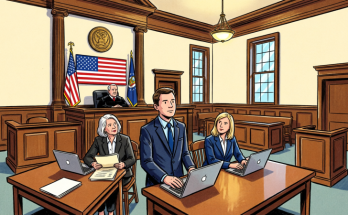
The jury filed in, faces unreadable. My parents stood when the judge entered, and the movement looked surreal—like a family standing in church.
The foreperson held the paper in trembling hands.
Guilty.
The word landed like a door slamming.
Counts rolled out one after another: elder abuse, unlawful imprisonment, fraud, theft. Each guilty was a nail.
My mother sobbed openly now, head bowed. My father’s face went unnaturally still, like someone had turned him into stone.
I sat frozen, waiting for relief that didn’t come.
Because guilt didn’t rewind time.
Guilt didn’t erase three years.
Sentencing came weeks later. The prosecutor presented the financial evidence, the forged documents, the attempted house sale, the passport application.
The defense tried again to paint it as stress. Overwhelm. A mistake.
The judge didn’t buy it.
When he spoke, his voice was calm but sharp enough to cut.
“This was not a momentary lapse,” he said. “This was a sustained pattern of abuse and deception. The victim was deprived of basic dignity and care. The court will impose a sentence reflecting the severity of the harm.”
My father was sentenced to twenty-five years.
My mother to twenty.
Gasps rose from the gallery. Some people thought it was too harsh. Others thought it was still too light.
My father finally moved then—his head snapping toward me, eyes blazing.
“You did this,” he mouthed.
I didn’t mouth anything back. I just stared at him until his gaze faltered for a fraction of a second.
My mother looked at me too, tears streaking down her face, but her expression wasn’t remorse.
It was accusation.
As they led my parents away, the courtroom felt both louder and emptier at the same time.
Outside, reporters waited. Cameras. Microphones. People hungry for the ugliness of someone else’s life.
I didn’t want to talk.
But I also remembered what Grandma said about choosing.
So I stepped to the edge of the courthouse steps and said the only thing I wanted on record.
“They didn’t just hurt my grandmother,” I said, voice shaking but clear. “They lied to everyone. They stole from her. They treated her like she was disposable. She wasn’t. And nobody else is either.”
Then I walked away.
The headlines hit the next day.
Local papers first. Then regional coverage. Then a national true-crime blog got hold of it and wrote a story with a title that made my stomach turn, as if our pain was entertainment.
Neighbors who’d once adored my parents stopped answering their calls. My dad’s coworkers distanced themselves. My mother’s church friends stopped posting supportive comments.
Their reputation didn’t just crack.
It collapsed.
At first, I thought that would feel like justice.
But reputation is a weird thing. It’s invisible until it’s gone, and then suddenly everyone acts like it was always fragile.
In the weeks after sentencing, I started getting mail addressed to me at the house, even though I wasn’t living there anymore.
The first letter came in a plain envelope with my father’s handwriting.
I stood over a trash can, staring at it like it might explode.
I opened it anyway.
The words inside were venom. Betrayal. Ungrateful. Son. A promise that I’d pay. A promise that he had friends. A promise that prison wouldn’t silence him.
I burned it in the sink.
Then another came. And another. Sometimes from my father. Sometimes from my mother. Her letters were quieter but sharper in a different way—she wrote about how I’d “destroyed the family,” how Grandma had “poisoned me against them,” how one day I’d understand.
I burned those too, until my hands started shaking every time I smelled smoke.
Detective Ruiz told me to keep them.
“They’re evidence,” he said. “Harassment. Witness intimidation if the language crosses certain lines.”
Laura Kim agreed. “Don’t respond,” she warned. “Just document.”
So I bought a folder and started filing the letters like they were toxic receipts.
Meanwhile, Grandma’s health improved enough for discharge.
But she couldn’t go back to my parents’ house.
Neither could I.
We found a modest apartment across town. Two bedrooms. A small balcony. A kitchen that smelled like fresh paint, not secrets. It wasn’t fancy. It was safe.
The day I carried Grandma into that apartment, she looked around slowly like she was stepping into sunlight for the first time.
“Windows,” she whispered, almost reverent.
I laughed through tears. “Yeah, Grandma. Windows.”
She squeezed my arm. “We’re going to be alright.”
That night we sat on the balcony drinking tea, watching the sky turn orange and purple over the rooftops. Grandma held my hand and stared at the sunset like it was a miracle.
“You saved me,” she said quietly. “You saved my soul.”
I swallowed hard. “I should have found you sooner.”
Grandma’s gaze stayed on the horizon.
“Love outlives hate,” she whispered. “But love doesn’t go backward. It goes forward.”
Her words settled in me like a small seed.
I didn’t know what my future looked like yet.
But for the first time in years, I knew what it didn’t look like.
It didn’t look like a locked basement door.
Part 7
When the first letter arrived at the apartment, I knew my father had found our new address.
My stomach turned cold in a way anger couldn’t warm.
I’d been careful. I’d asked the court for privacy. I’d kept my name off certain public records when possible. I’d changed my mailing preferences. But my father had spent his life knowing how to find what he wanted. He was the kind of man who treated rules like suggestions.
The envelope sat in my mailbox like a threat.
I didn’t open it. Not right away.
I carried it upstairs, washed my hands, then called Laura Kim.
“Keep it,” she said immediately. “Bring it in.”
I drove to her office with that letter on the passenger seat like it was watching me.
Laura read it, face tightening as she reached the last lines. She looked up at me.
“This is intimidation,” she said. “We can file for a no-contact order and add it to his case file. Sometimes it won’t change his sentence, but it changes how parole boards view remorse. It changes how the system monitors him.”
“I don’t care about parole,” I said, and my voice shook. “I care about Grandma being safe.”
“And you,” Laura added.
I blinked. “I’m fine.”
Laura’s gaze didn’t soften. “You’re not fine. You’re functioning.”
That distinction landed uncomfortably true.
Detective Ruiz helped me file the no-contact order. The prison was notified. My father’s mail privileges were restricted. If he tried again, it would be logged. If he persisted, it could trigger disciplinary action.
The system moved slowly, but for the first time, it moved in my direction.
Back at home, Grandma noticed the tension anyway. She’d always been good at reading the air.
“Letter?” she asked softly one night while I was washing dishes.
I hesitated. “Yeah.”
Grandma set down her mug. “From him.”
I nodded.
Her eyes closed briefly, and her shoulders rose and fell with a slow breath. “He wants to keep living in your head,” she said.
“I know,” I muttered.
Grandma’s voice stayed gentle but firm. “Don’t let him rent space.”
I stared down at the sink water, at the soap bubbles sliding away.
“How?” I asked.
Grandma reached out, placed her hand over mine. “You keep building,” she said. “A life. A home. People who are good. That’s how.”
So I did.
I enrolled in community college classes. Not because I suddenly had a grand dream, but because I needed a future that wasn’t just survival. I took courses in criminal justice and social work. I wanted to understand the system that had finally protected Grandma—and the holes that had let my parents hide for three years.
I found a part-time job at a local nonprofit that helped seniors with food delivery and medical transportation. The work was humbling. It was also healing in a way I didn’t expect.
When I carried grocery bags up stairs for an eighty-year-old man who lived alone, I thought about how easily someone could vanish if nobody checked.
When I drove a woman to her doctor appointment and she thanked me like I’d given her a gift, I thought about Grandma’s gratitude and how it wasn’t supposed to be extraordinary to treat people like people.
It should have been normal.
At home, Grandma worked hard in physical therapy. Some days her progress felt miraculous. Other days she could barely lift her arms. But she insisted on small rituals that made life feel like hers again.
She baked when she could, sitting on a stool in the kitchen, stirring slowly. She taught me to make biscuits properly—not from a tube. She laughed at my clumsy hands.
“I made you spoiled on purpose,” she said once, smiling. “So you’d always know what kindness tastes like.”
One evening, two months after moving in, Grandma asked to see the sunset.
We sat on the balcony, tea steaming in our mugs. The sky was streaked with gold. Grandma’s fingers curled around mine.
“You’re quiet,” she observed.
“I keep thinking about…” I started.
“About them,” she finished.
I nodded, ashamed.
Grandma’s thumb rubbed lightly over my knuckles. “You wonder if you’re like them.”
My throat tightened. “Yeah,” I admitted. “Sometimes I hear my father’s voice in my head and I’m scared it’s mine.”
Grandma’s laugh was tiny but real. “Oh, sweetheart,” she said. “You’re not your father.”
“How do you know?” I asked, and the question sounded like a child.
Grandma’s gaze held steady. “Because you carried me out,” she said. “People like him don’t open doors for others. They lock them.”
The words hit with unexpected force.
I swallowed hard. “But I wanted revenge.”
Grandma nodded slowly. “You wanted justice,” she corrected. “And you wanted them to feel what they did. That’s human.”
She lifted my hand and pressed it gently to her cheek.
“Love outlives hate,” she whispered, “but love doesn’t mean you never feel hate. It means you don’t live there.”
In the months that followed, the letters stopped.
The silence didn’t erase the fear completely, but it loosened its grip.
One day, I got a message from Laura: parole board review scheduled in the future, but given no-contact violations and lack of remorse, chances were low.
I stared at the message for a long time, then set the phone down.
For the first time, I realized I didn’t need my parents to suffer more for me to heal.
I needed to keep choosing forward.
Part 8
By twenty-one, I could walk into a basement without my lungs locking up.
Not without discomfort—some memories don’t evaporate—but without panic. That was progress I never would have imagined the night I found Grandma on that mattress.
Life settled into routines that felt almost normal.
I worked part-time at the senior nonprofit. I took classes. I cooked dinner. Grandma supervised from her stool, criticizing my knife skills like she was training a contestant on a cooking show.
“You chop like you’re angry at the onion,” she’d say.
“I am angry at the onion,” I’d answer, and she’d laugh, genuinely.
Her health remained fragile, but she was present. She started knitting again, slow and careful. The scarf she finished for me was crooked, but it existed, and that felt like victory.
One afternoon, I came home to find her sitting at the table with a stack of papers.
“What’s that?” I asked, dropping my backpack.
Grandma patted the chair beside her. “Come sit.”
I sat, wary.
She slid a document across the table.
A will. Updated. Legal. Simple.
My chest tightened. “Grandma—”
“Hush,” she said, and her tone brooked no argument. “I’m not leaving tomorrow. But I’m not pretending the world doesn’t work the way it does.”
I stared at the paper. It left what little she had to me. Not because it was a fortune—it wasn’t—but because she wanted me protected.
“Why?” I asked, voice raw. “I’m fine.”
Grandma’s eyes softened. “You’re building,” she said. “But you’re young. And the world can be cruel. I want something in writing that says you were loved.”
I blinked fast, fighting tears.
Then she surprised me again.
She pointed to another paper. “And this,” she said, “is something I want you to do.”
It was a letter, addressed to my parents.
My stomach clenched. “No.”
“Not to send,” Grandma said quickly. “Not now. Not ever, unless you choose. But I want it written. Because I’m tired of carrying words I never got to say.”
I stared at the envelope. “What does it say?”
Grandma’s gaze didn’t waver. “It says I forgive them,” she said.
My throat tightened with disbelief. “Grandma—”
She raised a hand. “Listen,” she said. “Forgiveness isn’t a gift for them. It’s a release for me. I don’t want to die with them in my chest like poison.”
I swallowed hard. “But they—”
“I know what they did,” Grandma said, voice firm. “I lived it.”
Silence sat heavy between us.
Then Grandma added, softer, “Forgiveness doesn’t mean I want them near me. It doesn’t mean I excuse them. It means I refuse to let them own my last years.”
I stared down at my hands. My anger flared, then faltered.
Because Grandma wasn’t asking me to pretend.
She was asking me to choose.
Weeks later, the parole board hearing happened without us. Laura told me afterward that my father showed “minimal accountability.” My mother cried and spoke about “family strain.” The board denied any early consideration. The no-contact restrictions remained.
When I heard, I felt… nothing.
Not joy. Not relief. Just a quiet confirmation that my parents still couldn’t see beyond themselves.
That same week, I met someone at the nonprofit. Her name was Mariah. She was a case manager, mid-twenties, blunt in a way I respected. We spent an afternoon delivering meals together, and she listened to my story without turning it into gossip.
When I finished, I expected pity.
Instead, Mariah said, “That’s horrifying,” and then, “What are you doing for yourself?”
The question startled me.
“For myself?” I repeated.
Mariah raised an eyebrow. “Yeah. Not for your grandma. Not for the case. Not for revenge. For you.”
I didn’t have an answer.
That night, I sat with Grandma on the balcony and told her about Mariah’s question.
Grandma smiled slightly. “Smart girl,” she said.
“What do I say?” I asked.
Grandma leaned back, looking at the darkening sky. “You say you’re learning,” she replied. “That’s enough.”
So I learned.
I started therapy, uncomfortable and skeptical at first. Talking about my parents felt like peeling my skin off. But slowly, the therapist helped me see the patterns: the way my father’s anger trained me to be quiet, the way my mother’s sighs trained me to feel guilty for needs, the way I’d lived in constant vigilance without realizing it.
Healing wasn’t a moment. It was repetition.
At home, Grandma remained my anchor. Some nights she’d wake from nightmares and call my name, and I’d sit by her bed until her breathing eased.
“I’m here,” I’d whisper.
And she’d whisper back, “Love outlives hate.”
One evening near my twenty-first birthday, Grandma handed me a small wrapped box.
Inside was the scarf she’d knitted when she started again—this one straighter, stronger.
“I finished it,” she said, eyes bright.
I wrapped it around my neck and laughed, surprised by how warm it felt.
Grandma nodded. “See?” she said. “We keep going.”
For the first time in a long time, I believed her without fear clawing at the edges.
Part 9
The last time Grandma baked biscuits, the kitchen smelled like my childhood.
Butter. Flour. Warmth.
She moved slowly, leaning on the counter, but she insisted on doing it herself. I hovered nearby like a worried parent.
“Daniel,” she scolded, “if you fuss any harder, you’re going to sprout gray hair.”
“I already have gray hair,” I muttered.
Grandma laughed—full face, musical, exactly the way I remembered.
We ate the biscuits at the tiny table by the window. The sunlight poured in, making the steam from our mugs visible like ghosts becoming real.
Grandma took a bite and closed her eyes briefly.
“Good,” she whispered.
Then she looked at me with a seriousness that made my stomach tighten.
“I want to talk,” she said.
I set my mug down. “Okay.”
Grandma’s hands folded together carefully. “When I was in that basement,” she said, voice steady, “I didn’t just lose food. I lost time. I lost dignity. I lost… trust.”
My throat tightened.
“But,” she continued, “I didn’t lose everything.”
I swallowed. “Because I found you.”
Grandma nodded. “Because you came,” she said. “Because love showed up with legs and arms and a key.”
She reached across the table and took my hand.
“You’re going to carry this,” she said. “What happened. What you saw. What you did. People will tell you to move on like it’s a switch. Don’t listen to them.”
I blinked fast. “I don’t want to carry it forever.”
“You won’t,” Grandma said. “Not the same way. It will change shape.”
She squeezed my hand gently. “Promise me something.”
“Anything,” I said, too quickly.
Grandma’s eyes held mine. “Promise me you won’t become a prison,” she said softly. “Not for yourself. Not for anyone else.”
The words landed like a bell.
“I’m scared I’m like them sometimes,” I admitted, voice breaking. “I get angry and it feels… big.”
Grandma nodded slowly. “Anger is not cruelty,” she said. “Anger can be fuel. Cruelty is a choice.”
She lifted my hand and pressed it to her chest. I could feel her heartbeat—steady but tired.
“You chose,” she said. “You chose to open the door. You chose to tell the truth. You chose to build a life with windows.”
Tears slipped down my face before I could stop them.
“I’m proud of you,” Grandma whispered. “Not because you destroyed them. Because you saved me.”
That night, Grandma fell asleep in her chair with a book open on her lap. I covered her with a blanket and watched her breathe.
I thought about the letter she wrote forgiving my parents, sealed in an envelope she kept in a drawer. I thought about how forgiveness could exist alongside boundaries.
Two weeks later, Grandma had a stroke.
It wasn’t dramatic. No screaming, no warning. Just a quiet morning where she didn’t wake up right. Her speech was slurred, her eyes frightened.
I called 911 again, the same number that had changed everything.
In the hospital, the doctors were gentle but honest. Her body was tired. The years in the basement had weakened her in ways no rehab could fully undo.
I sat beside her bed holding her hand while machines beeped. The fluorescent lights washed her face pale.
Grandma’s eyes opened briefly.
“Daniel,” she whispered.
“I’m here,” I said, voice shaking.
Her fingers squeezed mine, faint but present.
“Love outlives hate,” she murmured one last time.
Then she closed her eyes.
She didn’t die that day. She lasted another week, drifting in and out, sometimes lucid enough to smile faintly when I spoke, sometimes gone behind a fog I couldn’t reach.
On the last night, the nurse dimmed the lights and told me I could stay. I sat in the chair beside Grandma’s bed and talked to her the way you talk to someone you love even when they can’t answer.
I told her about the first time she let me lick the spoon. About the ugly scarf she knitted when I was sixteen. About the balcony sunsets. About biscuits.
I told her I was scared.
And then, as dawn began to pale the window, Grandma’s breathing slowed.
Her face softened.
And she left quietly, like a candle going out when the room is already full of morning.
Grief hit like a physical weight. It didn’t feel like a scene. It felt like emptiness. Like the world had lost its warmest corner.
At the funeral, only a small group came. Some people cried honestly. Some looked ashamed. My parents weren’t there. They couldn’t be.
Afterward, I sat alone on our apartment balcony with two mugs of tea out of habit. One for me. One for her.
The sun dipped low, painting the sky orange and purple like it always did.
I thought about my father’s threats, my mother’s accusations. I thought about how revenge had burned hot in me for months, how it had felt like strength.
And I thought about Grandma’s last request.
Don’t become a prison.
I went inside and opened the drawer where Grandma’s letter was. The one she wrote forgiving my parents. I stared at the envelope for a long time.
Then I did something I didn’t expect.
I didn’t mail it.
I didn’t burn it.
I placed it in a folder with my own papers—my school forms, my work documents, my plans.
Not as a gift for them.
As a reminder for me.
That forgiveness is something you can hold without surrendering your safety.
That love can outlive hate without pretending hate never existed.
That justice can be real without letting bitterness become your home.
A month later, I changed my major to social work with a focus on elder advocacy. I started volunteering with an organization that checks in on isolated seniors. I learned how to spot financial exploitation. How to recognize the signs families hide.
I couldn’t undo what happened to Grandma.
But I could make sure fewer doors stayed locked.
On the anniversary of the day I opened the basement door, I stood in our apartment living room and looked around.
The couch where Grandma once sat, wrapped in blankets, rescued.
The kitchen where she baked biscuits.
The balcony where we watched sunsets.
Windows everywhere.
I wrapped her scarf around my neck and stepped outside into the evening air.
The sky glowed.
I held the warm mug in my hands and whispered into the fading light, not as a slogan, but as a promise I could live with.
“Love outlives hate,” I said.
Then, after a moment, I added the part I’d learned the hard way.
“And love knows when to break a lock.”
THE END!
Disclaimer: Our stories are inspired by real-life events but are carefully rewritten for entertainment. Any resemblance to actual people or situations is purely coincidental.