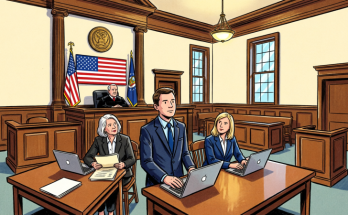
“Mrs. Paxton was never informed,” he said. “The trust agreement was never shared with her. She appears to believe the entire trust—approximately forty-two million at last valuation—belongs to the family generally.”
He folded his hands. “She’s been contacting my firm and the fiduciary manager—Rebecca Stone—requesting access to the trust provisions. Ms. Stone correctly declined.”
I sat back, my pulse loud in my ears.
Seventeen million dollars.
My mother had built a wall around it with paper and ink and foresight, and it had held for twenty-three years.
“What happens if I withdraw it?” I asked slowly.
Aldridge’s expression didn’t change. “The remaining trust assets,” he said, “will not cover the loans your stepmother has authorized using the full trust as collateral. The bank will issue a margin call.”
“Loans?” I echoed.
He nodded. “Your stepmother has leveraged the trust to secure debt. If the trust balance drops below the covenant threshold, the bank can freeze linked accounts and demand additional capital.”
I felt sick.
Not at the money. Money is abstract until it becomes power.
I felt sick at the shape of what Diane had been building without me ever seeing the blueprints.
I stared at the documents, my mother’s handwriting, her signature, her careful legal structure.
Then I said, “I’m not going to sign today.”
Aldridge raised an eyebrow.
“Give me until after my father’s retirement party,” I said. “I want to see if he chooses me.”
Aldridge’s gaze flicked to the photo of my mother on the wall, then back to me.
“Your mother,” he said softly, “would understand.”
I left his office with copies of both documents in a folder and something I hadn’t carried in years.
A choice.
Three weeks before the retirement party, I tried to give my father one last chance.
I called him and asked if we could meet for coffee—just us.
He said yes immediately, and for half a second something warm and unfamiliar flickered in my chest.
Then my phone rang ten minutes later.
Diane’s voice.
“Your father’s schedule is very full right now, Laura,” she said with smooth sweetness. “Maybe after the party.”
A week later, the invitation arrived.
Crane & Co. cardstock. Gold foil lettering.
Celebrating 35 years of excellence—Richard Paxton.
Hosted by Diane Paxton and Meredith Paxton.
My name was printed as Laura Paxton Hartwell.
Diane’s maiden name hyphenated onto mine like a brand.
I stared at it for a long time, then placed it on my kitchen counter and watched my cat step over it like it was litter.
Diane began building her stage.
I noticed the first move on a Monday. I texted the family group chat asking what time we were expected at the venue. The message sat there—delivered, unread—for three days.
On Thursday, I opened iMessage and realized the thread was dead. No new messages. No activity.
I texted Meredith separately. “Is the family chat broken?”
She replied four hours later. “Oh, mom made a new one. Must have been a glitch.”
There was no glitch.
There is never a glitch with Diane.
I called the event coordinator at the Whitmore Hotel—a woman named Janelle—and asked to confirm my RSVP.
There was a long pause on the line.
“I’m sorry,” she said carefully. “I don’t have Paxton—Laura—on the guest list. Could you be a plus one?”
The floor shifted beneath me—not surprise, but recognition.
I had seen this pattern before. The slow mechanical precision of being disappeared.
But this time the machinery was running faster.
I called Diane directly. She picked up on the second ring, because Diane never wanted to appear like she was avoiding you.
“Laura,” she said brightly. “What a surprise.”
“I called the hotel,” I said. “They don’t have me on the list.”
A beat of silence. Then Diane’s soft laugh, like a teacher indulging a confused student.
“Oh, darling,” she said. “I wasn’t sure you’d come, given everything.”
She let the pause hang there, inviting whatever rumors she’d planted to bloom.
“But of course,” she continued, “we’ll have someone add your name. And please—don’t wear one of your work outfits. This is black tie.”
I said I’d be there.
That evening, I checked the American Express Platinum card my father had set up for me when I turned eighteen—an “emergency” card linked to the family trust.
It was still active.
And for the first time, I looked deeper. I traced the account structure the way I’d trace a building’s hidden supports. Every card, every club membership, every insurance rider in the Paxton family was linked to the same trust. The same pool of money.
And I was starting to understand whose money it actually was.
Two weeks before the party, I drove to Westchester to give my father his retirement gift early.
I told myself it was because I wanted him to have it. But really, I wanted to see whether he could look at something made by my hands and still recognize his daughter.
I’d spent three months restoring an original architectural rendering of the first commercial property he ever purchased in 1989. I tracked down the blueprint in county archives, stabilized the paper, reframed it in reclaimed walnut, cleaned every line until it looked like it had been drawn yesterday.
The gift wasn’t expensive in the Paxton way.
It was expensive in time.
My father opened it in the living room. His eyes went soft. His fingers hovered over the glass like he was afraid to touch it.
For a moment, he was somewhere else—somewhere before Diane, before the gold foil invitations, before the image of his life became more important than the life itself.
“Laura,” he started.
Then Diane appeared in the doorway.
She glanced at the framed rendering the way you’d glance at a child’s finger painting.
“That’s sweet,” she said, “but we already have the walls full. Meredith commissioned a portrait of your father. Oil on canvas, by a real artist.”
My father set my gift down on a side table.
He didn’t fight for it.
He never fought for anything that was mine.
Diane guided him toward the kitchen, her hand light on his back like a steering wheel.
I stood alone in the living room and looked at the fireplace.
Above the mantle hung the portrait Meredith had commissioned: my father seated in a leather chair, Diane standing behind him with one hand on his shoulder, Meredith at his side smiling. The composition was complete. The lighting perfect. The frame gilded.
There was no empty space.
No room for anyone else.
As I turned to leave, I heard Diane’s voice from behind the kitchen door, low and fast.
“She’s going to make a scene at the party, Richard. You know how she is. She’ll bring up her mother and ruin everything. Maybe we should prepare security.”
My father’s reply was barely audible. “She’s my daughter, Diane.”
And Diane’s response was perfectly clear.
“Exactly. And daughters should know their place.”
I left without saying goodbye.
On my way out, I passed Diane’s study—and saw it on her desk: a manila folder with a law firm logo I didn’t recognize and the words Trust Amendment Draft printed across the tab.
I didn’t stop.
But I remembered.
The following Saturday, Meredith called me—not to check in, not to ask how I was. Meredith never called to check in.
She called because she wanted my opinion on her outfit for the party.
I said yes, because even at thirty-four I still sometimes said yes out of old reflex.
We met at Bergdorf Goodman on Fifth Avenue, eighth floor—the kind of place where the air itself smells expensive and sales associates remember your name if you spend enough.
They remembered Meredith’s.
She tried on seven dresses in ninety minutes: Oscar de la Renta, Valentino, Marchesa beading that looked like frozen starlight. Each one arrived on a velvet hanger carried by an associate named Clare who called her “Miss Paxton” and treated her like minor royalty.
The total hovered somewhere above twelve thousand dollars. Meredith didn’t blink.
She handed over a black card linked—like everything—to the family trust.
When I stepped to the counter to pay for a simple pair of shoes—two hundred dollars, from my own account—Clare looked at my card, then at me, and said, “And you are?”
Meredith laughed. Not cruelly. Worse—absently, as if the answer was obvious.
“She’s my half-sister,” Meredith said. “She restores old buildings. Like… physically. With her hands.”
The way she said with her hands made labor sound like a quaint hobby.
I smiled politely and paid for my shoes.
On the drive home, Meredith delivered the message Diane had clearly coached her to deliver.
“Laura,” she said, brushing lint from her dress bag, “mom thinks you shouldn’t give a speech at the party. It’s better if you just attend. Dad doesn’t like being emotional in public.”
I didn’t answer.
I just drove.
That’s what I’d always done. Driven and swallowed and driven.
One week before the party, I had lunch with Ellen Marsh.

Ellen had been my mother’s closest friend, one of the few people who still said Catherine’s name out loud as if she were a real person and not a footnote.
We met at a French bistro on the Upper East Side—the same one my mother used to take me to for Sunday brunch when I was small. White tablecloths. Copper pots on the walls. A waiter who still remembered that Catherine ordered a croque-madame every time.
I ordered the same.
Ellen was quieter than usual, rearranging her silverware like she was trying to build a sentence out of forks.
Finally, halfway through her second glass of Sancerre, she said, “Laura… is it true you were let go from your job?”
I put down my fork.
“Who told you that?” I asked.
Ellen winced. “Diane. At the garden club luncheon last week.”
My stomach tightened.
“She said you’ve been struggling,” Ellen continued, clearly uncomfortable. “No stable income. Relying on your father.”
I stared at her.
I had never relied on my father for a single dollar since the day I left for college.
“And,” Ellen added, voice dropping, “she said you have… mental health difficulties. That you push everyone away. That the family has been trying to help but you won’t accept it.”
I felt something cold spread through my chest.
“She called you,” Ellen whispered, “the frigid daughter.”
I sat very still, the restaurant sounds fading into a distant murmur.
Diane wasn’t just excluding me. She was building a story about me—seeding it into every circle that mattered so that when she humiliated me publicly, the crowd would already know what to believe.
Laura Paxton is unstable.
Uninvited.
Unwelcome.
So when security removed me, no one would question it. They’d nod and whisper, Poor thing. It was only a matter of time.
Ellen reached across the table and took my hand.
“I didn’t believe her,” she said fiercely. “Your mother was the strongest woman I knew. And you are her daughter.”
Something inside me that had been bending for a long time stopped bending.
It started to straighten.
That night, alone in my apartment, I looked at my mother’s photograph on the wall—Catherine Hail, thirty-one, laughing on a construction site with sawdust on her boots and a rolled blueprint under her arm.
I thought about not going to the party.
I could stay in my quiet life, in my restored brownstone, and let them have their champagne and their portrait and their narrative.
I could swallow this too.
I was good at swallowing.
But then I looked at my mother’s letter pinned above my desk.
Find him.
I had found him.
I had the documents now. I had the authority. I had Thomas Aldridge ready. I had Rebecca Stone prepared.
I hadn’t used any of it because I wanted to give my father one more chance.
If Richard Paxton stood next to me at that party—if he introduced me to his colleagues, if he said my name the way a father should—I would put the documents back in the drawer and never speak of them again.
It was the easiest test in the world.
Choose your daughter.
Just once.
I laid out my dress: midnight navy, clean lines, impeccable tailoring. Nothing flashy. Nothing begging to be noticed. I opened my jewelry box and took out my mother’s Mikimoto pearl earrings—the only thing of hers Diane hadn’t managed to claim.
I held them in my palm and felt their weight: cool, smooth, impossibly steady.
Then I picked up my phone and called Thomas Aldridge.
“If I need you tomorrow,” I asked, “can you execute within the hour?”
His voice was calm, precise.
“Everything has been ready for twenty-three years, Miss Paxton,” he said.
I set my alarm for seven.
I slept deeply, clearly—the way you sleep when you stop hoping and start deciding.
The Whitmore Hotel on a Saturday evening is the kind of place that makes you feel underdressed even when you’re wearing your best. Crystal chandeliers the size of small cars. Italian marble floors polished to mirror sheen. Waitstaff carrying silver trays of champagne that caught the light like liquid gold.
The ballroom had been transformed into a shrine to my father’s legacy: round tables draped in white linen, centerpieces of white hydrangeas and pale gold roses, a live jazz quartet playing with the kind of effortless precision money buys.
Two hundred guests milled beneath a banner that read:
Cheers to Richard Paxton—35 Years of Building Legacy.
Legacy. The word hung there like a joke.
I gave my name at the reception table. The young woman checked her list, scrolled, checked again. Her smile faltered.
“I’m sorry,” she said. “I don’t see—oh. Wait. Here. You were added yesterday.”
Yesterday.
Two hundred guests confirmed months in advance, and I was added yesterday, squeezed into the margin like a typo someone caught too late.
I thanked her and walked in.
It hit me in waves—the whispers, not loud enough to be challenged, quiet enough to slip through a room like a draft under a door.
“That’s the frigid daughter.”
“I heard she’s been out of work for months.”
“Diane says she just shows up and causes scenes.”
Diane’s seeds were blooming exactly on schedule.
I kept my back straight. I kept walking.
I scanned for my father and found him near the small stage standing between Diane and Meredith as a photographer arranged them into a family portrait.
Richard. Diane. Meredith.
Three people, perfectly composed.
No one looked for me. No one called my name.
And near the ballroom entrance, two men in dark suits stood with earpieces—security, already briefed. One of them glanced at Diane, then at me, and shifted his stance.
They were watching me.
They’d been told to watch me.
I crossed the ballroom. Every smile felt like a flinch. Every turned shoulder felt deliberate. I passed men I’d known since childhood—my father’s business partners—who didn’t even nod.
I reached my father’s circle.
Richard saw me first. His face flickered—warmth, then panic. He opened his mouth, and for half a second I thought he might say something real.
Then Diane’s hand landed on his arm, fingers pressing into his tuxedo like a leash pulled taut.
“Laura,” he said. “Glad you could make it.”
Five words. The words you say to a colleague you barely recognize.
Diane turned to me, radiant in cream silk. Her smile was the one she wore when she was about to draw blood.
“Laura,” she said, voice pitched just loud enough for the surrounding cluster to hear. “What a surprise. I wasn’t sure you’d come, given everything.”
She let the pause land, inviting everyone to fill it with rumor.
Then, softer, almost tender: “Just don’t make it about yourself, okay? Tonight is about family.”
Family. The word hit like a slap.
Meredith glanced at my dress with the smile of someone taking inventory.
“Love the dress,” she said. “Is that from last season?”
I didn’t answer. I looked at my father.
“Dad,” I said, “can I talk to you for a moment? Alone?”
I saw the instinct in him—a flicker of yes. His body leaned half an inch toward me.
Then Diane tightened her grip.
“Richard,” she said smoothly, “the Hendersons are waiting. You can talk to Laura later.”
My father looked at Diane, then at me.
And then he turned and walked away.
I stood alone in the middle of two hundred people who had been taught to see me as a problem.
That’s when the speeches began.
Diane took the microphone first, of course she did. She delivered a flawless speech—warm, charming, polished.
She thanked the guests, praised Richard’s career, called Meredith up for an embrace that drew collective “awws.” She spoke about loyalty, about family, about the people who truly make a house a home.
She did not say my name.
She did not look at me.
My mother’s name wasn’t mentioned once.
When the applause faded, I stood up.
I wasn’t going to give a speech. I wanted to do something smaller, quieter. I wanted to walk to the front and hand my father his gift—a brass compass I’d restored, the same one my mother had given him when they were young, engraved with her initials, C.H.
I was ten steps from the stage when Diane saw me coming.
Her expression didn’t change. That’s the part that still chills me—how controlled she was.
She leaned into the microphone and said, clear as a bell, “Security.”
A ripple moved through the ballroom. Heads turned.
Then she said, “Please remove this woman. She wasn’t invited, and she’s causing a disruption.”
Two hundred people went silent.
And my father looked at the floor…………………………………………………………………………………………………………………………….