After I quickly hung up with Daniel, effectively leaving him twisting in the wind, I turned my attention back to the envelope the banker had given me.
I slid my finger under the flap and tore it open. The paper inside was thick, textured, and incredibly familiar. My father’s handwriting hadn’t changed a fraction of an inch since I was a small child learning to read over his shoulder. Block letters. Sharp, straight lines. Absolutely no flourish, no wasted ink.
If you are reading this, then my heart finally gave out, and I didn’t get a chance to explain this to you in person. That single, opening line made my throat tighten so painfully I had to close my eyes for a second to hold back tears.
I did not hide this from you out of mistrust, the letter continued. I hid it because the sudden presence of money fundamentally changes how people listen. It changes how they look at you, and it changes what they expect from the world.
He went on to explain, in concise, unvarnished sentences, that shortly after he retired from the SEAL teams, he had quietly stayed in touch with a very small, tightly knit circle of men he had served with. These were not loud, boozy reunions in crowded bars. They were not social calls. They were quiet, discreet check-ins. Phone calls made late at night.
Over time, the brutal reality of their service had caught up with them. Some of those men had faced catastrophic medical issues. There were catastrophic spinal injuries that had never fully healed, aggressive cancers definitively tied to toxic burn pits on foreign deployments, and crushing, insurmountable financial strain that hit them long after the meager government benefits had run thin and the bureaucracy had turned its back.
My father hadn’t complained about the broken system. He hadn’t written angry letters to congressmen or sought out public recognition for his outrage. He had simply gone to work. He had taken his pension, his savings, and the modest income from the marine supply store, and he had quietly started setting money aside. He had educated himself on compound interest, on international equities, on steady, relentless growth.
You don’t advertise help, he wrote near the bottom of the page, the pen pressing deeply into the paper. You just provide it. You do the work in the dark so they can walk in the light. I am leaving you the keys, because you are the only one steady enough to hold them without dropping them.
I folded the letter carefully, my vision blurred with unshed tears, and placed it back in the envelope. The banker, sensing I had finished, gently returned to the desk carrying another, thicker folder.
“Inside here,” the banker said softly, “are the summaries—carefully anonymized, of course, to protect their dignity—of the specific families who have received vital support from the trust over the years.”
I opened the folder. The pages were a silent testament to grace. There was a record of full college tuition paid for a brilliant teenage daughter after her father, a former sniper, suffered a massive, debilitating stroke. There was a log of direct, monthly mortgage assistance that allowed a young widow in Texas to keep her family home after her husband took his own life. There were receipts for private medical transport planes chartered to fly a man with deteriorating lungs to a specialized treatment facility across the country.
My father had never been flashy. He had never been loud. But my god, he had been steady. He had been a silent guardian angel operating out of a dusty garage in Norfolk, Virginia.
“This trust, as of the close of markets yesterday, is currently valued at just over twelve million US dollars,” the banker said quietly, interrupting my thoughts.
The number didn’t fully register in my brain at first. Twelve million. It wasn’t the kind of wealth that bought private islands or political influence, but it was a staggering, almost incomprehensible sum for a man who had worn the same pair of boots for five years. My father had lived his entire civilian life in a modest, vinyl-sided three-bedroom house. He drove a twelve-year-old Ford truck that rattled when it hit fifty miles an hour. He clipped fifty-cent grocery coupons out of the Sunday paper.
“How?” I finally asked, looking up at the banker in absolute bewilderment. “How on earth did a retired enlisted man build this?”
“Investments,” the banker said simply. “Incredibly disciplined ones. Long-term, highly conservative growth strategies. He began with a moderate sum, but he compounded it aggressively. He never panicked during market downturns. He was relentlessly consistent.”
That word again. “I should also note,” the banker added, leaning forward slightly, “that he officially declined several opportunities we presented to him over the years to withdraw substantial funds for his own personal use or comfort. He insisted every accrued cent remain inside the protective structure.”
I sat perfectly still, letting the sheer weight of that revelation sink deep into my bones. Daniel had always, vocally and bitterly, believed that Dad had absolutely nothing. When Daniel was struggling, when his business went under, he believed Dad was just being tight-fisted, that he actively withheld his wealth out of spite or cruelty. But Dad hadn’t withheld a thing. He had merely directed it where it was desperately needed, choosing the survival of his broken brothers over the fleeting comfort of his own blood.
“What exactly happens now?” I asked, my voice finally finding its footing.
“You assume full, unilateral oversight,” the banker replied. “The scheduled disbursements to the veterans and their families will continue uninterrupted, exactly as he designed, unless you legally choose to alter or terminate them.”
“And if I choose to liquidate the entire trust?” I asked, needing to understand the exact parameters of the power sitting in my lap.
“It is entirely within your legal authority as the successor trustee to do so,” the banker said evenly, his face betraying no emotion. “Though there would, of course, be significant tax implications and international penalties to navigate.”
I immediately thought of Daniel’s voice on the phone. How much? The dark, seductive temptation to simply simplify everything washed over me for a fleeting second. I could sign the papers, dissolve the entire trust, wire six million dollars into Daniel’s account, keep six million for myself, and completely walk away. It would be so incredibly easy. It would permanently quiet the noise, erase Daniel’s debts, and allow me to retire tomorrow.
But doing so would instantly erase a legacy of silent heroism. It would pull the rug out from under widows and orphans who relied on that invisible safety net.
“My brother is going to contest this the moment he finds out,” I said, looking the banker dead in the eye.
The banker offered a small, knowing nod. “The trust is ironclad. It is entirely valid and legally binding under both Swiss and United States jurisdiction. However, family disputes upon the revelation of hidden assets are, regrettably, not uncommon.”
He opened a side drawer and handed me a thick, prepared packet containing extensive legal documentation and the contact information for a highly specialized American law firm based in D.C. that exclusively handled complex international estate matters.
“This will not be a dramatic affair,” the banker assured me, sensing my rising anxiety. “It will be heavily procedural. We have prepared for this exact contingency.”
That statement, oddly enough, reassured me more than anything else he had said.
When I finally stepped back out of the bank and into the crisp Geneva air, the world looked exactly the same, yet fundamentally shifted. The lake looked the same as it had earlier—gray, deep, and steady—but I felt different. Walking slowly along the paved waterfront promenade, pulling my coat tight against the biting wind, I didn’t feel rich. I didn’t feel the euphoric rush of a sudden lottery winner. I felt a crushing, immense weight. I felt responsible.
That evening, back in my small hotel room, Daniel called again.
“Don’t dodge me,” he snapped the moment I answered the phone. “What did he leave? Stop playing games.”
I took a deep breath, staring out the window at the distant, glittering lights of the Swiss Alps. “Dad created a formal trust, Daniel,” I said slowly.
“A trust? For who?”
“For wounded veterans. And for their surviving families.”
Silence hung heavy and thick on the line.
“And us?” he finally asked, his voice dropping an octave.

“I was named the successor trustee. I manage it.”
“That’s not what I asked,” Daniel barked, his temper flaring.
“There is money, Daniel,” I said carefully, trying to navigate the minefield. “But it is not sitting in a liquid checking account waiting for us to split it fifty-fifty.”
“How much?” he demanded, ignoring everything I had just said. “Stop stalling.”
“Twelve million,” I said.
I heard him inhale sharply, a ragged gasp of air. “Jesus Christ,” he muttered, the shock echoing in the empty space. Then, the shock rapidly curdled into pure, venomous anger. “Twelve million dollars? And he let me lose my house? He let me declare bankruptcy? He never helped me out properly when he was sitting on a mountain of cash?”
“He did help you, Daniel,” I fired back, my own patience fraying. “He bailed you out multiple times.”
“That’s different!” Daniel snapped, practically shouting into the phone. “Those were loans! He made me beg for it! This is my inheritance!”
“It’s not that simple, Daniel.”
“It is exactly that simple!” he insisted. “You are sitting on twelve million dollars of our father’s money that legally should be divided between his children.”
“It is not mine to divide,” I said firmly. “It is a legally structured entity. It belongs to the trust.”
He grew terrifyingly quiet. The kind of quiet that precedes an explosion. “I’ll talk to a lawyer,” he said finally, his voice cold and metallic.
“I figured you would,” I replied.
After we disconnected, I sat on the edge of the stiff hotel bed and reread my father’s handwritten letter. Money tests people. He hadn’t explicitly written those exact words on the page, but I could hear his gravelly voice saying them in the quiet room.
For years, Daniel had deeply, fundamentally believed that Dad favored me. And maybe, in some practical ways, he actually had. Not because I was a better person, or smarter, or more deserving, but simply because I listened. Because I showed up. Because I was reliable. Now, I was in a position that would brutally test me, too. I had the legal power to dissolve the entire trust, walk away a multimillionaire, and repair my fractured relationship with my brother. Or, I could lock the vault, continue exactly what my father had painstakingly started, and risk becoming the villain in my own family’s narrative forever.
I slept terribly that night, tossing and turning in the unfamiliar bed. When I boarded the heavy plane back to Virginia the next morning, I carried far more than just notarized documents and a passport in my briefcase. I carried a deeply solidified decision that would define the entire rest of my life. And I knew, with absolute certainty, that Daniel was not going to accept that decision quietly.
When the wheels finally touched down back in Virginia, the sky looked wider and brighter than I remembered. It was familiar. Honest. There was absolutely nothing about the mundane airport terminal or the sprawling parking lot that hinted that I was currently carrying documents legally tying my name to twelve million dollars hidden in a European vault.
I bypassed my own apartment entirely and drove my rental car straight from Dulles airport to my father’s empty house in Norfolk. As I pulled onto his street, I felt a knot tighten in my stomach. Daniel’s massive, lifted truck was already parked aggressively in the driveway, blocking the garage.
I unlocked the front door and walked in. He was sitting squarely at the kitchen table, a yellow legal pad and a pen positioned in front of him like he was preparing for a hostile corporate takeover.
“You move fast,” I said, dropping my keys onto the counter.
“I called an attorney yesterday,” he replied, not looking up from his notes. “A probate and estate specialist up in Richmond.”
Of course he did. He didn’t ask how my flight was. He didn’t ask about Geneva, or how I was holding up, or if I had learned anything else about the man who had raised us. He went straight, mercilessly, to the point.
“You’re not keeping that money from me,” he said, finally looking up, his eyes hard and unblinking.
“I am not keeping anything from you, Daniel,” I answered, pulling out a chair and sitting across from him. “But you fundamentally do not understand what this is.”
“Then explain it to me,” he challenged, leaning forward.
I unzipped my briefcase, pulled out the thick, cream-colored folder the banker had given me, and opened it. I didn’t hand it across the table to him; I kept my hands on the edges of the paper. I walked him through the structure exactly the way the Swiss banker had walked me through it.
“It’s a blind trust,” I said, keeping my voice calm and instructional. “Established in two thousand and two. It is explicitly designed to support specific, vetted veterans and their immediate families. It pays for medical assistance, housing support, long-term care facilities, and educational tuitions.”
Daniel frowned, his brow furrowing in deep confusion and disgust. “That’s just a charity.”
“It’s a responsibility,” I corrected him.
“And you control it entirely?”
“Yes.”
“And I get what?” he demanded, tapping his pen aggressively against the legal pad.
I looked at him carefully, letting the silence stretch for a long moment. “You were not named as a direct beneficiary of the trust.”
The words sat between us on the table, heavy and toxic.
His jaw tightened so hard I could see the muscle twitching under his skin. “So he cut me out completely.”
“He made a structured decision based on his priorities,” I deflected.
“Because I struggled!” Daniel shot back, his voice rising, echoing off the kitchen cabinets. “Because I wasn’t the perfect, flawless, compliant child like you!”
“He wrote a specific clause, Daniel,” I said quietly, trying to de-escalate. “About financial stability. He explicitly did not want the core capital of the trust dissolved or liquidated.”
“That’s not what I asked you,” Daniel said, slamming his hand flat against the wooden table. It wasn’t a violent gesture, just one born of immense, overwhelming frustration. “What did he say about me? In the letters. To the lawyers. What did he say?”
I hesitated. I didn’t want to hurt him, but I couldn’t lie. “Daniel,” I said softly, “he said… he said he felt he had already given you everything he could.”
Daniel let out a single, sharp laugh that sounded like a bark. “So that’s it. I get nothing. The veterans get millions, and his own flesh and blood gets nothing.”
“You got help, Daniel,” I reminded him, my own voice firming up. “Multiple times. You got bailouts when you needed them most.”
“That was completely different!”
“Yes,” I agreed. “It was. It was his money, to use how he saw fit.”
He stood up so fast his chair scraped violently against the linoleum. He began to pace the narrow kitchen, running his hands through his thinning hair. “You always thought you were better than me,” he said, pointing an accusing finger.
“I have never, ever thought that, Daniel.”
“You stayed close to him. You hovered around him like a vulture. You knew exactly how to talk to him, how to play the dutiful child. I didn’t know how to do that!”
“This is not about who loved him more, and it’s not about money!” I pleaded.
“It is entirely about money now!” he shouted, stopping his pacing to glare at me. “My lawyer says international trusts established by US citizens can easily be challenged in probate. He said especially if the foreign assets weren’t explicitly and fully disclosed in the primary will.”
“They were disclosed,” I said, my heart sinking. “The mere existence of the foreign trust was legally referenced in the boilerplate of the will. The specific monetary contents weren’t itemized, but they didn’t need to be. That is standard legal procedure.”
You sound like you’ve already prepared your courtroom defense,” Daniel sneered.
“I prepared to assume a massive responsibility,” I replied, refusing to back down.
That word again. Responsibility.
Daniel’s eyes narrowed into dark slits. “So what are you really going to do?” he asked, his voice dropping to a dangerous whisper. “Are you just going to keep running his little secret, self-righteous foundation over in Europe while your own brother is drowning in debt here in Virginia?”
I didn’t say that. But I also didn’t tell him the rest of it.
There was, in fact, a highly specific secondary clause written deep within the trust’s legal framework. If I, as the acting trustee, chose to do so, I could legally allocate a strictly defined percentage of the annual yield for ‘direct family stabilization.’ However, the clause stipulated that this could only be done provided the financial support was highly structured, meticulously documented, and utterly conditional upon the recipient’s behavior.
Dad had thought of absolutely everything. He hadn’t coldly cut Daniel off and left him to starve. He had, from beyond the grave, set impenetrable boundaries that he had never been able to enforce in life.
“I can create a structured support plan for you, Daniel,” I said carefully, watching his face. “Debt counseling. Strict financial oversight. Controlled, monthly distributions that are directly tied to your financial accountability and progress.”
Daniel stopped breathing for a second. He stared at me like I had just spat directly in his face. “You want to manage me?”
“I want to protect what Dad spent twenty years building,” I said firmly.
“You think I’ll ever agree to being treated like a child receiving an allowance?”
“No,” I said honestly, the sadness finally washing over me. “I think you’ll fight it with everything you have.”
“And you’re perfectly okay with that?”
“No,” I said, my voice cracking slightly. “I’m not. But I am not dissolving this trust, Daniel. Not for you, not for me.”
The kitchen went dead quiet. Outside the window, a neighbor’s dog barked once, a sharp, lonely sound, and then went silent.
Daniel slowly reached out and picked up his heavy canvas jacket from the back of the chair. “You’re choosing total strangers over your own brother,” he said, his voice thick with betrayal.
“I’m choosing to honor what Dad intended.”
He looked at me for a long, agonizing moment. There was immense anger burning in his eyes, yes, but underneath it, buried beneath the bluster and the greed, was something much older. It was hurt. Deep, unhealed, childhood hurt.
“You always just wanted his ultimate approval,” he said softly.
“No, Daniel,” I answered, holding his gaze. “I wanted his trust.”
Daniel turned and walked out of the kitchen. He left the house without slamming the front door, the quiet click of the latch somehow feeling more violent than a crash.
That night, I sat entirely alone at the kitchen table, nursing a lukewarm glass of tap water, and reread the dense, legalese-heavy trust documents. Dad hadn’t written them in emotional, flowery language. Every single paragraph was measured, mathematically structured, and predictable. He had known, with the cold, calculating precision of a military tactician, that this exact moment would come. He had known the money would ruthlessly test us both.
The very next morning, the war officially began.
I received formal, certified notice from Daniel’s aggressive Richmond attorney. It was a formal legal request for the full, immediate disclosure of the Swiss trust, citing potential ‘undue influence’ by the successor trustee (me) and a ‘lack of transparency’ in the execution of the estate.
It had begun. It wasn’t going to be a cinematic, dramatic courtroom battle with people shouting over each other on the courthouse steps. It was just going to be an avalanche of sterile paperwork. Procedure. Motions.
I hired my own attorney, an older, highly respected lawyer in Norfolk named Thomas Reeves. Thomas had silver hair, an impeccably calm, sonorous voice, and a framed photograph of his own Navy destroyer on his office wall. He spent three days reviewing every single document I brought back from Geneva.
“This is incredibly solid work,” Thomas said, leaning back in his leather chair and tapping his pen against the file. “Your father was remarkably thorough. The Swiss architecture is practically bulletproof.”
“He expected Daniel to do exactly this,” I replied, staring out Thomas’s window at the Norfolk harbor.
Thomas nodded slowly, his eyes filled with the weary wisdom of a man who had spent forty years watching families tear themselves apart over money. “Families don’t actually fall apart over money, you know,” he said softly. “Money just acts as an accelerant. It merely reveals the cracks that were already there.”
I thought about that profound statement long after I left his office. Daniel wasn’t evil. He wasn’t a cartoonish villain driven purely by mustache-twirling greed. He was deeply, profoundly resentful. And childhood resentment, when suddenly mixed with a twelve-million-dollar catalyst, is an incredibly dangerous, volatile thing.
I drove back to Dad’s house that evening and stood in the center of the living room. I looked at the bare walls where there had never been any medals, any shadow boxes, any evidence of a heroic past. He had lived his life so quietly. And now, his quiet life was making a deafening noise, and I was the only one left who had to decide exactly how loud it would get.
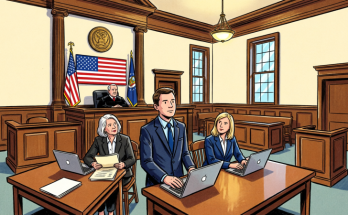
Daniel officially filed his lawsuit in probate court within three weeks.
It remained profoundly un-dramatic. There were no shouting matches on the phone, no dramatic confrontations in the street. It was just a formal, typewritten petition filed in the Circuit Court of Norfolk, formally challenging the overall validity of the European trust and aggressively questioning whether our father had properly, legally disclosed his vast foreign holdings to his heirs. The lawsuit threw around heavy, damaging legal phrases: Undue influence. Lack of fiduciary transparency. Failure to provide equitable distribution to rightful heirs.
Legal language has a incredibly cruel way of stripping away a lifetime of shared history and turning a family into sterile, opposing categories: Petitioner and Respondent.
Thomas Reeves called me early on the crisp autumn morning the court papers were officially served……………………………………….