The doctor turned serious. He explained that burns should be cooled with running water, that I shouldn’t apply unprescribed ointments or home remedies, because they could worsen the injury. I thought of the girl at the pharmacy, of my desperation, of how many women rubbed anything on themselves to heal quickly and return to the house where they were being killed slowly. Emergency Services also recommend not applying creams or home remedies on burns and not popping blisters. “Do you want to file a police report?” the doctor asked. Before, I would have said no. Before, I would have said “it was an accident.” Before, I would have thought of Ray crying, of my mother-in-law blaming me, of Paula saying I was destroying the family. But Matthew was there. Matthew had seen the mug fly. “Yes,” I said. “I want to file a report.” The doctor called social services. While waiting, I replied to the unknown number. “Who are you?” The answer didn’t take long. “My name is Gabe. I’m an administrator at the clinic. I shouldn’t have texted you, but I saw your name on the card they tried to use. I also saw a consent form where Ray Miller appears as a companion and possible biological father.” I almost dropped my cell phone. Ray Miller. My husband. Paula’s brother.
I felt nauseous. I wanted to think I had misread. That it was another Ray. That it was a system error. That the pain was confusing me. But the next message completely broke me. “Paula Miller is 11 weeks pregnant. The test they want to pay for is a prenatal paternity test. There is another name in the file, but they are changing it.” I typed with cold fingers. “What other name?” Gabe replied: “Matthew Miller.” I gasped for air. Matthew. My four-year-old son. I didn’t understand at first. Then the horror took shape. It wasn’t just that they wanted to use my card to pay for a test. They wanted to drag my son’s name into a lie. They wanted to make Matthew appear as a “sibling,” “donor,” “family record,” something filthy on paper that I couldn’t even begin to imagine. My mother-in-law spreading jam. Paula hugging my purse. Ray yelling that we were all going to lose. Everyone.
The social worker arrived. Her name was Irene. She carried a green folder and had a look that didn’t judge, but wouldn’t be fooled either. “Mary, the doctor told me this was an assault by your husband.” I nodded. Matthew clung to my leg. “Do you have somewhere to go?” “My mom lives in San Antonio.” “Does he know?” “Yes.” “Then don’t go alone if he can follow you.”
She told me about the women’s support center in Phoenix, about accompaniment, guidance, and protection for women, children, and adolescents in violent situations. The city has comprehensive care services for vulnerable women and families at the Downtown Phoenix Center. I listened to it all, but my head was at St. Regina’s Clinic. I showed her the messages. Irene read them slowly. When she finished, she looked up. “This is no longer just domestic violence. There could also be attempted fraud, misuse of personal data, and a risk to your son.”
I felt like I was missing skin. As if the coffee had burned me on the outside and the truth on the inside. “What do I do?” “First, block the card and document everything. Second, do not go back to your house alone. Third, press charges.” “I’m scared.” “Of course you’re scared. But you already walked out with your son in your arms. That is the hardest part.”
No. The hardest part was when Matthew asked me: “Is Daddy going to look for us?” I hugged him carefully. “Yes, my love. But this time he won’t find us alone.”
I called the bank. I blocked the card. I asked for the reference numbers of the declined attempts. A representative read me the merchants: two department stores and St. Regina’s Clinic. I saved it all. Then I called my mom again. “Mom, I’m not going to be there just yet. I have to file a police report.” She was silent for a second. “I’ll come to you.” “No, Mom, you’re in San Antonio.” “And there are buses, Mary. I didn’t give birth to you just to hear you tremble over the phone.”
I cried. I imagined her leaving her house in San Antonio, with her tote bag, crossing streets that smelled of barbecue, baked bread, and pecan pies, arriving at the Greyhound Station with her heart in her throat. My mother didn’t have spare money, but she had something I had forgotten: courage.
That afternoon, Irene accompanied me to the Police Department. Matthew fell asleep on my lap while I told them everything. The first slap. The first push. The time Ray locked me in the bathroom because I didn’t want to lend him money. The time Paula used my card to buy a cell phone and my mother-in-law said that “between family, you don’t charge.” The mug. The coffee. The smell of burning skin. The threat. The clinic.
When I finished, my throat was dry. The detective who took the statement asked to see the burn, the screenshots, and the bank transactions. She also asked me not to delete any messages. “Sometimes financial abuse hides behind phrases like ‘just lend it to her,’” she said. “But when there are hits, threats, and credit card misuse, there is already a pattern.”
Pattern. That word disgusted me. Because yes. My life had a pattern: they asked, I paid; I said no, Ray exploded; my mother-in-law justified it; Paula cried; I gave in. Until I stopped giving in. And they burned me.
At seven in the evening, my mom arrived. She entered the waiting area with messy hair, a jacket over her dress, and a bag of sandwiches. When she saw me, she stood still. She didn’t scream. She didn’t cry right away. She walked over, held my face on the unburned side, and said: “Who did this to you?” Matthew woke up. “My dad threw coffee.” My mother closed her eyes. When she opened them, she was no longer Linda, the sweet lady who baked apple pies in August and prayed before bed. She was a wounded mother. “We are going to bury him alive in paperwork,” she said. I couldn’t help but laugh. My face hurt when I did. But I laughed.
That night we didn’t go back to the house. We stayed in a small room at a temporary shelter. Phoenix is attached to massive suburbs and neighboring cities; I had always felt like I could run anywhere, but I had never dared to cross the threshold. I slept very little. Matthew woke up twice screaming. “Not the mug, Daddy!” My mom hugged him until he fell back asleep. I stared at the ceiling, the gauze tight on my cheek, thinking about Paula. About her pregnancy. About Ray. About my mother-in-law. About that family where everyone seemed to know something except me.
The next morning, Gabe texted again. “They are coming to the clinic today. They say they already have another card. If you want proof, come with the authorities. I can’t hand over anything directly.” I showed the message to the detective. She made some calls. Irene arranged an escort. My mother put on her shoes as if she were going to church. “Let’s go.” “Mom, this could get ugly.” “Ugly was seeing you burned.”
St. Regina’s Clinic was on a clean avenue, with a white facade, tinted windows, and receptionists who smiled as if money were anesthesia. We arrived with an officer, the detective, and my mom. Matthew stayed with a social worker. At reception, the employee tried to deny that Paula was there. But her voice could be heard from the hallway. “Ray, tell Mom not to take long. I’m getting nervous.” My body froze. Ray replied: “Calm down. If Mary hadn’t thrown her tantrum, this would already be paid for.” My mother squeezed my hand. The officer stepped forward.
The three of them were in the private room. Ray. Paula. My mother-in-law. Paula had a gown on and puffy eyes. Ray stood up when he saw me. For the first time since breakfast, he didn’t look furious. He looked caught. “What are you doing here?” he said. I didn’t answer. My mother did. “I came to see the kind of trash you raised in this family.” My mother-in-law stood up with fake dignity. “Ma’am, stay out of this.” “I get involved where my daughter gets burned.” Ray tried to approach. The officer stepped in. “Keep your distance.” Paula started crying. “This is your fault, Mary. If you had just lent the card…” “For what?” I asked. “To pay for a test that said your baby isn’t Ray’s?”
The room went silent. My mother-in-law crossed herself. But not out of surprise. Out of fear. Right then I confirmed it. She knew.
Ray clenched his teeth. “You don’t know what you’re talking about.” “Then explain to me why your name appears as the possible biological father.” Paula sobbed. “We didn’t want anyone to know.” My mom took a step back. “Good Lord.” Ray yelled: “Shut up, Paula!” The officer raised her hand. “Sir, lower your voice.”
I looked at my sister-in-law. For the first time, I didn’t just see the spoiled woman who stole money from me. I also saw a trapped woman, even if she had decided to trap me to save herself. “Since when?” I asked. Paula covered her face. “It was one time.” My mother-in-law exploded. “Don’t say anything!” The detective took notes. Ray glared at me with hatred. “You’re going to destroy Matthew.”
Then I understood the next piece. They didn’t want to list Matthew as the father, of course not. They wanted to use his file, his data, his birth certificate, to create a fake family chain. Maybe say the baby came from another relative. Maybe alter papers. Maybe cover one monstrosity with another. “Matthew was already destroyed this morning when he saw his father burn his mother,” I said. Ray lowered his voice. “Mary, let’s go home. We’ll talk. I’ll pay for your medical bills. I’ll buy you whatever you want.” I almost laughed. After years of taking my money, he was offering to buy my silence. “There is no home with you.” My mother-in-law turned to me. “You’re ungrateful. My son gave you his last name.” My mom let out a bitter laugh. “Last name? My daughter gave him a roof, food, and a credit card. Don’t get it twisted, ma’am.”
The clinic didn’t hand over the complete documents that day, but the authorities put it on record. Gabe stated that he had seen payment attempts with my card and suspicious changes in the file. I don’t know if he lost his job later. But before leaving, he told me quietly: “My sister also experienced abuse. No one believed her in time.” I didn’t know what to answer. I just told him: “Thank you for believing me before meeting me.”
Ray was subpoenaed. At first, he mocked it. Then, when the medical report, the bank screenshots, the texts, and the clinic’s statement began to pile up, he stopped mocking. The mug he threw didn’t disappear. Neither did my burn. Matthew spoke to a child psychologist and told her what he saw. “Daddy threw fire at Mommy,” he said. Fire. That’s how he had seen it. And he was right.
I was granted a restraining order. Ray couldn’t come near me or Matthew. An investigation for domestic violence, assault, and possible fraud was also initiated. The detective explained that the process would be slow, that Ray would try to play the victim, that his family would call me dramatic. She wasn’t wrong. My mother-in-law sent messages. “Paula is sick because of you.” “A decent wife protects her husband.” “Matthew is going to hate you.”
Paula also wrote one night. “I’m sorry. I didn’t want him to burn you.” I stared at that sentence for a long time. She didn’t say, “Sorry for stealing from you.” She didn’t say, “Sorry for using your card.” She didn’t say, “Sorry for dragging your son into a lie.” She only said she didn’t want him to burn me. As if everything else had been permissible. I didn’t reply.
I went to San Antonio with my mom. It wasn’t an elegant escape. It was a suitcase with Matthew’s clothes, my medications, the police report papers, and a shiny scar crossing my cheek. In San Antonio, my room still had the floral curtains from when I was a teenager. My mom put a clean sheet, a glass of water, and an image of the Virgin of Guadalupe on the dresser. “Nobody asks you for a credit card here,” she said. Matthew stared out the window. “Is Daddy not coming here?” “No.” “And the mean grandma?” My mom cleared her throat. “Her least of all.” For the first time in days, my son smiled.
Recovery was slow. The burn healed, but it left a pink mark across my cheek and part of my neck. At first, I covered it with makeup. Then I stopped. Not because I liked seeing it, but because I got tired of hiding the evidence of what others did. In San Antonio, I started working with my mom selling catered food. Beef brisket, Mexican rice, enchiladas, tamales, pecan pies in season. My hands smelled like garlic, cinnamon, and chocolate again, not fear. Matthew started at a small kindergarten near the house. The first week he cried every day. The second, only three. The third, he came home with a drawing: him, me, and my mom in a yellow house. He didn’t draw Ray. I didn’t say anything to him. Children leave on paper what their hearts no longer want to carry.
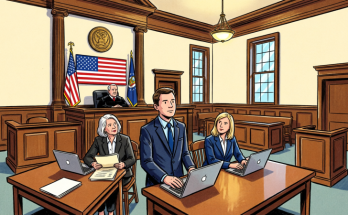
Months later, the hearing arrived. I traveled to Arizona with my mother. The scar no longer burned, but my skin tightened when I was afraid. Ray arrived in a blue shirt, bags under his eyes, looking like an offended man. Paula didn’t show up. I learned from the prosecutor that she was still pregnant and had given a partial statement. My mother-in-law sat in the back, holding a rosary, as if God hadn’t also been in my kitchen when her son burned me. Ray tried to say it was an accident. That the mug slipped. That I was hysterical. That he just wanted to help his sister. Then they presented the text messages. “Come back now. Don’t make a scene. Paula needs that card today or we’re all going to lose.” Then the medical report. Then the declined purchases. Then Matthew’s statement. “Daddy threw fire at Mommy.” Ray lowered his gaze. Not out of guilt. Out of a shattered strategy. The judge upheld the restraining orders. She ordered therapy for Matthew, follow-up for me, a financial investigation, and stricter restrictions. She also ordered a review of any attempt to use my son’s personal information.
When I walked out, my mother-in-law caught up with me in the hallway. “Mary, you can still drop all this.” I looked at her. I was surprised I didn’t tremble. “You could have stopped your son before he threw the mug.” She squeezed her rosary. “He’s my son.” “Matthew is also my son. That’s why I will never be like you.” She was left speechless. My mother, by my side, smiled as if she had just tasted the best brisket of her life.
Paula had her baby months later. I don’t know all the details. I heard Ray was confirmed as the father through a court-ordered test. I heard my mother-in-law tried to claim it was all a lie until she couldn’t anymore. I heard Paula went to live with an aunt in Denver, far from Ray, far from her mother, perhaps too late, perhaps in shame, perhaps in fear. One day I received a letter from her. I didn’t open it for a week. When I did, I found a page with shaky handwriting. “Mary, I’m not asking for your forgiveness because I don’t know if I have the right. I was also afraid of Ray, but that doesn’t justify what I did to you. I wanted to use your money, your name, and even Matthew to hide something that disgusted me to look at. I hope your son never remembers my face as part of that day.” I cried. Not for Paula. For Matthew. For all the people who had been in that kitchen and chose to protect a secret over a child. I didn’t reply. But I kept the letter. Someday, maybe, Matthew would ask more questions. I wanted to have truths, not poison.
A year passed. We opened a small restaurant in San Antonio. “Linda’s Kitchen,” my mom named it, even though I told her it sounded like a roadside diner. “Better,” she replied. “Real hungry people eat at roadside diners.” We sold daily specials, fresh drip coffee, sweet bread on Fridays, and street food on Sundays. Matthew would draw at a table in the back while I served plates. One day a customer asked me about the scar. Before, I would have hidden. That day I said: “I was burned for saying no.” The woman stayed quiet. Then she took my hand. “I’m so glad you survived.” Survive. That word no longer sounded small to me.
The last time I saw Ray was at another hearing. He was thinner. He looked at me as if trying to find the Mary who apologized for everything. She was gone. “Matthew asks about me,” he lied. “Matthew sleeps better without you.” He clenched his jaw. “You’re going to turn him against me.” “You threw the mug. I just stopped picking up the pieces.” He didn’t answer. Because there are phrases that don’t need to be yelled to close a door.
That night I returned to San Antonio and found Matthew asleep on the diner’s sofa, with flour on his nose because he had helped my mom make empanadas. I carried him. He was heavier now. In his sleep, he mumbled: “Mommy, no fire.” My heart broke. I kissed his forehead. “No, my love. No more fire.” Outside, the streets of San Antonio smelled of rain, bread, and sweet potatoes. Church bells rang in the distance. My mother rolled down the shop’s security gate and turned off the lights. She looked at my face. “Does it hurt?” I touched the scar. “Sometimes.” “And your soul?” I looked at my son. I looked at our clean pots. I looked at the cash register—small, honest, mine. “Less.”
My husband threw boiling coffee in my face because I said no. He thought my refusal was a challenge. He didn’t understand it was the first brick of my freedom. His mother kept spreading jam. His sister hugged my purse. He thought he could burn me and then demand silence. But fire doesn’t just destroy. Sometimes it illuminates. And that morning, amidst the broken mug, my son’s cries, and the bitter smell of coffee on my skin, I finally saw the house I lived in for what it truly was. It wasn’t a home. It was a wildfire. And I walked out carrying the only things that truly mattered. My son. My name. And a word I was never going to lend out again: No.