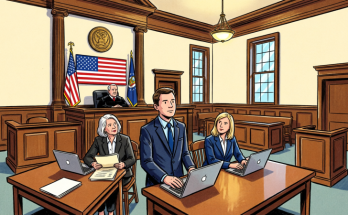
The lawyer continued reading. I couldn’t move. Ellen squeezed my hand, but her fingers were like ice. Ryan let out a nervous laugh—the kind that escapes when someone already knows they’ve lost something before they even understand what it is.
“Martin, I know you thought I contributed nothing… but every meal you gave me was the reason I hid everything in your name.”
“For twenty years I heard your complaints, son. Don’t think I didn’t. I heard when you said I occupied the room your children needed. I heard when you counted pennies to buy my medicine. I heard when you sold your truck and came home walking under the Phoenix sun, your shoes covered in dust.”
I swallowed hard. I remembered that day. I had crossed half the city from the shop, passing near the old downtown area, my throat dry and my pride crushed. Jacob was sitting on the patio when I arrived. He offered me coffee.
I had snapped back at him: “You should offer me money instead.” He just looked down. And I felt like a big man for telling the “truth.” Now, that truth was burning me alive.
The lawyer read another line: “I also know that even though you grumbled, you never left me without a plate. You didn’t dump me in a nursing home. You didn’t lock me out. And when my own children came by only to ask if I had died yet, you were the one going to the late-night pharmacy.”
Ryan slammed the table. “This is a performance!” The lawyer looked up. “Mr. Ryan, your father left instructions. If you interrupt, the reading is suspended and will resume before a judge.” Ryan went quiet, but his face turned purple.
I looked at the blue notebook. It was full of numbers, dates, and shaky words. “Gas: Martin paid.” “Cataracts: Martin sold truck.” “Christmas: Martin bought blanket, though he said it was from Ellen.” “Derek, school supplies: Martin skipped dinner.”
Derek was my oldest son. I saw him standing by the door, twenty-four years old now, with a beard and red eyes. My daughter Ana was behind him. Both had grown up hearing me say their grandfather was a burden. Both had learned that horrible word from me.
Burden.
The lawyer pulled out some photographs. In one, Jacob appeared as a young man, next to an old truck loaded with sacks. In another, he was in front of a stall at the Farmers Market, with crates of tomatoes and peppers. He wasn’t the thin old man from my patio. He was a strong man with large hands and a smile I never knew.
The lawyer took a deep breath. “Mr. Jacob Morales owned three small warehouses in the produce district and two plots of land inherited in Sedona. For years, he leased them through a land trust managed by this firm.”
Ryan stood up. “Lies! My dad had nothing. We checked everything!” “You checked what he wanted you to check,” the lawyer replied.
Ellen put her hand to her chest. “My father had properties?” “He had more than properties, ma’am. He had a memory.”
The lawyer opened another document. “He left the house you live in to Mr. Martin Salcedo. The deed had been ready for eleven years, but it was finalized six months ago. He also left a savings account for his grandchildren, Derek and Ana. And a sum intended to repair the roof, pay utility debts, and pay off the loan Mr. Martin took for the cataract surgery.”
I felt like I couldn’t breathe. “No,” I said. Everyone looked at me. “No, that can’t be.”
The lawyer held my gaze. “It can. Mr. Morales signed everything while in full possession of his faculties. There are medical certificates, notarized videos, and witnesses.”
Ryan scoffed. “And why did he never pay for anything? Why did he play poor? Why did he let this idiot support him?” That word would have made me angry any other day. Not today. Because I wanted to ask the same thing.
The lawyer went back to the letter. “You’re going to hate me for not bringing out the money sooner. You have every right. But my children took my first house when your mother-in-law died. I signed it over trusting them. They left me with nothing visible. If they knew I still had something left, they would have locked me up, declared me incompetent, or made me disappear in a clinic where no one asks about the elderly.”
Ellen began to cry. Not like at the funeral. Now she was crying with shame.
“That’s why I needed no one to know. Not even Ellen. Forgive me, daughter. You always had a soft heart, and Ryan knew how to work his way in there. If he saw you with money, he would have ripped it from you with tears, threats, or lies.”
Ryan took a step toward the lawyer. “That old man was crazy.” Then Ana spoke up. “Don’t call him that.” My daughter’s voice came out trembling, but firm. Ryan turned toward her. “You shut up, kid.”
Derek stepped in front of his sister. “The ‘kid’ finished college, Uncle. And you’re still the same leech.” A heavy silence fell. Ryan clenched his fists. “They brainwashed you.” I finally found my voice. “No. I brainwashed myself with my own misery.”
Everyone looked at me. I sat down slowly because my legs wouldn’t hold me anymore. For twenty years, I had counted every tortilla as if it were an insult. I had watched the old man serve himself beans and thought he was stealing from me. I never asked what had been stolen from him before he arrived at my table with his gray hat and his “Thank you, son.”
The lawyer pulled out the cloth bag. “This is also for you.” I opened it. Inside was Jacob’s hat. And underneath, bundles of receipts. They weren’t his receipts. They were mine.
The payment for Ana’s high school. The late mortgage installment. The refrigerator repair. Derek’s tuition at the community college.
I looked at the lawyer. “I paid those.” “Sometimes you did,” he said. “Sometimes you came up short, and Mr. Morales sent me to cover the difference on the side. He didn’t want you to find out.” “How?” “He sold antique parts, collected small rents, moved interest. All with discretion. Sometimes he asked the lady at the corner store to give you credit even though it was already covered.”
I remembered Mrs. Miller at the store. “Pay me later, Martin,” she would always say, wiping her hands on her apron. And I thought she was pitying me. Jacob was behind it all. Quiet. As always.
The lawyer kept reading. “I didn’t want to buy your affection. I wanted to protect the little you had left. You were hard on me, yes. But you were never cruel. There are men who get tired and turn into beasts. You got tired and just became bitter. There was still a cure for that.”
I covered my face. I didn’t want to cry in front of Ryan. But I did. Ellen knelt beside me. “Martin…” “I called him a burden,” I whispered. “I said it to him so many times.”
Ellen hugged me. “I left him alone many times, too. To avoid fighting with you. To avoid fighting with my brothers. Out of fear.”
Ryan let out a dry laugh. “How touching. Everyone’s a saint now. But we’re entitled to that inheritance. We’re his kids.”
The lawyer closed the folder. “Mr. Morales also left something for you.” Ryan straightened up. His siblings, who had been quiet until then, moved closer like dogs smelling meat. The lawyer pulled out three white envelopes. “A letter for each of you. And one dollar.”
Ryan blinked. “What?” “One dollar for each child who abandoned him. Mr. Morales specified that it wasn’t an oversight. It was a symbol.” Ryan’s face contorted. “I’m contesting this.” “That is your right.” “I’m going to prove Martin manipulated him.”
The lawyer looked at my house: the damp walls, the worn floor, the patio with the empty chair. “I wish you luck convincing a judge that the man who complained about supporting him manipulated him into giving him everything.”
Ryan lunged toward the table. Derek stopped him. There was shouting, chairs scraping, Ellen pleading for calm, Ana crying in rage. Ryan pointed his finger at me. “You were always a starving nobody. That’s why he picked you. Because he knew you’d cry and play the victim.”
I stood up. For the first time in years, I wasn’t afraid of looking bad. “He didn’t pick me because I was good,” I said. “He picked me because you were worse.”
Ryan wanted to reply, but he couldn’t find the words. He left cursing. His siblings followed. The house went silent. The lawyer put away the papers, except for the letter. “Mr. Morales asked that I read the end only with you.”
Ellen let go of my hand. “I’ll go make some coffee.” “No,” I said. “Stay.” The lawyer nodded and read:
“Martin, I don’t leave you this so you feel forgiven. I’m not God. I leave it to you because at your table I learned that a family doesn’t always love ‘pretty,’ but sometimes it stays. You stayed. With rage, with exhaustion, with words that hurt, but you stayed.”
I looked toward the back room. The door was open. The bed was made. His radio was silent for the first time.
“Do something good with what I leave. Don’t spend it trying to prove anything to anyone. Pay your debts. Fix the roof. Buy another truck if you want. But above all, if one day an old man sits at your table and can’t pay, remember me before you call him a burden.”
The lawyer folded the letter. I couldn’t get up.
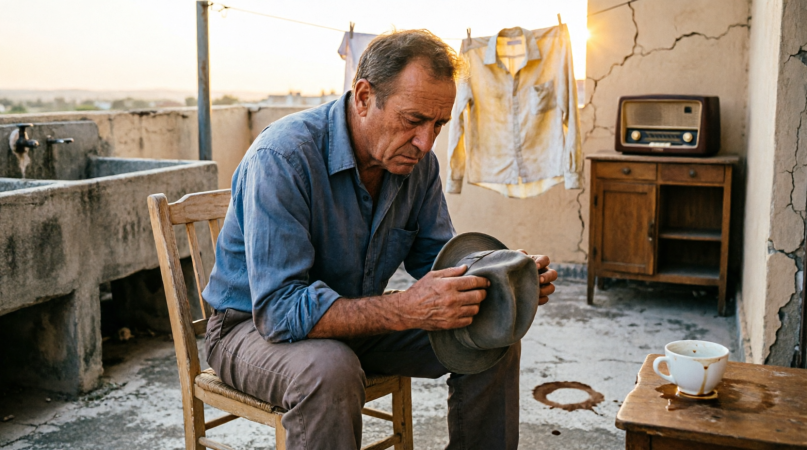
That afternoon I went out to the patio. Jacob’s chair was still there, by the laundry sink. There was still a circular stain on the floor where he used to leave his coffee mug. An old shirt Ellen hadn’t wanted to take down was moving on the clothesline.
I sat in his chair. I had never done that. For twenty years I had considered it mine, stolen by him. But the chair had the shape of his absence.
The next day we went to the market. Ellen wanted to buy flowers. I didn’t understand why, since we had already buried him. But I followed her among the stalls of fruit, peppers, and BBQ where people shouted prices with a force that woke up the morning. She bought marigolds. “My dad liked the color,” she said.
Then we went to the cemetery. Jacob’s grave still had fresh dirt. There were two wilted wreaths and a discarded plastic cup. I felt ashamed that his goodbye had been so poor, when he was the one who sustained us from the shadows.
I knelt down. I didn’t know how to pray beautifully. I just said: “I’m sorry.”
Ellen cried beside me. Derek put the gray hat on the cross for a moment. Ana left a piece of sweet bread inside a napkin. “For his coffee,” she said.
And then I broke down. Not because of the money. Not because of the house. But for all the mornings that old man broke his bread in silence while I looked at him like an enemy.
The following weeks were a refined hell. Ryan followed through on his threat. He hired a lawyer, talked trash about me to the neighbors, said I had stolen papers, that Ellen had drugged her father, that Jacob didn’t even know how to sign his name. He even went to the shop where I worked and told the boss I was a lucky thief.
But Jacob had prepared every stone in the path. There were videos. In one, he appeared sitting before a notary, in a white shirt with his hat on his knees. His voice was low, but clear. “I leave my assets to Martin Salcedo not because he loved me perfectly, but because he gave me a roof when my own children gave me excuses.”
I watched that video only once. I couldn’t watch it again.
By the third month, Ryan lost the first legal battle. By the sixth, he stopped calling. By the eighth, he showed up at the house drunk. It was a cold night. The wind was dry and smelled of woodsmoke from some nearby food stand. I was fixing a leak in the roof with Derek when someone started pounding on the door.
I opened it. Ryan was at the door, swollen with rage. “Give me something,” he said. “No.” “He was my dad.” “He was also Ellen’s dad. He was also my children’s grandfather. He was also the man you left in a laundry room for twenty years.” “I had problems.” “We all did.”
He pushed me. Before I could respond, Ellen appeared behind me. “Get out, Ryan.” He looked at her with contempt. “You chose a husband over blood.” Ellen took a step forward. “No. I chose the one who stayed with my father when his own blood abandoned him.”
Ryan raised his hand. I stepped in between. But it was Ana who shouted from the hallway: “I already called the police!”
Ryan lowered his hand. He left spitting insults.
That night I understood that Jacob’s inheritance wasn’t money. It was a mirror. And no one wanted to look too closely.
With some of the money, we paid off the debts. I fixed the roof before the rainy season. I bought a used truck—not new, because I was still ashamed to spend. I put a larger table in the kitchen. Ellen changed the curtains in the back room and turned it into a study for Ana, even though she didn’t live there anymore.
I left Jacob’s chair on the patio. Not out of guilt. But for memory. Every morning I put a cup of coffee by the laundry sink. At first, Ellen thought I was going crazy. Maybe I was. But I needed to ask for forgiveness in a way that could be repeated.
One Sunday, I took my kids to the historic district. We walked through the park, among families, balloons, musicians, and ice cream vendors. The city was as clean and proud as ever, with its stone mansions and old churches where tourists walk slowly, never imagining the shame families carry inside their homes.
We stopped in front of the old Aqueduct. The stone arches rose up enormous, crossing the city like an old rib. Jacob used to say a work like that wasn’t built in a hurry, but stone by stone. I never paid him any attention.
That day, I understood. A family is built like that, too. And it also cracks if you stop taking care of the water that keeps it alive.
Derek stood next to me. “Do you miss him?” It took me a while to answer. “I miss the chance to have been better to him.” My son nodded. “That’s also missing someone.”
I looked at him. Derek was a man now. And I didn’t want him to learn late regret from me. “When I’m old,” I told him, “if I get stubborn, you tell me. But don’t let me become invisible.” Derek hugged me. Not tight. Just enough.
A year passed. On the anniversary of Jacob’s death, Ellen made beans, red rice, and fresh tortillas. She put sweet bread on the table and cinnamon coffee. She invited Mrs. Miller from the store and the lawyer, who now seemed like part of a story no one knew how to tell without crying.
Before eating, Ellen placed her father’s photo in the center. It was an old photo, taken at a famous local landmark. Jacob was young, smiling, with a bag of bread in his hand. He looked like a man who didn’t yet know how much he was going to lose.
I raised my mug. I didn’t give a speech. I just spoke the only way I could. “For twenty years I thought this table became poorer when he sat down. I was wrong. It became more human. I didn’t see it. I wish I had.”
No one replied. They didn’t need to. I served the first plate and put it in front of the empty chair on the patio. Then I served the others.
That night, when everyone had left, I stayed alone by the laundry sink. The air smelled of damp earth, soap, and coffee. Jacob’s old radio, which I had sent to be fixed, started playing a low country song.
I closed my eyes. For a second, I swore I heard his voice: “Thank you, son.”
This time, it didn’t make me angry. I raised the mug to my lips and answered the empty patio: “No, Mr. Morales. Thank you.”
And as the house breathed in silence, I finally understood that there are burdens that don’t weigh because of what they cost. They weigh because of how late we learn to love them