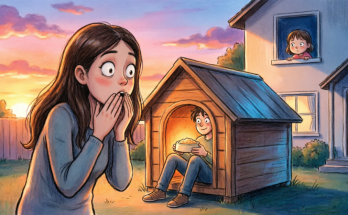
At Breakfast, Mom Said: “Your Sister’s Twins Will Take Your Room — They Need More Space To Grow.” As I Opened My Mouth, Dad Slammed His Glass And Said: “Agree Or Get Out Of This House.” I Just Nodded. A Week Later, I Bought The House Next Door, Watched Them Fall Apart, And Said “Good Morning” Every Day.My name is Christopher, and if you’ve ever met the kind of person who can disappear into a doorway while still holding the door open for everyone else, that’s me. I’m thirty-one. I run a small pastry shop on the corner of Lyman and Third. It’s the kind of place where the sign is a little crooked because I hung it myself, and people forgive it because the almond croissants come out flaky and warm at 6:15 a.m. sharp. I know my regulars’ orders the way some people know prayer. Mrs. Patel likes her latte extra hot. Mr. Corgan pretends he’s “just browsing” and leaves with six éclairs. Kids from the middle school stop by after class and ask if I have anything “with a lot of chocolate.” I remember birthdays. I remember anniversaries. I remember the weird details that make people feel seen.
In my family, I am the person who sees everyone else.My older sister Sabrina is the one everyone sees.She’s three years older and has what my mother calls “presence,” which is her polite word for taking up all the air in a room. Sabrina’s laugh is loud and confident. Sabrina’s opinions arrive like they’re doing you a favor. Sabrina married a man who talks a lot about “opportunities” and not much about paying bills, and then she had twins—miracle babies, according to my mother.
Everyone says our miracle babies as if we all chipped in biologically.I chipped in financially. That was my job. “Chris is stable,” my mother says whenever someone asks how Sabrina and her husband are managing. “He has his own business.” My father says it like the bakery prints money in the back. Growing up, it was a steady stream of small cuts. Be a good brother. Your sister needs it more. Don’t make a fuss. I learned how to patch drywall, swap out a faucet, and split a check four ways when I was the only one with a card that wouldn’t bounce. I learned to say it’s fine and make it sound convincing. That breakfast started like any other family morning, which meant it started with me showing up with food. I got to my parents’ house at 7:40 a.m. with a box of cinnamon rolls because my mother “doesn’t like store-bought,” which is hilarious because she hasn’t set foot in a grocery store since the Obama administration. The kitchen smelled like coffee and baby powder. Sabrina’s twins were in matching onesies that said copy and paste, propped in their bouncy seats like tiny judges.
I kissed their foreheads. They smelled like milk and warmth. I tried not to think about my credit card statement.
We sat down. My father unfolded the local paper like it was still 1998. Sabrina scrolled her phone like it held the only real world. My mother poured coffee with her jaw already set, as if she’d been rehearsing.
“Your sister’s twins will take your room,” she said.
She said it the way you announce the weather. No build-up. No conversation. Just a fact, like it had always been decided and I was simply receiving the update.
“They need more space to grow.”
I blinked. My room.
It was still my room in the way that matters when you’re the kind of person who kept a little piece of yourself tucked into a corner. I didn’t live there full-time anymore, but I slept there sometimes after late shifts when I was too tired to drive across town. It was the only place in that house that still smelled faintly like lemon polish and birthday candles, like childhood before it got complicated.
My mother didn’t pause. “You have your shop. You practically live there. It’s selfish to keep a whole room empty.”
I opened my mouth.
My father slammed his glass down so hard milk sloshed onto the table. The twins hiccuped at the sound.
“Agree,” he said, voice sharp, “or get out of this house.”
There are sentences you hear once and they echo for years. That was one of them.
Agree or get out.
Sabrina didn’t even look up. Not until the silence stretched. Then she lifted her eyes like I was a customer taking too long to order.
“It’s not personal, Chris,” she said. “The babies need space.”
I stared at her and had the strange thought that we all sounded like we were discussing a storage unit. Like I wasn’t a person, just a closet that needed rearranging.
Where was I supposed to sleep when I closed at midnight and couldn’t drive home? On the couch, Sabrina suggested, like it was nothing.
The couch was my father’s throne. The couch was where complaints lived. I pictured myself curled up there listening to him breathe and judge, and something in my chest went quiet.
I nodded.
“Okay,” I said.
My mother immediately shifted into logistics. “We’ll move your boxes to the garage. We’ll repaint. We’ll get a crib in there by next weekend.”
I chewed my cinnamon roll without tasting it. My tongue felt like cardboard.
In my head, I heard the glass slam over and over, like a metronome that kept time with my entire childhood.
After breakfast, I drove to the bakery on autopilot. Parked. Opened the door. Turned on the lights. The smell of butter and yeast wrapped around me like a familiar blanket, and I stood behind the counter watching morning light crawl across the tile floor.
My phone buzzed.
Sabrina: Can you send $300 for the car seats? Sale ends today.
Then Mom: It’s settled then. Start moving your things. We’ll rent a storage unit if you insist, but you’ll cover it.
Settled. Like a judge’s gavel.
I stared at the words for a long time, and something shifted—not loudly, not dramatically. Just a small movement inside me, like a door clicking shut.
A customer walked in. I smiled on autopilot and filled a pastry box.
When they left, I turned my phone face down beside the register.
I didn’t answer Sabrina.
I didn’t answer my mother.
I wasn’t angry yet. Anger would’ve required energy.
What I felt was clarity.
Because the truth was, my family didn’t want my room.
They wanted my yes.
And I had been handing it over for years like it was nothing.

Part 2
If you want to understand why a bedroom turned into my breaking point, you have to understand how my family treated my life like a group project.
It started small. It always starts small.
Sabrina borrowed $120 in college for textbooks, then $350 for a traffic ticket. “You’re better with fees,” she said, like I had a hobby. When she was twenty-seven, she called me crying from a mall parking lot because her card got declined at Nordstrom and she “needed” a blazer for an interview. I drove over, handed the cashier my card, and pretended it didn’t matter because I hate scenes.
The blazer was $498.27.
I remember the number because later that week I skipped lunch three days in a row so I wouldn’t overdraft.
My parents never asked where my money came from. They assumed I had it.
“You’re careful,” my mother would say.
Translation: You don’t say no.
My father kept a running scoreboard of everything they’d “done” for me. Roof over your head. Food on your plate. Education. Like existing was a tab I still hadn’t settled. If I hesitated, he’d mutter, “After all we’ve done,” the way some men mutter prayers.
When Sabrina got married, I made a five-tier cake for free and paid the florist’s rush fee because they messed up. When she got pregnant with the twins, I bought the crib, then the second crib, then the humidifier, then the better humidifier because the first one was “too loud.” Sabrina’s registry looked like it was for a minor royal.
At the shower, Aunt Nora hugged me and said, “You’re the glue of this family.”
Glue is sticky. Glue holds other people’s messes together until it dries and cracks.
I told myself I didn’t mind because I liked being useful. I liked being the dependable one. The guy people could count on.
But somewhere in the last year, the asks changed shape.
They got bigger. Heavier. They came with deadlines.
Two months before the twins were born, my father called while I was piping buttercream onto sixty cupcakes.
“No hello,” he said. “Sabrina’s lease is up. We’re converting the den into a nursery. You’ll handle the contractors.”
“Dad, I’m in the middle of—”
He talked over me. “We need it done before June. Your shop is slow in spring, right? You can manage the budget.”
Whose budget? I asked, already knowing.
“Ours,” he said, then coughed like the truth had a sharp edge. “Yours. We’ll pay you back when things even out.”
When do things ever even out?
I started keeping a spreadsheet. Not because I wanted to be petty. Because I could feel control slipping, and numbers were the one thing my family couldn’t gaslight.
By the week of the breakfast ultimatum, the total I’d fronted in twelve months was $18,542.19.
I am not rich. I sell pastries for $4.75. My “profit” is what’s left after flour, butter, rent, payroll, repairs, and the occasional disaster when the mixer decides to die at 2:00 a.m.
That number glowed on my laptop screen like a warning label.
Around the same time, Sabrina began leaving boxes in my old room. “Just for now,” she’d say. Then a stroller appeared. Then two. Then the changing table. I stepped around it at night like a guest in a museum of my own childhood.
The night before the breakfast, I worked late on a custom order. A husband wanted a cake that looked like the first book he and his wife read together. It took me four hours to get the fondant right.
While I worked, my phone lit up with family texts.
Mom: Don’t forget breakfast. 8:00 a.m.
Sabrina: Can you bring cinnamon rolls?
Dad: Be on time.
No please. No thank you. Just instructions.
I brushed it off because brushing it off is a skill now. I boxed the cake, set my alarm, and slept on a mattress half covered by diapers I’d paid for.
Then came the breakfast. The sentence. The glass slam. Agree or get out.
I nodded that morning because nodding was my reflex. But the nod didn’t feel like surrender. It felt like collecting information.
A week later, the breaking point arrived dressed as Sunday lunch.
Roast chicken. The twins sleeping. The house smelled like rosemary and baby shampoo. I brought a tart because I didn’t know what else to do.
My father started without preamble. “We found a contractor. You’ll write the check.”
“How much?” I asked.
“Forty-two with permits,” he said, like he was asking me to pass the salt. “Four thousand two hundred.”
My mother chimed in. “And while we’re at it, Sabrina and the babies will move into your room this week. We need you to get the rest of your things out tonight. Your childhood stuff can be tossed. It’s clutter.”
Tossed.
My stuff was clutter.
Sabrina sipped water. “Chris, can you not make this dramatic?”
Then, like an afterthought: “Also daycare waitlist fees came through. Can you spot me $600? I’ll send it back when I can.”
I looked around the table. The chicken steamed. The twins snuffled. My father’s knife hit the plate with little clinks.
“I can’t,” I said.
Three faces lifted like periscopes.
“Can’t what?” my father demanded.
“I can’t write a check for renovations,” I said, and my voice surprised me with how steady it sounded. “I can’t pay daycare fees. I can’t move my things out tonight so you can toss them in the garage. I can’t do this anymore.”
Silence. Thick. Waiting.
My mother recovered first. “Don’t be childish. We all sacrifice for family.”
“I’ve sacrificed,” I said. “$18,542. Nineteen hundred in free cakes. Two hundred hours on your renovations. Midnight calls. Early drop-offs. And when I asked for one thing—keep my room—you told me to agree or get out.”
My father leaned back. “You keeping score?”
“I started keeping score because you were already keeping it for me,” I said. “Every favor becomes proof I owe more.”
Sabrina rolled her eyes. “This is about the room. The babies need space.”
“This isn’t about revenge,” I said quietly. “It’s about boundaries.”
My father’s jaw worked like he was chewing anger. “Then get out.”
“Okay,” I said, pushing my chair back.
My mother’s mouth opened, closed. “Christopher, sit down.”
I stood. “I’ll be back tonight for my things. The rest is yours.”
Sabrina laughed once, brittle. “You’re overreacting.”
I looked at her. “You texted me forty-seven times last month asking for money. Venmo requests for $8.99 because you forgot coffee. I sent it. Not anymore.”
I walked to the door.
My father said, “If you leave like this, don’t come back.”
I paused, hand on the knob. “I’m tired of nodding,” I said, then opened the door and stepped into the afternoon like it was the first breath after being underwater.
I drove to the bakery and cleaned the espresso machine like it had offended me.
Then I sat at the tiny office desk and opened a real estate app.
The listing had been up for nineteen minutes.
Charming three-bedroom next door to quiet cul-de-sac.
The photos showed a sunlit kitchen, a backyard with a lopsided fence, and the exact view of my parents’ living room window that I grew up staring through.
The price made my stomach flip.
High, but not impossible.
Not if I pulled from the expansion fund and braced for a tight year.
My phone buzzed nonstop.
Mom: Be reasonable.
Dad: Don’t be stupid.
Sabrina: We need the money today. Sale ends at midnight.
I didn’t answer.
I called the agent instead.
“Hi,” I said. “I own the bakery on Lyman. I’d like to make an offer on the house next door.”
The agent whistled softly. “You move fast.”
“Not really,” I said. “Just tired.”
Part 3
The next forty-eight hours felt like someone had replaced my life with a checklist and a caffeine addiction.
I wasn’t a reckless person. I’d built my business on planning. I knew what the bakery made, what it spent, what I could pull without collapsing payroll. The expansion fund existed because I’d wanted to open a second location someday, or at least renovate the current one. Using it for a house felt like swallowing my own dream.
But then I thought about my dream.
Was it a second location, or was it a life that didn’t require me to buy my own boundaries back?
I met the agent at the house that evening. The neighbor’s porch light flickered. The yard needed work. The fence leaned like it was tired. Inside, the place smelled like old dust and lemon cleaner, like someone had tried to erase the past with a mop.
It wasn’t perfect.
It was mine if I wanted it.
I walked room to room with the agent trailing behind me. The kitchen had a small breakfast nook. The living room had windows facing my parents’ house. Upstairs were three bedrooms, one of them the size of my old room. Same light angle. Same quiet.
I stood in that empty room and felt something loosen in my chest.
“Any questions?” the agent asked.
“Yeah,” I said. “How fast can we close?”
He laughed. “If your offer’s strong enough, pretty fast.”
I made a cash offer. Not because I was rich, but because I’d been saving like a man preparing for disaster. Maybe I had been.
The offer went in that night.
The seller countered.
I countered back.
By the next morning, we were under contract.
I slept on the bakery couch with a pillow under my head and flour still dusting my hair. Jade, my assistant manager, came in at 4:30 a.m. and found me staring at my laptop like it was a confession booth.
“You okay?” she asked.
“I’m buying a house,” I said.
Jade blinked. Then she grinned. “About time.”
I didn’t tell my family. Not because I wanted to surprise them, but because I didn’t want them to interfere. My family treated my choices like votes they could overturn.
This wasn’t a vote.
This was a deed.
On Wednesday, the title company emailed: Recorded.
I stared at that word for a full minute.
Recorded.
Ownership confirmed.
I drove to the house with a folding chair, a pillow, and a bag of groceries. No moving truck. No ceremony. Just me, my keys, and a quiet decision.
The house was empty and echoed when I stepped inside. I opened windows. The air moved through like the place was exhaling. I sat on the living room floor and ate a cold sandwich, looking at the bare walls, and felt a strange peace.
Not joy. Not revenge.
Peace.
At 7:02 a.m. the next day, I stood on my new front porch with a coffee mug and watched my parents’ blinds twitch.
Across the lawn, their front door opened like a jaw.
My mother stepped out in her robe, hair clipped back. She spotted me and froze.
“Christopher?” she called, voice rising like she was catching me committing a crime.
“Morning,” I said, and lifted my mug slightly. “Good morning.”
My father appeared behind her, squinting at the sunlight, then at me, like his brain was trying to rearrange the world.
“What are you doing?” he demanded.
“Living,” I said.
Sabrina texted before she called.
Sabrina: Is this a joke? Tell me you didn’t.
Then Mom called. Then Dad. Then the family group chat lit up like a Christmas tree.
I didn’t answer right away. I sat on the porch step and let the quiet sink into my bones.
By noon, the rumor machine was full speed.
Aunt Nora called, breathless. “Your mother is hysterical.”
Uncle Ted texted: Bold move, kid. with a thumbs up emoji that made me laugh despite myself.
That afternoon, my father came over. No hello. No “how are you.” Just anger, delivered like a bill.
“You think this is funny?” he said, standing on my porch like he owned it.
“No,” I replied. “I think it’s close.”
“Close to what?”
“Closure,” I said.
He scoffed. “You bought a house to spite your sister.”
“I bought a house because you told me to get out,” I said calmly. “And because I can afford to live without being told my value every time you need a check.”
My father looked past me into the empty living room, then back at my face. “So what now? You’ll just sit here and watch us?”
I smiled slightly. “I’ll say good morning like neighbors do.”
He stared at me for a long time, like he was waiting for the old version of me to apologize and back down.
“We raised you,” he said finally.
“I know,” I replied. “Thank you.”
He left shaking his head.
An hour later, my mother sent a paragraph about betrayal and family and how I should be ashamed.
Five minutes after that, she sent a second text.
Mom: Can you at least bring cinnamon rolls on Sunday? The twins love them.
I stared at the message until my coffee went cold.
Then I set my phone down and started building a bed frame.
I’m not handy in an influencer way, but I can follow instructions. It felt good to tighten screws and watch the frame become solid beneath my hands. It felt good to build something that stayed where I put it.
That night, I slept in my new house for the first time, on a mattress on the floor, listening to nothing but the hum of the neighborhood and the quiet thump of my own heartbeat.
In the morning, I stepped outside again with coffee.
Their blinds twitched.
Their door opened.
“Good morning,” I said.
No one answered.
I didn’t need them to.
Part 4
The first week next door was a lesson in how quickly a family can panic when their designated fixer stops fixing.
My mother tried the sentimental route first.
Mom: We’re family. Families don’t do this to each other.
Mom: Your father didn’t mean it. You know how he is.
Mom: Your sister is overwhelmed. The babies are innocent.
Then she tried the practical route, like affection was optional but logistics were mandatory.
Mom: Since you’re so close, you can still help with the contractor calls. The nursery needs to be finished.
Mom: Also the garage door is sticking again. You know how to fix it.
Sabrina tried guilt with a sharper edge.
Sabrina: You embarrassed Mom. Everyone’s talking.
Sabrina: You could’ve just helped like you always do.
Sabrina: This is not the time to make a statement. We have twins.
I didn’t answer. Not because I was silent out of fear, but because I was finally learning that not every demand deserves a response.
At the bakery, I kept my hands busy. Butter, flour, sugar, heat. Simple truths. Customers came in asking about scones and birthday cakes, and nobody asked me to fund their remodel.
My mortgage was real. The bank didn’t care about family dynamics. I rearranged the expansion fund, shelved a shiny idea for a spring renovation, and braced for a lean year. Jade picked up an extra shift without complaint. I cut one subscription I never used. It wasn’t glamorous.
But it was honest.
My numbers were my numbers, not a family group project.
Across the lawn, the house I grew up in felt louder now. Not because they were screaming constantly, but because I could hear the strain in the small sounds. Doors shutting harder than necessary. A muffled argument through a cracked window. Sabrina’s car leaving and returning, leaving and returning, like she was searching for an escape route.
One afternoon, Sabrina showed up at my porch pushing the twin stroller like a battering ram.
“You’re insane,” she snapped.
“Hi,” I said, because politeness was my new armor. “Good afternoon.”
“Don’t do that,” she hissed. “Don’t act like we’re neighbors. You’re my brother.”
“Then talk to me like one,” I said evenly.
She glared. “You humiliated Mom.”
“Mom tried to kick me out of my room,” I replied. “Dad told me to agree or get out. I got out.”
Sabrina’s mouth opened, closed. “You could have stayed. You could’ve just—”
“Just what?” I asked softly. “Just nod and keep paying?”
She looked away toward our parents’ front windows, where the blinds were definitely moving again. “We needed help.”
“You needed a wallet,” I said. “There’s a difference.”
Her face tightened. “So you won’t help with daycare? Or the contractor? Or—”
“No,” I said. “Not financially.”
Sabrina stared like I’d slapped her. “Then what’s the point of you?”
The question hung in the air.
It was so blunt I almost laughed.
Because there it was. The quiet truth that had lived under every request: my value to them was what I provided.
I took a breath. “I’m your brother,” I said. “And I’m done being your bank.”
Sabrina scoffed, sharp. “Enjoy your empty house.”
“I will,” I said, and meant it.
That weekend, the calls stacked up.
Mom left a voicemail crying about betrayal and how I was breaking her heart.
Dad left one saying he was disappointed in the man I’d become.
Sabrina sent a screenshot of her bank app like that was supposed to move me.
I took a walk around the block instead. The air smelled like cut grass. A neighbor I didn’t know waved.
“New on the block?” he called.
“Sort of,” I replied. “Old, but new.”
On Sunday morning, I brewed coffee and stood on my porch at 7:30 a.m. like it was a ritual.
Their blinds moved.
The front door opened.
Mom stepped out, eyes red. Dad hovered behind her. Sabrina stood to the side, arms folded.
I lifted my mug.
“Good morning,” I said.
No one answered. They went back inside.
It kept going like that.
Monday: Good morning.
Tuesday: Good morning.
Wednesday: Good morning.
On Thursday, my father grunted, barely audible.
On Friday, my mother waved without meaning it.
By the following week, their texts were shorter and angrier, then longer and guiltier, then quiet.
Silence has a shape. It fits around you differently when you choose it.
And in that silence, something else happened.
I started practicing no out loud at the bakery when I was alone, to the rhythm of the mixer.
No.
No, thank you.
No, I can’t.
No, I won’t.
It felt clumsy at first, like new shoes. Then it felt like standing up straight after years of hunching.
One morning, I saw Sabrina loading the stroller into her car. She glanced over at me, hesitated, and called out, “Morning.”
It wasn’t warm. It wasn’t kind. But it was the first time she’d spoken to me without asking for money.
“Morning,” I replied.
And for the first time, I understood what I’d bought with that house.
Not revenge.
Space.
Part 5
The “falling apart” didn’t look like one dramatic explosion. It looked like a slow collapse of assumptions.
Without me paying, things got inconvenient fast.
The contractor my father “found” turned out to require a deposit they didn’t have. The daycare waitlist fee didn’t disappear just because Sabrina was stressed. The twins still needed diapers, formula, doctor copays, a stroller that didn’t wobble. Their car still needed repairs. Their kitchen sink still leaked. Life kept charging them.
And for once, I wasn’t automatically the credit card.
I heard my father yelling through the open window one evening.
“You told me he’d help,” he snapped.
Sabrina’s voice came back, tight. “He always did. How was I supposed to know he’d—”
“He’d what?” my father barked. “Grow a spine?”
I flinched at the word, even from next door.
My mother’s voice slid in, sharp and furious. “Don’t talk about him like that. He’s still our son.”
Then, quieter, “We just need him to stop being stubborn.”
Need. That word again.
Not miss. Not love. Need.
The next morning, my father knocked on my door at 6:30 a.m. like he was trying to catch me before I could hide.
I opened it in a flour-dusted hoodie. “Morning,” I said.
He scowled. “Don’t.”
“Okay,” I replied, and stepped outside onto the porch anyway, because this was my porch and I wasn’t shrinking on it.
He held an envelope. “We need you to co-sign something.”
I stared at him. “No.”
He blinked like he hadn’t heard the word in his entire life. “It’s a short-term line of credit. Just until—”
“No,” I repeated.
His jaw clenched. “You’re enjoying this.”
I shook my head. “I’m not enjoying anything. I’m refusing.”
“You’re going to let your sister drown?” he snapped.
“She’s an adult,” I said calmly. “So are you.”
My father’s face reddened. “We raised you.”
“You raised me to be useful,” I replied. “Not respected.”
He opened his mouth, then closed it, then tried again with a different angle. “The twins—”
“I love the twins,” I said. “And I will not buy access to them.”
My father stared at me like I’d spoken another language. Then he shoved the envelope back into his coat pocket.
“You’re cold,” he muttered.
“No,” I said. “I’m finally warm enough to not freeze myself for you.”
He turned and walked away without another word.
That afternoon, my mother came over instead. She stood on my porch like she was trying to look dignified while standing on someone else’s property.
“Christopher,” she began, voice soft.
I waited.
“We’re struggling,” she admitted.
I almost felt a surge of sympathy. Almost. Then I remembered the way she said my room was empty and selfish. The way she said my things were clutter. The way she asked for cinnamon rolls five minutes after calling me a betrayal.
I kept my voice gentle. “I’m sorry you’re struggling.”
Her eyes sharpened. “So you’ll help.”
“No,” I said.
Her mouth tightened. “I don’t understand you.”
“That’s the first honest thing you’ve said in years,” I replied.
She inhaled sharply, offended. “We’re family.”
“Yes,” I said. “And in this family, my no has never counted. It counts now.”
My mother’s eyes glistened. “Your father is under a lot of stress. Sabrina’s exhausted. You could at least—”
“What?” I asked. “At least pay?”
She hesitated, then said it anyway. “At least contribute.”
I nodded slowly. “I will contribute in ways that don’t ruin me.”
My mother’s face twisted. “So you’ll babysit.”
“I didn’t say that,” I replied.
Her eyes narrowed. “You’re punishing us.”
“I’m protecting myself,” I said.
She stared at me for a long time, then turned away with a stiff little shake of her head. “You’ve changed.”
“Yeah,” I said softly. “I did.”
The next day, I heard a crash next door and then frantic voices. A pipe had burst under the kitchen sink. Water spilled. Towels slapped down. Panic rose.
My father knocked on my door again, desperate this time. “Chris. Please. We need a plumber.”
I looked at him and felt something shift. Not obligation. Choice.
“I’ll call the plumber I use for the bakery,” I said. “I’ll give you his number.”
My father’s shoulders sagged in relief. “And you’ll pay?”
“No,” I said calmly. “You’ll pay. But I’ll help you find someone reliable.”
He stared at me, confused, then angry, then resigned. “Fine,” he muttered.
The plumber came. They paid. The world didn’t end.
That evening, Sabrina appeared at my door alone, no stroller, no attitude. Her eyes were red, her hair pulled into a messy knot like she’d given up on looking polished.
“I’m tired,” she admitted quietly.
I stepped aside. “Do you want to sit?”
She entered my empty living room and looked around like she’d expected me to have more furniture, more evidence of a life.
“I thought you’d be lonely,” she said.
“I am sometimes,” I replied. “But I’m not trapped.”
Sabrina swallowed hard. “We can’t afford daycare,” she whispered. “Not full-time. And Mom keeps saying… Mom keeps saying you’ll come around.”
I sat across from her. “I’m not coming around,” I said gently. “I’m staying right here. With my boundaries.”
Sabrina’s mouth trembled. “So what am I supposed to do?”
For the first time, it sounded like a real question, not a demand.
I took a breath. “You figure it out,” I said. “And I can support you in ways that don’t involve me paying. I can help you make a budget. I can help you apply for assistance. I can help you find work you can actually keep.”
Sabrina blinked. “You’d do that?”
“Yes,” I said. “Because I want you to stand on your own feet. Not on my back.”
She stared at the floor, then nodded once, small. “Okay.”
It was the first okay in our family that didn’t mean surrender.
Part 6
That week, Sabrina came over twice with a notebook and a grim expression like she was going to war.
We sat at my kitchen counter, the only furniture I’d bothered to set up properly, and I walked her through numbers the way I did with the bakery.
Income. Expenses. Debt. Reality.
Sabrina kept saying things like, “But Mom said—” and I kept replying, “Mom isn’t paying your bills.”
It was rough. She got defensive. She got embarrassed. She got angry.
Then she got quiet.
On the third night, she whispered, “I didn’t realize how much you were covering.”
I didn’t gloat. I just nodded. “That’s the point,” I said. “You didn’t have to realize.”
Sabrina flinched. “I’m sorry,” she said, and the words sounded awkward in her mouth, like a language she’d never practiced.
I swallowed. “Thank you,” I said. “Keep going.”
My parents didn’t like that Sabrina was coming to me. They tried to frame it as manipulation.
Dad: Don’t let him poison you against us.
Mom: He’s being smug. He wants control.
Sabrina surprised me by not repeating their lines. She didn’t defend me, exactly, but she stopped carrying their messages like packages.
The twins became my unexpected anchor.
One morning, I was on my porch with coffee when Sabrina stepped out next door with both babies balanced on her hips like she’d become a professional juggler. One twin reached toward me, tiny fingers stretching.
“Say hi to Uncle Chris,” Sabrina said quietly.
I lifted my mug slightly. “Good morning,” I said.
The baby squealed, and something in my chest softened.
Sabrina looked at me for a long moment. “They really do like your voice,” she admitted.
I smiled. “I’m charming,” I deadpanned.
She laughed once, surprised, and it was the first genuine laugh I’d heard from her in months.
My father had his own unraveling.
Without me smoothing everything out, he had to feel the consequences of his own rigidity. He had to hear my mother’s constant criticism without me absorbing it. He had to confront the fact that “agree or get out” worked until it didn’t.
One afternoon, he came over holding a bag of groceries like it was a peace offering.
“I bought these,” he said stiffly.
I stared at the bag, then at him. “Okay.”
He cleared his throat. “Your mother’s tired.”
I waited.
He looked away, embarrassed. “I’m tired.”
There it was. Two words that sounded like truth.
“You can sit,” I said, nodding toward my porch chair.
He sat like he wasn’t sure he had permission.
For a long moment, we just listened to the neighborhood—lawnmowers, distant kids, a dog barking like it had opinions.
Then my father said quietly, “I didn’t think you’d actually leave.”
I took a slow breath. “That’s the problem,” I said. “You didn’t think I had options.”
He swallowed. “We gave you a home.”
“You gave me a place,” I replied. “You didn’t give me belonging.”
My father’s face tightened, and for a second I thought he’d explode. Instead, he looked tired in a way I’d never seen before.
“I don’t know how to fix this,” he admitted.
“Start with not threatening me,” I said gently. “Start with asking instead of demanding. Start with accepting no.”
He nodded once, small, like it physically hurt.
The next week, my mother tried one last big move. She showed up at my bakery during the morning rush.
She stood in line like any customer, face composed, as if that alone proved something.
When she reached the counter, Jade greeted her brightly. “Good morning! What can I get you?”
My mother glanced past Jade to me, eyes sharp. “I’ll take a dozen cinnamon rolls,” she said, voice smooth. “For the twins.”
Jade smiled. “Sure! That’ll be $38.40.”
My mother’s mouth tightened. She looked at me like she expected me to intervene.
I didn’t.
She pulled out her card slowly, the way someone pays a fine, and swiped it.
Jade handed her the box with a cheerful smile. “Have a great day!”
My mother walked out without another word.
Jade leaned toward me and whispered, “Was that your mom?”
“Yep,” I said.
“She hates paying,” Jade murmured, impressed.
I watched my mother’s car pull away and felt a strange satisfaction.
Not because she spent forty dollars.
Because she finally did something in my world without me bending first.
Part 7
The real shift happened in late spring, when Sabrina’s husband, Evan, lost his job.
He’d always been the kind of guy who talked about the future like it was guaranteed. Promotions. Investment ideas. “Big plans.” But when bills arrived, his big plans disappeared.
Sabrina showed up at my door with the twins in the stroller and a face that looked like she hadn’t slept.
“He’s gone,” she said.
I blinked. “Gone where?”
“Seattle,” she whispered. “He said he needed ‘space.’ He left me with the babies and a stack of unpaid bills.”
My chest tightened. I wasn’t surprised, but I hated that Sabrina was.
“I don’t know what to do,” she said, voice shaking. “Mom is spiraling. Dad is blaming me. And I—”
I looked at the twins, blinking up at me like the world was still simple.
“We do one thing at a time,” I said. “We breathe. Then we make a plan.”
Sabrina nodded like she wanted to crawl out of her own skin.
That week, the house next door became a pressure cooker.
My mother tried to take control the only way she knew how: criticizing, commanding, rewriting reality.
“Evan will come back,” she insisted. “He’s just stressed.”
My father snapped, “He abandoned his family.”
Sabrina cried in her car. The twins screamed in the afternoons. The nursery paint job sat half finished. The house looked like a metaphor.
And through it all, I still went out on my porch each morning with coffee and said, “Good morning.”
Some mornings, my father answered. Quietly. Like the words were difficult.
Some mornings, my mother didn’t look at me at all.
One morning, Sabrina stepped out with both babies and said, “Morning,” and it sounded like a lifeline.
I helped Sabrina in ways I could live with.
I watched the twins for two hours while she met with a social worker about daycare subsidies. I helped her update her resume. I connected her with a friend of mine who managed a local office and needed a part-time admin. I drove her to a job interview because her car had a check engine light and my father refused to pay for repairs out of pride.
My mother called it enabling.
My father called it interfering.
Sabrina called it saving her.
“It’s not saving,” I told her one night while we sat at my kitchen table surrounded by paperwork. “It’s support. You’re still doing the work.”
Sabrina nodded, eyes red. “I didn’t know how to do work without someone rescuing me.”
I paused, then said the truth. “Me neither. I just did it quietly.”
That night, Sabrina looked at me with a strange mixture of guilt and respect. “You really built all this,” she whispered. “The bakery. The savings. The house. You did it while we… while I—”
“While you were busy being the golden child,” I finished softly.
Sabrina flinched. “I didn’t ask for that.”
“I know,” I said. “But you benefited from it.”
She swallowed hard. “I’m sorry,” she whispered again, and this time the words sounded less like a script and more like a bruise.
I nodded. “Okay.”
Across the lawn, my mother started to lose her grip.
Not in a dramatic way. In small humiliations.
She had to call the cable company herself. She had to fill out forms. She had to admit she didn’t know how much things cost because she’d spent decades assuming someone else would handle it.
One evening, she showed up at my door with a look of pure frustration.
“Your father won’t listen,” she snapped. “Sabrina is falling apart. The babies need stability.”
I leaned on my doorframe. “They do.”
My mother’s eyes sharpened. “So help.”
“I am helping,” I said calmly. “I’m helping Sabrina build independence. That’s stability.”
My mother’s mouth tightened. “You think you’re so righteous.”
“No,” I replied. “I think I’m done.”
She stared at me like she wanted to slap me with a sentence. Then she said, quieter, “You’re enjoying watching us struggle.”
I shook my head. “I’m not enjoying it,” I said. “I’m learning what happens when I stop absorbing it.”
My mother’s face flickered—anger, shame, something like fear—then she turned away without another word.
The next morning, my father stood on his porch and looked at me across the lawn.
“Good morning,” I said.
He hesitated, then said, “Morning, son.”
Son.
Not Chris. Not problem. Not scoreboard.
Son.
It wasn’t an apology.
But it was the first time in my adult life my father sounded like he knew I belonged to him without owing him.
Part 8
By summer, the chaos had settled into something that looked almost like reality.
Sabrina got the part-time job. It wasn’t glamorous, but it was consistent. She started paying her own bills, one by one, like a person learning how to stand after years of being carried. She moved the twins into my old room because, yes, they needed space. The nursery looked sweet in photos, and I felt a small pang when I saw it—not because I wanted the room back, but because it confirmed that my childhood had been repurposed without anyone asking.
Then I remembered: asking was my new standard. The past didn’t have to meet it.
My father sold a few things he’d been clinging to out of pride—an old boat he never used, a second car he insisted was “necessary.” My mother hated it, but she didn’t stop it. She had less leverage now that my father wasn’t spending his energy controlling me.
One Saturday, Sabrina texted me.
Sabrina: Can I buy cinnamon rolls? For real. Like, pay. The twins are obsessed.
I stared at the text and smiled.
Me: Text when you’re on the way. I’ll set a box aside.
She showed up at the bakery with the stroller and a card in her hand like she was proving something to herself. Jade greeted her warmly. Sabrina paid. Sabrina thanked Jade. Sabrina left like a normal customer.
Outside, she paused by my door.
“You know,” she said, voice quiet, “it feels weird paying.”
“Good weird,” I replied.
She nodded slowly. “Yeah. Good weird.”
She hesitated, then said, “I didn’t realize how much you carried until you stopped.”
I took a breath. “That’s usually how it works,” I said.
Sabrina looked down at the twins, who were chewing on teething toys like the world was simple. “I don’t want to be like Mom,” she whispered.
I studied her face. “Then don’t,” I said. “Start with not using people.”
Sabrina swallowed hard. “I’m trying.”
“I see that,” I said.
That night, I sat on my porch step with coffee even though it was late, listening to the neighborhood settle. The house next door was quieter now. Not perfect. But quieter.
The next morning, I stepped outside at 7:30 a.m. like always.
Their blinds moved. Their door opened.
My mother stepped out holding a trash bag. She looked at me like she wanted to pretend I wasn’t there.
I lifted my mug. “Good morning.”
She hesitated.
Then she said, stiffly, “Morning.”
Two syllables. Barely warm. But real.
My father came out behind her and nodded. “Morning, Chris.”
Sabrina stepped out with the twins and gave me a small smile. “Morning.”
And just like that, the phrase that started as a thorn became something else.
Not forgiveness. Not a reunion. Not some dramatic family redemption.
A new routine built on boundaries.
I still didn’t pay their bills. I didn’t co-sign anything. I didn’t fix their lives.
But I stopped being invisible.
I was the neighbor next door with his own keys, his own mortgage, his own life. I could be polite without being pliable.
One afternoon, Jade asked me, “So what’s the point of the good morning thing?”
I thought about it for a while.
“It’s a reminder,” I said. “That I can be kind without being controlled.”
That fall, I refinanced the bakery equipment and finally ordered the new mixer I’d been putting off. The expansion fund would rebuild slowly. I didn’t mind. For the first time, my money felt like mine.
On the anniversary of the breakfast ultimatum, I stood in my kitchen and thought about that glass slam. Agree or get out.
I’d gotten out.
And in doing so, I’d built something better than a room.
I’d built a boundary that held.
The twins will grow up. Sabrina will keep learning or she won’t. My parents will soften more or they won’t.
None of that is my job to manage.
My job is to preheat the oven at 3:45 a.m., laminate dough with quiet music on, pay my staff on time, and lock my front door at night without checking my phone for a new request.
And every morning, I step onto my porch with coffee, look at the house next door, and say what I mean.
“Good morning.”
Because now, it isn’t a plea.
It’s proof.
Part 9
By October, my house didn’t feel empty anymore. It felt quiet on purpose.
The bakery got busy in the way it always does when the weather turns. People who swear they don’t like pumpkin suddenly want pumpkin. Corporate offices order trays of pastries for “fall appreciation meetings.” A high school coach came in every Friday for two dozen cookies and told me, like clockwork, “They play better when they’re sugared.”
I liked the rhythm. Flour on my sleeves. Oven heat on my face. The simple logic of dough: if you give it time, it rises.
Across the lawn, my parents’ house looked the same, but the inside sounded different.
You can hear change through drywall if you’ve spent your whole life listening for moods.
There were fewer sharp commands from my father, more tired sighs. There were still bursts of my mother’s controlled frustration, but they ended sooner now, like even she was running out of fuel. Sabrina’s car came and went at odd hours because she was juggling her part-time job and the twins and the kind of exhaustion that makes your bones feel heavy.
One morning, while I was standing on my porch with coffee, I saw Sabrina step out with the stroller and pause at the edge of the walkway. She looked toward my house like she was deciding whether to come over.
She did.
She pushed the stroller up my path and stopped two feet from my door.
“Morning,” she said.
“Morning,” I replied.
She didn’t have her usual sharpness. Her eyes were a little swollen, like she’d cried in the car and wiped her face before stepping outside.
“He texted me,” she said quietly.
Evan.
Even though he’d run to Seattle, he still had a way of being present in the worst possible way.
“What did he say?” I asked.
Sabrina’s mouth tightened. “That he misses the babies. That he ‘found himself.’ That he wants to come home.”
I didn’t react the way I used to. I didn’t jump to fix. I didn’t say what I thought would make her calmer.
I said the truth. “What do you want?”
Sabrina blinked like she wasn’t used to being asked that. “I don’t know,” she admitted. “Mom says I should forgive him. Dad says he’s dead to him. And I’m just… tired.”
The twins made little snuffling noises in the stroller, their cheeks round and sleepy.
I nodded toward my porch chair. “Sit for a minute.”
Sabrina sat carefully, like she was afraid my chair would judge her. I leaned against the railing.
“Mom will make it about her,” Sabrina said, voice small. “She keeps saying Evan leaving made her look bad.”
I almost laughed, but it wasn’t funny. “Of course she did,” I said.
Sabrina swallowed hard. “I think I need a lawyer.”
I felt a strange surge of pride. Not because her marriage was falling apart, but because she was finally taking steps without waiting for someone to rescue her.
“I know someone,” I said. “A customer at the bakery. Family law. She’s solid.”
Sabrina’s eyes filled. “Can you…?”
I held up a hand gently. “I can connect you. I can help you write down questions. I can watch the twins for the appointment if you schedule it. I won’t speak for you.”
Sabrina nodded, tears slipping down. “Okay.”
That night, my mother texted me.
Mom: Sabrina is confused. You’re putting ideas in her head.
I stared at the message. Then I typed one sentence and sent it.
Me: Sabrina is an adult making decisions for her own life.
My mother didn’t reply for two hours.
Then:
Mom: Thanksgiving is coming. We need to talk.
We need. That word was always her doorbell.
Three days later, she showed up at my porch. Not furious. Not crying. Carefully calm, like she’d decided a softer approach would get better results.
“Christopher,” she said, as if we hadn’t spoken that morning across the lawn.
“Good morning,” I replied.
Her lips tightened at the phrase. “We should do Thanksgiving,” she said. “As a family. And it makes sense to do it at your house.”
I blinked. “My house.”
“It’s bigger than Sabrina’s apartment,” she said quickly, then corrected herself. “Her situation. And our house is… chaotic with the babies.”
Chaotic meaning she couldn’t control it.
“And you have the bakery,” she added, like the punchline. “You can handle the food.”
There it was.
House plus catering plus emotional labor, all served with a smile.
I took a sip of coffee. “I can host,” I said. My mother’s eyes brightened. “But it’s potluck.”
Her expression fell. “Christopher—”
“Everyone brings something,” I continued. “I’ll make dessert. Not the whole meal. And no one talks about money. No requests. No guilt. If that can’t happen, we don’t do it.”
My mother looked like I’d spoken profanity. “Families don’t make rules.”
“They do when they want to stay families,” I said calmly.
She opened her mouth, closed it, tried again. “Your father won’t like this.”
“Then he can stay home,” I said.
My mother’s eyes flashed. “You’re enjoying being difficult.”
I smiled slightly. “I’m enjoying being clear.”
She stared at me for a long moment, then turned stiffly and walked away without agreeing.
So I made my own plan.
I hosted a Neighborsgiving at my house the Saturday before Thanksgiving. Jade came with her girlfriend and a giant bowl of mac and cheese. Mrs. Patel brought samosas and called them “little triangles of peace.” Mr. Corgan showed up with store-bought pie and tried to apologize for it like he’d committed a crime. A few other neighbors came, people I’d only waved at before.
We squeezed around my table and laughed, and for the first time in my life, a holiday felt like something that didn’t require me to perform.
Sabrina came last, with the twins strapped to her chest in those baby carriers that make you look like you’re wearing a tiny backpack on your front.
She looked overwhelmed, but when she stepped inside and saw the room full of normal, kind people, her shoulders dropped slightly.
“This is… nice,” she whispered.
“It’s real,” I said.
Halfway through the meal, my father knocked on my door.
I froze for a second, then opened it.
He stood there holding a grocery bag. His face looked conflicted, like pride and loneliness were having an argument in his chest.
“I brought potatoes,” he said.
I stepped aside. “Come in.”
He walked into my dining room and looked around at the mismatched chairs, the neighbors, the noise, and something softened in his eyes. Not approval. Something closer to surprise.
My mother arrived ten minutes later, hair perfect, expression tight. She paused in the doorway like she expected to be offended.
Then she saw Sabrina laughing at something Jade said. She saw my father sitting quietly with a paper plate, not leading, not commanding. She saw the twins passed around gently by neighbors who didn’t care about family hierarchies.
My mother’s face shifted, just a fraction, like she’d walked into a world where her usual rules didn’t apply.
She didn’t apologize. She didn’t smile warmly.
But she stepped inside.
At the end of the night, while I was washing dishes, my father stood beside me and dried plates without being asked.
“I didn’t know you could do this,” he said quietly.
“Do what?” I asked.
“Be… the center,” he admitted.
I rinsed a fork and looked at him. “I’m not the center,” I said. “I’m just not the background anymore.”
He nodded slowly, like it hurt, but like he understood.
When they left, I stood on my porch and watched them cross the lawn.
“Good night,” I called.
My father lifted a hand in return.
My mother hesitated, then said stiffly, “Good night.”
And I realized something.
They were still themselves.
But they were learning that my life no longer bent around their expectations.
Part 10
The first snow came early that year, dusting the cul-de-sac like powdered sugar. I woke at 3:45 a.m. as usual, drove to the bakery while the neighborhood still slept, and came back around noon to find Sabrina sitting on my porch steps with the twins bundled in matching puffy coats.
Her cheeks were red from cold. Her eyes were red from something else.
“He’s back,” she said before I could ask.
Evan had returned from Seattle like a bad habit.
“Where is he?” I asked.
“At Mom and Dad’s,” Sabrina whispered. “Mom let him in. She said it’s better if we ‘keep the family together.’”
My jaw tightened. Of course she did. Evan was a convenient storyline for her: the husband returns, the family stays intact, everyone smiles, and she doesn’t have to face the mess.
“And you?” I asked.
Sabrina’s mouth trembled. “I told him no,” she said. “I told him he doesn’t get to disappear and come back like it’s a hobby.”
The twins squirmed, making little unhappy noises.
Sabrina swallowed hard. “Mom said I’m being dramatic. Dad yelled. Evan called me ungrateful.”
I took a breath. “Do you want to come inside?”
She nodded.
In my living room, Sabrina fed the twins little puffs from a snack container, her hands moving automatically while her eyes stayed empty with exhaustion.
“I met with the lawyer,” she said quietly. “Like you said. She told me what to file. What to document. I didn’t think I’d ever be the person who needed that.”
I sat across from her. “You’re doing the right thing.”
Sabrina’s eyes filled. “I’m scared.”
“I know,” I said. “But scared doesn’t mean wrong.”
That afternoon, my father came over without knocking. He stepped into my doorway like he still believed he had the right.
“Evan’s here,” he said, voice hard. “Your mother invited him.”
“I know,” I replied.
My father’s jaw clenched. “This is all spiraling.”
I held his gaze. “It was spiraling long before I bought this house.”
He flinched.
Then he did something I didn’t expect. He exhaled and said, “Help me.”
Not pay. Not fix. Help.
“With what?” I asked.
“How do we keep Sabrina steady?” he asked, voice rough. “How do we keep the babies safe? Your mother… she can’t see past the picture in her head.”
I felt a strange ache, because my father had been blind for so long and now he was finally looking.
“We follow Sabrina’s lead,” I said. “Not Mom’s. Sabrina decides what contact Evan gets. Not your guilt. Not Mom’s image.”
My father stared at me like I’d just told him the world was upside down. Then he nodded once.
“Okay,” he said quietly.
Across the lawn, chaos erupted anyway.
Evan stayed for three days before my father finally told him to leave. It wasn’t a dramatic eviction. It was my father standing in the hallway with his shoulders straight and saying, “You don’t get to destabilize my grandchildren.”
Evan tried to argue. My mother tried to smooth it over. My father didn’t budge.
When Evan left, my mother slammed a cabinet door hard enough to make the twins cry. Sabrina put on her coat and walked out with them, refusing to engage.
She came to my house instead.
“You were right,” she whispered.
I didn’t say I told you so.
I just opened the door wider.
By January, Sabrina signed a lease on a small two-bedroom apartment across town. It wasn’t fancy. It had thin walls and a laundry room that smelled like detergent and frustration. But it was hers.
She asked if I could watch the twins two evenings a week so she could work without begging my parents.
I agreed, and we wrote it down like adults. Schedule. Expectations. Boundaries.
No last-minute guilt calls. No “emergencies” that were actually poor planning. If I couldn’t do it, the answer was no without arguments.
Sabrina looked at the paper and laughed nervously. “This feels like a contract.”
“It is,” I said. “A contract for sanity.”
The twins became part of my routine in a way that felt healing and strange. They toddled around my living room, fascinated by my mixing bowls. They laughed when I made silly faces. They learned to say “dough” before they learned to say “dog.”
Sometimes, while I watched them, I’d think about my own childhood, how I had learned to be quiet to keep peace. And I’d look at these two little humans and feel something fierce in my chest.
They would not grow up thinking love meant pressure.
Meanwhile, my parents’ house started to feel too big for them.
Not physically. Emotionally.
Without Sabrina living there and without me funding things, the illusions wore thin. Repairs got delayed. The den nursery sat half finished. My mother complained about money more often. My father looked tired in ways he couldn’t hide.
One night, my father called me and said, “We’re thinking about selling.”
I blinked. “Selling the house?”
He hesitated. “Property taxes went up. And your mother… she wants things. Upgrades. And I can’t keep pretending we can afford what she wants.”
I sat down slowly. “What do you want to do?”
My father exhaled. “Downsize. Condo. Something manageable.”
“And Mom?” I asked, already knowing.
My father’s laugh was bitter. “Your mother wants the house to look like it always has. Like time can’t touch it.”
I nodded. “What are you asking me?”
There was a pause, and I felt my body brace for the familiar request.
My father surprised me.
“I’m not asking you for money,” he said. “I’m asking you… if you’ll stay steady. Because when we say sell, she’s going to blame someone. And I don’t want it to be you.”
I swallowed hard.
“Dad,” I said quietly, “if she blames me, that’s her habit. Not my job.”
My father was silent, then said, “I know.”
Another surprise. A real one.
The next week, my parents sat Sabrina down and told her they were listing the house.
My mother cried. My father stayed firm. Sabrina looked relieved.
Then my mother did what she always did when she felt control slipping.
She came to my house.
She stood on my porch, eyes shiny, and said softly, “If we sell, where will we go?”
I waited.
She swallowed. “Maybe… maybe we could stay with you.”
There it was. The old plan, dressed in vulnerability.
I took a slow breath. “No,” I said gently.
My mother’s eyes widened. “Christopher—”
“No,” I repeated. “You’ll find a place. I’ll help you research. I’ll send you listings. But you won’t live with me.”
Her mouth tightened, anger flashing through the tears. “After everything—”
I raised a hand. “I’m not arguing. I’m setting a boundary.”
My mother’s face twisted. “So you’re just going to watch us struggle.”
I looked at her calmly. “I’m going to watch you handle your own life,” I said. “Like adults.”
She stared at me like she hated me and needed me at the same time.
Then she turned and walked away.
And for the first time, her leaving didn’t feel like a threat.
It felt like reality.
Part 11
They sold the house in March.
It wasn’t a foreclosure. It wasn’t a dramatic collapse. It was simply the end of an era my mother had tried to preserve like a museum exhibit.
The buyer was a young couple expecting their first child. They walked through the place and talked about paint colors and nursery ideas with a tenderness that made something in my chest ache.
My mother hated them immediately.
“They’re too casual,” she muttered to my father at the closing, as if casual was a character flaw.
My father didn’t respond. He signed the papers with a steady hand.
After the closing, my parents moved into a condo fifteen minutes away. Smaller. Cleaner. No guest room for Sabrina to “temporarily” become permanent. No extra space to hide chaos.
My mother complained for weeks. The walls were thinner. The neighbors were loud. The kitchen was too small.
My father started cooking.
Not well at first. He burned rice. He overcooked chicken. He texted me questions like a man discovering Google for the first time.
How long do you boil pasta?
Do you salt the water?
Is the smoke alarm supposed to go off?
I answered with short, amused replies, and I didn’t resent it. Because it wasn’t a demand for money. It was a man learning how to contribute.
Sabrina’s life stabilized in small, steady ways. She worked more hours. She got a better daycare arrangement through a community program. She stopped texting me in panic and started texting me like a person with a plan.
Sabrina: Can you watch the twins Thursday 6–8? I have a shift.
Sabrina: If not, no worries. I’ll ask my neighbor.
The first time she added if not, no worries, I stared at the text for a long moment.
That was growth.
One Saturday, Sabrina brought the twins to the bakery after I closed. We sat at a back table with flour dust still on the counter, and I taught the twins how to roll little balls of dough between their palms.
They giggled, hands sticky, faces bright.
Sabrina watched quietly, her eyes shiny.
“They adore you,” she whispered.
I shrugged. “I’m bribing them with sugar.”
Sabrina smiled, then her face softened into something serious. “I owe you,” she said.
I held up a hand. “Not like that,” I said. “I don’t want a debt relationship with you.”
She nodded quickly. “Not money,” she said. “I mean… I owe you acknowledgment. You were always there. And we treated you like background.”
My throat tightened.
“I didn’t know how to be anything else,” I admitted.
Sabrina reached across the table and touched my wrist gently. “I’m learning,” she said. “I’m sorry.”
I nodded. “Okay.”
That night, when we locked up, Sabrina lingered by the door.
“Do you still do the good morning thing?” she asked, half smiling.
“Every day,” I said.
Sabrina laughed softly. “Mom hates it.”
“I know,” I said, smiling.
“She told me it feels like you’re judging her,” Sabrina admitted.
I leaned against the counter. “I’m not judging her,” I said. “I’m reminding myself.”
“Of what?” Sabrina asked.
“That I can be kind without being owned,” I said.
Sabrina nodded like she understood.
Spring turned into summer. My mortgage felt less terrifying as the bakery kept growing. I still postponed big expansion ideas, but I didn’t feel trapped by it. For the first time, sacrifices I made were for my own goals, not someone else’s emergencies.
And then something unexpectedly sweet happened.
My mother came into my bakery on a Tuesday morning at 8:10 a.m.
No entourage. No performance.
Just her, standing in line behind two construction guys and a woman holding a toddler.
When she reached the counter, Jade greeted her the same way she greeted everyone.
“Good morning! What can I get you?”
My mother glanced at the menu like she’d never seen prices before.
“I’ll take… cinnamon rolls,” she said quietly. “Four.”
Jade smiled. “Sure thing. That’ll be $12.80.”
My mother didn’t look at me this time. She pulled out her card, paid, and waited.
When Jade handed her the box, my mother hesitated, then said something I never expected to hear from her without an agenda.
“Thank you,” she said.
Jade beamed. “Of course! Have a great day.”
My mother turned toward the door, then stopped and looked at me.
Her mouth opened, closed, then opened again.
“Good morning,” she said, stiff but real.
I blinked once, surprised, then smiled softly.
“Good morning,” I replied.
She left with the cinnamon rolls.
No lecture. No request. No guilt.
Just a neighbor buying pastries.
That afternoon, I sat on my porch with coffee and watched the sun warm the fence. Sabrina drove up with the twins and waved. My father walked out of his condo building down the street with a grocery bag and nodded at me. A neighbor I’d met at Neighborsgiving called out hello from across the sidewalk.
My life felt stitched together in a new pattern.
Not perfect. Not cinematic.
But mine.
People think revenge looks like yelling or humiliation. They think closure is a dramatic speech.
For me, closure looked like keys in my pocket and bills paid on my own terms. It looked like Sabrina learning to ask without demanding. It looked like my father saying morning, son without irony. It looked like my mother paying for cinnamon rolls and saying thank you.
And every morning, it still looked like me stepping onto my porch with coffee and choosing the smallest, strongest sentence I’d ever learned.
“Good morning.”
Not as a weapon.
As proof.
THE END!
Disclaimer: Our stories are inspired by real-life events but are carefully rewritten for entertainment. Any resemblance to actual people or situations is purely coincidental.