Because I hadn’t signed anything.
Not that loan.
Not that co-signature.
Not a single document authorizing Richard to use my name as if my identity were a pen forgotten on the kitchen table.
I re-read the last page three times, then four, then five. My name was there, perfectly written: Sophia Martinez Ortega. The signature attempted to mimic mine, but there was something rigid in the stroke, a clumsiness that was far too calculated. It wasn’t my signature. It was a dirty version of me.
First, I felt cold.
Then, a sort of ringing in my ears.
And then, something much worse than tears: a brutal clarity.
I remember closing the laptop very slowly. My mother was sleeping in the next room, exhausted, breathing with that slight rasp that still made me get up several times a night to check that she was still there. The house smelled of reheated soup and disinfectant. Outside, it was raining. Inside, my marriage had just revealed its true face to me.
There was no immediate argument. I didn’t call him screaming. I didn’t write him a threat. I didn’t go running to confront him like the old Sophia would have—the one who still thought things could be fixed if you just explained the pain well enough.
No.
That night, I did something different.
I opened the Excel file again.
I added a new tab.
I named it “Signature.”
I saved the contract. I saved the email. I saved the bank statement. I added the exact date. I took screenshots. I downloaded the original PDF. I forwarded it to a personal account Richard didn’t know about. Then I opened a cloud folder and uploaded everything with a password. After that, I searched through old filing cabinets at home for documents actually signed by me: deeds, tax returns, bank forms. I scanned them one by one.
And for the first time in a long while, I didn’t feel like I was just surviving.
I felt like I was gathering evidence.
The next morning, Richard showed up at the apartment as if nothing had happened. He walked in with the same scent of expensive cologne and mediocre haste as always, dropped his keys on the counter, and asked if there was coffee. He didn’t even go toward the bedroom to see my mother.
“There isn’t any left,” I replied.
He looked at me with annoyance, as if my tone were the true problem in that house.
“You’ve been impossible lately, Sophia.”
I watched him in silence. Seven years of marriage suddenly fit into tiny details: how he never took off his watch when he arrived, how he spoke while looking at his phone, how he turned every reality into a nuisance if it didn’t revolve around him.
“Did you co-sign for your sister using my signature?” I asked.
It was like dropping a glass on the floor and not looking away from the shards.
Richard took less than a second to react, but I had worked too many years in finance, deadlines, and audits not to recognize true shock when I saw it.
“What are you talking about?”
“About forty thousand dollars. About Clara. About a loan. About a line where my name appears.”
He let out a short laugh. Bad sign. Richard always laughed when he didn’t want to answer.
“Oh, that. Don’t be dramatic. It was a formality.”
I felt my back stiffen.
“A formality is signing for a package at reception. Forging my signature is a crime.”
He set his phone on the table, finally giving me his full attention.
“Lower your voice. Your mother is sleeping.”
I had to stifle a laugh. Ninety days without showing up at the hospital, and suddenly he cared about Pilar’s rest.
“Did you forge it or not?”
Richard held my gaze with that mixture of arrogance and weariness used by men who believe they have been “tolerated” for too long.
“Clara needed help. It was urgent. And you were in… well, hospital-mode, drama-mode. Nothing could be brought up to you without everything ending up as a tragedy.”
I didn’t answer. Because when contempt becomes that clear, it no longer needs a translation.
He kept talking, making the most useful mistake of all: over-explaining.
“Besides, nothing was going to happen. It was just to get the operation going. I was handling everything. You always turn any gesture toward my family into a problem.”
My family.
His was always “family.” Mine had always been “your issue,” “your burden,” “your chaos,” “your responsibility.”
“You used my name without my consent,” I said. “And you took money from our joint account for your mother while I was paying caregivers and medicines by counting pennies.”
He shrugged. “My mother is your family too.”
I looked at him. I truly looked at him.
And I think something in my face changed, because it was the first time he looked uncomfortable.
“No,” I told him. “My family is the woman you left alone among tubes and scars while you were eating seafood on Christmas Eve.”
He didn’t answer immediately. He ran a hand through his hair, irritated.
“I’m not going to argue with you like this. You’re worked up. When Pilar stabilizes, we’ll talk.”
Again.
Always later.
Always when something happens.
Always when it doesn’t hurt so much.
I watched him grab his keys and leave, convinced he had closed another crack with his usual method: minimize, postpone, wear down. He didn’t even suspect that the conversation hadn’t been a fight. It had been a verification.
And I already had what I needed.
Two days later, I made an appointment with a lawyer.
Not a friend.
Not an acquaintance.
Not someone “trustworthy” recommended by people who always expect a woman to understand, to measure, to give in, to not complicate things.
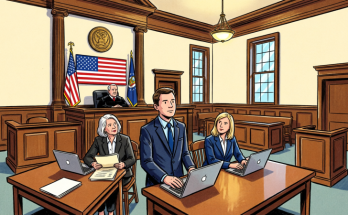
I looked for a specialist in banking and family law. Her name was Beatriz Llorente; she had a small office in Manhattan and the kind of gaze that isn’t impressed by tears or expensive suits. I brought her a blue folder with dividers. When I set it on her desk, she asked me:
“Do you want to scare him, or do you want to protect yourself?”
I thought about it for a few seconds.
“I want to stop being the floor where others find their footing.”
Beatriz didn’t smile. She nodded like someone who understands that language perfectly.
She reviewed the documents one by one. The $4,000 transfer to Richard’s mother. The loan to Clara. The contract with my forged signature. The messages where he demanded I resolve my mother’s expenses alone. The yellow post-it. I had even saved the photo of the gift box in the car, with the note on top, because that morning something inside me had already started recording before I even understood.
“This isn’t just ugly,” she said after a while. “It’s useful.”
“Useful?”
“Yes. Domestic cruelty rarely leaves such tidy documents. Yours, fortunately, does.”
For the first time in months, I felt something like relief. Not because the damage was less. But because at least it had a shape.
Beatriz talked about the nullity of the guarantee, handwriting analysis, breach of fiduciary duty if the misuse of joint funds could be proven, asset strategies, and protective measures. I took notes as if I were in a business meeting. Every legal term was a plank in the middle of the ocean.
“Don’t rush,” she told me at the end. “There are people who only show the true extent of their cynicism when they believe they are still in charge. Observe. Save. Wait for the right moment.”
And that’s what I did.
My mother got better slowly. She started eating small amounts, walking without leaning on me so much, laughing at times while watching game shows in the afternoon. I kept working and rebuilding a routine that was never innocent again. Richard became kinder for a few weeks, as if he had detected a change in temperature without knowing where it was coming from. He would arrive with supermarket flowers. He’d ask about Pilar without looking at her much. He talked about “getting away” when everything calmed down.
I nodded.
I archived.
I waited.
The trigger came almost a year later.
It was a Tuesday in November. I was at the office reviewing a quarterly closing when my phone vibrated. I saw his name on the screen: Richard.
I didn’t answer the first time. He insisted. Then a message came in.
“Get to the hospital right now. You need to take care of my mother.”
I read it once.
Then again.
No “please.”
No “something serious has happened.”
No “I need help.”
Just an order. Naked. Automatic. As if I still occupied the same place as always: the woman available to take charge of someone else’s misfortune while her own was just background noise.
I looked up from the screen and, for a second, I saw myself again in that plastic hospital chair—three nights without sleep, my mother coming out of cancer surgery, and Richard’s voice telling me: “Hire a caregiver.”
I felt a serenity so intense it was frightening.
I replied five minutes later.
“What happened to her?”
He was quick to answer.
“She fell down the stairs. She’s admitted. Clara can’t. I’m handling things. Go now.”
I’m handling things.
Of course.
There was always something more important than a woman’s broken body—unless that woman was his, and then, by force of habit, the duty fell on me.
I didn’t go.
First, I called Beatriz.
Then, I opened the digital folder.
After that, I searched a drawer in my office for the yellow post-it. Sometimes I carried it with me—not out of masochism, but because there are offenses you keep as a compass. The paper was already a bit bent at the corners. My mother-in-law’s handwriting was still there, elegant, poisonous, impeccable: saying she hoped my mother wouldn’t cause me “any more trouble.”
No more trouble.
I laid the post-it next to a copy of the $4,000 transfer and the last page of the loan backed by my forged signature. The three objects together seemed insignificant. A little yellow paper. A bank transaction. A signature. And yet, there was the entire skeleton of my marriage.
At six in the evening, Richard wrote to me again.
“Where are you?”
I didn’t answer.
At six-twelve, he called.
I picked up.
“What the hell are you doing?” he started, no greeting. “I’ve been trying to reach you for hours.”
“Working.”
“I told you to get to the hospital.”
His mother was admitted to the same hospital where mine had spent ninety days.
I couldn’t help but think of it.
“I also told you my mother had cancer,” I replied.
Silence.
Then exasperation.
“Don’t start with that again.”
That again.
As if abandonment had an expiration date when it becomes inconvenient to remember.
“Clara is very nervous,” he continued. “My mother needs someone there tonight.”
“Hire a caregiver.”
It wasn’t revenge. It was exact justice.
I heard him breathe on the other end. First, incredulity. Then, rage.
“You can’t be serious.”
“Very serious.”
“Sophia, for God’s sake. We’re talking about my mother.”
“Yes. The same one who wrote that mine shouldn’t cause me any more trouble.”
This time the silence was different. More dangerous.
“You’re still on about that post-it? You’re sick.”
I smiled joylessly.
“No. I just have a good memory.”
He lowered his voice. He always did that when he wanted to seem reasonable.
“Look, it’s not the time to bring up old laundry. I need you here.”
I need you.
Not “I need help.”
Not “I’m overwhelmed.”
Not “I’m sorry for everything.”
Just that dry, utilitarian phrase, intact in its selfishness.
“You don’t need me,” I said. “You need the woman who used to solve the consequences for you while you pretended not to see the causes.”
“What the hell is wrong with you?”
I rested my elbow on the table and looked at the office lights reflected in the window.
“The same thing that happened to you a year ago. I ran out of unilateral compassion.”
I hung up.
He didn’t call again for an hour. Then messages started arriving. First angry. Then playing the victim. Then one from Clara, casually sweet, saying her mother was very scared and that “as women” we should support each other. Then one from my mother-in-law, surely dictated to someone because she never wrote to me directly: “This is no time for childish grudges.”
Childish.
I opened a new file in the folder.
I saved every message.
Every word.
Every hour.
At nine, Beatriz called me.
“I’ve reviewed the last things you sent me,” she said. “They’re nervous.”
“It shows.”
“The question is if you’ve already decided.”
I looked again at the trio on my desk: post-it, transfer, signature.
“Not entirely,” I admitted.
And it was the truth.
Because for months I had imagined this moment as something clean. A definitive line. I discover you, I free myself, I leave. But real lives don’t break with the elegance of movies. They break in layers. Through habits. Through fear. Through emotional investments that take years to accept their ruin.
“You can report the forgery,” Beatriz continued. “You can initiate property measures and request full access before they try to move things. You can leave the house this very week. You can also wait. The important thing is that whatever you do, it’s to protect yourself, not to punish them.”
I stayed quiet.
Through the glass, New York kept functioning with its indecent normalcy. Cars. Traffic lights. People coming out of the subway. And somewhere in that city, Richard’s mother was on a gurney, surely truly scared, while her son kept believing the women around him existed to cover for what he didn’t know how to sustain.
“Sophia?” Beatriz insisted.
“Yes. I hear you.”
“Don’t warn them before you move.”
I closed my eyes for a second.
“Understood.”
I left the office around ten. I didn’t go home. I went to my mother’s apartment. Pilar opened the door with her slow step and a blanket over her shoulders. She was thinner, more fragile, but alive. Immensely alive. She looked at me and knew instantly that something had changed.
Mothers sometimes discover the storm by the way a daughter closes the door.
“What happened?” she asked.
I set my bag on the chair. I pulled out the post-it, the transfer, the copy of the guarantee. I put them on the dining table. She read slowly, in silence. When she finished, she looked up. Her eyes were full of a quiet sadness, but no surprise.
“I always thought you were too good for that house,” she said.
I didn’t cry.
I had cried too much before.
I sat across from her and, for the first time, told her everything without filtering a single thing. The 47-second call. Christmas. The car driving off with the suitcases. The forged signature. The messages from the hospital that afternoon. Pilar listened to me with her hands together, as if she were praying inside or containing something very old.
When I finished, she pulled a folder from the drawer that I hadn’t seen before.
“I kept things too,” she said.
She opened it.
There were copies of receipts I had paid alone during her illness. A handwritten note from Richard saying that “Pilar’s thing” should be managed by my family. And even a page torn from a planner with a figure and a name: that of a manager who, according to my mother, had called once asking about a pending signature “on behalf of Clara.”
I felt the world become strangely precise.
As if for an entire year everything had been pushing me, document by document, toward an exact point.
“Mom…” I whispered.
She covered my hand.
“Don’t go back where they made you feel small.”
We stayed like that for a while. The kettle whistled in the kitchen. Outside, it started to rain.
My phone vibrated again.
Richard.
I didn’t open it.
At eleven-thirty, one last message arrived.
“Don’t do anything crazy. We’ll talk at home tomorrow. My mother asked about you.”
I read that sentence several times. Not out of guilt. Not out of tenderness. But because of the strange feeling of finally seeing the whole machinery. The moral obligation, the pressure, the family as an alibi, the mandate to return to your post even if they have emptied you from the inside.
I laid the phone face down.
Then I took my mother’s folder, my own, the post-it, the transfer, and the copy of the guarantee and put them all in my bag. Too much weight for a few pieces of paper. Too much truth for a single night.
Pilar observed me in silence.
“What are you going to do tomorrow?” she asked.
I looked toward the window, where the rain had blurred the streetlights.
I thought about the hospital. About Richard expecting obedience. About his mother believing, perhaps, that I would show up as always. I thought about Beatriz, the handwriting analysis, the potential report, the shared house, the signature that wasn’t mine and could break much more than a loan.
I took a deep breath.
“I don’t know yet,” I said.
And it was the truth.
Because for the first time in years, the next step wasn’t going to be decided by fear.
It was going to be decided by me.