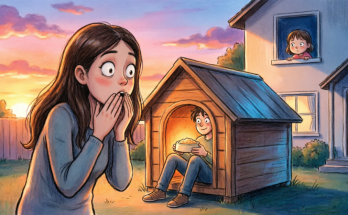
During Mother’s Day Dinner, My Sister Proudly Shared That Her Third Baby Was On The Way. My Mom Clapped Her Hands, “This Is Everything I Wanted.” Then My Dad Turned To Me. “You’ll Be Helping With The Kids.” I Froze. “Excuse Me?” My Sister Rolled Her Eyes. “You’re Not Doing Anything With Your Life Anyway. This Will Give You Purpose.” I Smiled, Pushed My Chair Back, And Left The House. The Next Morning, My Phone Buzzed With An Unknown Number: “Good Morning, Ma’am. This Is The Police Department.”
Part 1
My name is Martha Pierre. I was thirty-seven years old when I finally understood that some families do not break all at once. They split along old cracks that have been there for years, hairline fractures hidden under paint and prayer and Sunday dinner. Mine broke on Mother’s Day, in my parents’ dining room, with roasted chicken steaming on the table and the smell of garlic butter clinging to the curtains.
I almost did not go.
I sat in my car outside my childhood home for three full minutes with the engine idling, my fingers resting on the steering wheel, watching the last gold light slide down the magnolia trees that lined the street. The neighborhood looked exactly the way it had when I was fourteen. Brick ranch houses. Neatly cut lawns. Wind chimes on porches. The same old white mailbox at the curb with PIERRE in fading black letters. It should have felt comforting. Instead it felt like stepping back into a play where I already knew my lines and hated every one of them.
On the passenger seat beside me was a lemon pound cake wrapped in foil and tucked into a cardboard bakery box. I had baked it that morning from my grandmother Odessa’s recipe, the one with extra zest and sour cream that made the crumb stay soft for days. I always brought dessert, partly because I liked baking and partly because it gave me something to do with my hands when conversation turned sharp. A cake can be a shield if you carry it right.
I finally killed the engine, picked up the box, and walked inside.
The house smelled like hot grease, onions, and my mother’s perfume, something powdery and floral that always made me think of church pews and hard smiles. Francine Pierre was in the kitchen in a lavender blouse with pearl buttons, moving between stove and counter like a woman directing traffic. Her hair was smooth and pressed, her lipstick a deep plum. My mother did not simply host dinner. She staged it. Every plate, every spoon, every topic was placed where she wanted it.
“There she is,” she said without looking up. “Set that on the counter.”
No hello. No hug. Just direction. Familiar enough to almost be comforting.
My father, Renard, was in the living room with a baseball game turned up too loud and a beer balanced on his knee. He gave me a nod that landed somewhere between acknowledgment and obligation. My younger sister Colette was sprawled on the couch, scrolling through her phone while her son, Enzo, tore around the coffee table with a plastic dinosaur and her daughter, Soleil, shrieked after him with one pink sock missing.
Colette looked up long enough to say, “Hey, Martha,” in the same tone people use for parking attendants and hotel clerks, then went back to her phone.
That was my family in one frame. My mother directing. My father absent in plain sight. My sister occupying the center as if gravity itself had been arranged for her comfort.
I was four years older than Colette, and for as long as I could remember, I had been cast as the reliable one. The calm one. The one who did not make scenes, did not demand attention, did not require rescue. It sounds like a compliment until you realize it means people feel free to take and take and call it love.
We ate at six o’clock sharp at the same scarred oak table I had eaten on my whole childhood. One leg still wobbled if you put pressure on the left side. My father had promised to fix it for twenty years and never had. The food was good. My mother cooked with the kind of skill that made people forgive things they should not. Roasted chicken with crispy skin. Rice and gravy glossy with pepper. Collard greens cooked down soft. Cornbread sweet enough to taste the honey.
For the first thirty minutes, the evening moved in that tense, ordinary way our family dinners always did. My mother talked about women from church. My father chewed loudly and muttered at the game during commercial breaks. Enzo knocked over a glass of water and nobody moved until I reached for a towel. Colette sighed like her children were weather, inconvenient but not her responsibility.
I was halfway through my food, mentally calculating how soon I could leave without starting anything, when Colette laid her fork down with a soft clink and smiled at my mother.
That smile made the back of my neck tighten.
It was the smile she had worn in high school when she knew she’d gotten the dress she wanted and I hadn’t. The smile she wore at twenty-four when she flashed her ring and my mother cried like the world had been personally good to her. It was her spotlight smile, the one that said watch me.
“I have news,” she said.
My mother froze with both hands on the serving spoon. My father reached for the TV remote and muted the game. Even the kids seemed to feel the room pull toward her.
Colette pressed a hand to her flat stomach and waited exactly long enough for everyone to lean in.
“Baby number three.”
My mother gasped so hard I thought for one strange second she might choke. Then she laughed, cried, stood up, all of it at once. She rushed around the table and folded Colette into a hug so fierce her chair scraped the floor. My father grinned. Actually grinned. He slapped the table like somebody had just hit a home run.
“That’s my girl,” he said.
My girl.
I remember that clearly because I do not think he had ever said that to me.
The room went bright and loud around me. My mother was already talking nursery colors. My father was speculating whether it would be a boy or girl. Enzo started yelling, “Baby! Baby!” because children can smell excitement the way dogs smell rain. Colette tipped her chin down modestly, soaking it in. She was pretty in a soft, glossy way that translated well in photographs. She knew exactly how to receive admiration. Like inhaling.
I sat there with my fork in my hand and felt myself go very still.
Not sad. Not jealous. Just still.
Then my father turned to me, and his whole face changed. The smile flattened into something practical.
“Well,” he said, pointing at me with his fork, “you’ll be helping with the kids.”
At first I thought I had misheard him.
“I’m sorry?”
My mother didn’t miss a beat. “It makes the most sense, Martha. You work from home. Your schedule is flexible. Colette’s going to need support.”
Support.
That word in our family was always code for unpaid labor with a smile attached.
I opened my mouth, but Colette got there first. She leaned back in her chair, one hand still resting on her stomach like she was posing for a picture only she could see.
“It might actually be good for you,” she said lightly. “You’re not exactly busy building a family of your own.”
The room went quiet in a way that had weight. My mother looked down at her plate. My father took a drink of beer. Nobody corrected her. Nobody even pretended to.
Then Colette added, with a little laugh, “Maybe this’ll give you some purpose.”
That was the sentence.
Not the announcement. Not the volunteering me without asking. That sentence. Maybe this’ll give you some purpose.
Something shifted inside me so cleanly it almost felt physical, like a bone clicking back into place after years of sitting wrong. I set my fork down. Folded my napkin. Stood up.
My mother looked up, annoyed, not worried. “Martha, don’t start.”
I picked up my purse from the chair back.
“I’m not starting anything,” I said.
And then I walked out.
The night air hit my face warm and damp, smelling like cut grass and exhaust and someone’s charcoal grill down the block. My heart was beating hard, but my hands were steady. Behind me I heard my mother’s voice call my name once, sharp and command-like, not loving. I kept walking.
I drove home with the windows down and the radio off. Baton Rouge blurred past in streaks of neon and porch lights and fast-food signs. At every red light I expected my phone to ring. It stayed dark. That hurt more than it should have.
At home I locked the door, put the untouched pound cake on my kitchen counter, and stood there in the quiet. My house was small but mine. Two bedrooms. Pale yellow walls. A back porch with three potted tomato plants and a wind spinner that clicked when the breeze caught it. I had bought the place four years earlier with money I’d saved from my job as a licensed medical coder. It wasn’t glamorous, but it paid the bills, funded my retirement, and let me sleep at night. Peace counts for something, even when your family acts like it doesn’t.
I changed into pajamas, washed my face, and climbed into bed without checking my phone.
I did not know that before sunrise, my mother would decide I had not only disobeyed her.
She would decide to punish me for it.
When my phone started vibrating in the dark at 6:47 the next morning, I reached for it half asleep, saw the unfamiliar Baton Rouge number, and answered anyway.
The voice on the other end was calm, official, and so unexpected my whole body went cold.
“Ma’am, this is Officer Landry with Baton Rouge Police. Are you Martha Pierre? We need to speak with you about a welfare check requested by your mother.”
I sat straight up in bed, the room suddenly sharp around me, and one thought cut through everything else.
What exactly had she told them?
Part 2
The first thing I noticed was my own breathing.
It had gone shallow and quick, the kind of breath you take when you are trying not to panic in front of a stranger. Morning light was leaking through the blinds in narrow white bars, striping my comforter, the dresser, the glass of water on the nightstand. Outside, a garbage truck groaned somewhere down the block. My bedroom still smelled faintly like the lavender lotion I used before bed. Ordinary things. Quiet things. They only made the voice on the phone sound more unreal.
“Your mother reported that you left a family gathering in an emotionally unstable state,” the officer said. “She expressed concern that you might be a danger to yourself.”
I swung my legs out of bed and put my feet on the floor because suddenly I needed to feel something solid.
“I am fine,” I said, and even to my own ears my voice sounded too controlled, too careful. “I left dinner. I drove home. I went to sleep.”
The officer paused, maybe typing. Maybe just listening for cracks.
“I understand, ma’am. Procedure requires that we verify your well-being. Would you be willing to speak briefly with responding officers if they stop by?”
That was the thing about humiliation. It arrives in layers. First the shock. Then the disbelief. Then the understanding that somebody has managed to drag a private wound out into public air.
I could have argued. Refused. Asked what exactly my mother had said. But I knew how these things worked. Resistance has a way of looking suspicious when somebody has already painted you unstable.
“Yes,” I said. “I’ll cooperate.”
Twenty minutes later a patrol car pulled into my driveway.
I had changed into jeans and a T-shirt and brushed my teeth, as if mint breath could restore dignity. The officer who came to the door was a woman around my age with neat braids tucked beneath her cap. She was professional and kind in that brisk way people get when they know they are intruding on something embarrassing.
She asked if I knew where I was, whether I intended to harm myself, whether I had support. I answered each question with clipped politeness while my stomach burned. She glanced past me once at my clean kitchen, the coffee mug in the sink, the lemon pound cake still in its box on the counter like evidence from another life.
“You seem all right,” she said finally.
“I am all right.”
She nodded, wrote something on her pad, then lowered her voice a little. “Sometimes family overstates things. If you need resources, I can leave you some.”
There was no judgment in her face. That almost made it worse.
“I don’t need resources,” I said. “I need my mother to stop weaponizing concern.”
One corner of her mouth twitched, almost sympathy. “Understood. Have a good morning, Ms. Pierre.”
I stood in my doorway and watched the patrol car pull away, red dust puffing up from the edge of my driveway. My neighbor Mrs. Robichaux across the street had opened her blinds. Not wide, just enough. Small towns make spectators out of people without even trying.
I shut the door and leaned against it.
My mother had not called me. Had not texted to ask if I was home safely. Had not apologized for volunteering my life away. She had gone straight to the police, as if refusal itself were proof of madness.
That was the moment it stopped being about babysitting.
At 8:15 my phone rang again. Aunt Lenore.
I looked at the screen until it almost stopped, then answered because Lenore was the kind of woman who would keep calling until silence became a project. She lived in Lafayette, wore bright lipstick, and delivered opinions the way other people delivered casseroles: often, heavily, and with the expectation that you would be grateful.
“Martha, baby, what on earth happened?” she asked, already breathless with secondhand emotion. “Your mama called me crying at midnight.”
I stared at the wall over my kitchen table where a framed print of blue irises hung slightly crooked.
“She called the police on me.”
A beat. “Well, she said you left upset and wouldn’t answer.”
“I left because Dad informed me I’d be helping raise Colette’s third child, and Colette told me babysitting might finally give my life some purpose.”
Lenore sighed like I was making her work too hard. “You know how Colette talks.”
“Yes,” I said. “That’s part of the problem.”
“Martha, she’s pregnant. She’s emotional.”
I laughed once, short and empty. “Interesting how pregnancy keeps excusing cruelty in this family.”
That sharpened her tone. “Now don’t do that. Your mama says you’re overreacting because you’re sensitive about being unmarried.”
There it was. The real script. Not concern. Correction.
For a second I could smell my childhood kitchen, the burned sugar scent of pecans in a pie, the waxy tang of furniture polish, my mother telling me at nineteen that I was too serious for men, at twenty-six that my standards were too high, at thirty-two that maybe God had simply called me to service instead of family. Always a diagnosis. Never a daughter.
“I’m not sensitive about being unmarried,” I said. “I’m angry that I was insulted and then treated like a mental health emergency for leaving.”
Lenore got quiet, which with her was almost rare enough to count as honesty. “Your mama shouldn’t have called the police,” she admitted. “But you know how she gets when she feels disrespected.”
I closed my eyes.
There was the center of it. Not fear for me. Not worry. Disrespect. I had stepped out of my assigned place at the table.
By noon I had seventeen missed calls, three voicemails from my mother, and a text from Colette that read: You embarrassed everybody over nothing.
Over nothing.
I deleted the text and logged in to work.
My job was the kind that disappeared under other people’s conversation when family gathered. Medical coding. Insurance modifiers. Procedure notes. Accuracy over drama. Quiet over applause. I liked it precisely because it rewarded steadiness. The day unfolded in screens and spreadsheets and patient records. Little boxes to click. Diagnosis codes to verify. The mindless order of it soothed me. There is comfort in systems that do not change the rules just because somebody prettier entered the room.
By late afternoon the anger had settled into something colder.
That evening, after I finished work, I carried a bowl of tomato soup onto my back porch and sat under the slow churn of the ceiling fan. The air was thick enough to taste. Crickets had started up in the hedge. Somewhere a dog barked twice and then gave up. The neighborhood smelled like wet dirt and someone’s laundry detergent drifting from a vent.
I thought about my life the way a stranger might.
Thirty-seven. Homeowner. Stable income. No consumer debt besides my mortgage. Retirement account growing quietly. Friends from my book club who showed up when they said they would. A pantry that stayed full. A house that stayed peaceful. I volunteered once a month at a food bank. I had a decent laugh, healthy kidneys, and basil growing in a pot I had not yet killed.
By any reasonable standard, I was doing fine.
But in my family, none of that counted because I had never married and never had children.
Colette had married at twenty-four. She had Enzo at twenty-eight, Soleil at thirty-one, and now another baby on the way at thirty-three. On paper she looked like success if success was measured in Christmas card photos. The truth was messier. Damien, her husband, was on the road most weeks driving long-haul. Money was always tight. My parents helped with rent more than once, though they called it “just a little support.” Colette treated dependence like entitlement in a pretty dress.
And now they had all looked at me and seen labor.
Not Martha. Not daughter. Not sister.
Resource.
On Wednesday, three days after the dinner, I got a text from Colette while I was making coffee between calls.
You’re being selfish. Mom says you’ve always hated seeing me happy.
I stared at the message so long my coffee machine beeped twice. Then another one came in.
Maybe if you had kids, you’d understand what family does for each other.
That sentence scraped against something old. Because family had always been something I did for them. I was the one who visited Grandma Odessa at the care facility when her hands got too shaky to butter toast. I was the one who sat through my father’s silent moods. I was the one who remembered birthdays, brought food, mailed sympathy cards. But in families like mine, the giving only counts when it flows toward the chosen person.
I took screenshots and saved them in a folder I named May.
I did not yet know why I was documenting things. Only that some instinct had finally woken up and wanted proof.
The next day, Thursday, my personal email chimed while I was reviewing outpatient charts. The subject line read: Succession Matter Regarding the Estate of Odessa Pierre.
For a second I thought it was spam.
My grandmother had been dead since November 2019. I knew the date the way some people know the date of an accident they survived. She had died in a care facility in Baton Rouge, quietly in her sleep, after two years of being slowly diminished by a body that stopped obeying her. I had been the one who found out first because I was the one who visited every Tuesday evening with lotion, fruit, and whatever gossip I thought might make her laugh.
After the funeral my mother told me she had “handled the estate.” There had been, according to her, “not much to speak of.” A house in Tremé that needed work. A little savings. Some old furniture nobody wanted. Grief makes you accept explanations you would challenge in daylight.
Now a law office in New Orleans was requesting that I contact them regarding unresolved matters.
My hands went cold.
I opened the email. Marchand & Associates. Formal. Precise. They asked me to schedule a consultation as soon as possible concerning “significant irregularities” in the succession of Odessa Marie Pierre.
Irregularities.
The word sat there on the screen with a hard little pulse to it.
I called immediately. A receptionist with a warm voice transferred me to a woman named Yvette, who spoke the way people in legal offices do when they know not to say too much over the phone.
“We’d prefer to discuss the matter in person, Ms. Pierre,” she said. “But yes, it concerns documents related to your grandmother’s estate. Monday morning, if possible.”
I booked the appointment, hung up, and stared at my own reflection in the dark edge of the monitor. My face looked the same. Brown skin. Tired eyes. Hair pulled back in a low bun. But something beneath it had changed. A thread had been tugged, and I could feel the whole fabric of the past four years starting to loosen.
That night I took my grandmother’s recipe card out of the kitchen drawer where I kept it tucked between takeout menus and old coupons. The card was worn soft at the corners and smelled faintly, impossibly, like nutmeg. Odessa’s handwriting curled across the top: Lemon Pound Cake, don’t skimp on the zest.
I sat at the table with that card in my hands and thought about her house in Tremé. The crooked porch. The narrow hallway that always held heat. The way she used to hum while stirring gumbo, low in her chest, like the song lived in her bones. I had spent whole Saturdays there. Colette almost never came.
What if there had been more to the estate than my mother admitted?
What if “not much to speak of” had only meant not much she wanted me to know?
When I finally went to bed, sleep came thin and restless. Somewhere around two in the morning I woke with the distinct feeling that a door had opened in another room of my life, one I had walked past for years without touching.
On Monday I would drive to New Orleans to find out what had been hidden
By then, I still thought the worst thing my mother had done was call the police on me.
I had no idea she’d been hiding something much older, and far more expensive, than concern.
Part 3
I left for New Orleans before sunrise on Monday with a travel mug of coffee in the cup holder and a knot under my ribs that had been growing since Thursday.
Interstate 10 stretched ahead in a gray ribbon, damp from overnight mist. The swamp on either side looked half asleep, cypress knees poking out of dark water, Spanish moss hanging limp as old lace. Louisiana mornings have a way of feeling both ancient and unfinished, like the world is still making up its mind. I drove with the windows cracked just enough to let in the smell of wet earth and diesel, jazz low on the radio because silence felt too loud.
My grandmother Odessa used to say New Orleans made the truth come out of people. “That city peels folks,” she told me once while shelling peas on her porch. “Heat, history, sin, sorrow. You sweat long enough down there and eventually the lie slides right off.”
At nine-thirty I stepped into the lobby of Marchand & Associates on Poydras Street, carrying a leather tote and the kind of dread that makes everything look too sharply lit. The office was sleek and cold, all glass and brushed metal and a bowl of green apples no one touched. The receptionist wore a navy blazer and spoke in a voice soft enough to suggest discretion was part of the decor.
A few minutes later I was shown into the office of Claudette Marchand.
She was in her late fifties, silver hair pinned into a low bun, glasses balanced low on her nose, the sort of woman whose calm made you want to tell the truth even if you had not planned to. Her office overlooked the river. Barges moved slow and heavy through the brown water below, like thoughts too large to turn around.
“Ms. Pierre,” she said, shaking my hand. “Thank you for coming.”
She gestured for me to sit, then opened a thick file with my grandmother’s name on the tab.
I noticed that first. Odessa Marie Pierre. Typed in neat black letters. Real. Official. Larger than memory.
“Before we begin,” Claudette said, “I want to tell you that what I’m about to show you may be upsetting.”
I gave a short laugh without humor. “That has been the month so far.”
Something in her eyes softened, but only briefly. She slid a document across the desk.
It was a will.
Not typed. Handwritten. Dated March 15, 2018. Signed at the bottom in the shaky but unmistakable script of my grandmother. Her loops had always been big, generous, like she expected words to need room.
My heartbeat turned loud.
“This,” Claudette said, tapping the page, “is the original notarized will of Odessa Pierre. I personally witnessed its signing.”
I leaned forward. The air in the room felt suddenly thin and overcooled. I read the first lines once, then again, because my brain refused to accept them at the speed my eyes could.
I, Odessa Marie Pierre, being of sound mind…
Then farther down.
I leave my home located on Dauphine Street in New Orleans, Louisiana, together with all contents therein, to my granddaughter Martha Elaine Pierre…
I stopped reading and looked up.
“Martha,” Claudette said gently, “your grandmother named you the primary beneficiary of her estate.”
It was the kind of sentence that should have landed clearly. It didn’t. It scattered. House. Primary. Estate. You.
I looked back down.
There was more. A savings account at Pelican State Credit Union. A life insurance policy worth one hundred and fifty thousand dollars. A smaller bequest to Colette in the amount of ten thousand dollars. My hands began to shake.
“My mother told me there wasn’t much,” I said, and even to me my voice sounded far away.
Claudette folded her hands. “That is part of the irregularity.”
Irregularity again. The word had shape now. Teeth.
She pulled another document from the file. This one typed. Cleaner. Colder. An unsigned will supposedly distributing the estate equally between me and Colette. It did not look like my grandmother’s language. Odessa spoke in plain, warm rhythms. This read like somebody trying to sound official after skimming a legal form online.
“This document was filed in East Baton Rouge Parish in early 2020 by your mother, Francine Pierre, who represented herself as executor,” Claudette said. “Based on that filing, the estate was processed and the assets were distributed.”
“Distributed where?”
Claudette looked down at her notes and answered with the precision of somebody who has said difficult things many times. “The Dauphine Street property was sold. The savings account was liquidated. The life insurance policy was paid out. The total value distributed was approximately three hundred ninety thousand dollars.”
I stared at her.
“To whom?”
“A joint account held by your mother and your sister.”
There are moments when the body understands betrayal before the mind does. My vision narrowed. My ears rang. I could smell the paper on the desk, the faint citrus polish on the wood, my own coffee turning sour in my stomach.
“No,” I said automatically, because denial is just the first reflex of grief wearing work clothes. “No. She told me everything was handled. She told me—”
“I know,” Claudette said. “We believe the original will was intentionally bypassed. A parish audit flagged the discrepancy this spring. Because our office notarized the original will, we were contacted.”
She reached into the file and drew out one last sheet of paper, folded once down the middle.
“There is also this.”
The paper was lined, ordinary, almost childish in its simplicity. Pencil writing. My grandmother’s hand again. Claudette placed it carefully in front of me.
Martha, my sweet girl, you are the one who came. You are the one who sat with me. You are the one who listened. I am leaving you what I have because you gave me what no one else did: your time, your kindness, your presence. Do not let anyone tell you your life is small. It is full of the things that matter.
I love you more than I can say.
Grandma Odessa
The room blurred.
I had not cried when the police came. Had not cried when Colette said I had no purpose. Had not cried when my mother turned my refusal into an accusation. But this note undid me completely.
I cried hard and ugly and without elegance, bent over in a leather chair in an office overlooking the Mississippi while Claudette quietly slid a box of tissues closer. The note trembled in my hand. All those years of swallowing the family’s story about me—too quiet, too plain, too alone, not quite enough—and here was the one person who had seen me clearly, writing the opposite in pencil on a piece of lined paper.
Do not let anyone tell you your life is small.
My mother had hidden this from me.
Not just the money. Not just the house. The note. The proof that somebody knew exactly who I was and loved me for it.
When I could finally speak, my throat burned.
“What can I do?”
Claudette’s face settled into its professional calm again, though there was something fierce behind it now. “You can petition to reopen the succession. We can challenge the fraudulent filing, seek restitution of the estate assets, and refer the matter for criminal review if you choose.”
“If I choose.”
“Yes.”
I looked back at the note. The pencil had smudged in one corner where my thumb rested. I imagined my grandmother at a table, maybe in the notary office, maybe afterward, writing those words carefully because she knew things in this family had a way of disappearing if not anchored.
“Did she know?” I asked quietly. “Did my grandmother know my mother might try something?”
Claudette hesitated, choosing honesty over comfort. “I cannot tell you what she knew. I can tell you she was very clear. She wanted this documented properly. She insisted on notarization. She asked specific questions about record keeping. That suggests concern.”
Concern. Another quiet word with sharp edges.
I sat back and tried to pull my mind into order. Facts helped. I asked them one by one. Dates. Account numbers. Sale records. Who signed what. What had already been traced. Claudette answered each question with calm efficiency.
The Dauphine Street house had been sold in April 2020 for two hundred ten thousand dollars. Below market value, likely. The life insurance had been paid within weeks. The savings account emptied in stages. Most of the money had moved through the joint account and then out again. Some to my sister. Some to my parents. Exact destinations still being traced.
The detail that stuck in my teeth was the sale price. My grandmother’s house in Tremé was worth more than that even in rough shape. Odessa had lived there more than forty years. Neighbors knew her. Children on the block called her Miss O. I had sat on that porch and watched second lines pass in the distance, heard brass bands blooming faintly from another street on humid afternoons. That house had history in its walls. My mother had sold it like flipping a damaged appliance.
When the meeting ended, Claudette handed me a folder thick with copies and instructions.
“We can file within two weeks,” she said. “I recommend you do not confront your mother until we’ve begun formal proceedings.”
I almost laughed. “That advice came a little late. She came to my house on Friday already sniffing around.”
Claudette’s brows rose slightly. “Did you say anything about this?”
“No. I only told her to go home.”
“Good,” she said. “Keep it that way for now.”
I left the office with the folder pressed against my chest and my grandmother’s note tucked inside like something alive.
Instead of driving straight home, I went to Dauphine Street.
The house looked smaller than I remembered, which is what adulthood does to old places. The porch had been enclosed in glass. The exterior was painted a sage green that would have amused my grandmother and then irritated her. A wrought iron gate had been added out front, delicate and decorative, not her style at all. Her rocking chair was gone.
I sat in my car with the AC running and stared at it.
This house had been mine.
Not in some abstract sentimental way. Legally. Intentionally. My grandmother had chosen me. Put it in writing. Signed her name. And my mother had stepped between her dead hand and my living one and decided her own wishes mattered more.
People always talk about betrayal as if it arrives like a knife. Quick. Clear. In reality it can feel like subtraction. Like someone quietly removing pieces of your life and then telling you you never had them.
I drove back to Baton Rouge that afternoon feeling hollowed out and sharpened at the same time. At home I spread the documents over my kitchen table beneath the yellow light fixture: the will, the false filing, the copy of the property sale, my grandmother’s note. The lemon pound cake recipe card sat nearby, and for one strange second the scene looked almost domestic. Paperwork. Recipes. A woman at her table.
Then I found a text from my mother dated January 5, 2020.
I took care of everything with Mama Odessa’s estate. Nothing complicated. You don’t need to worry about it.
I stared at it until the words looked blurry, then screenshotted it and dropped it into a new folder on my desktop.
Evidence.
By ten that night I had found three more messages worth saving, including one from Colette saying, Mom says Grandma didn’t really leave much. She split it fair and square.
Fair and square.
The phrase made me laugh, and the sound that came out of me was so bitter it didn’t feel like mine.
I printed everything. Put copies in a manila folder. Then I carried my grandmother’s note to my bedroom, opened the fireproof lockbox in my closet, and laid it inside with the care of placing a child to sleep.
I stood there with the box open a moment longer, looking down at that lined paper.
For years I had let my mother define what mattered. Marriage. Babies. Being useful in ways she recognized. But here was Odessa, long dead and still clearer than all of them. She had seen the thing in me they always mocked or minimized. Steadiness. Presence. Care without spectacle.
The next step should have felt difficult.
It didn’t.
I called Claudette the following morning and told her four words.
“I want all of it.”
She did not ask what I meant. She already knew.
And when I hung up, my phone buzzed with a new voicemail from my mother.
This time, I didn’t even listen before deleting it.
Because now I knew she hadn’t just lied to me at dinner.
She had been lying for years.
Part 4
The legal process began quietly, which somehow made it feel more dangerous.
No dramatic knock on a door. No courtroom gavel. No movie version of justice. Just documents moving through offices, petitions filed with clerks, signatures in ink, certified mail making its patient way toward people who still thought they controlled the story.
Claudette filed the petition to reopen the succession in Orleans Parish two weeks after our meeting. She also referred the matter to the district attorney for review because, as she put it in her measured way, “The discrepancy here is unlikely to be interpreted as accidental.”
Accidental.
That was one of my mother’s favorite disguises. So much of what she did came dressed as misunderstanding. Favoring Colette because “the baby needs more.” Forgetting to include me because “there was just so much going on.” Telling people I was sensitive because “Martha takes things the wrong way.” She could build an entire alternate reality out of soft language and a pained expression.
What she could not build around were notarized documents and bank records.
Those first few weeks, I lived in a strange split-screen version of myself. On one side: work, grocery runs, library book club, watering my tomatoes, folding towels still warm from the dryer. On the other: evidence folders, calls with Claudette, a low electric current of fury humming beneath everything.
I still did not tell my family what I knew.
That turned out to be less difficult than I expected, because they were too busy trying to force me back into place.
My mother called every other day. When I stopped answering, she moved to voicemails. Her tone shifted depending on what she thought might work.
“Martha, I raised you better than this.”
“Martha, your father’s blood pressure is through the roof.”
“Martha, Colette is crying because she thinks you don’t love the children.”
One afternoon she tried righteous sorrow. “I don’t understand why you are punishing us.”
Punishing us.
Like I had invented all this. Like her call to the police and her little decades-long fraud were storms I had conjured because my feelings were hurt.
I saved each voicemail in a folder beside the texts.
On the last Wednesday in May, I finally told my friends.
We met at a coffee shop near the library with scuffed wooden floors and a pastry case that always smelled like butter and cinnamon. Our book club had started as a public-library flyer and over three years turned into the most dependable thing in my social life. Nadine, who was a school counselor and laughed with her whole chest. Corinne, a dental hygienist with dry humor and no patience for nonsense. Margaret, a former nurse who now ran a bakery and spoke in the calm tone of somebody who has seen people break and live anyway.
We had barely opened our books when Margaret looked at me over the rim of her teacup and said, “You’ve been somewhere else all evening.”
I should have brushed it off.
Instead I told them everything.
The dinner. The police. The will. The stolen estate. The note. The house sale. The lie that had stretched over five years of my life like a sheet.
By the time I finished, Nadine had both hands pressed flat against the table. Corinne looked like she wanted to bite through glass. Margaret simply reached across and took my hand.
“Martha,” Corinne said slowly, “that is not family drama. That is fraud.”
“I know,” I said.
Nadine shook her head. “The police part alone would have sent me through the roof. The inheritance? Baby, your mother’s been eating off your plate and telling you you’re selfish for noticing.”
That image hit hard because it was so precisely right. Not just stealing. Stealing while accusing me of hunger.
Margaret squeezed my hand once. “How do you want to move through this?”
The question itself nearly undid me. Not what should you do. Not what will keep the peace. What do you want.
“I want the truth on paper,” I said. “I want what Grandma meant for me. And I want to stop shrinking every time they decide I’m useful.”
Corinne nodded. “Good. Then do exactly that and let the rest burn where it burns.”
It was not gentle. It was exactly what I needed.
Two days later my mother came to my house unannounced.
I was in the backyard watering my little garden, dirt dampening the knees of my jeans, when I heard her car door slam out front. Her silver sedan. My stomach tightened on instinct, but it was a smaller feeling than it used to be. More irritation than fear.
She was standing on my porch when I came around the side of the house, arms crossed, purse tucked under one elbow like a prop in a courtroom drama. She wore sunglasses too large for her face and a blouse the color of cream. The kind of outfit she chose when she wanted to look like the reasonable party.
“This has gone on long enough,” she said before I reached the steps.
Water dripped from the hose onto my shoe. The front yard smelled like wet grass and sun-heated brick. Somewhere nearby a lawn mower buzzed.
“Then you probably shouldn’t have started it,” I said.
Her jaw flexed. “Don’t get smart with me.”
I shut off the hose and set it down carefully. “Why are you here, Mom?”
“Because you are ignoring your family over one little misunderstanding.”
I nearly laughed at the size of that lie.
“One little misunderstanding?”
“Yes. Colette is pregnant, everybody’s under stress, feelings got hurt. Then you leave like that and won’t answer anybody. You’ve got people talking.”
That last sentence told on her more than anything else. Not Martha, are you all right? Not I’m sorry about the police. People are talking.
“Mom,” I said, “you called the police and told them I was unstable.”
She lifted one shoulder. “I was worried.”
“No,” I said. “You were angry.”
For a second something flashed across her face. Something sharp and involuntary. Not shame. Recognition. Then it was gone.
“I am your mother,” she said, each word clipped. “I will not have you speaking to me like this.”
My whole life, that line had worked like a key in a lock. It was supposed to open obedience. Instead I felt myself go still.
“Then you should go home.”
Her chin jerked back slightly, as if I had slapped her.
“What did you say?”
“I said you should go home.”
We stared at each other in the thick heat, cicadas whining in the oak tree by the curb. I could smell her perfume from halfway up the walk. White florals and powder and memory. She had worn that same scent at my high school graduation, when she spent most of the party talking about how pretty Colette looked in photographs. She had worn it at Grandma Odessa’s funeral too.
“Something’s wrong with you,” she said finally, voice low now, dangerous. “You’ve changed.”
That almost made me smile.
“No,” I said. “I’m paying attention.”
She turned and walked back to her car without another word. Her heels clicked across the porch, then the steps, then the driveway. She never looked back. I stood there until the sedan disappeared around the corner.
When I went inside, there was a voicemail waiting from Colette.
“You need to stop whatever little episode this is,” she said, sounding annoyed more than angry. “Mom’s trying to help you, and you’re making everything harder because you’re lonely.”
Lonely.
The word landed, but differently than she intended. Because yes, I was alone in my house. Alone in the way single adults often are when dishes sit drying on the rack and no one asks how your day was unless they mean it. But loneliness and emptiness are not the same thing. My life had friends in it. Books. Work I was good at. A home that held my shape. What she meant was unchosen. Unvalidated. Unclaimed by a man or a child. In my family’s language, those counted as the same.
I saved the voicemail.
In early June, Claudette called with the first serious update. The court had accepted the petition. A hearing date was likely by August. More importantly, initial tracing of the account showed clear movement of funds from the estate into the joint account and then outward into separate uses: transfers to Colette, payments connected to my parents’ mortgage, a car loan in my father’s name.
Everybody had eaten.
I sat at my kitchen table holding the phone while sun flashed off the glass of the patio door. Dust motes moved in the light like tiny living things.
“So my father knew,” I said.
“It appears he benefited,” Claudette replied carefully. “Knowledge may be inferred. We need more documentation before I make stronger claims.”
Benefited. Another lawyer word. It sounded so mild for something that made my throat burn.
After the call I pulled out the old family photo albums from my hall closet. Not because I wanted comfort. Because I wanted to look at the evidence of us. The years. The patterns. My mother’s hand always resting a little more proudly on Colette’s shoulder. My father smiling broader in pictures where Colette held a report card or a baby. Me on the edges, competent and smiling, the kind of child adults trust to stand still.
I turned pages until I found one from Christmas at Grandma Odessa’s house maybe ten years earlier. The porch strung with cheap lights. My grandmother in a red cardigan. Me beside her, laughing at something out of frame. Colette indoors near the tree, holding a wrapped box and basking in attention like heat.
I stared at that photo a long time.
Maybe the betrayal had not started with the will. Maybe the will was simply the first time there was enough money attached for me to stop dismissing the pattern as preference, personality, bad communication. People endure emotional theft for years because there is no receipt for it. Money creates paper trails.
Around mid-June my father called me.
Not from my mother’s phone. Not on speaker. His number. The screen lit up while I was folding laundry, and for a second I almost didn’t recognize it. He and I rarely spoke alone. Our relationship had narrowed over the years to weather, sports scores, and holiday greetings performed in passing.
“Martha,” he said when I answered.
“Dad.”
He cleared his throat. In the background I could hear the television. Always the television. “Your mama’s upset. Wants you at Sunday dinner.”
“I’m not coming.”
Pause. Then: “Your grandmother wouldn’t like this.”
The sentence hit me so hard I had to grip the edge of the kitchen counter.
“You don’t get to talk to me about Grandma.”
Silence.
Then he said, more sharply, “She wouldn’t want the family divided.”
I looked at the folded towels on the counter, the neat little stacks of washcloths and T-shirts, ordinary soft things. I thought about my grandmother’s note in the lockbox. I thought about the house sold out from under her memory.
“You don’t know the first thing about what she wanted,” I said.
He hung up.
My hands were shaking when I set down the phone, not from sadness this time. Rage. Clean and bright. Because somewhere under everything else—under the legal case, under the exhaustion, under the old grief—there was this fresh realization that they all still thought they could tell me what my own life meant. What my grandmother meant. What family meant.
By the end of June, Claudette had the bank subpoenas.
The paper trail was about to turn from suspicious to devastating.
And though I didn’t know it yet, someone much closer to Colette than any of us was beginning to notice the same thing.
Within weeks, a man who spent most of his life on the road would walk into my kitchen carrying proof my mother could not explain away.
Part 5
July came in hot enough to blur the edges of the city.
By ten in the morning the air above the pavement was already wobbling. My front porch railing felt hot under my palm. The basil leaves in their pot looked offended by noon. Baton Rouge in summer smells like wet concrete, cut grass, fryer oil drifting from strip malls, and that deep green rot from ditches holding too much water. Heat changes people. Tempers rise faster. Secrets ferment.
Claudette’s call came on the last Friday in June, just before lunch.
“The subpoenaed bank records are in,” she said.
I shut my office door though I lived alone, as if privacy were suddenly a thing I could create by force. On my second monitor a patient chart glowed open, abandoned mid-code.
“Tell me.”
Her voice stayed even, but I could hear the charge under it. “The estate funds were deposited into the joint account held by Francine Pierre and Colette Pierre Landry between February and May of 2020. Roughly ninety-five thousand dollars was transferred directly to Colette. Approximately thirty-five thousand was used to satisfy a car loan associated with Renard Pierre.”
My father’s car. White Buick. Paid off with my grandmother’s money.
“And the rest?” I asked.
“A significant portion appears to have gone toward your parents’ mortgage, home improvements, retail purchases, and travel expenses. We’re still tracing specifics, but Martha—there’s no ambiguity anymore.”
I sat back in my chair and looked through the blinds into my backyard. Sunlight hammered the fence. The wind spinner clicked without breeze because the fan in my open window nudged it. No ambiguity anymore.
I had spent years swimming in ambiguity. Maybe Mom didn’t mean it like that. Maybe Colette was just immature. Maybe Dad avoided conflict because that was easier than choosing. Ambiguity had been the family’s native language. It let everybody keep their hands clean while I stood there bleeding quietly.
Now there were numbers.
Money had moved. Bills had been paid. Purchases made. My grandmother’s last act of love had been emptied into appliances and vacations and my father’s car note.
“Thank you,” I said, and my voice came out so flat I barely recognized it.
After we hung up, I went to the bathroom and threw up into the sink.
It wasn’t dramatic. Just sudden. My body rejecting what my mind already knew.
I cleaned the sink, rinsed my mouth, and went back to work because that is one of the strange things about being the reliable daughter: even when your whole history is rearranging itself, you still answer emails and meet deadlines.
The next week passed in that same split existence. By day I coded records and spoke in steady, professional tones. By night I sat on my porch with iced tea and thought about my grandmother’s hands. Large hands for a small woman. Hands that smelled faintly of Ivory soap and onions and Nivea cream. Hands that had folded my hair into sections when I was a little girl sleeping over at Dauphine Street. Hands that had signed a will because she knew exactly what she was doing.
On July tenth, Claudette mailed me formal notice of the evidentiary hearing: August 14, Orleans Parish Civil District Court. Attached was a list of documents to be presented. Original notarized will. Fraudulent will. Bank records. Property sale records. Affidavit from Claudette confirming execution of the original.
I read the date three times. Five weeks.
Five weeks until the truth stood in a courtroom where my mother could not smooth it away with church voice and wounded eyes.
The summons went out the following week.
And then things got loud.
My mother called me at 9:22 on a Thursday morning, voice shaking in a way I had never heard before.
“Martha.” She didn’t even say hello. “There are people at my door from the court.”
I was standing at my kitchen counter slicing a peach for breakfast. The knife paused midair. Juice ran over my thumb.
“Yes,” I said.
“They handed me papers.” Her breathing was fast. “They said this is about Mama Odessa’s estate. What have you done?”
For one second I saw the whole thing exactly as she must have. Her on the porch in her good house slippers, opening the door expecting a package or a neighbor. Seeing a process server instead. Feeling the ground tilt.
“I didn’t do anything,” I said. “The truth did.”
“What truth?” she snapped, fear turning quickly to anger because anger was her strongest language. “I handled that estate fairly.”
“No, you didn’t. You filed a fake will, sold Grandma’s house, took the money, and told me there was nothing to discuss.”
Silence.
Not the thoughtful kind. The blank kind. The kind that opens when a person didn’t prepare a lie for this exact set of facts.
Then she said, lower, “You don’t understand. Colette needed that money.”
There it was. No denial. Just justification.
I put the knife down very carefully on the cutting board.
“So because she had children, I was disposable?”
“You were fine,” she said, and now her voice was pleading, almost frantic. “You had your little job and your little house and no responsibilities. Colette had babies. She needed help.”
My little job. My little house.
I felt something inside me go cold and hard and perfectly still.
“You robbed me because I survived without you,” I said.
She made a sound I can only describe as offense wrapped in tears. “How dare you talk to me like this. I’m your mother.”
“And you’re a thief.”
The word landed with a thud between us.
She started crying then, loud and wet and performative, the same crying she used when she wanted church ladies to comfort her. I pictured her free hand pressed to her chest, shoulders rounded just so. Even now, even cornered, she was staging herself.
“You can’t do this to family,” she said.
I looked at the peach on the counter, split open, golden and fragrant, summer spilling out of it.
“You already did.”
I hung up.
My hands shook afterward, but not with guilt. Relief. The kind you feel when a rotten tooth finally comes out and your mouth can stop pretending the pain is manageable.
The rest of the family came in waves after that.
Aunt Lenore called to say my mother had made mistakes but “not prison mistakes.” Uncle Bertrand from Shreveport called to tell me I was humiliating the family. Cousin Therese sent a text saying, This should have been handled privately.
I almost answered that theft had, in fact, been handled privately. That was the problem.
I didn’t respond.
Colette, interestingly, went silent.
After weeks of texts calling me selfish and bitter, nothing. Not a peep. No insults. No excuses. No “think of the children.” At first I assumed a lawyer had told her to shut up. Then I wondered if maybe fear had finally found her too.
Two days before the hearing, I got my answer.
It was 8:10 on a humid Monday morning when someone knocked at my front door. I was in the kitchen barefoot, waiting for coffee to drip. The house smelled like grounds and toast. I expected a package.
Instead, when I opened the door, Damien Landry stood there.
My brother-in-law—though I had never once thought of him with warmth enough for the title—looked like he’d been wrung out. Faded trucking company polo. Work boots dusty at the toes. Stubble too dark under tired eyes. He smelled like diesel, road sweat, and that stale cold air truck cabs get from running AC too long.
“Martha,” he said. “Can I come in?”
I stepped aside.
We sat at my kitchen table with coffee between us. He wrapped both hands around his mug without drinking, staring into it like the answer might rise with the steam. The ceiling fan clicked overhead. Somewhere in the hedge outside a mockingbird tried three songs and couldn’t commit.
“I didn’t know,” he said finally.
“About what?”
He looked up. “Not all of it. Colette told me back in 2020 that your mama had given us some money from your grandmother’s estate. She said it was twenty thousand. Said Grandma wanted to help because we had kids.”
A humorless laugh slipped out of me. “It wasn’t twenty.”
“I know.” He reached into the pocket of his work pants and set a small black USB drive on the table between us. “I found bank statements on an old tablet. Messages too.”
I didn’t touch it yet. Just looked.
“What messages?”
“Between Colette and your mother.” His jaw flexed. “About the will. About the money. About you.”
There are moments when the body braces before the mind can catch up. My shoulders tightened. The coffee in my cup suddenly smelled too strong, almost burnt.
“Why are you bringing this to me?”
He rubbed one hand down his face. “Because I filed for separation two weeks ago.”
That startled me enough to show.
He gave a small, miserable shrug. “It’s not just this. But this didn’t help. The spending. The lies. The way she expects everybody to arrange themselves around whatever she wants. I was gone too much to see it clear. Or maybe I saw it and didn’t want to do the math.”
The road had done something to Damien. Or maybe the collapse had. He looked less blank than I had ever seen him. More embarrassed than angry, which was somehow sadder.
“How much did she get?” he asked.
“Ninety-five thousand transferred directly,” I said.
He closed his eyes for a second. “Jesus.”
I picked up the USB drive. It was warm from his pocket.
“What’s on here exactly?”
“Screenshots. PDFs. Exported messages from her tablet backup. She forgot she was still signed in on it. I was cleaning out the hall closet after—” He stopped, swallowed. “After things went bad.”
I nodded once.
“There’s one message,” he said, looking not at me but at the scratch in my tabletop near the salt cellar, “that made me drive over here instead of throwing up in my own driveway.”
Something in his tone made me stay quiet.
He finally met my eyes. “Your mother told Colette your grandmother left everything to you. And she said you didn’t need it because you didn’t have children.”
The room seemed to tilt, though I was already prepared for some version of this. Hearing it confirmed by a third party made it drop differently. Heavy. Final.
“I figured your lawyer should have it before the hearing,” Damien said. “I’m not trying to be noble. I should’ve asked questions years ago.”
I turned the USB drive over once in my fingers. Cheap plastic. Eight gigabytes, maybe. Amazing how much ruin can fit inside something so small.
“Thank you,” I said, and I meant it, though gratitude felt strange in my mouth with him.
He stood to leave after that, refusing another cup of coffee. At the door he hesitated, one hand on the frame.
“For what it’s worth,” he said, “you were always the one who acted like a person in that family.”
I didn’t answer because I didn’t know what to do with the ache that sentence opened.
After he left, I called Claudette immediately.
“Bring it to me,” she said.
I drove to New Orleans at dawn the next morning, the USB drive in my purse feeling heavier than my wallet. Claudette’s staff copied the files while I sat in the waiting room staring at a framed map of old New Orleans and listening to the air conditioner hum.
An hour later Claudette came out with a print stack in her hand and a look I had never seen on her face before.
It wasn’t surprise. It wasn’t even anger.
It was satisfaction sharpened by disgust.
“Martha,” she said, “you need to sit down.”
I stood anyway.
She handed me the top page.
It was a text exchange dated December 2019, one month after my grandmother died.
Francine: Mama Odessa left everything to Martha. Everything. House, savings, insurance.
Colette: That’s not fair.
Francine: I know. We cannot let that happen. Martha doesn’t need it. You have babies. We’ll handle it ourselves.
I read it twice. Then a third time, because some wounds insist on full clarity before they cut.
My mother had known from the beginning.
My sister had known too.
And together they had decided my life counted less.
The hearing was less than twenty-four hours away, and for the first time I understood this would not be about proving what happened.
It would be about watching them sit in a room where they could no longer pretend not to know.
Part 6
The morning of the hearing I woke before my alarm with that sharp, unnatural alertness you get before a funeral or a flight.
For a few seconds I lay still in the dark, listening to the hum of the AC and the faint rattle of a truck somewhere on the highway. My house smelled cool and clean, laundry detergent and lemon dish soap. Ordinary. Safe. Then memory slid back into place all at once: the will, the texts, the date, the courtroom.
August 14.
I got up, showered, and dressed slowly in a navy sheath dress I’d bought for the occasion because I wanted to look like exactly what I was: prepared, controlled, unafraid. I put on my grandmother’s pearl earrings, the small real ones she’d given me for my twenty-fifth birthday in a velvet box that smelled faintly of cedar. In the mirror, they caught the bathroom light and flashed white. Odessa’s pearls. Odessa’s will. Odessa’s note. It felt less like accessorizing than armor.
I drove to New Orleans with a bottle of water I barely touched and a stomach too tight for breakfast. The sky was pale and already threatening heat. Every mile marker on I-10 felt like a count down. By the time I parked near Loyola Avenue, my palms were damp against the steering wheel.
Orleans Parish Civil District Court was colder inside than the weather warranted. Old wood. Fluorescent lighting. Tile floors that carried footsteps a little too far. The kind of institutional cold that never smells clean, only scrubbed. Claudette was already there outside the courtroom with two file boxes and the expression of a woman who trusted paper more than people.
“You look ready,” she said.
“I feel like I swallowed a battery.”
“That’s acceptable.” She handed me a bottle of water. “Let them be the ones who sweat.”
I almost smiled.
The courtroom itself was smaller than I had imagined, almost intimate. Polished benches worn smooth at the edges. Flags tucked into corners. The judge’s bench raised just enough to remind everyone where power sat. There were only a few other people there for unrelated matters, and their quiet presence irritated me irrationally. How dare strangers exist on a day like this.
At 9:45 my mother walked in with a lawyer I had never seen before, a man in a gray suit whose tie sat slightly crooked as if he’d dressed in a hurry. My father followed behind them, face set into that hard closed look he wore when he wanted to pass for stoic. Really it just made him look like a man trying not to throw up.
My mother wore cream again. She liked colors that suggested innocence. Her hair was perfect. Lipstick applied. Pearls at her throat. If you did not know better, she looked like somebody’s respectable church mother attending a civic hearing by mistake.
She saw me. Froze for half a second. Then her mouth tightened.
I held her gaze.
She looked away first.
Colette was not there. Her attorney had submitted a statement claiming advanced pregnancy and medical advice against appearance. Whether that was true or tactical, I did not know. The judge would read the absence however she pleased.
At ten o’clock sharp Judge Vivienne Arceneaux entered.
If justice can wear a face, hers was sharp-eyed and unsentimental. She looked to be in her sixties, with silver hair cut close at the jaw and the posture of somebody who had long since stopped being impressed by performance. When everybody rose, the room shifted around her. Not louder. More exact.
Proceedings began.
Claudette laid out the case methodically. Original notarized will executed in Orleans Parish in 2018. Fraudulent unsigned substitute filed in East Baton Rouge in 2020. Asset distribution inconsistent with the original will. Sale of the Dauphine Street property. Bank transfers. Insurance payout. The subpoenaed records. The newly discovered text exchanges demonstrating knowledge and intent.
Knowledge and intent.
Those are damning words in any room, but especially one where truth gets typed into the official record.
My mother’s attorney tried to frame the matter as confusion during a period of grief. An outdated document. A misunderstanding of Odessa’s wishes. Verbal indications from the deceased that the daughters should “do what was fair.”
“Do you have evidence of such verbal indications?” Judge Arceneaux asked.
He did not.
Not one witness. Not one note. Not one recording. Just the wet cardboard logic of a lie forced to stand in daylight.
When Claudette called me to the stand, my knees felt boneless for exactly three steps. Then they steadied.
I was sworn in and sat facing the courtroom, one hand resting on the rail polished by years of other people’s anxiety. Claudette asked clear questions and let me answer plainly. My relationship with Odessa. My regular visits. My discovery of the estate issue. My mother’s statements after the funeral. The police welfare check after the dinner. The note.
When Claudette handed me the copy of my grandmother’s note and asked me to read it aloud, the words came easier than I expected. Not because they hurt less. Because by then they belonged to me in a new way. Publicly. On the record. No longer hidden in a lockbox where only I could protect them.
You are the one who came. You are the one who sat with me. You are the one who listened…
When I finished, the courtroom was silent in that peculiar, full way silence gets when people are embarrassed by truth. I did not look at my mother. I didn’t need to. I could feel her anger like heat from a stove.
On cross-examination, my mother’s lawyer tried gently at first.
“Ms. Pierre, is it possible your grandmother changed her mind after 2018?”
“Anything is possible,” I said. “But the only valid document in evidence is the one she signed in 2018.”
“Did your grandmother ever say she wanted to provide for your sister’s children?”
“She loved her great-grandchildren. That is different from revoking a will.”
He shifted. Tried another route. “Would you agree that your mother took on significant responsibilities after Ms. Odessa Pierre entered assisted care?”
I thought about that. About appointments my mother attended when there were papers to sign or church friends to impress. About Tuesdays when I sat beside Odessa rubbing lotion into her hands while my mother called once a month and called it devotion.
“No,” I said. “I would not.”
The lawyer’s mouth thinned. He knew he had very little and less time.
Then Claudette introduced the text messages from the USB drive.
Those changed the air in the room.
She read them slowly, each line distinct, each timestamp attached. My mother’s words. Colette’s replies. The explicit acknowledgment that Odessa left everything to me. The plan to “handle it ourselves.” The justification that I “didn’t need it” because I had no children.
My mother actually made a noise at that. Not a gasp exactly. More like a person hearing their own voice played back and realizing how ugly it sounds stripped of context.
Judge Arceneaux took off her glasses and read the printouts herself for a long moment. The room was so quiet I could hear somebody’s watch ticking two benches behind me.
My mother’s attorney objected on grounds I barely processed. Authenticity. Chain of custody. Privacy. Claudette answered each point with the kind of patience that cuts deeper than anger. The materials had been obtained lawfully from a marital device accessible to Damien Landry during separation. Metadata preserved. Originals copied and sealed. Supporting bank records independently corroborated content.
My mother sat very straight. Too straight. Only her hands betrayed her, fingers worrying the strap of her handbag until her knuckles blanched.
At one point Judge Arceneaux asked directly, “Mrs. Pierre, did you know of the 2018 will at the time you filed the 2020 succession documents?”
Her attorney half rose as if to shield her, but my mother stood before he could stop her.
“This was my family,” she said, voice already shaking. “My granddaughter’s babies needed help. Martha was fine on her own. I did what any mother would do.”
It was such a naked answer, so certain of its own righteousness, that even her lawyer seemed startled.
Judge Arceneaux looked at her the way surgeons look at scans. No emotion. Just assessment.
“What you did,” the judge said, “was substitute your own preferences for the legal directives of the deceased and conceal that substitution from the named beneficiary.”
My mother’s eyes filled instantly, but I saw it now the way I hadn’t all my life. Not pain first. Strategy first. Pain as costume.
“You can’t put a mother in jail for trying to help her child,” she said.
The judge’s voice stayed level. “This court is not evaluating motherhood. It is evaluating fraud.”
Then she recessed for one hour to review the exhibits in chambers.
That hour was the longest of my life.
I sat beside Claudette on a bench in the hallway while people moved past us in little clusters smelling of perfume, paper, stale coffee, city heat. My water bottle sweated onto my palm. My mother and her lawyer stood at the far end speaking in urgent low tones. My father sat alone, elbows on knees, staring at the floor. He looked older than sixty-five all of a sudden. Smaller too. For one tiny disloyal second I felt sorry for him. Then I remembered the car loan. The house payments. The years of silence that always somehow benefited him.
“You okay?” Claudette asked.
“I think so.”
“That text from your mother did more damage than any bank statement.”
“I know.”
She glanced toward the end of the hall. “People like her always think motive will save them. As if wanting to help one child cancels stealing from another.”
I looked down at my hands. My nails were neatly trimmed. Clear polish. Tiny things my grandmother would have noticed. She loved details. Always said details told the truth when people wouldn’t.
When we were called back into the courtroom, my heartbeat turned into a drum.
Judge Arceneaux returned, sat, and began reading from her notes.
Her ruling was clean and devastating.
The 2018 will was valid and enforceable. The 2020 succession filing was fraudulent and void. All estate assets and proceeds were to be restored to the rightful primary beneficiary, Martha Elaine Pierre. The matter would be referred to the district attorney for criminal review based on evidence of deliberate falsification and misappropriation.
No ambiguity. No soft language. No room left for family mythology.
Then my mother did something I had only ever seen her do when a scene no longer favored her: she lost control.
“This is insane,” she snapped, rising too fast, chair legs scraping hard against the floor. “This is my family. You don’t understand what I’ve carried.”
Judge Arceneaux did not raise her voice. She didn’t have to.
“Mrs. Pierre,” she said, “sit down.”
And for the first time in my life, somebody with real authority told my mother to sit down and she had no choice but to obey.
She sat.
Her face was blotchy. Her lipstick looked suddenly too dark. My father’s hand twitched once on the bench behind her, like he wanted to touch her shoulder and knew better.
I did not feel triumph exactly.
I felt release.
Like a window had finally been opened in a room I had spent years suffocating inside.
Outside the courthouse, the heat hit hard and wet. New Orleans in August wraps around you like a hot towel. Claudette said a few practical things about next steps—restitution calculations, liens, criminal referral, timelines—but I only caught half of it because the rest of me was busy absorbing one impossible fact:
They had done it. All of it. And now a court had said so out loud.
My mother exited the building ten minutes later. Her attorney was speaking in clipped phrases. My father hovered beside her. She saw me standing near Claudette under the awning and stopped.
For a second I thought she might come toward me.
Instead she stared from across the walkway, eyes red, mouth trembling with fury she could no longer disguise as grief
“You’ve destroyed this family,” she said.
No hello. No apology. No denial. Straight to accusation. Straight to the thing that mattered most to her: narrative.
I took one step forward, enough that my voice would carry without effort.
“No,” I said. “You did.”
The look on her face then was one I would think about many times afterward. Not sorrow. Not guilt. Something emptier. The shock of discovering that control and love are not the same currency, and that one does not automatically buy the other.
She turned away first.
Again.
That should have been the end of it for the day.
It wasn’t.
Because while I was driving back to Baton Rouge with court papers in my passenger seat and sweat drying at the base of my neck, my phone buzzed with a notification from an unknown email address.
Attached was a scanned letter in familiar handwriting.
It was from Colette.
And from the first line, I knew this was not going to be an apology that changed anything.
It was going to be a confession that made forgiveness impossible.
Part 7
I did not open Colette’s letter in the car.
I thought about it at every red light between New Orleans and Baton Rouge, the phone face-down beside me like something poisonous in a pretty wrapper, but I waited until I got home. Some instincts arrive late in life and still deserve respect. I knew whatever was in that attachment needed walls around me. My walls. My kitchen. My chair. My silence.
By the time I unlocked my front door, the sky had started going that late-afternoon white-gold that makes everything in Louisiana look overheated and forgiving. My house smelled faintly of the vanilla candle I’d burned the night before. I took off my heels, set the court folder on the table, poured a glass of water, and finally opened the email.
The letter was handwritten on cream stationery, scanned crookedly as if she’d done it in a hurry. Even before I read the first line, I recognized Colette’s handwriting. Round, pretty, practiced. The kind of handwriting people compliment in bridal showers.
Martha,
I know you probably don’t want to hear from me, and I don’t blame you. I kept trying to write something that didn’t sound like an excuse, but every version was an excuse, so I’m going to tell you the truth.
That alone made me sit down.
Because truth had never been my sister’s favorite instrument. Colette preferred atmosphere. Impression. Emotion with lighting.
I kept reading.
Mom told me about Grandma Odessa’s will not long after the funeral. She said Grandma left everything to you. The house, the savings, the insurance. She said it wasn’t fair, that I was the one with children, the one who needed help, and that you didn’t really need that kind of money because you were fine by yourself. I knew it was wrong. I knew it right then. But I also wanted it to be wrong in a way that benefited me.
I read that sentence twice.
Then this:
Part of me had always believed Grandma loved you more. I hated that. Not because you were mean to me. You weren’t. You were the one who showed up. You were the one who visited. You were the one who remembered things. But Mom made me feel like if I stayed in my place as the special one, I didn’t have to look too hard at what I wasn’t.
There are truths that hurt because they are ugly. Then there are truths that hurt because they confirm what your body has known since childhood while your mind kept arguing it away.
I had known Colette knew.
Not in facts. In feeling. In the little hesitations after Grandma died. The way she said fair and square too fast. The way she never once asked if I had seen the will. Real guilt has a smell to it, even through a phone. I had been breathing around it for years.
The letter continued.
I am not writing to ask you to forgive me. I don’t deserve that. Damien is leaving. I am six months pregnant and I’m more scared than I have been in my whole life, but that still doesn’t make what I did smaller. I took money that was yours. I let Mom say what she said about you because it kept me from having to admit who I was. And who I was is selfish. Maybe still is. I don’t know yet.
At the bottom, her name. Just Colette. No love. No flourish.
I folded the pages and set them beside my grandmother’s note on the table. Two documents. Two women. Two kinds of truth. One written in pencil by a dying woman who wanted to protect me. One written in ink by a grown woman forced into honesty when the lies finally collapsed under their own weight.
I did not cry.
That surprised me. I had expected anger or grief or some electric vindication. What I felt instead was an exhausted clarity. Like turning on a porch light and seeing exactly what had been making noise in the dark.
My sister knew.
She had known all along.
And she had chosen herself.
Understanding is not forgiveness. Sometimes it is the opposite. It removes the last soft edge from the wound.
Over the next few weeks, the legal consequences unfolded in stages.
First came the restitution order. Independent appraisal on the Dauphine Street house came in at three hundred twenty-five thousand dollars, far higher than the two hundred ten thousand for which my mother had sold it. Add the life insurance, the savings account, accrued interest, and fees, and the court calculated total restitution owed to me at roughly four hundred seventy-five thousand dollars.
My mother did not have that money. Not liquid, anyway.
Funny how quickly “we had to do what was necessary for the children” turns into panic when the bill comes due.
Claudette filed liens. One against my parents’ house. Another against a small rental duplex purchased in 2021, which tracing showed had been funded partly with estate money. The bank accounts were frozen where possible. Social Security garnishment would come later, slower and meaner.
Then came the criminal side.
In early September, the district attorney filed charges against my mother: fraud, forgery, and theft by conversion. The words looked almost unreal printed in the notice Claudette forwarded me, not because they were too harsh, but because they were so plain. My mother had spent my whole life padding reality with justifications. These charges stripped her down to verbs.
She posted bond through money borrowed from Uncle Bertrand.
That was when extended family started swarming in earnest.
Aunt Lenore called and left me a voicemail so dramatic I could practically hear her free hand pressed to her chest. “I hope you’re happy, Martha. Your mother is sick with shame. She can barely eat.”
I deleted it. My mother had eaten just fine when the money was funding kitchen renovations and car payments.
Cousin Therese sent me a long text about “private family matters” and how legal action made us look bad in church circles. I read it once, thought about the police welfare check, thought about a forged will filed in court, and blocked her number.
Uncle Bertrand called late one evening and skipped all pretense. “You humiliated your father,” he said.
I was standing barefoot in my kitchen eating grapes over the sink. Purple skins. Cold sweetness. The domestic normalcy of the moment sharpened everything.
“No,” I said. “He humiliated himself when he spent stolen money.”
He exhaled hard. “That’s still your parents.”
“And I’m still their daughter.”
That shut him up for exactly three seconds.
“You’re really going to do this to your mama?”
I looked out the window over my sink. The porch light had drawn moths. They battered themselves soundlessly against the bulb.
“She already did it to me.”
He had no answer for that one. Most of them didn’t.
The hardest part was not the family outrage. That was almost easy. Predictable. What hurt was the strange quiet after each call, when I’d put the phone down and feel the shape of what was gone. Not the family itself. The illusion of it. The idea that under all the favoritism and slights there had still been some deep reservoir of equal love waiting for the right emergency to reveal itself.
There wasn’t.
There had been terms. Conditions. Utility. As long as I was helpful, quiet, and willing to stand off to the side while Colette glowed, I was included. Once I stepped out of that arrangement, I became difficult. Dangerous. Unwell.
One Saturday in September, I found myself crying in the cereal aisle of Rouse’s because a father was kneeling to tie his daughter’s shoe while she leaned on his shoulder and laughed. It was such an ordinary tenderness that it cracked something in me. I abandoned my cart near the oatmeal and went to sit in my car until I could breathe without embarrassing myself.
Loss is rude that way. It doesn’t show up for the dramatic scenes. It gets you in fluorescent grocery stores holding Honey Nut Cheerios.
Around that time, Colette called.
Her number lit my screen on a Thursday evening while I was deadheading basil flowers on the back porch. The sky was heavy with coming rain. I let it ring twice, then answered.
“Martha.”
Her voice was thinner than I had ever heard it. Not softer. Reduced. Like too much had been scraped off.
“Yes.”
“I had the baby.”
I gripped the little pair of garden shears harder. “Are you okay?”
There was a tiny hitch in her breath, maybe surprise that I asked. “It was a girl. We’re home now.”
Rain tapped once against the porch screen, then stopped.
“What did you name her?” I asked.
A pause.
“Odessa.”
The name went through me like cold water.
For a second all I could see was my grandmother’s kitchen. Yellow linoleum. Her apron with the faded strawberries on it. Flour on her forearm. The low hum in her chest when she was cooking and thinking at the same time.
“She deserves to know where the name came from,” Colette said quickly, almost as if she heard the silence harden. “Not the version Mom told. The real one.”
I sat down in the porch chair. The wood was still warm from the day.
“That’s a heavy name,” I said.
“I know.”
Wind moved through the yard, carrying the smell of rain-damp dirt and something green being crushed under it. I could hear one of her children in the background asking for juice. A baby made that damp newborn sighing sound into the phone. Life continuing with or without anybody’s moral growth.
“I’m not going to rescue you,” I said finally.
“I know.”
“I’m not giving you money. I’m not becoming your childcare plan. I’m not stepping into the place Mom used to occupy just because she can’t.”
“I know,” she said again, and this time she sounded like she meant it. “I wasn’t calling for that.”
“Why were you calling?”
She was quiet long enough that I heard a cabinet shut on her end.
“Because I wanted you to hear her name from me. And because—I don’t know. Because I’m trying not to lie when I don’t have to anymore.”
That was not enough to redeem her.
But it was something true.
We spoke for less than ten minutes. About the baby’s weight. About how Enzo was adjusting. About Soleil insisting the baby’s socks belonged to her. Mundane things. Safe things. When we hung up, I felt oddly hollow, as if a room in the house of my life had been unlocked but not entered.
I still kept the letter in my lockbox.
Not because it healed anything. Because it documented the shape of the wound.
In October, the criminal case ended with a plea agreement. My mother avoided prison. Given her age, lack of prior record, and my refusal to push for maximum punishment, the charges were reduced. She pleaded guilty to one count of fraud and one count of forgery. Three years’ probation. Community service. Full cooperation with restitution enforcement. Permanent felony conviction.
Some people said I was merciful.
That annoyed me more than if they had called me cruel.
Mercy suggests softness. I was not soft about it. I simply did not want my freedom tied forever to imagining her in a cell. I wanted distance. Consequence. Paper. Finality. Prison would have turned her into a martyr in the family’s eyes. Probation and public shame left her something far more difficult: her own life, diminished and undeniable.
I did not attend sentencing. Claudette went on my behalf and called me after.
“She cried,” Claudette said.
“I’m sure she did.”
“She told the judge she never meant to hurt you.”
That made me laugh once, tired and sharp. “Did she look like she believed herself?”
Claudette was quiet a beat. “She looked like a woman who regrets being caught in a lie she mistook for love.”
That was the cleanest thing anybody had said about my mother in months.
By November, the first restitution money started coming in. Not all at once. Bits of it. Sale proceeds from the duplex. Seized funds. Structured recovery. I watched the numbers hit my account with less triumph than I expected. Money can return. Houses can’t. Time can’t. My grandmother’s porch would never again be mine to step onto with a grocery bag and a key.
But there was one thing money could still do.
It could become intention.
For years I had carried a private dream so impractical I barely admitted it to myself: buying a small place in Tremé and turning it into a community room. A porch in spirit if not design. Free meals. Books. Conversation. Somewhere people could sit and not have to earn their welcome. A place that felt like what my grandmother had given me without fanfare.
The night that idea stopped being a fantasy, I was standing in my kitchen looking at the first meaningful deposit from the restitution order, and I heard my mother’s voice in memory from May:
Maybe this’ll give you some purpose.
I stood there a long time, the refrigerator humming, my phone still in my hand, and let the irony bloom.
She had said it to belittle me.
But purpose had been growing in me all along.
And now, with her money—my money, Odessa’s money—I was finally in a position to build something she would never understand and could never control.
The next morning, I called a realtor in New Orleans.
By nightfall, I had a list of properties in Tremé.
And one of them, a former corner store with a wide front porch on Ursulines Avenue, had just come back on the market.
Part 8
The first time I saw the building on Ursulines Avenue, it was raining lightly.
Not a hard Louisiana storm, just a soft gray drizzle that turned the sidewalks dark and made the air smell like brick dust, wet leaves, and old iron. The corner store had been vacant for two years, according to the realtor, and vacancy had settled on it in layers. Faded paint. Boarded side window. Weeds splitting the seam between the front steps and the walk. But the bones of the place were good. You could tell that immediately.
High ceilings. Original wood floors under the grime. A narrow kitchen space in the back. Most importantly, a front porch that wrapped just enough to invite lingering. Four rocking chairs would fit easy. Maybe six if you didn’t mind elbows.
I stood under my umbrella while the realtor fumbled with the lockbox and looked at that porch, and something in me went utterly still.
This.
Not as an abstract dream. Not as “someday.” This exact place, with its sagging awning and dented mailbox and stubborn little line of marigolds somebody must have planted years ago and forgotten.
Inside, the old store smelled like damp plaster and dust. Rain tapped the windows. Somewhere in the walls a pipe clicked as if the building itself were clearing its throat before speaking. The front room was long and open, sunlight muted by clouds but still finding its way in. I could already see shelves of books on the west wall. A round table for tutoring near the front window. A coffee urn in the back. A bulletin board. Community flyers. Someone reading on a Tuesday afternoon just because it felt safe there.
“What do you think?” the realtor asked.
I ran my hand over the chipped front counter, felt the grooves of old scratches beneath the peeling paint.
“I think,” I said, “I can hear it breathing.”
She smiled politely, probably used to sentimental buyers.
But I wasn’t sentimental. I was practical to the point of irritation, according to everyone who knew me. Practical people don’t usually buy damaged buildings in old neighborhoods and call them dreams. And yet there I was, doing mental math so fast it made my scalp tighten.
The asking price was one hundred five thousand dollars. I offered ninety-five at first. The seller countered. We settled at one hundred one. By the end of the week, paperwork was moving.
I named it in my head before closing.
Odessa’s Porch.
I didn’t tell anyone outside my small circle at first. Not because I was unsure. Because I wanted one thing in my life to grow without family hands pawing at it. When you come from people who mistake access for entitlement, privacy becomes fertile ground.
I told Nadine, Corinne, and Margaret over wine and cheese straws in Margaret’s bakery kitchen after hours. The room smelled like butter, cinnamon, and yeast. The steel counters still held a little warmth from the ovens. When I said the name out loud—Odessa’s Porch—Margaret put both hands to her mouth and started crying before I’d finished explaining.
“Of course that’s what you’re building,” she said.
Nadine slapped the table. “That is the pettiest holy thing I’ve ever heard and I am obsessed with it.”
Corinne leaned back on a stool and grinned. “Using stolen inheritance money, recovered through legal warfare, to build a neighborhood sanctuary in your grandmother’s honor? That’s practically scripture.”
I laughed so hard I snorted.
That was one of the first moments I understood the difference between being admired and being loved. My family loved symbols. Wife. Mother. Daughter. Helpful aunt. They were invested in roles. My friends loved motion. Projects. Questions. The actual shape of my mind. It is hard to go back to role-based affection once you’ve tasted the other kind.
Renovations began in February.
The contractor, Gerard, was a stocky man in his fifties with forearms like hams and kind eyes that crinkled when he listened. He arrived at dawn every day with a thermos, a pencil tucked behind one ear, and the calm certainty of someone who had spent his life turning rot into usefulness.
“We don’t need to make it fancy,” he said on our first walkthrough. “Just sound. Warm. Inviting.”
“Yes,” I said. “Exactly.”
We kept the old floors and had them sanded down until the wood came up honey-colored beneath years of dirt. We opened one wall in the back to widen the kitchen. Repaired plaster instead of replacing everything. Hung shelves built from reclaimed wood donated by a retired carpenter named Mr. Thibodeaux, who showed up one Saturday in a pickup and simply announced, “I heard what this place is for.”
That happened more and more as the weeks passed.
Margaret offered to provide baked goods for the opening. Nadine organized a fundraiser through her school and raised four thousand dollars from teachers and parents. Corinne, who understood social media with the same dry skepticism she applied to men, set up accounts and started posting progress photos: scraped walls, fresh paint, the first row of donated books, the porch after Gerard reinforced the supports.
The attention snowballed.
A little local paper in Tremé ran a feature about a woman rebuilding a family legacy into a community space. I asked them not to use my family’s names, and they didn’t. The article focused on Odessa. Her generosity. Her porch culture. Her habit of feeding anybody who stopped by whether she knew them or not. People responded to that. Maybe everybody is a little hungry for places that don’t ask what you can contribute before they offer you a chair.
Volunteers appeared.
A retired librarian brought boxes of novels and children’s books with handwritten category labels tucked inside. A Tulane student studying architecture offered to draft a free layout for the back room. Three teenage girls from a nearby high school came during spring break and painted one entire wall a warm creamy white while singing along to Beyoncé off somebody’s phone. By the end of March, the place no longer looked abandoned. It looked expectant.
Through all this, I heard almost nothing from my parents.
My mother was serving probation with the grim practicality of a woman forced to endure consequences she still thought she didn’t deserve. Community service at a local food bank. Restitution monitoring. Financial disclosures. Claudette told me that my mother complied in the way of people who confuse obedience with innocence. She followed instructions but remained deeply offended that she had to.
I did not call. She did not either.
My father phoned once on my birthday. The conversation lasted three minutes and smelled of effort even over the line.
“Happy birthday,” he said.
“Thank you.”
A silence.
“You doing okay?”
It was the first remotely fatherly question he’d asked me in years, and because life is unfair, it almost hurt more than the neglect. I looked around Odessa’s Porch while I answered. New shelves. Fresh paint. Sun on the floorboards.
“Yes,” I said. “I’m doing very well.”
Another silence, then, “That’s good.”
He never apologized. Not directly. Men like my father often mistake the absence of fresh harm for remorse. We hung up gently, which somehow made it sadder.
Colette and I developed a strange, cautious rhythm after the baby was born.
A phone call about once a month. Never too long. Never emotional on purpose. She started classes in medical billing, of all things, and worked part-time when Damien had the kids. There was a humility to her I had never seen before, though I did not confuse humility with redemption. She had lost the marriage she took for granted, the financial cushion she thought permanent, and the image of herself as the favored daughter who would always land softly. Consequences can mimic growth for a while. Time tells the difference.
The first time I held baby Odessa was in April.
We met in a public park halfway between us, because I was not ready for family houses or private rooms. The baby was small and warm and smelled like milk and powder and that impossible sweetness only brand-new children have. Her hair was dark and damp at the crown. She opened her eyes once, solemn as a judge, and then fell asleep against my shoulder.
Colette watched me with a look I could not fully read. Not envy. Not even guilt exactly. Something more stunned. Maybe she had never expected me to say yes to holding the child named after the woman she helped rob.
I handed the baby back after fifteen minutes.
“That’s all for today,” I said.
Colette nodded. “That’s fair.”
Fair.
It was a different word in her mouth now. Smaller. Less decorative.
When we opened Odessa’s Porch on April first, I expected maybe a dozen people.
Forty-two came.
Margaret set up trays of biscuits, hand pies, and coffee cake in the back room. Nadine coordinated a little reading corner for children. Corinne handled sign-in, donation jars, and the kind of practical chaos that can ruin events if nobody claims it. Mr. Thibodeaux stood by his shelves like a proud grandfather pretending not to be.
I wore jeans, sneakers, and my grandmother’s pearls.
A framed copy of Odessa’s note hung just inside the entrance, not the original, of course. I kept that locked away. But the words were there for anyone who walked in:
Do not let anyone tell you your life is small. It is full of the things that matter.
People stopped and read it before moving farther into the room. Some smiled. Some touched the frame. One older man stood there so long I thought he might be waiting for someone. Finally he wiped his eyes with the heel of his hand and said, “That woman must’ve known something.”
“She did,” I said.
By the end of the day, the porch was full. A pair of high-school boys hunched over chess in the corner. Two older women swapping recipes near the coffee urn. A teenager reading a battered copy of Beloved in one of the rocking chairs. A mother bouncing a fussy toddler while accepting a takeout container of red beans and rice with such visible relief that I had to excuse myself to the back room for a minute.
Because that was it, exactly.
Relief.
A place where nobody had to perform worthiness to be welcomed. No one had to be married, useful, smiling, fertile, compliant. They just had to be human and in need of a chair.
Later, after the last guest left and the floor was swept and the lights were dimmed, I sat alone on the porch in one of the rocking chairs and listened to the city settle around me. Distant music. A motorcycle passing. Somebody laughing two blocks over. The wood beneath me still held a little heat from the day.
I thought about that dinner in May when Colette said babysitting might give me some purpose.
I thought about the police at my door.
The fake will.
The courtroom.
My mother in cream pretending innocence.
My grandmother writing in pencil.
Then I looked at the hand-painted sign over the entrance: Odessa’s Porch.
Purpose had never been the problem.
Only permission.
When I finally locked up and walked to my car, my phone buzzed in my purse.
A text from an unknown number.
It was only one sentence.
Your mother was outside across the street for an hour today. I think she saw everything.
No name. No explanation. Just that
I turned slowly and looked back at the porch glowing warm in the dark, every window lit from within.
And for the first time since the case ended, I felt something colder than anger move through me.
Because my mother had stayed away from me for months.
So why had she chosen now to come watch?
Part 9
I did not sleep much that night.
It wasn’t fear exactly. More like alertness stretched too thin. Every creak of my house sounded intentional. Every set of headlights passing my bedroom window made me sit up a little straighter. I told myself there was no reason to panic. My mother had not approached the building. Had not called. Had not left a message. She had simply watched, if the anonymous text was true.
Still, watching had always been one of her favorite forms of control.
As a child I used to feel it before I saw it. That sense from across a church fellowship hall or a school auditorium that my mother’s eyes were on me, measuring. Not admiring. Measuring. Was I polite enough? Quiet enough? Proper enough? Was I making the family look right? Colette got warmth. I got surveillance.
By morning I had talked myself down into logic. People send anonymous texts for all kinds of reasons. Maybe a neighbor thought they were helping. Maybe someone wanted to stir drama. Maybe it was true. Maybe not. What mattered was what I would do if it was.
The answer came surprisingly easy.
Nothing.
Not because I was afraid. Because I finally understood that not every move requires a response. My mother had spent my whole life training me to orient around her reactions. Her moods, her silences, her performances. Refusing to bite was its own boundary.
So I made coffee, fed my basil, drove to Odessa’s Porch, and opened the doors.
Spring in New Orleans has a brief sweet stretch before the wet heat becomes a personality. That morning the air smelled like jasmine, car exhaust, and fresh bread from somewhere down the block. The porch boards creaked under my shoes in a way that already felt familiar. Inside, light poured across the floor and caught the dust in soft gold. Margaret was due at ten with muffins. Nadine had organized an after-school reading group for later. I had invoices to pay, a volunteer schedule to print, and two boxes of donated books waiting to be shelved.
Life, in other words.
Useful, warm, ordinary life.
That was the thing my family had never understood. They thought purpose had to arrive with applause and labels and visible sacrifice. Husband. Mother. Caregiver. The kinds of roles people can point at across a room and recognize instantly. But purpose can also be a quiet accumulation of small honest acts. Opening a door. Making coffee. Learning who likes cream and who only takes sugar. Remembering names. Building a place where nobody has to shrink.
By noon the porch was full of its usual early crowd. Mr. Alphonse from down the street reading the paper with a magnifying glass. Two women from the neighborhood sharing bread pudding and neighborhood gossip. A college student in scrubs asleep over a sociology textbook. Somebody’s aunt dropping off a pot of gumbo “for the people.” We had started logging meals by then, and the running total for the month had already passed three hundred.
Around two, Corinne came in carrying a roll of new flyers under one arm and iced coffees in a cardboard tray.
“You look tired,” she said before she even sat down.
“Thank you for the flattering review.”
“I’m serious.”
I told her about the anonymous text.
Her eyebrows rose. “Do you think it was really her?”
“I think it sounds like her.”
Corinne handed me an iced coffee and leaned one hip against the front desk. “Do you want me to call that little detective I dated for six weeks?”
I snorted so hard coffee nearly went down the wrong way. “No.”
“He still owes me for concert tickets. This could be healing.”
“I am not launching a surveillance operation against my mother.”
Corinne made a face. “Rude of you to deny me closure.”
Then she sobered. “Okay. Real answer. Document everything. Cameras if you don’t already have them. But don’t let her drag you back into a dance you finally walked off.”
That was exactly right, which annoyed me because it meant I had no excuse to spiral.
We installed cameras the next day.
Small ones. Discreet. Front porch, side entrance, back alley gate. Gerard mounted them in less than an hour while complaining gently about people who couldn’t just “leave well enough alone.” I didn’t ask if he meant my mother or humanity in general.
Three days later, I got the footage.
April 6th, 3:11 p.m.
A silver sedan pulled across the street and parked under a live oak. My mother’s car. Grainy but unmistakable. She stayed inside for forty-seven minutes. Once she lowered the driver’s side window. Once she leaned forward as if trying to read the sign better. She never got out.
I watched the clip three times in my office at the back of the Porch while rain drummed softly on the awning.
There was something almost unbearable about it. Not because she came. Because she stayed in the car.
That was my mother in her purest form. She could watch. Judge. Evaluate. Hover near the edge of what I had built. But walking across the street, stepping onto the porch, entering the place with my grandmother’s name over the door and my work in every room? That would require a humility she did not possess.
I saved the footage and moved on.
Or tried to.
Three days after that, on a Saturday just before closing, she called.
I recognized the number immediately and let it ring once while I stood behind the front desk staring at the phone in my palm. The Porch was mostly empty by then. Soft jazz on the speaker. The smell of coffee grounds and cornbread lingering in the air. Somebody had left a children’s book open on the couch, a stuffed rabbit marking the page.
I answered.
“What.”
Silence at first. Then my mother inhaled.
“So it’s true.”
Her voice sounded smaller than I remembered. Not kinder. Smaller. As if the conviction, the probation, the loss of status had all taken visible bites out of her.
“What’s true?”
“This place.”
I looked around me. Odessa’s note in its frame. The yellow curtains Margaret had sewn from donated fabric. The chessboard waiting on the table near the window.
“Yes,” I said. “It’s true.”
“People are talking.”
I laughed before I could stop myself.
She got sharper instantly. “Don’t you laugh at me.”
“Then don’t lead with gossip after months of silence.”
Another pause. I could hear television in the background, muffled. My father’s domain. Maybe she was at home in the same living room where he’d volunteered me for child care like assigning overtime.
“I saw the sign,” she said finally.
“Then you know how to read.”
“Martha.”
There it was. The warning note. The one that used to make me brace.
Instead I leaned against the counter and waited.
“That money was for family,” she said.
I actually closed my eyes at that, because it was such a perfect expression of her mind I almost wanted to admire the efficiency. Even now. Even after a judge. After a plea. After liens and probation and public records. Still the money was not Grandma’s wish. Not my inheritance. Not stolen assets. It was for family, meaning for whatever version of family she approved.
“No,” I said. “It was from family. There’s a difference.”
“You’re showing off.”
I looked toward the porch where a little hand-painted sign near the coffee station read TAKE WHAT YOU NEED. The sugar jar was half empty. Someone had left three romance novels on the donation shelf.
“I’m feeding people,” I said.
“With spite.”
The accusation was so absurd I almost smiled.
“Do you hear yourself?”
“You named it after her to make me look evil.”
I straightened.
“No,” I said, and my voice came out very calm. “You made yourself look evil when you stole from a dead woman and then from me. I named it after her because she was good.”
Silence again. Longer this time.
Then, softer: “I was trying to help.”
There are sentences that would have broken me a year earlier. This one no longer had the right key for my lock.
“You were trying to choose who mattered,” I said.
Her breathing changed. A small hitch. Maybe real hurt. Maybe performance. I no longer cared enough to sort it.
“I’m still your mother.”
“Yes,” I said. “And this is still the consequence.”
I hung up before she could answer.
That night I sat on my back porch in Baton Rouge with my feet up on the second chair and a bowl of strawberries in my lap. The air was thick with that sweet green smell after rain. Frogs clicked in the ditch. My phone rested face down beside me.
I thought about calling Colette and telling her her mother had been circling my building like a woman haunting property she could no longer own. I didn’t. Colette and I had reached a fragile truce based on boundaries, and I refused to turn my mother into our only shared topic. Some relationships survive only if you stop feeding them old poisons.
Instead I pulled out my grandmother’s note and reread it under the porch light.
I had started carrying a copy in my bag.
Not for courage exactly. More like alignment. A reminder of scale. My mother’s voice, even in memory, could still make the whole world feel like it narrowed down to her judgment. Odessa’s note widened it again.
Do not let anyone tell you your life is small.
The next morning, two women came into Odessa’s Porch carrying plastic grocery bags full of canned goods. They had read about us in the neighborhood paper. One of them was named Mrs. Baptiste. The other, Delores. They both wore housedresses and good earrings and smelled faintly of Pond’s cold cream and starch.
“We heard this place helps folks,” Mrs. Baptiste said, setting the bags down.
“We try,” I said.
She looked around the room, eyes landing on the framed note. Then she looked at me.
“Baby,” she said, “places like this don’t come from trying. They come from surviving something.”
I stood there with her words settling slowly through me. She wasn’t asking questions. Just naming weather.
By summer, Odessa’s Porch had become bigger than I could have planned and smaller than I could ever control, which was exactly right. We hosted tutoring twice a week. A grief circle on Thursdays. Community meals every Saturday. Book discussions once a month. We passed three thousand meals served by August. Corinne handled outreach. Nadine built partnerships with schools. Margaret all but adopted the kitchen.
My role shifted from builder to steward.
That mattered to me. My mother hoarded power. I wanted to distribute usefulness.
And maybe that was why what happened in September shook me more than I expected.
It was a Tuesday afternoon. Humid, bright, ordinary. I was in the back office reviewing expense reports when Gerard knocked once on the open door.
“You got company,” he said.
I looked up. “Who?”
He hesitated just long enough to warn me.
“Your daddy.”
For one second my whole body forgot what year it was.
Then I stood, smoothed my shirt, and walked toward the front.
My father was sitting on the porch in the far rocking chair, hat in his hands.
He looked older than when I’d seen him last. Shoulders sloped. Skin a little grayer around the mouth. The porch light caught at the white in his beard. He did not rise when I stepped outside.
He only looked up at the sign, then at me, and said, “I came to tell you your mother’s sick.”
And I knew instantly this was not concern talking.
This was the family trying one more door.
Part 10
The porch boards creaked under my feet as I stepped outside.
Late afternoon light had gone thick and gold, flattening everything into brightness. Cars hissed past at the corner where the street was still wet from a burst of rain an hour earlier. The air smelled like coffee grounds from inside, magnolia from somewhere down the block, and the metallic edge of coming evening.
My father sat in the far rocking chair like a man waiting outside a principal’s office. Hat turning slowly in his hands. Elbows on his knees. He did not look at home there. That struck me right away. Odessa’s Porch had a softness to it, a looseness, the kind of space where people exhale before they realize they’ve done it. My father had spent his whole life in harder rooms. Warehouses. TV dens. Kitchens where silence did half the talking. Here, he seemed awkwardly assembled, as if somebody had placed him in the wrong set.
“I came to tell you your mother’s sick,” he said again.
I leaned against the porch rail instead of sitting.
“Sick how?”
He stared at the hat. “Stress. Blood pressure. Her doctor says she needs to rest.”
I let the silence stretch until he finally looked up.
“If you came here to make her probation my fault, you can save the gas next time.”
His jaw tightened.
“That’s not what I’m doing.”
“Then what are you doing, Dad?”
The question sat between us, bigger than the words themselves. Because we had never once in my adult life had a conversation that honest. We had skated around each other for years on weather reports and logistics, never touching the deep water where the real damage lived.
Inside, through the screen door, I could hear somebody laughing near the coffee station. A spoon clinked against ceramic. Life going on twenty feet away while the old world tried to drag itself back onto my porch.
He took a long breath.
“Your mama ain’t handling things good.”
There it was. Not apology. Not accountability. Management problem.
“She should have thought of that before forging a will.”
His face flinched at the bluntness of it. Men like my father rely on softened language to keep from drowning. I no longer felt responsible for that oxygen.
He rubbed a hand over his mouth. “I didn’t know everything.”
I laughed once, low and unbelieving. “You paid off your car with money that came from somewhere.”
He looked away.
“I knew there was money,” he said. “I didn’t ask enough questions.”
It was the closest thing to honesty I had ever heard from him, and it made me sadder than rage would have. Cowardice often does. It’s such a small, disappointing force to find underneath years of authority.
“You never asked enough questions,” I said.
He nodded once, a tiny motion, almost involuntary.
For a minute neither of us spoke. A boy on a bike rattled past, music tinny from his phone speaker. Across the street an old woman watered potted plants in a house dress and slippers, glancing up just long enough to clock the scene before granting us the dignity of pretending not to.
Finally my father said, “You built something nice here.”
I looked at him sharply because compliments from him had always been so rare they felt suspicious.
“Yes,” I said. “I did.”
He glanced up at the sign. “Your grandma would’ve liked it.”
That one landed differently than when he’d tried to use Odessa against me months before. Not because it healed anything. Because this time it sounded like surrender instead of strategy.
“I know,” I said.
He turned the hat in his hands again. “Your mama won’t come in.”
“I noticed.”
“She drove by more than once.”
“I know that too.”
He looked embarrassed. Truly embarrassed. The emotion sat strangely on his face, like a shirt buttoned wrong.
“She don’t know how to…” He trailed off.
“To what? Walk into a place she can’t control?”
His mouth twitched, then flattened. “Maybe.”
That honesty, accidental as it was, angered me almost more than denial. Because if he could see it, if he had always been able to see pieces of it, then every year of silence had been a choice. Easier to let me absorb the damage than to interrupt the family current.
“Why are you really here?” I asked.
He opened his mouth. Closed it. Then tried again.
“She wants to talk to you.”
“No.”
“Martha—”
“No.”
The word came out so clean it startled even me. Not loud. Not cruel. Just final.
He studied my face, maybe looking for the old Martha. The one who would explain, soften, negotiate, cry privately afterward. She was gone. Or maybe she had been there all along and simply gotten tired of wearing the family costume.
“She’s still your mother,” he said at last.
“And I’m still the daughter she stole from.”
There it was again. That little collapse in him when reality arrived without cushioning.
I pushed off the rail. “I’m not doing this here.”
I thought he’d stand then, maybe angry, maybe shamed into leaving. Instead he surprised me.
“I should’ve said something years ago.”
The porch went very still.
I looked at him carefully.
“What do you mean?”
He swallowed. The skin in his throat moved under the open collar of his shirt. “At the funeral. After. When your mama said she was handling the estate. I asked once about the paperwork. She told me not to worry about it, that Colette needed help and you’d be all right. I let it go.”
The words were dry. Flat. No melodrama. Which made them worse.
“You let it go.”
He nodded.
I could feel my pulse in my wrists.
“Do you understand what that means to me?” I asked.
He looked up then, and for the first time I saw something like real shame in him. Not the embarrassment of public fallout. Shame. Quiet and ugly and overdue.
“Yes,” he said. “I think I do now.”
I almost said it was too late, but that would have implied there had once been a moment when his understanding could have preserved something. Maybe there was. Maybe the instant he accepted the car payoff. Maybe years earlier, the first time he watched my mother praise Colette for behavior she would have criticized in me. Families aren’t usually broken by one betrayal. They’re broken by a thousand permissions.
I sat down at last, but not near him. In the chair closest to the door.
“You don’t get to bring me messages anymore,” I said. “Not for Mom. Not for anybody. If she has something to say, she can write it for the court file with the rest of her statements.”
He nodded again.
“And I’m never coming back to those Sunday dinners.”
That one hit him hard. You could see it. Sunday dinner was less a meal than a ritual, proof the family still existed in a shape people recognized. To refuse it permanently was to refuse the old map.
“Even for holidays?” he asked.
“Especially for holidays.”
His fingers tightened around the hat brim.
“Colette said you’ve been seeing the baby.”
“I have.”
“She named her Odessa.”
“I know.”
He let out a breath through his nose, not quite a laugh. “Your mama was mad about that.”
“I’m sure.”
Something almost like a smile crossed his face and vanished. The expression was so brief it barely counted, but it revealed a sliver of the man he might have been if comfort hadn’t been his true religion.
We sat in silence a while. Not warm silence. Not reconciled silence. Just two people who shared blood and history but no longer shared a story.
At last he stood.
He looked around the porch one more time, taking in the chairs, the potted fern by the steps, the chalkboard by the door with that day’s menu written in my looping hand. Red beans, rice, cornbread, peaches.
“You really did make something out of it,” he said.
Out of it.
He still couldn’t say what it was. Theft. Betrayal. Justice. Love redirected. Even now the language failed him where it mattered most.
“Yes,” I said. “I did.”
He put his hat back on. “Happy belated birthday.”
“My birthday was three months ago.”
“I know.”
Then he walked down the steps and into the slow golden wash of evening without trying to hug me, which was the first correct instinct he’d shown in years.
I watched him get into the Buick bought partly with my inheritance. He sat there for a long second before starting the engine. Then he drove away.
Through the screen door, Gerard glanced over from the front room. I gave him a tiny nod to say I was fine enough, and he nodded back in that contractor way of men who know when not to ask.
That night, after closing, I sat alone in the back office and wrote down everything my father had said. Dates, phrasing, details. Not because I planned to use it. Because I had spent too much of my life letting important truths drift away undocumented. Writing it down made it real outside my own body.
Then I opened my lockbox and added one more item.
Not a legal paper. Not a text printout.
A fresh page torn from my notebook, on which I wrote:
Today Dad admitted he knew there was money and let Mom “handle it” because Colette needed help and he thought I’d be all right.
I stared at the sentence awhile after I wrote it.
That had been the family creed all along.
Martha will be all right.
A phrase that sounds like faith until you realize it has always been used as permission to take.
By the end of the year, restitution had climbed past three hundred thousand. Odessa’s Porch had stabilized with grants, donations, and the small endowment I set aside from the recovered funds. The meals kept going. The reading groups grew. People began referring others to us not as a program but as a place. That mattered more than I can explain.
Places save people differently than plans do.
My mother completed probation terms and kept her distance. We never spoke again.
Not because I lacked opportunities. Aunt Lenore tried around Thanksgiving, calling to say your mama just wants one conversation before Christmas. I told her no and did not elaborate. I had finally learned that explanations are often just invitations for negotiation.
At Christmas I hosted dinner at my house for the people who had stood beside me when the family myth burned down. Nadine with her booming laugh. Corinne with a bottle of wine and a mean story about a terrible date. Margaret bringing a chocolate cake so rich it nearly silenced the room. Their spouses, children, cousins, neighbors. The table was loud and warm and crowded with dishes and elbows and jokes that didn’t need tiptoeing.
After they left, I stood in the kitchen with my hands in warm dishwater and looked around at the aftermath. Crumbs. Half-empty glasses. Someone’s forgotten scarf over the chair. Evidence of joy.
For the first time in my life, a holiday dinner left me fuller instead of emptier.
Months later, on an April morning almost two years after that Mother’s Day dinner, I arrived at Odessa’s Porch before opening and sat in my usual chair by the front window. The place smelled like coffee and lemon cleaner and books. Sun warmed the floorboards. Outside, the sign swayed faintly in a breeze.
My phone buzzed once with a message from Colette: Little Odessa lost her first tooth.
I sent back a thumbs-up and nothing more.
That is what our relationship has become. Fragile. Honest enough. Limited. She lives with the consequence of what she did. I live with mine. We do not pretend more than exists.
Some stories end in reconciliation because people crave symmetry.
Mine didn’t.
Mine ended in structure.
Boundaries. Distance. A reclaimed inheritance turned into a living place. A sister I may one day know in pieces, but never trust the way sisters in grocery store aisles seem to. A father who arrived too late with too little and now speaks to me rarely, politely, from the far side of his own failures. A mother who lost access to me completely and will die with that door closed.
I do not hate her.
That surprises people.
Hatred is still a form of attachment. It keeps the wound warm. What I feel now is cleaner than that. Final. She taught me exactly who she was. I believed her at last. And once you truly believe someone’s cruelty, forgiveness stops looking noble and starts looking like bad judgment.
At 38, I own my house. I built a community space that feeds people. I have friends who show up. Work that steadies me. A name above a porch that means something. My life was never small. My family was simply too invested in belittling it to see.
If I could speak to the version of myself sitting in the driveway before that Mother’s Day dinner, lemon pound cake on the passenger seat, instinct whispering turn around, I would tell her this:
You are not selfish for refusing what was never yours to carry.
You are not cruel for closing the door after theft.
You are not hard for naming betrayal accurately.
And love that requires your silence is not love.
I would tell her to trust the quiet voice sooner.
To get back in the car.
To drive home.
And never sit down at that table again.
THE END!