My daughter-in-law stole my credit card.
The next day I saw the bill—$53,000 in jewelry and a trip. On Monday she texted me, “Love the gifts, mother-in-law.” I smiled, because the card she used…
 “I’m glad to have you here. Follow my story until the end and comment the city you’re watching from so I can see how far my story has reached.”
My hands trembled as I stared at the credit card statement, the numbers blurring through tears I refused to let fall. Fifty-three thousand dollars in a single day. My heart hammered against my ribs as I read each line item, each purchase more outrageous than the last.
Tiffany & Co., $18,000. Cartier, $22,000. Premium spa package, $3,500. First-class tickets to Paris, $9,500.
I sank into my kitchen chair, the same one where Harold and I used to share our morning coffee for thirty-eight years before cancer took him three years ago. The statement felt like ice in my hands, but my face burned with humiliation. How could I have been so stupid, so trusting?
The worst part wasn’t even the money, though. Fifty-three thousand dollars was more than I’d ever spent on myself in a single year. The worst part was the text message that had arrived this morning—cheerful and mocking.
“Love the treats, mother-in-law. Thanks for being so generous, Zuri.”
I read it again, my chest tightening with each word, the casual cruelty of it, the assumption that I would just accept it—that I was too old, too weak, too dependent on keeping the peace to fight back.
My phone buzzed again. Another message from Zuri.
“Tyson and I are having such an amazing time in Paris. The suite is incredible. You should see the view from our balcony.”
Attached were photos: my daughter-in-law posing in what looked like a five-star hotel, wearing jewelry I’d never be able to afford, her smile radiant with satisfaction. In one photo, she held up a champagne glass in a mock toast, the diamond bracelet on her wrist catching the light like a spotlight on my humiliation.
I set the phone down with shaking hands and walked to the window overlooking my small backyard. Harold had planted those roses before he got sick. I’d been tending them alone for three years now, just like I’d been tending everything alone.
The house felt too big and too quiet, but it was mine—at least I’d thought it was secure. The credit card had been in my purse, tucked safely in my wallet, or so I believed. When had Zuri taken it?
During last Sunday’s dinner, when she’d insisted on helping me clear the dishes. When she’d hugged me goodbye, pressing close enough to slip her fingers into my purse. The thought made my skin crawl.
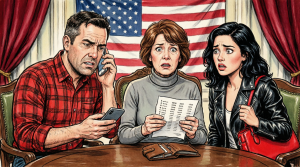
I’d been so grateful for any affection from her, so desperate to be included in my son’s new life. Three years of marriage, and I’d tried everything to win Zuri over. I’d complimented her clothes, praised her cooking, agreed with her opinions even when they stung.
When she suggested I was getting forgetful in front of Tyson, I laughed it off. When she rolled her eyes at my stories about Harold, I stopped telling them. When she made subtle comments about how outdated my house was, I actually considered renovating.
All because I was terrified of losing Tyson—my only child, my baby who’d once run to me with scraped knees and bad dreams. The son who’d held my hand at his father’s funeral and promised he’d never leave me alone.
But somewhere along the way, I’d lost him anyway.
The phone rang, jolting me from my thoughts. Tyson’s name appeared on the screen, and for a moment, hope fluttered in my chest. Maybe he’d discovered what Zuri had done. Maybe he was calling to apologize, to tell me they were coming home to make things right.
“Hi, sweetheart,” I answered, trying to keep my voice steady.
“Hey, Mom.”
His voice sounded distant, tired. “Look, I need to ask you something, and I need you to be honest with me.”
My grip tightened on the phone. “Of course, Tyson. What is it?”
“Zuri says you gave her permission to use your credit card for our anniversary trip. She says you insisted on treating us, but now she’s worried you might be having second thoughts about the amount.”
The words hit me like a physical blow—the carefully constructed lie, the way she’d twisted everything to make me look like a confused old woman who couldn’t keep track of her own decisions, and worse, the fact that my son believed her without question.
“Tyson,” I said carefully. “I never gave anyone permission to use my credit card.”
Silence stretched between us. When he spoke again, his voice carried a note of frustration I knew well.
“Mom, come on. Zuri showed me the messages where you told her to treat herself. She said you were excited about surprising us.”
“What messages?”
“I never sent any messages about that.”
“Maybe you forgot,” he said, and the words landed like a slap. “You’ve been under a lot of stress lately, and Dr. Peterson did mention that grief can affect memory sometimes.”
Dr. Peterson—my family physician for fifteen years. When had Tyson spoken to him, and about what?
“I remember perfectly well what I’ve said and done,” I replied, my voice sharper than I intended. “Someone used my credit card without permission. That’s called theft, Tyson.”
Another pause.
“Look, let’s just… let’s talk about this when we get back, okay? I don’t want to ruin our trip over a misunderstanding.”
“A misunderstanding?” The words escaped before I could stop them. “Fifty-three thousand dollars is not a misunderstanding.”
“Fifty-three?” His voice trailed off. “Mom, that’s not—Zuri said it was just a few thousand for the hotel and some souvenirs.”
For a moment, neither of us spoke. I could hear something shifting in his tone, a crack in the certainty Zuri had fed him.
“Tyson,” I said quietly, “check your wife’s luggage when you get back. Check her jewelry box. Then ask yourself if a few thousand dollars could have bought what she’s wearing in those photos she’s been posting.”
I hung up before he could respond, my hands shaking so badly I could barely set the phone down. The silence that followed felt different from my usual loneliness.
This wasn’t the gentle quiet of an empty house. This was the hollow echo of betrayal. I’d spent three years trying to buy love that was never for sale, trying to earn acceptance from someone who saw me as nothing more than a convenient bank account.
But as I stared at that credit card statement, something else began to simmer beneath the hurt—something I hadn’t felt in years. Something that made me sit up straighter and reach for my reading glasses to examine those charges more carefully.
Because there was something Zuri didn’t know about that particular credit card. Something that might just change everything.
I couldn’t sleep that night. Every time I closed my eyes, I saw Zuri’s smug smile from those Paris photos. Heard the casual cruelty in her voice during countless family dinners. How had I been so blind? How had I let it go on for so long?
The memories came flooding back like a dam had burst.
The first warning sign should have been their wedding day itself, when Zuri had somehow forgotten to save me a seat at the family table. I’d spent the reception sitting with Harold’s elderly cousins, watching my son dance with his new wife while she pointedly avoided making eye contact with me.
“It was just an oversight,” Tyson had insisted later when I gently mentioned it. “Zuri was so stressed about the seating chart. You understand, right, Mom?”
I’d understood. I’d always understood. That had been my mistake.
Then came the subtle exclusions from family photos.
“Oh, we were just taking a quick shot,” Zuri would say whenever I noticed that somehow every candid moment had been captured without me in frame. “We can take another one later.”
But later never came, and the photos that ended up on their social media told a story of a happy couple with no extended family at all.
I remembered the first Christmas after their marriage when I’d spent weeks knitting Zuri a beautiful cashmere scarf in her favorite color. She’d opened it in front of everyone, held it up for exactly three seconds, and said:
“How thoughtful. I’m sure someone will love this.”
Then she’d set it aside and never mentioned it again. Later, I’d seen it hanging in their coat closet with the tags from Goodwill still attached.
But the worst memory—the one that made my chest tighten with fresh pain—was from this past Mother’s Day. I’d invited them over for brunch, spent the entire morning cooking Tyson’s favorite meals from his childhood.
Zuri had arrived wearing a stunning new dress and immediately started taking photos of the food I’d prepared.
“This is so authentic,” she’d said, posting pictures to her Instagram. “Nothing like homemade cooking from the older generation.”
She’d made my food sound like a museum exhibit, my cooking like some quaint relic from a bygone era. But what had really stung was watching Tyson laugh and encourage her, completely oblivious to how his wife was diminishing me with every word.
That same day, as we’d sat around the table, Zuri started talking about their future plans.
“Tyson and I have been thinking about buying a bigger house,” she said, cutting her pancakes into perfect small bites. “Something more modern, you know, with better security.”
She glanced meaningfully around my modest home—the same house where Tyson had grown up, where Harold and I had built decades of memories.
“Of course, we’d want to be close enough to help when Agatha needs us,” she added with fake concern. “As people age, they really shouldn’t be living alone. It’s not safe.”
“I’m perfectly fine living alone,” I’d said quietly.
“Oh, I know you think you are,” Zuri replied, her smile never wavering. “But things can change so quickly at your age. Memory issues, falls, confusion about medications. It’s really something Tyson and I worry about constantly.”
I remembered how my son had nodded along, how he’d started looking at me with new eyes—not with love and familiarity, but with assessment. Was Mom getting forgetful? Was she becoming a burden?
The seed had been planted, and Zuri had been watering it ever since.
There was the time she’d helpfully reorganized my purse while I was in the bathroom at a restaurant, then made a show of how confused everything was inside. The way she started speaking louder to me in public as if I were hard of hearing.
The concerned comments about how I’d repeated a story I’d told just once months earlier. And then there were the financial probes, always wrapped in concern, always presented as helpful suggestions.
“Have you thought about setting up automatic bill payments, Agatha? It would be so much easier for you.”
“Maybe we should look into getting you a financial advisor, someone to help manage your accounts.”
“Tyson could be added to your bank accounts just for emergencies, you know, in case something happens.”
I’d resisted most of these suggestions, some instinct warning me to keep my independence, but I’d been softening—wearing down under the constant pressure disguised as care.
The worst part was how she’d used my grief against me. Every mention of Harold became an opportunity to remind everyone how fragile I was, how lost I seemed without him.
She’d pat my hand sympathetically whenever his name came up, as if I were a wounded bird that might shatter at any moment.
“It’s so hard when older people lose their partners,” she’d say to friends and family members when she thought I couldn’t hear. “They sometimes lose touch with reality a little bit. It’s completely understandable, but it does make you worry.”
Now, sitting in my kitchen at three in the morning, I could see the pattern clearly. Every kind gesture I’d made had been twisted into evidence of my declining mental state.
Every attempt to maintain my independence had been portrayed as dangerous stubbornness. Every gift, every gesture of love, had been cataloged as proof that I was an easy target.
I pulled out my laptop and did something I should have done months ago. I logged into my bank accounts—all of them—and started reviewing the statements. What I found made my blood run cold.
This wasn’t the first time.
There had been other charges over the past six months, smaller amounts spread out enough that I hadn’t noticed the pattern. An $800 charge at a high-end restaurant on a Tuesday when I was home alone.
A $1,200 payment to a spa I’d never heard of. Multiple charges at boutiques, department stores, and luxury retailers. Someone had been using my credit cards for months, testing how much they could get away with before I noticed.
The $53,000 shopping spree in Paris wasn’t an impulsive crime of opportunity. It was the culmination of a carefully planned campaign.
But as I scrolled through the charges, something else caught my attention, something that made me sit back in my chair with a mixture of horror and growing determination.
The card that had been used for most of these unauthorized purchases wasn’t one of my personal credit cards. It was tied to an account I’d almost forgotten about—the business account for Whitmore & Associates, the consulting company Harold and I had built together thirty years ago.
After Harold died, I’d stepped back from active management but had never officially dissolved the business. Tyson had been helping me wrap up the final contracts and handle the remaining clients.
He’d been signatory on the account, authorized to make purchases for business expenses, which meant that technically—legally—every charge Zuri had made wasn’t just theft. It was corporate fraud.
And corporate fraud, I remembered from my years running the business, carried much more serious consequences than simple credit card theft.
I closed the laptop and leaned back in my chair, my mind racing. For three years, I’d been playing defense, trying to accommodate and appease. I’d been so focused on not losing my son that I’d let his wife steal from me piece by piece—dignity and dollars both.
But Zuri had made a crucial mistake. She’d gotten greedy. And in her greed, she’d used the wrong card.
The card connected to a business that still existed, that still had legal protections and audit requirements. A business that was still officially mine.
For the first time in months, I smiled. Not the forced, pleasing smile I’d worn around Zuri, but something sharper, something with teeth.
If she wanted to play games with a confused old woman, then perhaps it was time she learned this particular old woman had been running a successful business since before Zuri was born, and I still remembered how to fight.
The next morning, I did something I hadn’t done in years. I put on my business suit—the navy-blue Armani Harold had bought me for our company’s tenth anniversary. It still fit perfectly, though it felt strange after months of cardigans and comfortable slacks.
I styled my silver hair the way I used to for board meetings, applied makeup with a steady hand, and looked at myself in the mirror. The woman staring back at me wasn’t the grieving widow Zuri had been so carefully cultivating.
This was Agatha Whitmore, co-founder of a multimillion-dollar consulting firm, the woman who had negotiated contracts with Fortune 500 companies and never backed down from a fight. I’d forgotten her, but she was still there.
My first stop was downtown to the office building where Whitmore & Associates had maintained its headquarters for twenty-five years. I still had a key, though I hadn’t used it in over a year.
The receptionist, Maria, looked up in surprise when I walked through the glass doors.
“Mrs. Whitmore? I wasn’t expecting you today.”
“Good morning, Maria. I need to access the company files and speak with our accountant. Is Jennifer available?”
“Of course. Let me call her.”
Maria’s fingers flew over her phone. “She’ll be right down.”
Jennifer Morrison had been our company’s financial adviser for over a decade. When she emerged from the elevator, her expression was carefully neutral, but I caught the flicker of concern in her eyes.
“Agatha. It’s good to see you. What brings you in?”
“I need to review all recent transactions on the company credit cards, particularly any charges made in the past six months.”
I kept my voice level, professional. “I also need to understand our current audit requirements and fraud protection policies.”
Jennifer’s eyebrows rose slightly. “Is there a problem?”
“There may be. I’d prefer to review the documentation before we discuss specifics.”
She led me to the conference room where Harold and I used to meet with clients, the same room where we’d celebrated our biggest contracts and weathered our most challenging negotiations. The familiar surroundings steadied me, reminded me of who I’d been before grief had made me small.
Jennifer spread the statements across the mahogany table, and together we went through every charge. What I’d discovered on my laptop the night before was just the beginning.
The unauthorized purchases stretched back eight months, starting small and growing bolder over time.
“These charges,” Jennifer said, pointing to a series of transactions, “they’re all coded as business expenses, but I don’t recognize most of these vendors.”
I studied the list: designer boutiques, luxury spas, high-end restaurants—nothing that could possibly be considered a legitimate business expense for a consulting firm that had been winding down operations.
“The card was issued to Tyson Whitmore as an authorized user,” Jennifer continued. “He has signing authority as part of the business transition planning we discussed last year. But he’s not the one making these purchases.”
I pulled out my phone and showed her one of Zuri’s Instagram photos from Paris, the one where she was wearing the diamond bracelet.
“That bracelet was purchased with the company card three weeks ago. Eighteen thousand dollars charged to Client Entertainment.”
Jennifer’s expression darkened. “Agatha, if someone is using company funds for personal purchases and misrepresenting them as business expenses, that’s not just theft. That’s fraud—corporate fraud.”
“What are the implications?”
“Federal charges, potentially. The IRS takes misuse of business accounts very seriously, especially when false documentation is involved.”
She leaned back in her chair. “We’re talking substantial fines, possible jail time, and complete destruction of professional reputation.”
I absorbed that information, feeling a mixture of satisfaction and dread. Satisfaction because finally, finally there would be consequences for Zuri’s actions. Dread because those consequences might also touch my son.
“What’s our next step?” I asked.
“We need to file a fraud report immediately. The company has to protect itself, and the longer we wait, the worse it looks for us.”
Jennifer’s voice was firm. “I’ll need to document everything and notify our legal team. And Tyson—he’s the authorized user.”
“That depends on whether he knew about the unauthorized charges,” she said. “If he was complicit, he’s equally liable. If he was unaware, he might be protected, but he’ll still face serious questions about his oversight responsibilities.”
I stared at the statements spread across the table, thinking about my son. Had he known? Had he been aware that his wife was using company funds for her shopping sprees? Or was he as much a victim of her manipulation as I was?
“I need to speak with him first,” I said finally, “before we file anything official.”
“Twenty-four hours.” Jennifer looked uncomfortable. “Agatha, I understand he’s your son, but legally the company has obligations.”
“Twenty-four hours,” I repeated. “Then we do whatever we have to do.”
She nodded reluctantly. “But no more charges can be processed on that card. I’m freezing the account immediately.”
I spent the rest of the day in my old office making calls and reviewing files. By evening, I had a complete picture of the damage and a plan for moving forward.
Zuri had stolen nearly $75,000 over eight months. All of it documented, all of it traceable.
That night, I did something I’d never done before. I used the spare key Tyson had given me and let myself into his house while they were still in Paris. I wasn’t there to snoop or gather evidence.
I had plenty of that already. I was there to understand—to see how they lived, how they thought about money, how they saw their future.
Their home was beautiful, I had to admit: expensive furniture, artwork that probably cost more than I spent on groceries in a year, a wine collection that belonged in a magazine. But as I moved through the rooms, I noticed something else.
Bills—stacks of them—some marked past due, scattered across the kitchen counter like accusations. Credit card statements showing balances that made my theft look like pocket change.
Mortgage payments that were months behind, a notice from their car dealership about missed payments on Zuri’s BMW. They were drowning in debt, living a lifestyle they couldn’t afford, maintaining appearances that were slowly strangling them financially.
And my money—my company’s money—had been keeping them afloat.
I found Zuri’s jewelry box in their bedroom, a massive thing that looked like it belonged in a museum. It was filled with pieces I recognized from the statements: the diamond earrings from March, the pearl necklace from April, the tennis bracelet from May—a timeline of theft displayed like trophies.
But it was what I found in the bottom drawer that truly shocked me.
A folder labeled Financial Planning, containing detailed research about my assets. Printouts of property records showing the value of my house. Copies of Harold’s obituary with his business accomplishments highlighted.
Internet searches about inheritance laws and power-of-attorney procedures. At the bottom of the folder was a handwritten note in Zuri’s careful script.
“Timeline established. Pattern of confusion. Memory issues. Get added to accounts by summer. POA by Christmas. Full access within 18 months.”
My hands shook as I read it again. Eighteen months. She’d been planning this for eighteen months, systematically working to take control of everything Harold and I had built together.
The credit card theft wasn’t impulsive greed. It was a test run for something much more comprehensive.
I photographed the documents with my phone, my heart pounding so hard I was afraid the camera would shake. Then I carefully replaced everything exactly as I’d found it and left their house.
Back home, I poured myself a glass of Harold’s best Scotch and sat in his old chair, thinking. Zuri wasn’t just a manipulative daughter-in-law.
She was a predator who had identified me as prey and had been systematically hunting me for over a year. But she’d made one crucial error in her planning.
She’d assumed I was exactly what I appeared to be—a lonely, grief-stricken widow who would be grateful for any attention and easily controlled. She’d never considered that under that widow lived a woman who had built and run a successful business for thirty years.
A woman who understood contracts and leverage and the art of negotiation. A woman who had just discovered her opponent had been playing checkers while she was about to unleash chess.
My phone buzzed.
“Flying home tomorrow. We should talk,” Tyson texted.
I smiled as I typed my response.
“Yes, we should. Come by Sunday evening. Bring Zuri. There’s something we all need to discuss.”
I hit send and finished Harold’s Scotch.
Sunday was going to be very interesting indeed.
Sunday evening arrived with the kind of autumn chill that made me grateful for the warmth of my kitchen, the kind that always comes early in the Northeast. I’d spent the day cooking Tyson’s favorite meal—pot roast with all the fixings, the same dinner I’d made for his homecoming since he was a boy.
But tonight wasn’t about nostalgia. Tonight was about truth.
They arrived exactly on time. Zuri looked radiant in what I now recognized as a new designer outfit, probably purchased with my stolen money. Her diamond bracelet caught the light as she hugged me—the same bracelet I’d seen itemized on the company statement.
“Agatha, you look wonderful,” she said, her voice honey-sweet. “I hope you weren’t too worried about us. I know you can get anxious when you can’t reach Tyson.”
The subtle dig was perfectly delivered, designed to reinforce the narrative of an anxious, dependent mother. I smiled and nodded, playing my part for just a little longer.
“I’m so glad you’re both home safely. Come sit down. Dinner’s ready.”
As we settled around the dining table, I studied my son’s face. He looked tired, stressed in a way that hadn’t been there before their trip. His eyes kept darting between Zuri and me, and I could see the internal struggle playing out.
Something had shifted during their time in Paris.
“So,” I said, serving the pot roast, “tell me about your trip. It looked absolutely beautiful from the photos.”
Zuri launched into an elaborate description of their hotel, the restaurants, the shopping. She was animated, glowing, describing each luxury in perfect detail.
But I noticed she was careful to avoid mentioning specific costs.
“The suite was incredible,” she said, cutting her meat into precise small pieces. “Floor-to-ceiling windows overlooking the Eiffel Tower. And the shopping—oh, Agatha, you would have loved some of the boutiques. So elegant, so sophisticated.”
“I’m sure,” I replied. “And the jewelry. That bracelet is stunning.”
She held up her wrist, letting the diamonds catch the light.
“This old thing? I’ve had it forever… though I did pick up a few new pieces while we were there. You know how it is. When in Paris.”
The lie rolled off her tongue so easily, so naturally. I glanced at Tyson, wondering if he’d caught it, but his expression was unreadable.
“Actually,” I said carefully, “I wanted to talk to you both about something. I’ve been reviewing some financial statements, and I found some unusual charges.”
Zuri’s fork paused halfway to her mouth, but her smile never wavered.
“Oh? What kind of charges?”
“Credit card purchases. I don’t remember making large amounts. I’m wondering if perhaps someone gained access to one of my cards.”
The silence that followed was electric. Tyson set down his fork and looked directly at his wife.
“Zuri, didn’t you say Mom gave you permission to use her card for the trip?”
I watched Zuri’s face carefully. For just a moment, a flicker of uncertainty crossed her features. Then the mask was back in place, complete with wounded innocence.
“Of course she did, Agatha. Surely you remember our conversation. You insisted on treating us for our anniversary. You said it was your gift to us.”
“What conversation was that?” I asked gently.
“The one we had last Sunday after dinner,” she said smoothly. “You walked me to the car and pressed the card into my hands. You said you wanted us to have a special trip. That Harold would have wanted you to be generous with family.”….